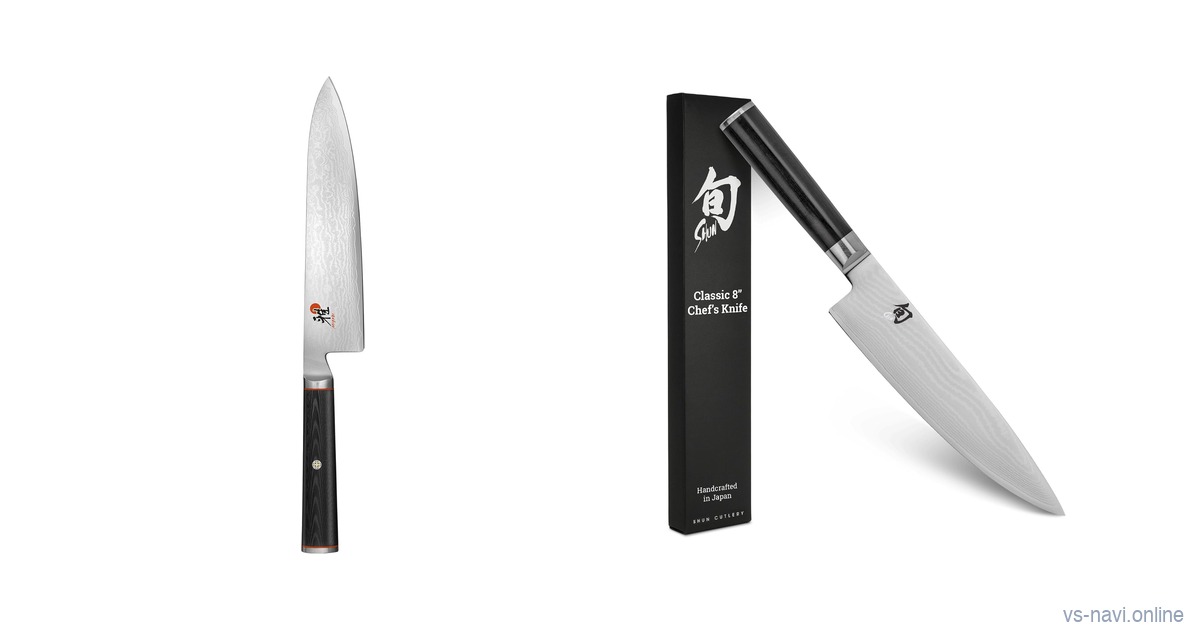
Two Damascus chef’s knives sit on the counter. Both have a rippled steel blade, a smooth D-shaped handle plus a razor edge that whispers through a tomato. On Amazon one costs around $160, the other around $220. From across the kitchen they look like twins. So which premium Japanese brand actually earns your money?
The quiet surprise is that both the Miyabi Kaizen plus the Shun Classic are forged in the same town: Seki, in Gifu Prefecture, the sword-making capital of Japan for 700 years. This is not East versus West. It is two takes on the same craft, one wearing a German badge, the other Japanese to the core.
The quick take: which knife to pick
If you want the sharper, thinner blade for less money, buy the Miyabi Kaizen. Its edge is honed to a more acute angle than most Western-market knives dare, it feels genuinely surgical on ripe produce plus it lands roughly $60 under the Shun.
If you want the most established name, the widest service network plus a slightly more forgiving everyday edge, the Shun Classic justifies its premium. It is the knife most American cooks picture when they hear “Japanese chef’s knife,” it is lighter in the hand plus Kai backs it with free sharpening for life.
Miyabi Kaizen 8-inch Chef’s Knife (around $160)
Around $160 on Amazon · price varies

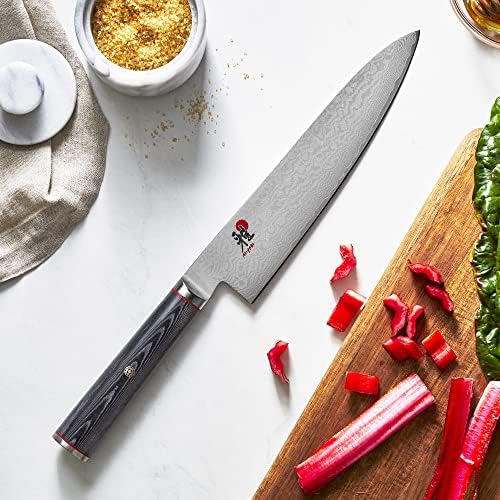
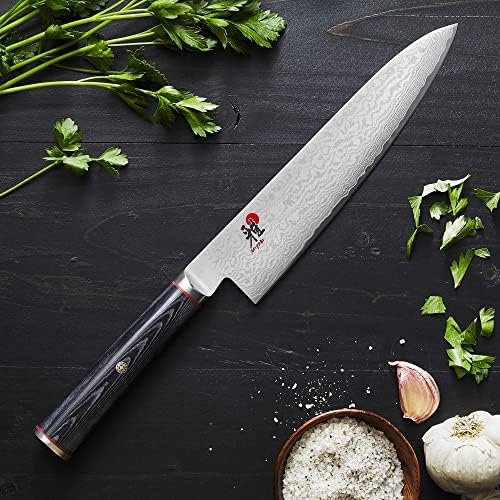
Miyabi is the Japanese arm of Zwilling J.A. Henckels, the German knife house. That sounds like a contradiction until you learn where the knives are actually made: in Seki, by Japanese craftspeople, using Japanese steel. Zwilling owns the badge; Japan does the work. In Japan the brand is seen as a bridge product, Western build discipline wrapped around a native blade.
The blade is a VG10 stainless core clad in 65 layers of flower-pattern Damascus, then ice-hardened through Zwilling’s CRYODUR process to roughly 60 on the Rockwell scale. What matters at the board is the honing. The edge is finished by hand to a fine angle of about 9.5 to 12 degrees per side, noticeably more acute than a typical European knife, which is why it parts a tomato skin with almost no pressure.
The handle is a D-shaped black Micarta, a resin-and-linen composite that shrugs off moisture, fitted with a red spacer plus a small mosaic pin. It is a touch heavier plus more substantial in the hand than the Shun, which some cooks prefer for control on big prep jobs.
The honest downside: that very acute edge is a little more delicate. Steer it clear of bones or frozen food, treat it to a hand-wash rather than the dishwasher plus it stays keen for a long time. On Amazon it holds a 4.8-star average across hundreds of reviews.
Who it suits: the cook who wants the most acute, most authentically thin Japanese edge here without paying the top price. In our testing it was the more surgical of the two on soft, ripe ingredients.
Shun Classic 8-inch Chef’s Knife (around $220)
Around $220 on Amazon · price varies
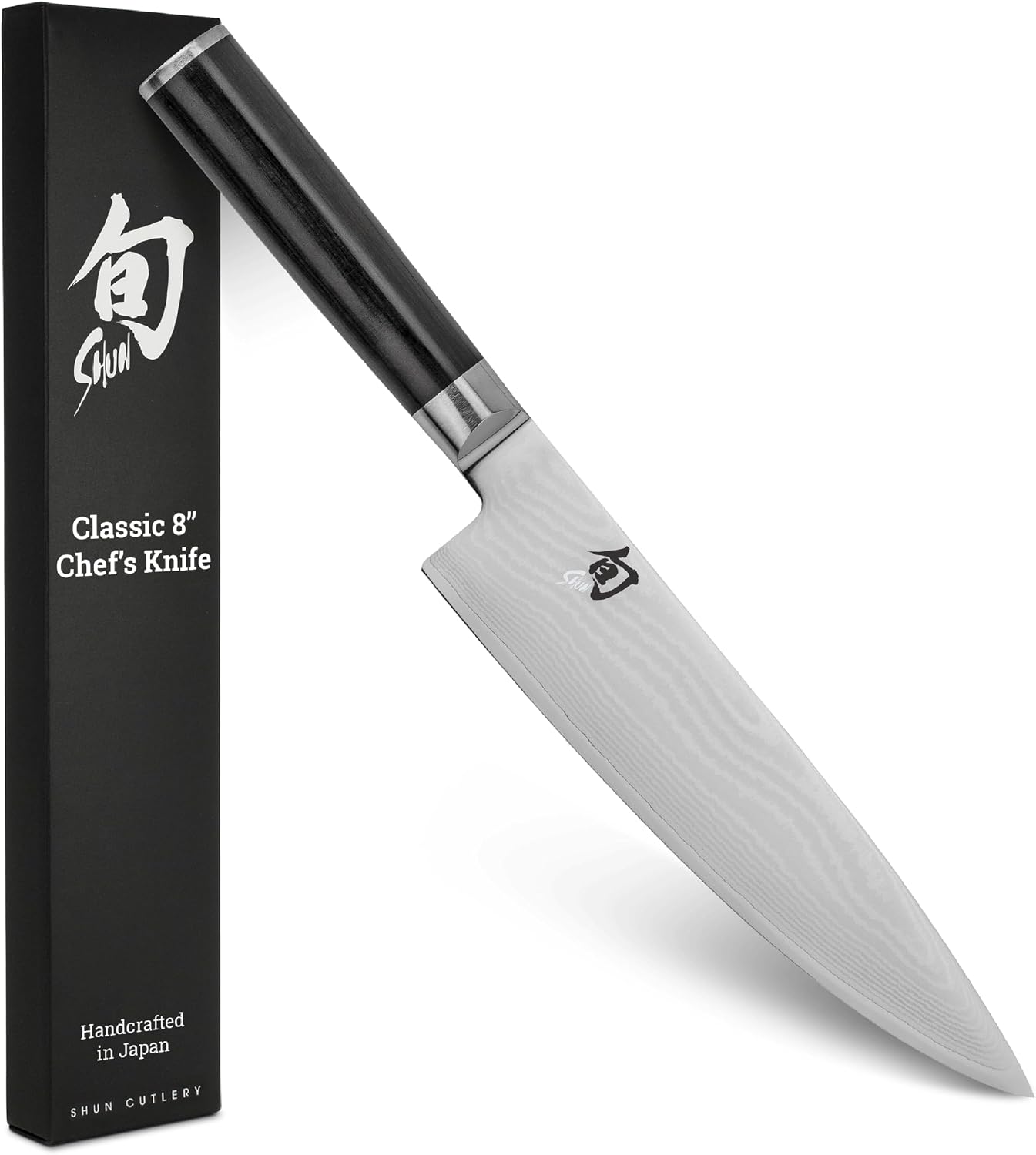
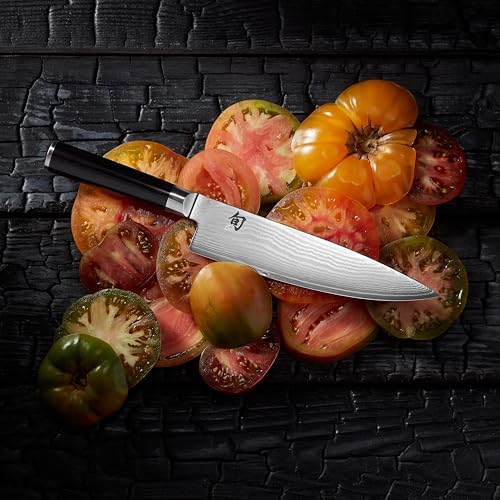
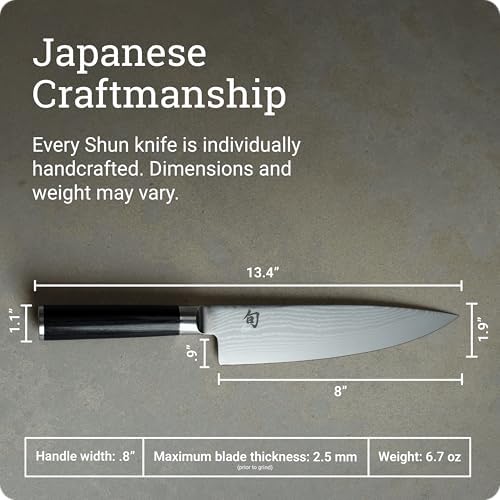
Shun is made by Kai Corporation, one of Seki’s largest native cutlery makers, with roots in the town’s blade trade going back generations. Where Miyabi carries a European parent, Shun is Japanese through and through. It is also the knife that put Japanese Damascus on the map for Western home cooks, thanks partly to years on cooking-show demo tables; as of 2025 it remains the Japanese chef’s knife most American cooks can name on sight.
The build is a VG-MAX cutting core, an upgraded steel richer in carbon plus chromium, wrapped in 68 layers of Damascus cladding at around 60 to 61 hardness. The edge is ground to 16 degrees per side, a fraction wider than the Miyabi, which trades a sliver of outright keenness for an edge that holds up better to everyday, less careful use.
In the hand it feels light plus quick at 6.7 ounces, with a slim 2.5 mm spine that tapers to almost nothing at the tip. The ebony-finish PakkaWood handle is a contoured D-shape sized for a Japanese pinch grip. It looks unmistakably premium, which is part of why it is the common wedding-registry pick.
The honest downside is simply the price: at around $220 it is the dearer knife for specs that, on paper, sit very close to the cheaper Miyabi. What you also buy is Kai’s Free Sharpening service for the life of the knife plus the deepest support network of any Japanese brand in the US.
Who it suits: the cook who wants the benchmark name, the lighter feel plus long-term service backing, then is happy to pay for the polish. It holds a 4.7-star Amazon average.
Miyabi vs Shun: side by side
| Miyabi Kaizen 8″ | Shun Classic 8″ | |
|---|---|---|
| Cutting core | VG10 stainless | VG-MAX stainless |
| Damascus cladding | 65 layers (flower pattern) | 68 layers |
| Hardness | ~60 HRC (CRYODUR ice-hardened) | ~60–61 HRC |
| Edge angle | ~9.5–12° per side | 16° per side |
| Handle | D-shaped black Micarta | D-shaped ebony PakkaWood |
| Feel in hand | Heavier, more substantial | Lighter (6.7 oz), nimble |
| Made in | Seki, Japan (Zwilling-owned) | Seki, Japan (Kai) |
| Sharpening support | Retailer / mail-in | Kai free sharpening for life |
| Amazon rating | 4.8 / 5 | 4.7 / 5 |
| Price (2026) | around $160 | around $220 |
Read the table one way plus the Miyabi looks like the steal: a more acute edge, a higher review score plus roughly $60 saved. Read it another way plus the Shun earns its keep on feel, name recognition plus lifetime service. Neither is a bad knife; they are aimed at slightly different buyers.
Because both are Seki-made Damascus over a high-grade stainless core, day-to-day cut quality is close enough that most cooks would struggle to tell them apart blindfolded. The real split is edge geometry versus everyday resilience, plus how much the badge plus the service package are worth to you.
Why “made in Seki” matters more than the badge
Seki has forged blades since the 13th century, when its water, clay plus charcoal made it Japan’s samurai-sword heartland. When swords fell out of demand, the town’s smiths turned to kitchen plus pocket cutlery. Today Seki produces the large share of Japan’s branded kitchen knives, Miyabi plus Shun among them.
That shared origin is the quiet headline of this comparison. A German-owned Miyabi plus a Japanese Kai-made Shun both draw on the same local pool of steel treatment, Damascus lamination plus hand-honing skill. The “which country” question dissolves; both knives are Japanese-made in the truest sense.
What differs is house philosophy. Miyabi leans into an ultra-acute, thin-behind-the-edge profile aimed at maximum sharpness. Shun aims for a slightly sturdier, more universally friendly edge plus a lighter body. Same town, two schools of thought.
Which is worth it for you
Buy the Miyabi Kaizen if sharpness plus value drive the decision. You get the more acute edge, the higher star rating plus a saving of roughly $60, at the cost of a marginally more delicate edge that rewards careful use.
Buy the Shun Classic if you want the household-name Japanese knife, a lighter nimble feel plus the reassurance of free lifetime sharpening. It is the safer gift, the easier knife to get serviced plus the one most cooks already trust on sight.
Either way you end up with a Seki-forged Damascus chef’s knife that will outlast a drawer full of supermarket blades. There is no wrong answer here, only which trade-off fits your hand plus your budget.
The bottom line
For most cooks weighing Miyabi versus Shun, the Miyabi Kaizen is the value winner: a sharper, more authentically Japanese edge for about $60 less. The Shun Classic remains the benchmark for a reason, lighter, better-supported plus instantly recognizable, so if those things matter to you the premium is fair. Both are built in the same 700-year-old knife town; you are really choosing a personality, not a quality tier.
Check Miyabi price on Amazon →
Frequently asked questions
Is Miyabi or Shun the better knife?
Neither is clearly better; they suit different cooks. The Miyabi Kaizen has a more acute edge of about 9.5 to 12 degrees plus costs around $60 less, so it wins on sharpness plus value. The Shun Classic is lighter, carries the more famous name plus includes free lifetime sharpening from Kai. Both are Damascus knives forged in Seki, Japan, so build quality is comparable.
Is Miyabi a Japanese or German brand?
Both, in a sense. Miyabi is owned by the German company Zwilling J.A. Henckels, but the knives are manufactured in Seki, Japan, by Japanese craftspeople using Japanese steel such as VG10. You are buying a Japanese-made blade under German ownership rather than a German-made knife.
Why is the Shun Classic more expensive than the Miyabi Kaizen?
The Shun’s roughly $220 price reflects its VG-MAX core, its status as the best-known Japanese knife brand in the US plus Kai’s free sharpening-for-life service. On paper the specs sit close to the cheaper Miyabi, so much of the premium is brand recognition plus long-term support rather than raw cutting performance.
What is the difference in edge angle between Miyabi and Shun?
The Miyabi Kaizen is honed to a very acute angle of roughly 9.5 to 12 degrees per side, making it extremely sharp on delicate produce. The Shun Classic is ground to 16 degrees per side, a slightly wider angle that gives up a little keenness for an edge that holds up better to everyday, less careful use.
Are Miyabi and Shun knives dishwasher safe?
No. Both are high-carbon Japanese Damascus knives that should be hand-washed then dried immediately. A dishwasher’s heat, detergent plus knocking around can dull or chip the fine edges plus damage the handles. Treat either knife as a hand-wash-only tool to protect the acute edge.
Can I use these knives to cut through bone?
No. Both the Kaizen plus the Classic are thin, acute-edged slicing knives built for vegetables, fish plus boneless meat. Cutting bone, frozen food or hard squash can chip the edge. Use a heavier cleaver or a dedicated bone knife for those jobs plus keep the Damascus blade for precision work.
Ready to choose? The Miyabi Kaizen is the sharper value pick; the Shun Classic is the lighter, better-supported benchmark. Either is a knife you keep for decades.