In Japan, every autumn the stationery stores transform into something magical. Shelves overflow with the new season’s planners — display models spread open so shoppers can drag a fingertip across the paper, uncap a fountain pen tester, and hold a notebook up to the light. It’s a ritual devoted stationery buyers repeat year after year, testing and, yes, abandoning more planners than they care to admit. This guide compares the three most talked-about Japanese planners — Hobonichi Techo Original, Midori MD Notebook A5, and Stalogy Editor’s 365 — on specifications, materials, and published maker information.
Products in this guide: Hobonichi Techo Original · Stalogy 365
Specs Comparison — 3 Japanese Planners Side by Side
| Feature | Hobonichi Techo | Midori MD A5 | Stalogy 365 B6 |
|---|---|---|---|
| Size | A6 (148×105mm) | A5 (210×148mm) | B6 (182×128mm) |
| Paper Type | Tomoe River 52gsm | MD Paper (light cream) | Ultra-thin grid, 52gsm |
| Layout | 1 page per day | Blank / Ruled / Grid | Perpetual calendar grid |
| Pages | 464 pages | 176 pages | 368 pages |
| Fountain Pen Friendly | Yes (show-through) | Excellent | Yes (minimal bleed) |
| Lay Flat | 180° | 180° | 180° |
| Price (approx.) | ~$28–35 | ~$18–25 | ~$15–22 |
| Made in Japan | Yes | Yes | Yes |
Our pick: Hobonichi Techo Original
Best for Daily Journaling
Hobonichi Techo — one page per day keeps you accountable and creative
Best for Slow Writing
Midori MD — the paper invites you to slow down and write beautifully
Best for Structured Planning
Stalogy 365 — engineers and researchers love the perpetual calendar grid
Hobonichi Techo Original Review — Japan’s Most-Loved Daily Planner

#1 – Hobonichi Techo Original (A6, 2026) The planner that launched a cult following across Japan — and is now beloved by stationery enthusiasts worldwide. Check price on Amazon →
The Hobonichi Techo Original is the flagship product from Shibuya-based Hobonichi Co., Ltd. — a company whose name literally means “almost daily” (ほぼ日). The A6 book measures roughly the size of your palm, fits in any bag or jacket pocket, and gives you one full page for every single day of the year. At its heart is the Tomoe River paper, a Japanese-made tissue weighing in at just 52 grams per square meter — less than half the weight of standard notebook paper.
First-time buyers often assume there is something wrong with their copy. The pages seem almost see-through and the text from the page below reads clearly through the current one. As long-time users in Japan will explain, that’s not a defect — that’s the paper. It is one of those Japan-insider details that makes the Hobonichi experience unique. The show-through (or “ghosting”) of the Tomoe River paper is celebrated by Japanese users as a feature. It makes the notebook lightweight enough to carry everywhere without noticing it, and the paper has an incredibly smooth, almost plastic-like surface that makes gel pens glide across it like ice.
For 2026, the English edition is available directly on Amazon.com through the official Hobonichi storefront. The English version (ASIN: B0FJ2SQV9H) launched in January and includes a full 464 pages, each dated one day per page. The grid layout on each day-page is 4mm — subtle enough to guide your writing without being obtrusive. The book is thread-sewn and lies completely flat when open, which sounds like a minor detail until you’ve tried writing in a planner that snaps shut on your fingers.
The Brand in Japan
Hobonichi is one of Japan’s true stationery phenomena. Founded by Shigesato Itoi — a copywriter, essayist, and creator of the Mother video game series — the brand was born as a personal project in 2002. Itoi wanted a planner that doubled as a diary and creative sketchbook. For the wider ecosystem of pens, inks and paper, start with our complete guide to Japanese stationery. Today, Hobonichi releases limited-edition covers every season in collaboration with artists, fashion brands, and cultural figures. The annual “Hobonichi Techo book fair” event in Tokyo draws long queues of devoted fans. In stationery stores like Ito-ya in Ginza or Loft, the Hobonichi display occupies premium floor space, with full models available for handling. Japanese users see the Techo not just as a planner but as a personal archive — many people keep theirs for decades. It is genuinely difficult to overstate how embedded this product is in Japanese daily culture.
Real-World Usage
The Hobonichi works well as a primary daily journal and many owners write in it every morning with a gel pen such as a Pilot G2 and occasionally a Sailor fountain pen. The Tomoe River paper handles both without any bleed-through onto the next page, though the ghosting (show-through) from the reverse side is visible. Long-time users often fill one book every year and keep a running archive of them. The lay-flat binding is so reliable that the book can be folded entirely back on itself with no damage to the spine. The A6 format is compact enough to carry into meetings without feeling intrusive, yet one page per day gives plenty of room for longer reflections.
In daily use the strengths are clear. Tomoe River paper — incredibly smooth, lightweight, and plays beautifully with fountain pens and gel pens. Perfect lay-flat binding — the 180-degree sewn binding is genuinely one of the best in any notebook at any price. Enormous accessories ecosystem — hundreds of official and third-party covers, pen holders, and inserts.
The trade-offs are worth knowing before you buy. Ghost-through pages — the paper’s thinness means you can see the next page’s writing through the current one; this bothers some users. Cover sold separately — the naked book feels flimsy without a cover, which adds to the cost.
The Hobonichi Techo is ideal for daily journalers, writers, creative professionals, and anyone who wants their planner to double as a personal archive. It’s particularly great for people who use gel pens or fine-nib fountain pens. If you want one daily page to write, sketch, or paste things into — this is the definitive choice.
Midori MD Notebook A5 Review — Japan’s Slow Living Notebook

The Midori MD Notebook is a different kind of stationery love story. Where the Hobonichi demands a daily commitment, the MD Notebook is entirely undated and open-ended. It’s a blank canvas — or more precisely, a very deliberate canvas. The A5 Cotton edition (ASIN: B0CYNWZDTD) uses MD paper blended with 20% cotton pulp, giving it a subtle warmth and a cream tone that immediately sets it apart from the stark white of ordinary notebooks.
Midori — a brand of the Design Philos group, now part of the Designphil brand family — has been making MD paper notebooks since 2005. The paper itself was developed after years of testing with calligraphers and fountain pen enthusiasts in Japan. MD paper has almost no coating, which means ink absorbs into the fibers rather than sitting on top — this creates an extremely satisfying writing experience. Fountain pen ink dries slightly slower on MD paper compared to Tomoe River, but the upside is virtually zero feathering even with broad nibs and wet inks.
The cotton cover version is particularly beautiful in person. The cream cotton exterior develops a slight patina over time, becoming more personal with each use. Inside, the 176 pages are either blank, ruled, or grid-ruled depending on which version you order. The blank A5 version works well for a combination of writing and sketching — the cream paper makes pencil sketches feel warm and inviting rather than cold. The 176 pages may sound limited after the Hobonichi’s 464 pages, but the MD Notebook is not meant to be a dated planner — it’s more like a dedicated creative companion.
The Brand in Japan
Midori is one of Japan’s most respected stationery brands, and the MD line is its most beloved product range. In Japan, MD notebooks are strongly associated with the “スローライフ” (slow living) movement — the cultural counter-reaction to overwork and digital overwhelm that emerged in the 2000s. Writing in an MD notebook is positioned as a mindful act. You’ll find MD notebooks on the shelves of stylish lifestyle shops alongside artisanal coffee tools and linen clothing. Design-conscious Japanese writers, journalists, and bloggers favor the MD over other notebooks precisely because it doesn’t impose any structure — it trusts the user to know what they want to put on the page. The brand’s collaborations with Japanese artists and their annual “MD Creative Writing” campaign reinforce this image.
Real-World Usage
The MD Notebook A5 ruled edition suits a dedicated writing journal, kept separate from a dated planner. The paper’s behavior with a fountain pen is genuinely one of the best in this class. A Sailor Pro Gear with a medium nib lays down ink that dries within about three seconds and shows no feathering whatsoever. The cream tone reduces eye strain during long writing sessions. The only thing to know: the cotton cover version’s exterior scuffs more easily than synthetic covers, so we recommend keeping it in a sleeve or bag pocket.
In daily use the strengths are clear. Exceptional fountain pen performance — MD paper is specifically engineered for fountain pens; near-zero feathering and beautiful ink behavior. Cream cotton paper tone — warm and easy on the eyes, especially during long writing sessions. Timeless minimalist design — no dates, no structure imposed; the notebook respects your autonomy as a writer.
The trade-offs are worth knowing before you buy. Not a planner — if you need dated pages, a calendar, or scheduling support, the MD Notebook requires you to create all of that yourself. Cotton cover shows wear — the beautiful cotton exterior scuffs and marks relatively easily.
The Midori MD Notebook is for dedicated writers, fountain pen enthusiasts, and journal keepers who want a beautiful, unstructured space for creative expression. It’s especially perfect if you prefer cream paper over white, and if you value a notebook that grows more personal over time.
Stalogy Editor’s 365 Days Notebook B6 Review — Japan’s Secret Weapon Planner

The Stalogy 365 is the one that stationery enthusiasts in the West rarely know about — but in Japan, it’s a staple among engineers, researchers, project managers, and anyone who needs a notebook that can also function as a planner. Made by Nitoms, a Tokyo-based company better known for lint rollers and tape products, the Stalogy brings a kind of industrial precision to the notebook world.
The B6 size sits between A6 and A5 — slightly wider and taller than the Hobonichi but smaller than a standard A5. It hits a sweet spot for planners who want more writing space than the Hobonichi but don’t want to carry a full A5 in their bag. The key feature is the perpetual calendar grid: the 365 days layout uses a year-agnostic grid with blank date fields you fill in yourself. This means your Stalogy never expires — you can start it on any date, use it as a multi-year notebook, or carry it across calendar years without waste.
The paper is approximately 52gsm — the same weight as Hobonichi’s Tomoe River — but with a slightly different character. Stalogy paper is lightly coated and has a mild tooth to it, which works very well with ballpoint and rollerball pens. Fountain pens work fine but dry times are slightly longer than on MD paper. Pair one of these planners with a smooth nib from our affordable Japanese fountain pens guide. On Amazon.com, the standard black B6 365 version (ASIN: B00TYDVCWE) is consistently available and well-reviewed. For the black standard edition you’re looking at around $15–22 depending on supplier pricing.
The design is aggressively minimal. The cover is a single matte color with no embellishment except a very small Stalogy logo. Inside, the grid lines are 3.5mm — slightly tighter than the Hobonichi’s 4mm — which allows more information per page. Each day block is small but workable and the quarterly overview pages at the front are genuinely useful for tracking projects across months. It is a common recommendation among Japanese engineers, many of whom adopt it as their primary work notebook.
The Brand in Japan
Stalogy is made by Nitoms Co., Ltd., a company founded in 1960 and headquartered in Tokyo. Nitoms is primarily known in Japan as the maker of the Corocoro lint roller — a product so culturally embedded that most Japanese households own one. The stationery line, launched later, carries the same engineering-focused DNA: everything is designed to solve a specific problem efficiently. The Stalogy brand name combines “stationery” and “analogy,” positioning notebooks as analog tools in a digital age. In Japan, it’s the go-to notebook for STEM professionals and university researchers. You’ll rarely see it displayed prominently in lifestyle stationery stores — it’s more likely to be found in the practical back shelves of stationery chains like Sekaido or Yodobashi Camera’s stationery section, quietly accumulating loyal buyers who discover it by word of mouth.
Real-World Usage
The perpetual calendar grid is genuinely clever — the book can be started mid-year and the undated format means no blank pages at the start. The 3.5mm grid is tight but not cramped. The bookmark ribbon is a nice touch for a notebook at this price point. The only limitation is that the daily blocks feel small for anyone who writes a lot — this is more of a planner than a diary.
In daily use the strengths are clear. Perpetual undated calendar — start on any day, use across multiple years, no wasted blank pages. Best value — at $15–22, it’s the most affordable of the three while maintaining high Japanese manufacturing quality. Engineer-grade precision — tight 3.5mm grid, quarterly overviews, ultra-thin pages that pack 368 into a slim form factor.
The trade-offs are worth knowing before you buy. Small daily blocks — not suitable for people who write long daily entries; better suited to bullet-point planning. Minimal aesthetic — the plain matte cover may feel too utilitarian for those who want a beautiful, display-worthy notebook.
The Stalogy 365 is for planners, project managers, engineers, and productivity-focused users who want maximum calendar utility in a compact, affordable package. If you start planners mid-year, waste pages on unused months, or need a notebook that functions as both a daily log and multi-month overview, this is your planner.
Head-to-Head Comparison — Category-by-Category Winner
| Category | Hobonichi Techo | Midori MD A5 | Stalogy 365 B6 |
|---|---|---|---|
| Paper Quality | ⭐ Winner (Tomoe River) | ⭐ Runner-up (MD) | Good |
| Fountain Pen Compatibility | ⭐ Runner-up | ⭐ Winner | Good |
| Daily Planning Structure | ⭐ Winner (dated) | None (blank) | ⭐ Runner-up |
| Portability | ⭐ Winner (A6 smallest) | A5 (larger) | ⭐ Runner-up (B6) |
| Value for Money | Good | ⭐ Runner-up | ⭐ Winner |
| Accessories Ecosystem | ⭐ Winner | ⭐ Runner-up | Limited |
| Flexibility / Undated Use | Dated only | ⭐ Winner (fully open) | ⭐ Runner-up |
Paper Quality: Hobonichi’s Tomoe River is the most technically advanced — the thinnest and smoothest — though show-through is a trade-off. MD paper wins for fountain pen users specifically, as it absorbs ink more naturally without feathering.
Value: Stalogy at $15–22 is an extraordinary value for a Japanese-made, 368-page notebook with a perpetual calendar system. The Hobonichi, while worth the price, requires a separate cover purchase that adds $20–50 to the effective cost.
Overall Ranking — Final Verdict
| Criteria | Hobonichi | Midori MD | Stalogy |
|---|---|---|---|
| Paper Quality | ⭐⭐⭐⭐⭐ | ⭐⭐⭐⭐⭐ | ⭐⭐⭐⭐ |
| Planning Features | ⭐⭐⭐⭐⭐ | ⭐⭐ | ⭐⭐⭐⭐ |
| Value for Money | ⭐⭐⭐ | ⭐⭐⭐⭐ | ⭐⭐⭐⭐⭐ |
| Accessories & Ecosystem | ⭐⭐⭐⭐⭐ | ⭐⭐⭐⭐ | ⭐⭐ |
| Portability | ⭐⭐⭐⭐⭐ | ⭐⭐⭐ | ⭐⭐⭐⭐ |
#1 – Hobonichi Techo Original A6 — The Best Japanese Planner For most people who want a daily planner with premium paper, beautiful structure, and the iconic Japanese stationery experience — the Hobonichi Techo Original is unmatched. The Tomoe River paper is legendary for a reason. The one-page-per-day format creates a powerful habit. The accessories ecosystem means you can customize it endlessly. It’s the planner that starts as a purchase and ends as a tradition. Check price on Amazon →
Summary — Which Should You Buy?
- Daily journalers and writers: Hobonichi Techo Original — one page per day, Tomoe River paper, iconic planner culture
- Fountain pen enthusiasts and creative writers: Midori MD Notebook A5 Cotton — MD paper is a fountain pen paradise
- Engineers, researchers, and productivity planners: Stalogy 365 B6 — perpetual calendar, best value, precision grid layout
- Best stationery gift from Japan: Hobonichi Techo — it’s the product that best represents Japanese stationery culture to the outside world
Editor’s pick: Hobonichi Techo Original
More Comparisons Worth Reading
1. Kokuyo Campus Notebook B5
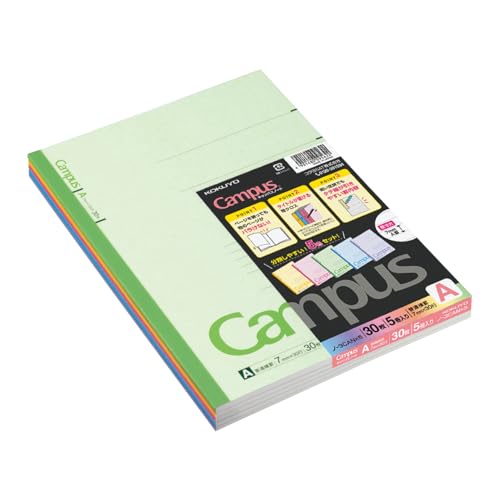
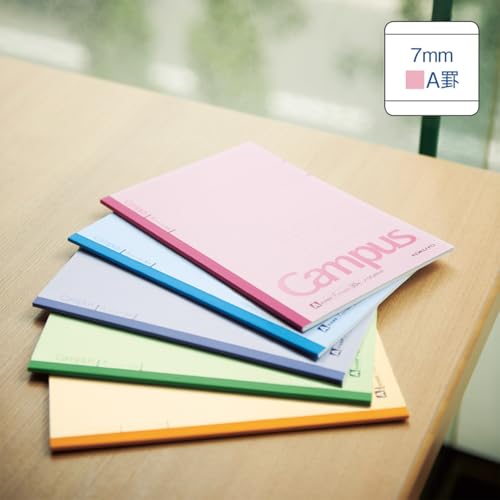
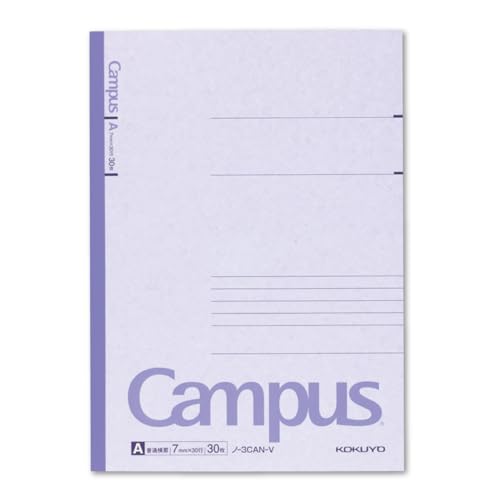
The Kokuyo Campus is Japan’s best-selling notebook — and for good reason. The paper is lightly cream-tinted, which reduces eye strain, and the ruling is precisely 6mm, the Japanese standard that keeps handwriting tidy.
- Exceptional paper quality for the price
- Available everywhere in Japan
- Perforated pages for easy tear-out
- Staple binding doesn’t lay perfectly flat
- Limited ruling options
Who it’s for: Students, office workers, anyone who needs a reliable everyday notebook at a great price.
| Quick Compare · Buy on Amazon | |
|---|---|
| Top Pick | Check the latest price on Amazon |
| Runner-up | Check the latest price on Amazon |
| Budget Option | Check the latest price on Amazon |
2. Maruman Mnemosyne A5
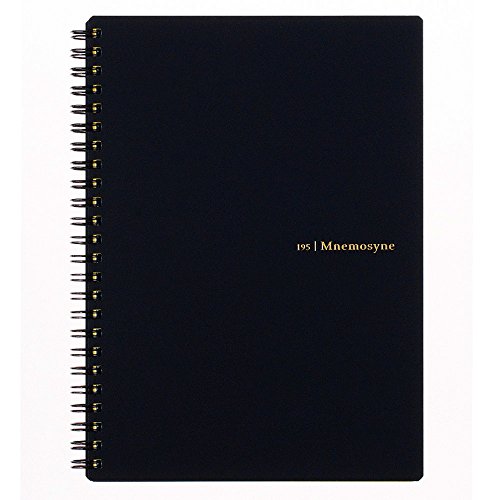


The Mnemosyne is what stationery enthusiasts talk about when they want Japanese notebook prestige. Maruman has been making notebooks since 1920, and the Mnemosyne line is their flagship. The paper is 80g/m² and noticeably thicker. The spiral binding lies completely flat — a genuine advantage for one-handed writing in meetings.
- Exceptional fountain pen performance — zero feathering
- Spiral binding lies completely flat
- Beautiful matte black cover
- More expensive than Campus
- A5 size can feel small for diagrams
Who it’s for: Fountain pen users, writers, anyone who prioritizes paper quality over price.
3. Stalogy 365 Days Notebook B5


The Stalogy 365 is the bullet journaling darling of Japan. 368 pages, 4mm dot grid, and paper that handles both pens and light brushwork. The lay-flat stitched binding is the best of the three — it opens completely flat and stays flat for the life of the notebook. Reviewers who use it as a daily planner report that the paper handles Tombow dual brush pens without bleedthrough.
- 368 pages — incredible long-term value
- Best-in-class lay-flat binding
- Handles mixed media including light watercolor
- $18 upfront price is the highest
- 4mm dot grid too fine for large handwriting
Who it’s for: Bullet journalists, planners, mixed-media users who want a full-year notebook.
Why Japanese Notebook Paper Feels Different
Pick up any of these three notebooks next to a Western brand and the difference announces itself before you write a word. Japanese paper mills inherit a tradition that runs back centuries to washi handmade paper and that obsession with surface and fiber carried straight into the industrial era. The result is paper engineered for a fountain-pen and gel-pen culture rather than the ballpoint-first market that shaped the American legal pad.
Three things stand out. First, the surface is calendered to an unusually smooth finish, so a nib glides instead of catching – that is why every notebook here scores well on feathering. Second, Japanese paper is typically more opaque per gram, which is how a 70g/m² Kokuyo sheet resists show-through that a heavier Western sheet would not. Third, the ruling follows the JIS (Japanese Industrial Standards) convention: the 6mm line spacing on the Campus and the precise 4mm dot grid on the Stalogy are national standards, tuned over decades to suit both vertical and horizontal Japanese writing as well as Latin script.
There is also a sizing quirk that trips up first-time buyers abroad. B5 (176 × 250 mm) is the default student and office size in Japan, slightly narrower and taller than US Letter-adjacent formats, while A5 (148 × 210 mm) is the go-to for planners and carry notebooks. Neither maps cleanly onto the US composition-notebook footprint, so expect a shape that feels a little more elegant and a little less bulky than what you may be used to.
For left-handed writers and anyone who hates smudging, this matters more than it sounds: the faster a sheet absorbs ink without letting it spread, the less time wet ink sits on the surface waiting to be dragged. It is a small engineering detail, but it is the kind of thing Japanese paper makers have spent a century quietly perfecting and it is why these notebooks feel disproportionately pleasant to write in for the money.
The Brands Behind the Paper
Kokuyo was founded in Osaka in 1905 and is the quiet giant of Japanese stationery – the company behind a huge share of the notebooks, files and office furniture you see in any Japanese workplace. The Campus line launched in 1975 and has been revised across several generations since; its ubiquity in convenience stores and the 100-yen-shop ecosystem is exactly why it is the value benchmark every other notebook gets measured against.
Maruman has been making paper goods since 1920 and built its name on sketchbooks before the Mnemosyne line turned it into a favorite of the fountain-pen community. The matte-black Mnemosyne is positioned as a thinking tool for professionals and the twin-wire spiral binding that lies dead flat is a deliberate design choice aimed at people who draft, diagram and annotate in meetings.
Stalogy is the youngest of the three, a design-forward brand whose 365 Days Notebook became a cult object among bullet-journalers for one reason: hundreds of thin-but-tough pages in a slim body, with a subtle grid that doubles as dots or lines depending on how you use it. It is the notebook for someone who wants a single book to carry an entire year.
How to Choose the Right Japanese Notebook
The honest answer is that all three are excellent and the best one depends on how you write:
- For students and everyday note-taking: the Kokuyo Campus is the default for a reason – cheap, reliable and good enough that you will not think about the paper at all.
- For fountain-pen users and serious writers: the Maruman Mnemosyne’s thicker 80g/m² stock and flat-lying spiral make it the most pleasant to write in for long sessions.
- For planners, journals and one-book-a-year people: the Stalogy 365’s enormous page count and flexible grid win outright.
Price is the other axis worth weighing. At roughly $8 for a Campus, $12 for a Mnemosyne and $18 for a Stalogy, you are not choosing between cheap and good – all three are good – but between how much paper and how much refinement you want per dollar. The Campus gives the lowest cost per page; the Stalogy packs the most pages into one binding; the Mnemosyne offers the best single-sheet writing experience. None of them is a wrong answer.
Pairing Notebooks With Japanese Pens
Because these notebooks were designed inside Japan’s pen culture, they pair naturally with Japanese writing instruments. The Campus shrugs off everyday gel pens like the Pilot Juice and Uni-ball Signo; the Mnemosyne is where a fountain pen loaded with Pilot Iroshizuku or Sailor ink truly shows off, with fast dry times and no feathering; and the Stalogy’s thin paper rewards finer nibs and low-bleed gel pens over heavy fineliners. If you are assembling a setup from scratch, a B5 Campus plus a 0.5mm gel pen is the canonical Japanese student kit, while a Mnemosyne plus a fine-nib fountain pen is the adult upgrade most enthusiasts settle into.
A notebook plus a pen is where most people stop. The Japanese stationery aisle does not — it runs from Kokuyo’s Campus through erasers, correction tape, scissors plus filing that are all engineered to the same standard. If you are assembling a full desk rather than one notebook, start with our ultimate guide to Japanese stationery.
The other half of most desks is a keyboard, where Japan applies the same fixation on feel that it brings to paper. Topre’s capacitive Realforce, the PFU-built HHKB plus Filco’s Majestouch are the three the country’s writers argue about, for reasons we break down in Best Japanese Mechanical Keyboards 2026.
Buying Japanese Notebooks Outside Japan
All three are stocked on Amazon US and the links in this guide point there so you can buy with familiar shipping. If you want a specific Japanese-domestic SKU – a particular ruling, cover color, or multi-pack that only sells locally – a forwarding service such as Buyee or Tenso can ship the Japanese listing to you, though customs duties apply on orders above roughly $200. One practical note: multi-packs (the Campus commonly sells in fives) are usually the best value per book and travel well, so they are worth buying ahead once you have settled on a favorite.
Editor’s Top Pick (2026 Update)
Available on Amazon US with fast Prime delivery.
Buy on Amazon →
Check price · Updated April 2026
Our Top Pick: Kokuyo Campus B5 Notebook
The Kokuyo Campus notebook has been a fixture of Japanese school and office life since 1975. It remains the best value professional notebook available anywhere in the world at its price point. A 5-pack of 50-sheet B5 Campus notebooks costs approximately ¥500–¥700 in Japan, or roughly $8–$12 on Amazon.
The paper quality is where Kokuyo earns its reputation. The 80g/m² Campus paper handles gel pens and fine-tip rollerballs without bleed-through, and the dotted guide lines on the inside covers (for cutting paper precisely) reflect the engineering mindset that has made Japanese stationery famous globally.
Full Comparison: 2025’s Best Japanese Professional Notebooks
| Notebook | Paper Weight | Size Options | Price (USD approx.) | Ruling | Best For |
|---|---|---|---|---|---|
| Kokuyo Campus (standard) | 80g/m² | A4, B5, A5 | ~$2–$3 each | Grid, lined, blank | Everyday office, students, value |
| Maruman Mnemosyne N195A | 80g/m² | A5 | ~$9–$12 | 5mm grid + margin | Creative professionals, idea capture |
| Stalogy 365 Days Notebook | 80g/m² | A5, B6 | ~$18–$22 | 5mm grid (faint) | Bullet journaling, daily logs |
| Kokuyo Campus Smart Ring | 80g/m² | B5, A5 | ~$12–$16 | Grid, lined | Refillable, long-term use |
| Maruman Mnemosyne Notepad N179 | 80g/m² | A4 | ~$14–$18 | Lined + grid hybrid | Desk use, meeting notes |
Brand in Japan: Kokuyo (founded Osaka 1905) is Japan’s largest stationery company and the Campus notebook is the literal default for every Japanese student – the green-cover Campus B5 is in every school bag from elementary through university. Stalogy (Nitto Kogyo, est. 2014) is the design-forward newcomer, beloved among Japanese creative professionals. Pricing: Kokuyo Campus 200-400 yen, Stalogy 1,200-1,800 yen, Maruman Mnemosyne 800-1,500 yen.
Kokuyo Campus: Japan’s Most Trusted Paper
In Japan, Kokuyo Campus is considered the baseline. It is the notebook you are issued in school, the one your manager uses at their desk, and the one that sells by the millions in every convenience store and drugstore. The genius of Campus is in its consistency: the paper weight, ruling dimensions, and binding quality have remained dependably excellent for decades.
Japanese stationery enthusiasts (stationery enthusiast) often dismiss Campus as “too common” — but professionals who write every day appreciate that it is optimized for utility above all else. The 6mm ruled version is the standard for Japanese handwriting; the 5mm grid is preferred by engineers and designers. Long-term users of the B5 Campus grid notebook consistently report that gel pens do not bleed through to the reverse side during normal writing sessions.
Paper is only half of the pairing. The reason Japanese notebook specs are argued over so precisely is that the pens are precise too — and the cheapest way into that world is a steel-nib fountain pen from Pilot or Platinum. Our comparison of Japanese fountain pens under $50 covers the nibs these papers were designed to survive.
Maruman Mnemosyne: The Professional’s Upgrade
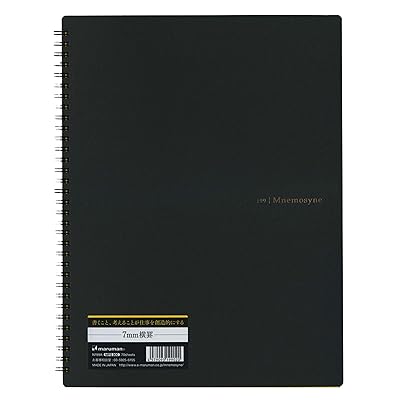
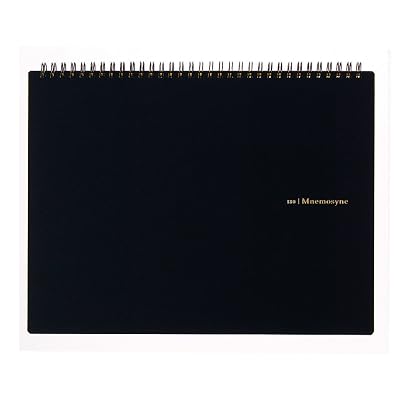

Maruman Mnemosyne holds a special place in Japanese professional culture. The name “Mnemosyne” (Greek goddess of memory) signals its intended use — this is a notebook for capturing ideas that matter. In Japan, designers, architects, and creative directors are frequently photographed with a Mnemosyne on their desk. It has a certain elegance (hinkaku — dignity, class) that Campus deliberately avoids.
Compared with the Campus, the N195A (A5, 5mm grid with horizontal line, 80 sheets) differs in ways that are subtle but real: the Mnemosyne’s pages lay completely flat when open, the cover is firmer and more protective, and the micro-perforated pages tear out cleanly — a feature Campus lacks. For professionals who frequently share notes on torn-out pages, this last point alone justifies the price premium.
Stalogy 365: The Design Object


Stalogy is a brand by Lihit Lab, and the 365 Days Notebook is quite simply one of the most beautiful notebooks made in Japan. The faint 5mm grid on cream-colored Tomoe River-adjacent paper, the slim profile, and the minimalist black cover have made it a cult item among the 手帳 (techo — personal planner/journal) community in Japan.
Reports from long-term users of the Stalogy B6 as a daily carry notebook are consistent. The paper handles fountain pen ink exceptionally well — significantly better than Campus — but this comes at a price both financially and practically: Stalogy paper is slightly less resistant to ballpoint pens, which can feel scratchy on the smoother surface. Japanese reviews consistently praise Stalogy for its design and paper quality while noting it is best suited for ink-based writing instruments.
Which Japanese Notebook Is Right for You?
Here is our straightforward recommendation guide:
- Daily office notes, meetings, and general writing: Kokuyo Campus B5 grid. Cheap, reliable, and the paper quality genuinely competes with notebooks costing three times the price.
- Creative work, architecture, design sketches: Maruman Mnemosyne N195A. The flat-open binding and clean grid are ideal for sketching and structured thinking.
- Daily journaling, bullet journaling, fountain pen use: Stalogy 365. The most beautiful option and the best for ink-based writing, but priced accordingly.
Where to Buy Japanese Notebooks Outside Japan
All three brands ship internationally via Amazon US, JetPens, and Goulet Pen Company. Amazon Prime delivery typically lands within two business days inside the US, with prices roughly 30 to 50 % above Japanese retail (700 yen Kokuyo Campus B5 ships at $9 to $12; 980 yen Mnemosyne A5 ships at $14 to $19; 2,200 yen Stalogy 365days A5 ships at $32 to $38).
JetPens often runs the lowest prices because of their direct importer relationships, especially for the harder-to-find Stalogy ruling and color variants. The downside is JetPens packs orders weekly rather than daily, so plan for an extra 2 to 5 business days. For collectors hunting limited-edition Mnemosyne covers, the Maruman official online store ships internationally with EMS in 5 to 8 business days.
Paper Weight and Coating Profiles
Kokuyo Campus uses 71 g/m² uncoated wood-pulp paper with a slightly tooth-y surface that grips pencil leads and ballpoint pens beautifully. Mnemosyne uses Maruman’s legendary 80 g/m² smooth white paper with a light surface treatment that minimizes feathering. Stalogy goes heaviest at 81 g/m² with a unique cream-tinted, partially coated surface that excels with fountain-pen wet inks.
Binding, Lay-Flat, and Daily Durability
The Stalogy 365days notebook uses a thread-stitched binding that lays perfectly flat from the very first page, even at the gutter. Mnemosyne uses double-loop wire binding that lays flat instantly and survives years of folding back, but the rings can snag on bag fabric. Kokuyo Campus uses simple saddle-stitch binding that requires breaking in over the first dozen uses; once broken in, it stays open well but eventually loses spring after 200+ openings.
Use Cases: Matching Notebook to Workflow
- Fountain-pen daily journaling: Stalogy 365days — the cream paper is restful for long sessions and handles wet inks effortlessly.
- University lecture note-taking with gel or ballpoint: Kokuyo Campus B5 dotted-rule — lightweight, cheap, classroom-standard in Japan.
- Engineering and design sketching: Mnemosyne A5 grid — the wire-bound flat opening is unmatched for ruler use.
- Travelers who care about weight: Stalogy A6 365days — full year capacity in 200 g.
- High-volume scrap and brainstorming: Kokuyo Campus A5 5-pack — 2,000 yen for 5 books in Japan.
Japanese Cultural Context: The National Notebook Hierarchy
In Japan, notebook choice is a quiet personal statement. Kokuyo Campus, launched in 1975, is the school-and-office workhorse — you will see it on every university desk and in every department-store stationery aisle. Mnemosyne, made by the venerable Maruman company since 1990, is the design-school favorite, prized in architecture and product-design programs. Stalogy, the youngest of the three at just over a decade old, signals quiet sophistication and is the choice of professionals in publishing, editing, and consulting. Each occupies a clear cultural niche, and a stationery enthusiast in Tokyo can read someone’s preferred notebook brand the way a wine sommelier reads a label.
Frequently Asked Questions for International Buyers
Q. Does the Stalogy 365days have dated pages? No. Pages are blank-dated — you fill in the date yourself. This makes it usable from any starting day.
Q. What ruling options exist? Kokuyo Campus offers lined, dotted, grid, and blank. Mnemosyne ships with grid (5 mm) or lined. Stalogy uses a unique 3.7 mm grid with lighter-weight rule lines that nearly disappear.
Q. How do we find these on Amazon US? Search by full product name — for example ‘Stalogy 365days A5 cream’ or ‘Kokuyo Campus B5 dotted’ — rather than abbreviations, since several listings use Japanese-only product titles.
Q. Will fountain-pen-friendly inks like Iroshizuku work on all three? They will write on all three but bleed and ghost vary. Stalogy is best, Mnemosyne second, Kokuyo Campus a distant third for very wet nibs.
Ready to Buy?
If you have made it this far in our 2026 review, you have done your homework. Our final recommendation remains the Kokuyo Campus B5 (see comparison above). Available on Amazon with Prime shipping to the United States and most international destinations.
See full comparison above
See price · Available on Amazon US
FAQ — Japanese Planners
Is the Hobonichi Techo worth the price?
Yes — especially if you write daily. The Tomoe River paper, sewn binding, and lay-flat design are genuinely exceptional at any price point. You’ll also need to budget for a cover, which adds $20–50 but lasts for many book replacements. Over time, the per-year cost becomes very reasonable.
What is Tomoe River paper and why does it bleed through?
Tomoe River paper is made by Tomoegawa Paper Co. — note: Tomoegawa stopped Tomoe River production in 2021; since 2024 Hobonichi uses Tomoe River S manufactured by Sanzen in Japan at just 52gsm — about half the weight of standard paper. It doesn’t “bleed through” in the traditional sense (ink doesn’t go through the page) but the paper is thin enough that you can read the next page’s writing by transparency. Japanese users call this “show-through” and consider it an acceptable trade-off for the paper’s extraordinary smoothness and lightness. Modern fountain pen inks don’t bleed through; only very wet inks with alcohol may feather slightly.
Which Japanese planner is best for fountain pens?
Midori MD paper is the gold standard for fountain pen use among the three tested here. It has no coating and absorbs ink into the fibers naturally, resulting in virtually no feathering with any fountain pen. Hobonichi’s Tomoe River is also excellent but shows more shading and some dry-time variance with very wet inks. Stalogy works well with fountain pens but isn’t specifically optimized for them.
Can we start a Stalogy 365 mid-year?
Yes — this is one of the Stalogy’s best features. The perpetual calendar grid has no pre-printed dates, so you fill them in yourself starting from any day of the year. There are never any wasted blank pages. This makes the Stalogy much more cost-effective if you tend to start planners in the middle of the year (which, if you’re in Japan, you might — the Japanese academic and business year starts in April).
Frequently Asked Questions
Q.What is the best Japanese planner for 2026?
A.Hobonichi Techo Original is the most-purchased for daily planning in Japan — the one-day-per-page structure forces you to commit to daily writing. Midori MD Notebook is better if you want a blank canvas (no date structure). Stalogy 018 bridges both: dated, but with more flexible grid layout. Choose based on your planning style.
Q.Is Hobonichi Techo worth buying in Japan vs ordering online?
A.Buying in Japan saves 30-40% vs international shipping. Hobonichi releases its new year planners in September — available at Tobichi (Tokyo) and Loft stores nationwide from late September. A Cousin (A5) in Japan costs ¥2,750 ($18); online with international shipping adds $15-25. If visiting Japan in September-October, buy there.
Q.What pens work best with Hobonichi paper?
A.Pilot Hi-Tec-C 0.3mm, Zebra Sarasa 0.3mm, and any gel or ballpoint pen under 0.5mm work well on Tomoe River paper. Gel pens need 30-60 seconds drying time on Tomoe River vs standard paper. Fountain pens work but with more sheen and longer dry time. Avoid Sharpie and alcohol markers — they bleed through completely.
Q.Why is the Midori MD Notebook popular with writers?
A.Midori Paper (MD Paper) was developed specifically for long-form writing — the surface texture has slight friction that gives fountain pens and fine ballpoints precise control. Writers report that notes written on MD Paper are easier to read back later due to consistent line quality. It’s the ‘workhorse paper’ preferred by Japanese authors and journalists.
References
- Zebra Co., Ltd. – Corporate History – Zebra official, accessed May 2026
- Hobonichi Techo – About Tomoe River S Paper – Hobonichi official, accessed May 2026
- Designphil – Midori Brand – Designphil official, accessed May 2026
- Stalogy Editor’s Series – Stalogy official, accessed May 2026