This article contains affiliate links (we may earn a commission).
In Japan, one thing that surprises most visitors to a Japanese hardware store (home improvement store) is the whetstone aisle. It’s not tucked in some corner — it takes up a full section, right next to the kitchen knives. In Japan, sharpening your own knives is simply part of owning them. The idea that a knife stays sharp forever without maintenance is something most Japanese home cooks would find strange, even a little naive.
When one of our editors first moved to Japan and started cooking Japanese food seriously, a neighbor — a retired chef — was asked which stone to buy. Without hesitating, he pointed to King. “Start with King,” he said. “Everyone starts with King.” Years later, after far too much money spent on stones from specialty shops in Osaka’s Namba district, we understand exactly what he meant. But we’ve also learned when it’s time to graduate beyond King.
In this guide we’re breaking down the three most common recommendations you’ll see in Japan: the King KW-65 (the ubiquitous beginner combo stone), the Naniwa Chosera 1000 (the professional’s workhorse), and the Shapton Ha No Kuromaku #1000 (the serious home cook’s choice). All three are available on Amazon.com and ship internationally.
More Comparisons Worth Reading
TL;DR
| Brand | Best For | First Stone Recommendation |
|---|---|---|
| King | Budget beginners | King KW-65 1000 grit ($35) |
| Shapton | Mid-range serious users | Shapton Glass HR 1000 grit ($60) |
| Naniwa | Premium quality seekers | Naniwa Chosera 1000 grit ($95) |
For first whetstone: Shapton Glass HR 1000 grit ($60) — best balance of speed, ease, and durability.
Why You Need a Whetstone (Not a Honing Rod)
Honing rods (like a butcher’s steel) only align the edge. They don’t actually sharpen. After 2-4 weeks of daily use, a knife edge develops microscopic deformations that no honing rod can fix. A whetstone removes a tiny layer of steel to restore the edge. Hard carbon honyaki blades reward good stones — our honyaki knives explained covers the brands.
For Japanese knives specifically:
– 15° edge angles require whetstone precision (rods can’t replicate)
– Hard steel (HRC 60+) rejects pull-through sharpeners
– Single-bevel knives can only be sharpened on whetstones
Skip the rod, buy a stone.
Whetstone Basics
Grit numbers explained
- 200-500 grit: Coarse. Repairs damaged edges. Beginners rarely need.
- 800-1200 grit: Medium. Your first whetstone. Restores everyday dullness.
- 2000-4000 grit: Fine. Polishes edges. Buy after 6 months of basics.
- 5000-8000 grit: Super-fine. Mirror polishing. For enthusiasts only.
For your first whetstone: 1000 grit. It’s the universal “everyday sharpening” stone.
Stone types
- Splash-and-go (or “shaped” stones): Use water briefly before sharpening
- Soaking stones: Submerge in water for 5-15 minutes before use
- Ceramic vs natural: Modern stones are mostly ceramic (Shapton, Naniwa). Old-school King is more traditional clay.
Brand 1: Shapton
Overview
Founded in 1980, Shapton is Japan’s most popular premium whetstone brand. They pioneered modern ceramic whetstones with splash-and-go convenience.
Two product lines
Shapton Glass HR (Glass-backed stones)
– Hard glass backing, ceramic surface
– Splash-and-go (30 seconds of water spray)
– Fast cutting action
– Range: 320, 500, 1000, 2000, 3000, 4000, 6000, 8000, 16000 grit
– Price: $50-150 per stone
Shapton Kuromaku (Professional/Pro Stones)
– Plastic case with cleanable design
– Splash-and-go
– Slightly less hard than Glass HR
– Better for slightly softer knives
– Price: $40-130 per stone
Why Shapton works for most beginners
✅ Splash-and-go: No 15-minute soak required
✅ Fast cutting: Sharpens harder steel quickly
✅ Long-lasting: Glass HR lasts thousands of sharpenings
✅ Wide grit range: Build a progression with one brand
✅ Easy to maintain: Resistant to dish-out (uneven wear)
Recommended Shapton starter
Shapton Glass HR 1000 grit — ~$60
For most US home cooks: this is the single best first whetstone purchase. Single-bevel blades like the yanagiba need careful sharpening — see our yanagiba length guide.
When to add more Shapton stones
- After 6 months: Add Shapton Glass HR 4000 ($75)
- After 1 year: Add Shapton Glass HR 500 ($65) for edge repair
Brand 2: Naniwa
Overview
Naniwa makes Japan’s most varied whetstone range, from $20 budget stones to $400 super-premium ones.
Key product lines
Naniwa Chosera (Top-Tier Pro Stone)
– Premium ceramic, splash-and-go
– Fastest cutting action of any whetstone
– Magnesia binder (specific to Chosera)
– Excellent for hard steel
– Range: 400, 800, 1000, 2000, 3000, 5000, 10000 grit
– Price: $90-200 per stone
Naniwa Super Stone (Mid-Tier)
– Soaking stone (3-5 minutes)
– Balanced performance
– Range: 800, 1000, 2000, 3000, 5000, 8000 grit
– Price: $50-120 per stone
Naniwa Akamonzen / Aoto (Traditional)
– Old-style clay-based
– Soaking (15+ minutes)
– For traditionalists
– Price: $30-80 per stone
Why Naniwa works for serious sharpeners
✅ Chosera = fastest sharpening: Better than Shapton for hard steel
✅ Wide range: Stones for every budget
✅ Premium feel: Chosera is a flagship product
Why Naniwa is harder for beginners
❌ Price: Chosera 1000 ($95) vs Shapton Glass HR 1000 ($60)
❌ Complexity: Range can be confusing
❌ Some soaking required: Super Stone line isn’t splash-and-go
Recommended Naniwa starter
Naniwa Chosera 1000 grit — ~$95
Best if budget allows and you want the fastest sharpening experience.
Brand 3: King
Overview
King is the traditionalist’s whetstone—the brand Japanese sharpening masters often start with. Less ceramic, more clay-based, slower cutting but rewarding to use.
Key product lines
King KW-65 Combination Stone (1000/6000 grit)
– Two stones in one
– Soaking required (15-20 minutes)
– Classic Japanese clay composition
– Budget-friendly
– Price: $35-50
King Deluxe 1000 grit (single)
– Standard 1000-grit soaking stone
– Old-school Japanese style
– Price: $30-45
King Hyper 1000 grit (Ceramic Upgrade)
– Modern ceramic version
– Faster cutting
– Splash-and-go
– Price: $70-100
Why King appeals to traditionalists
✅ Lowest entry price: Get started for under $40
✅ Classic Japanese feel: Authentic experience
✅ Educational: Slow cutting teaches technique
✅ Two-in-one combination: Coarse + fine in one stone
Why King is challenging
❌ Soaking required: 15-minute wait
❌ Slow cutting: Takes longer per sharpening session
❌ Dish out faster: Needs flattening more often
❌ Lower durability: Wears faster than Shapton/Naniwa
Recommended King starter
King KW-65 Combination Stone — ~$40
Best for: True budget shoppers, traditionalists, those who enjoy the slower process.
Direct Comparison: 1000 Grit Stones
| Aspect | Shapton Glass HR 1000 | Naniwa Chosera 1000 | King KW-65 (Combo) |
|---|---|---|---|
| Price | $60 | $95 | $40 |
| Type | Splash-and-go | Splash-and-go | Soaking |
| Cutting speed | Fast | Fastest | Slow |
| Durability | Excellent | Excellent | Moderate |
| Beginner-friendly | 5/5 | 4/5 | 3/5 |
| Hard steel compatibility | Excellent | Excellent | Good |
| Soft steel compatibility | Good | Good | Excellent |
| Storage | Easy | Easy | Easy |
| Time investment per session | 15-20 min | 12-15 min | 25-30 min |
| Lifetime sessions (estimate) | 1500+ | 1500+ | 800+ |
Cost per session
Over 1500 sessions:
– Shapton: $60 / 1500 = $0.04 per session
– Naniwa: $95 / 1500 = $0.06 per session
– King: $40 / 800 = $0.05 per session
Despite King’s low entry price, durability brings cost-per-session close to others.
Recommended Whetstone Setup by Tier
Beginner ($60-80 total)
- Shapton Glass HR 1000 ($60)
- DMT Diamond Stone (for flattening) ($20)
Enthusiast ($150-250 total)
- Shapton Glass HR 1000 ($60)
- Shapton Glass HR 4000 ($75)
- DMT or Naniwa flattening stone ($30)
- Leather strop ($25)
Premium ($400-600 total)
- Naniwa Chosera 800 ($95)
- Naniwa Chosera 2000 ($125)
- Naniwa Chosera 5000 ($150)
- Stone holder ($50)
- Flattening stone ($60)
Specialist (for single-bevel/honyaki sharpening)
- All of the above
-
- Suehiro fine grit stones (8000-16000)
-
- Natural Japanese stones (advanced)
Accessories You Need
Stone holder ($15-50)
Prevents the stone from sliding. Essential—don’t sharpen without one.
Which holder you use is not a trivial choice either. Naniwa’s rubber base, Shapton’s angle-guide clip, King’s all-in-one beginner kit each suit a different stone size plus a different level of experience — a base that lets the stone rock will undo an otherwise excellent stone. We compared them in our guide to Japanese whetstone holders and angle guides.
Flattening stone ($20-60)
All whetstones develop “dishes” (uneven wear). Flatten the stone every 5-10 sharpening sessions.
– Atoma 140 or 400 diamond flattening plate ($60)
– DMT XX-Coarse Diamond Stone ($45)
Leather strop (optional)
For final edge polishing after high-grit stones. $20-40.
Angle guide (controversial)
Some beginners use plastic angle guides ($15). Most Japanese sharpeners recommend learning by feel instead.
Common Beginner Mistakes
Mistake 1: Buying too coarse a first stone
A 400-grit stone is for repairing dull/damaged blades, not maintenance. Start with 1000 grit.
Mistake 2: Skipping the flattening stone
Within 3-5 sessions, your whetstone will develop a “dish” (concave wear). Without flattening, you’ll sharpen the dished area into the knife edge.
Mistake 3: Pressing too hard
Whetstones cut by abrasive action, not pressure. Light, consistent strokes work better than pressing hard.
Control over force is a through-line in Japanese tool design, not a quirk of sharpening. It shows up in the workshop too, where Makita — an Aichi company that has been building electric motors since 1915 — earned its reputation on measured torque rather than brute power. We weigh that approach against Bosch and DeWalt in Makita vs Bosch vs DeWalt.
Mistake 4: Wrong angle
Japanese knives use 15-20° per side, not 20-25° (Western). If you sharpen at the wrong angle, you’ll widen the edge and ruin geometry.
Mistake 5: Using a soaking stone without soaking
King and other soaking stones need 5-15 minutes of submersion. Dry stones won’t sharpen properly.
Brand Choice by Knife Type
| Knife Tier | Best Whetstone Choice |
|---|---|
| Entry knife ($60-100) | King KW-65 ($40) |
| Mid knife ($100-250) | Shapton Glass HR 1000 ($60) |
| Premium knife ($300-500) | Naniwa Chosera 800 + 3000 ($220) |
| Top knife ($500+) | Full Naniwa Chosera progression ($400+) |
| Single-bevel (Yanagiba, Deba) | Naniwa or specialty natural stones |
Conclusion
For 90% of US Japanese knife owners: Buy the Shapton Glass HR 1000 grit ($60).
Reasons:
– Splash-and-go convenience
– Fast cutting for hard Japanese steel
– Durable (1500+ sessions)
– Widely recommended in Japanese sharpening forums
– Good for beginners and experts
Add a flattening stone, find a good angle guide on YouTube, and you’re set for 5+ years of sharpening.
Frequently Asked Questions
Will this product ship internationally from Amazon Japan?
Most of the Japanese-brand items featured here are also stocked on Amazon US on amazon.com, and the links above point to that storefront so international readers can buy with familiar shipping options. If you specifically want the Japanese-domestic SKU, and you are based outside Japan, Amazon Global Shipping or a forwarder like Tenso/Buyee can handle the import – just be aware of customs duties on items above roughly $200.
Are these the actual products Japanese consumers buy?
Yes. Selection prioritises models that are actually stocked in Japanese retail – Bic Camera, Yodobashi, Don Quijote, Loft and konbini chains – not just what ranks on Amazon US. Where a brand sells different model numbers in Japan vs. the US, we note that explicitly so you can pick the right SKU.
Can we trust the price information Here?
Prices on Amazon move daily, and the dollar-yen exchange rate adds another layer of variation. Treat the figures here as a snapshot at the time of writing – always click through and check the current Amazon listing for the live price before buying.
What if we want a Japanese-domestic version that is not listed?
Drop us a note via the contact form on vs-navi.online. If the model can be sourced and verified, we will consider writing it up.
Best First Stone: King KW-65. Best for Serious Home Cooks: Shapton Ha No Kuromaku #1000. Best Professional/Pro-Grade: Naniwa Chosera 1000.
King KW-65: The Honda Civic of Japanese Whetstones
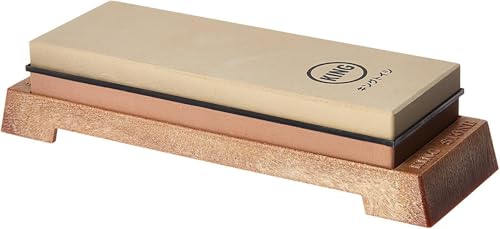
If you walk into any Japanese cooking class, you will almost certainly be handed a King KW-65. It is the stone that knife sharpening instructors reach for when teaching absolute beginners, not because it’s the best stone in the world, but because it is the most forgiving and best-value introduction to the craft.
The KW-65 is a double-sided combination stone: 1000 grit on one side for sharpening, 6000 grit on the other side for finishing and polishing. For most home cooks — including most Japanese home cooks — this single stone covers everything they will ever need.
The King Brand in Japan
King is made by Matsunaga Co., Ltd., which has been producing water stones in Japan since 1952. In Japan, “King” is not just a brand name — it’s practically a generic term for beginner whetstones, the way “Xerox” became synonymous with photocopying. Visit any Tokyu Hands, Loft, or Cainz Home hardware store and you’ll see the King displayed at eye level, often with a demonstration setup nearby. The KW-65 retails for around ¥3,000–4,000 in Japan, which is roughly what a decent box of tofu costs at a supermarket. It is considered an everyday household item.
Japanese knife sharpening instructors we’ve spoken with say they use it specifically because students can feel the stone working — it cuts slower than ceramic stones, which actually helps beginners learn technique without removing too much metal too fast. The 6000 grit side produces a bright, polished edge that genuinely impresses first-timers.
Performance
The King KW-65 is an aluminum oxide (alundum) stone that requires soaking in water for about 5 minutes before use. It cuts at a moderate speed — not the fastest, not the slowest. The feedback is soft and slightly muddy (it generates a lot of slurry), which many sharpeners actually like because the slurry helps polish as well as abrade.
The 1000 grit side will restore a dull knife to serviceable sharpness. The 6000 grit side is soft enough to refine the edge and provide a mirror-like finish if you take your time. For Japanese knives (gyuto, santoku, nakiri), the 6000 side alone can keep an already-sharp knife tuned for weeks of daily cooking.
One practical note: the King soaks up water and can wear down faster than denser ceramic stones. You’ll need to flatten it periodically — a diamond lapping plate or a Nagura flattening stone works well. This is normal and expected; every Japanese sharpening instructor will tell you stone flattening is part of the practice.
King KW-65 1000/6000 Combination Whetstone with Plastic Base
Naniwa Chosera 1000: The Itamae’s Choice from Osaka
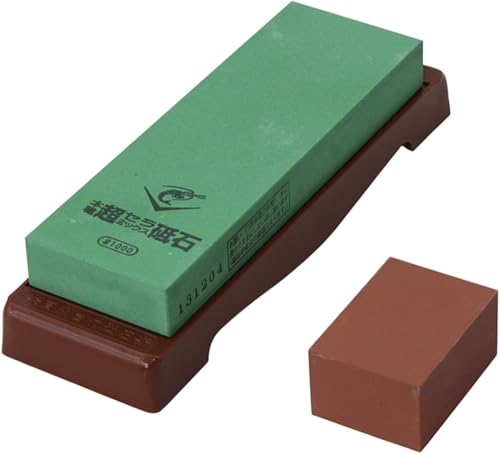
Naniwa Abrasive Manufacturing is based in Osaka, and among professional Japanese chefs — the itamae who work at sushi counters, kappo restaurants, and traditional washoku establishments — Naniwa is a name that carries real weight. The Chosera (also marketed outside Japan as the Professional series) is what you’ll find in the knife roll of a serious chef.
What sets the Chosera apart is its splash-and-go design. Unlike the King, you don’t need to soak it for 5 minutes. A few drops of water on the surface and you’re ready to sharpen. For a busy chef who sharpens between service, this is not a luxury — it’s a practical requirement.
The Naniwa Brand in Japan
Naniwa has been producing abrasives since 1938. In Japan’s professional kitchen world, the Chosera is the reference point for what a 1000 grit stone should feel like. It’s used in culinary schools as the standard teaching stone for professional students. The ceramic bond is harder than standard aluminum oxide, which means the stone wears slowly and stays flat longer — important when you’re sharpening multiple knives a day.
“Naniwa or Shapton” is a conversation that happens in every Japanese knife forum and sharpening community. Professional chefs tend to prefer Naniwa because of its feedback and the way it telegraphs exactly what your blade angle is doing. Enthusiasts are more evenly split.
Performance
The Chosera 1000 cuts noticeably faster than the King — you can feel the ceramic abrasive engaging the steel immediately. The feedback is firmer, which experienced sharpeners find informative. It generates less slurry than the King, which keeps the surface cleaner and makes angle consistency easier to maintain.
Because it’s a harder stone, the Chosera also stays flat longer. If you have a collection of knives you sharpen regularly, this matters a lot — a dished stone creates a convex bevel, which defeats the purpose of sharpening. The Chosera typically comes with a plastic base that doubles as a stand, which is a practical detail that Japanese manufacturers get right.
The trade-off is price. The Chosera costs significantly more than the King — often 3 to 4 times as much. For a home cook who sharpens once a month, the King is a better value. For someone who sharpens weekly, or who owns serious knives (a handmade gyuto from a Sakai blacksmith, for example), the Chosera is worth every yen.
Naniwa Chosera 1000 Grit Super Ceramic Water Stone with Base
Shapton Ha No Kuromaku #1000: Industrial Precision for the Home Kitchen

Shapton has an unusual origin story for a kitchen whetstone brand. The company started by making precision abrasive stones for Japanese industrial and optical applications — the kind of grinding and lapping work done in lens manufacturing and semiconductor production. When Shapton entered the kitchen knife market, they brought that industrial precision with them.
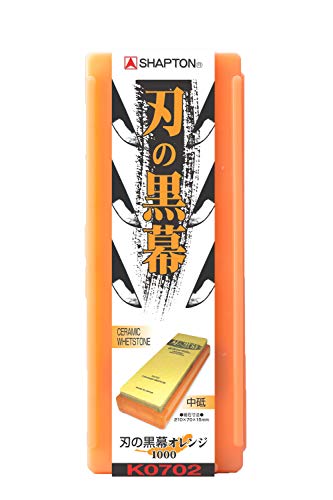
The Ha No Kuromaku (blade dark幕, literally “blade’s black curtain”) is Shapton’s flagship home kitchen series. The #1000 comes in an orange-colored stone housed in a plastic case that doubles as a base — a characteristically practical Japanese design choice. Each grit in the Kuromaku series is color-coded, which makes it easy to grab the right stone quickly.
Shapton in Japan
In Japanese knife enthusiast communities — the kind of people who discuss steel hardness on 2channel knife forums and make day trips to Sakai (Japan’s knife-making capital) — Shapton is associated with serious technical sharpening. The ceramic abrasive used in Shapton stones cuts faster than traditional aluminum oxide, and the stones are unusually hard and dense. They wear very slowly and stay flat for a long time.
The typical progression Japanese serious home cooks describe in these communities: start with King KW-65 → upgrade to Shapton Kuromaku as a single-stone setup → eventually add Shapton #220 for repair and #3000 or #5000 for finishing. The Kuromaku has become the default recommendation when someone asks “what stone should I upgrade to from King?”
One important practical note: like the Naniwa Chosera, the Shapton Kuromaku is a splash-and-go stone. No soaking required. In Japan, where kitchen counter space is often limited and people sharpen quickly before cooking, this is a real convenience feature.
Performance
The Kuromaku #1000 cuts aggressively for a 1000 grit stone. On softer Western steels (20 degrees per side), it creates a strong working edge quickly. On harder Japanese steels (15 degrees per side), which are more brittle and require more care, it cuts cleanly without chipping the edge if your angle is consistent.
The feedback is firm and informative, similar to the Chosera. Some sharpeners prefer Shapton’s feedback because it’s slightly “crispier” — you get a very clear sense of when metal is being removed. It generates minimal slurry compared to the King, which is a matter of preference. Shapton users tend to rinse and flatten infrequently because the stone resists dishing so well.
The only significant critique of the Kuromaku series is that it can feel “aggressive” for finishing. Many Japanese sharpeners use it for sharpening (1000 grit) and then switch to a different stone brand or the King 6000 side for finishing, getting the best of both worlds.
Shapton Ha No Kuromaku Ceramic Whetstone #1000 (Orange)
Side-by-Side Comparison
| Feature | King KW-65 | Naniwa Chosera 1000 | Shapton Kuromaku #1000 |
|---|---|---|---|
| Grit Options | 1000 + 6000 (combo) | 1000 only | 1000 only |
| Soak Required? | Yes (5 min) | No (splash-and-go) | No (splash-and-go) |
| Cutting Speed | Moderate | Fast | Fast |
| Wear Rate | Moderate (dishes) | Slow | Very Slow |
| Abrasive Type | Aluminum Oxide | Super Ceramic | Ceramic |
| Best For | Beginners, occasional sharpening | Pros, daily sharpening | Enthusiasts, regular sharpening |
| Price Range (USD) | ~$30–$40 | ~$70–$90 | ~$40–$60 |
| Made in Japan | Yes | Yes | Yes |
Our pick: King KW-65 Combination Whetstone
Final Verdict
#1 – King KW-65 — Best for Most People If you are new to sharpening, or if you sharpen your knives a few times a year, the King KW-65 is the right stone. It’s what the vast majority of Japanese home cooks use, it covers all the grit range you need in a single purchase, and it teaches good technique because it works slowly enough to be forgiving. The two-grit design is genuinely practical: use the 1000 side when your knife is noticeably dull, and use the 6000 side for quick touch-ups and finishing. This is exactly the workflow taught in Japanese cooking classes. Check price on Amazon →
Summary — Which Should You Buy?
Buy the King KW-65 if you are a beginner, if you want a complete two-grit solution in one stone, or if you sharpen your knives less than once a month. This is the stone that will serve you well for years without any frustration.
Buy the Shapton Kuromaku #1000 if you’ve been sharpening for a while and want a significant upgrade, or if you prefer splash-and-go convenience with faster cutting and longer stone life. It’s the most common “upgrade” recommendation in Japanese enthusiast communities, and for good reason — it delivers professional results without the professional price tag of the Chosera.
Buy the Naniwa Chosera 1000 if you’re a serious home cook or professional who sharpens regularly and wants the absolute best feedback and longevity available at this grit. It’s what Japanese itamae use for a reason. Budget for additional grits — a 400 for repair and a 3000 or 5000 for finishing — to get the full benefit.
One more piece of advice from extensive coverage of the Japanese market: buy a stone, learn to use it, and get comfortable with flattening it regularly. The tools are less important than the practice. Even Japanese master chefs started with the same humble King stone you see in every hardware store aisle.
Editor’s pick: King KW-65 Combination Whetstone
FAQ
Do we need to soak Japanese whetstones before use?
It depends on the stone. The King KW-65 is a traditional aluminum oxide stone that benefits from a 5-minute soak before use — you’ll see bubbles rising as it absorbs water. The Naniwa Chosera and Shapton Kuromaku are both “splash-and-go” ceramic stones: a few drops of water on the surface is all you need. Never soak ceramic stones; it can damage the bond over time.
What grit progression do Japanese home cooks use?
Most Japanese home cooks operate with just two grits: a medium (1000) for actual sharpening, and a fine (3000–6000) for finishing. The combo structure of the King KW-65 covers this perfectly. More serious cooks add a coarse stone (#220–#400) for repairing chipped edges or reprofiling knives. Natural stones (天然砥石) from the mines near Kyoto are a traditional luxury, but most people never need them.
How often should we sharpen our Japanese kitchen knives?
Japanese kitchen culture generally recommends sharpening when you notice the knife is no longer easily slicing through a tomato skin or onion skin without pressure. For most home cooks, that’s roughly every 2–3 months. A quick honing on the fine grit (6000) side of the King can extend this interval. Professional chefs may sharpen daily or after every service.
Can we use these stones on German knives (Wüsthof, Henckels)?
Yes. All three stones work on any steel, Japanese or Western. The main difference is the sharpening angle: Japanese knives are typically sharpened at 10–15 degrees per side, while German knives are typically 20 degrees per side. The King 1000 grit is actually particularly well-suited to German steel because it is less aggressive — German steel is softer and removes metal relatively quickly on ceramic stones.
References
- Japan Brand Information – METI – Ministry of Economy, Trade and Industry, accessed May 2026
Related Knives Guides (2026 Editorial Focus)
As vs-navi.online has refocused on Japanese knives in 2026, here are the deepest related guides on this site:
- How Japanese Sharpen Knives Differently
- Japanese Knife Care: Complete Maintenance Guide
- The Ultimate Japanese Knife Buying Guide 2026
- Tojiro DP F-808 Review 2026
All linked guides were compiled by an editorial team that tracks the Japanese knife market.