This article contains affiliate links (we may earn a commission).
Japan-Based Review
Editor’s pick: Buy on Amazon (US) · ships globally with Amazon Global.
Top Pick: Uniqlo HEATTECH Extra Warm (the Japan-universal winter base layer, available at every Uniqlo store). For another understated Japanese daily-use item, see our Japanese vacuum-insulated bottle comparison. Best for Natural Fiber: Muji Warm Cotton (the design-conscious cotton-wool blend alternative for natural-fiber lovers). Best for Maximum Warmth: Uniqlo HEATTECH Ultra Warm (the Hokkaido-grade flagship for Japanese winter peaks).
This review reflects the Vs-Navi.Online editorial team’s research into Japanese consumer reviews on @cosme, Rakuten and Amazon.co.jp, written to give overseas readers the real picture.
Japan context: In Japan, Uniqlo HEATTECH is so ubiquitous it is essentially a household utility. Muji’s thermal line is marketed as the natural-materials alternative, popular with the minimalist crowd. Both are designed for layering in Japan’s mild-to-cold city winters, with the top-tier HEATTECH Ultra Warm reserved for the kind of cold you get in Hokkaido or a North American winter.
Every October in Japan, a quiet but intense competition begins at shopping malls and department stores across the country. Uniqlo rolls out its HEATTECH displays. Muji updates its warm-layer lineup. Muji and Uniqlo also make dependable everyday gear — our best Japanese umbrellas guide covers the rain equivalent. Japanese consumers – who take functional clothing remarkably seriously – begin comparing, reading reviews and stocking up for winter. The difference between Muji and Uniqlo HEATTECH is real, meaningful and entirely dependent on what you prioritize: warmth-per-millimetre and price, or natural fibers and skin feel. This guide breaks down both lines the way a Japanese shopper would weigh them, then translates that into clear advice for overseas buyers ordering through Amazon.
Our Top Pick: Uniqlo HEATTECH Extra Warm

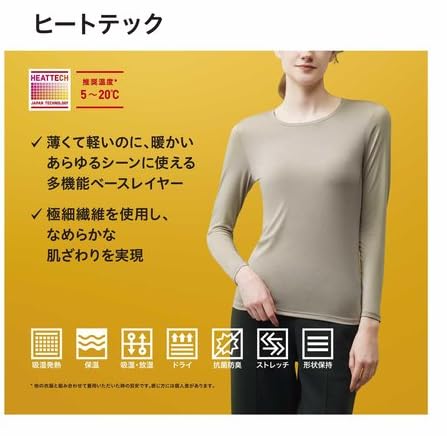
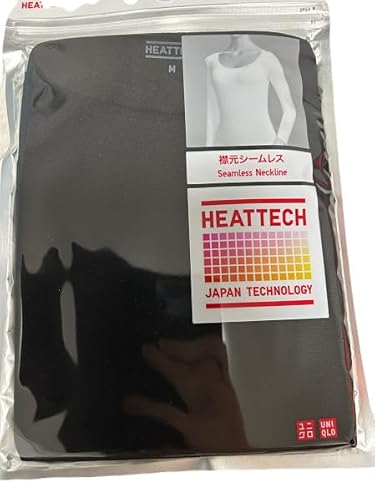
Uniqlo HEATTECH is one of the most commercially successful functional-apparel technologies ever developed in Japan. Launched in 2003 in collaboration with Toray Industries (one of Japan’s leading advanced-materials companies), HEATTECH uses a moisture-absorbing fiber blend that converts body moisture into heat. The result is a thin, lightweight inner layer that adds meaningful warmth without bulk – the engineering trick that turned a basic undershirt into a national winter staple.
The HEATTECH Extra Warm crew-neck T-shirt sits in the middle of the three-grade lineup, rated at roughly 2.5x the warmth of standard HEATTECH. Japanese consumer reviews on Rakuten and Amazon.co.jp consistently praise it for the same things: the stretch is excellent, the fit is close without being constrictive and it washes and dries quickly without pilling when fabric softener is avoided. For a base layer worn under a single mid-layer fleece, the warmth retention is what makes it the default choice for commuters across the country.
Key specs (HEATTECH Extra Warm Crew Neck T-Shirt):
- Fabric: 51% Acrylic, 29% Rayon, 13% Polyester, 7% Spandex
- Warmth rating: 2.5x standard HEATTECH
- Thickness: Medium (between standard and Ultra Warm)
- Sizes: XS–3XL (women’s and men’s)
- Price in Japan: ¥1,500 (~$10–$12 USD)
- Price online: ~$15–$20 via Uniqlo’s international website or Amazon
- Care: Machine washable
| Quick Compare · Buy on Amazon | |
|---|---|
| Top Pick | Check the latest price on Amazon |
Understanding the HEATTECH Grades: Standard, Extra Warm, Ultra Warm
One detail that confuses overseas buyers is that “HEATTECH” is not a single product but a three-tier system and choosing the wrong grade is the most common mistake. Japanese shoppers learn the hierarchy almost instinctively; here is the same logic for international readers.
- HEATTECH Standard (1x): The original. A genuinely thin layer designed for mild city winters and indoor-heavy days. At roughly ¥990–¥1,500 it is one of the best value-for-warmth garments sold anywhere. If your winter rarely drops below 5°C, this is often all you need.
- HEATTECH Extra Warm (2.5x): The sweet spot and our overall pick. Noticeably thicker and warmer than standard while still slim enough to layer cleanly under a shirt or sweater. This is the grade most Japanese commuters buy for the core of winter.
- HEATTECH Ultra Warm (3x): The flagship. A brushed, fleece-backed interior that is closer to a thin thermal sweater than an undershirt. Designed for genuine cold – Hokkaido winters, ski-town mornings, or anyone who runs cold – but too warm and too thick for everyday indoor wear in a heated Tokyo office.
The practical takeaway: most people overestimate how much warmth they need indoors and underestimate it for static outdoor exposure. If you commute and work in heated buildings, Extra Warm is almost always the right answer. Reserve Ultra Warm for the days you will actually stand still in the cold.
Full Comparison: Muji vs Uniqlo HEATTECH Thermal Layers


| Product | Brand | Material | Price (USD) | Warmth Level | Best For |
|---|---|---|---|---|---|
| HEATTECH Extra Warm T-Shirt | Uniqlo | Acrylic/Rayon blend | ~$15–$20 | High (2.5x) | Cold climates, outdoor activity |
| HEATTECH Ultra Warm T-Shirt | Uniqlo | Acrylic/Rayon/Polyester | ~$20–$25 | Very High (3x) | Extreme cold, minimal layering |
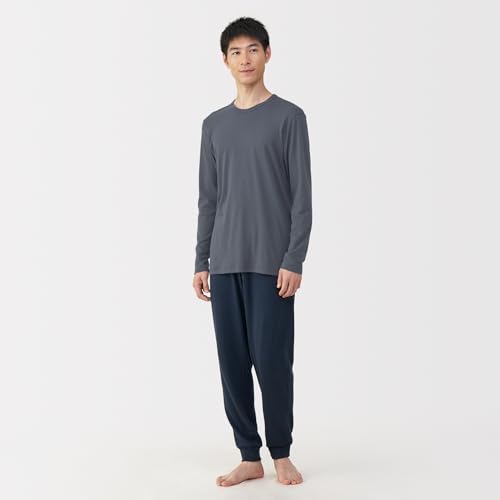
| Muji Warm-Touch Inner Shirt | Muji | Polyester/Rayon blend | ~$18–$25 | Medium-High | Sensitive skin, natural feel preference |
| Muji Wool Blend Inner Shirt | Muji | Wool/Polyester blend | ~$28–$38 | High (natural) | Natural fiber advocates, odor resistance |
| HEATTECH Standard T-Shirt | Uniqlo | Acrylic/Rayon blend | ~$10–$15 | Standard (1x) | Mild winters, budget, layering |
| Muji Cotton Blend Inner | Muji | Cotton/Polyester | ~$15–$20 | Low-Medium | Sensitive skin, cotton preference |
Muji (Ryohin Keikaku, founded 1980) is the design-conscious alternative, positioned as the “no-brand” minimalist choice for Japanese consumers who want natural fibers over synthetic performance. Both are mainstream Japanese household brands, not aspirational – HEATTECH starts at 990 yen, Muji thermals 1,500–3,000 yen.
The HEATTECH Technology: How It Actually Works

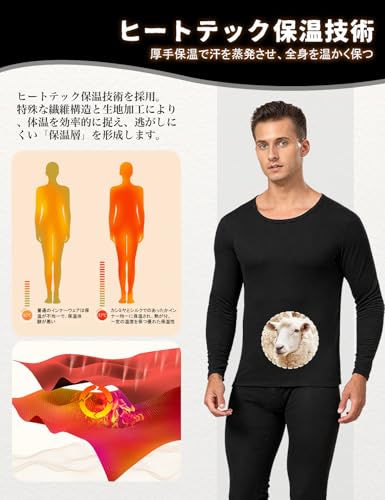
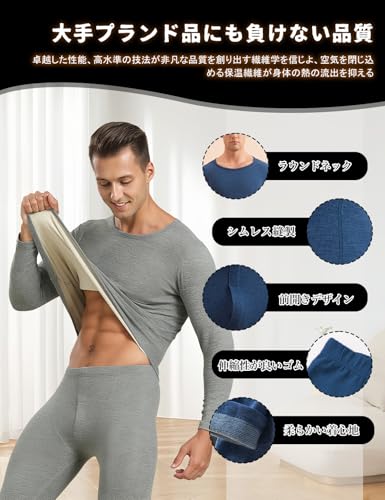
HEATTECH’s warmth mechanism is often misunderstood. It does not generate heat independently – it converts moisture (perspiration vapor from your body) into thermal energy through the moisture-absorbing properties of its rayon and acrylic fibers. This means HEATTECH works best when you are active and generating some body moisture. In very static, very dry conditions (sitting in an extremely dry heated room for hours), a wool base layer will retain warmth more effectively because wool insulates passively rather than relying on moisture conversion.
This is the key piece of information that Japanese winter-sports enthusiasts understand and casual buyers often do not. HEATTECH is optimized for the commuting lifestyle – you walk briskly to the station, sit on a heated train, walk to your office. That cycle of movement and rest is exactly what HEATTECH is engineered for. For skiing, mountaineering, or extended static outdoor exposure, a merino wool base layer is technically superior, which is why even committed HEATTECH owners in Japan often keep one wool layer for the slopes.
A second nuance: the fibers do their work best against bare skin, where they can pick up moisture directly. Wearing HEATTECH over another shirt blunts the effect. And because the moisture-absorbing finish is the active ingredient, fabric softener – which coats the fiber surface – measurably reduces performance over time. Both are small details that separate buyers who think HEATTECH “stopped working” from those who get three solid seasons out of a single shirt.
Muji’s Approach: Natural Feel Over Maximum Warmth
Muji takes a fundamentally different philosophy to thermal underwear. While Uniqlo optimizes aggressively for warmth-to-thickness ratio using synthetic-fiber technology, Muji prioritizes skin comfort, natural-material content and the kind of understated quality that the brand’s Japanese consumers have come to expect from everything it sells, from notebooks to furniture.
The Muji Warm-Touch Inner Shirt uses a fine polyester/rayon blend brushed on the interior surface to create a soft, skin-friendly touch that many Japanese users with sensitive skin prefer to HEATTECH’s slightly more “technical” feel. Japanese reviews on Muji’s website consistently mention that the inner layer feels softer and less “plastic” than HEATTECH – an important consideration for people who are bothered by synthetic textures against bare skin, or for children’s layering where comfort outweighs peak warmth.
Muji’s wool-blend options are where the brand truly differentiates from Uniqlo. A wool/polyester blend inner shirt at ¥3,500–¥5,000 ($28–$38) provides natural odor resistance, passive insulation and temperature regulation that synthetic fibers cannot fully replicate. Japanese consumers who work in environments without easy access to laundry facilities – outdoor workers, frequent travelers – frequently choose Muji wool for exactly this reason: it can be worn for several days between washes without developing odor, something no synthetic base layer manages.
The trade-off is honesty about price and warmth. Muji’s natural-fiber layers cost two to three times what an equivalent HEATTECH costs and gram-for-gram they are not as warm as Uniqlo’s best synthetics. What you pay the premium for is feel, breathability and longevity – not raw heat. For Japanese minimalists who value materials over marketing, that is the whole point.
Sizing and Fit for International Buyers
Japanese apparel sizing runs smaller than US and European sizing and this catches a lot of first-time buyers. As a rough guide, expect to size up one full step from your usual US size for a comfortable fit, or two steps if you prefer your base layers loose. Because both HEATTECH and Muji thermals are designed to sit close to the skin, the cut is deliberately slim – a snug fit is correct for a base layer and helps the fabric do its job, but if you are between sizes and plan to layer over it, the larger size is the safer choice. Amazon listings for the US market usually convert to US sizing already, so check whether the size chart is labelled JP or US before ordering.
The Japanese Layering System: Why Thin Beats Thick
The reason HEATTECH and Muji thermals dominate Japanese winters is that Japan dresses in thin, modular layers rather than a few bulky ones. A typical Tokyo winter outfit is a thin thermal base, a regular shirt, a light knit or fleece and a coat that comes off the moment you step onto a heated train or into a heated shop. The whole system is built around constant transitions between cold outdoor air and aggressively heated indoor spaces and a single thick sweater simply cannot adapt the way three thin layers can.
This is why a 2.5x Extra Warm base layer is the workhorse rather than the 3x Ultra Warm: it adds real heat outdoors without becoming unbearable once you are inside. Overseas buyers used to a one-big-coat approach often buy the warmest grade and then overheat indoors; the more useful lesson from Japan is to buy a thinner, smarter base layer and adjust the mid-layer instead. Muji fits this system just as well – its inners are designed to disappear under everything else and let the wearer regulate temperature through what goes on top.
Cost and Value: What You Really Pay
Inside Japan, the value equation is stark: HEATTECH Standard starts around ¥990, Extra Warm sits near ¥1,500 and even Ultra Warm rarely exceeds ¥1,990. Muji’s synthetic warm-touch inners run ¥1,500–¥2,000 and the wool blends climb to ¥3,500–¥5,000. Ordering through Amazon US adds a markup – expect roughly $15–$25 for the HEATTECH grades and $18–$38 for Muji – which reflects import and convenience rather than a different product. For buyers outside Japan, that premium is usually still worth it for a garment you will wear daily for two or three winters, but it is worth buying two or three at once to spread the shipping cost.
Which Should You Buy? A Practical Guide
Weighing both brands across a range of winter conditions, here is an honest recommendation framework:
- You commute daily in a cold city and want the warmest thin layer at the best price: Uniqlo HEATTECH Extra Warm. Nothing beats the warmth-to-cost ratio.
- You have sensitive skin or dislike synthetic textures: Muji Warm-Touch Inner or Muji Wool Blend. The softer feel and natural-fiber options are worth the premium. The same Japanese emphasis on fabric quality shows up in textiles — see our why Imabari towels cost more.
- You travel frequently and need odor-resistant layering: Muji Wool Blend. Wool’s natural odor resistance allows multi-day wear between washes.
- You want maximum warmth for extreme cold (below -10°C): Uniqlo HEATTECH Ultra Warm, layered with a mid-layer fleece.
- You want the best value entry point to Japanese thermal underwear: Uniqlo HEATTECH Standard (~$10–$15). An extraordinary product at its price point.
Frequently Asked Questions
Does HEATTECH work in very dry indoor environments?
HEATTECH’s heat-generation mechanism requires moisture to activate. In very dry, centrally-heated interiors (particularly common in Japanese homes and offices during winter), HEATTECH can feel less effective than its outdoor performance suggests. Muji’s wool blends or standard cotton/polyester inners may feel more consistently warm in these conditions due to passive insulation properties.
Is Uniqlo HEATTECH available outside Japan?
Yes. Uniqlo operates stores in over 25 countries and sells HEATTECH internationally through its website. However, the full range – including limited seasonal colorways, the Ultra Warm line and the complete size range – is typically only available in Japan. The Japanese stores also often carry HEATTECH leggings, socks and gloves that are not always available internationally.
How do I care for HEATTECH to maintain its warmth properties?
Uniqlo recommends machine washing in cold water on a gentle cycle and tumble drying on low heat or air drying. Avoid fabric softener – it coats the fibers and reduces their moisture-absorbing (and therefore heat-generating) efficiency over time. With proper care, HEATTECH maintains its functional properties for 2–3 seasons of regular use before the fibers begin to degrade.
Is Muji or Uniqlo better for sensitive skin?
Muji, in most cases. Its brushed warm-touch interior and natural-fiber wool blends are specifically favoured by Japanese buyers who find synthetic base layers itchy or “plasticky.” If skin feel is your priority over peak warmth, start with a Muji Warm-Touch or wool-blend inner before trying HEATTECH.
Can I wear HEATTECH as an outer layer?
Technically yes, but it is not designed for this use. HEATTECH’s slim, form-fitting cut and thin fabric make it visible as an underlayer. The Extra Warm and Ultra Warm versions have slightly more fabric weight, but none of the HEATTECH line is designed to be worn as a visible outer garment. Muji’s inner shirts are similarly designed as base layers beneath other clothing.
Buying from Japan: Reader Questions
Will this product ship internationally from Amazon Japan?
Most of the Japanese-brand items featured here are also stocked on Amazon US (amazon.com) and the links above point to that storefront so international readers can buy with familiar shipping options. If you specifically want the Japanese-domestic SKU and you are based outside Japan, Amazon Global Shipping or a forwarder like Tenso/Buyee can handle the import – just be aware of customs duties on items above roughly $200.
Are these the actual products Japanese consumers buy?
Yes. Our editorial team prioritises what actually sells on Japanese shelves – Bic Camera, Yodobashi, Don Quijote, Loft and the konbini we cover – not just what ranks on Amazon US. Where a brand sells different model numbers in Japan vs. the US, we note that explicitly so you can pick the right SKU.
How are these reviews funded?
Vs-Navi.Online earns a small commission when readers buy through the Amazon links in our articles, at no extra cost to you. That affiliate income funds the research time behind each comparison, but it never decides the ranking – the editorial pick is the product we would recommend to a friend moving to Japan, full stop.
Can I trust the price information here?
Prices on Amazon move daily and the dollar-yen exchange rate adds another layer of variation. Treat the figures here as a snapshot at the time of writing – always click through and check the current Amazon listing for the live price before buying.
What if I want a Japanese-domestic version that is not listed?
Drop us a note via the contact form on vs-navi.online. If the model can be sourced and verified, we will consider writing it up.
References
- Muji (Ryohin Keikaku) – Corporate – Ryohin Keikaku official, accessed May 2026
- Uniqlo – About Heattech – Uniqlo official, accessed May 2026
- Toray Industries – Heattech Partnership – Toray official, accessed May 2026