vs-navi.online is a participant in the Amazon Services LLC Associates Program. Purchases made through links on this page may earn us a commission at no extra cost to you.
A blank greeting card, a name to write across the front. You press down on the downstroke, the line swells, then you lift off into a thin hairline. That thick-to-thin rhythm is what a Japanese brush pen is built for.
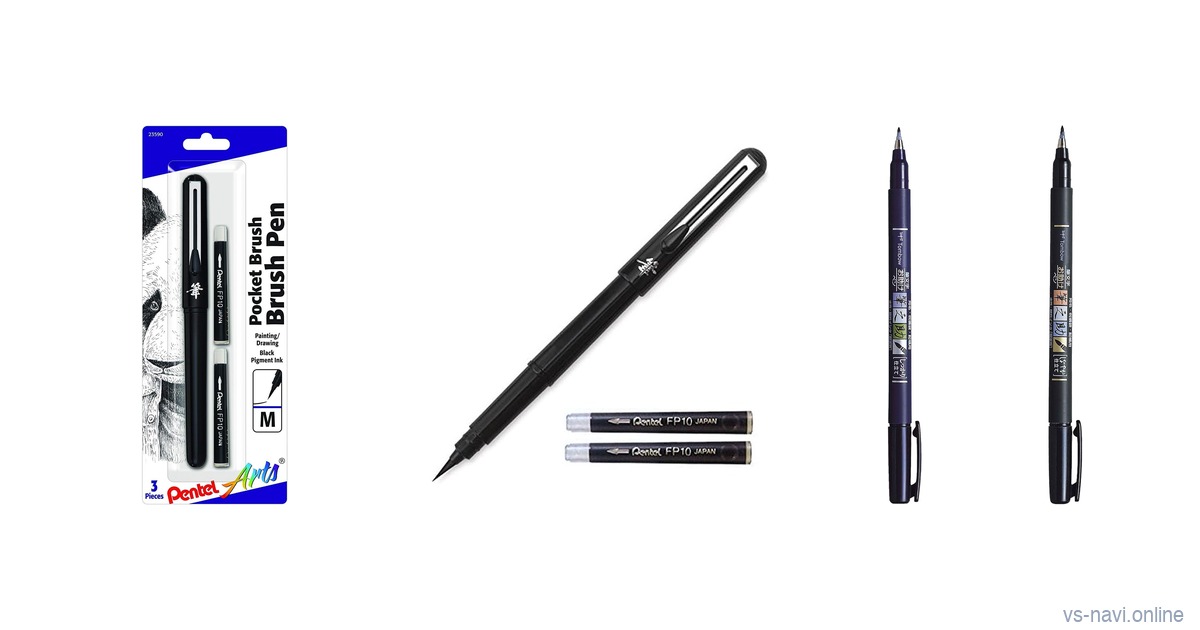
Two pens come up again and again when people shop for one on Amazon.com: the Pentel Pocket Brush with real bristles plus the Tombow Fudenosuke with a firm molded tip. They solve the same problem in very different ways. One rewards a steady hand; the other forgives a shaky one.
We compared three listings on the manufacturers’ published information, the printed packaging plus current Amazon.com listings and review summaries. This is a desk comparison of public information, not a hands-on writing test.
Our Pick: Which Brush Pen Should You Buy
All three showed a live U.S. price with stock available when we checked Amazon.com in October 2026.
- Tombow Fudenosuke, soft plus hard tip 2-pack — about $6, 4.8 out of 5 from more than 41,000 ratings. The easiest start for hand lettering, bullet journals plus cards.
- Pentel Arts Pocket Brush Pen, 1 pen with 2 refills — about $12, 4.8 out of 5 from about 3,200 ratings. The pick for inking, comics plus sketching where you want true brush texture.
- Pentel Pocket Brush, Japanese-market pack, 1 pen with 2 refills — about $8, 4.6 out of 5 from about 2,700 ratings. The same refillable bristle-pen concept in import packaging, usually a few dollars cheaper.
If you are new to brush lettering, start with the Fudenosuke 2-pack. If you already draw with ink plus want the expressive line of a real brush, go straight to the Pocket Brush.
Bristles vs a Molded Tip
This is the single most important difference. The Pocket Brush has a tip made of separate synthetic bristles, much like a small paintbrush. Pentel’s listing says the bristles create fine to broad lines in a single stroke. The bristles also leave dry-brush texture when the pen moves fast, which inkers prize.
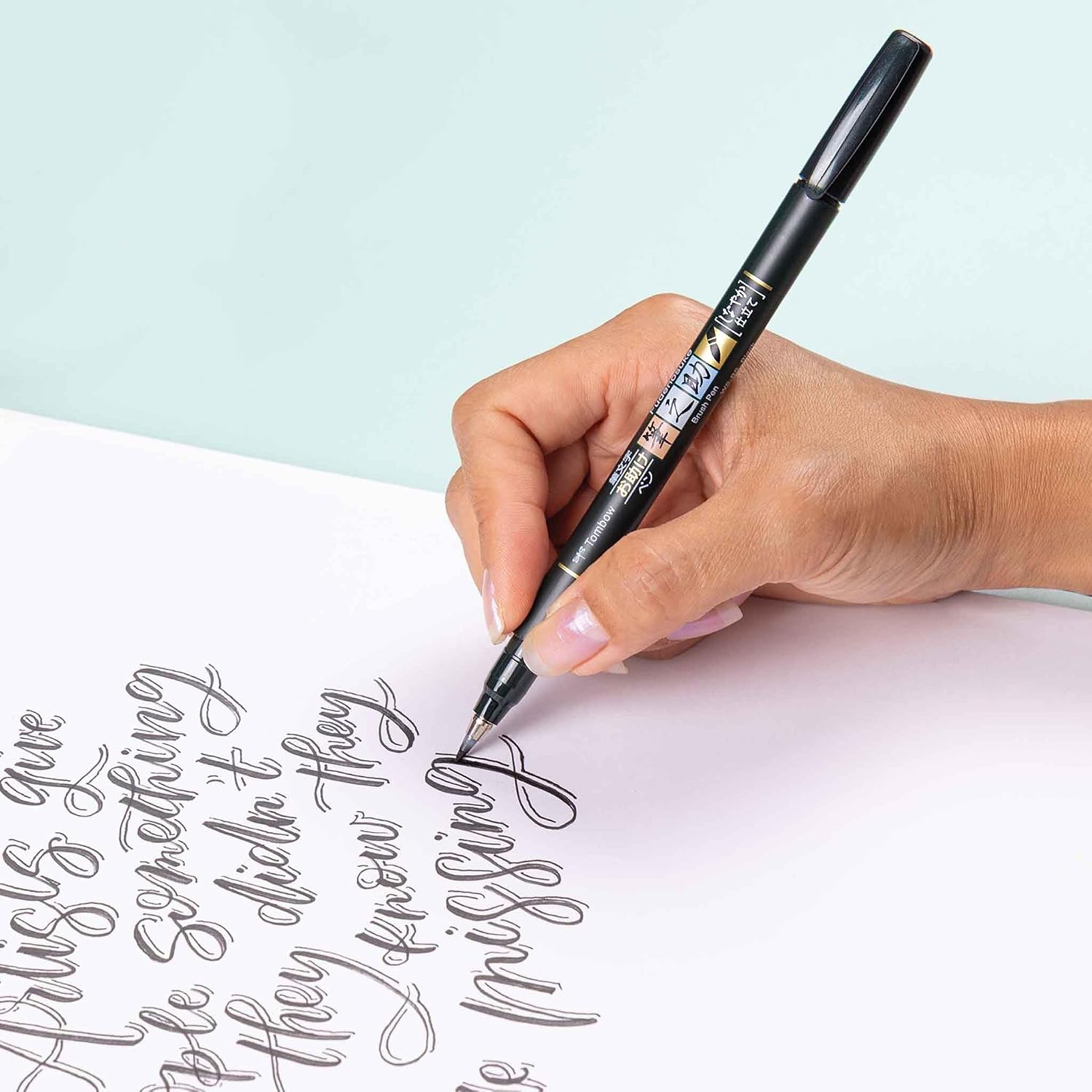
The Fudenosuke uses one flexible molded tip instead of loose hairs. Tombow’s listing says a change in pressure gives extra-fine, fine or medium strokes. The tip springs back to a point on its own, so letters come out more consistent from one to the next.
In short, bristles give more range with less control. A molded tip gives more control with less range. Neither is better in the abstract; it depends on whether you are drawing or lettering.
The Two Brands in Japan
In Japan a brush pen is called a fude pen (筆ペン), from fude, the word for a calligraphy brush. Many households keep one in a drawer for writing New Year’s cards, the names on gift envelopes plus signing guest books at weddings or funerals. Those are moments when a ballpoint feels too casual.
Pentel, founded in Tokyo in 1946, is one of the makers most associated with the modern fude pen. The Pocket Brush sits in its art line rather than its office line, which explains the bristle tip plus the pigment ink.
Tombow, named after the Japanese word for dragonfly, is a Tokyo stationery maker best known in Japan for MONO erasers plus pencils. The Fudenosuke became a favorite with hand-lettering learners outside Japan, which is why the U.S. pack is labeled for calligraphy, bullet journaling plus illustration.
Tombow Fudenosuke Brush Pen, Soft plus Hard Tip 2-Pack (Around $6 on Amazon)
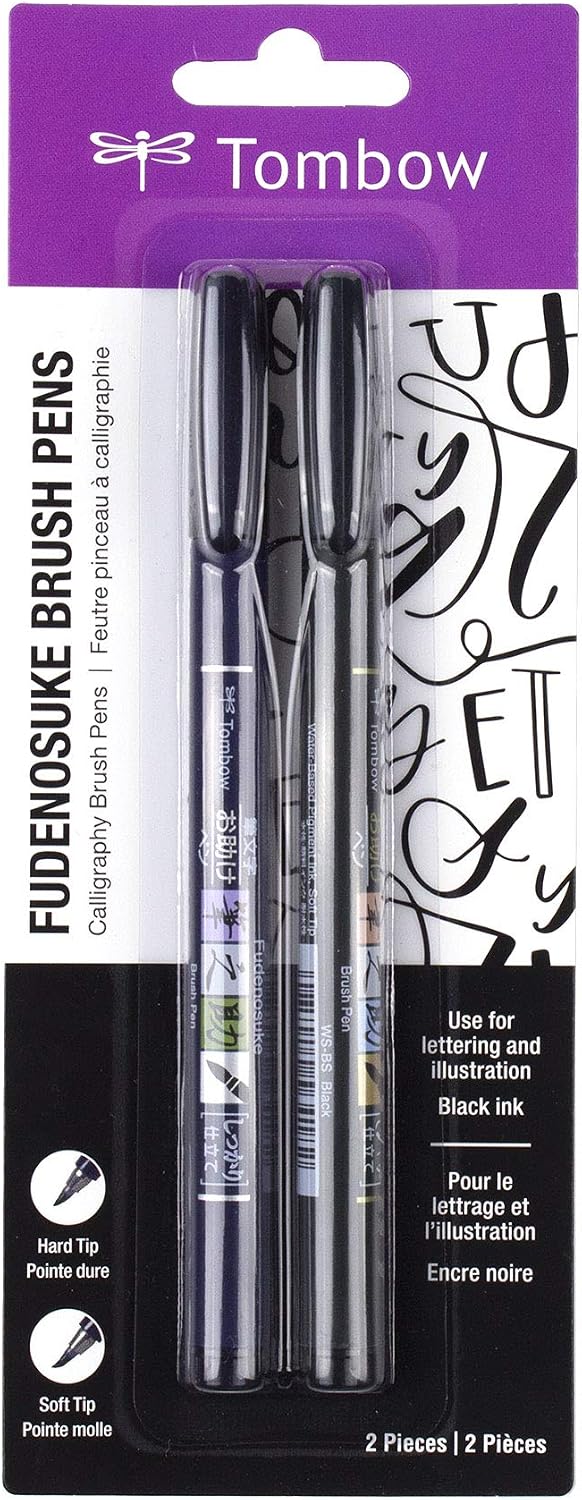
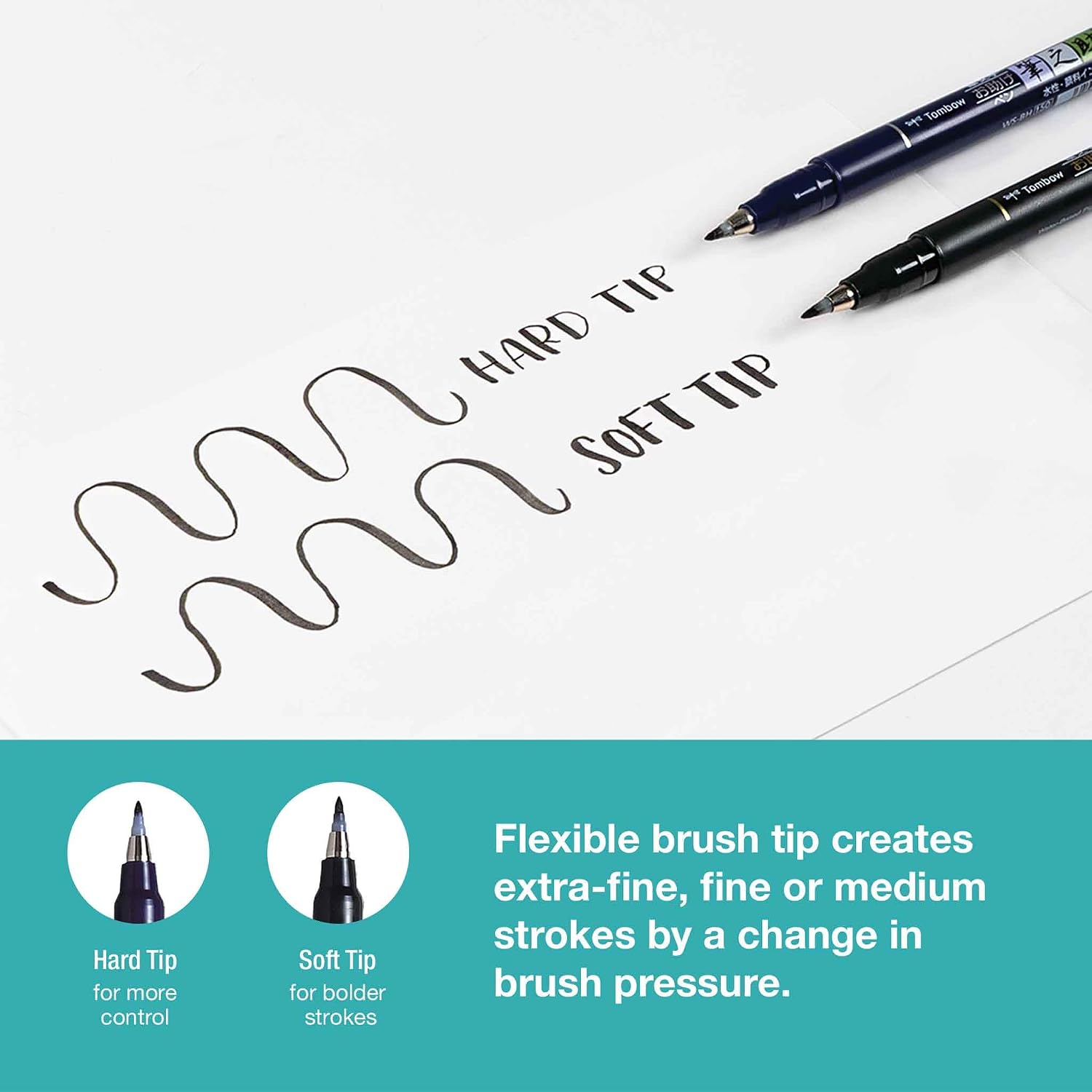
The pack holds two black pens. The hard tip (blue barrel) is stiffer for more control, while the soft tip (black barrel) bends more for bolder downstrokes. Having both lets you find out which feel suits your hand before buying more.
The ink is water based with black pigment, per Tombow’s listing. The back of the card marks the pens as non-refillable, so each one is used until it runs dry.
Amazon’s review summary shows buyers calling these excellent for beginners, especially for calligraphy plus bullet journaling, with smooth writing mentioned often. The main complaints are about ink: some find the black too light rather than deep. Some also report the pens drying out quickly.
The honest downside is range. A molded tip cannot make the very broad, textured stroke of a bristle brush, so heavy poster lettering or bold comic inking is outside its comfort zone.
Best for: beginners, planner pages, greeting cards plus anyone learning brush script.
Pentel Arts Pocket Brush Pen, 1 Pen with 2 Refills (Around $12 on Amazon)
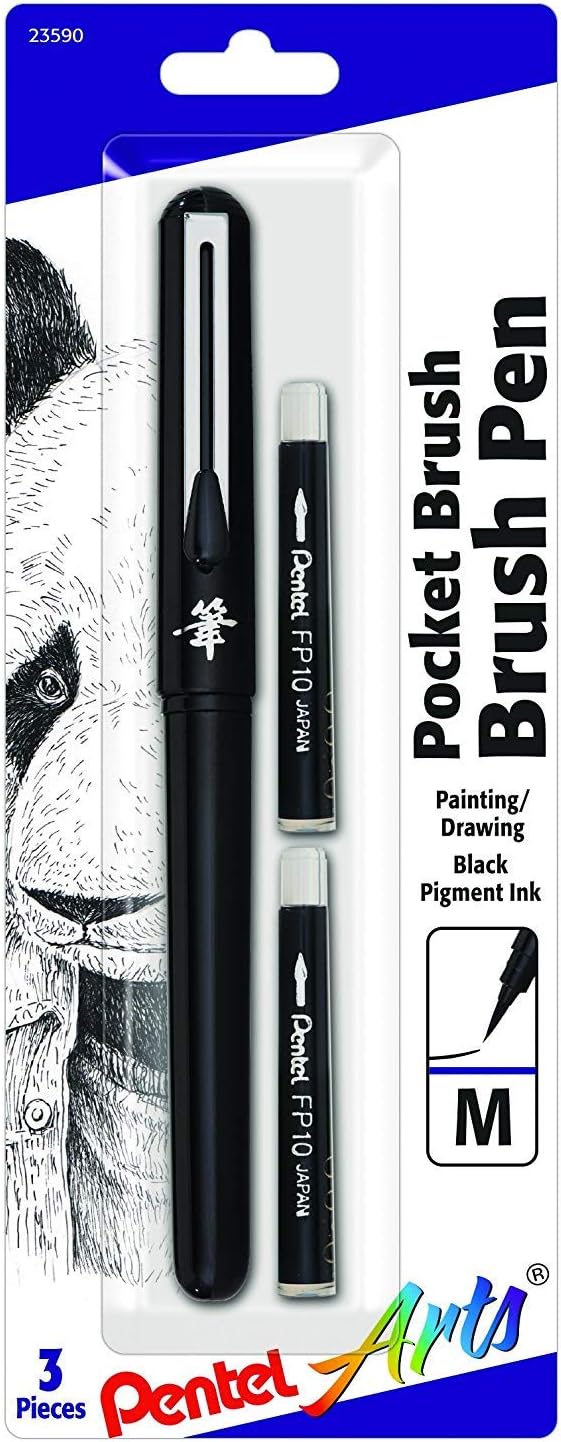
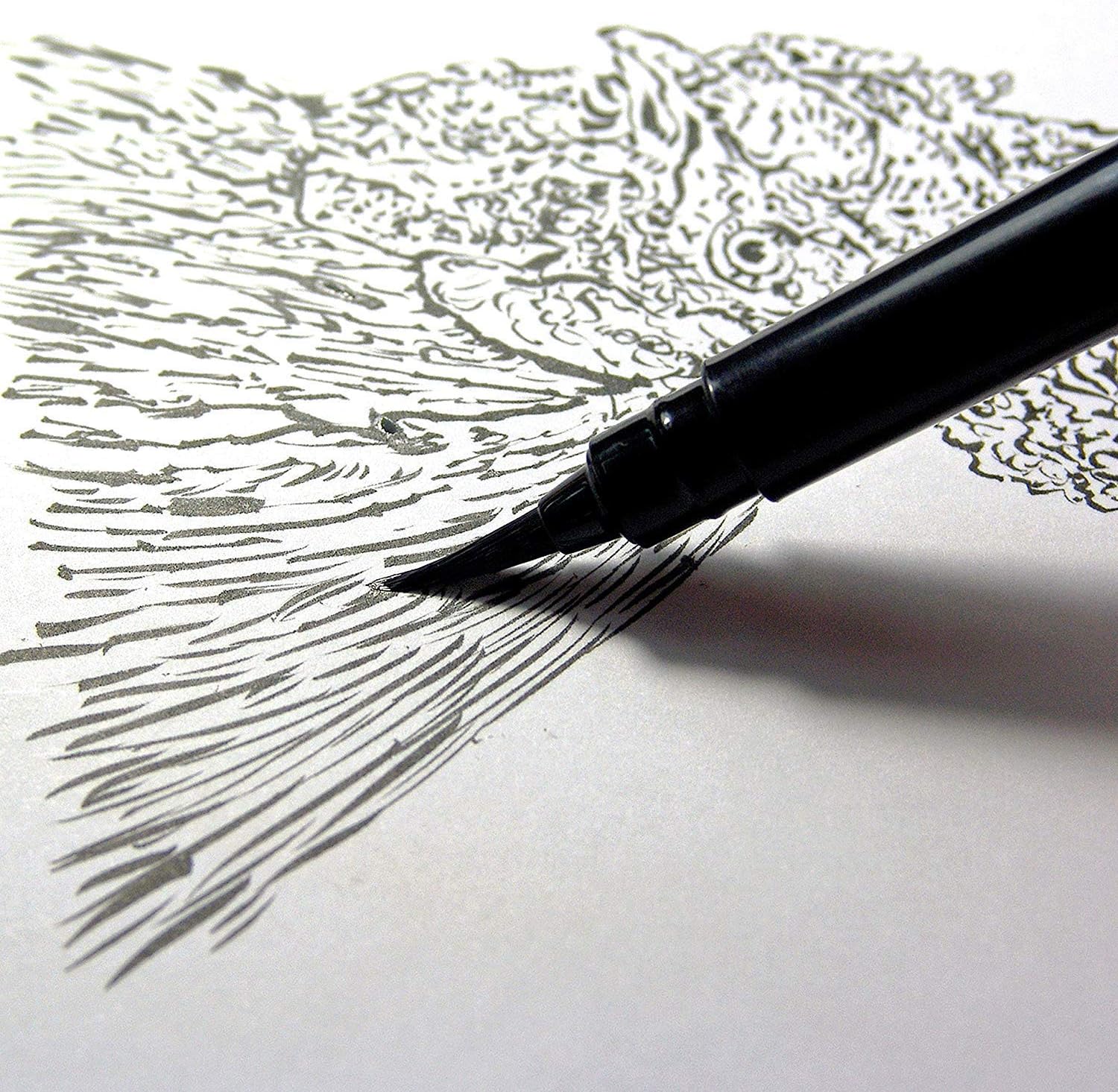
This is the pen many comic artists plus sketchers reach for when they want brush lines without a jar of ink. The card holds one pen plus two black ink cartridges. The cartridges are marked FP10 in Pentel’s product photos.
Pentel describes the ink as permanent pigment that is both fade resistant plus water resistant. That is useful if you ink first then add watercolor, though any ink should dry fully before paint goes on top.
Amazon’s review summary shows buyers finding it versatile for sketching, writing plus illustration, with smooth dark ink that flows well. Feedback on line control is mixed: buyers like the jump from fine to broad lines, while some say thickness is hard to control at first. Several note it takes practice to master.
The honest downside is the learning curve. Bristles splay if you press too hard, so neat, even lettering takes more practice here than with the Fudenosuke.
Best for: ink drawing, comics, loose sketching plus experienced letterers who want texture.
Pentel Pocket Brush, Japanese-Market Pack with 2 Refills (Around $8 on Amazon)
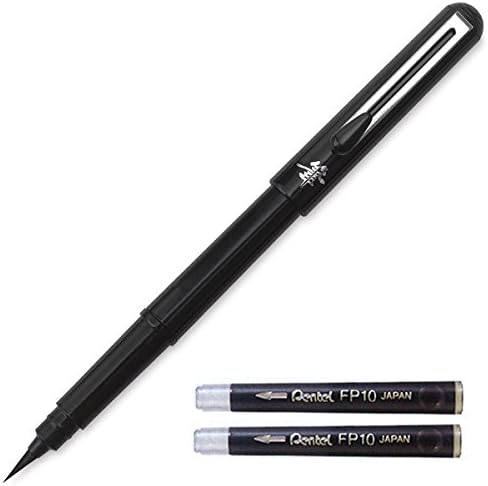
This listing sells the Pocket Brush in packaging made for the Japanese market. The listing calls it a Japanese limited version with a medium point. It also contains one pen plus two refills, with the cartridges shown marked FP10 JAPAN.
The U.S. retail card above is also marked M on the front, so both listings appear to sell the same medium bristle pen. The listings do not state that outright, so check the photos on the day you buy. The practical difference is price: the import pack usually costs a few dollars less.
Amazon’s review summary shows buyers finding it worth the price, with smooth bold lines for calligraphy plus quick sketching. Opinions split on ink flow plus durability. Some say the ink can smudge under marker or water, so let it dry before layering.
The honest downside is that you get thinner English support. The packaging is aimed at Japanese buyers, so instructions on the card may not be in English.
Best for: buyers who already know the Pocket Brush plus want a cheaper pack.
Compare the Three
| Fudenosuke 2-pack | Pocket Brush (U.S.) | Pocket Brush (import) | |
|---|---|---|---|
| Price (approx.) | $6 for 2 pens | $12 for 1 pen + 2 refills | $8 for 1 pen + 2 refills |
| Tip | Molded flexible tip (soft plus hard) | Synthetic bristles | Synthetic bristles |
| Ink | Water-based pigment, black | Permanent pigment, fade plus water resistant | Permanent pigment, fade plus water resistant |
| Refillable | No | Yes (FP10) | Yes (FP10) |
| Learning curve | Gentle | Steeper | Steeper |
| Amazon rating | 4.8 (41,000+) | 4.8 (about 3,200) | 4.6 (about 2,700) |
| Best for | Lettering, journals, cards | Inking, comics, sketching | Repeat Pocket Brush buyers |
Pick the Tombow Fudenosuke if you are learning brush lettering. The firm tip keeps letters even, the 2-pack lets you try both stiffness levels plus it has by far the largest review base of the three.
Pick the Pentel Pocket Brush U.S. pack if you draw. Real bristles give the widest line range plus dry-brush texture, while refills keep the running cost down over time.
Pick the Japanese-market pack if you already know you like the Pocket Brush. Compare the listing photos to the U.S. pack before you buy, then take whichever is cheaper that day.
Buyer’s Considerations
Paper matters more with brush pens than with ballpoints. Rough or very absorbent paper frays a molded tip plus makes bristle lines feather. Smooth paper, such as marker pads or quality planner paper, keeps tips sharp longer.
Cap the pen right after each use. Many of the drying-out complaints for both brands trace back to tips left open. For the Pocket Brush, a spare FP10 cartridge in your pencil case saves a session when the ink runs out.
If you mix brush lettering with small text, a fineliner handles the fine print. Our Pigma Micron vs Uni Pin comparison covers the Japanese fineliners most often paired with brush pens. For soft color behind black lettering, our Zebra Mildliner guide covers the highlighters planner users like.
Summary
Both pens come from long-standing Tokyo stationery makers. The Tombow Fudenosuke 2-pack is the easiest, cheapest way into brush lettering. The Pentel Pocket Brush is the refillable bristle pen for inking plus sketching, sold in both a U.S. pack plus a cheaper Japanese-market pack.
FAQ
Is the Pentel Pocket Brush or Tombow Fudenosuke better for beginners?
For most beginners the Fudenosuke is easier. Its molded tip springs back to a point, so letters stay consistent. The Pocket Brush has real bristles that give more range but take more practice to control.
What is the difference between the soft plus hard Fudenosuke?
The hard tip (blue barrel) is stiffer for more control. The soft tip (black barrel) flexes more for bolder downstrokes. The 2-pack includes one of each.
Can I refill these brush pens?
The Pentel Pocket Brush takes replacement ink cartridges, shown as FP10 in Pentel’s photos. Both Pocket Brush listings include two. The Fudenosuke is marked non-refillable on its packaging.
Can I paint watercolor over the ink?
Pentel describes Pocket Brush ink as water resistant pigment, though some buyers say it can smudge under water or marker. Let any brush pen ink dry fully plus test on scrap paper before painting over it. Prices on Amazon change often, so check the current price before you buy.