vs-navi.online is a participant in the Amazon Services LLC Associates Program. Purchases made through links on this page may earn us a commission at no extra cost to you.
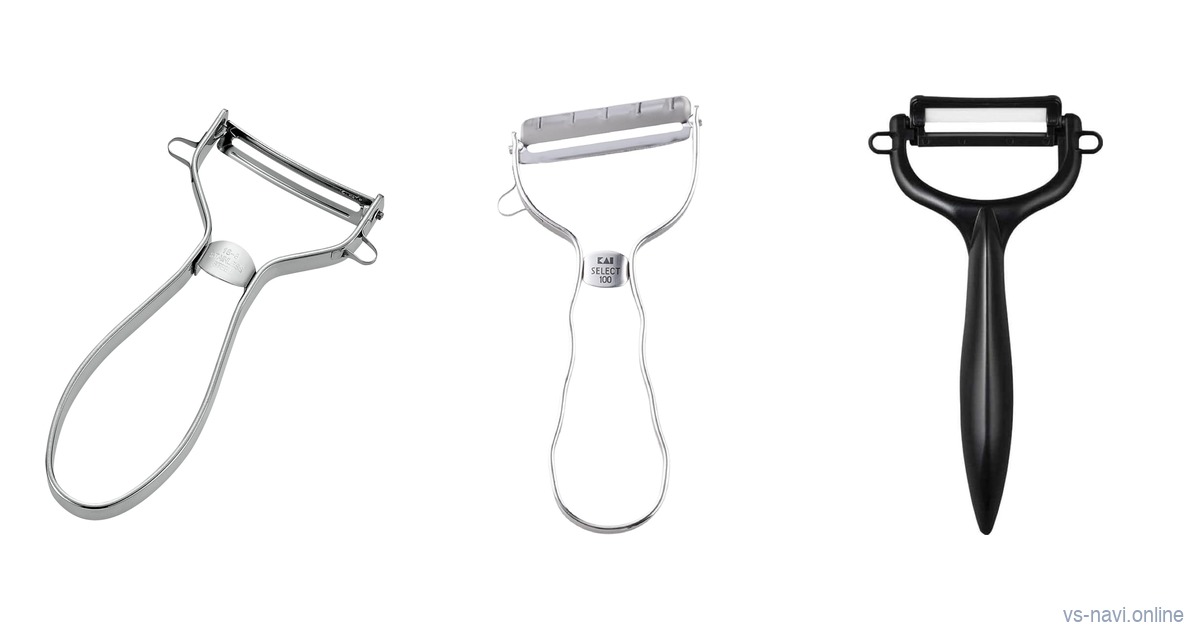
A good peeler is the tool you notice least. The skin comes off a carrot in one long ribbon. The blade glides over the bumps of a potato without digging in. You reach for it every day and never think about it.
Japan takes this small tool seriously. Its peelers come from the same knife towns as its chef’s knives: Tsubame-Sanjo in Niigata and Seki in Gifu. Kyoto’s Kyocera adds a third option with a ceramic blade.
We compared one peeler from each maker on published specifications, maker information and current Amazon.com listings. All three cost between about $11 and $15. This is a desk comparison, not a hands-on peeling test.
Our Pick: The Best Japanese Vegetable Peeler in 2026
All three peelers below had a live price with an add-to-cart button when we checked Amazon.com:
- Kai Select 100 T-Peeler (DH3000) — about $12. All stainless steel with an angled, dimpled blade. Rated 4.6 out of 5 from more than 18,000 ratings. The best all-round pick for most kitchens.
- Shimomura Pro Grade Rapid Peeler (PG-642) — about $14. All stainless steel, made in Tsubame-Sanjo, with a curved blade that follows round vegetables. The pick if you peel a lot of carrots, potatoes or daikon.
- Kyocera Ceramic Peeler (CP-NBK) — about $12. A fine ceramic blade that never rusts and does not pass a metallic taste to food. The pick for apples, pears and other fruit that brown quickly.
If you only buy one, start with the Kai. It has by far the deepest review record of the three. Choose the Shimomura for heavy vegetable prep or the Kyocera if rust and browning bother you.
Check price on Amazon: Kai Select 100 →
Why Japanese Peelers Look Different
Most American peelers are swivel peelers: a long handle with a blade that runs in line with it. Japanese peelers are usually T-shaped, a style also called a Y-peeler. The blade sits across the end of the handle. You pull it toward you in short strokes.
The T-shape suits the vegetables of Japanese home cooking. Daikon, carrots, burdock and potatoes are peeled almost daily. A wide blade held at right angles covers more surface per stroke. Most models also have a small loop or scoop on the side for cutting out potato eyes.
Within the T-shape, makers compete on the blade itself. Shimomura curves it. Kai angles it and dimples it. Kyocera swaps steel for ceramic. Those three choices are what this comparison is really about.
Kai Select 100 T-Peeler DH3000 (Around $12 on Amazon)
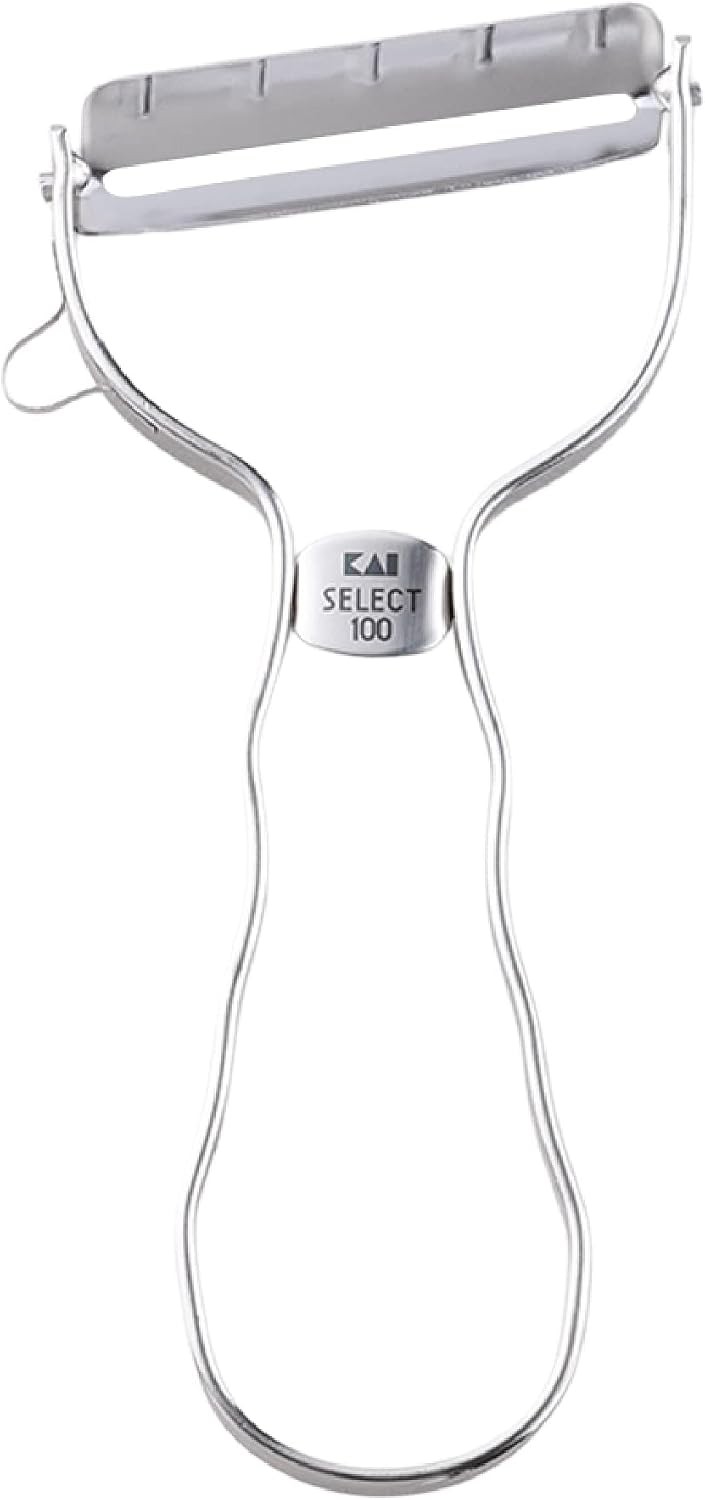
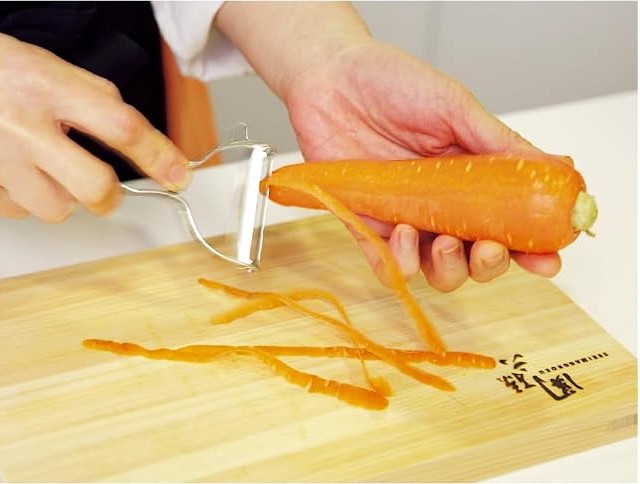
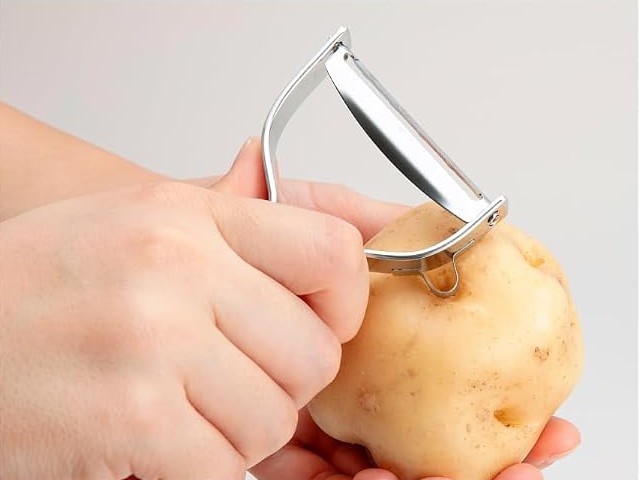
Kai was founded in 1908 in Seki, the Gifu knife town. In Japan it is one of the best-known names in everyday blades, from razors to kitchen knives. Select 100 is its line of plain, practical kitchen tools. On Amazon.com the T-peeler is the line’s most-rated peeler, with more than 18,000 ratings.
The blade sits at a slight angle rather than straight across. Kai says this lets it start the cut smoothly. The blade face is grooved so wet peel does not stick to it. A U-shaped scoop on the side handles potato eyes with a twist. The whole tool is 18-8 stainless steel, weighs about 57 g and can go in the dishwasher.
Picture a butternut squash on a Sunday afternoon. The wave-shaped handle gives your fingers somewhere to sit while you pull hard on thick skin. The listing says it works on tough-skinned squash and citrus as well as root vegetables.
The review record is the strongest of the three: 4.6 out of 5 from about 18,500 ratings. Amazon’s review summary says buyers find it very sharp and durable. They also mention it is comfortable to hold for long jobs. One honest caution: when we checked, the listing showed only a few units in stock, so the price may move.
Buy it if you want one dependable peeler for everything. It suits a cook who peels a bit of everything rather than a mountain of one vegetable.
Shimomura Pro Grade Rapid Peeler PG-642 (Around $14 on Amazon)
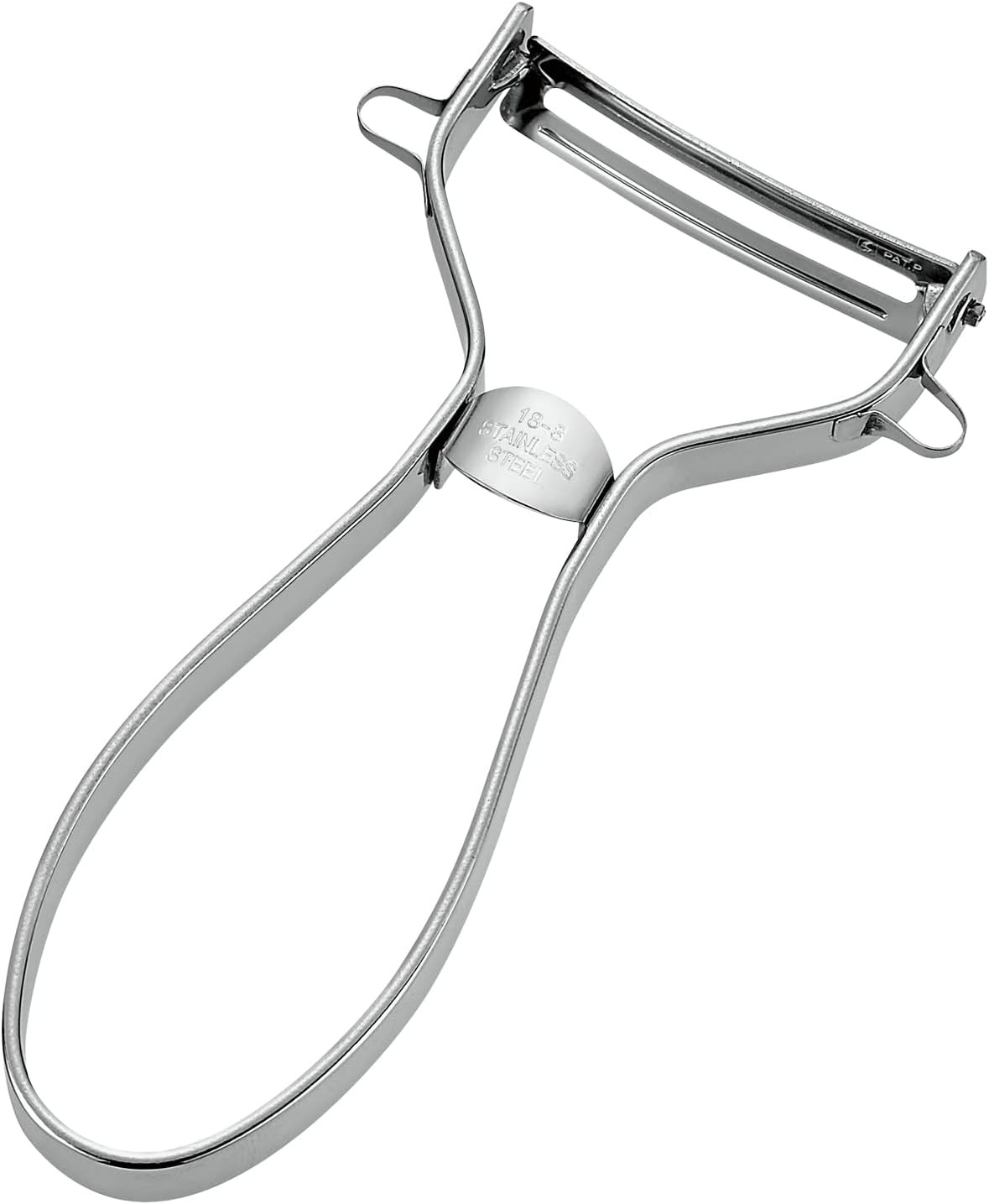
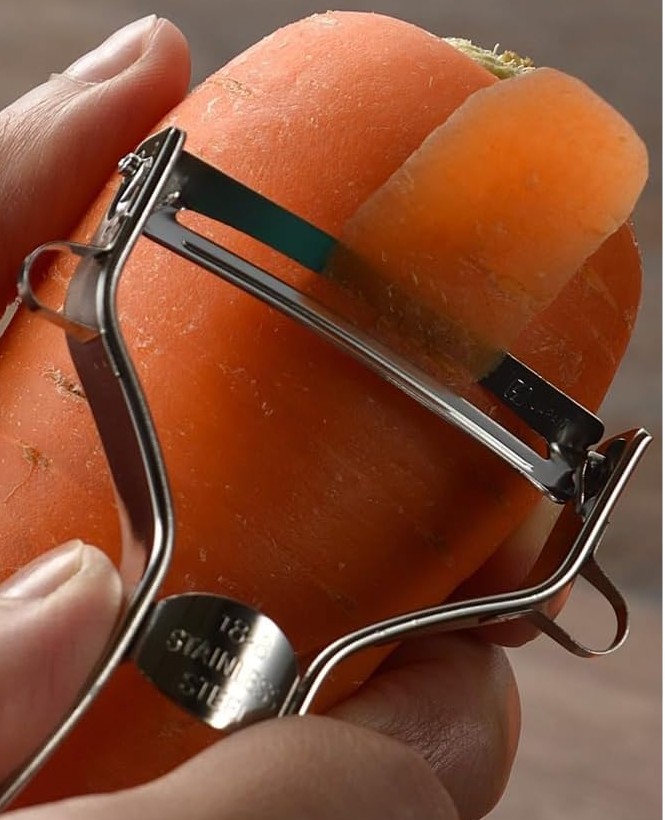
Shimomura Kogyo was set up in 1957 in Sanjo, Niigata. Sanjo and its neighbor Tsubame form Tsubame-Sanjo, Japan’s best-known metalworking region. Shimomura makes knives, slicers and kitchen tools there. Pro Grade is one of its named product lines alongside Full Veggie.
The idea behind this model is the curve. Shimomura shapes the blade in an arc so it matches the round surface of a carrot or potato. More of the edge touches the food on each stroke. The maker says this peels faster than a straight blade.
Imagine a five-pound bag of potatoes for a holiday mash. Each pull takes off a wider strip, so the pile shrinks faster. Both blade frame and handle are 18-8 stainless steel. The peeler weighs about 40 g, measures about 12.4 cm long and is dishwasher safe.
The downside is the thin review record: 4.5 out of 5, but from only about two dozen ratings. Amazon’s summary says buyers praise the build quality. One mentions it is good for cutting citrus peel for drinks. Another notes cutters on both sides for potato eyes. The wire-style handle is also less cushioned than the Kai.
Buy it if you peel large amounts of root vegetables. It also suits anyone who wants a tool made in Tsubame-Sanjo.
Kyocera Ceramic Peeler CP-NBK (Around $12 on Amazon)
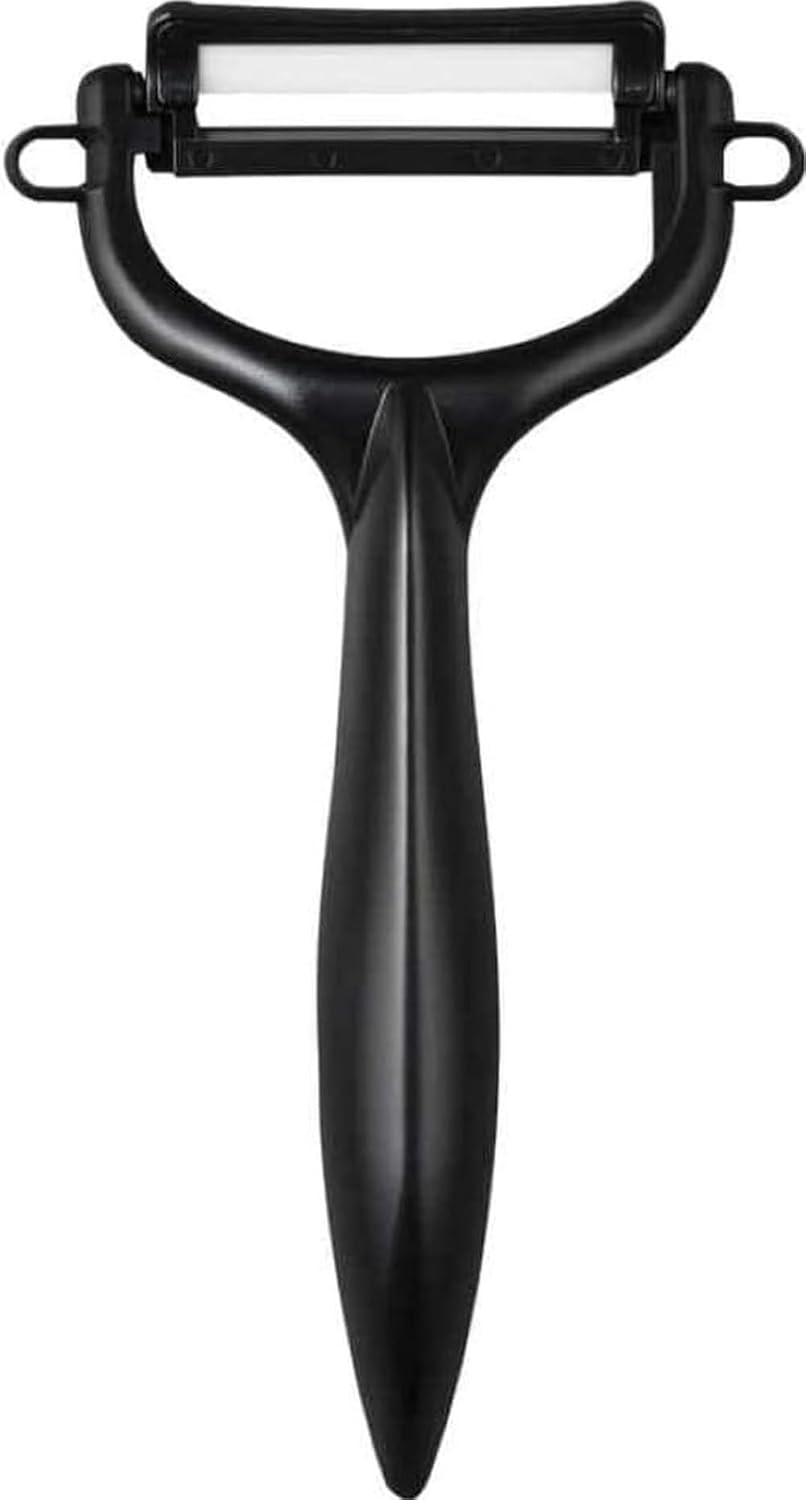
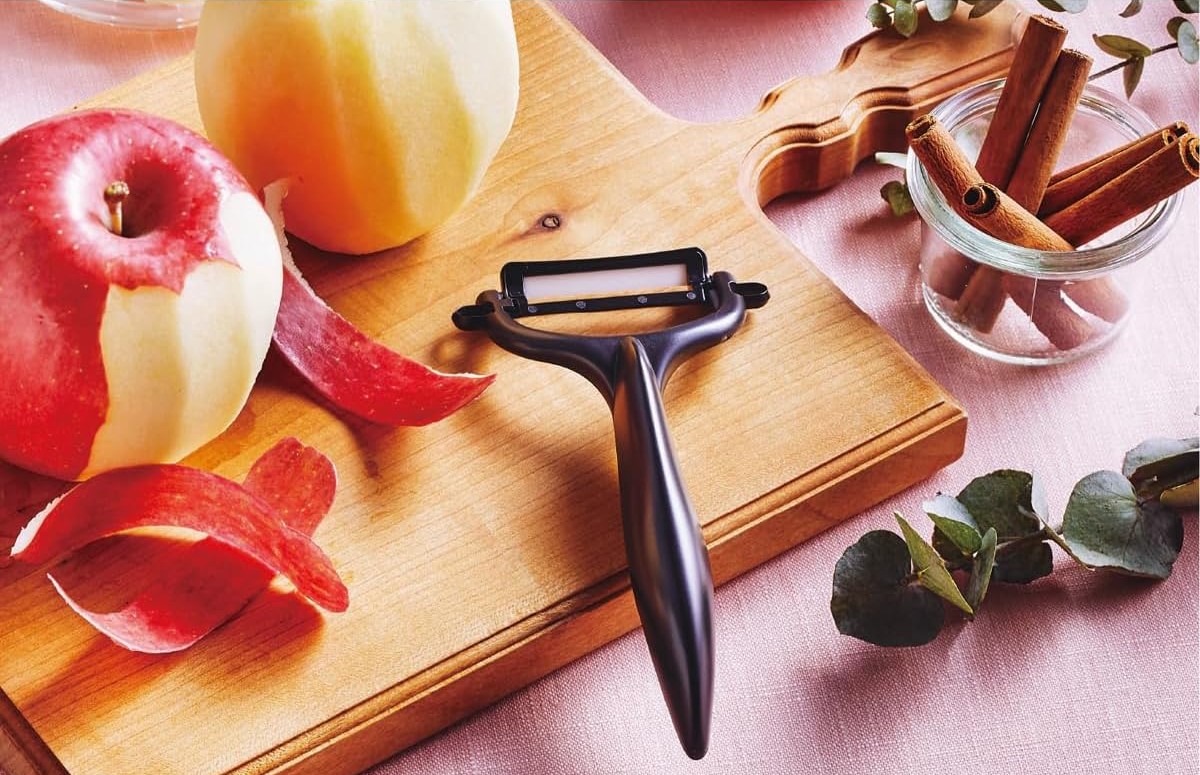
Kyocera is a Kyoto company best known for industrial ceramics. In 1984 it became the first Japanese maker to sell ceramic kitchen knives. Its ceramic peeler grew out of that line.
The blade is fine ceramic. Kyocera says it is more than twice as hard as stainless steel, so the edge stays sharp for a long time. Ceramic does not rust. It also does not release metal ions, so the maker says peeled food is less likely to brown or pick up a metallic smell.
Think of peeling apples for a pie. The slices sit on the board while you finish the rest. The listing says the ceramic edge leaves the surface less likely to discolor. The peeler weighs only about 30 g and measures 14.5 by 7.8 cm.
It is rated 4.7 out of 5 from about 1,800 ratings, the highest score here. Amazon’s summary says buyers find it sharp for years and rust-free; one mentions it handles winter squash. Opinion on value is mixed. The ABS handle is rated only to about 70°C (154°F). The listing warns against the dishwasher or dryer. Like any ceramic blade, it can chip if dropped on a hard floor.
Buy it if you peel a lot of fruit or dislike rust spots. It also suits cooks who like to sanitize tools with kitchen bleach, which the maker allows.
Compare the Three
| Kai Select 100 | Shimomura PG-642 | Kyocera Ceramic | |
|---|---|---|---|
| Price (approx.) | $12 | $14 | $12 |
| Blade | Angled, grooved stainless | Curved stainless | Fine ceramic |
| Handle | Wave-shaped stainless | Loop stainless | ABS resin |
| Weight | 57 g | 40 g | 30 g |
| Dishwasher | Yes | Yes | No |
| Rust-free | Stainless | Stainless | Ceramic, never rusts |
| Amazon rating | 4.6 (about 18,500) | 4.5 (24) | 4.7 (about 1,800) |
| Made by | Kai, Seki (est. 1908) | Shimomura, Sanjo (est. 1957) | Kyocera, Kyoto |
For most people the Kai is the safe choice. It is the cheapest steel option with the longest track record. It also goes in the dishwasher.
The Shimomura is the specialist. If your weekly prep includes a lot of potatoes or carrots, the curved blade is built for exactly that. The Kyocera is the fruit peeler: light, rust-free and kind to apples. At these prices, some cooks simply keep one steel peeler and one ceramic peeler.
Summary
All three are well made in Japan and cost less than a takeout lunch. Pick the Kai Select 100 for everyday use. Pick the Shimomura for big batches of root vegetables or the Kyocera for fruit.
Frequently Asked Questions
What is the best Japanese vegetable peeler?
For most kitchens, the Kai Select 100 T-Peeler. It is all stainless steel, dishwasher safe and rated 4.6 out of 5 from more than 18,000 Amazon ratings.
Is a ceramic peeler better than a stainless steel one?
It depends on the job. Ceramic stays sharp for a long time, never rusts and does not give food a metallic taste. Stainless steel is tougher, so it will not chip if dropped. It can usually go in the dishwasher.
Why do Japanese cooks use T-shaped peelers?
The wide blade across the handle covers more surface per stroke. That suits daily peeling of daikon, carrots and potatoes. Most Japanese T-peelers also include a side scoop for potato eyes.
Can the Kyocera ceramic peeler go in the dishwasher?
No. The handle is ABS resin rated to about 70°C (154°F), so the listing advises against the dishwasher or dryer. Kyocera says it can be washed by hand and sanitized with kitchen bleach.
What is Tsubame-Sanjo?
Tsubame-Sanjo is a metalworking region in Niigata Prefecture made up of the cities of Tsubame and Sanjo. It is known in Japan for cutlery, kitchen tools and blades. Shimomura Kogyo is based in Sanjo.