vs-navi.online is a participant in the Amazon Services LLC Associates Program. Purchases made through links on this page may earn us a commission at no extra cost to you.
In a Japanese kitchen, rice is washed before it is cooked. Cold water goes in, a hand stirs the grains, the water turns milky white. You pour it off and repeat until the water runs almost clear.
Doing this in the rice cooker pot works, but grains slip out every time you tip the water away. Japanese cooks solve the problem with two simple tools: a rice washing bowl with built-in drainers or a zaru, the round colander found in every home.
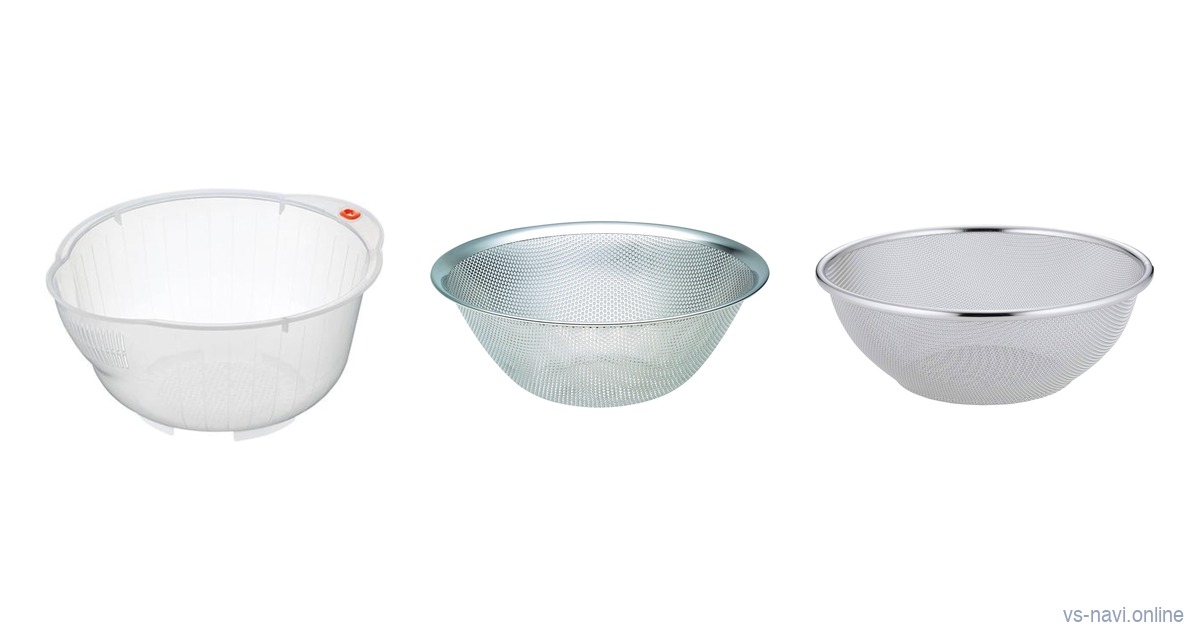
We compared three Made-in-Japan options on published specifications, maker information and current Amazon.com listings. One is a plastic rice washer. Two are stainless zaru from the metalworking towns of Tsubame-Sanjo. This is a desk comparison, not a hands-on washing test.
Our Pick: The Best Japanese Rice Washing Bowl and Zaru in 2026
All three had a live price with an add-to-cart button when we checked Amazon.com:
- Inomata Rice Washing Bowl with Side and Bottom Drainers — about $13. Food-grade plastic, made in Japan, rated 4.7 out of 5 from more than 14,000 ratings. The best pick if washing rice is the main job.
- Sori Yanagi Punching Strainer 23 cm — about $33. One sheet of punched stainless steel shaped by a famous Japanese designer. The pick if you want one zaru for noodles, vegetables plus rice for years.
- Shimomura Kihan TSUBAME Round Colander 22 cm — about $17. Fine 18-8 stainless wire mesh from Tsubame, Niigata. The pick for fine grains or a lower price on stainless.
If you cook rice several times a week, start with the Inomata. It is cheap, light and built for exactly this task. Add a stainless zaru later when you want a colander that also handles soba, blanched greens or salad leaves.
Check price on Amazon: Inomata Rice Washing Bowl →
Why Rice Washing Bowls and Zaru Matter in Japan
Japanese short-grain rice carries a fine coating of bran and loose starch after milling. Washing it off, called kome wo togu, gives cooked rice a cleaner taste with grains that stay separate instead of gummy. It remains the standard home method in Japan.
The trouble is the draining. Each rinse means tipping cloudy water out without losing rice. A rice washing bowl has rows of small slots on one side plus a perforated base, so the water leaves while the grains stay put. A zaru does the same job from the other direction: you wash in a bowl, then lift the rice out to drain.
The zaru is also one of the most-used tools in Japanese cooking overall. It drains cold soba and somen, rinses spinach after blanching, holds washed vegetables and even dries ingredients in the sun. Buying a good one is less about rice than about owning a colander you will reach for daily.
Inomata Rice Washing Bowl with Side and Bottom Drainers (Around $13 on Amazon)
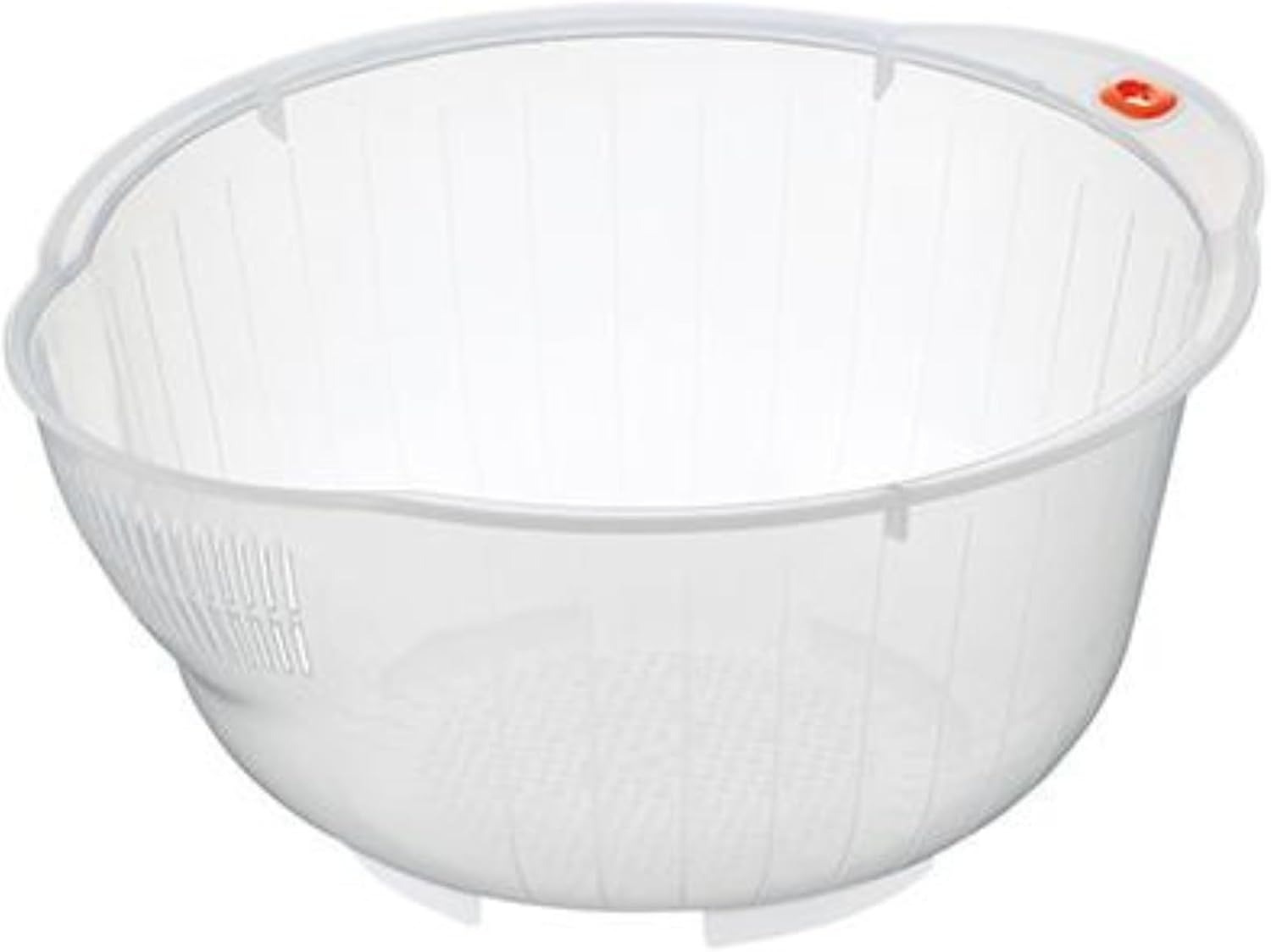
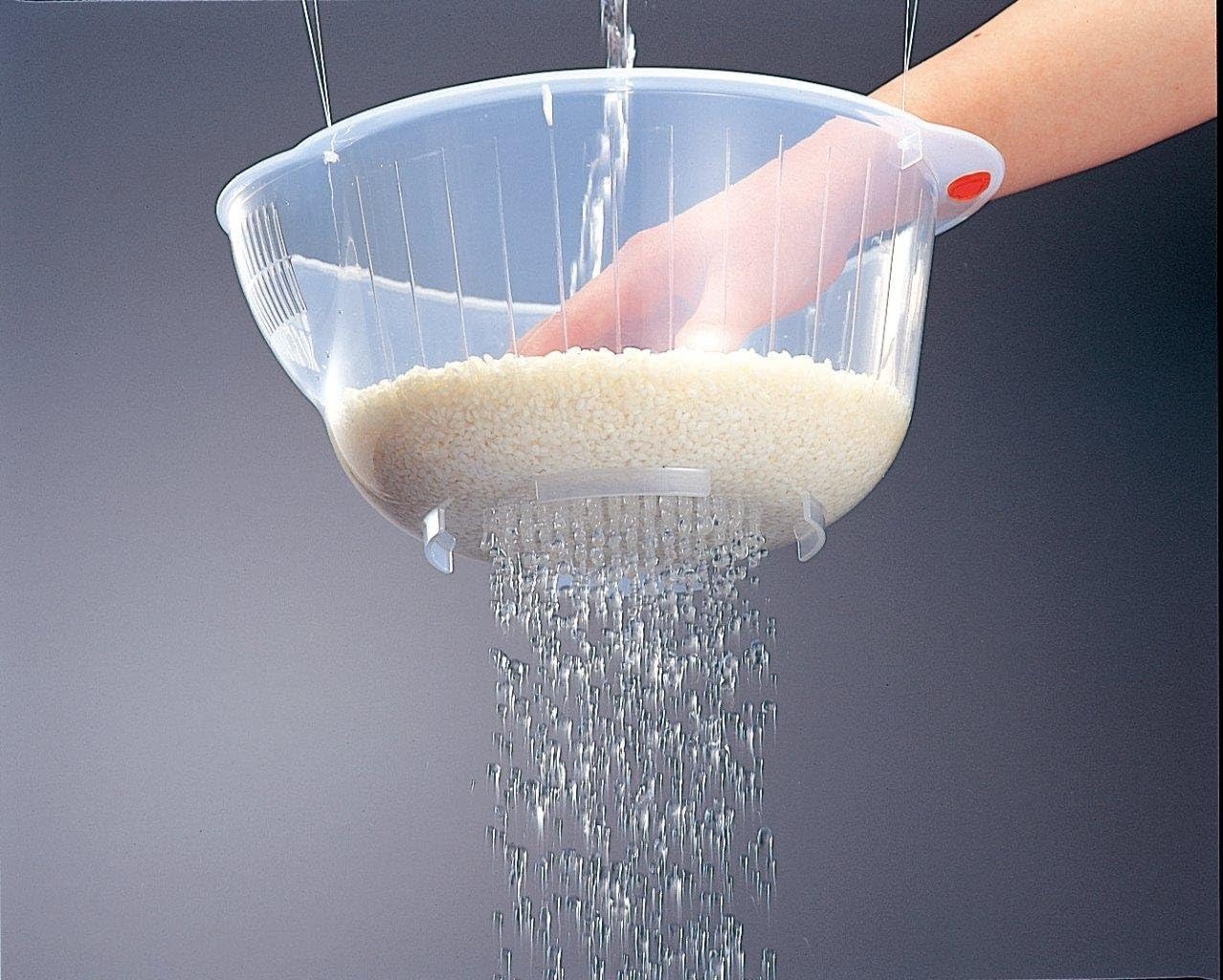
Inomata is a Japanese maker of plastic housewares for everyday kitchen jobs. This bowl is its best-known product on Amazon.com, where it carries a 4.7-star average from more than 14,000 ratings. The listing confirms it is made in Japan from food-grade plastic.
The design is simple. A row of slots runs down one side; the bottom is covered in small holes on raised feet. Fill it with rice plus water, swirl, then tilt it toward the slotted side. The milky water pours out while the grains stay behind the slots. Set it in the sink to let the last of the water drain through the base.
Picture the weeknight routine. Two or three rinses take less than a minute, with no rice going down the drain. The bowl measures about 10 by 10 inches across with a height of about 5 inches. It weighs only 3.2 ounces, so it is easy to swirl one-handed.
Amazon’s review summary says buyers like how quickly it drains plus how little rice escapes. The honest downside is the material. It is light plastic, so a stainless zaru is the better tool for hot pasta water. It also does one job very well rather than many.
Buy it if you cook rice often and want the cheapest, fastest fix. It also works for rinsing quinoa, beans or berries.
Sori Yanagi Punching Strainer 23 cm (Around $33 on Amazon)
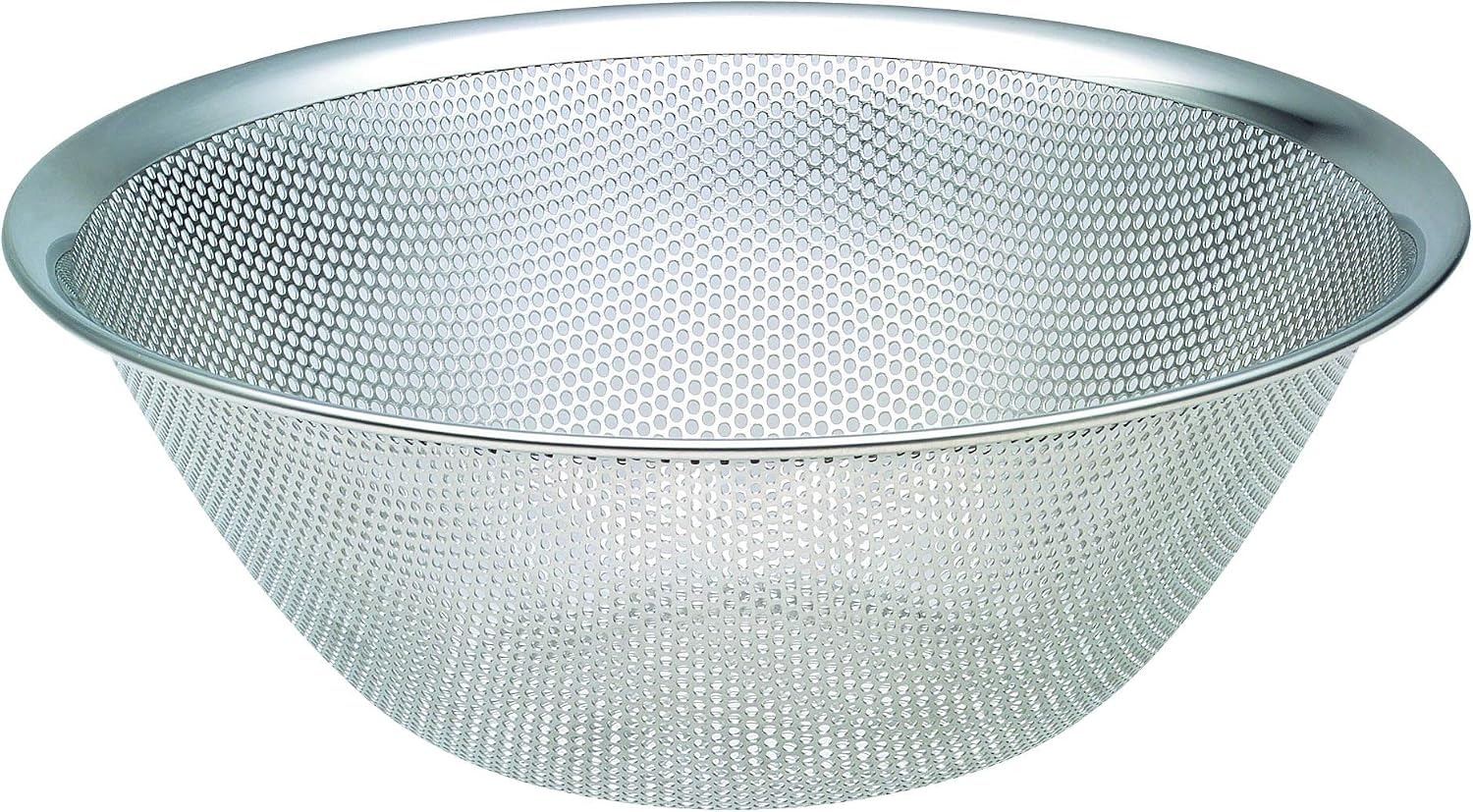
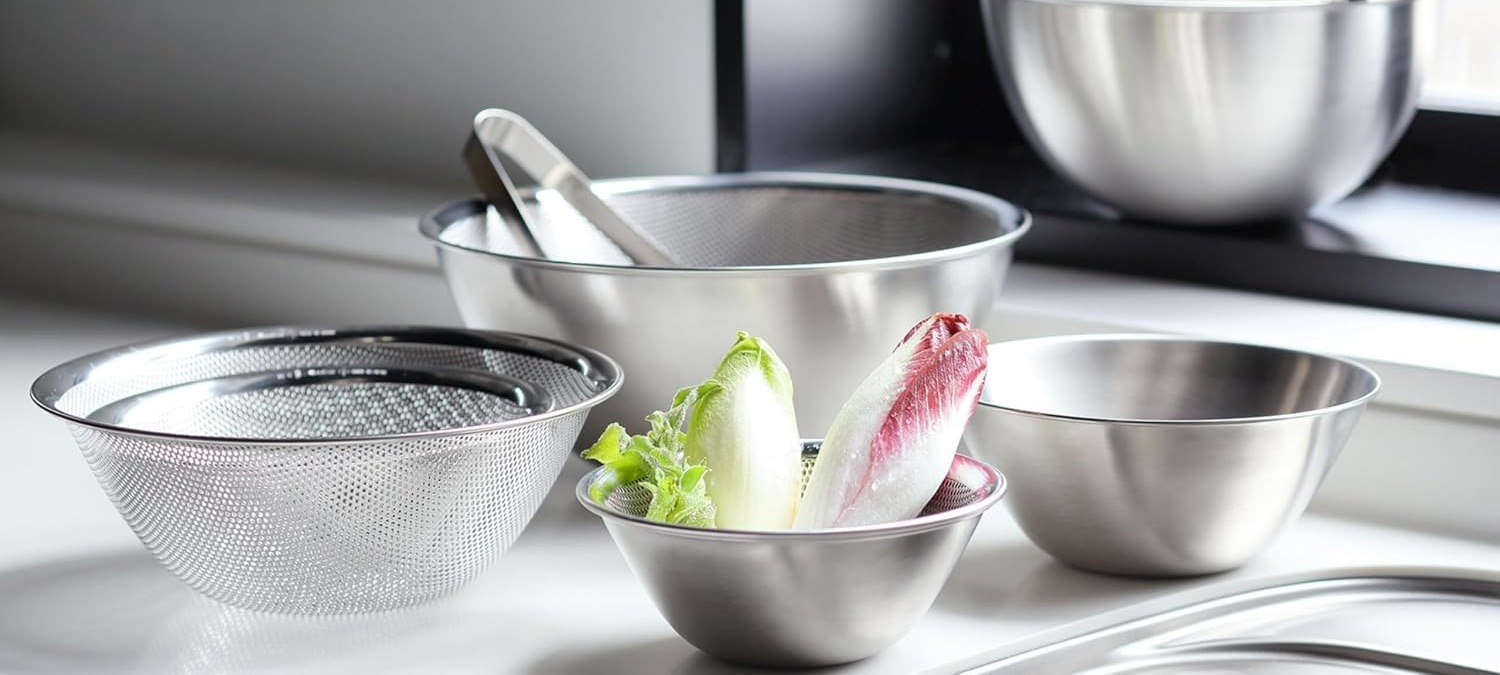
Sori Yanagi (1915–2011) was one of Japan’s best-known industrial designers. His father founded the mingei folk-craft movement, which prized plain everyday objects. Sori Yanagi kitchenware is produced in the Tsubame-Sanjo area of Niigata, Japan’s metalworking center. The bowls and strainers remain in production decades after they were designed.
Most stainless colanders are made from wire mesh. This one is a single sheet of stainless steel punched with small holes, then shaped into a bowl. The maker says this makes it tougher than mesh. There are no seams or wire edges to trap starch or bits of food, so it rinses clean quickly.
It measures about 9.4 inches across with a height of 3.4 inches. It weighs about 190 g. The listing says it can drain noodles, wash vegetables plus sit on a pan as a steamer. It is designed to nest with Sori Yanagi mixing bowls of the same size, which is how many Japanese cooks wash rice: rinse in the bowl, drain in the strainer.
It is rated 4.6 out of 5 from about 435 ratings. The honest downside is price; it costs more than twice as much as the mesh zaru below. The US listing also does not give the hole size. For very small grains such as quinoa, a fine mesh is the safer choice. Stock was low when we checked. If the matching bowls interest you, our Sori Yanagi kitchenware guide covers the bowl set.
Buy it if you want one colander that does everything for many years. It suits a cook who already likes simple stainless tools.
Shimomura Kihan TSUBAME Round Colander 22 cm (Around $17 on Amazon)
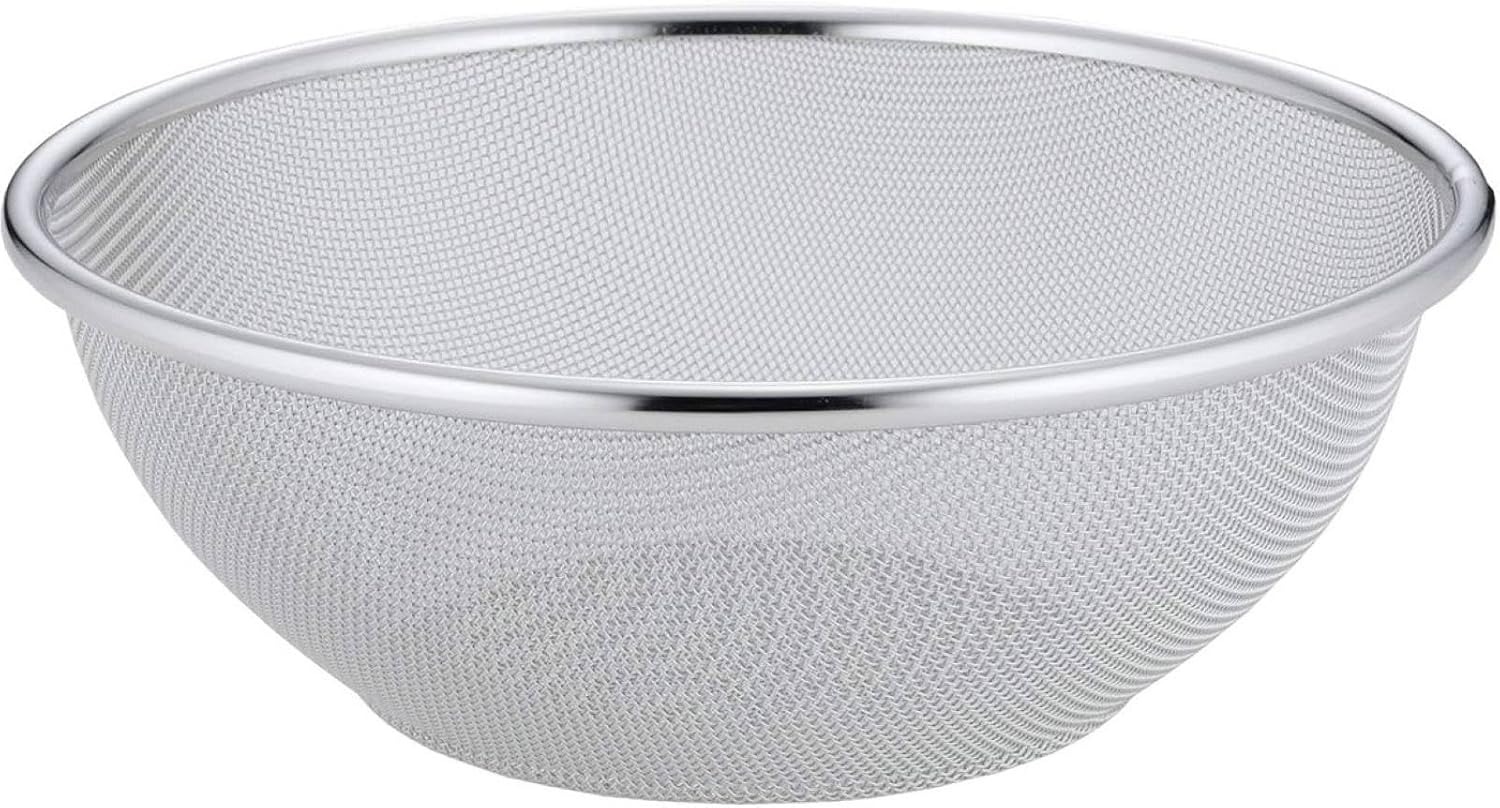
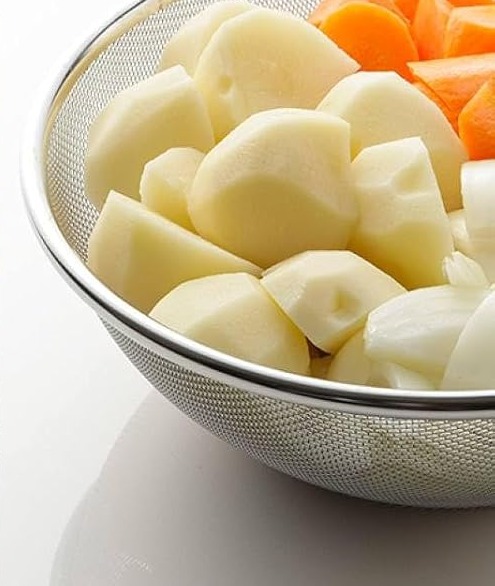
Shimomura Kihan was established in 1973 in Tsubame, Niigata. The wider Shimomura group traces its roots to blade-making in neighboring Sanjo in 1874. It is a different company from Shimomura Kogyo, the Sanjo maker known for peelers. The TSUBAME line is named after its home town plus the metalwork it is famous for.
This is the classic Japanese zaru. A bowl of fine 18-8 stainless wire mesh sits inside a sturdy rolled rim. The listing gives the mesh as 16 wires per inch. Holes that fine hold back short-grain rice as well as smaller grains. The outer diameter is 22 cm (8.7 inches), the depth 7.1 cm, the weight about 160 g.
The maker’s photos show a heavy brick resting on the colander without crushing it, a pointed answer to the soft mesh strainers that dent after a year. It is dishwasher safe. Picture a pot of somen at lunch: pour it into the zaru, rinse under cold water, shake once and serve.
The honest downside is the thin review record. It shows a 4.5-star average but only a small number of ratings, so there is less buyer evidence than for the other two. Fine mesh also takes a little more scrubbing to clear stuck starch than punched steel. Only a few units were in stock when we checked.
Buy it if you want a true stainless zaru at a lower price. It suits cooks who wash small grains or drain a lot of noodles.
Compare the Three
| Inomata Rice Bowl | Sori Yanagi 23 cm | Shimomura Kihan 22 cm | |
|---|---|---|---|
| Price (approx.) | $13 | $33 | $17 |
| Type | Rice washer with drainers | Punched zaru | Wire mesh zaru |
| Material | Food-grade plastic | Stainless, one sheet | 18-8 stainless mesh |
| Size | About 10 in across | 9.4 in across | 8.7 in across |
| Weight | 3.2 oz (about 90 g) | About 190 g | About 160 g |
| Hot water / noodles | Cold-water rinsing | Yes | Yes |
| Small grains (quinoa) | Yes | Check hole size | Yes, fine mesh |
| Amazon rating | 4.7 (about 14,000) | 4.6 (about 435) | 4.5 (few ratings) |
| Made in | Japan | Tsubame-Sanjo, Japan | Tsubame, Japan |
Prices are approximate US dollar figures from Amazon.com at the time of writing. They change often, so check the current listing before buying.
For washing rice only: the Inomata. It is the cheapest, lightest and most purpose-built of the three. The side slots make draining faster than any colander.
For one colander that lasts: the Sori Yanagi. It costs the most, yet the punched steel has no mesh to dent or fray. It pairs well with matching bowls.
For fine grains plus noodles on a budget: the Shimomura Kihan. It gives you real Tsubame stainless for about half the Sori Yanagi price. Pair any of these with a donabe clay pot for stovetop rice or with our onigiri molds and rice tools picks once the rice is cooked.
How to Wash Japanese Rice in a Rice Washing Bowl
Measure the rice into the bowl. Add cold water to cover, swirl briefly, then pour the first water off quickly, since dry rice absorbs it fast.
Add fresh water. Stir the grains gently with your fingertips for about 10 to 20 seconds; there is no need to scrub hard. Tilt the bowl toward the slots to drain. Repeat two or three times until the water is only slightly cloudy.
Let the rice drain for a few minutes in the bowl or zaru. Then move it to the rice cooker or pot with measured water. If you bought musenmai (no-wash rice), skip washing entirely; it has already been polished.
Summary
All three are made in Japan and cost less than a good bag of rice. Pick the Inomata if rice is the job. Pick the Sori Yanagi for a lifetime colander or the Shimomura Kihan for fine stainless mesh at a lower price.
Frequently Asked Questions
What is the best Japanese rice washing bowl?
For most kitchens, the Inomata Rice Washing Bowl with Side and Bottom Drainers. It is made in Japan, costs about $13 and is rated 4.7 out of 5 from more than 14,000 Amazon ratings.
What is a zaru?
A zaru is the round colander used in Japanese kitchens. Traditional ones were woven bamboo; modern ones are usually stainless steel mesh or punched stainless. They drain noodles, rice plus washed vegetables.
Do you really need to wash Japanese rice?
It is the standard Japanese method. Washing removes loose bran and surface starch, which helps the cooked grains taste cleaner and stay separate. The exception is musenmai, or no-wash rice, which is sold ready to cook.
Can I use a rice washing bowl for quinoa or beans?
Yes. The small drainer holes in the Inomata bowl hold back most grains and beans. A fine wire mesh zaru such as the Shimomura Kihan is the safest choice for very small grains.
Can a plastic rice washing bowl take hot water?
The US listing does not state a heat rating, so treat it as a cold-water tool. For draining hot pasta or noodles, use a stainless zaru such as the Sori Yanagi or Shimomura Kihan.
What is Tsubame-Sanjo?
Tsubame-Sanjo is a metalworking region in Niigata Prefecture made up of the cities of Tsubame and Sanjo. It is known in Japan for stainless tableware, kitchen tools plus blades. Both stainless zaru in this guide come from the area.