This article contains affiliate links (we may earn a commission).
In Japan, collagen supplements are as ordinary here as taking a daily vitamin back home. Nothing protects collagen like sun defence — our daily Japanese sunscreen guide explains what to use. Walk into any drug store in Tokyo or Osaka — Matsumoto Kiyoshi, Sundrug, Welcia — and an entire aisle is dedicated to beauty supplements, with collagen front and center. Adding collagen powder to morning coffee is an unremarkable daily habit for millions of consumers here. The term 飲むserum (nomo bijyoueki, “drinkable beauty serum”) is a product category that barely exists in Western markets, yet here it generates billions of yen annually. Japan consumes more collagen supplements per capita than any other country in the world.
This guide compares the three biggest names you’ll actually see in Japan — Meiji, Shiseido and FANCL — and aims to give the picture most Western review sites miss, because they rarely set foot in a Japanese pharmacy.
Best Overall — Meiji Amino Collagen Powder. Best Luxury Pick — Shiseido The Collagen Tablet W. Best for Skeptics — FANCL HTC Collagen DX.
Meiji Amino Collagen Powder: Japan’s Everyday Standard
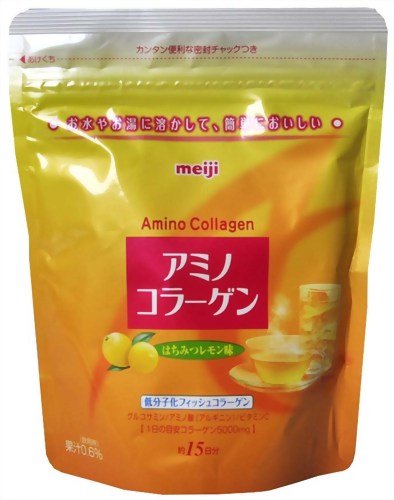
If there is one collagen supplement that defines what Japanese women in their 30s and 40s actually take, it is Meiji Amino Collagen. By any measure it is Japan’s single best-selling collagen supplement — it has occupied the top spot in Japanese beauty supplement rankings for years running.
What’s in the Jar
A single daily serving (about 6.5g) delivers 5,000mg of low-molecular hydrolyzed fish collagen peptides, alongside hyaluronic acid (20mg), ceramide (1,200mg), CoQ10, glucosamine, and L-arginine. The hydrolysis process breaks collagen into smaller peptides — this is what Japanese manufacturers argue allows better absorption compared to whole collagen. The powder is nearly flavorless and dissolves quickly in any liquid: coffee, tea, miso soup, yogurt.
The Brand in Japan
Meiji is one of Japan’s largest food and pharmaceutical conglomerates — the same company behind Meiji chocolate and Meiji yogurt. When they entered the collagen supplement space, they brought their food-science credibility with them. In Japan, Amino Collagen isn’t a “beauty product” in the precious sense. It’s sold at 7-Eleven, FamilyMart, and drug stores. Japanese women in their 30s to 50s treat it the way Westerners treat a multivitamin — a routine morning habit, not a special occasion.
The packaging itself reflects this: understated, clinical, white and green. No aspirational imagery. In a market where Shiseido sells glamour, Meiji sells routine trust. For an everyday topical layer, see our Japanese moisturizer guide. That positioning has made it a household name across generations.
The Science Debate — Japanese vs. Western Views
Here’s something worth knowing before you read Western dermatology blogs about collagen supplements: the scientific consensus differs between Japan and the West. Japanese dermatologists, and publications like VoCE and MAQUIA (Japan’s leading beauty magazines), operate on the mainstream assumption that hydrolyzed collagen peptides reach the skin via the bloodstream. Peer-reviewed studies in Japanese journals — including some from Meiji’s own R&D division — support bioavailability of marine collagen peptides. Western dermatology is more skeptical, often pointing out that digestion breaks proteins into amino acids indistinguishable from any dietary protein.
This guide is not here to resolve that debate. What we can tell you is that Japanese women who take this product seriously cite it as part of long-term skin maintenance — and there are clinical trials (not by Meiji) showing measurable skin elasticity improvements with hydrolyzed collagen peptide supplementation over 8–12 weeks. The evidence base is growing.
Supplements pair with topical care — our premium Japanese anti-aging skincare comparison covers the premium end.
Who Should Buy Meiji Amino Collagen
If you want the product that Japanese women actually take at scale — the mass-market gold standard — this is it. It’s the entry point into the category that almost everyone in Japan starts with. The price-to-dose ratio is reasonable, and you can find it in convenience stores across the country when you visit.
Meiji Amino Collagen Powder — Available on Amazon
Shiseido The Collagen Tablet W: The Department Store Choice
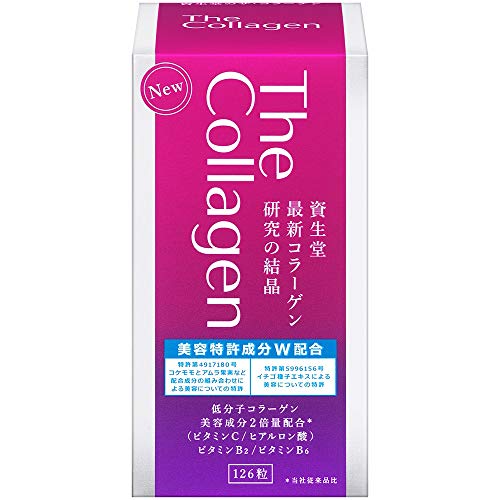
Walk into the beauty supplement section of Isetan or Takashimaya — Japan’s landmark department stores — and you’ll find Shiseido The Collagen displayed alongside skincare serums and foundation, not next to sports supplements. That placement is deliberate and communicates everything about what this product is: a luxury beauty item that happens to be ingestible.
What’s in the Tablet
The Collagen Tablet W (“W” stands for the two-generation formula update) contains collagen peptides, hyaluronic acid, elastin, and vitamin C, plus Shiseido’s proprietary SPCP (sodium polyglutamate complex) blend. Six tablets per day — the recommended dose — provides collagen equivalent to one full bottle of the Shiseido collagen drink. The tablet format appeals to people who prefer capsules over powder mixing.
Shiseido claims over 40 years of collagen research underpins the formula, and that lineage genuinely means something in Japan. Their skincare science division, SENESCENCE LAB, has published research on skin aging mechanisms. When they put that credibility behind a supplement, it carries weight with Japanese consumers who already trust Shiseido for their serum and sunscreen.
The Brand in Japan
Shiseido is arguably Japan’s most recognized beauty brand globally, founded in 1872. Their cosmetics line is sold in over 120 countries. In Japan, The Collagen is positioned as the premium in-between tier: above mass-market (like Meiji) but accessible to anyone who buys their skincare at a department store counter. The brand association is the product. Women who already use SHISEIDO Cle de Peau skincare or ELIXIR serums naturally extend trust to the ingestible collagen.
This matters more than it might sound. In the Japanese supplement market, where unregulated products proliferate, the Shiseido name functions as a quality signal. Buying from Shiseido means you’re buying from a company that has real regulatory accountability, decades of dermatological research, and a reputation it cannot afford to damage.
Comparing the Two Formats: Tablet vs. Drink
Shiseido offers The Collagen in both tablet and drink formats. The drink is popular in Japan as a convenience purchase — sold individually at department store food halls. The tablet is better value for daily sustained use. The “W” version is the current formulation (replacing the older “V” and “EX” versions) and is the one to look for.
Who Should Buy Shiseido The Collagen
This is the right pick if you already trust the Shiseido brand in your skincare routine, prefer tablets to powder, or want to gift a beauty supplement that communicates prestige. It’s not a budget purchase, but you’re paying for a brand that has spent decades building credibility in Japanese dermatological research.
Shiseido The Collagen Tablet W — 126 Tablets
FANCL HTC Collagen DX: The Science-First Option

FANCL occupies an interesting niche in the Japanese supplement market: the brand that built its identity around what it doesn’t put in its products. Founded in 1980 in Yokohama, FANCL pioneered preservative-free cosmetics in Japan at a time when the industry dismissed the concept. That philosophy extended to their supplement line: minimal additives, no coloring agents, no unnecessary fillers.
What’s in the Capsule
FANCL’s HTC Collagen DX is built around their proprietary HTC Collagen (High Triple Collagen) — a hydrolyzed marine collagen peptide formulation developed in partnership with Nitta Gelatin, one of Japan’s leading collagen research organizations. Each daily serving of three tablets delivers collagen peptides alongside glucosamine, vitamin C, and elastin. What distinguishes FANCL’s approach is their emphasis on documented absorption studies conducted with their specific peptide molecular weight range.
FANCL has published internal research showing measurable increases in dermal collagen density in test subjects after 12 weeks of supplementation with their specific peptide formulation. They are more transparent about their methodology than most Japanese supplement brands — something that appeals to the consumer who wants to see the data, not just marketing copy.
The Brand in Japan
FANCL is a beloved brand among Japanese women who are health-conscious and ingredient-savvy. Their flagship Harajuku and Ginza stores function more like wellness clinics than beauty counters — staff are trained in nutrition science. The brand sits between mass-market (Meiji) and ultra-luxury (Shiseido department store) but skews toward educated, research-aware consumers.
Importantly, FANCL doesn’t rely on distributor markup the way department store brands do. Their pricing reflects more direct-to-consumer economics, which means you get a meaningfully formulated product without the full department-store premium. In Japan, FANCL is the supplement choice of the “I read the label” consumer — the same person who cross-references ingredient lists on rice crackers.
Who Should Buy FANCL HTC Collagen DX
If you’re a skeptic who wants the most scientifically documented Japanese collagen option, FANCL is your brand. The HTC Collagen technology has the most published supporting research of these three options, and the preservative-free, minimal-additive formula suits people who are particular about what they put in their bodies.
FANCL HTC Collagen DX — 180 Tablets
Side-by-Side Comparison
| Feature | Meiji Amino Collagen | Shiseido The Collagen W | FANCL HTC Collagen DX |
|---|---|---|---|
| Format | Powder (mix in drinks) | Tablet (6/day) | Tablet/Capsule (3/day) |
| Collagen per serving | 5,000mg | Varies by tablet count | HTC proprietary blend |
| Key extras | Hyaluronic acid, ceramide, CoQ10 | Elastin, SPCP complex, Vit C | Glucosamine, elastin, Vit C |
| Japan retail tier | Convenience store / drugstore | Department store | Specialty / direct-to-consumer |
| Brand philosophy | Mass market trust | Luxury beauty credibility | Preservative-free science |
| Best for | Beginners, daily routine | Brand loyalists, gifting | Ingredient-aware buyers |
Final Verdict
After comparing all three, the answer depends entirely on who you are as a buyer. But if we had to recommend just one product to someone starting their Japanese collagen journey, it would be Meiji Amino Collagen — because it’s the product that Japan itself chose as its standard.
#1 – Meiji Amino Collagen Powder Japan’s best-selling collagen supplement. Trusted by millions of Japanese women. Simple formula, excellent dissolution, adaptable to any daily beverage. The benchmark everything else is measured against. Check price on Amazon →
That said, Shiseido The Collagen W is the better choice if you value brand pedigree and prefer tablets. And FANCL HTC Collagen DX wins on research transparency — if you want the most documented formula, that’s the one.
Which Should You Buy? A Decision Guide
- New to Japanese collagen supplements? Start with Meiji Amino Collagen. It’s the product the entire Japanese market standardized around, it’s easy to use, and it’s forgiving if you miss a day.
- Already use Shiseido skincare? The Collagen W is the obvious extension of your existing brand trust. Six tablets a day is the commitment, but many users find it easier than mixing powder.
- Health-conscious and want documented science? FANCL HTC Collagen DX is the choice. The preservative-free formulation and published absorption research give ingredient-savvy buyers the backing they need.
- Buying as a gift from Japan? Shiseido The Collagen is the most giftable — the packaging and brand name communicate thoughtfulness immediately.
- Budget-conscious? Meiji offers the best volume-to-cost ratio of the three, especially if you find the standard (non-premium) variant.
One final Japan insider note: if you ever visit Japan, buy these at a drugstore or convenience store, not at the airport. Drug stores like Matsumoto Kiyoshi consistently have them in stock at Japanese retail prices — significantly cheaper than the imported premium you’ll pay shipping internationally. Bring an extra bag.
FAQ: Japanese Collagen Supplements
Do Japanese collagen supplements actually work?
The evidence is growing but still contested. Japanese clinical studies — including some published in peer-reviewed international journals — have shown measurable improvements in skin elasticity, hydration, and wrinkle depth after 8–12 weeks of consistent supplementation with hydrolyzed collagen peptides. Western dermatology remains more skeptical, arguing that digestion reduces all proteins to amino acids. The honest answer: the studies are more positive than critics suggest, but individual results vary significantly. Consistency over months matters more than any single dose.
What is the difference between collagen powder and collagen tablets?
Both deliver hydrolyzed collagen peptides, but the delivery mechanism differs. Powder (like Meiji) allows you to add collagen to any beverage or food, which many people find easier to sustain as a habit. Tablets (like Shiseido and FANCL) are more convenient if you travel or dislike mixing. There’s no significant evidence that one format absorbs better than the other once digested — it’s primarily a preference and lifestyle question.
Why do Japanese collagen supplements use fish collagen?
Marine (fish) collagen is predominantly Type I collagen, which is the most abundant type in human skin. Japanese supplement manufacturers favor marine collagen for several reasons: the peptide molecular weight after hydrolysis is generally smaller than bovine collagen (thought to improve absorption), Japan has an abundant domestic supply of fish byproducts from the sashimi and seafood industries, and there are no religious dietary restrictions that affect fish consumption in the primary Japanese market. Most high-quality Japanese collagen supplements use marine-sourced peptides.
How long before I see results from Japanese collagen supplements?
Based on available clinical studies and the consensus among Japanese dermatologists, the minimum meaningful trial period is 8 weeks of daily use. Most Japanese brands recommend 3 months as the timeframe to assess whether the product is working for your skin. Changes tend to manifest first as improved hydration (noticed within 4–6 weeks), followed by subtle improvements in skin elasticity and texture. Do not judge a collagen supplement after two weeks — that is not how the mechanism works.
Frequently Asked Questions
Will this product ship internationally from Amazon Japan?
Most of the Japanese-brand items featured here are also stocked on Amazon US (amazon.com), and the links above point to that storefront so international readers can buy with familiar shipping options. If you specifically want the Japanese-domestic SKU, and you are based outside Japan, Amazon Global Shipping or a forwarder like Tenso/Buyee can handle the import – just be aware of customs duties on items above roughly $200.
Are these the actual products Japanese consumers buy?
Yes. Selection prioritises models that are actually stocked in Japanese retail – Bic Camera, Yodobashi, Don Quijote, Loft and konbini chains – not just what ranks on Amazon US. Where a brand sells different model numbers in Japan vs. the US, we note that explicitly so you can pick the right SKU.
Can I trust the price information Here?
Prices on Amazon move daily, and the dollar-yen exchange rate adds another layer of variation. Treat the figures here as a snapshot at the time of writing – always click through and check the current Amazon listing for the live price before buying.
What if I want a Japanese-domestic version that is not listed?
Drop us a note via the contact form on vs-navi.online. If the model can be sourced and verified, we will consider writing it up.
References
- Shiseido – Corporate History – Official corporate history, accessed May 2026
- Meiji Holdings – Corporate Profile – Meiji official, accessed May 2026