As an Amazon Associate, vs-navi.online earns from qualifying purchases. Amazon links on this page are affiliate links.
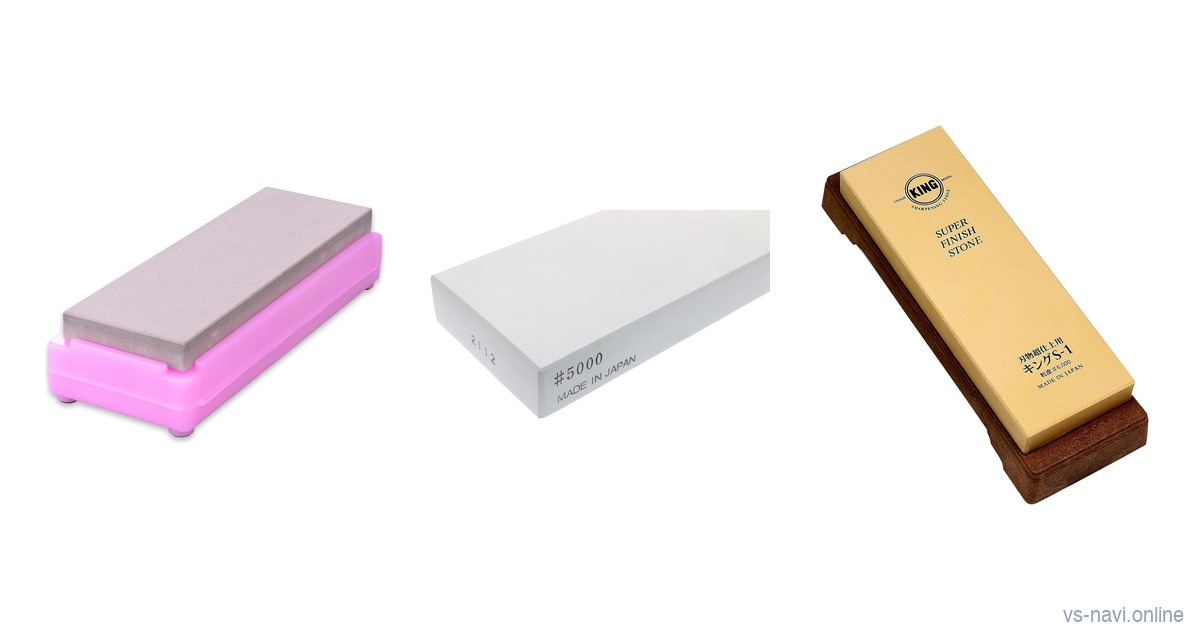
A 1000 grit stone makes a knife sharp. A finishing stone makes that edge smooth, so it glides through a tomato skin and keeps its bite for longer between sessions.
Finishing stones sit roughly between 3000 and 8000 grit. In Japan they are called shiage-to and almost every whetstone maker sells one or two.
We compared three Japanese finishing stones listed on Amazon.com in November 2026: the Shapton Ha no Kuromaku #5000, the Suehiro Rika #5000 and the King S-1 #6000. This is a desk comparison of the listings, the maker information and public ratings.
Our Picks: Which Finishing Stone for Which Sharpener
- For quick sessions: Shapton Kuromaku #5000. A thin ceramic stone in a case that doubles as a stand, from a maker that says its stones are ready to use with just water on the surface.
- For a soft, polished feel: Suehiro Rika #5000. A thick ceramic finishing stone with a 4.8 rating that buyers describe as silky.
- For a traditional stone on a base: King S-1 #6000. A long-running Japanese finishing stone mounted on a wooden base.
Check price on Amazon →Amazon affiliate link
Do You Need a Finishing Stone?
If you sharpen on a single 1000 grit stone, the edge will cut well but feel a little toothy. A finishing stone removes the scratch pattern the 1000 leaves and refines the very edge.
Most home cooks only need one finishing stone. Around 5000 to 6000 grit is the usual next step after a 1000. Higher grits such as 8000 give more polish but take longer to show a difference.
Finishing stones remove very little steel, so they do not fix chips or a dull edge. That is still the job of a medium stone. Our guide to a first Japanese whetstone covers the King, Naniwa and Shapton 1000 grit stones that come before this step.
Two practical questions separate the stones below: does it need soaking and does it sit on its own base or need a holder.
Shapton, Suehiro and King in Japan
Shapton is a Japanese maker of ceramic whetstones. Its official site says the Ha no Kuromaku line was the first whetstone in the world color-coded by grit, with each grit in its own colored case.
Suehiro presents itself as a specialist maker of whetstones and sharpeners. Its range runs from standard stones to high-grade finishing stones and the Rika is one of its finishing models.
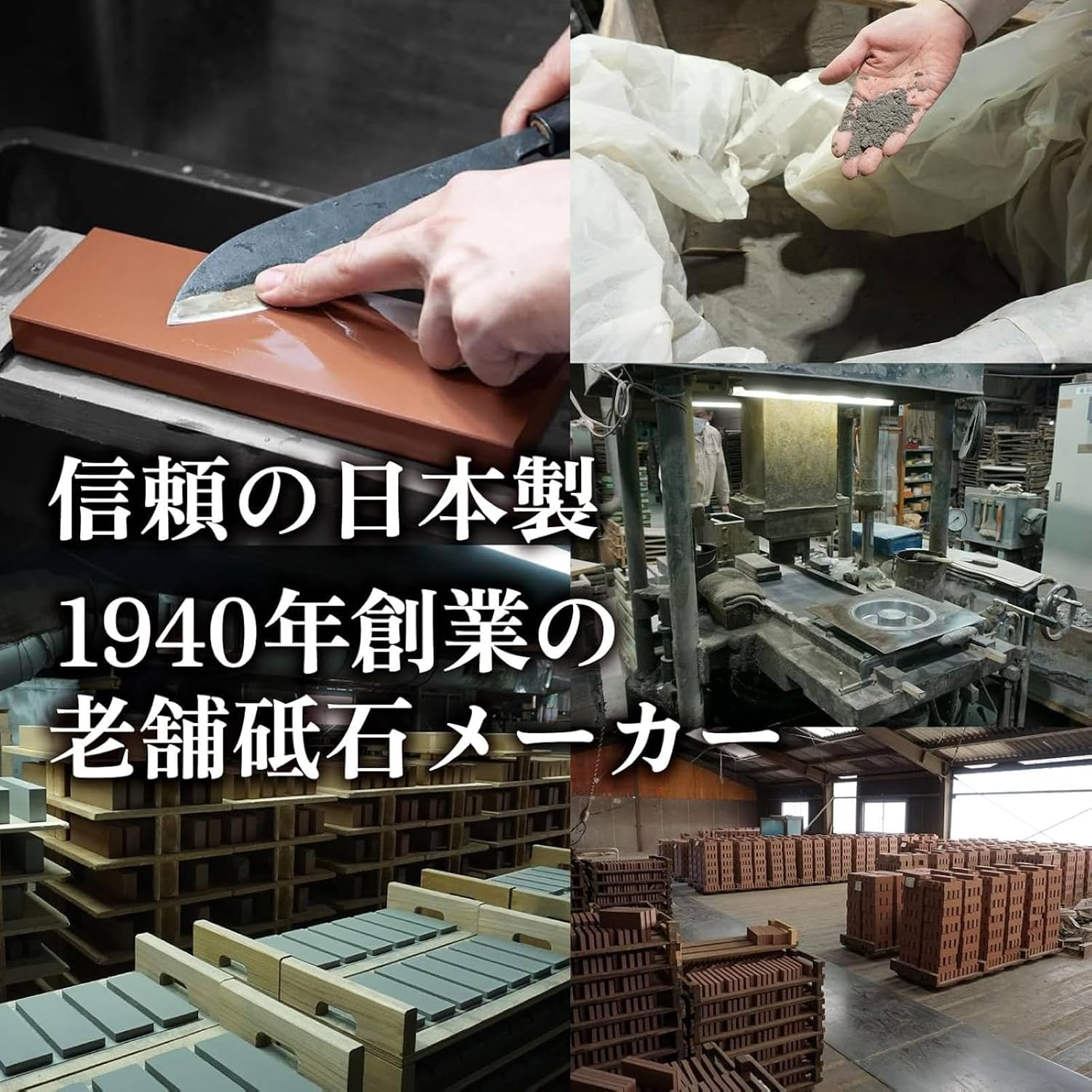
King is a long-running Japanese whetstone brand. An image on the King listing describes the maker as an established whetstone company founded in 1940.
All three listings say the stones are made in Japan.
Shapton Ha no Kuromaku #5000
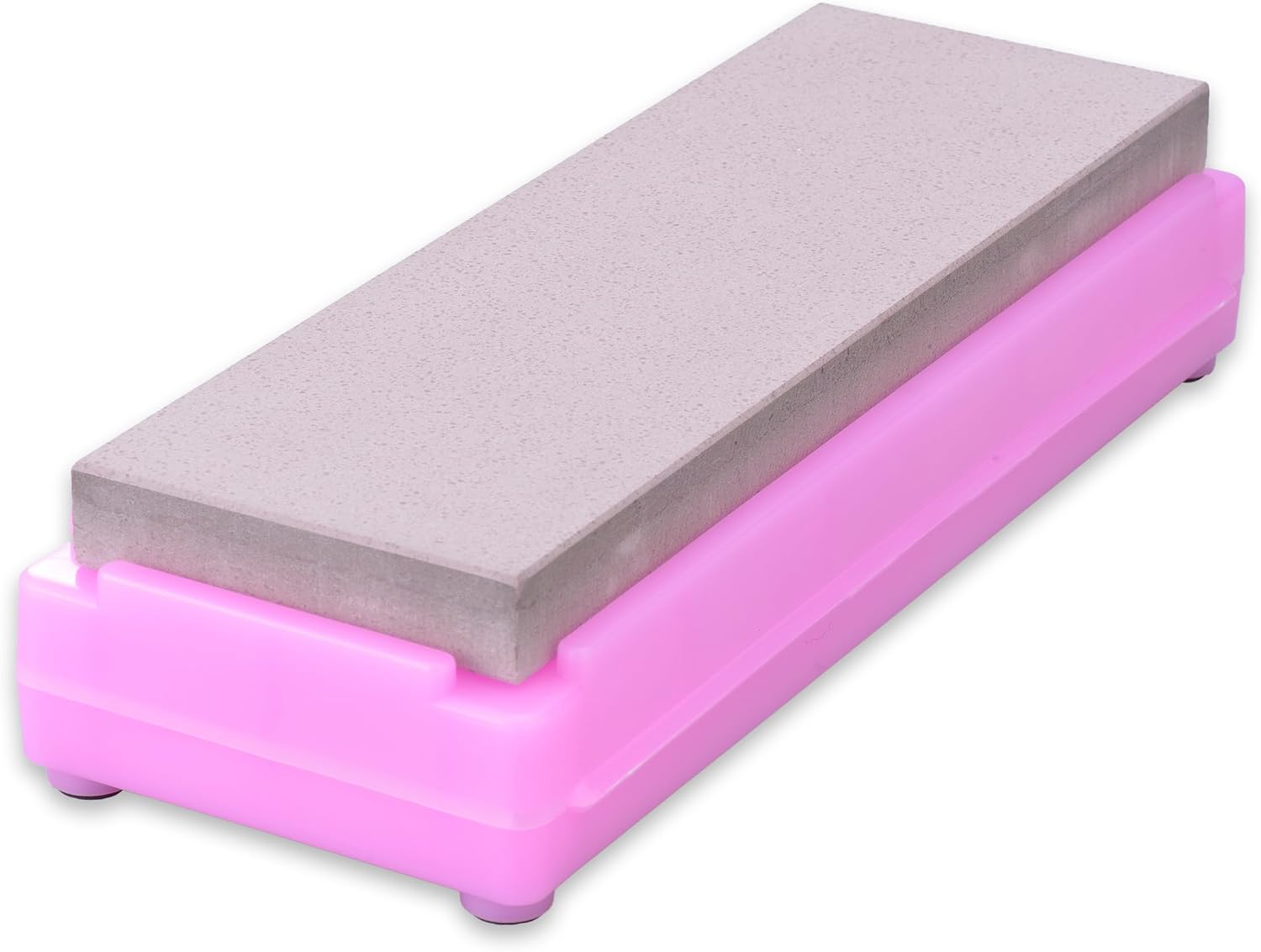
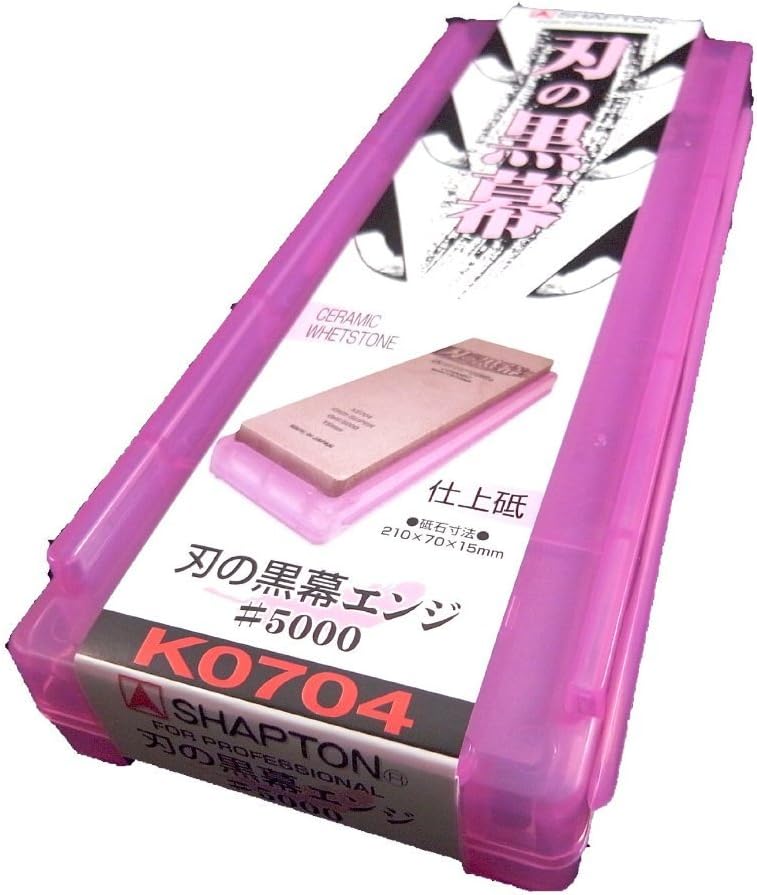
The Kuromaku #5000 is the finishing grit in Shapton’s color-coded line. Shapton lists it as K0704, color Enji, at 210 x 70 x 15 mm and about 500 g.
Its plastic case is the main convenience. Shapton says the case works as a sharpening stand and the listing repeats that, so you do not need a separate holder.
The listing describes strong polishing power without the slick feel common with traditional finishing stones. Shapton’s site also says the line can be used as an oil stone.
It showed 4.8 out of 5 from about 6,600 ratings, a total shared with other Kuromaku grits on Amazon.com. Amazon’s AI summary of reviews says customers find it durable with little wear and fast-cutting, with one buyer reporting a mirror edge on carbon steel knives.
The downside is thickness and price. At 15 mm it is the thinnest stone here, so it will wear through sooner. It was also the most expensive of the three when we checked.
It suits sharpeners who want to wet the stone and start and anyone who already uses Shapton for the 1000 grit step.
Check price on Amazon →Amazon affiliate link
Suehiro Rika #5000
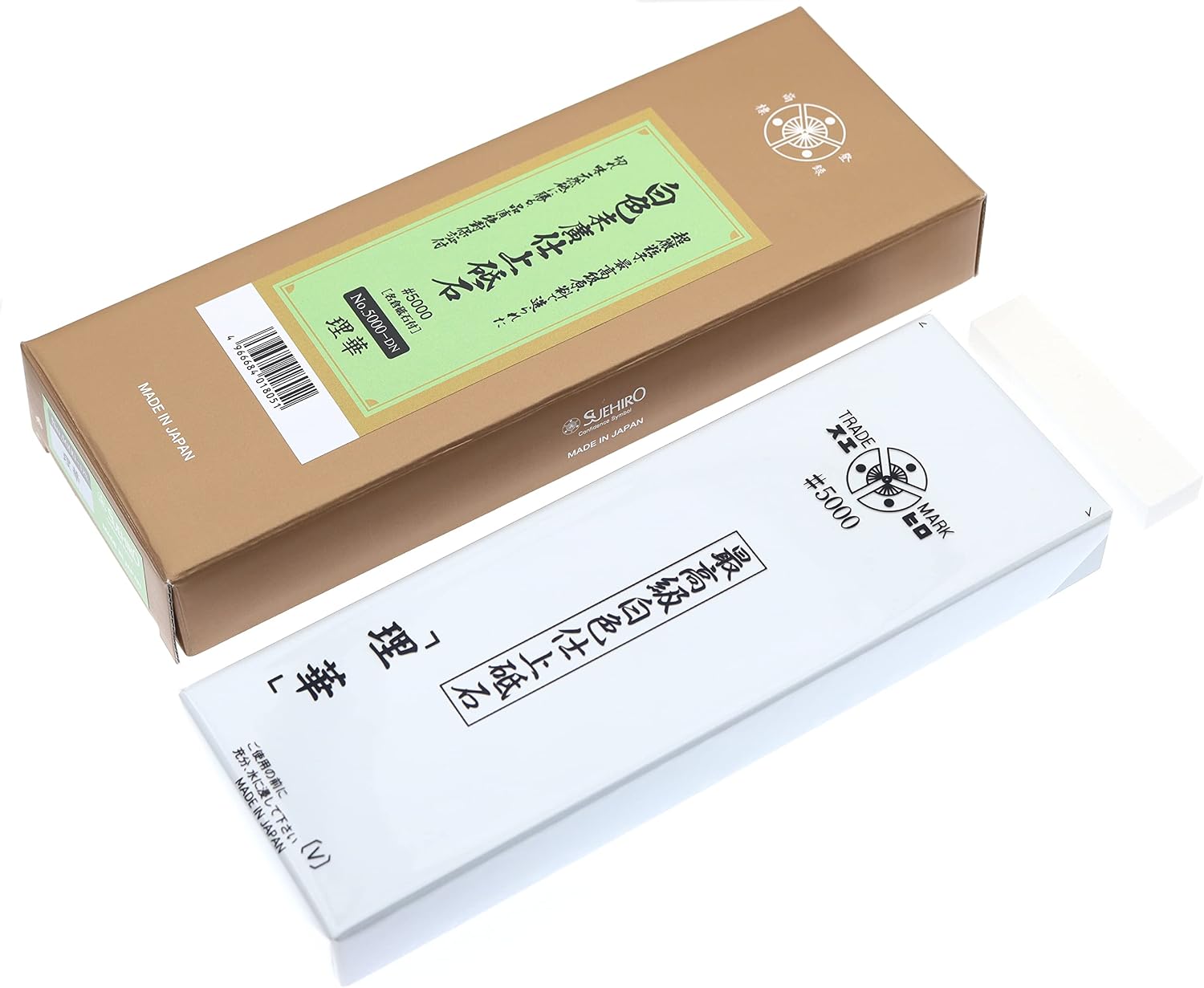
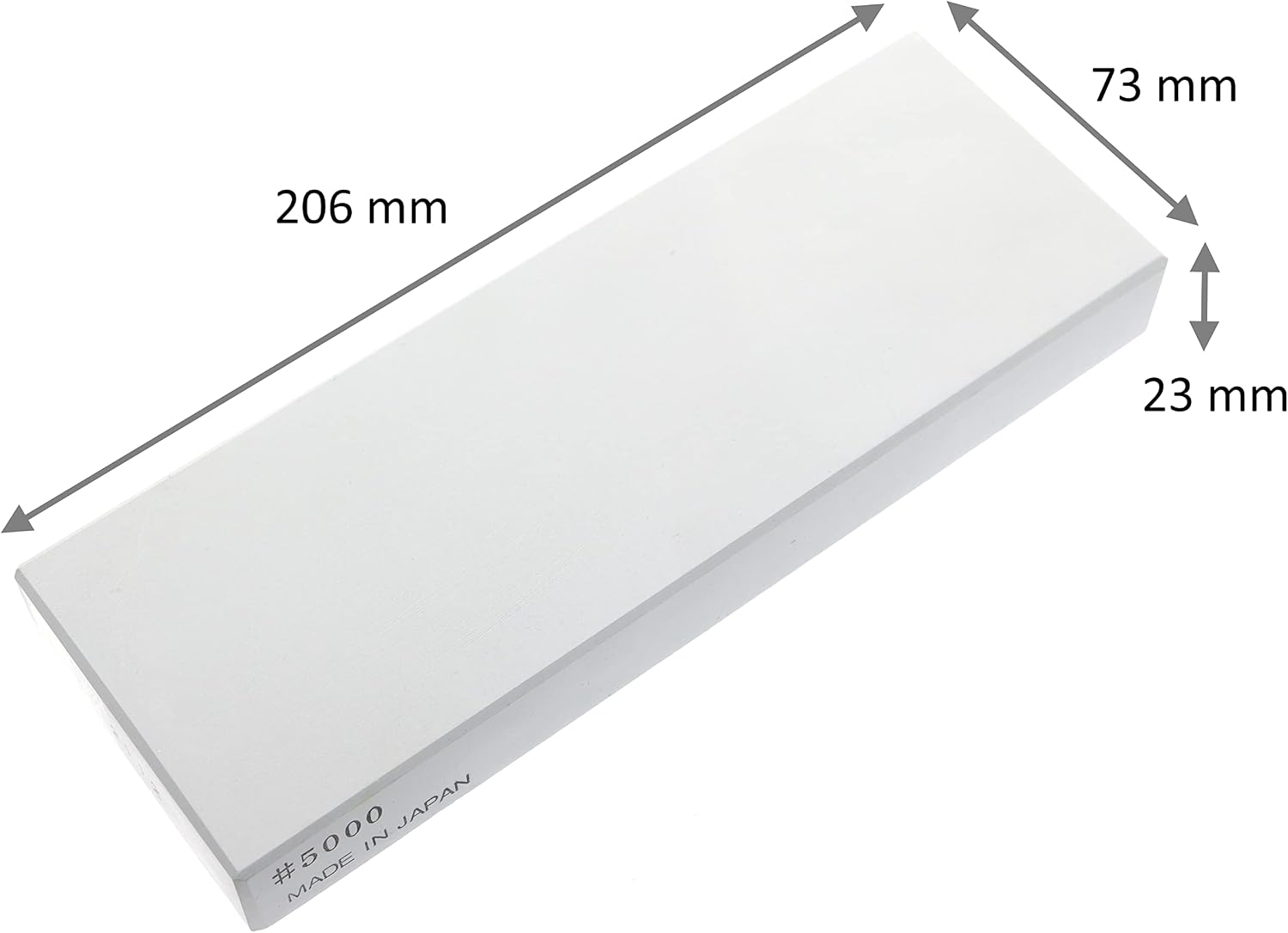
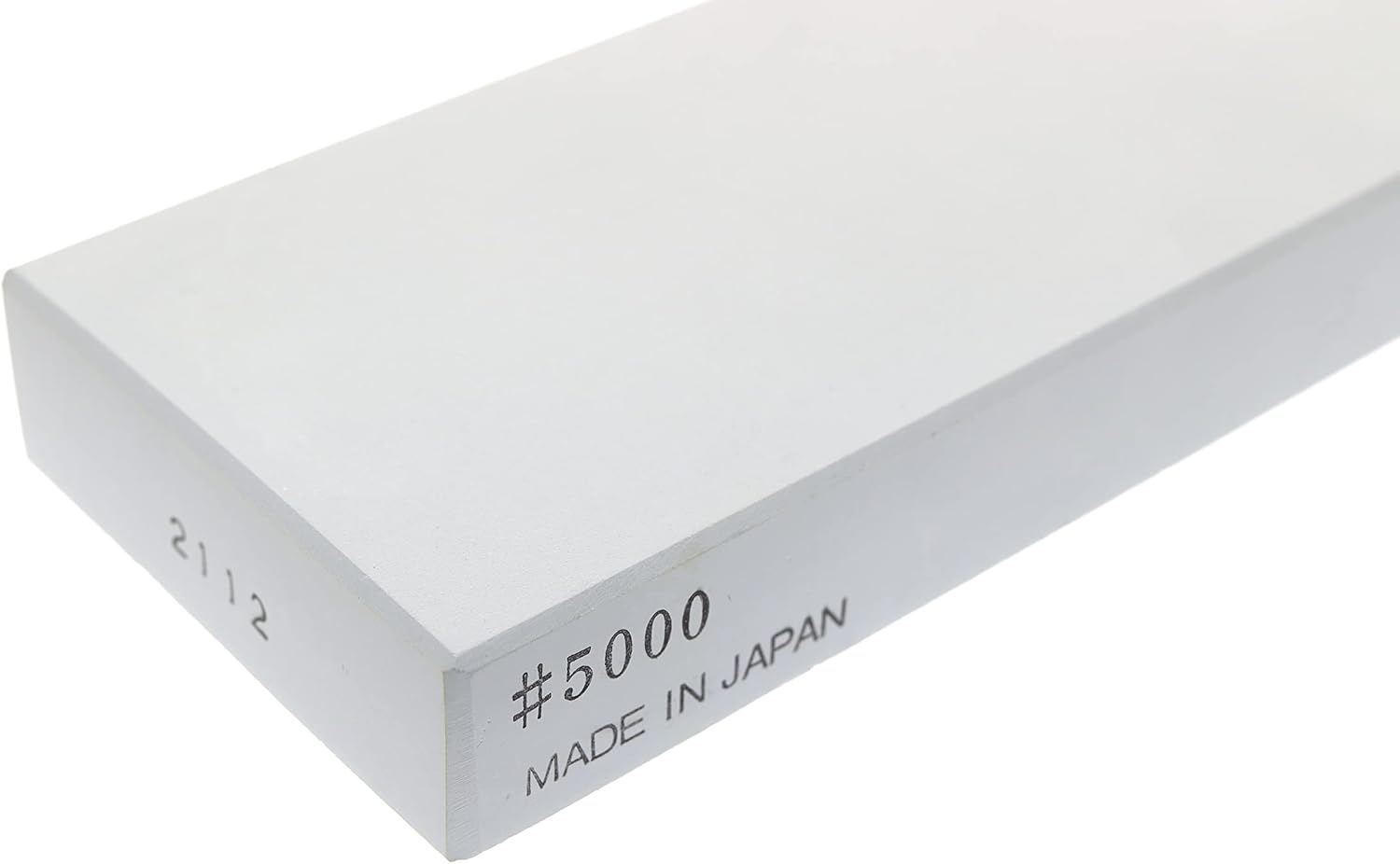
The Rika is Suehiro’s ceramic finishing stone. This listing is the 5000-DN without a base and gives a size of 206 x 73 x 23 mm, so it is much thicker than the Kuromaku.
The listing notes that the current version of the Rika has no markings on the stone surface. The instruction image on the listing tells you to soak the stone well in water before sharpening.
It held 4.8 out of 5 from about 350 ratings. Amazon’s AI summary says customers find it gives fine, sharp edges and cuts quickly for a 5000 grit stone, with a silky texture and good feedback.
The same summary reports mixed views on the finish: some buyers describe a satin polish, others note it does not give a mirror. Opinions on ease of use are also split.
The downside is that it needs soaking and a holder, since this version has no base. It suits sharpeners who prefer a soft, polished feel and plan to use the stone for a long time.
Check price on Amazon →Amazon affiliate link
King S-1 #6000 Super Finish Stone
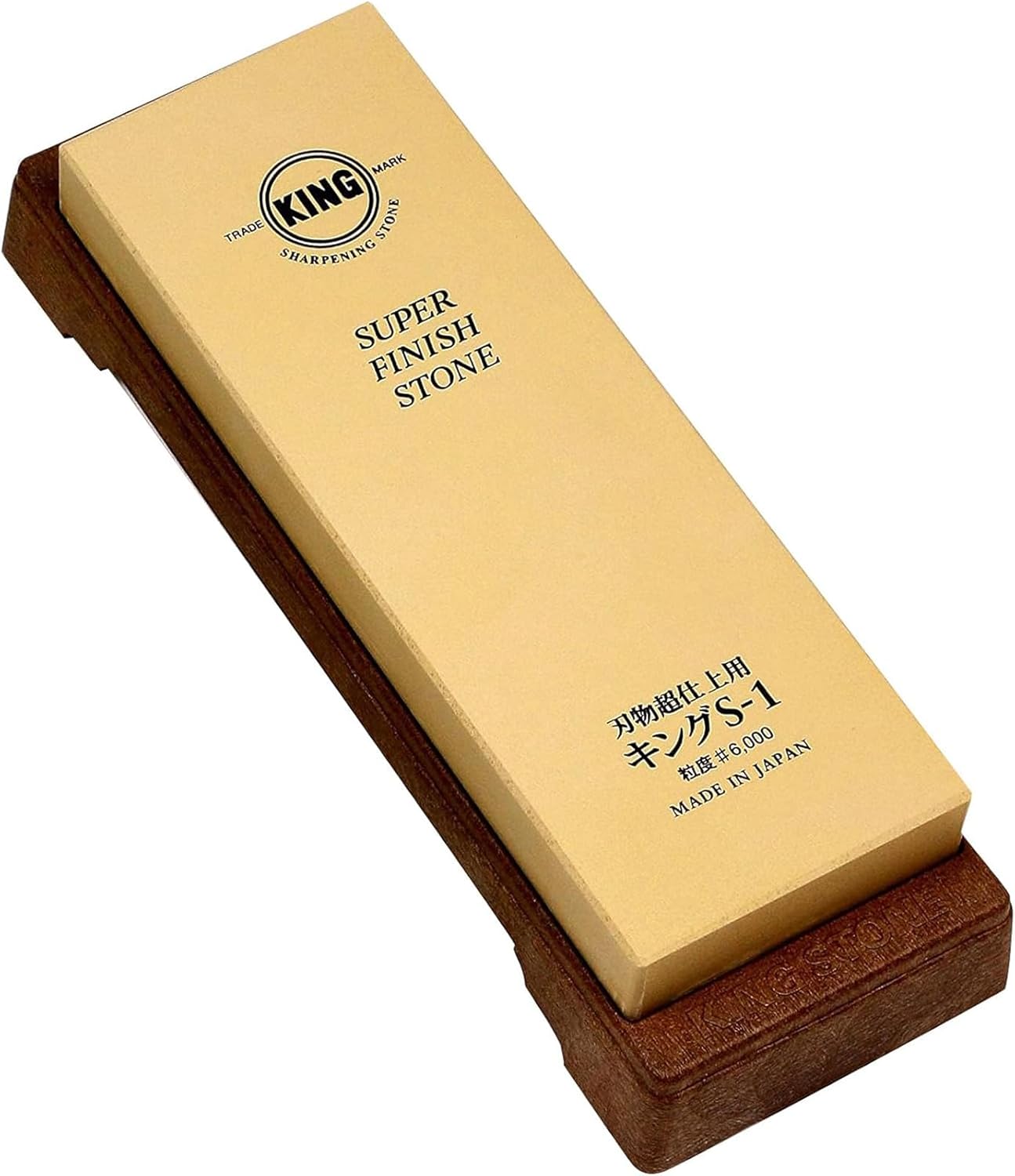
The King S-1 is a traditional 6000 grit finishing stone sold on a wooden base. The box in the product image reads Super Finish Stone and the listing says it is made in Japan.
The item details give 8.27 x 2.87 x 0.87 in and about 0.91 kg with the base. The base means it can go straight onto a towel or sink bridge without a separate holder.
It held 4.5 out of 5 from about 340 ratings. Amazon’s AI summary says customers find it effective and good value, with razor-sharp edges and a mirror polish. One buyer notes it works without a nagura stone.
The downside is build consistency. The same summary reports mixed feedback on durability, including the stone separating from the base. Some buyers also say it is smaller than they expected.
It suits beginners who want a familiar Japanese finishing stone at a moderate price and sharpeners who like the feel of a classic water stone.
Check price on Amazon →Amazon affiliate link
Compare the Three
| Shapton Kuromaku #5000 | Suehiro Rika #5000 | King S-1 #6000 | |
|---|---|---|---|
| Grit | 5000 | 5000 | 6000 |
| Material (per listing) | Ceramic | Ceramic | Not stated |
| Size | 210 x 70 x 15 mm | 206 x 73 x 23 mm | 8.27 x 2.87 x 0.87 in |
| Base or stand | Case doubles as stand | None (without-base version) | Wooden base |
| Soaking | Wet the surface (maker) | Soak before use (listing image) | Not stated on listing |
| Made in Japan | Yes, per listing | Yes, per listing | Yes, per listing |
| Amazon rating | 4.8 (about 6,600, shared) | 4.8 (about 350) | 4.5 (about 340) |
| Best fit | Fast sessions | Polished feel | Classic stone on a base |
If you want to start sharpening the moment you take the stone out, the Shapton Kuromaku #5000 is the pick. The case doubles as a stand and the stone does not need a long soak.
If you care more about how the stone feels and want it to last, the thicker Suehiro Rika is the better match. The King S-1 is the classic option with its own base.
Buyer’s Considerations
Flatten your stones. Finishing stones wear unevenly like any whetstone. A flattening plate keeps the surface true. Our whetstone holder and angle guide comparison covers holders that fit stones without a base.
Keep stones apart. Grit from a coarse stone can scratch a finishing stone. Rinse the knife and your hands between grits.
Soaking stones and splash stones. Read the instructions for each stone. Leaving a splash-and-go ceramic stone underwater for long periods is not what its maker intends.
Third-party sellers. All three were sold by third-party sellers on Amazon.com when we checked, so check the seller and delivery date.
Prices. Prices change often and may display in another currency depending on your address, so check the listing before you buy.
Summary
The Shapton Kuromaku #5000 is the fast, case-mounted finishing stone with the deepest rating record.
The Suehiro Rika #5000 is the thicker soaking stone with a silky feel. The King S-1 #6000 is the classic finishing stone on a wooden base.
Check the current price on each Amazon.com listing before ordering.
Check price on Amazon →Amazon affiliate link
FAQ
What grit is a finishing stone?
Finishing stones usually run from about 3000 to 8000 grit. For a first finishing stone after a 1000, 5000 or 6000 is a common choice.
Do I need to soak a Shapton Kuromaku?
Shapton says the Kuromaku stones are ready to use after wetting. The Suehiro Rika listing tells you to soak it well before use.
Is 5000 or 6000 grit better for kitchen knives?
Both work as a first finishing stone. The difference between 5000 and 6000 is small compared with the jump from a 1000 grit stone.
Can a finishing stone fix a chipped knife?
No. Finishing stones remove very little steel. Chips need a coarse or medium stone first.
Do I need a holder?
The Shapton case works as a stand and the King S-1 comes on a base. The Rika in this listing has no base, so it needs a holder or a damp towel underneath. Check price on each Amazon.com listing linked above before ordering.