vs-navi.online is a participant in the Amazon Services LLC Associates Program. Purchases made through links on this page may earn us a commission at no extra cost to you.
You open a notebook you have not touched in a month, uncap the fountain pen that has been sitting in a drawer the whole time, plus it writes on the first stroke. No scratchy start, no dried nib to rinse. That one moment is the main reason the Platinum #3776 Century has a loyal following.
It is also a $200-plus pen with a resin body, which is a lot to spend on a name you may only know from forums. So is it worth it, or should you buy the cheaper Platinum that shares the same anti-dry-out cap?
We compared the two current #3776 Century versions sold on Amazon.com against Platinum’s steel-nib Procyon on price, nib, published specs plus ratings, checked in late October 2026. This is a desk comparison of public information, not a hands-on test.
Our Pick: Is the Platinum #3776 Century Worth It?
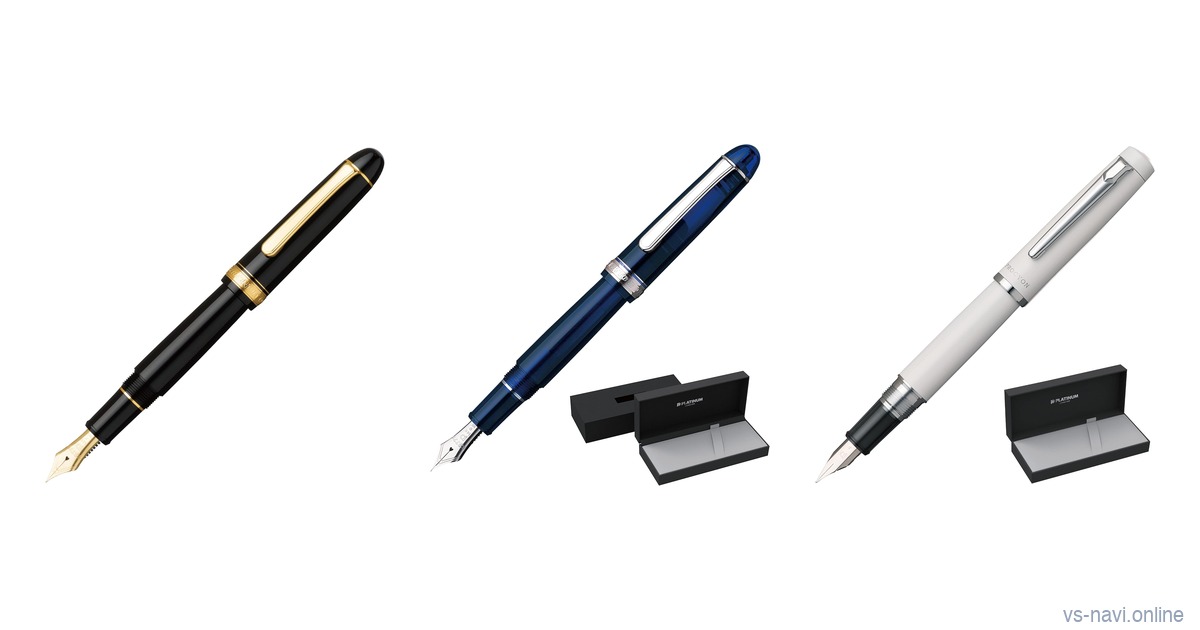
- Platinum #3776 Century, Black in Black, Fine (PNB-15000) — about $212, 4.3 out of 5 from 38 ratings. The pick for most people who want a Japanese 14K gold nib. It is the classic gold-trim version at the lowest Century price we found on Amazon.com.
- Platinum #3776 Century Rhodium, Chartres Blue, Fine (PNB-18000CR) — about $247, 4.8 out of 5 from 9 ratings. The pick if you prefer silver-tone trim plus a translucent blue body. Same pen underneath, roughly $35 more.
- Platinum Procyon, Porcelain White, Medium (PNS-5000) — about $60, 4.4 out of 5 from more than 450 ratings. The pick if you mainly want the never-dries-out cap. It has the same Slip & Seal idea with a stainless steel nib for under a third of the price.
Short answer: yes, the Century is worth it if a gold nib is the point. If the dependable cap is what you are really after, the Procyon gets you most of the way for about $60.
The Brand in Japan: Platinum Pen
Platinum Pen Co. was founded in 1919 plus is one of Japan’s three major fountain pen makers, alongside Pilot plus Sailor. In Japanese stationery shops the three usually share one glass case, plus most Japanese pen users own at least one of each.
The number 3776 is the height of Mount Fuji in meters. Platinum gave its flagship gold-nib pen that name to signal that it was meant to be the top of its range. The current Century generation added the Slip & Seal cap, an inner cap with a spring that closes tightly around the nib.
Platinum states that the Slip & Seal cap keeps ink from drying out even after about two years without use. That claim is why the 3776 is often recommended in Japan to people who write a few times a month rather than every day. It is also why Platinum put a version of the same mechanism into its cheaper pens.
If you are new to fountain pens, start with our guide to Japanese fountain pens under $50. The 3776 Century is the pen many people move to after a Preppy or a Kakuno.
Platinum #3776 Century, Black in Black, Fine (Around $212 on Amazon)
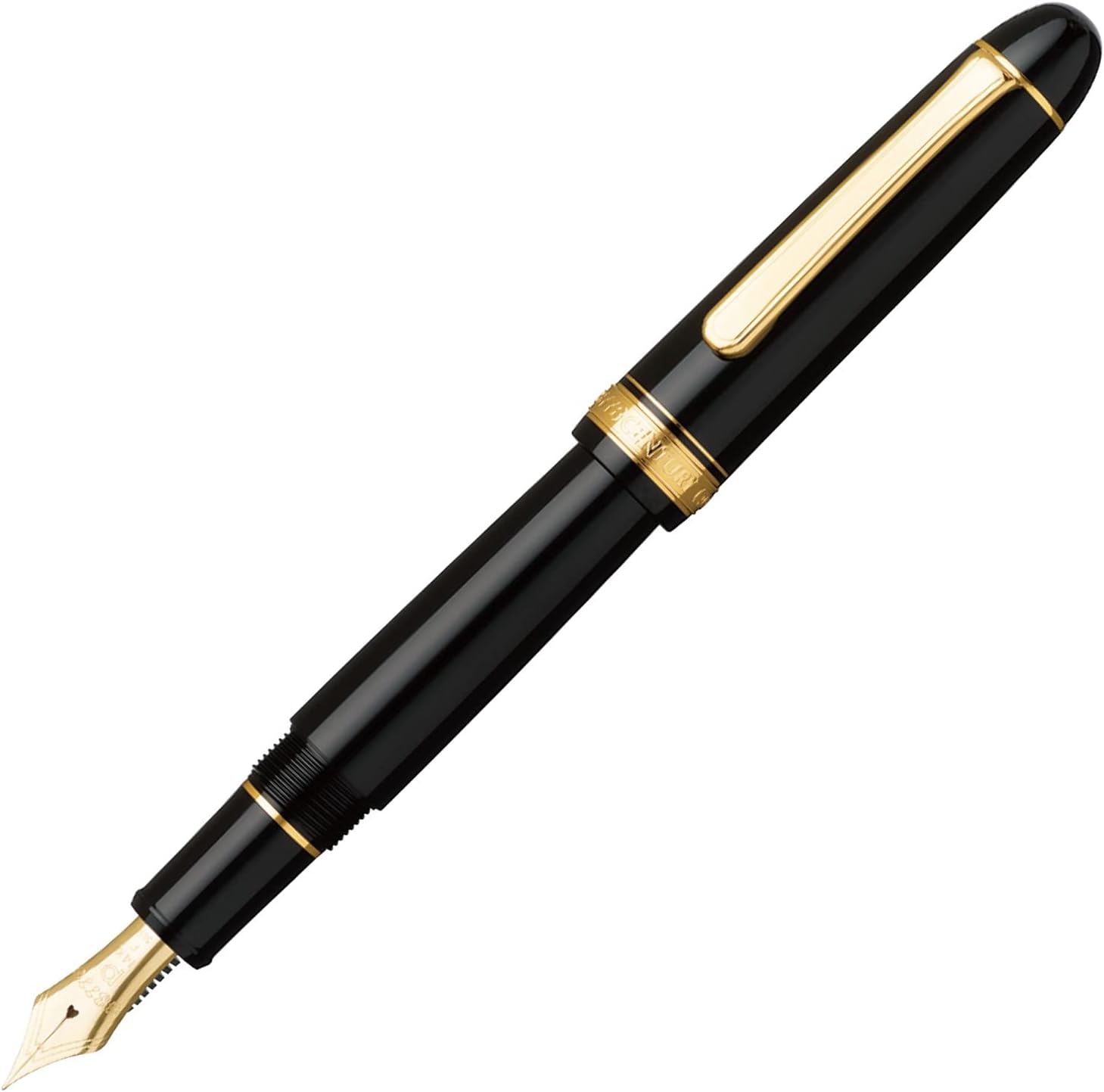
This is the standard #3776 Century: a black resin body, gold-plated trim plus a two-tone 14K gold nib. Platinum lists it at 139.5 mm long with the cap on, 15.4 mm at its widest plus about 20.5 g. That is light for a gold-nib pen, so it suits long journaling sessions more than it suits people who like a heavy metal barrel.
The nib is the reason to buy it. Platinum offers the Century in a wide spread of grades, from Ultra Extra Fine through Fine, Soft Fine, Medium plus Broad, with a Music nib on some versions. Like most Japanese nibs, they run narrower than Western sizes: a Japanese Fine writes closer to a European Extra Fine, which makes it a good choice for small handwriting or Japanese kanji.
It fills from Platinum’s own cartridges or a converter. The listing includes one blue-black cartridge, while the Platinum converter costs under $10 on Amazon.com if you want bottled ink. Standard international cartridges do not fit, which is the main practical catch.
The honest downside is value. For around $212 you get a resin pen, not a metal one, plus the listing is sold by Amazon Japan with limited stock. On Amazon Japan the same model lists around ¥30,000, so the US price is close to the Japanese one rather than a bargain. Buy it if you want one well-made Japanese gold-nib pen that tolerates irregular use.
Platinum #3776 Century Rhodium, Chartres Blue, Fine (Around $247 on Amazon)
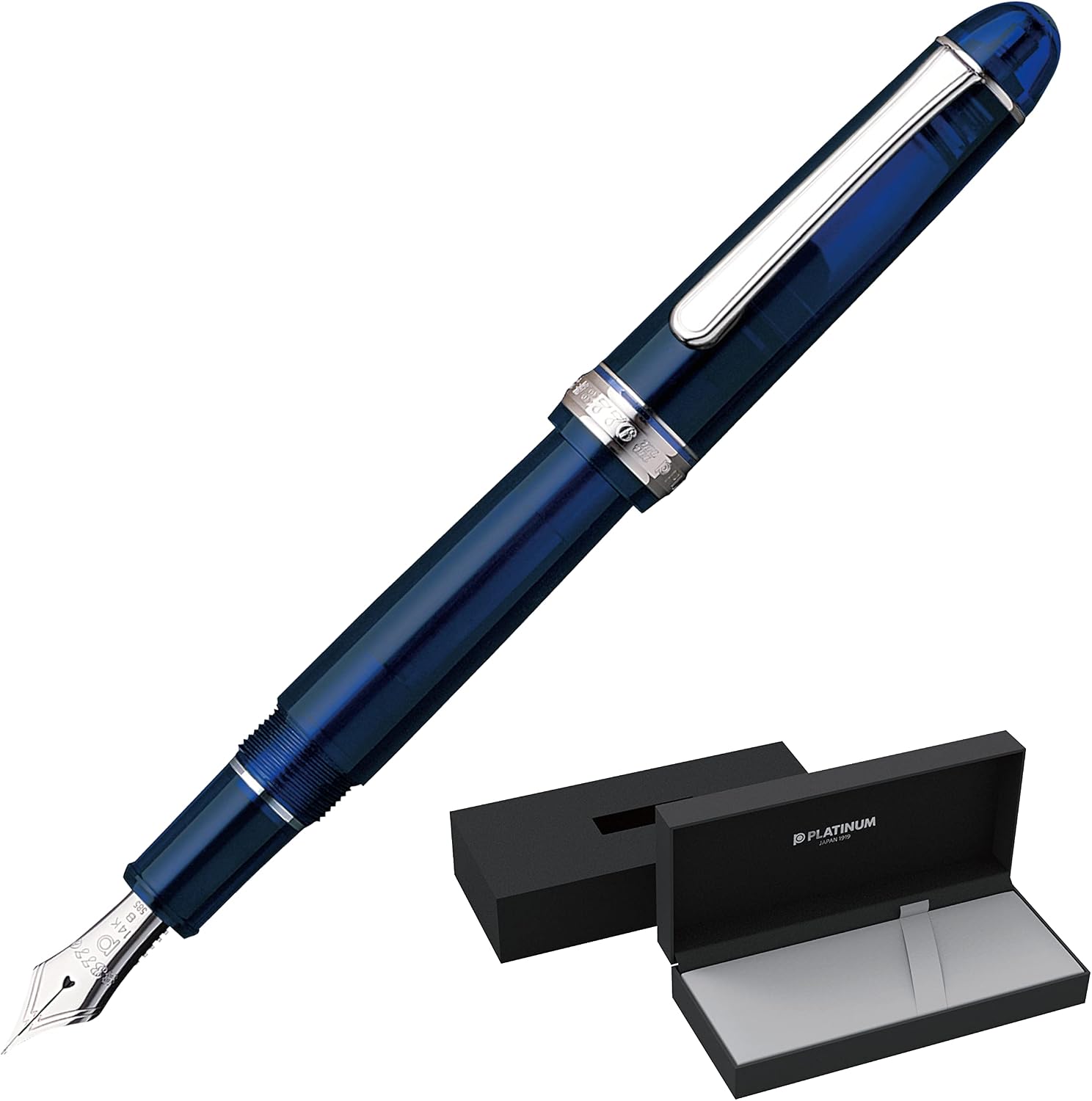

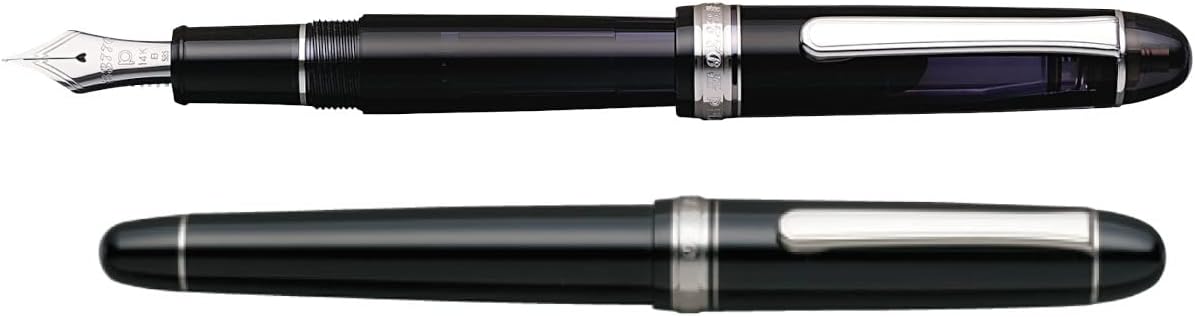
The Rhodium version, model PNB-18000CR, is the same #3776 Century with a rhodium-finished 14K nib plus silver-tone trim instead of gold. Platinum lists the same 139.5 mm length plus 20.5 g weight, so it writes the same way. You are paying for the look.
Chartres Blue is a translucent deep blue, so with the cap off you can see the ink level through the barrel. Picture it next to a navy leather notebook or a white desk: it is the more modern-looking of the two Centuries. Note that the Amazon.com bullet points mention a gold clip while the photos show silver-tone trim, so check the photos plus model number before you order.
On Amazon.com it carries 4.8 out of 5, but from only 9 ratings, which is too few to say much. Stock was down to the last two units when we checked. Buy it if silver trim matters to you plus the $35 premium over the standard Century does not.
Platinum Procyon, Porcelain White, Medium (Around $60 on Amazon)
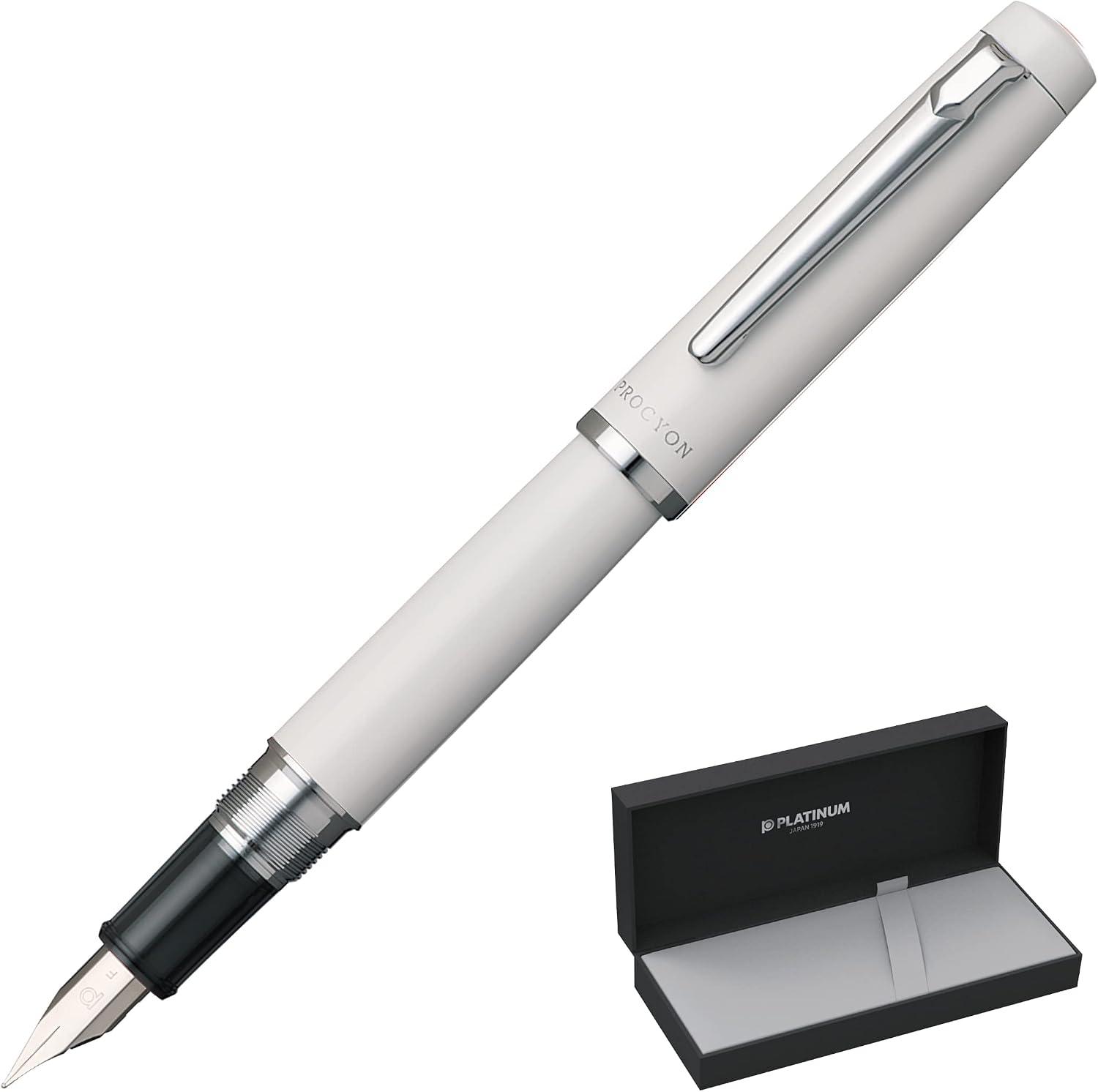
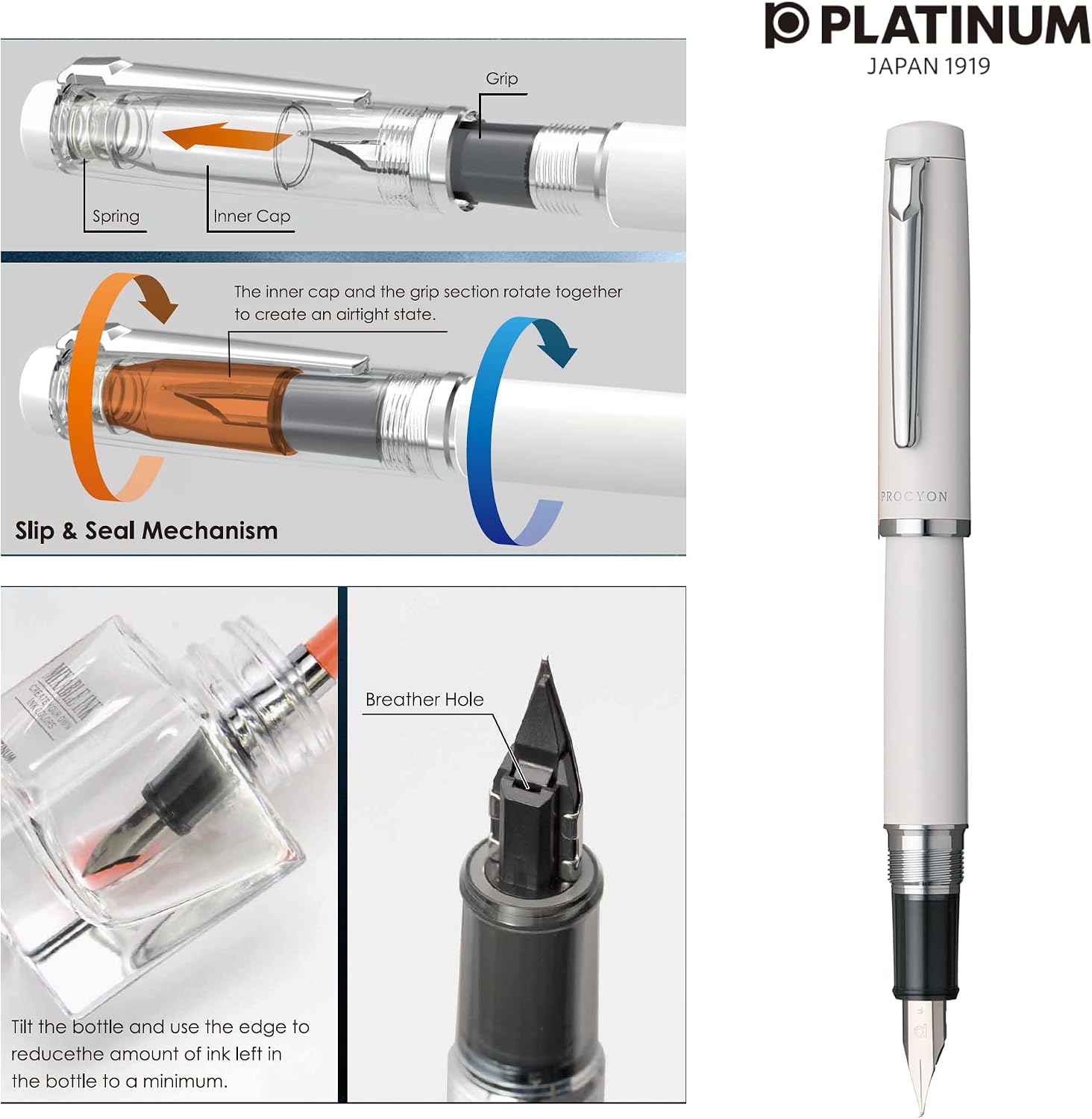
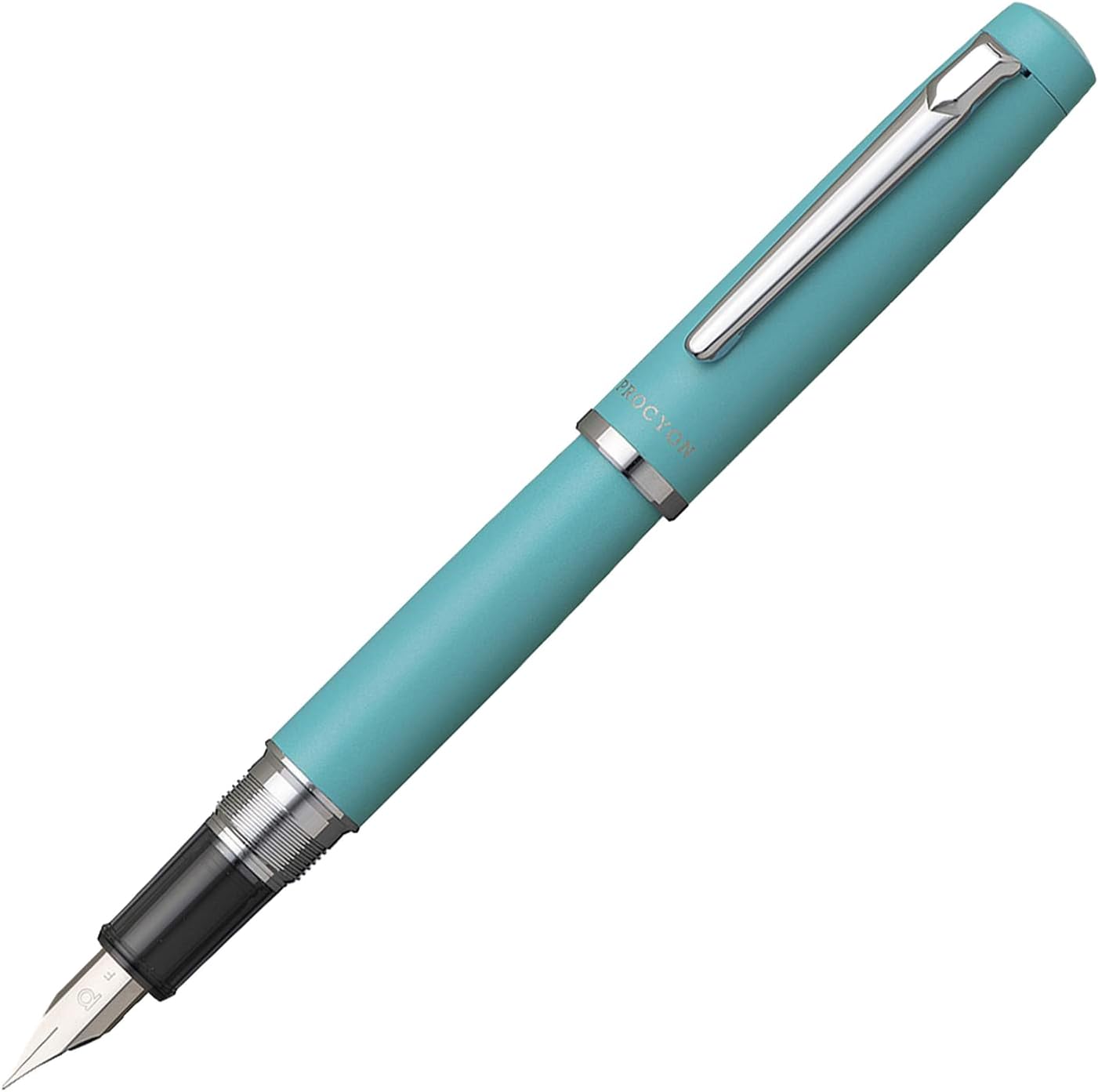
The Procyon is Platinum’s answer to the question in this article’s title. It brings the Slip & Seal cap to an aluminum-bodied pen with a stainless steel nib for about $60. The listing gives 139.7 mm long, 14.4 mm wide plus about 24 g, so it is the same length as the Century but slightly heavier in the hand.
Platinum gave it a redesigned section that makes it easier to draw ink from a nearly empty bottle, plus a five-sided nib shape meant to give a steel nib some of the give of a gold one. In Japan the Procyon won an award in the function category of the 2019 Japan Stationery Awards, shown on its Amazon.com listing.
With more than 450 ratings at 4.4 out of 5, it has far more buyer feedback behind it than either Century. The trade-off is the nib: steel rather than 14K gold, with fewer grades to choose from. The Porcelain White listing we checked is sold by a third-party seller with low stock, so compare colors before you buy.
Buy it if you write occasionally, want a pen that is ready whenever you pick it up, plus do not need gold. It is also a sensible way to find out whether Platinum’s narrow Japanese line sizes suit your handwriting before spending $200 on a Century.
Compare the Three
| 3776 Century (gold trim) | 3776 Century Rhodium | Procyon | |
|---|---|---|---|
| Approx. price | $212 | $247 | $60 |
| Nib | 14K gold | 14K gold, rhodium finish | Stainless steel |
| Body | Resin, gold-tone trim | Translucent resin, silver-tone trim | Aluminum |
| Length / weight | 139.5 mm / 20.5 g | 139.5 mm / 20.5 g | 139.7 mm / 24 g |
| Slip & Seal cap | Yes | Yes | Yes |
| Filling | Platinum cartridge or converter | Platinum cartridge or converter | Platinum cartridge or converter |
| Amazon rating | 4.3 (38 ratings) | 4.8 (9 ratings) | 4.4 (450+ ratings) |
| Best for | A first Japanese gold nib | Silver-trim fans | Occasional writers on a budget |
If the question is simply “which 3776 Century,” buy the standard gold-trim model. It writes the same as the Rhodium version for about $35 less, plus it has the longer rating record of the two.
If the question is “do I need a 3776 at all,” be honest about why you want it. For a gold nib plus a pen you will keep for years, the Century is a fair price. For a pen that simply never dries out between uses, the Procyon delivers that for about $60.
Buyer’s Considerations
Choose the nib size one step broader than you would for a European pen. If you normally like a Western Fine, a Japanese Medium is the closer match. Pick Extra Fine or Ultra Extra Fine only if you write very small or on thin planner paper.
Budget for a converter if you plan to use bottled ink. All three pens take Platinum’s own cartridges plus the Platinum converter, not standard international cartridges.
Check the model number on every listing. Platinum sells the Century in many colors plus nib sizes, each as a separate listing, plus prices on Amazon.com swing widely between them. A listing far above about $220 for a standard Century is usually a third-party markup rather than a special edition. If you plan to use the pen in a planner, our Japanese planner comparison covers which paper handles fountain pen ink best.
Summary
The Platinum #3776 Century earns its reputation: a light Japanese pen with a 14K gold nib plus a cap that keeps it ready to write after weeks in a drawer. The standard gold-trim model at about $212 is the one to buy. Pick the Rhodium version only for the look, or the $60 Procyon if the cap is what you really want.
FAQ
What does 3776 mean on a Platinum pen?
It is the height of Mount Fuji in meters, 3,776 m. Platinum uses the number for its flagship gold-nib fountain pen line.
What is the Slip & Seal mechanism?
A spring-loaded inner cap that seals tightly around the nib when the pen is capped. Platinum states that it keeps ink from drying out for about two years without use.
Is the 3776 Century nib gold?
Yes. Both Century versions in this article use a 14K gold nib. The Rhodium version has the same gold nib with a silver-colored rhodium finish. The Procyon uses stainless steel.
Which nib size should I choose?
Japanese nibs run fine. For everyday English handwriting, Fine or Medium suits most people. Extra Fine plus Ultra Extra Fine are best for very small writing or thin paper.
Why do 3776 Century prices vary so much on Amazon.com?
Each color plus nib size is a separate listing, often with limited stock shipped from Japan. Prices in this article were checked on Amazon.com in late October 2026 plus are approximate; they change often.