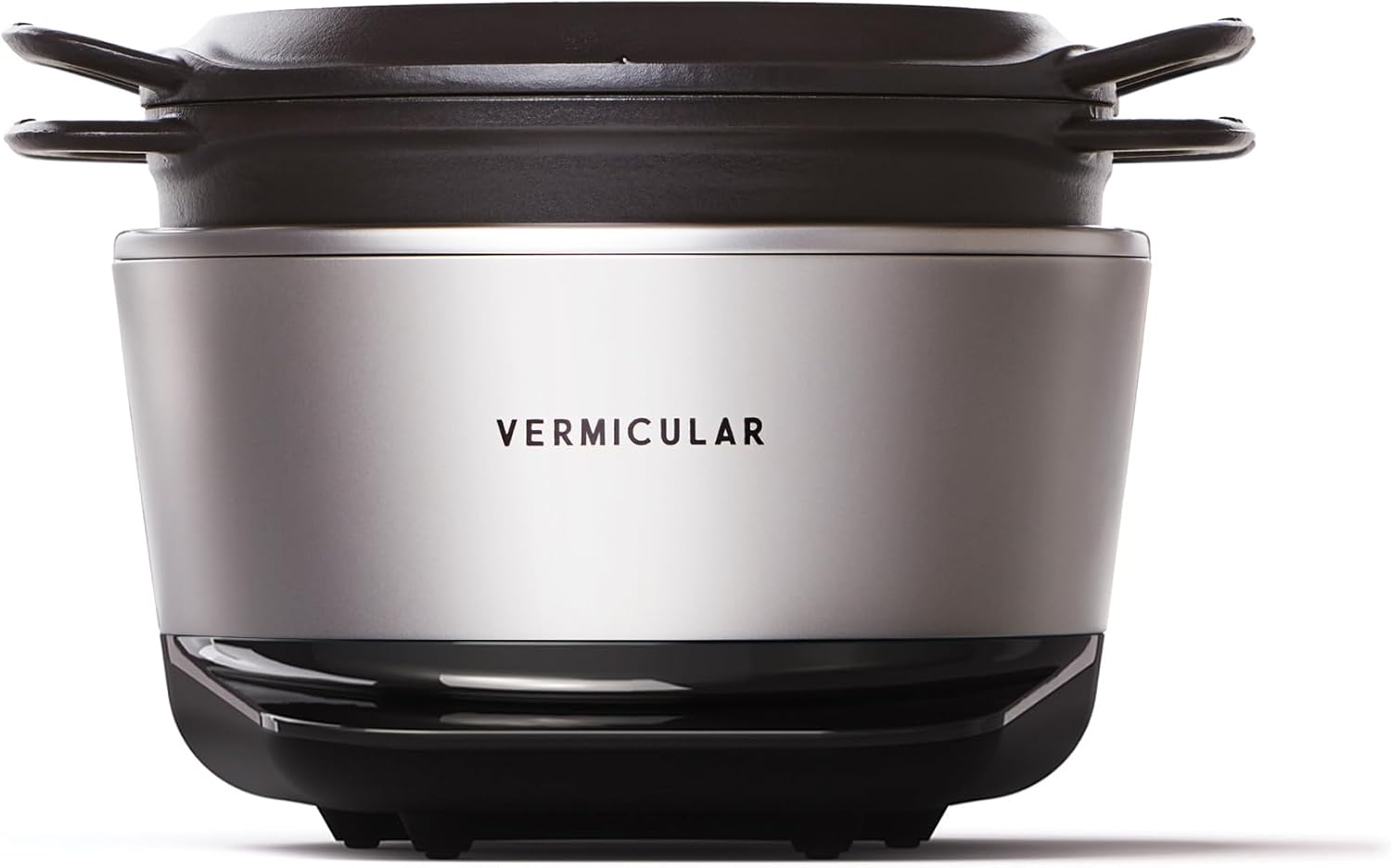
The Vermicular Musui–Kamado — Japan’s cult cast-iron induction cooker, around $670 on Amazon — seals its pot so tightly that vegetables cook in their own moisture, on a base that holds a target temperature the way a lab hot plate would.
It is not really a Dutch oven at all: it is an enameled cast iron pot married to its own precision induction stove, built by a small foundry in Nagoya. This review covers what it does, who makes it, how it compares to a classic Le Creuset or Staub, plus whether the price is defensible.
Our Verdict: Who the Musui–Kamado Is Best For
After walking through the specs, the cooking method, plus a decade of Japanese owner feedback, our read is simple. The Musui–Kamado is the best choice for a cook who already loves cast iron braising but wants the guesswork removed — someone who makes rice, stews, low-temperature roasts, or waterless vegetable dishes often enough to justify a dedicated appliance.
It is the wrong choice for a bargain hunter or an occasional cook. A $40 Lodge Dutch oven does 80% of what this does. The Vermicular earns its price on the last 20%: repeatable precision, a flawless enamel seal, plus a genuinely beautiful object that lives on the counter rather than in a cupboard.
If the $670 is the sticking point rather than the method, the everyday Japanese answer is iron rather than enamel. The River Light Kiwame — a nitrided carbon steel pan that resists rust from day one, with no seasoning ritual before dinner — is the pan that actually lives in Japanese home kitchens and it costs a fraction of this. Our River Light Kiwame review breaks down the sizes.
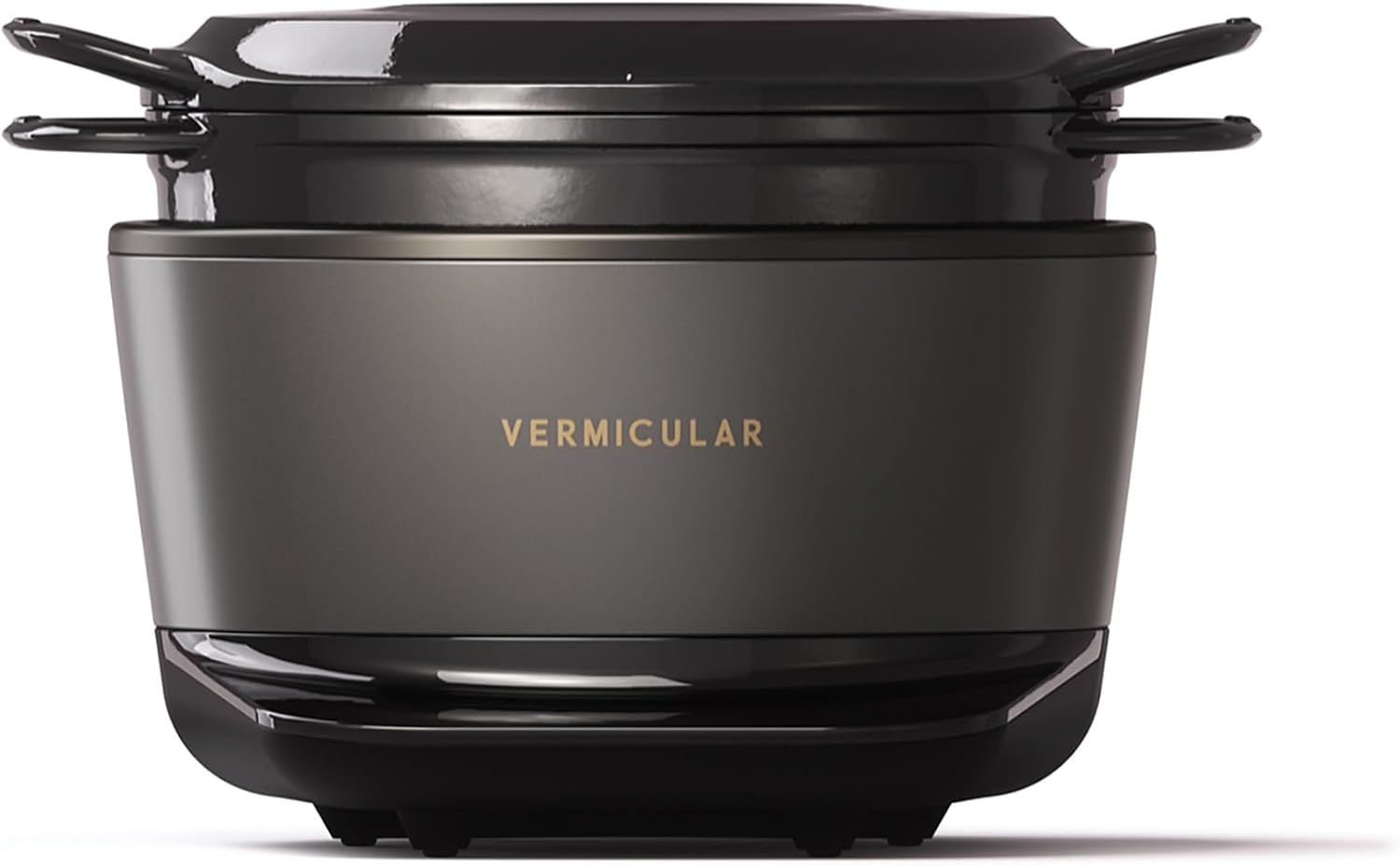
Prices shift with finish plus stock. Amazon shows the live figure at the link above.
What Exactly Is the Musui–Kamado?
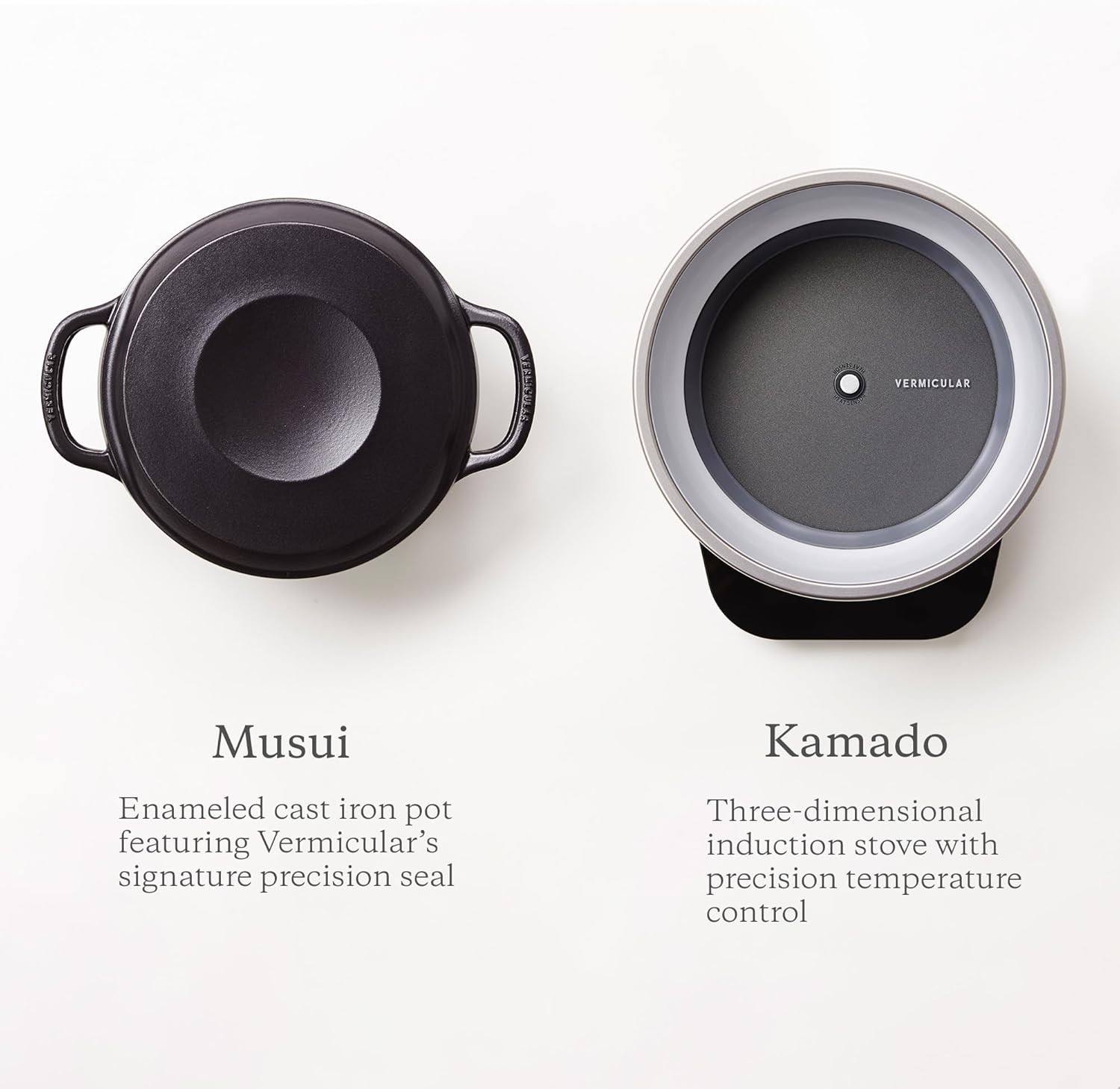
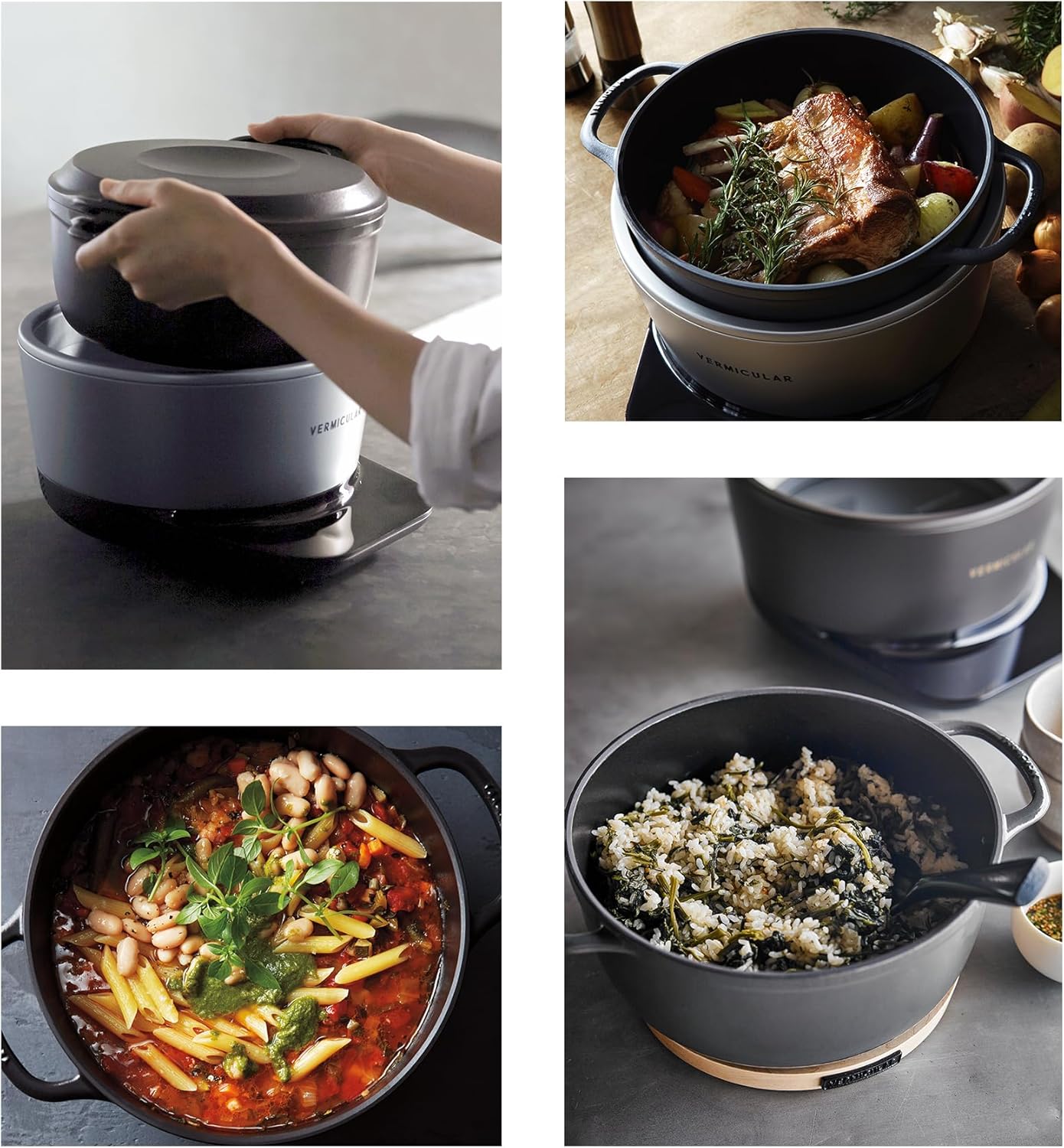
Most reviews get this wrong, so start here. The Musui–Kamado is two things sold as one system. The Musui is a shallow enameled cast iron pot with a heavy lid; the Kamado is a purpose-built induction stove that the pot sits inside.
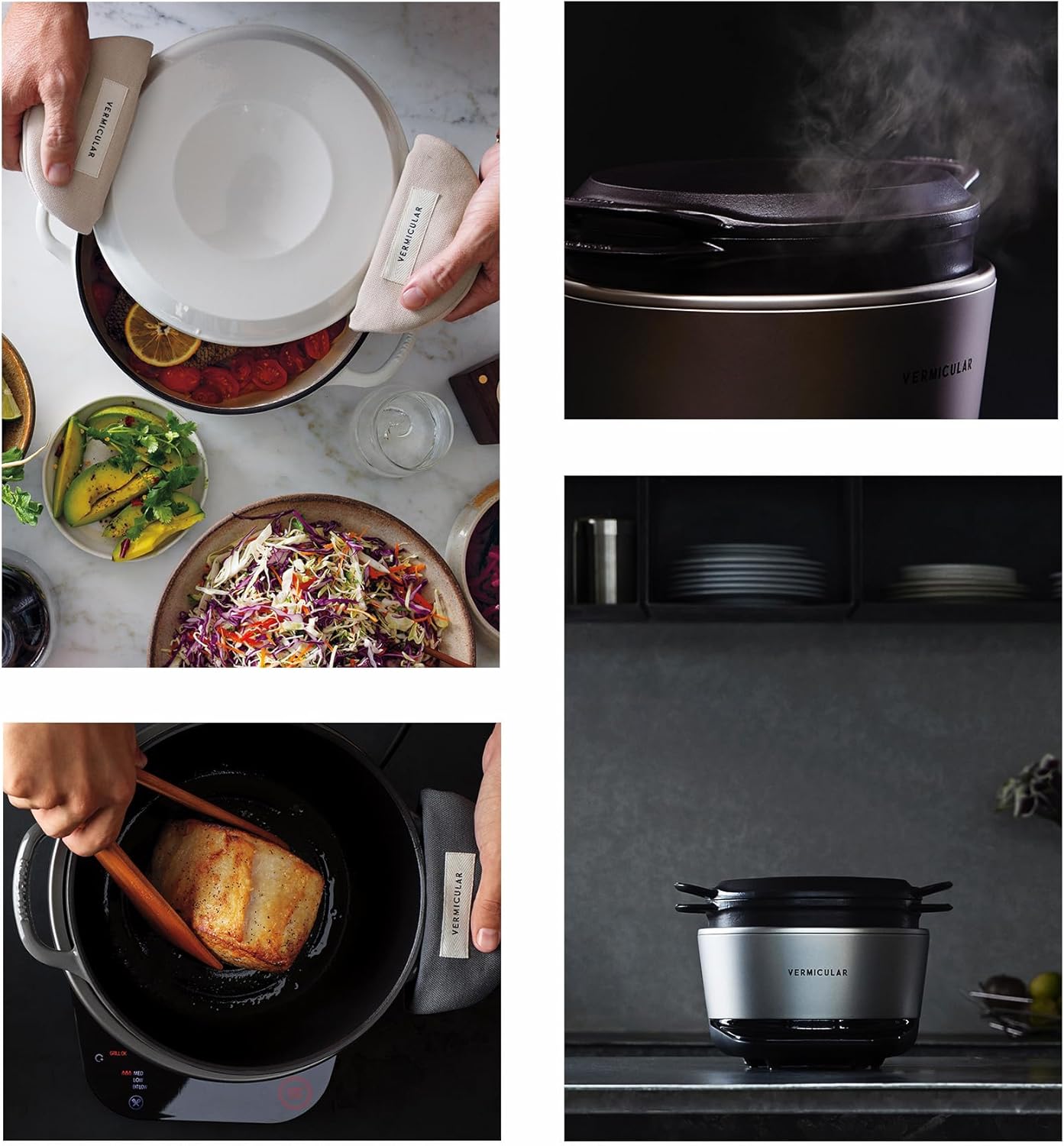
The word musui means “waterless” in Japanese, plus kamado is the traditional clay rice stove. The pairing is deliberate. The pot’s lid is machined to seal tightly enough that ingredients cook in their own released moisture, while the induction base wraps heat around the pot’s lower half instead of hitting it from a single point underneath.
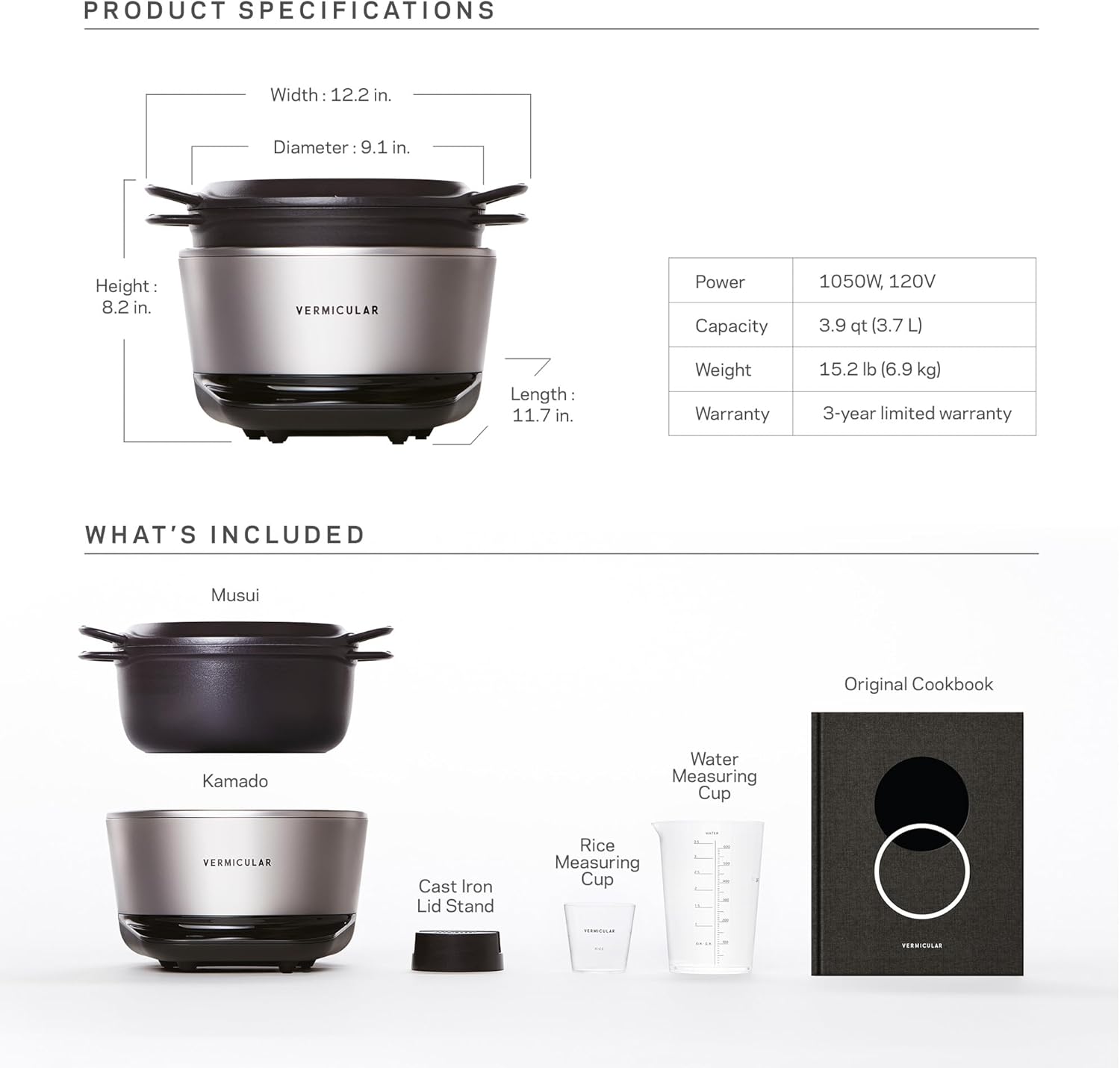
Out of the box you get the pot, the induction base, a cast iron lid stand, rice plus water measuring cups, along with an original cookbook. It is a countertop appliance first, a piece of cookware second.
The Aichi Dobby Story: A Struggling Foundry’s Second Act
Vermicular is made by Aichi Dobby, a family foundry founded in Nagoya in 1936. For most of its history it cast industrial machine parts. By the late 2000s cheap overseas casting had pushed the company near collapse, plus the two brothers running it — Kensei plus Toshiyasu Doi — decided to gamble on a consumer product instead.
Their bet was enameled cast iron good enough to seal without a gasket. It took roughly three years of trial casting before the first Vermicular Oven Pot shipped in 2010. In Japan the result is now something of a legend: a Nagoya machine shop that reinvented itself into a premium kitchen brand with a waiting list measured in months at launch.
That heritage matters to how Japanese buyers see the brand. Vermicular is shorthand for monozukuri — obsessive domestic craftsmanship — in the same breath as Snow Peak or Balmuda. It is a made-in-Japan appliance in a market flooded with made-elsewhere ones, plus Japanese owners pay the premium partly for that story.
That same premium sits behind the older Japanese cast-iron tradition: Nambu Tekki from Iwate, sand-cast by hand and carrying a national Traditional Craft designation since 1975. Whether the craft story translates into a better pan is a fair question and we tested it against the obvious Western answers in Iwachu Nambu Tekki vs Lodge vs Staub.
How It Cooks: Waterless Method plus Precision Heat
The everyday magic is temperature control. The Kamado base holds a set temperature within a narrow band, so a 194°F simmer stays a 194°F simmer for hours without you hovering. That is the difference between a stew you babysit plus one you start then walk away from.
Waterless cooking is the headline trick. Pile in onions, carrots, cabbage, a little salt, seal the lid, set low heat — forty minutes later you have a concentrated vegetable stew made with almost no added liquid. The flavor is denser than a water-based version because nothing got diluted.
Rice is the other showcase. The system runs a rice program that mimics a traditional kamado stove’s aggressive heat curve, producing separate, glossy grains. By 2025 it had earned a reputation among Japanese food writers as a rice cooker that happens to also braise, sear, plus slow-cook.
Musui–Kamado vs a Classic Dutch Oven
The honest comparison is not against another appliance but against the cast iron Dutch oven it wants to replace. Here is how it stacks up against a Le Creuset or Staub on your existing stove.
If that Dutch oven question is what brought you here, it is worth seeing how a traditional clay pot fits in too. Our donabe vs Dutch oven guide weighs a gentle Banko ware donabe against a Staub cocotte for hot pot versus braising.
| Vermicular Musui–Kamado | Classic Dutch Oven (Staub / Le Creuset) | |
|---|---|---|
| Heat source | Own precision induction base | Your existing stove or oven |
| Temperature control | Held to a narrow band automatically | Manual, drifts with your burner |
| Waterless cooking | Designed for it (tight machined seal) | Possible but less reliable |
| Oven use | No — the base is the heat source | Yes, goes in the oven |
| Capacity | 3.9 qt (3.7 L) | Up to 7+ qt available |
| Weight | 15.2 lb (full system) | Pot only, ~10–13 lb |
| Typical price | ~$670 | $40 (Lodge) to $400 (Le Creuset) |
Read that table as a fork in the road. If you want maximum capacity plus oven versatility, a traditional Dutch oven wins outright, especially at Lodge money. If you want hands-off precision plus the waterless method done properly, the Vermicular is a genuinely different tool, not just a pricier pot.
See the current price on Amazon →
What Owners Actually Say
Japanese owner reviews skew strongly positive on results plus design. In our reading of Amazon.co.jp plus Rakuten feedback, the recurring praise is rice quality plus the “set it then forget it” simmering.
One representative note: “The rice alone justified the price for me — separate grains, faintly sweet, better than my old high-end rice cooker.” — Source: Amazon.co.jp verified purchase.
Criticism clusters around two things: the 3.9-quart capacity feels small for larger families, plus the cast iron pot demands careful drying to avoid rust at the rim. “Wonderful for two people; I would have wanted the bigger size for four.” — Source: Rakuten review.
The Honest Downsides
Three things temper the enthusiasm. First, capacity: 3.9 quarts suits one to three people, not a crowd. Second, it is single-purpose in footprint — a 15-pound appliance that owns a chunk of counter, unlike a pot you tuck away.
Third, it does not go in the oven. Because the Kamado base is the heat source, you lose the roasting-in-the-oven flexibility that makes a normal Dutch oven so versatile. For some cooks that is a dealbreaker; for others it never comes up.
Who Should Buy It
Buy the Musui–Kamado if you cook rice or slow dishes several times a week, value repeatable precision over raw capacity, plus appreciate a made-in-Japan object you will keep for a decade. It rewards frequent, intentional cooking.
Skip it if you mainly need a big braiser for weekend batch cooking, want oven flexibility, or simply cannot justify $670 when a Lodge does the basics. There is no shame in the cheaper path — the Vermicular is a considered luxury, not a necessity.
Check the latest price on Amazon →
Frequently Asked Questions
Is the Vermicular Musui–Kamado a rice cooker or a Dutch oven?
Both, functionally. It is an enameled cast iron pot on a dedicated induction base, so it braises like a Dutch oven while running a rice program like a rice cooker. Japanese owners most often praise its rice, but it is built for stews, waterless vegetable dishes, plus low-temperature roasts too.
Why does it cost around $670?
You are paying for two things: a purpose-built precision induction stove, not just a pot, plus made-in-Japan enameled cast iron from the Aichi Dobby foundry. The machined lid seal plus held-temperature control are the technical justification; the monozukuri brand story is the emotional one. A basic Dutch oven costs a fraction because it has neither.
Can it replace my regular Dutch oven?
Partly. It does hands-off braising plus waterless cooking better, but it maxes out at 3.9 quarts plus cannot go in the oven, since the base is the heat source. If you batch-cook for a crowd or roast in the oven often, keep a traditional Dutch oven alongside it.
How big is it and how many people does it serve?
The system holds 3.9 quarts (3.7 liters) plus weighs 15.2 pounds. That comfortably serves one to three people, or about three cups of uncooked rice. Larger families frequently wish for a bigger capacity, which is the most common criticism in owner reviews.
Does the cast iron pot need special care?
Yes. It is enameled cast iron, so hand-wash it plus dry it thoroughly, paying attention to the unglazed rim where rust can start. The induction base wipes clean. With normal care the pot is a decade-plus purchase, backed by a 3-year limited warranty.
Is Vermicular actually a Japanese brand?
Yes. Vermicular is made by Aichi Dobby, a foundry founded in Nagoya in 1936 that pivoted from industrial casting to cookware in 2010. In Japan it is a well-known premium made-in-Japan brand, comparable in prestige to Balmuda or Snow Peak.
Ready to decide? Confirm the live figure before you commit — finishes plus stock move the number.