This article contains affiliate links (we may earn a commission).
A hinoki board does something no plastic board does. The first time you rock a knife through an onion on Japanese cypress, the sound is duller and the edge sinks in slightly instead of skating. The board smells faintly of lemon and fresh timber. That is the appeal — and it is why the good ones cost real money on Amazon.
It is also the most misunderstood board in the kitchen. For the rest of the counter, our complete Japanese kitchen tools guide covers the essentials. Hinoki is soft, so it scars faster than maple. It must never be oiled, which is the opposite of every care instruction written for a Western butcher block. Get either wrong and you will ruin a board that should have lasted a decade.
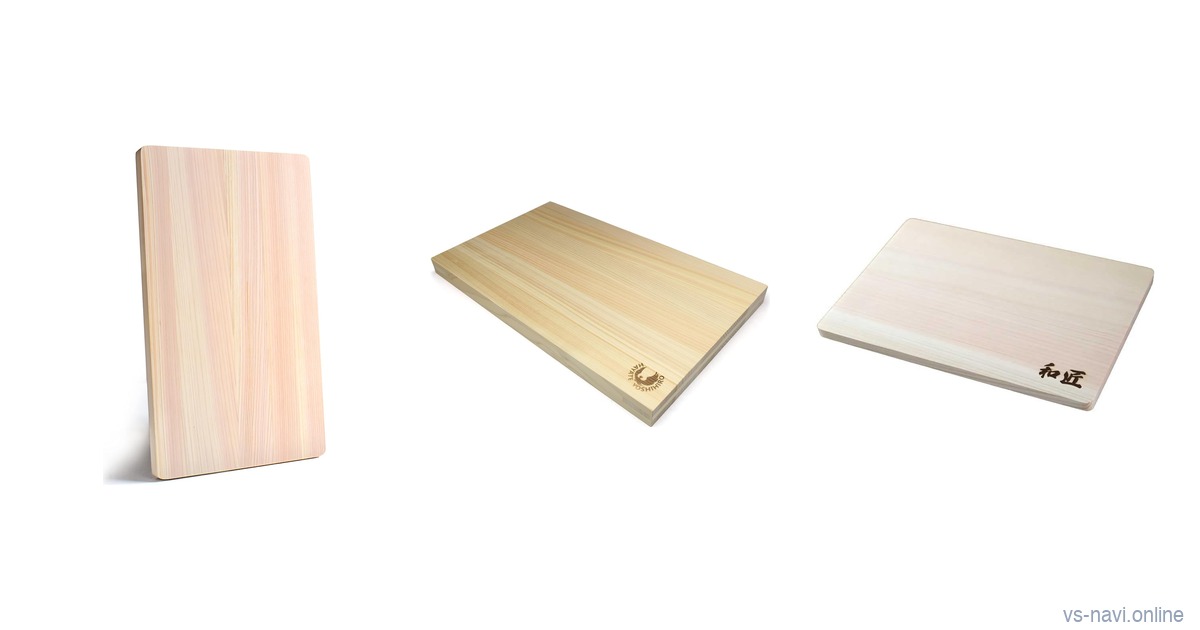
This guide compares three Japanese cypress boards sold in the US: the everyday YAMASAN, the thick professional-grade Yoshihiro with its maple anti-twist core and the compact hand-planed WASHO.
Which Hinoki Cutting Board Should You Pick?
For most kitchens, the YAMASAN Kyoto Uji Large is the one to buy. It is a single slab of Tono hinoki at a sane price, big enough for real prep at 16.5 by 9.4 inches and light enough that you will actually carry it to the sink rather than resent it.
Buy the Yoshihiro X-Large instead if you have had a wooden board warp on you before. Its 2.5 cm slab hides a maple core that resists twisting, which is the failure mode that kills most hinoki boards. Buy the WASHO Small if counter space is the constraint rather than budget.
All three are made in Japan. None of them belong in a dishwasher.
A board is only half of a Japanese prep station. For the paper-thin daikon curls or cucumber ribbons no knife repeats by hand, our Benriner mandoline review covers the $40 slicer Japanese kitchens reach for instead.
What Hinoki Actually Does Well
Hinoki (Chamaecyparis obtusa) is the cypress Japan builds its temples from. The Horyu-ji complex has stood in hinoki for roughly 1,300 years. The Ise Grand Shrine is rebuilt every twenty years using thousands of Kiso hinoki logs, a cycle that deliberately hands the craft from one generation to the next. That heritage is real. It is also not why the wood works on a counter.
The practical reason is softness. Hinoki is roughly a third to a half as hard as the sugar maple used in Western end-grain blocks. Japanese knives run hard, often 60 HRC or above, which buys a thin keen edge at the cost of brittleness. Sharpeners and knife retailers consistently argue that a soft surface lets that edge settle in rather than grip and chip. Worth being straight with you: we found no controlled study measuring edge retention on wood against plastic. This is practitioner consensus, not a lab result.
The hygiene story is better evidenced than most people assume, though not for the reason vendors give. Dean Cliver’s group at UC Davis tested wood against plastic with E. coli, Salmonella and Listeria. Bacteria applied to the wooden surfaces were drawn into the interior, failed to multiply and died off, while knife-scarred plastic became effectively impossible to clean by hand. That is a property of wood absorbing and drying, not a hinoki superpower.
One myth deserves killing. Hinokitiol, the antibacterial compound endlessly cited in hinoki marketing, was named for Taiwanese hinoki and is barely present in Japanese C. obtusa — which is why commercial hinokitiol gets extracted from hiba instead. Buy a hinoki board because it is kind to your knives and pleasant to work on. Do not buy it as a disinfectant.
YAMASAN Kyoto Uji Hinoki Cutting Board, Large (Around $60 on Amazon)
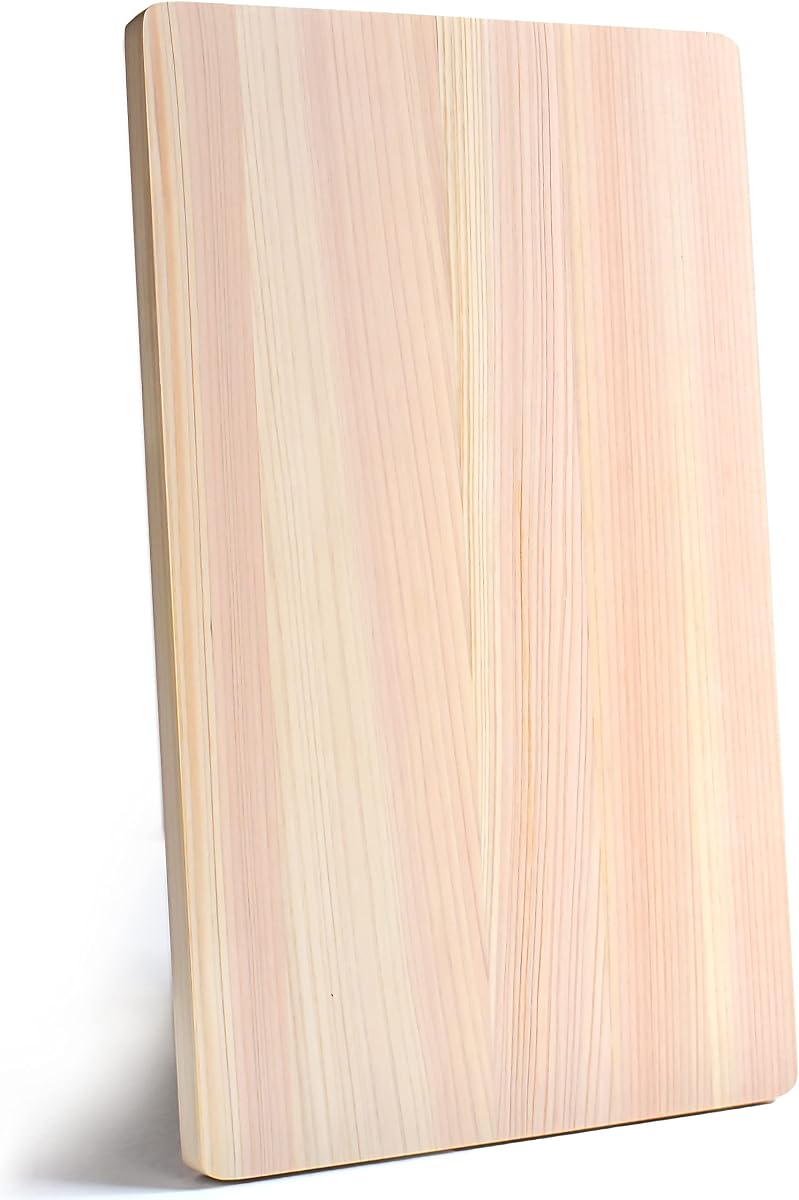
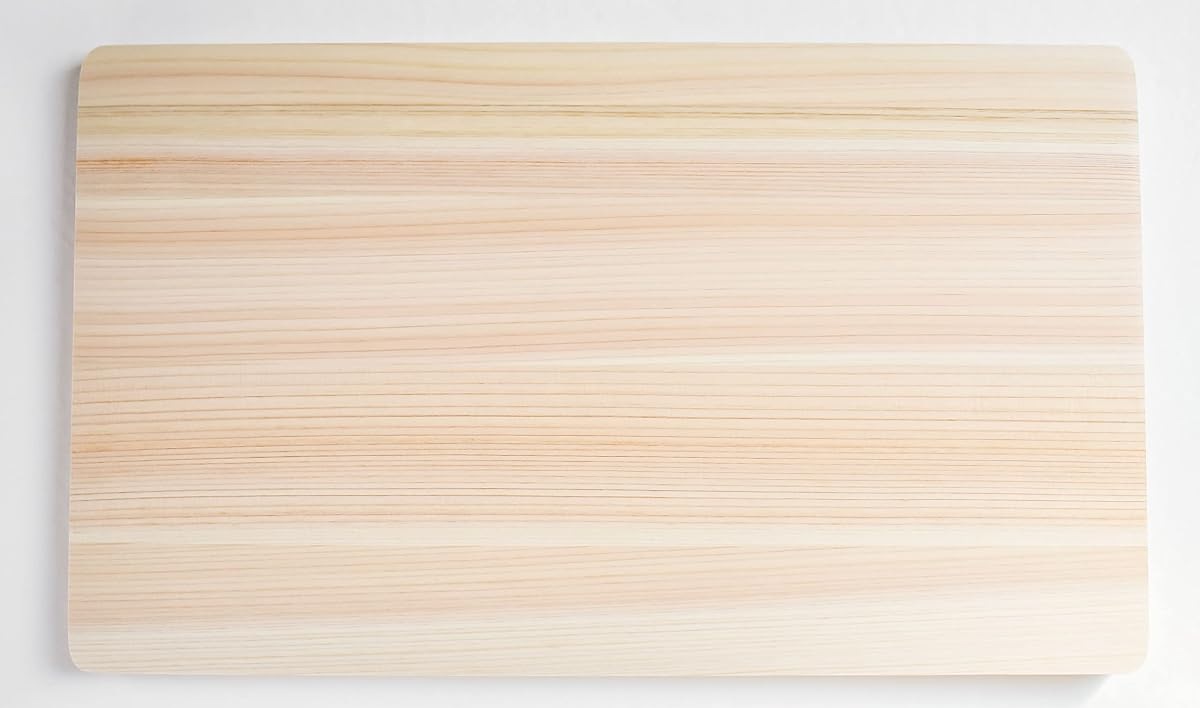
YAMASAN is a Uji tea house first. The company has sold matcha, miso and soy sauce out of Kyoto since 1995; cutting boards are a side line rather than the family craft. That matters less than it sounds, because the board itself is honest: one piece of Tono hinoki from Gifu, no laminations, no coating, no PFAS.
The Large measures 16.53 by 9.44 inches with a 0.59 inch slab, which the maker lists at 755 g. In practice that is the sweet spot. It swallows a whole daikon or a tray of vegetables without dominating the counter. At well under two pounds you can lift it one-handed to scrape trimmings into a pot.
Tono hinoki comes from the same Gifu forests that supply the region’s carpentry trade. Both YAMASAN and WASHO call it one of Japan’s three great cypress varieties, which is vendor copy we could not corroborate anywhere independent. The wood is genuinely good. The ranking is marketing.
The honest downside is the thickness. At 0.59 inches this is the thinnest full-size board here. A single unglued slab of softwood is exactly the shape that cups if you leave it flat in a wet sink. Dry it on its edge and it behaves. A soft hinoki surface protects a fine edge — pair it with a blade from our ultimate Japanese knife buying guide. Treat it like a plastic board and it will not.
It holds the strongest review record of the three at 4.4 stars across roughly 125 ratings, which is the main reason it is our default recommendation.
Yoshihiro Hinoki Anti-Twist Core, X-Large (Around $140 on Amazon)
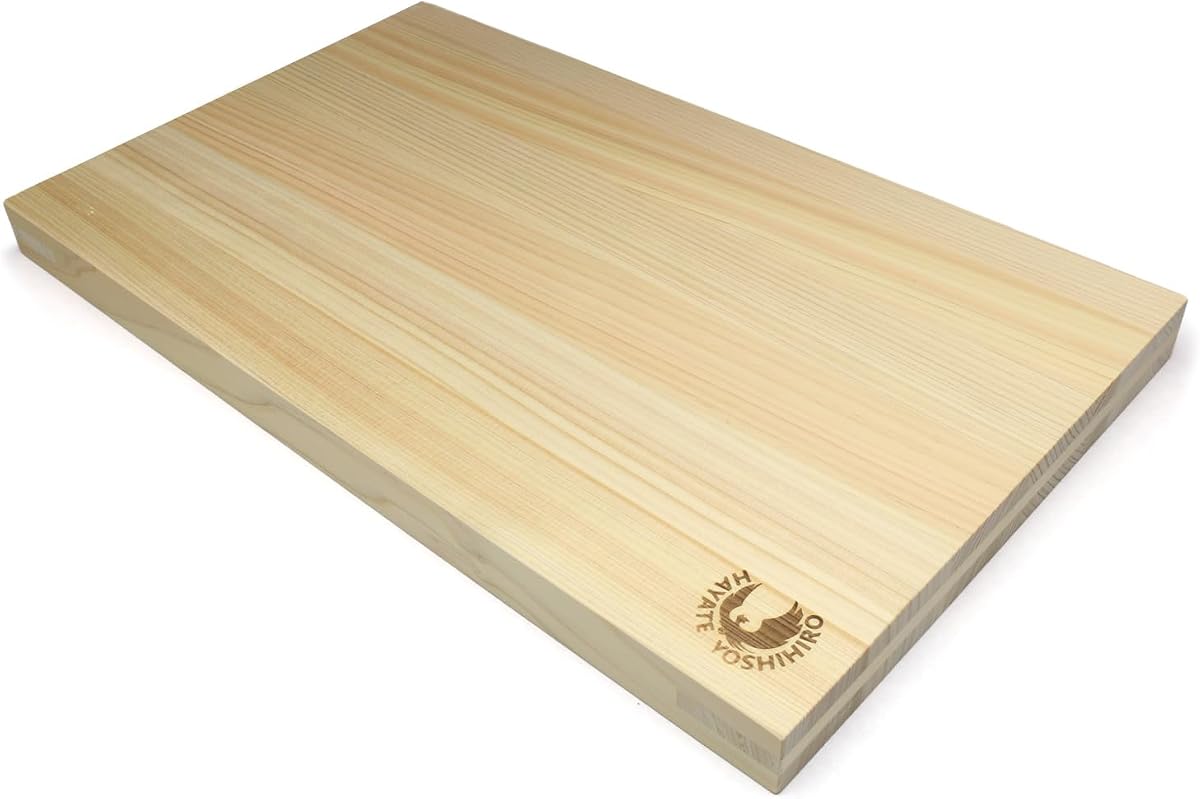
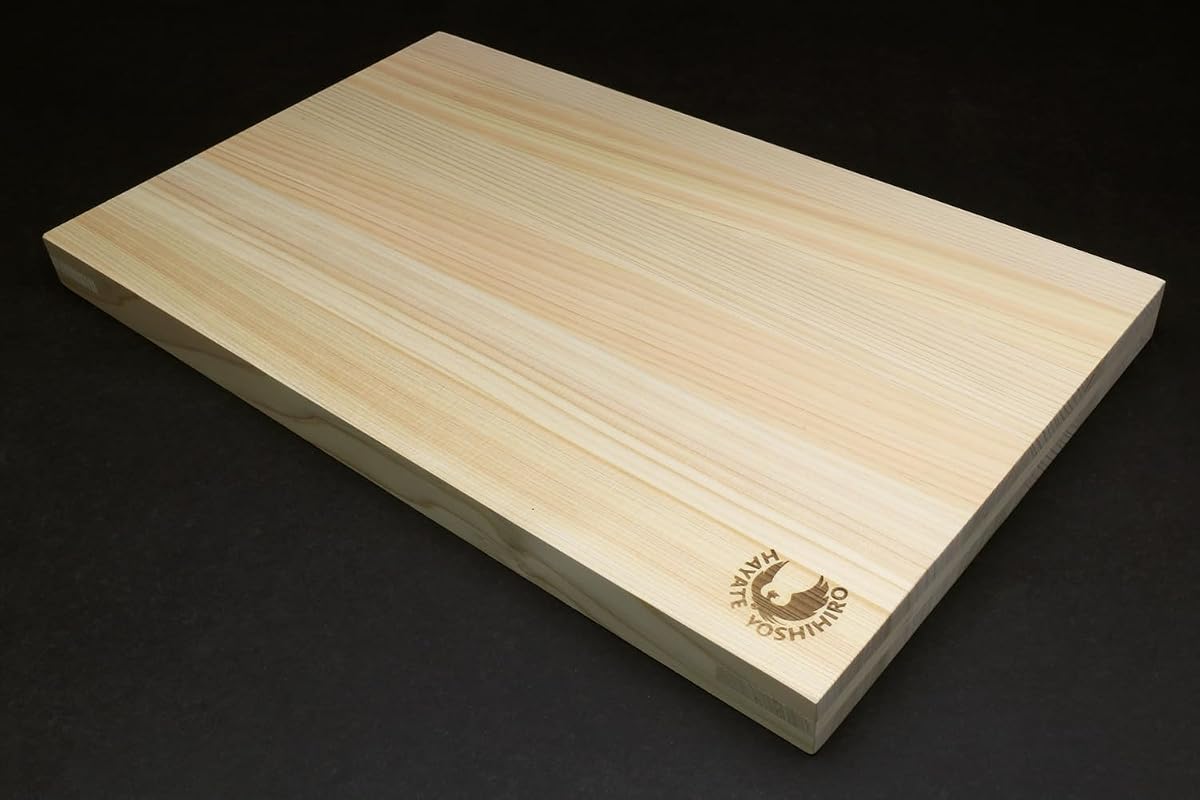
Yoshihiro is a knife house that has supplied chefs from a California base since 2008, with a catalogue running past six hundred knives. The company tells a longer story about a century-old lineage reaching back to Sakai swordsmiths. We can verify the knives and the trade; treat the founding legend as brand narrative.
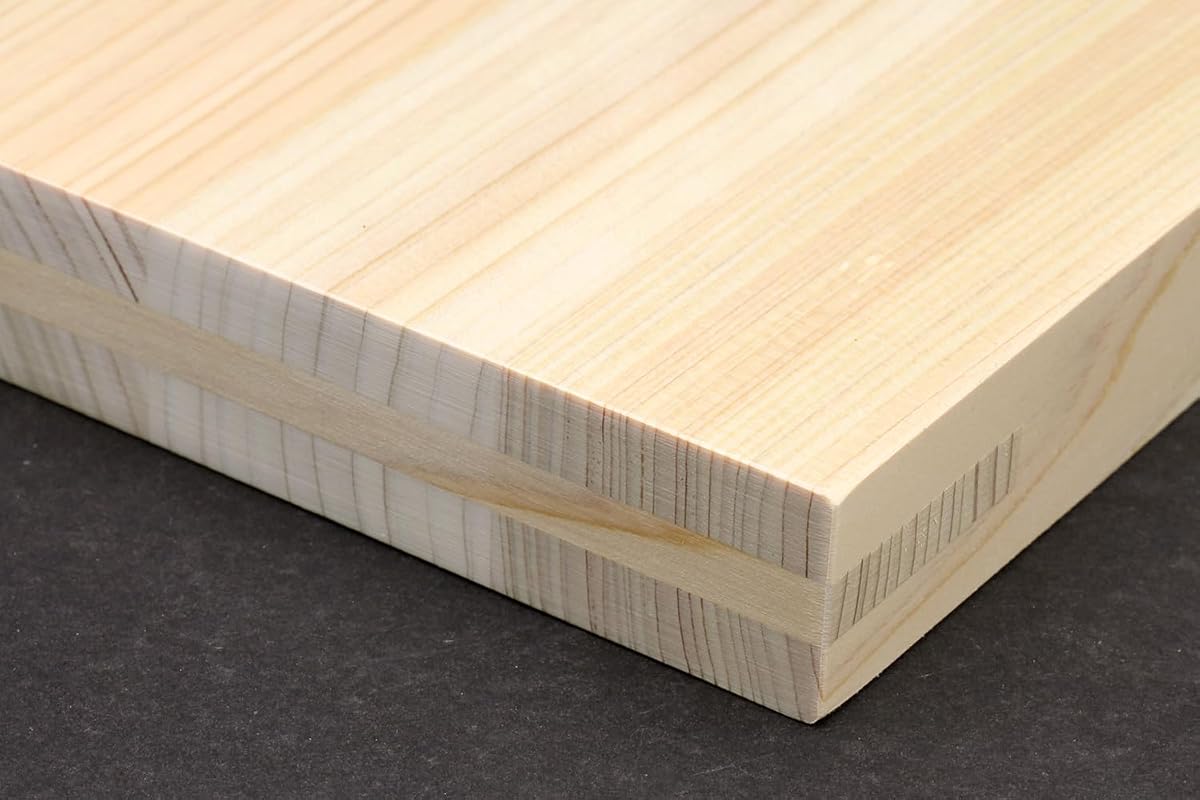
What we can verify is the engineering, because you can see it. Look at the edge of the board and a pale stripe of maple runs through the middle of the cypress. That is the anti-twist core — the whole argument for this board. Hinoki cups and twists as it takes on and loses water unevenly. A harder, cross-laminated core fights that movement.
The slab is 2.5 cm on every size, more than four times the thickness of the WASHO Small. The X-Large at 17.72 by 10.24 inches is the size most home cooks should take; the XX-Large is a commercial footprint and its stock comes and goes. That mass is the point. A heavy board does not shift when you lean into a squash.
The catch is the price. At roughly $140 this costs more than twice the YAMASAN. You are paying for insurance against warping rather than for a better cutting surface — the cypress feels the same under a blade. If your last board never warped, that premium buys you very little.
It carries 4.4 stars across about 50 ratings. In our review process it was the only board here that addresses hinoki’s real failure mode head on.
WASHO Hinoki Premium Cutting Board, Small (Around $37 on Amazon)
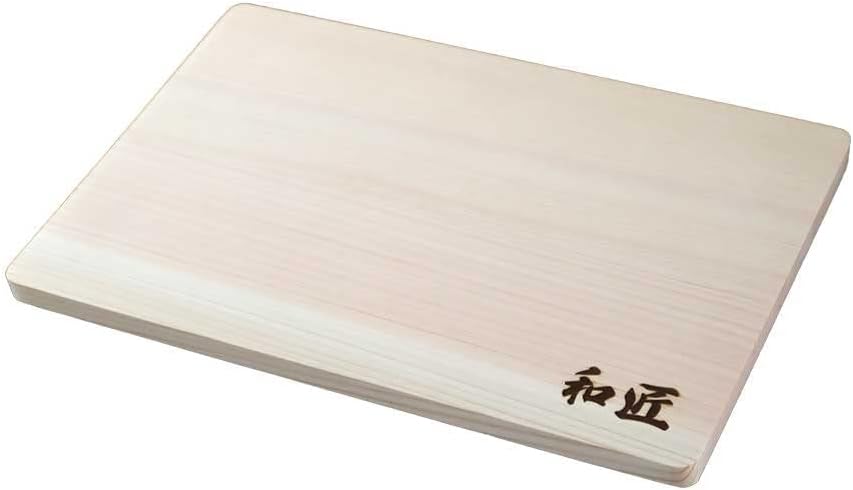
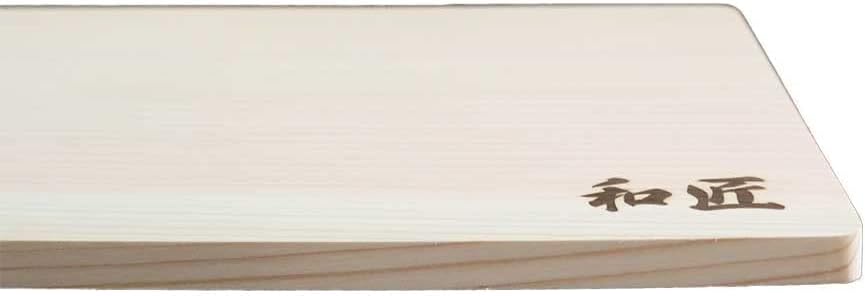
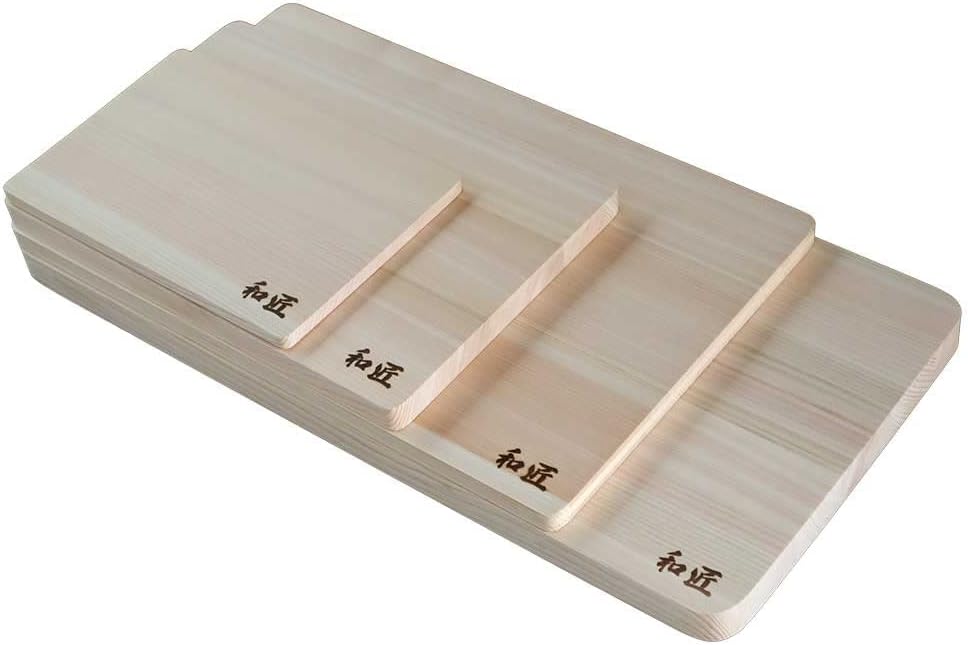
WASHO is the quietest name here. It sells through Zen Table Japan with no corporate history to speak of, which normally makes us cautious. The boards earn their place anyway, because of how they are finished.
Craftsmen take a kanna, the Japanese pull plane, across the face before sanding it. A planed surface is sheared rather than abraded, so the grain is left burnished instead of fuzzed. Run a thumb across it and the difference against a machine-sanded board is immediate.
The Small is 10.6 by 7.1 inches and a single centimetre thick, weighing 4.8 ounces. This is a board for a galley kitchen or a studio apartment: it lives in a drawer, it rinses and dries in a minute, it handles a lemon, a shallot or a piece of fish without a full-size slab taking over the counter. Step up to the Medium at 14.2 by 9.4 inches if you want a genuine everyday board.
Two honest cautions. At one centimetre this is the most warp-prone board in this comparison, so it must dry standing up. More importantly, the Small carries only a couple of ratings and stock is usually thin, which makes it the least proven pick here. The Medium has a slightly deeper review record.
It is the same Tono hinoki as the YAMASAN, cut smaller and finished more carefully.
Out of stock? The WASHO Medium (14.2 by 9.4 inches, around $62) is the same board in a more useful size.
Compare the Three
| YAMASAN Large | Yoshihiro X-Large | WASHO Small | |
|---|---|---|---|
| Approx. price | $60 | $140 | $37 |
| Size (inches) | 16.53 × 9.44 | 17.72 × 10.24 | 10.6 × 7.1 |
| Thickness | 1.5 cm | 2.5 cm | 1.0 cm |
| Construction | Single slab | Maple anti-twist core | Single slab, hand-planed |
| Wood | Tono hinoki (Gifu) | Hinoki, region unstated | Tono hinoki (Gifu) |
| Amazon rating | 4.4 / 5 (~125) | 4.4 / 5 (~50) | 4.2 / 5 (~2) |
| Best for | Most kitchens | Anyone who has warped a board | Small counters |
The prices above are approximate. All three ship from Japan, so what you pay moves with exchange rates and import charges; check the current figure before you commit.
Read the table as a question about failure rather than features. Every one of these boards cuts beautifully, because they are all Japanese cypress. What separates them is what happens in month eighteen, which is decided by thickness and by how you dry them.
Never Oil a Hinoki Board
This is the rule that surprises people who have owned a maple block. Western boards get mineral oil precisely to keep water out. Hinoki gets none, because sealing the grain blocks the absorb-then-dry cycle that keeps the wood sanitary. Oil it and you trap moisture inside, defeating the only mechanism that was protecting you.
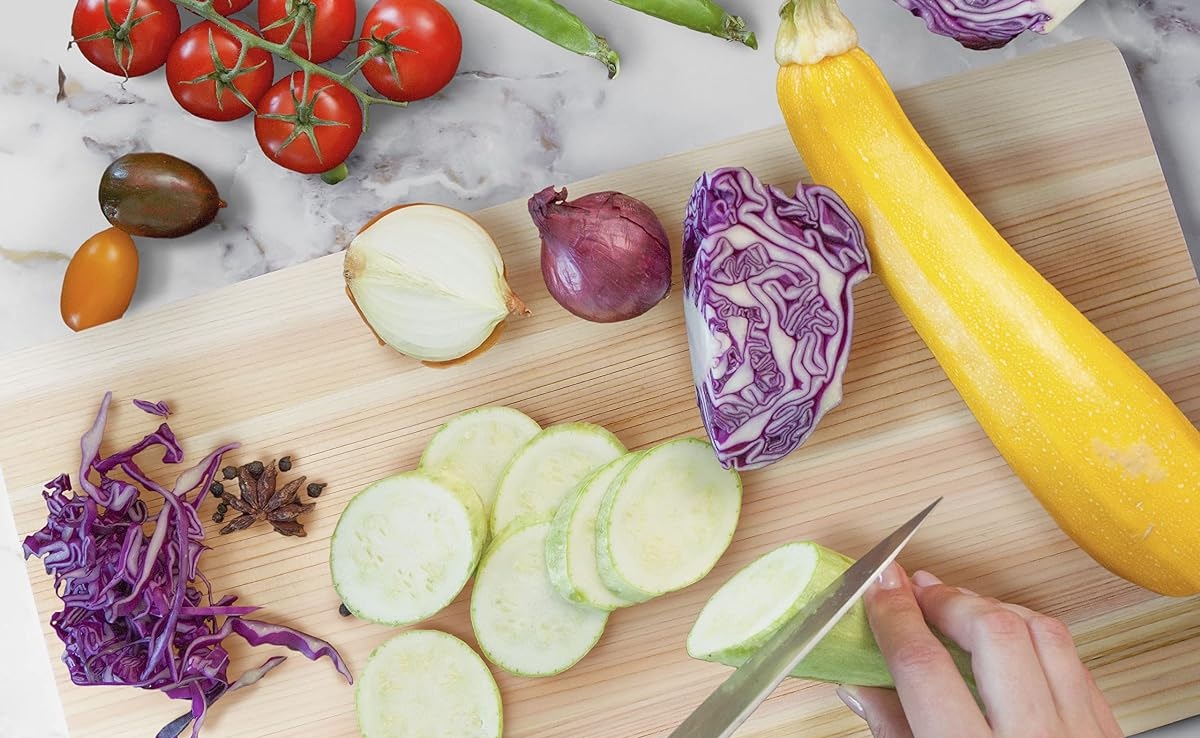
Wet the board with cold water before you cut. A damp surface will not drink up beetroot juice or fish oil. Wash with cold water and soap afterwards, never hot, since heat drives oils and detergent deeper into the timber. For stains, scrub with half a lemon and a spoonful of salt.
Then dry it standing on edge, never lying flat. Uneven drying is what warps a board; a slab left face-down on a wet counter is the single most common way these die. Expect the pale wood to darken over the years. Reserve one face for onion, garlic and fish, the other for fruit. Treated this way a good hinoki board lasts a decade or more.
The same cold-water, hand-dry discipline applies to the tool that spares the board its messiest jobs. Japanese kitchen scissors break down scallions or chicken with nothing touching the surface, so our Japanese kitchen scissors comparison is worth reading next to this one.
Summary
Buy the YAMASAN Large if you want one hinoki board and no fuss. Buy the Yoshihiro X-Large if warping is what you are afraid of and $140 is tolerable. Buy the WASHO Small if your counter is the limiting factor.
Whichever you pick, the board will outlive its reputation if you keep it out of the dishwasher, dry it on its edge and leave the oil in the cupboard.
Frequently Asked Questions
Do I need to oil a hinoki cutting board?
No. Unlike a maple or walnut block, hinoki should never be oiled. Mineral oil clogs the grain and traps moisture in the wood, which works against the absorb-then-dry behaviour that keeps a wooden board hygienic. Wash it in cold water and dry it standing on edge instead.
Is hinoki really better for Japanese knives?
Sharpeners and knife makers broadly agree that a soft surface is gentler on the hard, thin edges found on Japanese knives, which typically run 60 HRC or above. Hinoki is roughly a third to a half the hardness of sugar maple. Be aware this is practitioner consensus rather than a measured lab result.
Are hinoki boards antibacterial?
Not in the way the marketing implies. Hinokitiol is named after Taiwanese cypress and occurs only in trace amounts in Japanese hinoki. What research does support, from Dean Cliver’s work at UC Davis, is that wood generally draws bacteria in where they die off, while scarred plastic is very hard to clean by hand. That is a property of wood, not of hinoki specifically.
That comparison leaves out the surface Japanese professionals actually stand over all day. Rubber sits between the two: it refuses to hold the deep knife scars that make plastic hard to clean, yet it gives under an edge the way wood does. We put the three side by side in rubber vs hinoki vs plastic: what pros use in Japan.
Will a hinoki board warp?
It can — this is the main reason hinoki boards fail. Warping comes from uneven drying, so never leave one face wet or lay the board flat on a damp counter. Thicker slabs resist it better, which is why the Yoshihiro runs a maple anti-twist core through the middle of the board.
Can hinoki go in the dishwasher?
Never. The heat and prolonged soaking will crack, warp or split the board. All three boards here are listed as hand wash only. If dishwasher safety is a requirement, a synthetic rubber board is the tool you actually want.
What size hinoki board should I buy?
For general cooking, something close to 16 by 9 inches like the YAMASAN Large handles most prep without hogging the counter. Go to the Yoshihiro X-Large at 17.72 by 10.24 inches if you break down whole vegetables or fish. A 10 inch board such as the WASHO Small suits tight kitchens and quick jobs.
Every board here ships from Japan, so the dollar figure you see moves with the exchange rate. Check the current price on Amazon before you order.