vs-navi.online is a participant in the Amazon Services LLC Associates Program. Purchases made through links on this page may earn us a commission at no extra cost to you.
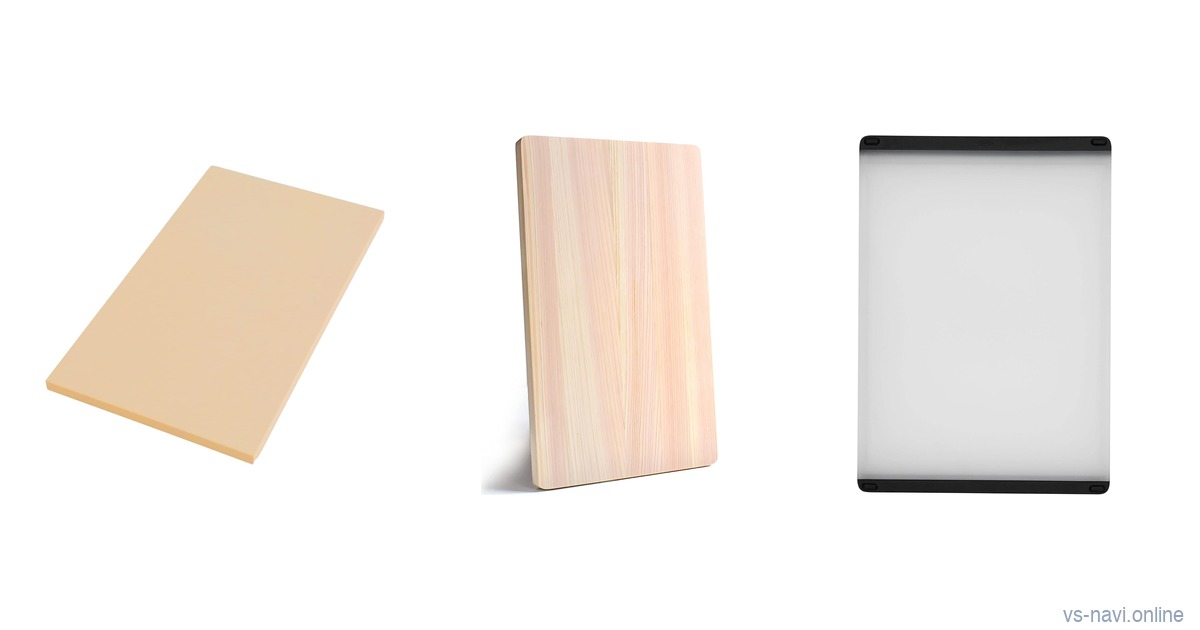
In Japan, the board under a professional knife is usually not wood.
Walk behind the counter of a sushi bar or a hotel prep kitchen in Tokyo today and the surface you will see most often is a slab of cream-coloured synthetic rubber. It looks like nothing. It costs more than a good chef’s knife. Cooks keep the same one for decades.
Western kitchens reach for plastic because it is cheap to replace. Japanese home kitchens still love hinoki cypress for the smell of it. We compared the three surfaces on published specs, manufacturer care instructions plus current Amazon listings so you can see what each one actually asks of you.
Which Cutting Board Should You Pick?
Short version, before the detail:
- Asahi Cookin’ Cut rubber — the one Japanese professionals buy. Kindest to a thin Japanese edge, dries fast, resurfaces with sandpaper when it looks tired. Heavy on the wallet at around $95.
- YAMASAN hinoki cypress — the traditional Japanese home board at around $60. Light, pleasant, forgiving under a knife. It wants to be washed quickly then stood on edge to dry.
- OXO Good Grips plastic — around $16 for a board you can throw in the dishwasher tonight. Fine for chicken night. It scars, then the scars are the problem.
Asahi Cookin’ Cut Rubber Board (around $95 on Amazon)
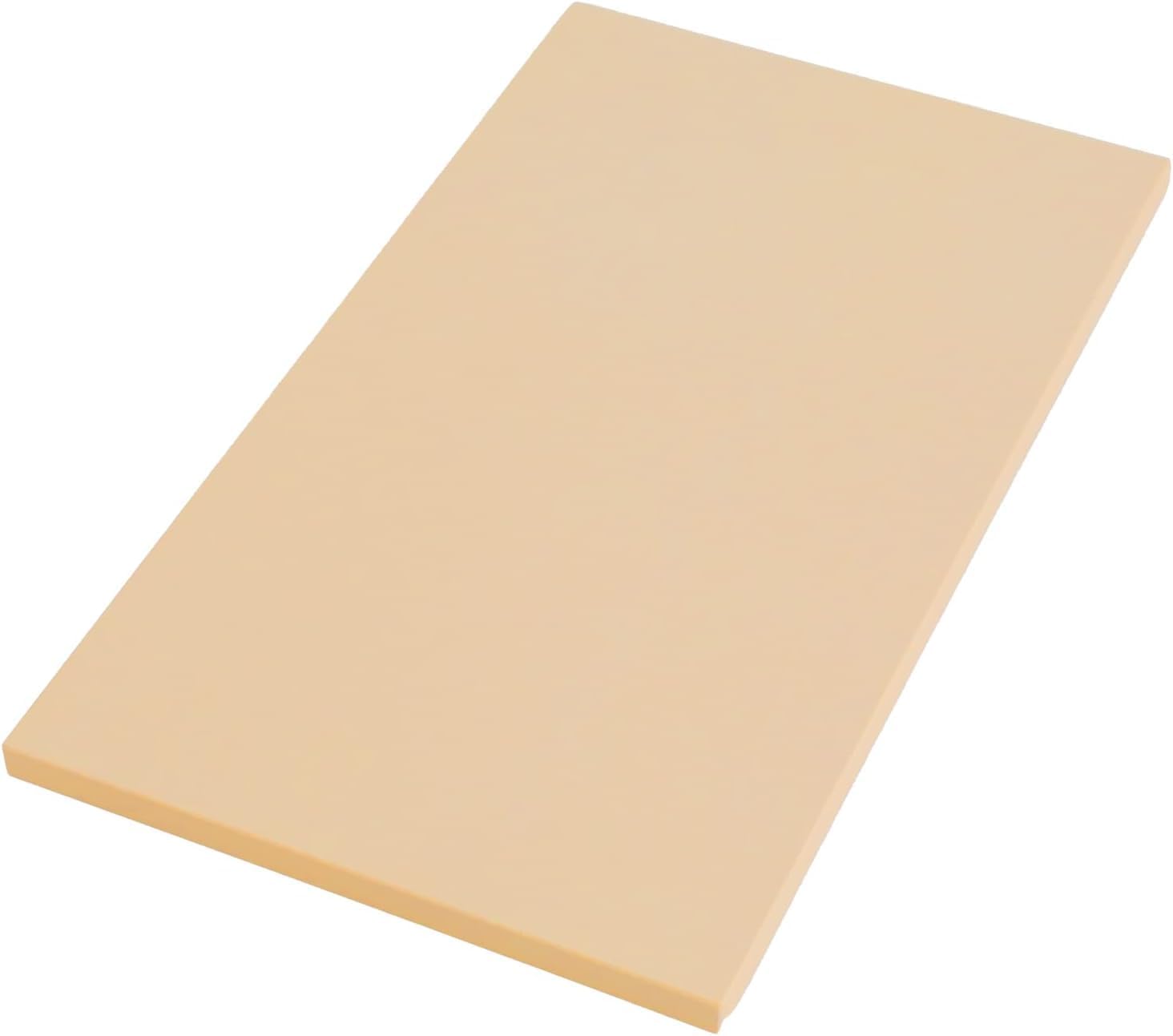
Parker Asahi was the first company in Japan to make a synthetic rubber chopping board. Cookin’ Cut has been on sale since 1965. Half a century later it is still the default in professional Japanese kitchens, sushi counters included.
The reason is the way rubber answers a blade. The material compresses under the edge then springs back, so the cut closes behind the knife instead of staying open as a groove. Deep scars are what turn any board into a place for bacteria to sit, so a surface that refuses to hold them is doing the hygiene work for you.
It barely absorbs water. Wipe it, stand it flat, it is dry in minutes with no smell of last night’s fish left behind. When the face eventually greys, professionals sand it flat with coarse paper rather than replacing it — one reason shops report using the same board for decades.
The honest downside is that it asks for care of its own. No dishwasher: the heat warps it. No hot pans parked on the surface. Store it flat rather than leaning at an angle. At roughly $95 for the LL size it is also the most expensive board here by a distance, though that is mild next to the $140 to $540 the same maker’s restaurant sizes fetch at US professional suppliers such as MTC Kitchen.
Buy it if you own carbon steel or thin Japanese knives that you sharpen yourself. The board will outlive them.
YAMASAN Kyoto Uji Hinoki Board (around $60 on Amazon)
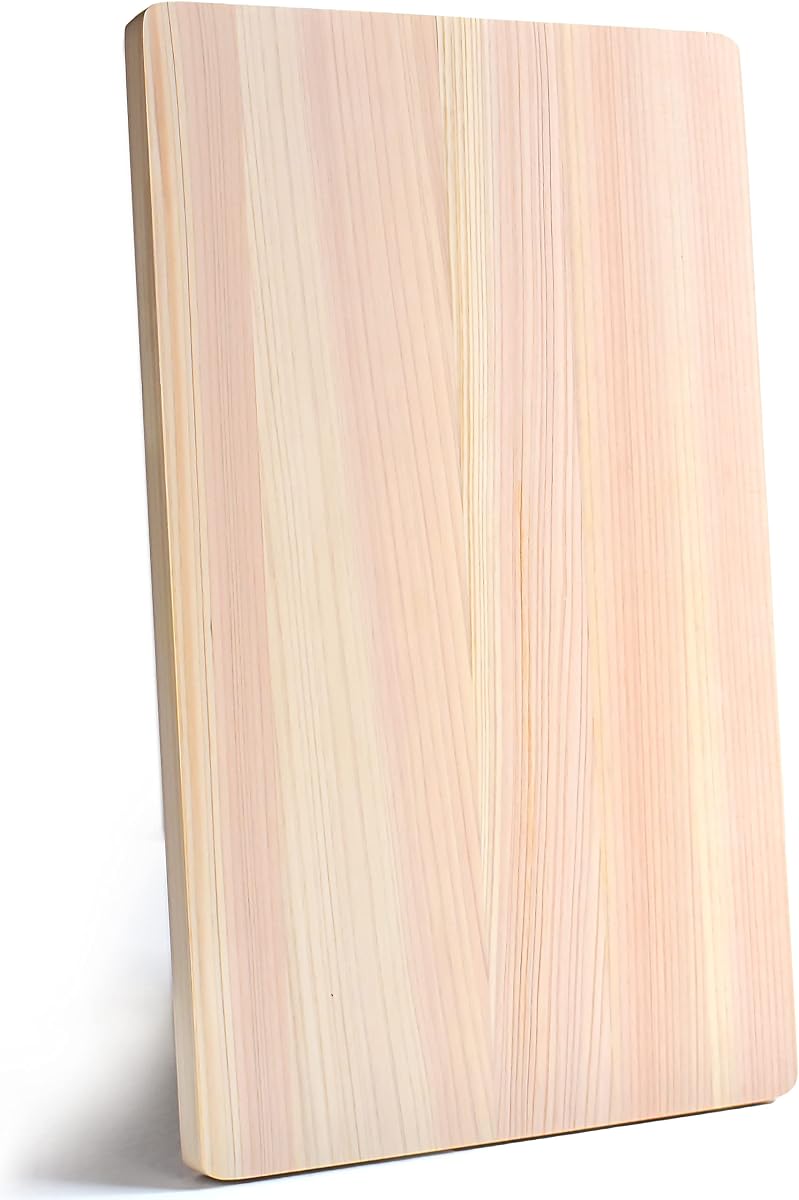
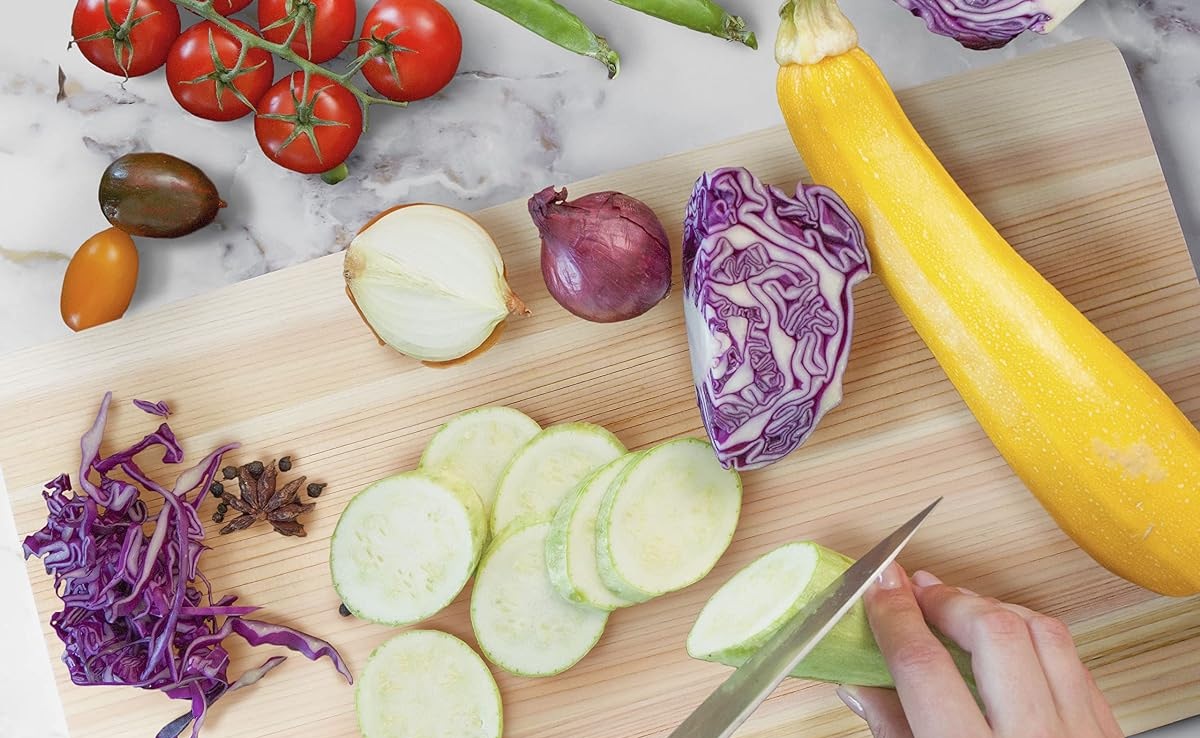
Hinoki is Japanese cypress, the wood of temple carpentry plus the bathtubs people still queue for at hot springs. In a kitchen it is prized for being soft under an edge, light enough to carry to the sink one-handed plus fragrant in a way plastic will never be.
This YAMASAN board is a single panel of Tono hinoki with no finish on it at all. That is deliberate. The most common mistake Western buyers make with Japanese cypress is treating it like a maple butcher block: never oil a hinoki board. Sealing the grain stops the wood doing the one thing it is good at — taking up moisture from the food then releasing it again as it dries.
Wood also has a quieter hygiene argument behind it. Research from UC Davis on wooden versus plastic surfaces found that bacteria driven into a wooden board tend not to survive there, while a plastic board with knife scars in it becomes very hard to clean by hand. Hinoki is on the right side of that finding.
What it asks in return is attention. Wash it quickly rather than letting it soak, stand it on edge so both faces dry, keep it away from the dishwasher. Beetroot or turmeric will mark it. It is a board with opinions.
If you want the full picture on sizes, thickness plus the three hinoki brands sold in the US, our hinoki cutting board comparison goes deeper than this section can.
OXO Good Grips Plastic Board (around $16 on Amazon)
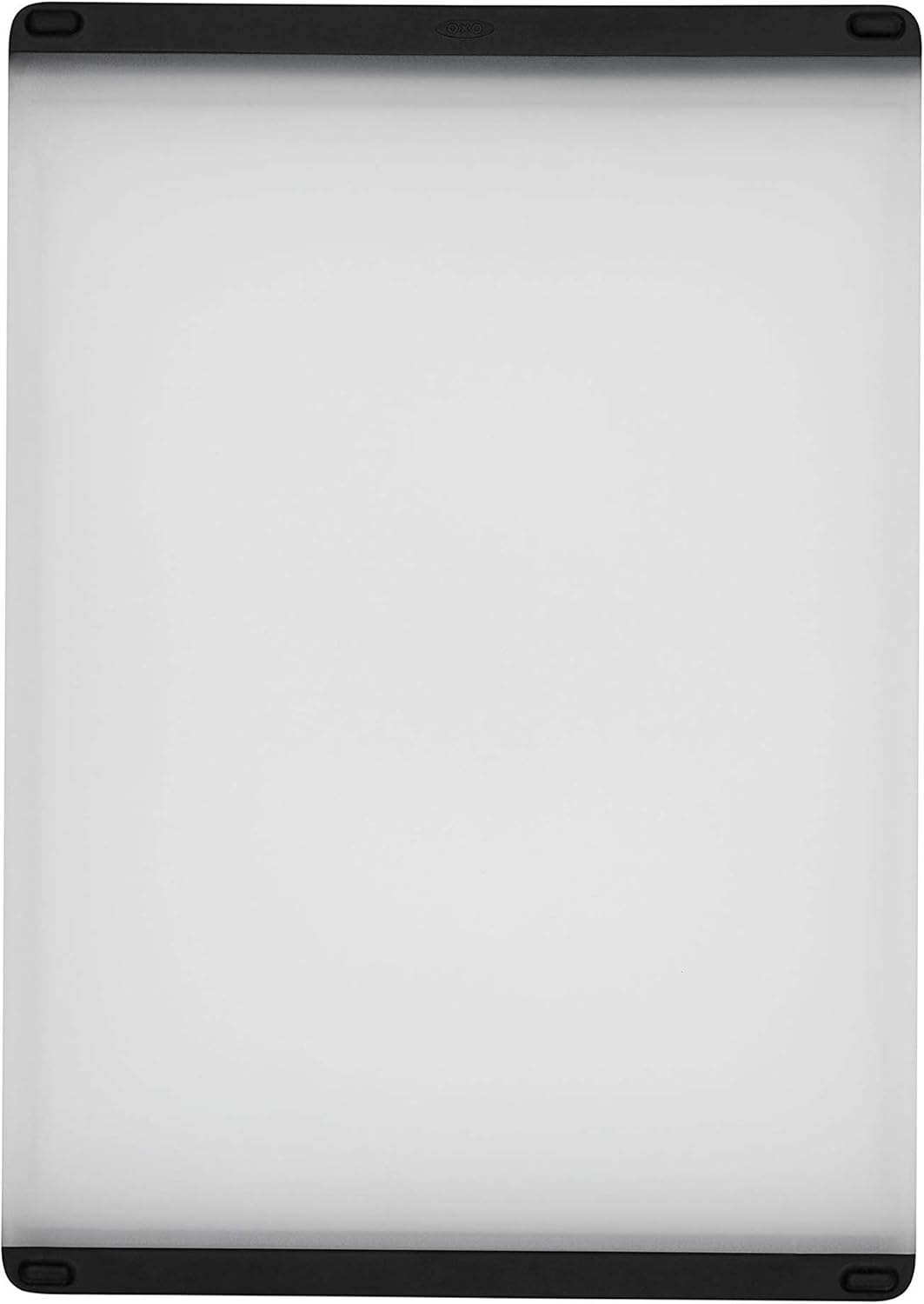
The plastic board is the one almost every Western kitchen already owns. OXO’s everyday version is the honest benchmark: a non-porous double-sided sheet with soft grips at each end so it does not travel across the counter while you work.
Its real advantage is the dishwasher. Raw chicken on Tuesday, a thermal wash that night, no thinking required. Neither the rubber board nor the hinoki can do that, which is why plenty of Japanese home cooks keep a cheap plastic sheet next to their good board purely for meat.
The cost shows up later. Polypropylene takes a knife cut as a permanent open groove, so a board six months into heavy use is a landscape of scratches that a sponge cannot reach into. That is the surface the UC Davis work flagged as difficult to clean by hand. A plastic board is a consumable — plan on replacing it, not curating it.
It is also small at 12.8 by 8.8 inches plus light enough to shift under a heavy cleaver. As a second board it is excellent value. As your only board with a $200 gyuto, it is the expensive choice disguised as the cheap one.
Compare the Three
| Asahi rubber | YAMASAN hinoki | OXO plastic | |
|---|---|---|---|
| Approx. price | $95 | $60 | $16 |
| Size | 16.5 × 9.8 in | 16.5 × 9.4 in | 12.8 × 8.8 in |
| Thickness | 13 mm | 15 mm | 10 mm |
| Kind to a thin edge | Best | Very good | Adequate |
| Dishwasher | No | No | Yes |
| Can be resurfaced | Yes, sandpaper | Yes, planing | No |
| Used in Japanese pro kitchens | Standard | Traditional, now rare | Prep only |
Pick the rubber board if your knives are the expensive part of your kitchen. It is the only one here that a working sushi counter would recognise, it protects an edge better than either alternative plus it is repairable rather than disposable.
Pick hinoki if you cook mostly vegetables plus fish, you enjoy the ritual of drying a board properly, or you simply want the cypress smell in the kitchen. It costs well under the rubber board with most of the kindness to your knives.
Pick plastic as a second board for raw meat, not as your main surface. Sixteen dollars for a dishwasher-safe sheet is good value precisely because you are meant to replace it.
Summary
Japanese professionals settled on rubber because it keeps an edge sharp, refuses to hold deep scars plus survives a decade of daily service. Hinoki is the home-kitchen classic that rewards a little discipline. Plastic is the dishwasher-proof workhorse that wears out.
Most kitchens end up with two: one good board for everything, one cheap sheet for chicken. The choice is really about which of the two you buy first.
FAQ
Do Japanese chefs really use rubber cutting boards?
Yes. Synthetic rubber boards have been sold in Japan since 1965 plus they are the usual surface in professional kitchens today, sushi counters included. Wood survives mainly in home kitchens or in restaurants that keep it for presentation.
Can a rubber cutting board go in the dishwasher?
No. Dishwasher heat can warp it. Wash it by hand, bleach it if you want to sanitise it, then store it flat rather than propped at an angle.
Should I oil a hinoki cutting board?
No. Unlike a maple butcher block, hinoki is left unfinished so the wood can take up moisture then release it as it dries. Oil seals the grain plus works against that cycle.
Is plastic more hygienic than wood?
Not automatically. A new plastic board cleans easily plus goes in the dishwasher. Once it is covered in knife scars it becomes difficult to clean by hand, which is the situation UC Davis research on cutting surfaces highlighted.
Why is the Asahi board so expensive?
It is a thick slab of engineered rubber built for professional service plus it can be sanded flat again instead of thrown away. Restaurant sizes from the same maker run from roughly $140 to $540 at US professional suppliers.
Which board is best for expensive Japanese knives?
The rubber board, with hinoki a close second. Both give under the edge. Hard surfaces such as glass, stone or bamboo are the ones to avoid entirely.
Prices shown are approximate US figures for 2026 taken from current Amazon listings. Amazon prices move frequently, so check the current price on Amazon before you buy.