vs-navi.online is a participant in the Amazon Services LLC Associates Program. Purchases made through links on this page may earn us a commission at no extra cost to you.
A crusty loaf fights back. The first stroke skates across the top, the second one tears, the third squashes the crumb flat against the board. The right bread knife goes through in a few long, quiet pulls — crackle on top, clean slice underneath.
Japan takes bread more seriously than most visitors expect. Shokupan, the soft square milk loaf, is sold in thick-cut half loaves at dedicated bakeries. The knives made to slice it come mostly from one town: Seki, in Gifu Prefecture, where blade-making has been the local trade for roughly 800 years.
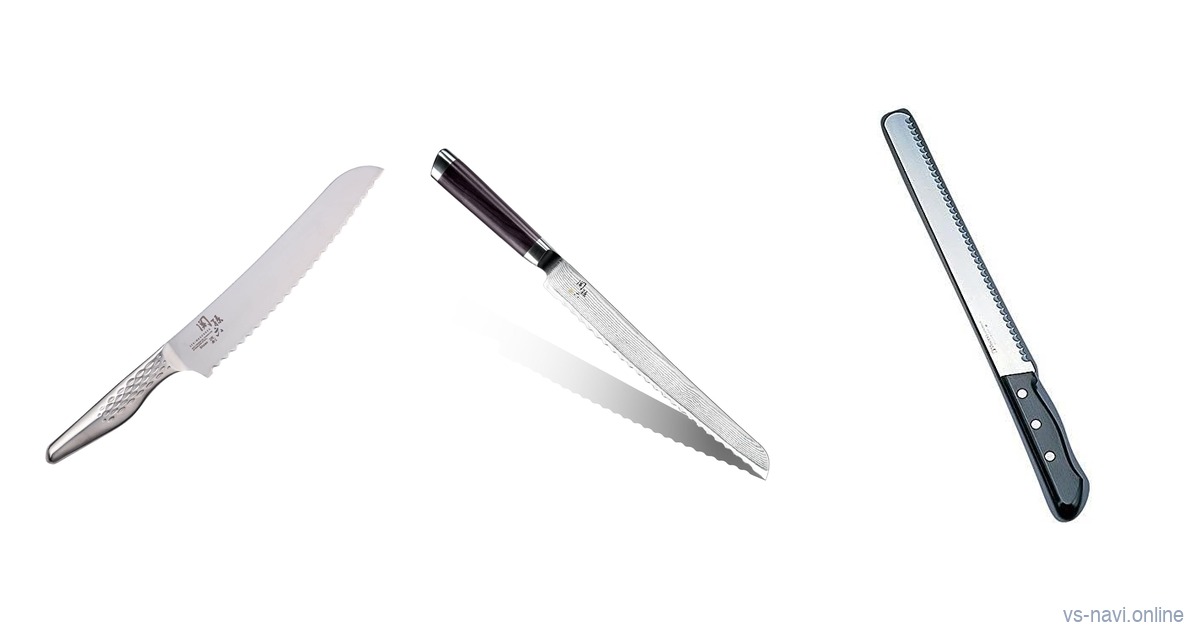
We compared three Seki-made bread knives that can currently be bought on Amazon.com, on published specifications, the manufacturers’ own spec imagery plus listing data. They split neatly by blade length: 210 mm, 240 mm or 300 mm. That single number decides more than anything else.
Which Japanese Bread Knife Should You Pick?
The short version, before the detail:
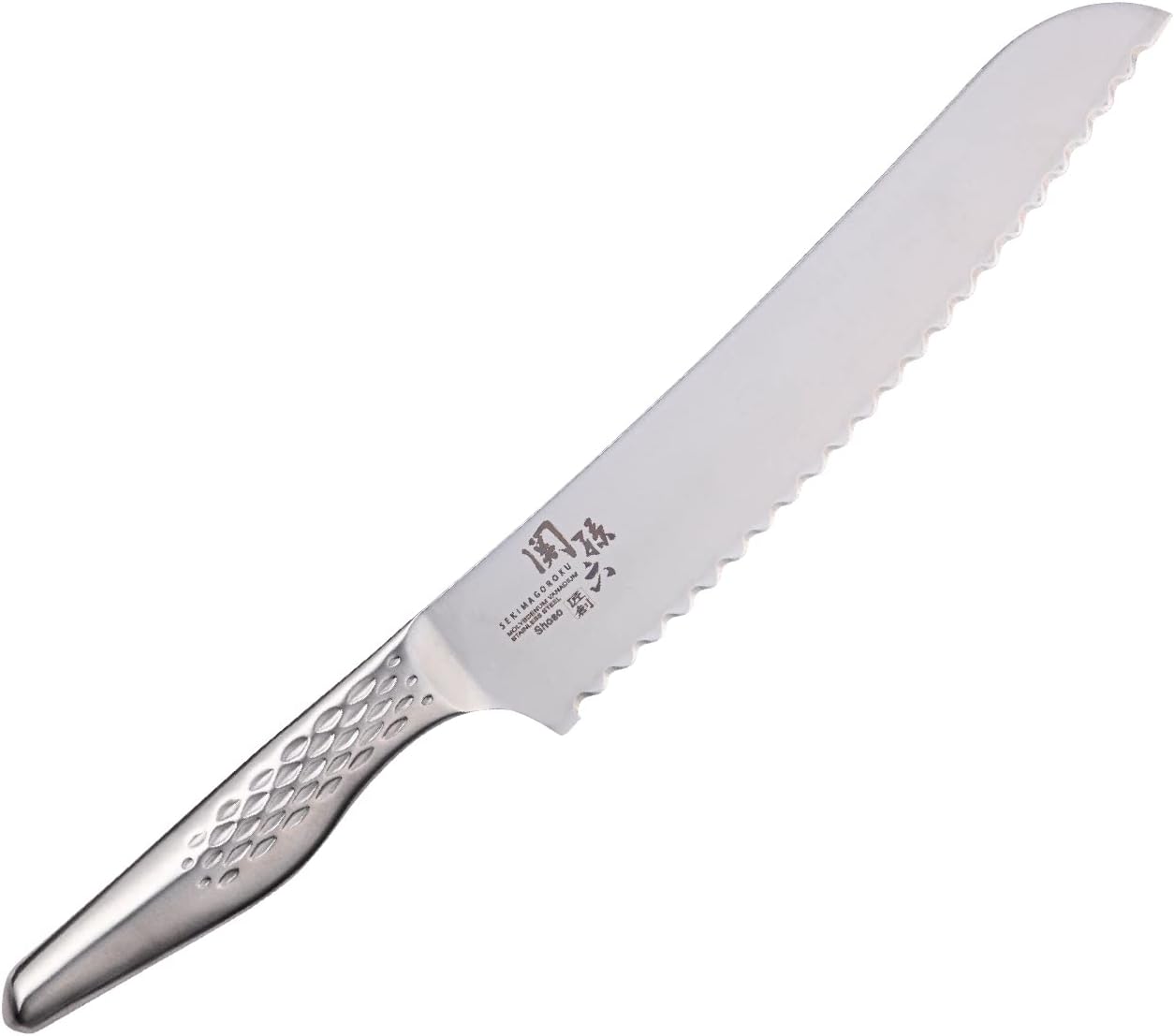
- Kai Seki Magoroku Shoso 210 mm (AB5167) — about $46, 118 g, one seamless piece of stainless steel. The best pick for everyday sandwich loaves, bagels plus soft Japanese shokupan.
- Kai Seki Magoroku Damascus 240 mm (AE5207) — about $103, 32-layer Damascus cladding plus a wood-composite handle. The one to buy if you bake round country loaves or sourdough boules at home.
- Misono No.696 Wave Knife 300 mm — about $176, a professional-length blade from Misono’s molybdenum steel line. For very large loaves, cakes or anyone who wants a single stroke to reach all the way through.
See the Seki Magoroku Shoso on Amazon →
Kai Seki Magoroku Shoso Bread Knife 210 mm — The Everyday Slicer
Around $46 on Amazon · 4.6 out of 5 stars from 322 ratings at the time of writing
Seki Magoroku is the knife brand of Kai Corporation, founded in Seki in 1908. The name borrows from Magoroku Kanemoto, a 16th-century Seki swordsmith. In Japan the brand sits in department-store kitchen aisles as the dependable, mid-priced choice. It is the same company behind Shun, which most American cooks know better.
The Shoso (匠創) line is the all-stainless branch of Seki Magoroku. The blade flows straight into a dimpled steel handle with no seam, no rivets, no wood to crack. Kai’s Japanese listing imagery says the knife tolerates boiling-water sterilization plus the dishwasher, which is unusual for a Japanese blade. The blade itself is molybdenum vanadium stainless steel.
At 210 mm of blade, 338 mm overall with a published weight of about 118 g, this is a light knife. It suits a standard sandwich loaf, a baguette cut on the bias, bagels or a soft shokupan where you want thick slices without pressing the top down. Kai describes the scalloped wave edge as designed to cut without crushing the bread, which also covers soft cakes.
The honest limit is length. A round boule wider than about 7 inches will need you to cut from both sides. The steel handle can also feel slick with buttery hands. For most kitchens, though, this is the knife that ends up in daily use.
Kai Seki Magoroku Damascus Bread Knife 240 mm — The Sourdough Knife
Around $103 on Amazon · 4.1 out of 5 stars from 52 ratings at the time of writing
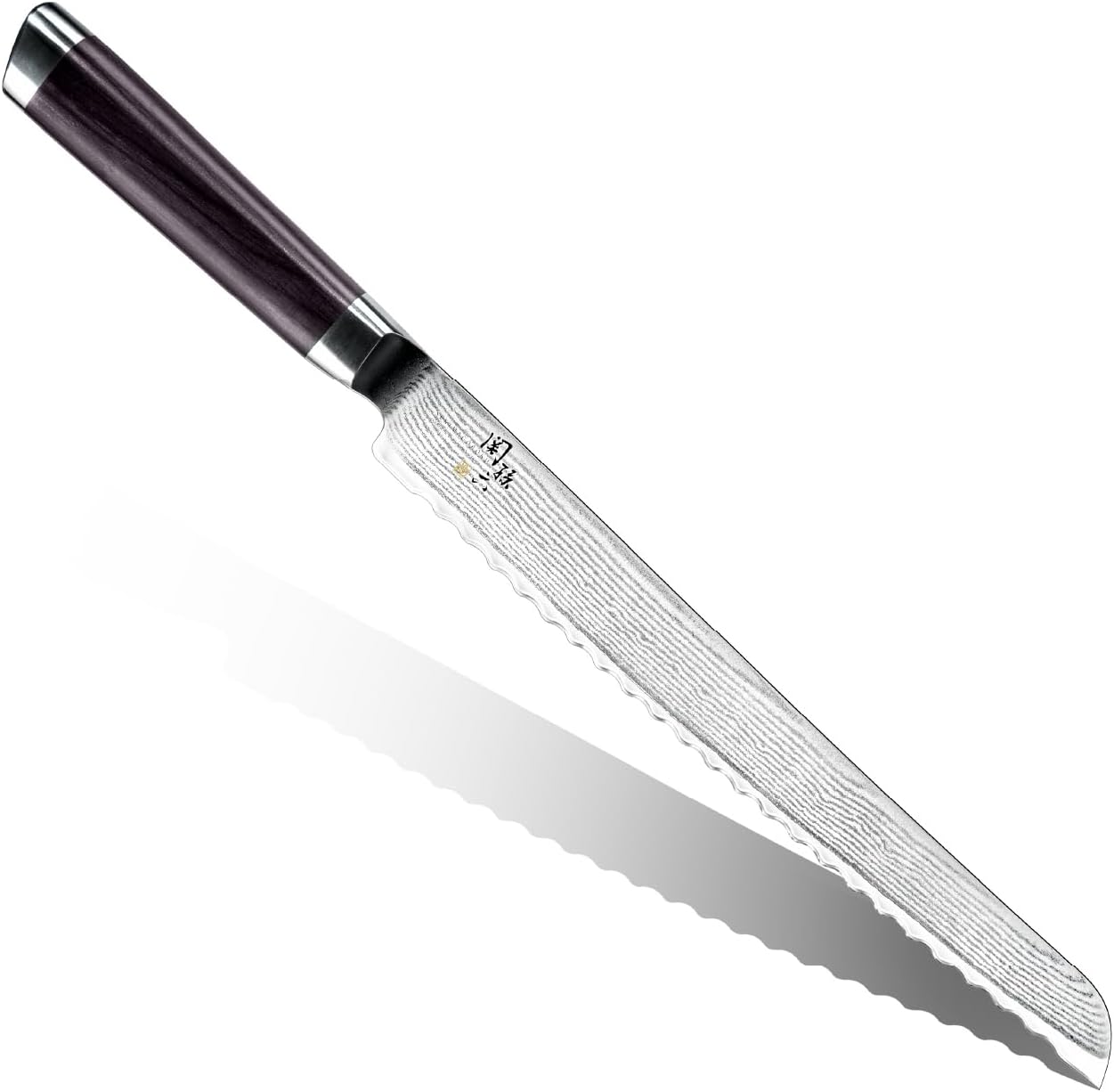
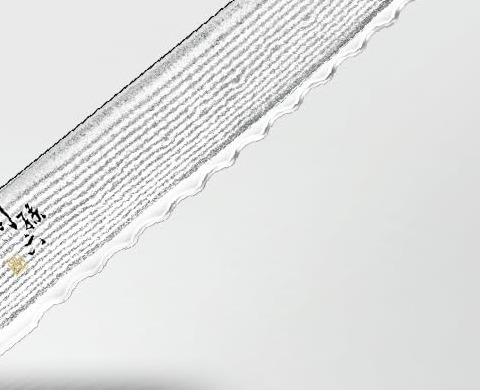
This is the step-up model from the same maker. According to Kai’s spec imagery the blade is clad in 32 layers of different stainless steels, which is where the wood-grain ripple pattern comes from. The handle is laminated reinforced wood with stainless end caps, shaped as a rounded inverted triangle so it sits in the palm without twisting.
The extra 30 mm is the real upgrade. A 240 mm blade clears most home-baked boules plus bâtards in one pass, so the saw stroke stays long instead of short back-and-forth jabs. Published weight is about 149 g, heavier than the Shoso, which helps the knife drop through a thick crust under its own weight.
In Japan the Seki Magoroku Damascus range is a common gift item: good-looking enough for a wedding present, practical enough to use every day. It is also the most familiar “nice knife” brand to Japanese home cooks, well below the price of hand-forged artisan work.
The downside is care. Unlike the Shoso, the wood-composite handle should be washed by hand, dried straight away. The rating also sits lower at 4.1 stars on a smaller sample of 52 ratings, so there is less buyer data behind it than behind the 210 mm model.
Misono No.696 Wave Knife 300 mm — The Professional Length
Around $176 on Amazon · 4.5 out of 5 stars on the listing (low stock at the time of writing)
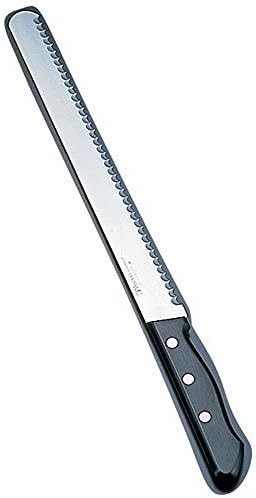
Misono Cutlery is also a Seki company, but its reputation is built in restaurant kitchens rather than department stores. Japanese chefs know it for the Molybdenum series plus the pricier UX10 line. Our Misono brand guide covers the full range.
The No.696 is the long member of the Molybdenum family’s wave knives. The listing gives a 30 cm blade, 43 cm overall, a 1.6 mm spine plus a weight of about 150 g. That thin spine on a long blade is the point: it slides through a tall loaf or a layered sponge cake with less wedging than a thicker Western bread knife.
This is a knife for people who slice a lot of large things. Pastry cooks, anyone baking big rye loaves, households that portion a whole cake at once. On a small cutting board the 300 mm blade can feel like more than you need.
Two practical notes. Stock on Amazon.com was thin when we checked, with only a couple left from the seller. The product listing is also a Japan import with limited English detail, so the spec figures above come directly from the listing rather than a US product page.
Compare the Three
| Seki Magoroku Shoso | Seki Magoroku Damascus | Misono No.696 | |
|---|---|---|---|
| Price seen | ~$46 | ~$103 | ~$176 |
| Blade length | 210 mm (8.3 in) | 240 mm (9.4 in) | 300 mm (11.8 in) |
| Overall length | 338 mm | 368 mm | 430 mm |
| Published weight | ~118 g | ~149 g | ~150 g |
| Blade steel | Molybdenum vanadium stainless | 32-layer stainless Damascus | Molybdenum steel |
| Handle | Seamless stainless | Laminated reinforced wood | Black, riveted |
| Dishwasher | Yes (per Kai) | Hand wash | Hand wash |
| Amazon rating | 4.6 (322) | 4.1 (52) | 4.5 |
| Best for | Sandwich loaves, shokupan, bagels | Sourdough boules, country loaves | Very large loaves, cakes |
Start with the widest loaf you usually cut. A common rule of thumb is to choose a blade a couple of inches longer than the loaf is wide, so the whole edge works on each stroke. Store-bought sandwich bread is well served by 210 mm. Home-baked boules want 240 mm.
Then decide how much care you will give it. The Shoso is the only one of the three that its maker says can go in the dishwasher, which matters more than it sounds for a knife used every morning. The Damascus model plus the Misono are hand-wash knives.
Spend on the Misono only if you really need the length. Its 300 mm blade is the clear winner on reach, but most home kitchens will get more daily value from one of the two Seki Magoroku knives.
If you are building out a set, our nakiri comparison covers another Seki Magoroku blade for vegetables. The guide to Sakai, Seki plus Echizen explains why so many Japanese knives come from this one town.
Frequently Asked Questions
What length bread knife do I need?
Pick a blade a little longer than the widest loaf you cut. 210 mm (about 8 inches) covers sandwich bread, bagels plus baguettes. 240 mm (about 9.5 inches) handles most home-baked sourdough boules. 300 mm is for very large loaves or cakes.
Why are there no Shun or Tojiro bread knives in this comparison?
We checked both. When we looked in September 2026, the Amazon.com listings for the Shun Classic 9-inch bread knife plus the Tojiro ITK bread slicer showed no current offer, so we left them out rather than send readers to pages they cannot buy from. Kai makes both Shun and Seki Magoroku. For Tojiro’s wider lineup, see our Tojiro brand guide.
Can you sharpen a serrated Japanese bread knife?
Yes, but not on a flat whetstone the way you would a gyuto. Serrated edges are usually touched up with a thin ceramic rod on each scallop, or sent to a professional sharpening service. Because bread is soft, a good bread knife stays usable far longer than a chef’s knife between sharpenings. Our Japanese knife care guide covers the basics.
Is a Japanese bread knife good for soft shokupan?
That is what many of them are designed for. A wave edge cuts the thin top crust without pressing the soft crumb flat, so thick slices keep their square shape. The light 210 mm Seki Magoroku Shoso is the most natural fit.
Can I put a Japanese bread knife in the dishwasher?
Only if the maker says so. Kai states that the all-stainless Seki Magoroku Shoso can go in the dishwasher. The Damascus model with its wood-composite handle plus the Misono should be washed by hand, then dried straight away.
Summary
All three knives come from the same Japanese town, but they solve different loaves. Light 210 mm for daily bread, 240 mm Damascus for sourdough, 300 mm Misono for the biggest jobs.
For most kitchens the Seki Magoroku Shoso is the one we would buy first.