vs-navi.online is a participant in the Amazon Services LLC Associates Program. Purchases made through links on this page may earn us a commission at no extra cost to you.
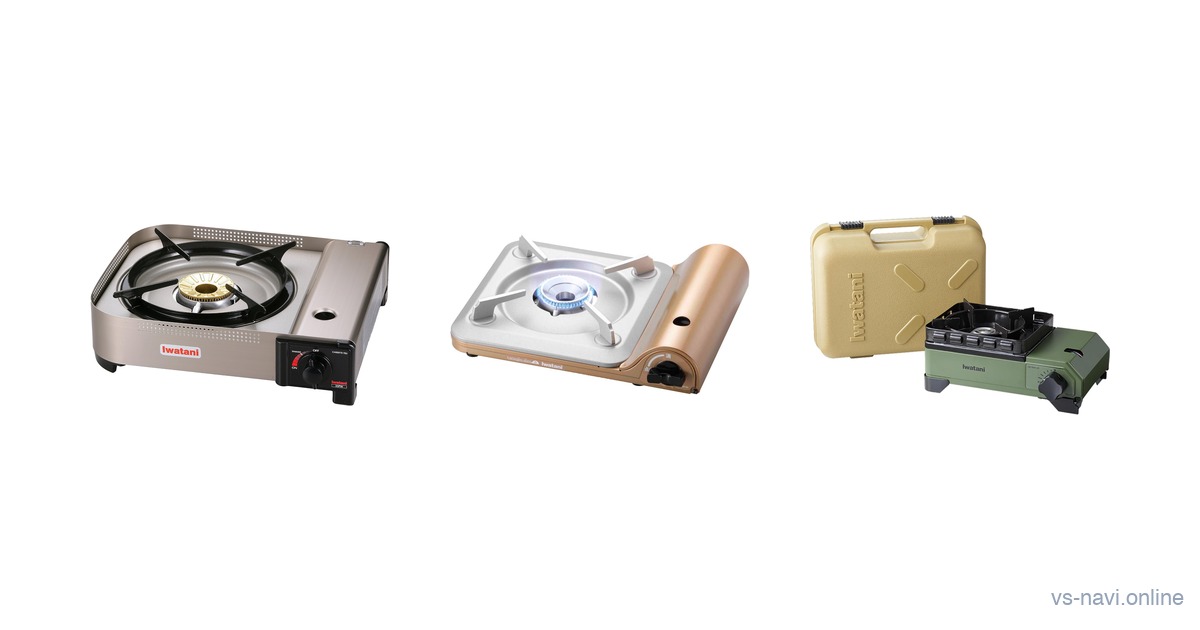
A Japanese hot pot is cooked at the table, not at the stove. The donabe sits in the middle, the broth keeps moving, everyone reaches in with their own chopsticks. That only works if the heat source lives on the table too.
In Japan the answer is almost always a cassette konro: a flat butane burner that takes a single 8 oz canister. Iwatani has owned that category since the 1970s. Walk into any Japanese home in January and there is a good chance an Iwatani sits in a cupboard, waiting for nabe season.
Three Iwatani bodies show up on Amazon.com, at three very different prices. We compared them on published specifications, listing data plus the manufacturer’s own spec imagery to work out which one belongs on your table.
Which Iwatani Stove Should You Pick?
The short version, before the detail:
- Iwatani 35FW — the highest published output of the three at 15,000 BTU. The straightforward choice for indoor hot pot if you want the model Iwatani prepares for the US market.
- Tatsujin Slim III CB-SS-50 — a 74 mm body at roughly half the price. The one to buy if the stove has to disappear into a drawer eleven months a year.
- Tough Maru Jr. CB-ODX-JR — double wind guards plus a 10 kg load rating. Buy this if the table is sometimes outdoors or the pot is cast iron.
Iwatani 35FW — The 15,000 BTU Tabletop Standard
Around $130 on Amazon
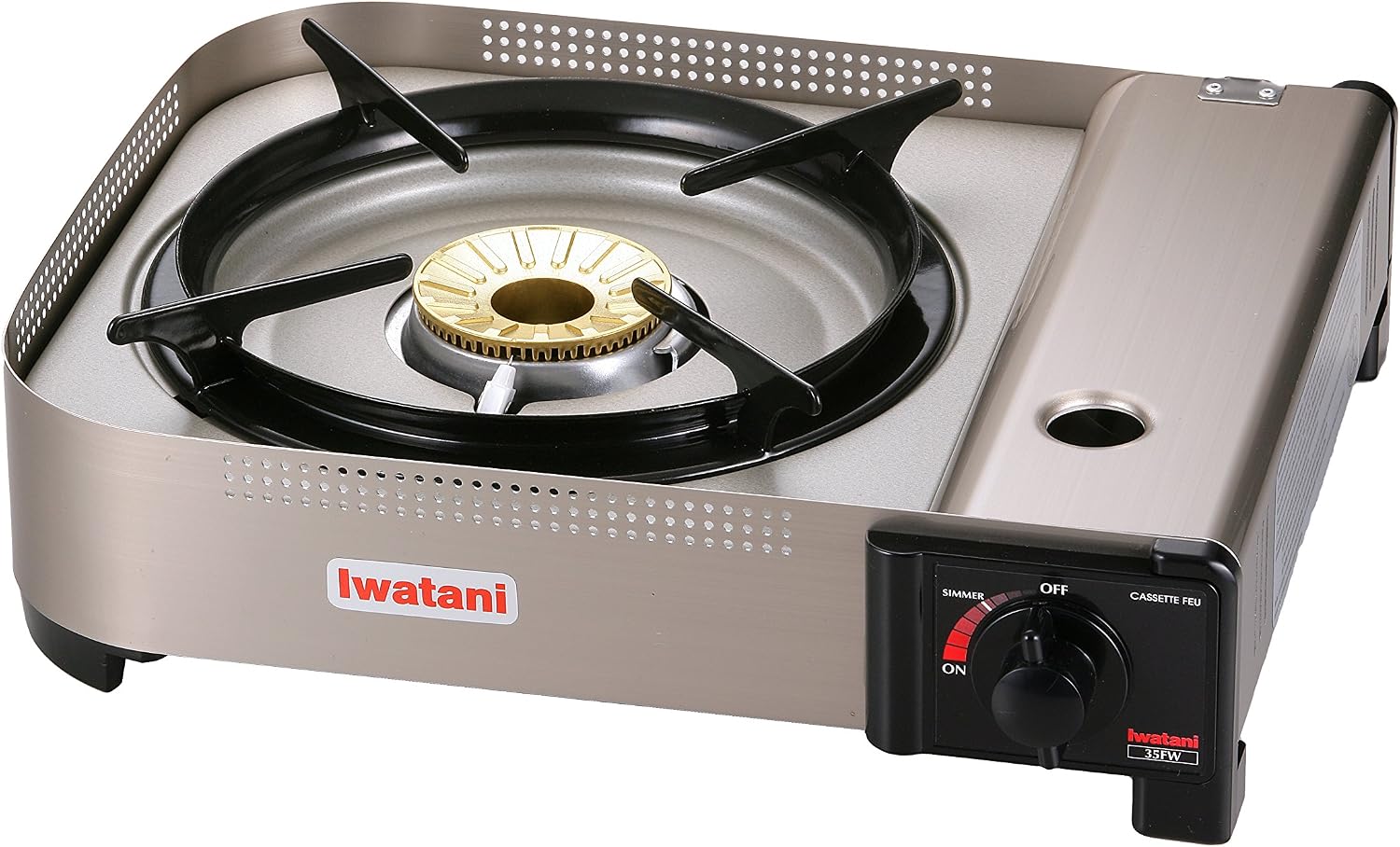
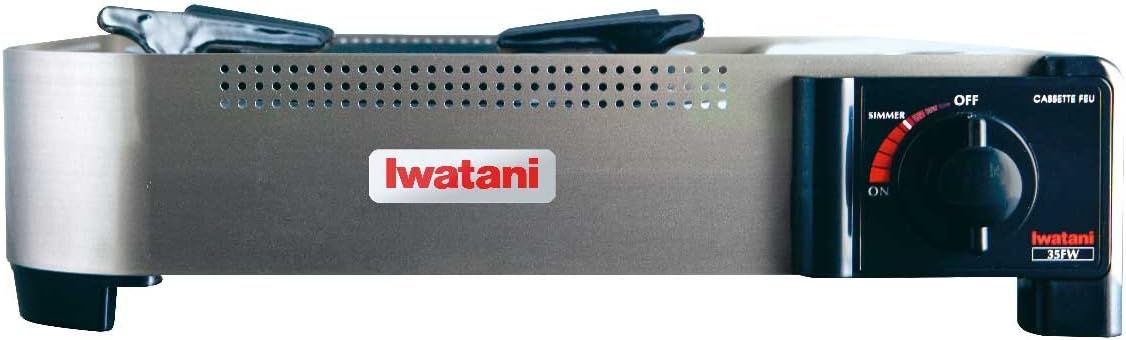
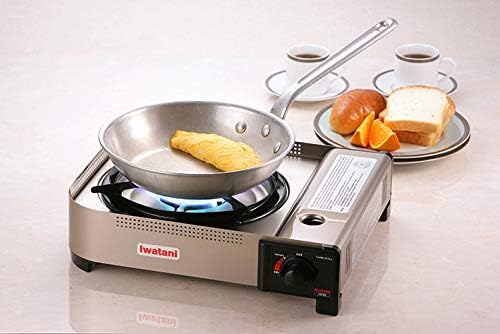
The 35FW is the Iwatani most Americans meet first. It is the one with the output printed in US units on the box: 15,000 BTU through a brass burner head, which is more than most single-burner camping stoves put out.
That number matters for hot pot in a specific way. A donabe full of cold dashi is a big thermal mass. A weak burner gets it to a shy simmer, then loses the fight every time someone drops in a handful of napa cabbage. The 35FW brings the pot back.
The canister loads by magnet rather than a locking lever. You push the can in until it grabs; there is no orientation to get wrong. Iwatani pairs that with a pressure-sensing cutoff that kills the gas flow if the canister gets too hot, plus a double wind guard that also does useful work indoors, where an air conditioning vent can flatten a flame from across the room.
The honest downside is price. At the time of writing this listing sat near $130 — more than twice what the Japan-domestic Slim III costs on the same site, for a stove of similar footprint. You are paying for US-market distribution rather than for extra hardware.
Iwatani Tatsujin Slim III CB-SS-50 — The Thin One That Stores Flat
Around $56 on Amazon
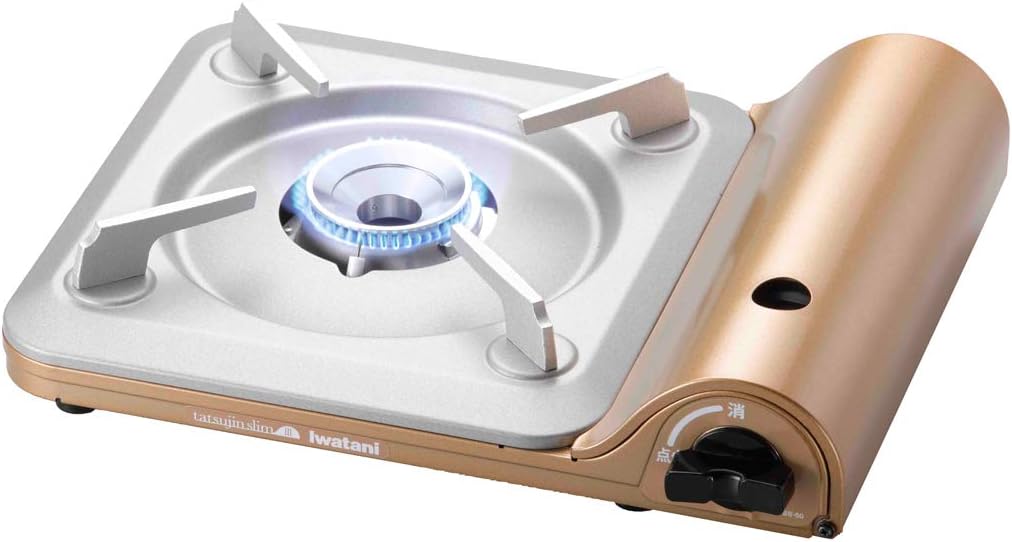
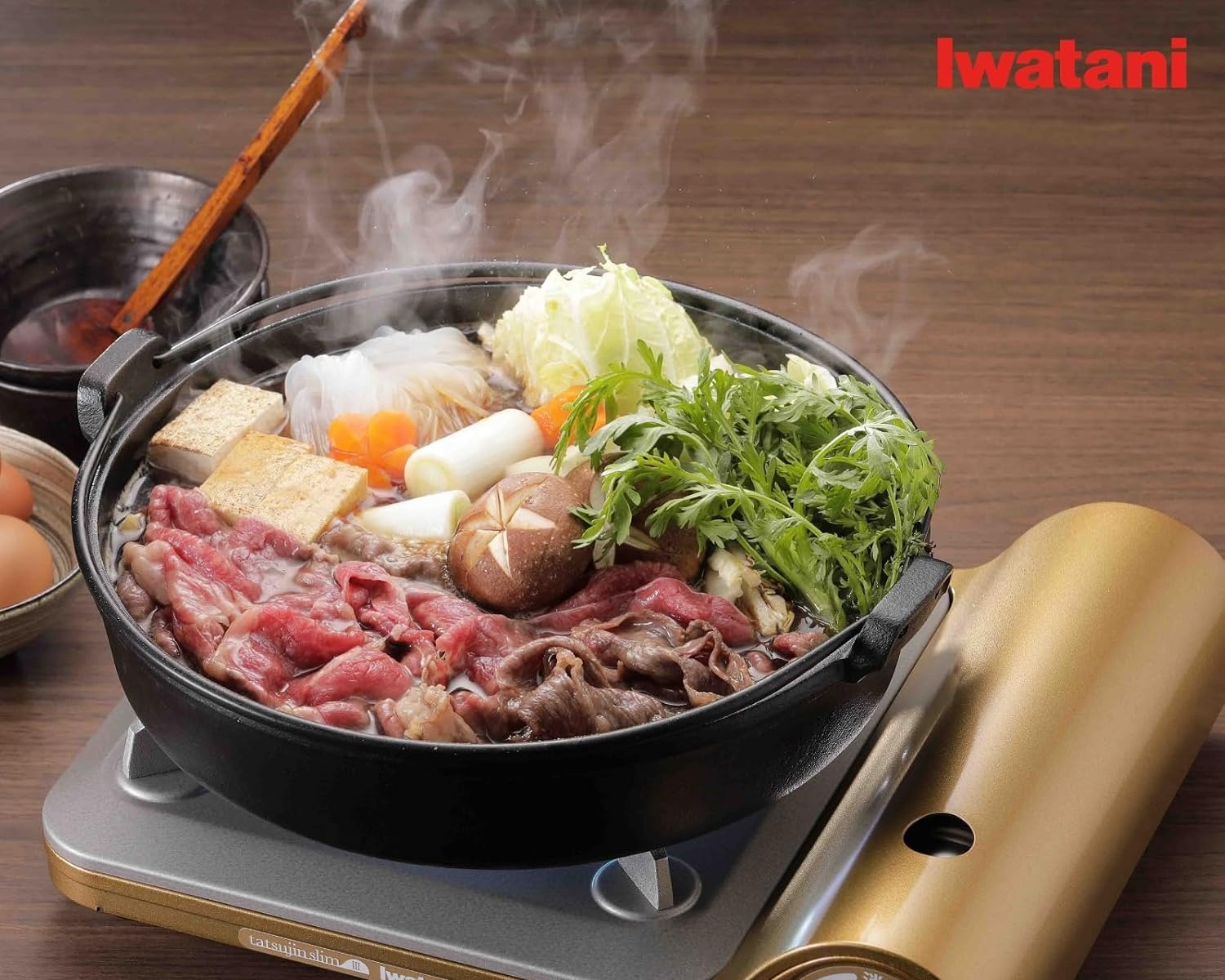
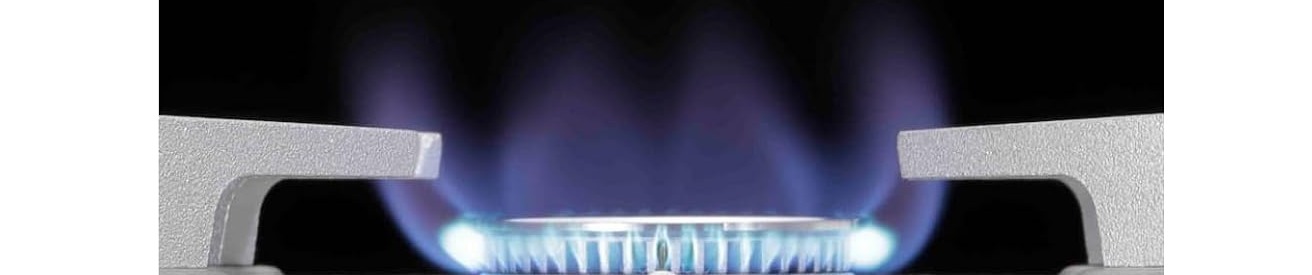
Tatsujin means “master” in Japanese, which is the kind of product name that usually signals marketing rather than engineering. Here it points at one real design decision: the flame ports face upward instead of outward.
On a conventional cassette konro, part of the flame spreads past the edge of a small pot and licks up the sides. That heat does nothing except warm your table. Iwatani’s vertical port keeps the cone tight under the base.
The company publishes a measurement for the effect. Against its own 3.3 kW model from 2014, Iwatani reports boiling 1.4 L of water in an 18 cm pot in 5.4 minutes instead of 6.5, using 20.9 g of gas instead of 25.1. Both stoves are rated at the same 3.3 kW, or roughly 11,300 BTU per hour. That figure is the manufacturer’s own testing rather than an independent result, so treat it as a direction rather than a guarantee.
The body is 74 mm thick with a fluorine-coated top plate, which is the practical reason to choose it: soy sauce wipes off, then the whole stove slides into a drawer. Iwatani rates it at 70 minutes of burn time at maximum power.
The catch is that this is Japan-domestic stock routed onto Amazon.com. The listing copy reads as machine translation, every spec graphic on the page is in Japanese, so expect a Japanese manual in the box. For a knob and a piezo igniter that is survivable. For warranty questions it is not ideal.
Iwatani Tough Maru Jr. CB-ODX-JR — The Windproof Compact
Around $98 on Amazon
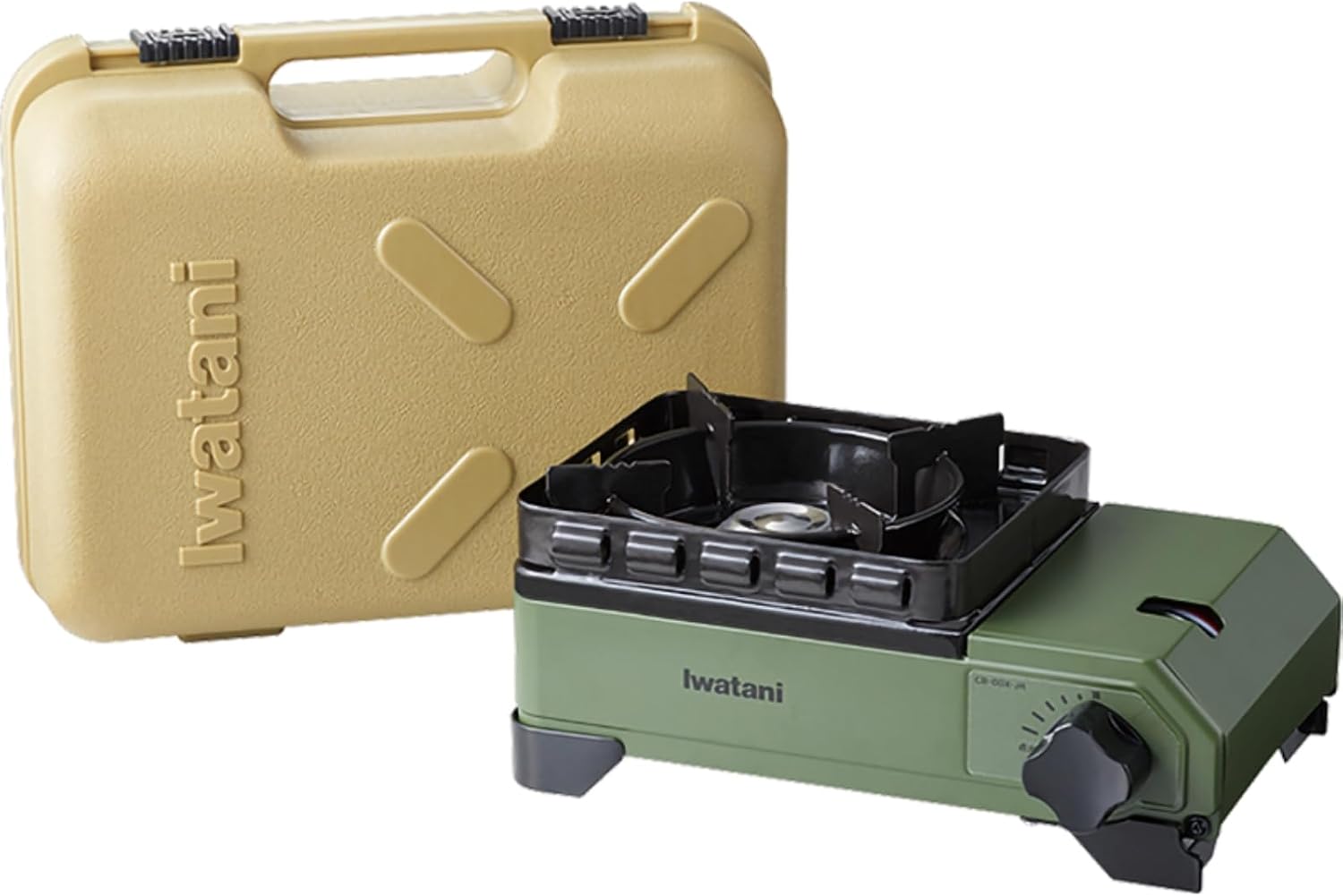
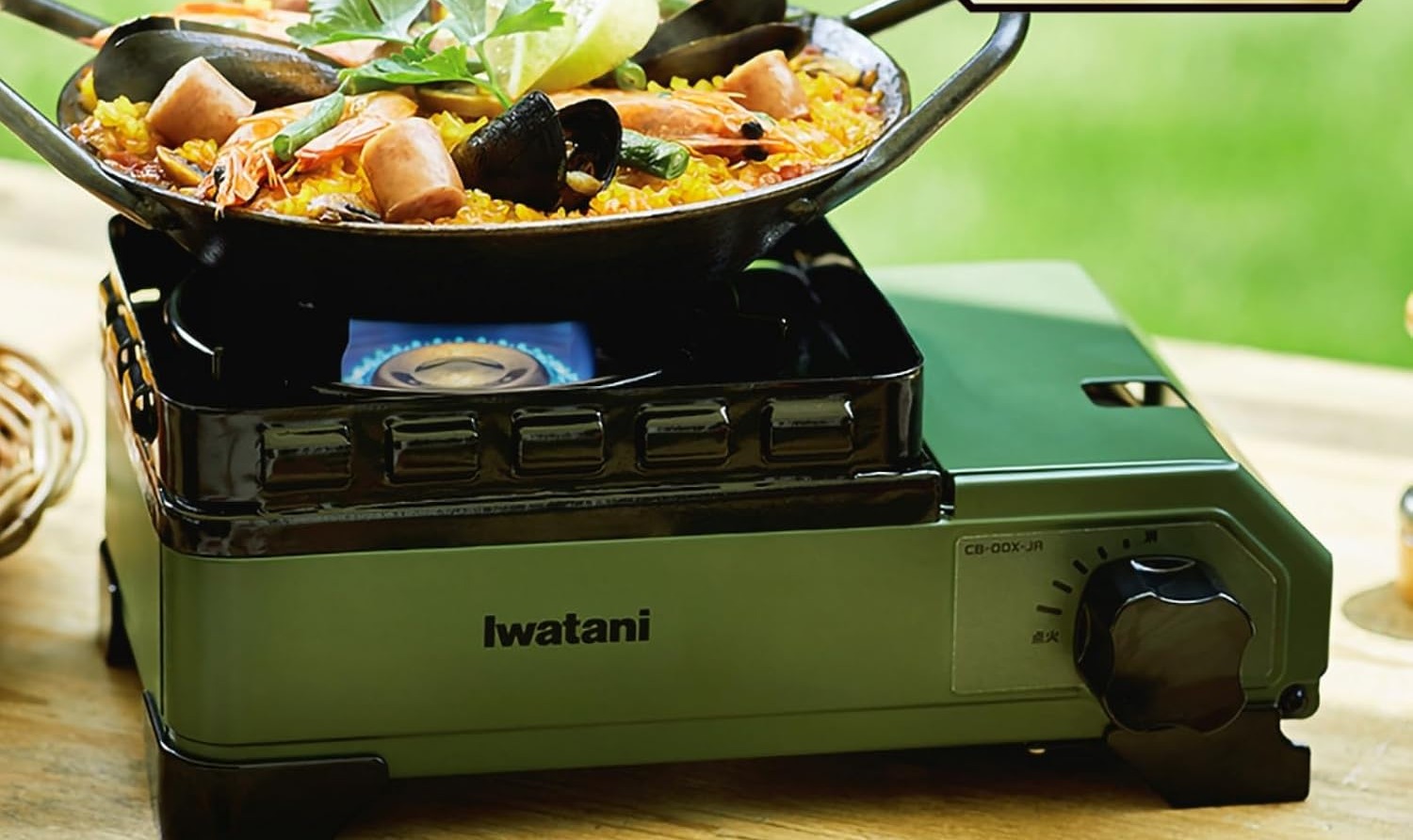
Tough Maru is Iwatani’s outdoor line. The Junior is the shrunken version — Iwatani puts it at about 60 percent the size of the standard Tough Maru, at 11.3 × 7.6 × 4.8 inches and 3.5 pounds.
Two things separate it from an indoor konro. The burner is surrounded by a double wind guard unit, with a deliberately short flame that is harder to blow sideways. The pot stand is aluminum die-cast rather than pressed wire, rated by Iwatani to 10 kg, which is what makes a small Dutch oven of up to about 8 inches safe to put on it.
That load rating is the reason to consider it even if you never camp. A cast iron pot full of stew is exactly the thing that makes a thin wire trivet flex. If your hot pot habit runs toward heavy cookware, this is the body that takes it.
The compromises are size plus certification. The burner is small, so a wide 10-inch donabe overhangs it in a way the 35FW’s broad top plate avoids. Like the Slim III, this is Japan-domestic stock with Japanese documentation. The bundled hard case is a genuine extra, not a stock photo prop.
Compare the Three
| 35FW | Tatsujin Slim III | Tough Maru Jr. | |
|---|---|---|---|
| Price seen | ~$130 | ~$56 | ~$98 |
| Published output | 15,000 BTU | 3.3 kW (~11,300 BTU) | not published on the listing |
| Size (in) | 13.3 × 11.9 × 3.7 | 13.2 × 10.8 × 3.3 | 11.3 × 7.6 × 4.8 |
| Weight | 4.4 lb | 2.2 lb | 3.5 lb |
| Wind protection | double wind guard | none stated | double wind guard unit |
| Pot stand load | not published | not published | 10 kg die-cast |
| Case included | manual only | no | hard case |
| Amazon rating | 4.7 (2,135) | 4.5 (3,427) | 4.6 (5,445) |
Read across that table and the shape of the decision is clear. The 35FW wins on raw output plus on being the model set up for buyers outside Japan. The Slim III wins on price, on thickness, on weight. The Tough Maru Jr. wins on anything involving wind or a heavy pot.
One row deserves a caveat. “Not published on the listing” is not the same as “weak” — Iwatani simply does not print an output figure for the Tough Maru Jr. on Amazon.com. We have left those cells honest rather than filling them with a number we cannot source.
Prices move on all three listings, sometimes by a lot, because two of them are import stock. Check the current number before deciding the gap is worth it.
Which Should You Buy?
If hot pot is the point and the stove will live indoors, the Tatsujin Slim III is the value answer. It is thin, it is light, it costs less than half the 35FW, its top plate wipes clean after a shabu-shabu session.
Buy the 35FW instead if the extra output matters to you, or if buying the US-market model with US-unit documentation is worth the premium. It is also the widest of the three, which suits a large donabe.
Buy the Tough Maru Jr. if the table is sometimes a balcony, or if the pot is cast iron. The 10 kg stand rating plus the wind guards are the whole argument.
Whichever body you pick, the pot matters as much as the burner. Our guide to Japanese donabe clay pots covers what to put on top, while the takoyaki pan comparison explains the cast iron plates that turn one of these stoves into a party.
Frequently Asked Questions
Can I use an Iwatani cassette stove indoors?
Yes — that is the primary use in Japan, where these stoves are a standard part of winter dining at the table. Use one in a ventilated room, keep the canister away from heat sources, follow the safety instructions that come with the body.
What is the difference between a cassette konro and a camping stove?
A cassette konro is flat, wide, designed to sit on a dining table with a large pot on it. A camping stove is usually taller, narrower, built around a small pan. The Iwatani bodies here are all konro-shaped, which is why they work for shared eating.
Do the Japan-domestic models come with an English manual?
The Slim III plus the Tough Maru Jr. are Japan-market products — their Amazon.com listings show Japanese spec graphics, so plan on Japanese documentation. The 35FW is the model Iwatani prepares for the US market, with its output stated in BTU.
How long does one butane canister last?
Iwatani rates the Tatsujin Slim III at about 70 minutes at maximum power. Real hot pot rarely runs at maximum — most of the meal is a simmer — so a single canister usually covers an evening with margin.
Which one handles a cast iron pot?
The Tough Maru Jr. is the only one of the three with a published load rating: 10 kg on an aluminum die-cast stand, which Iwatani says supports a Dutch oven of up to roughly 8 inches. The other two do not publish a figure.
Summary
Iwatani makes one category of product extremely well, then sells it in three shapes. Thin and cheap, powerful and US-ready, or small and windproof.
For a first hot pot stove at home, the Tatsujin Slim III is the one we would put on the table.