This article contains affiliate links (we may earn a commission).
Our pick for the best Japanese nakiri in 2026 is the Kai Seki Magoroku Damascus 165mm — check its price on Amazon. The nakiri (菜切包丁) is the flat, square-tipped blade Japanese home cooks reach for to get through produce — it drops straight down through cabbage, daikon and onion with no rocking. To keep this honest and like-for-like, we compared the three tiers of Kai Seki Magoroku, Japan’s best-selling kitchen-knife line: the premium Damascus VG-10, the seamless Artisan and the dishwasher-safe budget Moeki. Same maker, same 165 mm shape, three prices — here is which to buy.
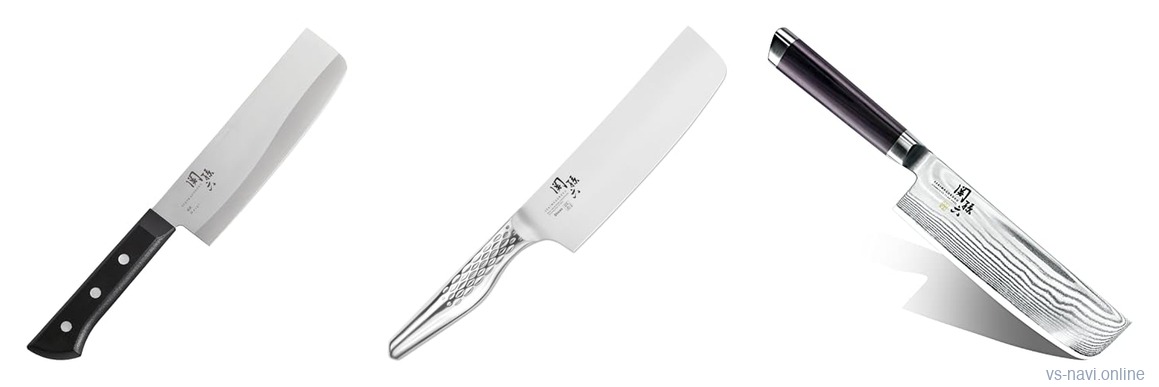
Quick Picks — Our Top Three Japanese Nakiri Knives
Best Overall: Kai Seki Magoroku Damascus 165mm (VG-10 Damascus edge & looks). Best for Hygiene / One-Piece: Kai Seki Magoroku Artisan (Seamless steel, no handle gap). Best Budget / Dishwasher-Safe: Kai Seki Magoroku Moeki (Triple-layer steel, around $30). Check price on Amazon →
Specs Comparison — Three Nakiri Knives Side by Side
| Seki Magoroku Damascus | Seki Magoroku Artisan | Seki Magoroku Moeki | |
|---|---|---|---|
| Blade length | 165 mm (6.5 in) | 165 mm (6.5 in) | 165 mm (6.5 in) |
| Core steel | VG-10 (33-layer Damascus clad) | One-piece stainless | Triple-layer stainless |
| Hardness (HRC) | ~60–61 | ~57–58 | ~57–58 |
| Edge angle (per side) | ~15° | ~15° | ~15° |
| Handle | Mahogany-toned pakkawood, riveted | Seamless one-piece steel | Heat-resistant resin, riveted |
| Finish | 33-layer Damascus | Streamlined satin steel | Plain stainless |
| Dishwasher | Hand-wash only | Hand-wash recommended | Dishwasher safe |
| Weight | approx. 150 g | approx. 120 g | approx. 110 g |
| Made in | Seki, Japan | Seki, Japan | Seki, Japan |
| Price (2026) | around $100 | around $50 | around $30 |
| Amazon rating | 4.7 / 5 | 4.6 / 5 | 4.5 / 5 |
Specs reflect the standard 165 mm nakiri models. Prices are 2026 street prices and move often — always confirm the live figure before buying.
Kai Seki Magoroku Damascus — The Best Nakiri for Most Cooks
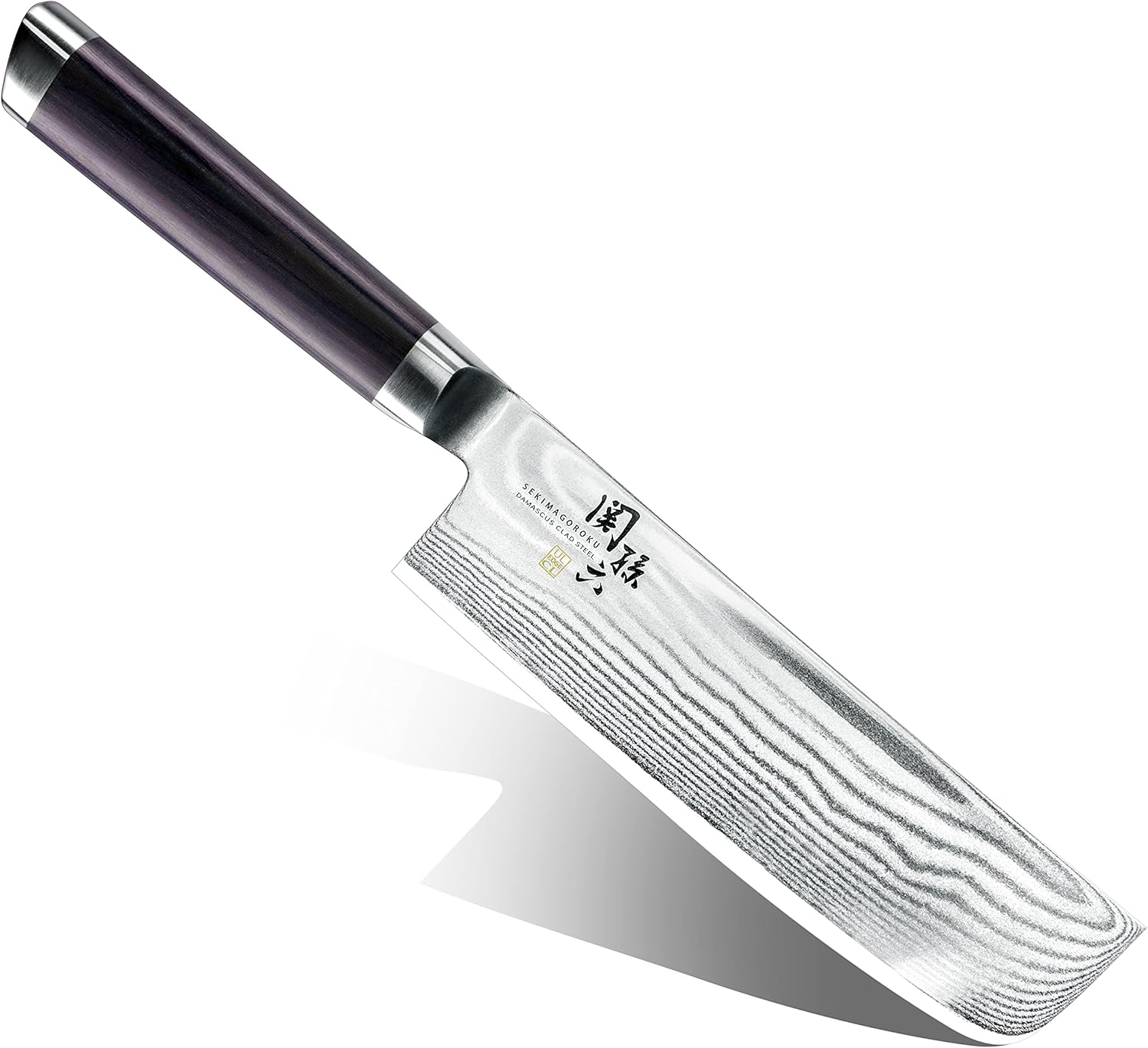
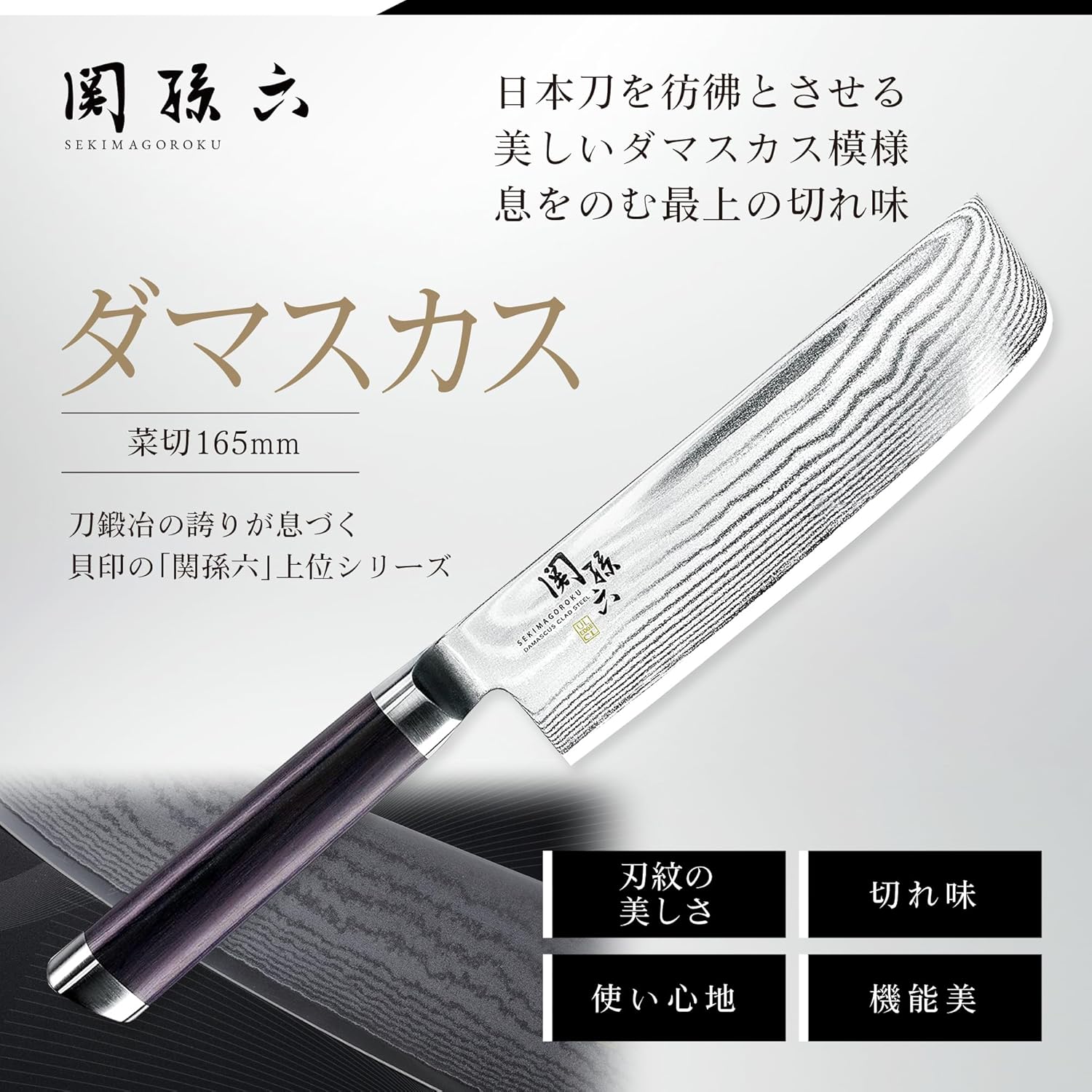
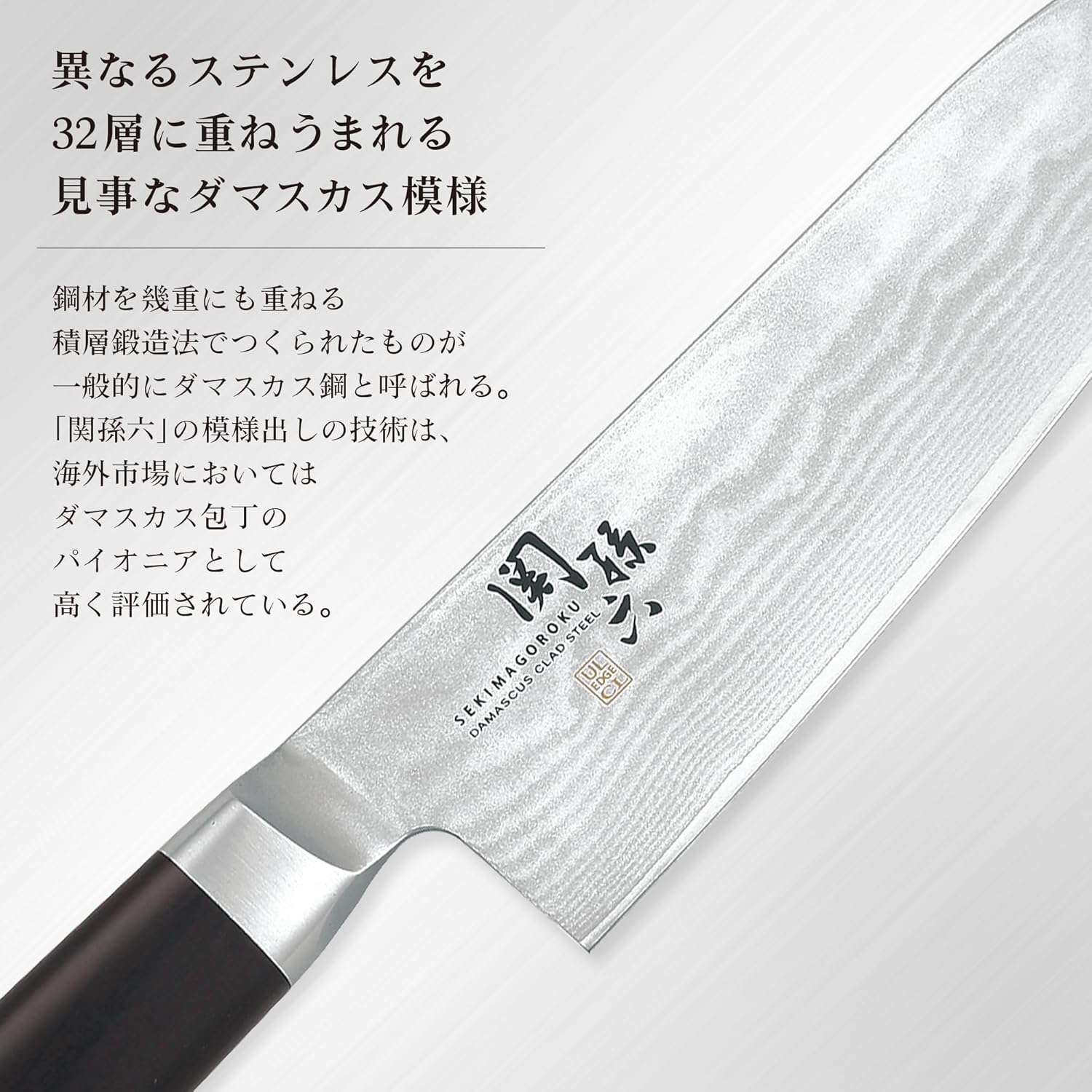
If you only want to buy one nakiri and have it cut beautifully for years, the Seki Magoroku Damascus is the easiest of the three to recommend. It pairs a hard VG-10 core — the high-carbon stainless steel used in knives costing far more — with 33 layers of Damascus cladding and a ~15° edge per side. It arrives genuinely sharp, holds that edge noticeably longer than the softer stainless blades below it and looks like a knife two or three times the price.
The nakiri shape rewards the way most people prep vegetables: the dead-flat profile means the whole edge meets the board on every stroke, so a straight push- or pull-cut goes clean through without the half-rocking shuffle a curved knife forces. The tall, square blade also gives you knuckle clearance and a wide face for scooping chopped onion straight into the pan. At around $100, the Damascus sits in the sweet spot — serious Japanese steel and a real Damascus finish, without artisan-tier pricing.
A nakiri gives you clean, even cuts; it will not give you identical ones. For paper-thin daikon, cucumber for sunomono or a mountain of cabbage for tonkatsu, most Japanese kitchens keep a mandoline next to the knife — almost always a Benriner, the $40 slicer that professional kitchens quietly rely on. Our Benriner mandoline review explains when it beats the blade.
The Brand in Japan
Seki Magoroku (関宫宅) is the flagship domestic kitchen line of Kai Corporation (貳削), based in Seki City, Gifu — Japan’s historic blade capital. The name honors Magoroku Kanemoto, a legendary 16th-century swordsmith from Seki. To Japanese home cooks, Seki Magoroku is one of the most trusted kitchen-knife names on the shelf, sold everywhere from department stores to home centers. Kai is also the maker of the export-focused Shun brand — so a Seki Magoroku Damascus is, in effect, the nakiri Japanese households buy from the same workshop that produces Shun for overseas markets.
Real-World Usage
On the board the Damascus feels balanced and planted. The flat belly excels at the everyday vegetable rotation — cabbage for okonomiyaki, daikon for simmering, onion, carrot, green onion — with clean push-cuts that fall away from the wide blade. It is the heaviest of the three at around 150 g, which most cooks read as “confident” rather than “clubby.” Hand-wash and dry it immediately; the Damascus finish and pakkawood handle do not belong in a dishwasher.
✅ Pros
- Genuine VG-10 Damascus — hard, edge-holding core with a real layered-steel finish.
- Best edge retention here — the harder VG-10 core keeps its sharpness far longer than the softer stainless models.
- Trusted, serviceable brand — Kai backs its blades and the line is easy to source and re-sharpen.
❌ Cons (Honest Assessment)
- Hand-wash only — the Damascus face and pakkawood handle need care the budget Moeki does not.
- Hard steel needs respect — the VG-10 edge can chip if you twist it in dense squash or hit a bone.
👤 Who Should Buy This
Anyone who wants one do-everything vegetable knife that performs like a serious Japanese blade and looks the part — and who will hand-wash it. If you cannot decide between the three, buy this one and stop researching.
Kai Seki Magoroku Artisan — The Most Hygienic, One-Piece Nakiri
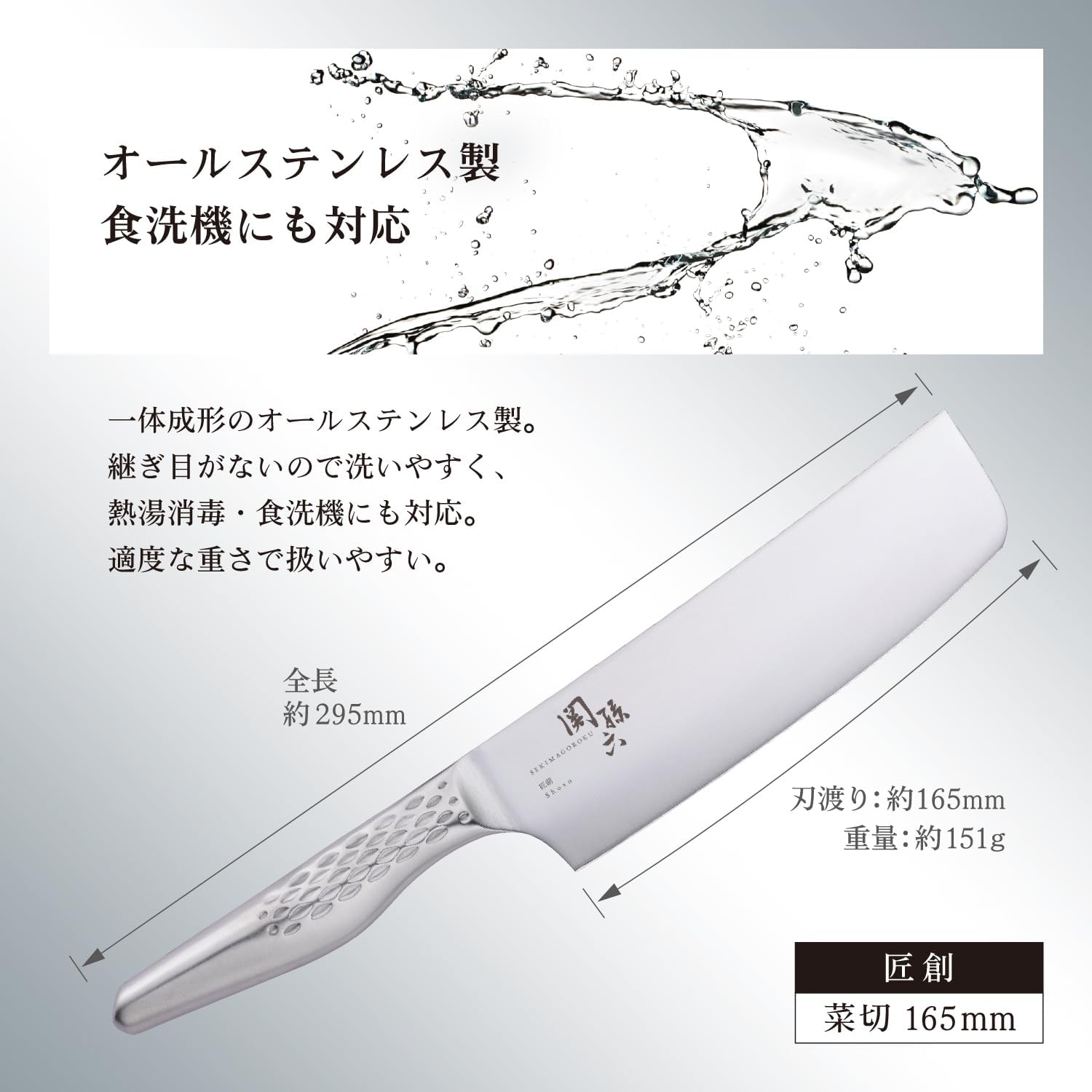
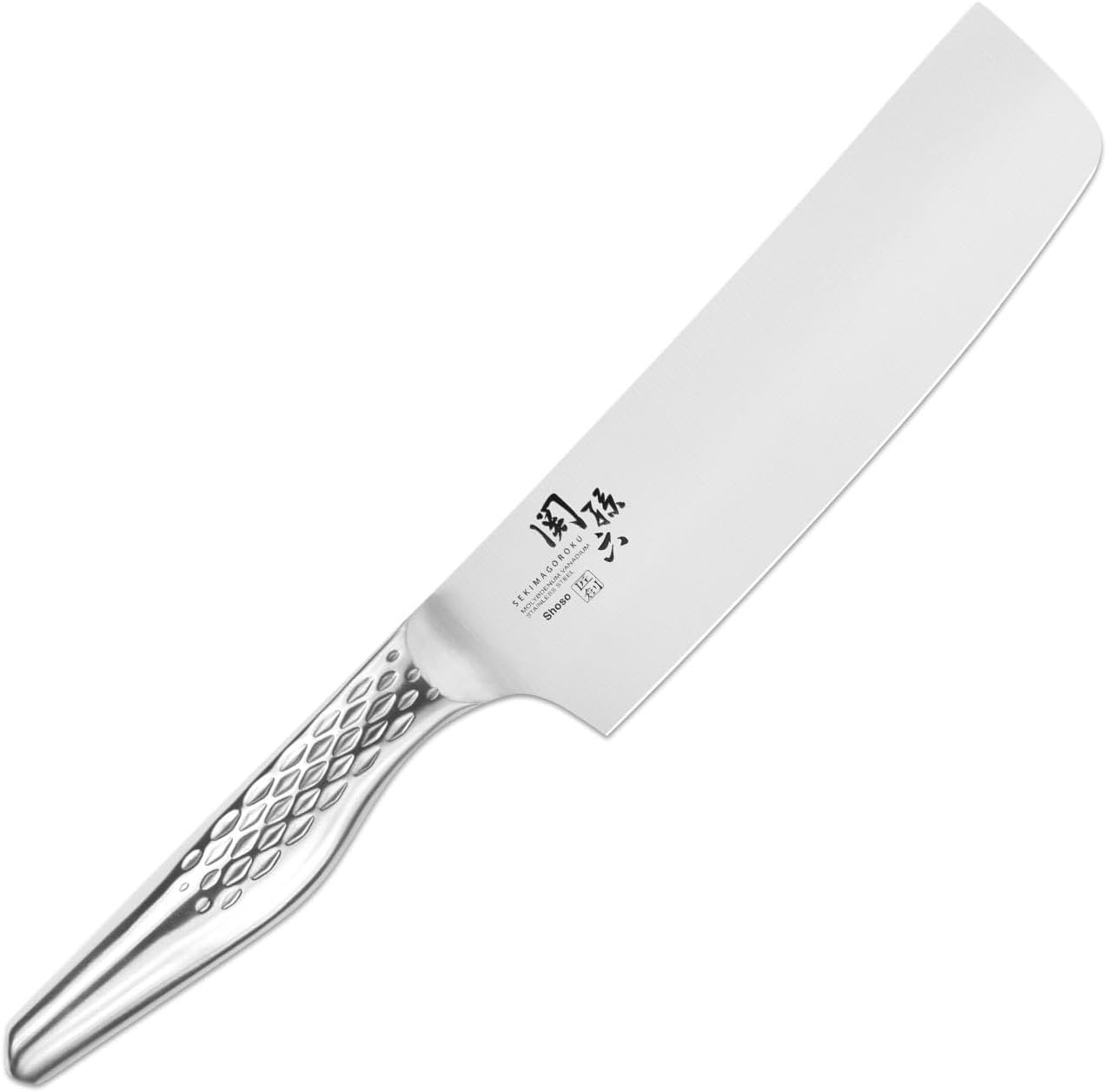
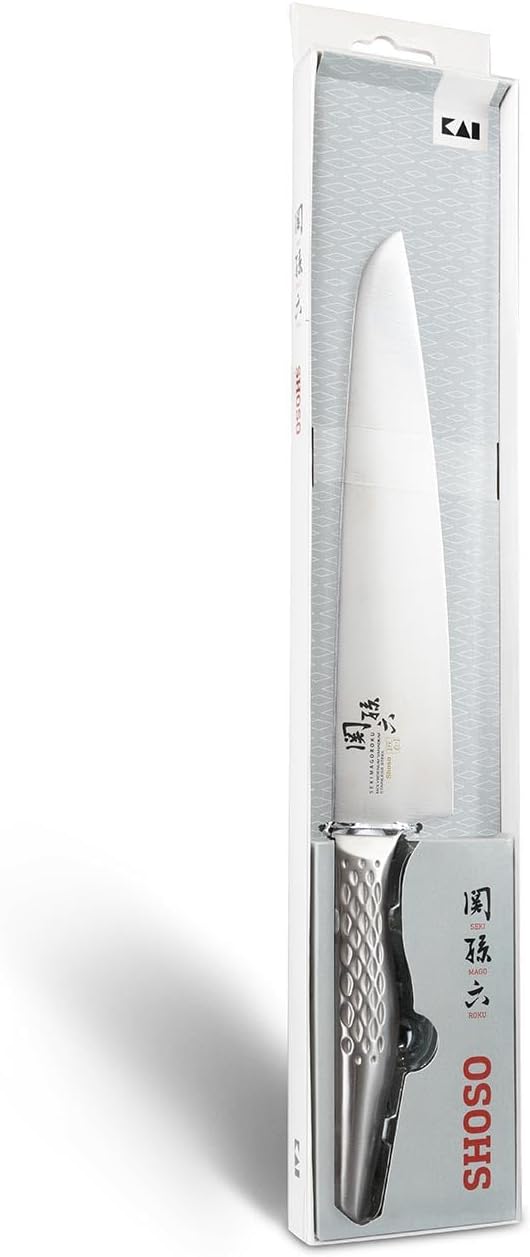
The Artisan is the nakiri to buy when cleanliness and low maintenance matter most. Kai forges the whole knife — blade and handle — from a single seamless piece of stainless steel, so there is no gap between handle and blade where water, scraps, or bacteria can collect. That makes it a favorite for cooks who hate the grime that builds up around a riveted handle and it is the kind of detail Japanese makers obsess over.
What you trade for that hygiene is the warmth of a wood-style handle and the edge retention of a hard VG-10 core. The Artisan uses a single-layer stainless steel that is softer than the Damascus, so it dulls a little faster — but it is also more forgiving, rust-resistant and effortless to re-sharpen on a basic whetstone. At around $50 it is the sensible middle pick: more refined and more sanitary than the Moeki, without the Damascus price.
The Brand in Japan
The Artisan sits in the same Seki Magoroku family, made in Seki, Gifu by Kai. One-piece all-steel knives like this are a recognizable Japanese category — the design is registered (No. 1550965) — and they are popular in Japan precisely because home cooks there think hard about hygiene and long-term upkeep. Where overseas buyers often chase Damascus looks, many Japanese households quietly prefer a seamless, dishwasher-friendly tool that disappears into daily cooking. The Artisan is built for exactly that buyer.
Real-World Usage
In the hand the Artisan is lighter and cooler than the Damascus, with a slightly more clinical feel from the all-steel grip. It powers through the same vegetable rotation cleanly and the seamless body means you can rinse it under the tap and wipe it dry with zero fuss. The factory edge is good; a quick pass on a 1000-grit stone every few weeks keeps it keen. It is the knife to reach for when you are cooking in volume and do not want to baby your blade.
✅ Pros
- Seamless one-piece steel — no handle gap, the most hygienic and easiest-to-clean knife here.
- Light and rust-resistant — forgiving stainless that shrugs off acidic vegetables and quick rinses.
- Easy to sharpen — the softer steel takes an edge fast on a basic whetstone.
❌ Cons (Honest Assessment)
- Softer edge than the Damascus — sharpens easily but needs touching up more often.
- All-steel handle feels cold — hygienic, but lacks the warmth and grip of pakkawood for some cooks.
👤 Who Should Buy This
Hygiene-minded cooks, anyone who cooks in volume and buyers who want a low-maintenance Japanese nakiri that they can rinse and forget. If you do not care about a Damascus pattern and want the cleanest tool here, this is your knife.
Kai Seki Magoroku Moeki — The Best-Value, Dishwasher-Safe First Nakiri
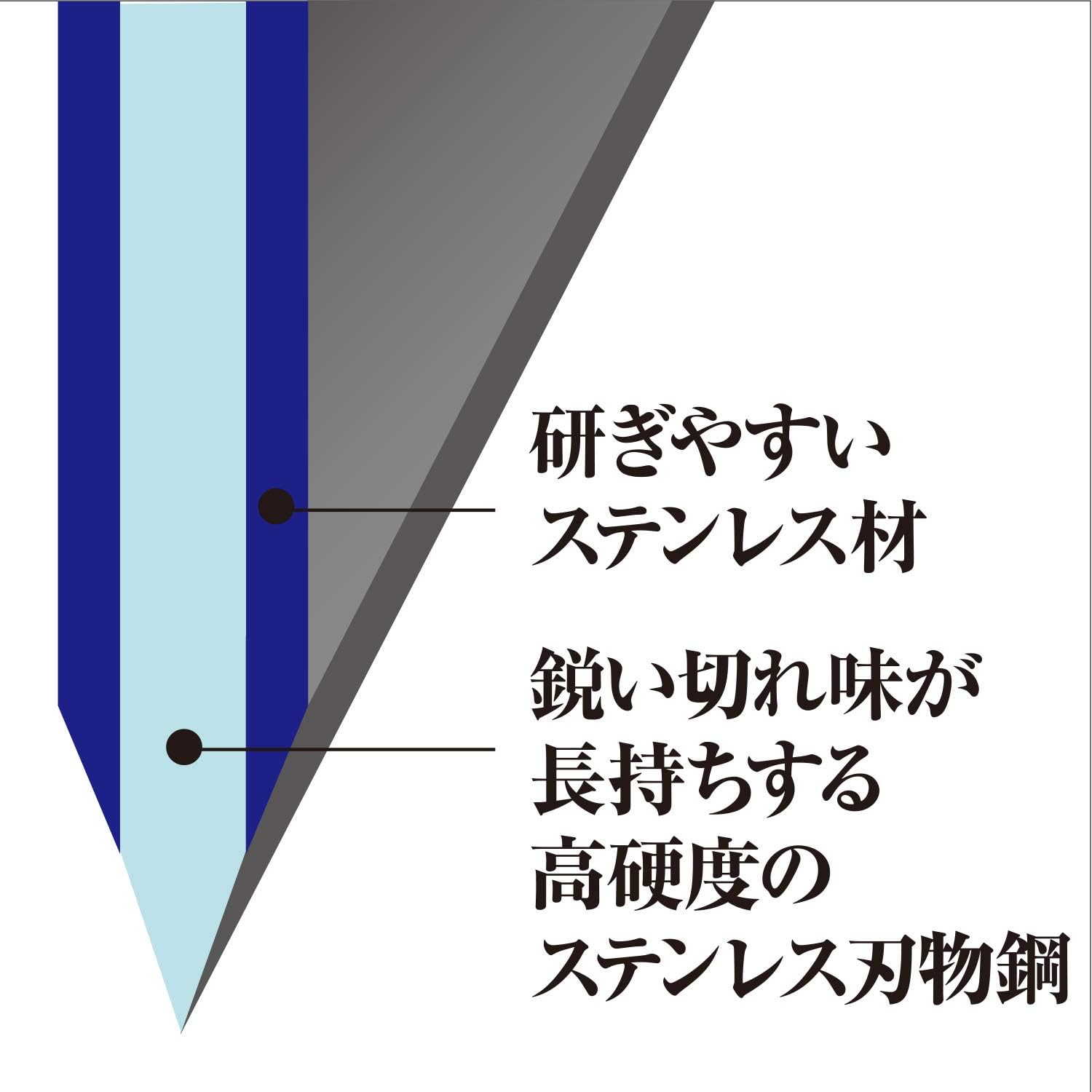
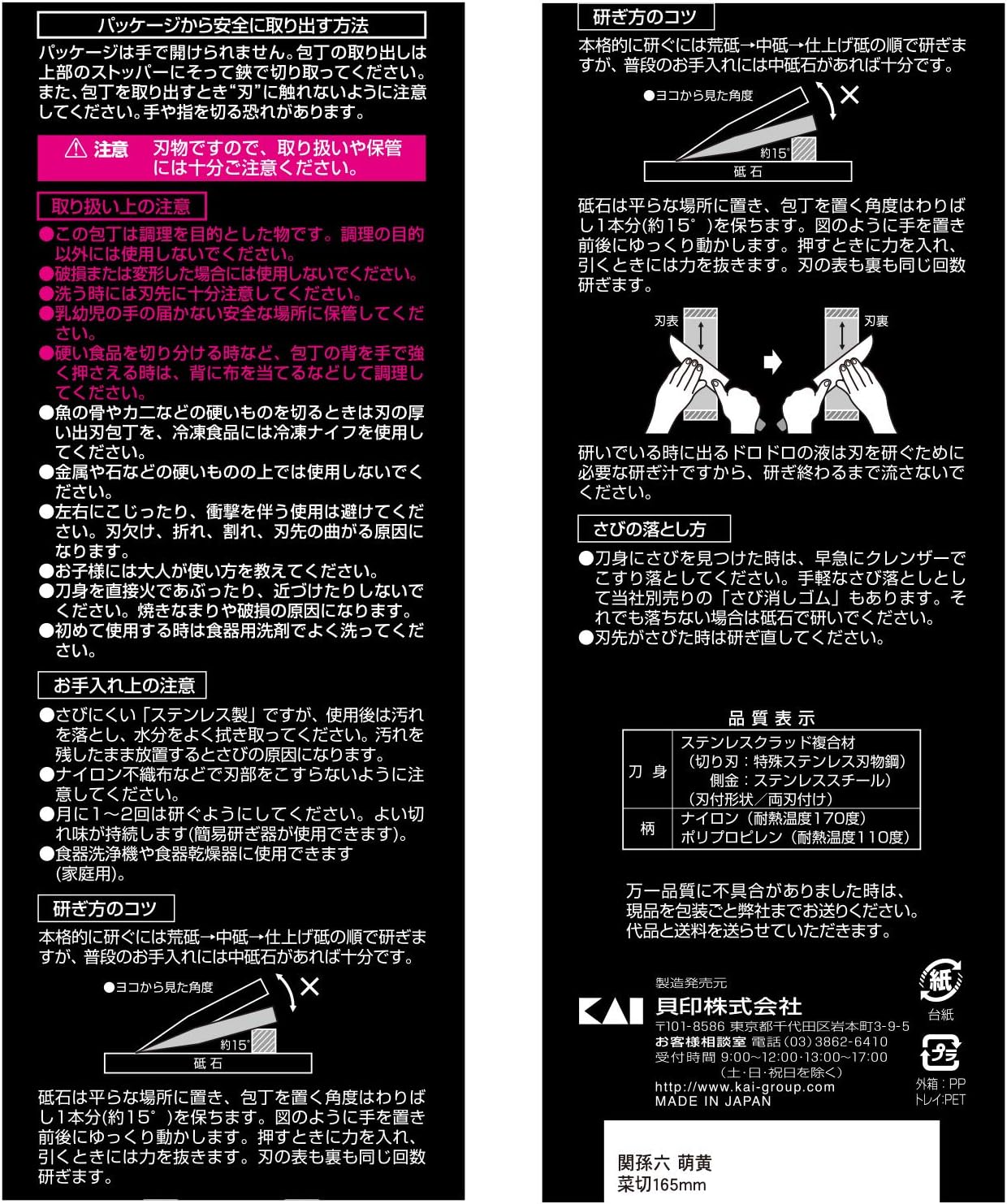
The Moeki is the knife to buy when someone asks “what’s a good first nakiri that I won’t baby?” For around $30 you get a genuine Made-in-Japan Seki Magoroku with a triple-layer (san-mai) stainless blade: a soft, easy-to-sharpen outer jacket clad over a slightly harder center layer. It is light, sharpens in seconds and — uniquely here — its heat-resistant resin handle is rated dishwasher safe.
What you give up at this price is refinement and edge life. There is no Damascus pattern, the steel is softer so it dulls sooner and the spine and choil are not rounded as nicely as the others. But as a do-everything vegetable workhorse you can throw in the dishwasher and not cry over, the Moeki is unbeatable value — and the perfect knife to learn freehand sharpening on before you graduate to the Damascus.
The Brand in Japan
Moeki is Seki Magoroku’s entry line, made in Seki, Gifu by Kai for the everyday domestic market. In Japan it is the kind of dependable, affordable knife you find in ordinary kitchens, student apartments and as a starter gift — not a luxury name, but a genuinely good tool from a trusted maker. The triple-layer stainless and dishwasher-safe handle reflect what a lot of Japanese households actually want from a daily knife: cheap to replace, easy to live with and made properly in Seki.
Real-World Usage
The Moeki handles the whole weeknight vegetable rotation without complaint. The light weight suits cooks who find heavier knives tiring and the soft stainless takes a screaming edge in a minute on any stone. Because it is inexpensive and dishwasher safe, it is also the ideal knife to practice freehand sharpening on — mistakes here cost $30, not $100. Just expect to touch it up more often than the Damascus.
✅ Pros
- Genuine Made-in-Japan nakiri for ~$30 — real Seki quality at an entry price; nothing else here is close on value.
- Dishwasher safe — the heat-resistant resin handle survives the machine, which the others do not.
- Light and effortless to sharpen — soft triple-layer steel takes an edge in seconds; the perfect learner knife.
❌ Cons (Honest Assessment)
- Edge dulls fastest — the soft stainless needs the most frequent touch-ups of the three.
- Basic finishing — no Damascus, plain handle and the spine and choil are not rounded.
👤 Who Should Buy This
Beginners, students and anyone who wants a genuine Japanese nakiri without spending much — or a knockabout daily knife they can put in the dishwasher. Pair it with a beginner whetstone and you have a complete setup for well under $60.
Head-to-Head — Category-by-Category Winner
| Category | Damascus | Artisan | Moeki |
|---|---|---|---|
| Out-of-box sharpness | Excellent ✓ | Very good | Very good |
| Edge retention | Excellent ✓ | Good | Fair |
| Fit & finish / looks | Best in class ✓ | Clean & modern | Basic |
| Hygiene / cleaning | Hand-wash care | Seamless, easiest ✓ | Dishwasher safe |
| Ease of sharpening | Easy | Easy | Easiest ✓ |
| Value for money | Good | Very good | Outstanding ✓ |
Sharpness & edge retention: all three arrive sharp at ~15°, but the harder VG-10 Damascus core holds its edge clearly the longest; the softer stainless Artisan and Moeki dull sooner (the Moeki fastest). Looks: the Damascus wins decisively, with the modern Artisan a clean second. Hygiene: the seamless one-piece Artisan is the easiest to keep truly clean, while the Moeki is the only one rated dishwasher safe. Sharpening & value: all sharpen easily, the soft Moeki fastest of all and it delivers the most nakiri per dollar by a wide margin.
How to Choose — A 30-Second Decision Tree
- “I just want one great everyday nakiri” → Seki Magoroku Damascus. Buy it and stop reading.
- “Cleanliness and low upkeep matter most” → Seki Magoroku Artisan — the seamless one-piece body.
- “I’m on a budget or want something dishwasher-safe” → Seki Magoroku Moeki.
- “It’s my first Japanese knife and I want to learn sharpening” → the Moeki — cheap, soft, forgiving steel.
- “I chop bones or frozen food” → none of these — a nakiri is a vegetable knife; keep a cheap cleaver for hard work.
How We Compared These Knives
This is a desk comparison, not a kitchen test. We do not receive samples or run knives through a test kitchen; every call below rests on published maker specifications, steel data plus current Amazon listings, cross-referenced against Japanese-language manufacturer pages, Japanese consumer forums (5ch / 趣味の包丁) as well as English communities such as r/chefknives. For this 2026 update we re-checked specs, current US pricing and steel data against Kai’s own listings, holding the same published points in view for every knife: steel grade plus hardness, blade geometry, stated weight plus balance, maker guidance on sharpening plus price. Where sharpness or edge retention is described, it reflects what the maker publishes together with what owners consistently report — not our own measurements. Holding the maker and the 165 mm nakiri shape constant lets the price tiers speak for themselves. For deeper background, see our Ultimate Japanese Knife Buying Guide.
🏆 Verdict — Overall Ranking
#1 – Kai Seki Magoroku Damascus 165mm The best balance of edge, looks and longevity. It is the nakiri we recommend to the most people because the harder VG-10 Damascus blade simply outlasts the softer stainless models — genuine Damascus from the workshop behind Shun, at a fair mid-range price. Check price on Amazon →
#2 Seki Magoroku Artisan — Best hygiene — seamless one-piece steel with no handle gap. Check price on Amazon →
#3 Seki Magoroku Moeki — Best value — a genuine Made-in-Japan nakiri that is dishwasher safe. Check price on Amazon →
More Comparisons Worth Reading
TL;DR
| If You… | Choose |
|---|---|
| Are a home cook wanting one vegetable knife | Nakiri (double-bevel, forgiving) |
| Are a professional Japanese chef or serious enthusiast | Usuba (single-bevel, traditional) |
| Cook lots of vegetables and want efficiency | Nakiri |
| Want to master katsuramuki (paper-thin daikon) | Usuba |
| Just want a vegetable knife that works | Nakiri |
90% of home cooks should buy nakiri, not usuba.
The Real Difference
| Aspect | Nakiri | Usuba |
|---|---|---|
| Bevel | Double (50/50) | Single (100/0) |
| Length | 160-180mm | 180-240mm |
| Profile | Slight curve | Completely flat |
| Tip | Squared | Squared (sometimes pointed = “kamagata”) |
| Steel | Often stainless | Usually carbon |
| Use | Home vegetable work | Professional precision (katsuramuki) |
| Skill needed | Low-medium | High |
| Maintenance | Lower | Higher |
| Price (entry) | $60-150 | $150-300 |
| Price (premium) | $200-400 | $400-800 |
Bevel difference explained
-
Nakiri (double-bevel): Sharpened on both sides, like a Western knife. Cuts straight down through food. Easy to sharpen.
-
Usuba (single-bevel): Sharpened only on one side (right for right-handed users). Creates a slight “wedge” effect on cuts. Requires specialized sharpening technique.
This bevel difference is the defining distinction. Nakiri = accessible. Usuba = specialized.
Who Should Buy Nakiri?
✅ Buy Nakiri if you:
- Cook vegetable-heavy meals (vegan, vegetarian, stir-fries, salads)
- Want easy maintenance (stainless options available)
- Are new to Japanese knives
- Want to add a “specialty” knife to your gyuto/santoku
- Cook Japanese, Korean, Chinese cuisine regularly
Best nakiri choices
Entry ($60-100) – Tojiro DP F-502 Nakiri 165mm — ~$85 – Mac MTH-65 Nakiri 165mm — ~$110
Mid ($100-200) – Shun Classic Nakiri DM-0728 — ~$175 – Yoshihiro VG-10 Damascus Nakiri 165mm — ~$180
Premium ($200-400) – Yoshikane SKD Nakiri 170mm — ~$250 – Konosuke HD2 Nakiri 165mm — ~$380
Who Should Buy Usuba?
✅ Buy Usuba if you:
- Are a serious Japanese cooking enthusiast
- Want to master katsuramuki (paper-thin daikon rolling)
- Are committed to single-bevel sharpening
- Have multiple Japanese knives already
- Want a “next-level” technique knife
❌ Skip Usuba if you:
- Want low maintenance
- Don’t know what katsuramuki is
- Are buying your first Japanese knife
- Cook everyday family meals (overkill)
Best usuba choices
Entry ($150-250) – Sakai Takayuki Inox Usuba 195mm — ~$180 – Yoshihiro Inox Usuba 195mm — ~$200
Mid ($250-450) – Sakai Takayuki Tokujou Shirogami Usuba 195mm — ~$320 – Yoshihiro Aogami Usuba 195mm — ~$380
Premium ($450+) – Sakai Takayuki Hongasumi Aogami Usuba 195mm — ~$520 – Konosuke Honyaki Usuba (Japan only) — ~$1,200
Regional Variations
Kanto-style (Tokyo) usuba
- Squared tip (like a small cleaver)
- More common in Eastern Japan
- Used for general vegetable prep
Kansai-style (Osaka) usuba — “Kamagata”
- Pointed tip (like a small sword)
- More common in Western Japan
- Slightly more versatile (tip work possible)
Most US-sold usubas are Kanto-style (squared). Specialty retailers like Hocho-Knife stock Kamagata variants.
Technique Comparison
Nakiri technique
- Push-cut motion (down through food)
- Slight rocking acceptable
- Western users adapt quickly
Usuba technique
- Slicing motion (pull or push)
- Katsuramuki: Continuous paper-thin rolling cut on round vegetables (daikon, cucumber)
- Sengiri: Julienne after katsuramuki
- Mukimono: Decorative vegetable carving
Usuba is the foundational tool for traditional Japanese vegetable artistry.
Sharpening: The Big Difference
Nakiri sharpening
- Standard double-bevel sharpening
- Use any 1000-grit whetstone (King, Shapton, Naniwa)
- 15-20 minute basic resharpening
- Easy to maintain
Usuba sharpening
- Single-bevel technique required
- Front side: precise angle (usually 15-20°)
- Back side: only the urasuki (concave hollow) is touched
- Requires Japanese-style sharpening lessons
- Takes 1-2 hours for proper maintenance
This is why usuba is for committed enthusiasts only.
Pricing Reality Check
| Tier | Nakiri | Usuba |
|---|---|---|
| Entry | $60-100 | $150-250 |
| Mid | $100-200 | $250-450 |
| Premium | $200-400 | $450-800 |
| Top | $400+ | $800-1500+ |
Usuba is consistently 50-100% more expensive than equivalent nakiri because: – Single-bevel requires more skilled forging – Carbon steel is more common (more brittle to work) – Lower volume production
Recommended First Vegetable Knife
For 95% of readers: Tojiro DP F-502 Nakiri 165mm at $85.
Why: – Same trusted Tojiro DP quality as the F-808 gyuto – VG-10 steel – Easy maintenance – Good entry to “Japanese vegetable cooking”
Conclusion
Nakiri = practical home knife. Buy this 95% of the time.
Usuba = specialized professional/enthusiast tool. Buy this only if you’ve committed to single-bevel knife maintenance and want to learn traditional Japanese vegetable techniques.
The naming similarity has caused decades of confusion. Now you know.
Single-Bevel Geometry: Why the Usuba Asks More of the Cook
The clearest divide between these two vegetable knives is not the flat profile they share but what sits behind the edge. The usuba is a kataba (single-bevel) blade ground on one face only, with a subtly concave back known as the ura. That geometry lets a skilled hand shave a translucent, unbroken sheet in the classic katsuramuki rotary peel and it releases cleanly because only one side wedges into the food. The trade-off is commitment: a single-bevel edge is hand-specific, so a right-handed usuba is genuinely awkward for a left-handed user and the concave back has to be maintained with a deliberate ura-oshi stroke on the stone. The nakiri, by contrast, is a ryoba (double-bevel) knife sharpened on both faces like most Western blades. It is symmetrical, forgiving, usable in either hand and far quicker to learn, which is exactly why it has become the default vegetable knife in Japanese home kitchens.
Steel, Reactivity and Edge Retention at the Board
Construction usually follows use. Home-focused nakiri are commonly built from stainless or stainless-clad steels such as molybdenum-vanadium blends or VG-10, chosen because they resist the acids and moisture of onions, tomatoes or citrus without discoloring. Traditional usuba aimed at professional washoku work are more often forged in high-carbon shirogami (white) or aogami (blue) steel, typically hardened into the low-60s HRC range. That carbon delivers a crisp, keen edge and takes a very fine polish, but it is reactive: it will darken and can spot if left wet against vegetable juices, so it needs wiping and drying through a prep session and a light coat of care oil for storage. For most cooks the reading is simple. If low upkeep matters, a stainless nakiri holds a clean working edge with almost no fuss; if ultimate keenness and a traditional feel matter more than convenience, carbon rewards the maintenance it demands.
Matching the Knife to Your Kitchen
Choose by how you actually cook rather than by prestige. A double-bevel nakiri is the right first vegetable knife for nearly every home kitchen: it chops, it does push and pull cuts, it dices a board of vegetables quickly and it forgives an imperfect angle. Reach for a usuba only if you are pursuing traditional Japanese vegetable technique — decorative cuts, paper-thin katsuramuki sheets or kaiseki-style presentation — and you are willing to learn single-bevel sharpening. Whichever you pick, treat the edge kindly: use an end-grain wooden or soft composite board rather than glass or stone, cut straight down without twisting, then keep a whetstone rather than a pull-through sharpener. Readers weighing specific models can start with our roundup of the best Japanese nakiri knives for home kitchens and anyone building a first set from scratch will find the trade-offs mapped out in the ultimate Japanese knife buying guide. Because a single-bevel usuba lives or dies on its edge, it also helps to understand how Japanese knives are sharpened differently before you commit.
Nakiri vs Usuba: Quick Questions
Can a nakiri do everything a usuba can?
For everyday home cooking, yes — a nakiri handles chopping, slicing and dicing of vegetables with ease. What it cannot match is the true single-bevel katsuramuki peel that produces a continuous paper-thin sheet, which is the usuba’s signature and the main reason professional washoku cooks keep one.
Is a usuba difficult to sharpen?
It is more demanding than a double-bevel knife. You sharpen the single front bevel and then lightly deburr the concave back with an ura-oshi stroke, keeping the flat geometry intact. It is a learnable skill on whetstones but not something a pull-through sharpener can do.
Do I need a left-handed usuba if I am left-handed?
Yes. Because the usuba is ground on one side, the bevel is handed. A left-handed cook should buy a left-handed grind; using a right-handed single-bevel knife fights the geometry and hurts both control and food release. Double-bevel nakiri have no such restriction.
Frequently Asked Questions
What is a nakiri knife used for?
A nakiri (菜切包丁) is a Japanese vegetable knife. Its tall, flat, square-tipped blade is built to drop straight down through produce — cabbage, daikon, onion, carrot — in clean push- or pull-cuts, without the rocking motion a curved Western chef’s knife needs. It is not meant for meat on the bone or frozen food.
Which Seki Magoroku nakiri is best for beginners?
The Seki Magoroku Moeki. At around $30 it is a genuine Made-in-Japan nakiri with soft, easy-to-sharpen triple-layer steel and a dishwasher-safe handle, so you can learn whetstone sharpening on it without fear. It delivers most of the cutting performance of knives costing three times more.
Is the Kai Seki Magoroku Damascus worth it over the cheaper models?
Yes, if you will hand-wash it. For around $100 you get a hard VG-10 core and 33 layers of real Damascus, so it holds its edge far longer than the softer stainless Artisan and Moeki and looks far better. If edge life and looks matter to you, it is the safest buy here.
Nakiri vs santoku — which should I buy?
A nakiri is a dedicated vegetable knife with a dead-flat edge and square tip, ideal if you mostly prep produce. A santoku is the all-purpose “three virtues” knife with a slight curve and a pointed tip that also handles meat and fish. Buy a nakiri if vegetables dominate your cooking; buy a santoku if you want one knife for everything.
Are these nakiri dishwasher safe?
Only the Moeki, thanks to its heat-resistant resin handle. The Damascus (pakkawood handle, Damascus finish) is hand-wash only and the one-piece Artisan is best hand-washed too. For any Japanese knife, hand-washing and drying immediately is always the safest choice to protect the edge.
What angle should I sharpen a Japanese nakiri at?
Around 15 degrees per side for all three of these. Maintain the factory angle on a 1000 and 6000 grit Japanese whetstone. Avoid pull-through V sharpeners, which can damage the hard VG-10 steel of the Damascus in particular.
Summary & Recommendation
- Best overall — Seki Magoroku Damascus: the smartest single buy for most cooks; VG-10 Damascus that outlasts the rest, at a fair price.
- Best hygiene — Seki Magoroku Artisan: a seamless one-piece nakiri with no handle gap, easiest to keep clean.
- Best value — Seki Magoroku Moeki: a genuine ~$30 Made-in-Japan nakiri that is dishwasher safe and the ideal first knife.
Whichever you choose, add a basic Japanese whetstone and follow proper knife care — a maintained $30 Moeki out-cuts a neglected $100 blade every time.
You Might Also Like
- Best Japanese Santoku Knife 2026: Seki Magoroku vs Tojiro vs Yoshihiro
- Gyuto vs Santoku 2026: Which to Buy First
- Best Japanese Chef’s Knife 2026: Shun vs MAC vs Tojiro
- The Ultimate Japanese Knife Buying Guide 2026
References & Editorial Notes
This comparison was compiled by an editorial team that tracks the Japanese knife market, drawing on Japanese-language manufacturer pages (Kai Corporation / Seki Magoroku), Japanese consumer forums (5ch / 趣味の包丁) and English communities (r/chefknives). Steel, layer-count and spec claims were cross-checked against Kai’s own product listings. Prices reflect 2026 US market conditions and may change. Affiliate links to Amazon US carry the vsnavi-20 associate tag; we may earn a commission at no extra cost to you.