vs-navi.online is a participant in the Amazon Services LLC Associates Program. Purchases made through links on this page may earn us a commission at no extra cost to you.
A lead snaps mid-sentence. You click twice. It snaps again. A gray crumb rolls across the page. Every mechanical pencil user knows the feeling.
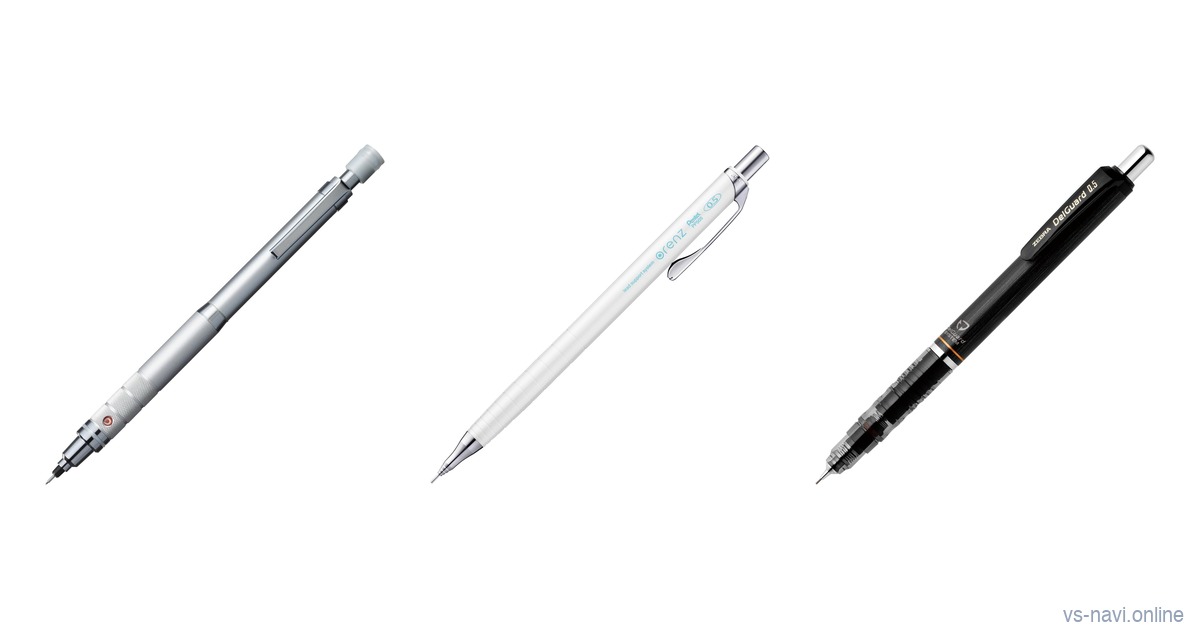
Japanese pencil makers have spent years engineering that moment away. Three answers now sell for under $10 on Amazon.com: the Uni Kuru Toga turns its lead as you write, the Pentel Orenz shields it inside a sliding metal pipe, the Zebra DelGuard cushions it on springs.
We compared the three 0.5 mm versions on maker information, published specifications and current Amazon.com listings. This is a desk comparison of how each mechanism works, not a hands-on writing test.
Our Pick: The Best Japanese Mechanical Pencil in 2026
All three showed a live price with an add-to-cart button when we checked Amazon.com. Each carried a 4.7 out of 5 average.
- Uni Kuru Toga Roulette 0.5 mm — about $9. The lead rotates a little with every stroke, so the point stays sharp instead of wearing flat. The best overall pick for long note-taking sessions.
- Pentel Orenz 0.5 mm — about $7. A metal sleeve slides back as the lead wears down, so the lead itself never sticks out unprotected. The pick for tidy small handwriting in narrow lines.
- Zebra DelGuard 0.5 mm — about $6. Springs absorb pressure from straight down or from an angle. The pick for heavy-handed writers who break leads constantly.
If you are unsure, start with the Kuru Toga. It solves the most common complaint (lines that get thick and smudgy) for less than the cost of a lunch. Choose the DelGuard instead if breakage, not line width, is what bothers you.
Check price on Amazon: Uni Kuru Toga Roulette →
Why Japan Builds Mechanical Pencils Like This
In Japan the mechanical pencil, called a sharp pen (shāpu pen), is the everyday writing tool for students. Exams, cram school worksheets along with years of kanji practice all happen in pencil. That makes the student market enormous, with fierce competition between Japanese stationery makers.
The competition has pushed each maker toward one signature problem. Uni went after uneven line width. Pentel went after lead that pokes out too far. Zebra went after breakage. The packaging tells the story: the DelGuard box in Japan carries a slogan that translates as “It won’t break anymore.”
All three are standard stock in Japanese stationery stores, which is why they show up so often on lists of Japanese stationery worth importing. If you are building a full Japanese pen case, our comparison of Sarasa Clip, Juice Up and Signo gel pens for students covers the ink side of the desk.
A pencil also needs an eraser. Japanese students usually pair theirs with a Tombow MONO, the block eraser in the blue, white and black sleeve. Our Tombow MONO vs MONO Zero guide explains when the pen-shaped MONO Zero is worth adding for fixing single letters in small handwriting.
Uni Kuru Toga Roulette 0.5 mm (Around $9 on Amazon)
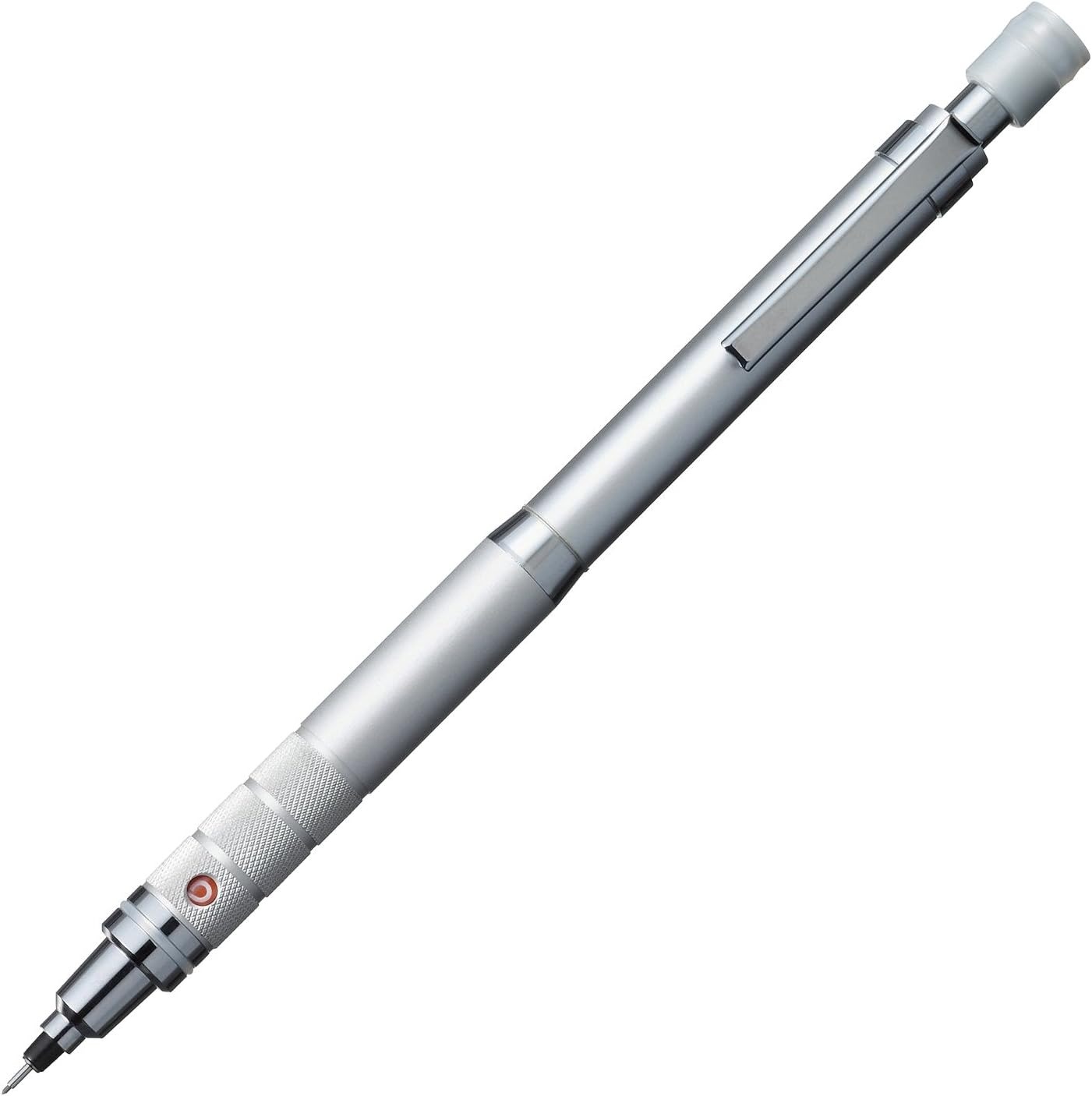
Mitsubishi Pencil, the company behind the uni brand, was founded in Tokyo in 1887. It has no connection to the Mitsubishi industrial group despite the shared name. The Kuru Toga line first went on sale in Japan in 2008. Kuru means to turn; toga comes from togaru, to be pointed.
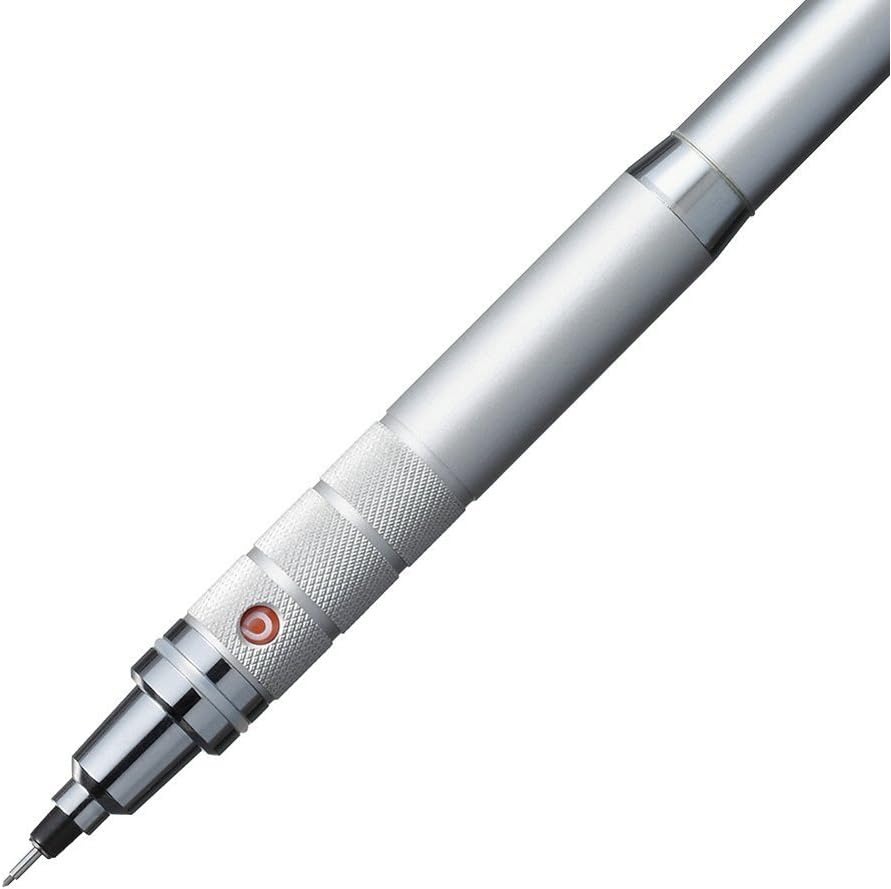
The idea is simple. An ordinary pencil wears its lead on one side, leaving a flat, angled tip. Lines get thicker until you twist the pencil by hand. Inside the Kuru Toga, a small gear turns the lead each time you lift the point off the paper, so the wear is spread evenly around the tip. Uni states the lead turns 9 degrees per stroke, a full rotation every 40 strokes.
The Roulette is the metal-grip version. The knurled aluminum section gives the pencil a weighted front end with a firm, textured hold. A small window near the tip lets you watch the mechanism spin. It looks like a drafting tool rather than a school pencil.
Amazon’s review summary says buyers find the rotation works as intended, with clean, consistent lines. They also praise the balance along with the build quality. The honest downside: durability opinions are mixed, with some reports of the pencil failing within a month. Also, because the lead turns only when you lift the point, long joined-up strokes get less benefit than print-style writing.
Who it suits: students who fill pages of notes, anyone who writes small kanji or math, or a reader who simply wants every line to look the same.
Pentel Orenz 0.5 mm (Around $7 on Amazon)
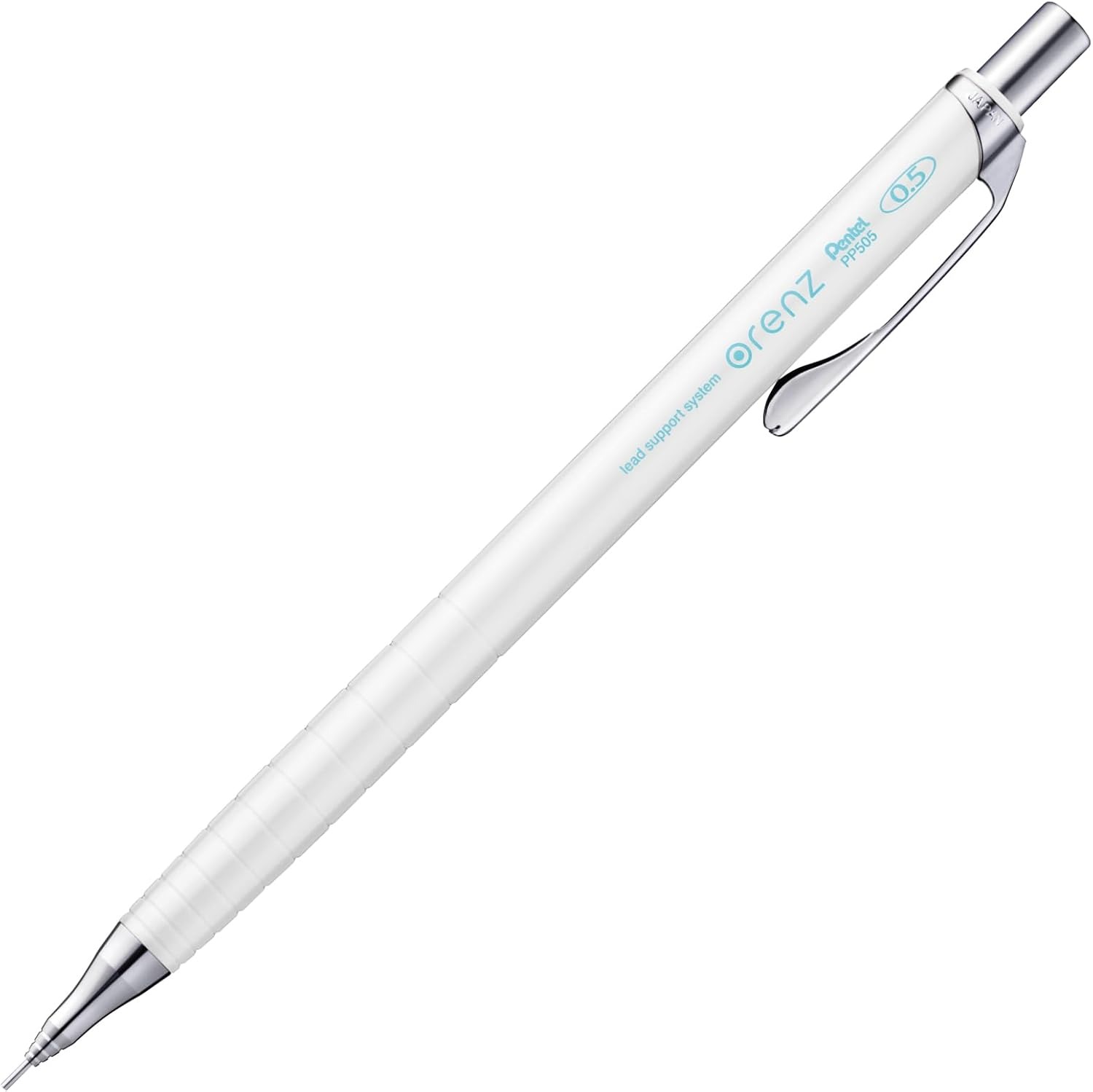
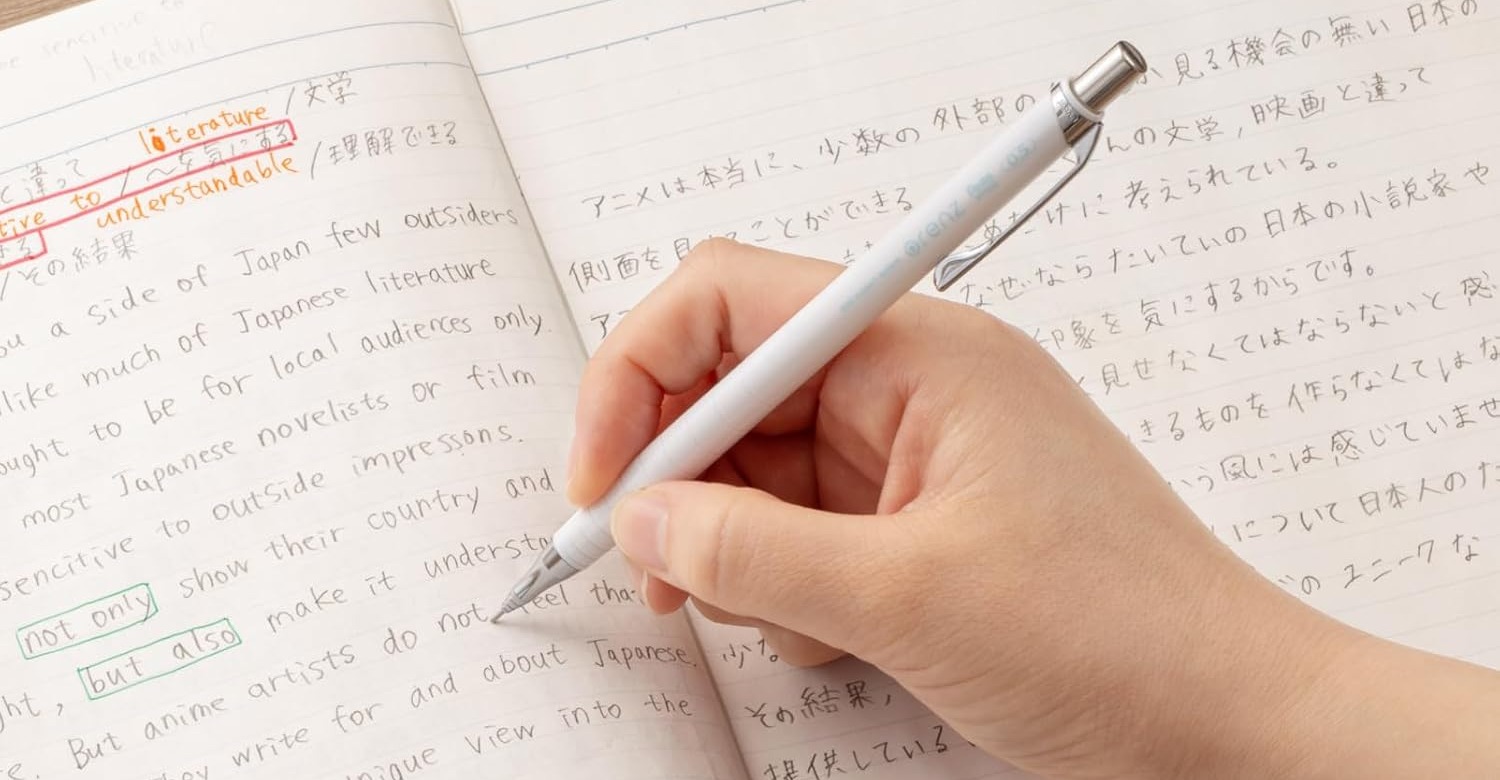
Pentel was founded in Tokyo in 1946. Outside Japan it is best known for the GraphGear drafting pencils along with EnerGel gel pens. The Orenz arrived in 2014. Pentel has since celebrated the line’s tenth anniversary in Japan.
The name comes from oren, the Japanese word for break, with a twist: the pencil is designed so the lead does not. You click once to bring the metal pipe forward. As you write, the pipe slides back with the lead, so the lead stays inside its protective sleeve. Pentel’s own instructions say to write without extending lead past the pipe.
The result is a needle-like tip with a clear view of where the line lands. That matters in narrow ruled notebooks or when you annotate between printed lines. The body is slim with very little weight, closer to a standard school pencil than to the metal Kuru Toga.
Amazon’s review summary describes it as one of the best pencils for writing in small spaces, with praise for the design. The honest downside is the most mixed feedback of the three: some buyers say the lead never breaks while others report it does. Grip opinions split too, with some finding the plastic slippery. The most specific complaint is lead jamming, which Pentel addresses with its own guidance to remove the short leftover lead before reloading.
Who it suits: precise writers with a light touch, planners or journal users with narrow lines, or anyone who wants the finest-looking point for the least money.
Zebra DelGuard 0.5 mm (Around $6 on Amazon)
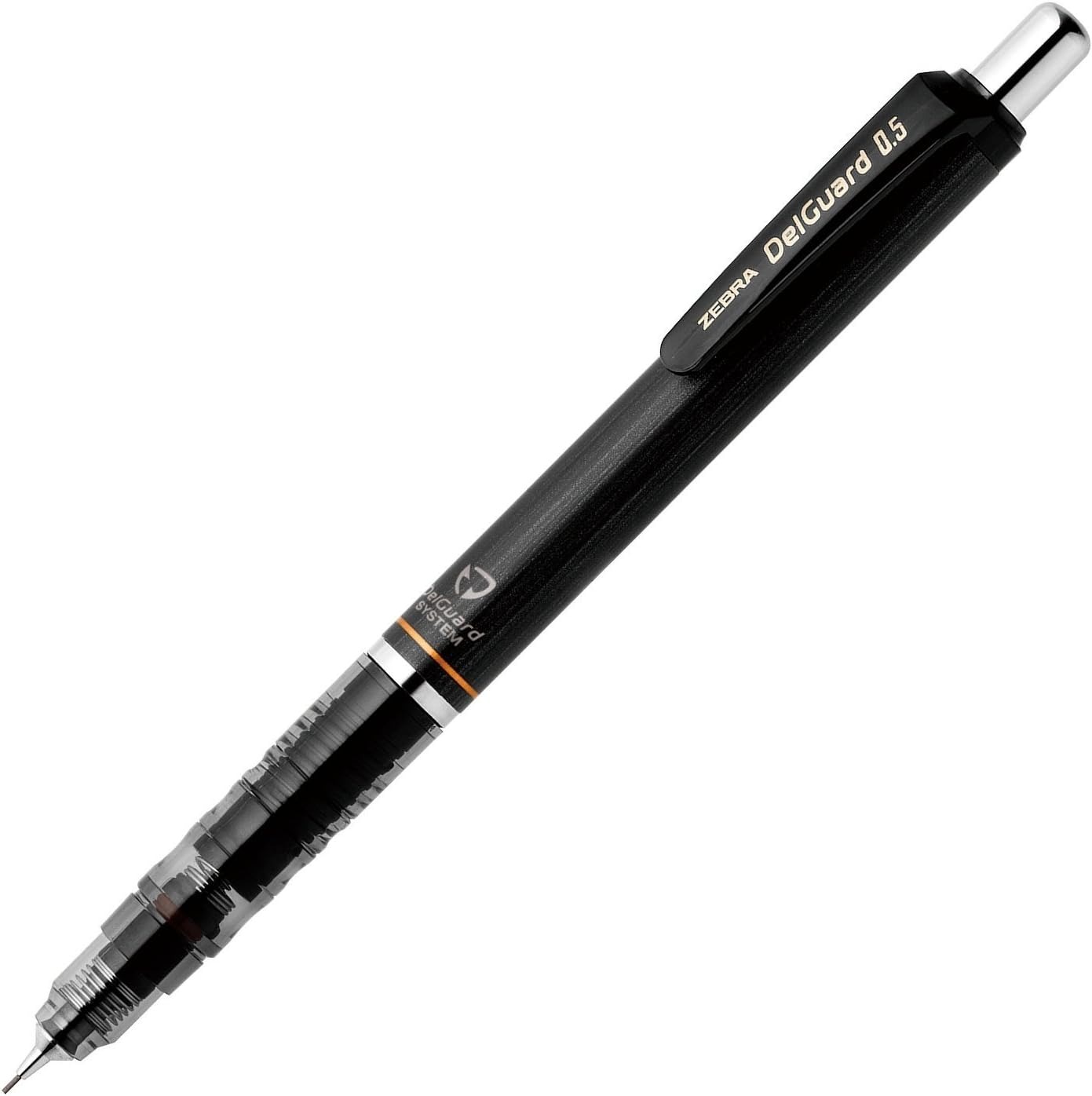
Zebra was founded in Tokyo in 1897, making it the oldest of the three makers. It started with steel dip pens before moving into ballpoints. Today the Sarasa gel pen is its best-known product, but the DelGuard is its flagship pencil.
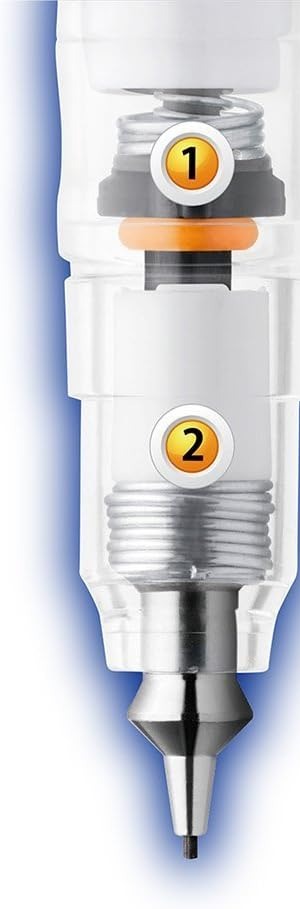
The DelGuard tackles breakage from two directions. When you press straight down, an internal spring gives slightly to absorb the force. When you press at an angle, the sleeve at the tip moves forward to support the lead from the side. Zebra also fitted a spacer inside to stop short leftover pieces from jamming the mechanism.
In the hand, it feels the most like a standard click pencil of the three. The springs give a faint cushioned feel when you press hard, which buyers often notice in the first few lines. It is light, with a clear grip section.
Amazon’s review summary is the most consistently positive here. Buyers praise durability, comfort along with grip, with the feedback that the lead simply does not break, especially for heavy-handed users. The honest downside is weight: opinions are mixed, with some wishing it were heavier. It also does nothing about line width, so the point wears flat like any ordinary pencil.
Who it suits: heavy-handed writers, younger students, test takers who cannot afford a snapped lead, or anyone who wants the cheapest reliable choice.
Compare the Three
| Kuru Toga Roulette | Orenz 0.5 | DelGuard 0.5 | |
|---|---|---|---|
| Price (approx.) | $9 | $7 | $6 |
| Maker (founded) | Mitsubishi Pencil / uni (1887) | Pentel (1946) | Zebra (1897) |
| Core idea | Lead rotates for an even point | Sliding pipe shields the lead | Springs absorb pressure |
| Consistent line width | Best | Good | Standard |
| Breakage protection | Standard | Good with a light touch | Best |
| View of the tip | Good | Best (needle pipe) | Good |
| Grip | Knurled metal | Rubber | Clear grip section |
| Amazon.com rating | 4.7 (8,800+ ratings) | 4.7 (2,400+) | 4.7 (2,000+) |
| Most common complaint | Mixed durability reports | Lead jams, slippery grip | Feels light |
The three solve different problems, so the right choice depends on what annoys you most. If your notes look neat on page one but smudgy by page ten, the Kuru Toga is the fix. If you press hard enough to snap lead daily, the DelGuard is the fix.
The Orenz sits in between. It protects the lead well for writers with a light hand while giving the clearest view of the line. Heavy-handed users may find its pipe-guided writing needs a gentler stroke than they are used to.
Left-handed writers face a related problem with ink smearing rather than lead. Our Pentel EnerGel vs Zebra Sarasa Clip guide for left-handed writers covers fast-drying gel pens from two of the same makers.
Summary
All three are Japanese pencils that cost under $10. Pick the Kuru Toga for even lines on long study days, the Orenz for fine detail with a light touch or the DelGuard if lead breakage is your daily frustration.
Frequently Asked Questions
What is the best Japanese mechanical pencil?
For most people, the Uni Kuru Toga Roulette is the best all-round pick because it keeps line width consistent. The Zebra DelGuard is best for heavy-handed writers. The Pentel Orenz is best for fine, small handwriting.
How does the Kuru Toga rotate the lead?
A small gear inside turns the lead each time you lift the pencil from the paper. Uni states it turns 9 degrees per stroke, a full turn every 40 strokes, which spreads the wear evenly around the tip.
Does the Pentel Orenz really never break lead?
It is designed to keep the lead inside a sliding metal pipe, which protects it well with a light or normal touch. Amazon reviews are mixed, though, so heavy-handed writers may prefer the DelGuard.
Which lead should I use in these pencils?
All three versions here take standard 0.5 mm lead. Each maker sells its own lead, but any quality 0.5 mm lead fits. HB or B grades are the common choices for note-taking.
Are these pencils allowed in exams?
They are ordinary mechanical pencils with no electronics, so they are generally fine wherever mechanical pencils are allowed. Some standardized tests require a wooden No. 2 pencil, so check the rules for your exam.
Is Mitsubishi Pencil part of the Mitsubishi group?
No. Mitsubishi Pencil, the maker of uni products, was founded in 1887 and is independent of the Mitsubishi industrial group despite the shared name.
Prices along with ratings were checked on Amazon.com in October 2026. Prices change often, so check the current price on Amazon before buying.