This article contains affiliate links (we may earn a commission).
Our pick for the best Japanese petty knife in 2026 is the Tojiro DP Petty 150mm — check its price on Amazon. The petty (ペティナイフ) is the small Japanese utility knife — bigger than a paring knife, nimbler than a gyuto — that Japanese home cooks reach for to peel, trim, slice shallots, segment citrus and break down boneless chicken. We compared three genuine Made-in-Japan pettys across the price ladder: the value-king Tojiro DP (VG-10), the hand-finished Yoshihiro 46-layer Damascus and the premium Shun Classic Utility. Here is which to buy.
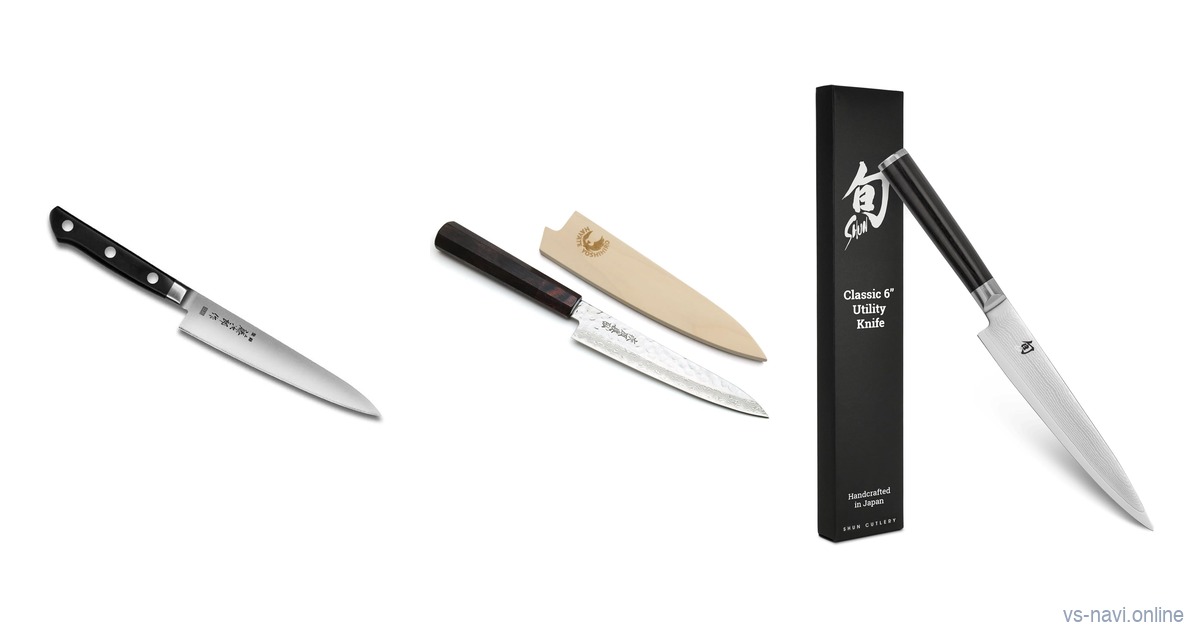
Quick Picks — Our Top Three Japanese Petty Knives
Best Overall & Best Value: Tojiro DP Petty 150mm (Real VG-10 at an entry price). Best Looks & Step-Up: Yoshihiro 46-Layer VG-10 Damascus (Hammered Damascus, rosewood, saya included). Best Premium / Gift: Shun Classic 6″ Utility (68-layer Damascus, lifetime warranty). Check price on Amazon →
Specs Comparison — Three Petty Knives Side by Side
| Tojiro DP Petty | Yoshihiro 46-Layer Damascus | Shun Classic Utility | |
|---|---|---|---|
| Blade length | 150 mm (5.9 in) | 150 mm (5.9 in) | 152 mm (6.0 in) |
| Core steel | VG-10 (3-layer san-mai) | VG-10 (46-layer Damascus clad) | VG-MAX (68-layer Damascus clad) |
| Hardness (HRC) | ~60–61 | ~60 | ~60–61 |
| Edge angle (per side) | ~15° | ~15° | ~16° |
| Handle | Reinforced laminate, riveted | Octagonal rosewood wa-handle + bolster | D-shaped ebony PakkaWood |
| Saya (sheath) | None | Magnolia saya included | None |
| Dishwasher | Hand-wash only | Hand-wash only | Hand-wash only |
| Weight | approx. 85 g | approx. 120 g | approx. 113 g |
| Made in | Tsubame-Sanjo, Japan | Japan | Seki, Japan |
| Price (2026) | around $55 | around $90 | around $120 |
| Amazon rating | 4.5 / 5 | 4.8 / 5 | 4.6 / 5 |
Specs reflect the standard 150 mm petty / 6-inch utility models. Prices are 2026 US street prices and move often — always confirm the live figure before buying.
Tojiro DP Petty 150mm — The Best Petty for Most Cooks
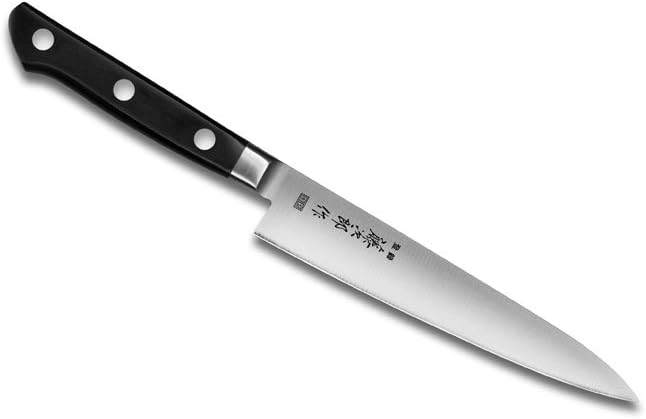
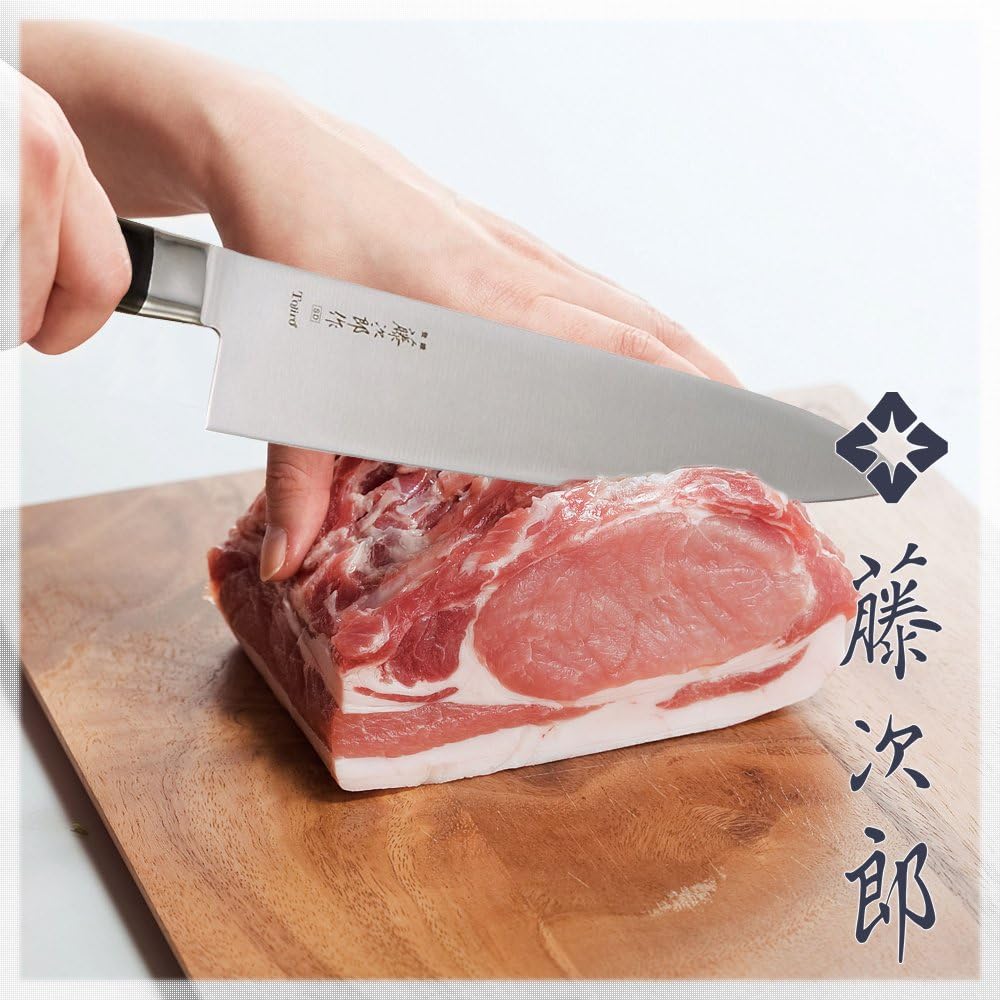
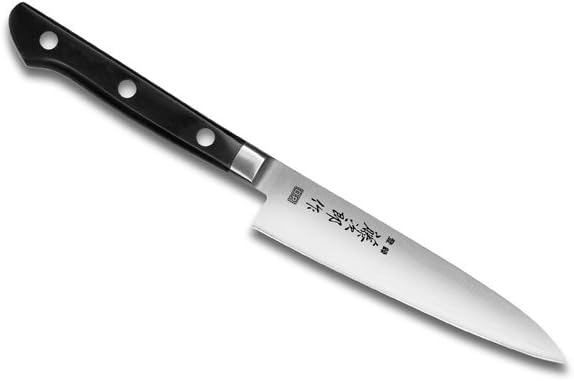
If you want one small Japanese knife that punches far above its price, the Tojiro DP Petty is the easiest of the three to recommend. It pairs a hard VG-10 cutting core — the same premium cobalt-alloy stainless used in knives costing three times as much — with a no-nonsense laminated handle and sells it at an entry-level price. The san-mai construction sandwiches that hard core between two layers of softer stainless, giving you a thin, keen, easy-to-resharpen edge with good rust resistance.
It sits at the budget tier purely on fit and finish, not on steel quality. The handle is functional rather than beautiful and the spine and choil arrive unrounded. But the cutting performance is the real thing: at around $55 it out-slices most $100 Western knives and at roughly 85 g it is light and agile enough to make detail prep — shallots, garlic, citrus segments, chicken thighs — feel effortless. For most people asking “which Japanese petty should I buy first?”, this is the answer.
The Brand in Japan
Tojiro is the export name of Fujitora Industry (藤寅工業), based in Tsubame-Sanjo, Niigata — Japan’s metalworking heartland, distinct from the Seki (Gifu) and Sakai (Osaka) knife traditions. Sanjo is historically a center of carpentry tools and industrial cutlery and Tojiro is regarded domestically as a high-value, no-frills workhorse brand favored by working cooks and culinary schools rather than collectors. It was an early adopter of mass-produced VG-10 san-mai, which is exactly why it can offer serious Japanese steel at this price.
Real-World Usage
On the board the DP Petty feels quick and precise. The thin blade glides through tomato skin without sawing and the light weight makes it the knife you instinctively grab for the small jobs a big gyuto feels clumsy at. Hand-wash and dry it immediately — VG-10 is stainless but not stain-proof and the laminate handle lasts longest dry. Many owners spend two minutes easing the spine with sandpaper for a more comfortable pinch grip; after that, it is hard to fault for the money.
✅ Pros
- Genuine VG-10 core at a budget price — exceptional value; nothing else here is close on dollars-per-performance.
- Thin, keen factory edge — slices cleanly out of the box and takes a fine polish on a basic whetstone.
- Light and low-maintenance — ~85 g agility and a tough laminate handle that shrugs off humidity.
❌ Cons (Honest Assessment)
- Unfinished spine and choil — can feel sharp on the pinch grip until you ease them.
- Plain looks — utilitarian, not a showpiece or a gift-box knife.
👤 Who Should Buy This
Anyone who wants a genuine Japanese petty without overspending — a first Japanese knife, a second knife to live beside a chef’s knife, or a workhorse you can sharpen freely. If you cannot decide between the three, buy this one and stop researching.
Yoshihiro 46-Layer VG-10 Damascus Petty — The Best-Looking Step-Up
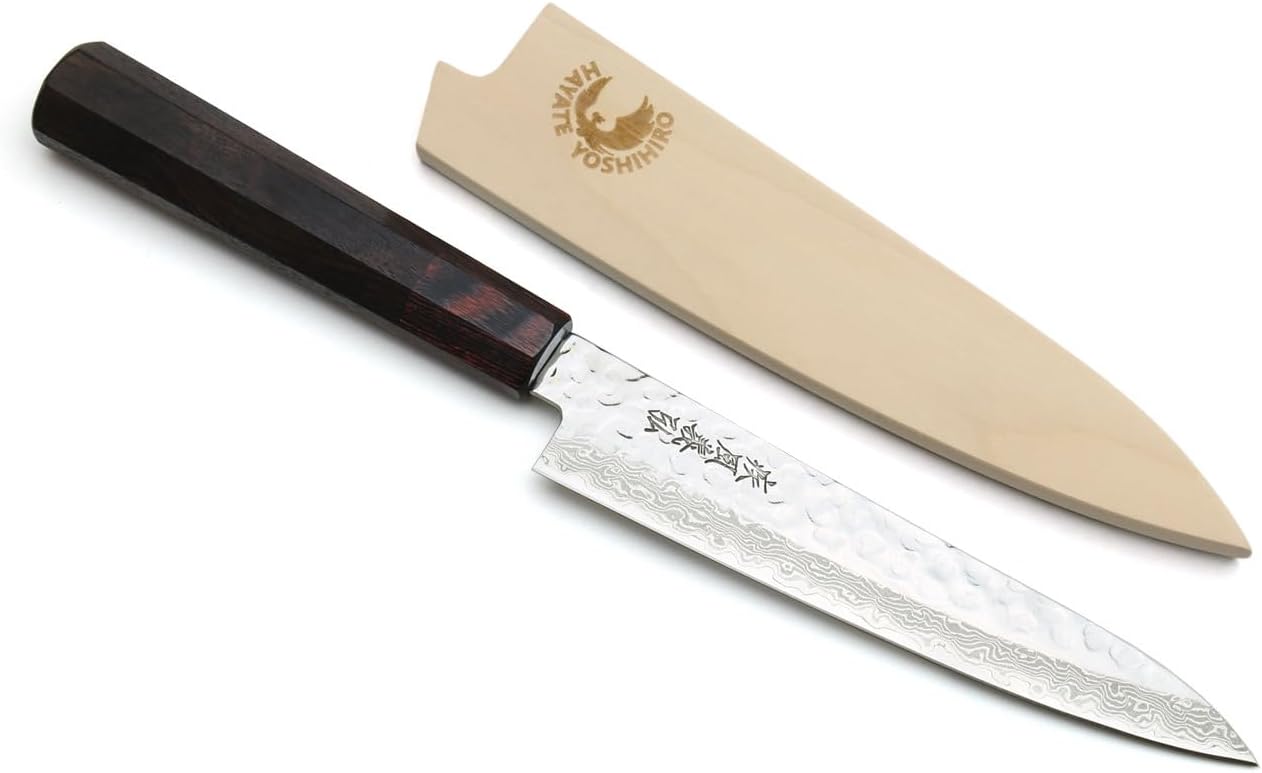
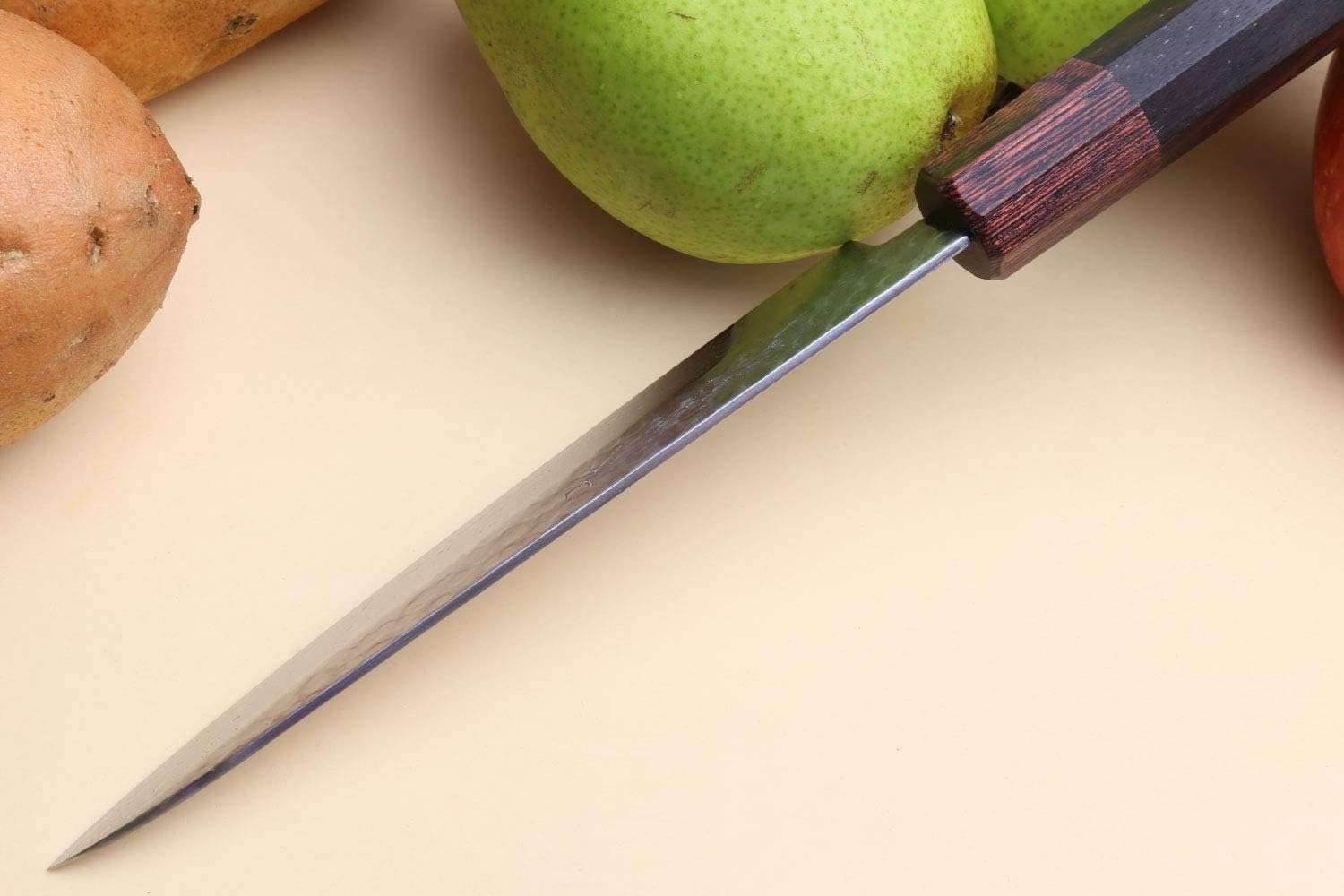
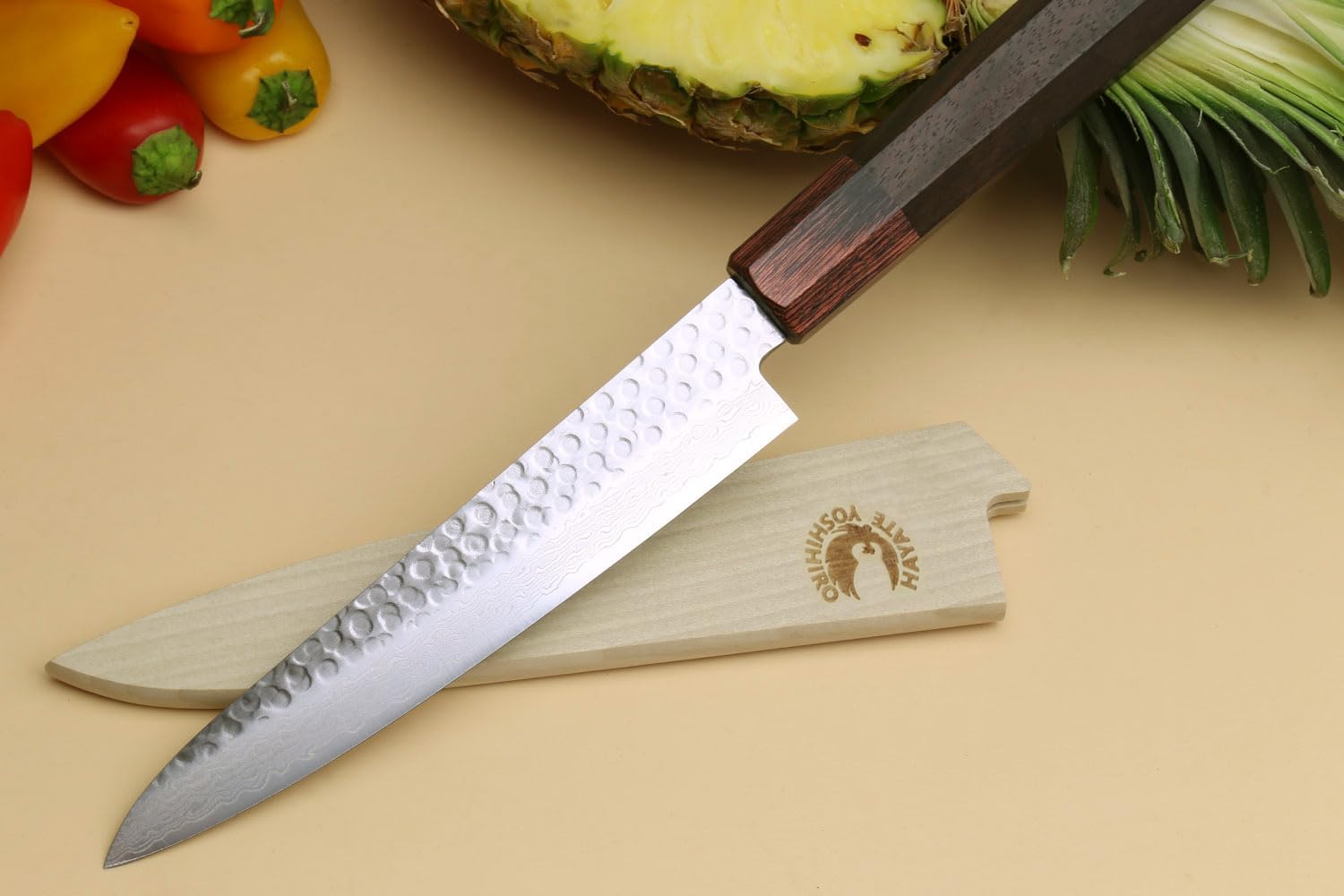
The Yoshihiro is the petty to buy when you want a real step up in soul and finish without paying premium-brand money. It wraps the same class of VG-10 cutting core as the Tojiro in 46 layers of hammered (tsuchime) Damascus and the dimpled finish is not just decorative — it reduces surface drag so slices of potato and shallot release more cleanly off the blade. The stain-resistant outer layers also make it far more forgiving than a raw-carbon knife.
What pushes it above budget territory is the hand-finishing. The octagonal rosewood wa-handle with a double bolster is set by hand, the spine and choil are eased from the factory and it ships with a fitted magnolia saya for safe storage — touches normally reserved for far pricier knives. At around $90 it reads as a “performance plus beauty” pick: more refined and more beautiful than the Tojiro, without the Shun premium.
The Brand in Japan
Yoshihiro is a Tokyo-based cutlery house that sources blades from Japan’s traditional smithing regions, most notably the Sakai (Osaka) and Seki (Gifu) clusters that have forged blades for centuries — Sakai historically for professional Japanese-cuisine knives, Seki for VG-10 stainless production. Domestically the name carries a craftsman-export reputation: Yoshihiro built its profile supplying serious home cooks and professionals with hand-finished single- and double-bevel knives and the VG-10 Hammered Damascus series is one of its long-running flagship lines — respected for value-per-dollar Damascus.
Real-World Usage
In the hand the Yoshihiro feels lively and precise; the lighter octagonal wa-handle shifts the balance forward for fine tip control, which suits detail work like deveining, segmenting and trimming. The tsuchime face genuinely keeps starchy vegetables from gluing to the blade. The trade-off is care: the natural rosewood handle and VG-10 core are strictly hand-wash and the wood benefits from an occasional drop of oil. Treat it well and it stays a beautiful, keen daily knife for years.
✅ Pros
- Hand-finished detailing at a sub-Shun price — rosewood wa-handle, double bolster and an included magnolia saya.
- Beautiful, functional hammered Damascus — the tsuchime finish reduces food sticking, not just looks.
- Refined out-of-box edge — eased spine and choil and a keen VG-10 edge that out-cuts most sub-$60 pettys.
❌ Cons (Honest Assessment)
- Demands care — natural wood handle plus VG-10 core means no dishwasher and occasional handle oiling.
- Light Japanese geometry — a precision slicer, not a knuckle-clearing workhorse for heavy chopping.
👤 Who Should Buy This
Cooks who already love their chef’s knife and want a small Japanese petty that is a joy to look at and use — and who will hand-wash it. It is also a superb gift: the saya and Damascus make it feel like an occasion without a Shun price tag.
Shun Classic 6″ Utility — The Premium Showpiece
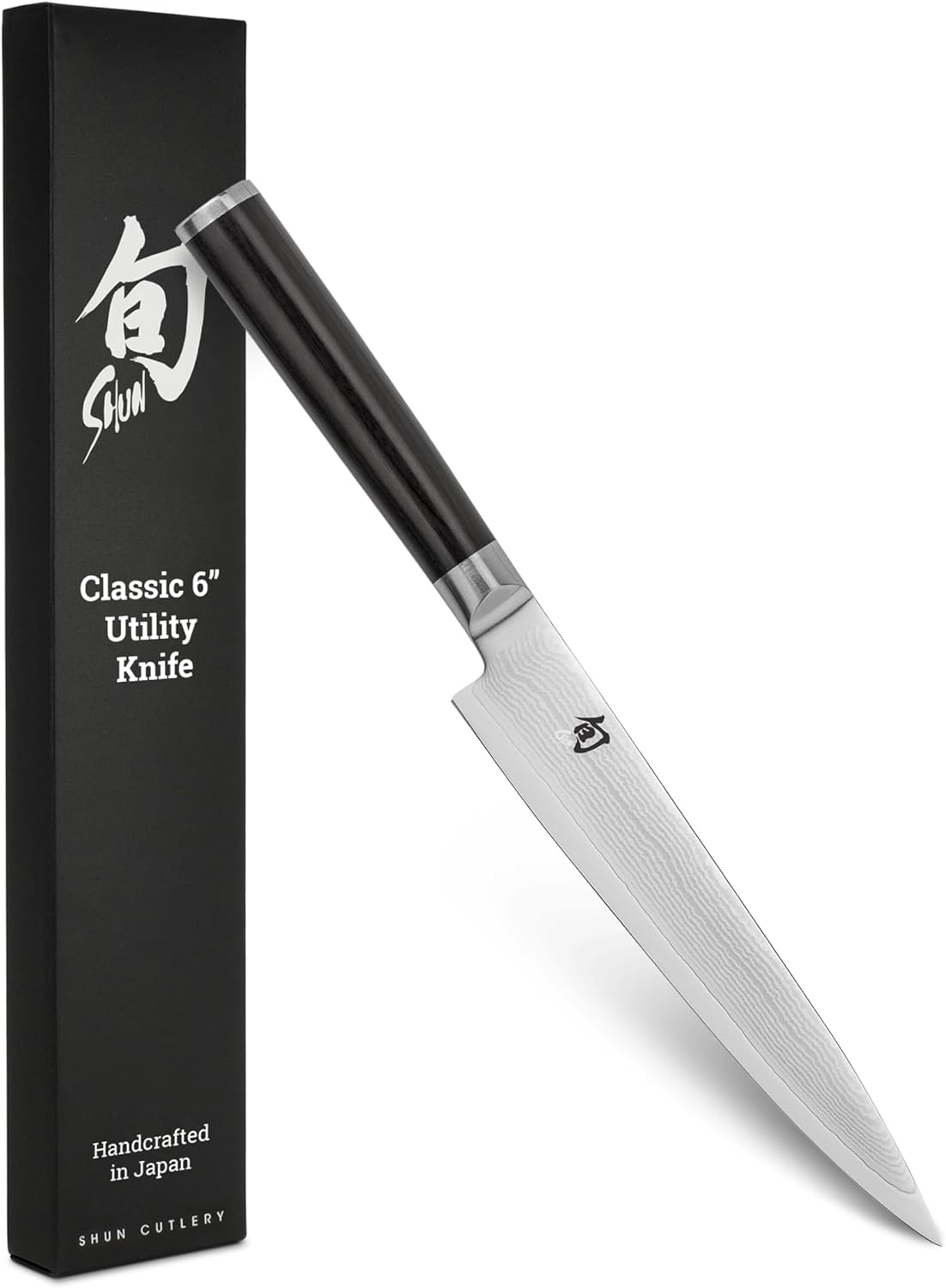
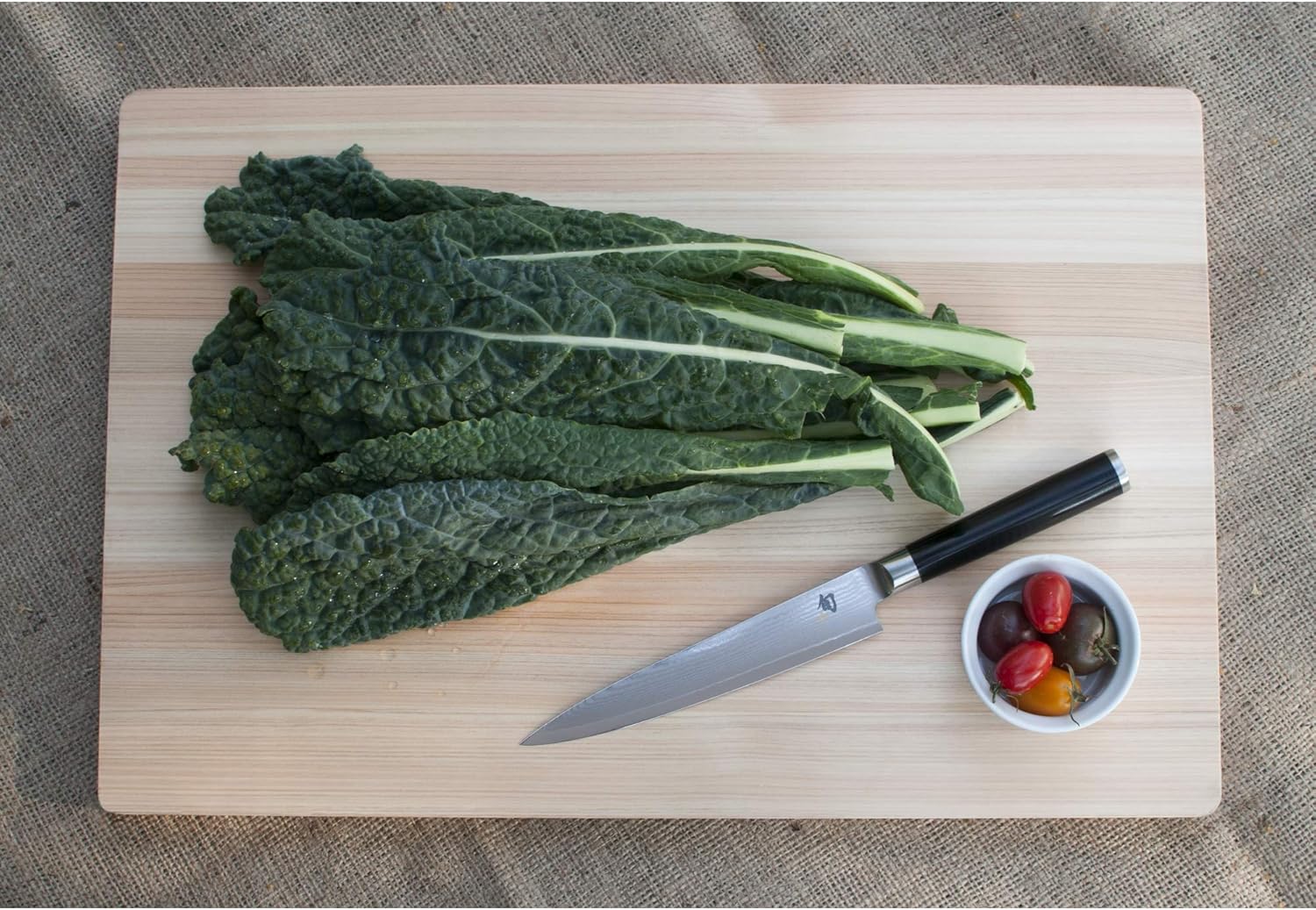
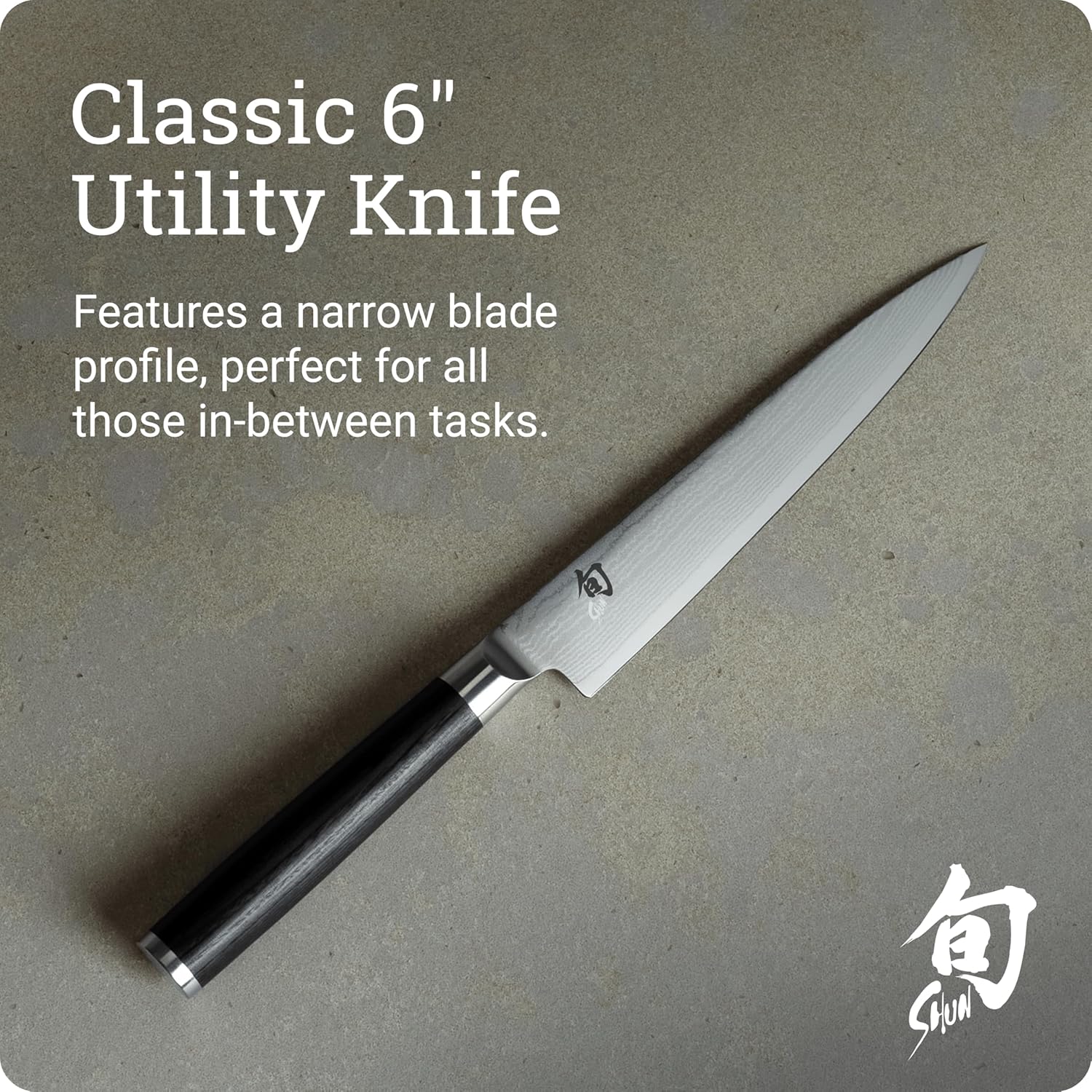
The Shun Classic Utility is the premium-tier benchmark: a VG-MAX cutting core wrapped in 68 layers of flowing Damascus stainless, finished with Shun’s signature D-shaped ebony-PakkaWood handle. It is the knife people picture when they imagine a “Japanese knife” — jewel-like, comfortable and razor-sharp at a true 16° edge. Functionally it is a do-everything petty/utility: long enough to slice a sandwich or a chicken breast, nimble enough for shallots and citrus.
It commands its price on craftsmanship and presentation as much as raw cutting. The Damascus is partly cosmetic — it does not make the edge sharper than a plain VG-10 san-mai — but the heat treatment, hand-finishing, the genuinely excellent handle and Kai’s lifetime warranty plus free sharpening program justify the tier. This is the countertop showpiece and the safe luxury gift.
The Brand in Japan
Shun is the flagship kitchen line of Kai Corporation (貳削), one of Japan’s largest blade makers, headquartered in Seki City, Gifu — the same 700-year sword-forging tradition behind many Japanese knives. Domestically, Kai is a household name spanning razors to surgical blades; the “Shun” (旬, meaning the peak season for an ingredient) brand was developed largely for the premium export market. Among Japanese enthusiasts Shun is seen as beautifully made and beginner-friendly, if a touch more “polished for export” than the austere artisan single-bevel knives of Sakai.
Real-World Usage
The Classic Utility is comfortable and confidence-inspiring; the D-shaped handle locks into a pinch grip and the narrow blade tracks straight through produce and boneless protein. It is the one here most likely to draw a comment from a guest. As with the others, it is hand-wash only and the D-handle is subtly right-hand-biased — left-handers should buy the dedicated lefty version. Kai’s free honing and sharpening service is a real ownership perk over the long run.
✅ Pros
- Stunning 68-layer Damascus finish — a true showpiece and the obvious gift choice.
- Excellent D-shaped PakkaWood handle — one of the most comfortable grips in the category.
- Lifetime warranty + free sharpening — Kai’s US support is a genuine long-term advantage.
❌ Cons (Honest Assessment)
- Most expensive — you pay a premium for the Damascus and the brand more than for cutting performance.
- Right-hand-biased D-handle — left-handers must seek out the separate left-handed model.
👤 Who Should Buy This
Buyers who want beauty, brand and a lifetime of free sharpening — and anyone shopping for a special gift. If the Damascus and the warranty matter to you as much as the cut, this is your knife.
Head-to-Head — Category-by-Category Winner
| Category | Tojiro DP | Yoshihiro | Shun |
|---|---|---|---|
| Out-of-box sharpness | Very good | Excellent ✓ | Excellent |
| Edge retention | Good | Very good | Best in class ✓ |
| Fit & finish / looks | Basic | Hammered Damascus + saya ✓ | Flawless polish |
| Lightness & agility | Lightest, nimblest ✓ | Light | Light |
| Ease of sharpening | Easiest ✓ | Easy | Easy |
| Value for money | Outstanding ✓ | Very good | Good |
Sharpness & edge retention: all three arrive genuinely sharp; the Yoshihiro and Shun edge slightly ahead out of the box and the harder VG-MAX Shun holds its edge the longest, with the softer-clad Tojiro needing touch-ups soonest. Looks & finish: the Yoshihiro’s hammered Damascus and included saya win on character, with the Shun’s flawless factory polish a close, more expensive second. Agility, sharpening & value: the light ~85 g Tojiro is the nimblest and the easiest to sharpen and it delivers by far the most petty per dollar.
How to Choose — A 30-Second Decision Tree
- “I just want one great everyday petty” → Tojiro DP Petty 150mm. Buy it and stop reading.
- “I want it to be beautiful as well as sharp” → Yoshihiro 46-Layer Damascus — hammered Damascus, rosewood and a saya.
- “It’s a gift, or I want a lifetime warranty” → Shun Classic 6″ Utility.
- “It’s my first Japanese knife and I’m on a budget” → the Tojiro — cheap, light and forgiving to learn sharpening on.
- “I cut bones or frozen food” → none of these — a petty is a precision utility knife; keep a cheap heavy blade for hard work.
How We Compared These Knives
This is a desk comparison, not a kitchen test. We do not receive samples or run knives through a test kitchen; every call below rests on published maker specifications, steel data plus current Amazon listings, cross-referenced against Japanese-language manufacturer pages, Japanese consumer forums (5ch / 包丁板) as well as English communities such as r/chefknives. For this 2026 update we re-checked specs, current US pricing, steel grades and Amazon ratings against each maker’s own listings, holding the same published points in view for every knife: steel grade plus hardness, blade geometry, stated weight plus balance, maker guidance on sharpening plus price. Where sharpness or edge retention is described, it reflects what the maker publishes together with what owners consistently report — not our own measurements. Holding the 150 mm petty / 6-inch utility shape constant lets the price tiers speak for themselves. For deeper background, see our companion knife guides linked below.
🏆 Verdict — Overall Ranking
#1 – Tojiro DP Petty 150mm The best balance of performance, agility and value. It is the petty we recommend to the most people because it delivers genuine VG-10 cutting at an entry price — the same steel class as knives costing twice as much, in a light, nimble package you can sharpen without fear. Check price on Amazon →
#2 Yoshihiro 46-Layer Damascus — Best looks — hammered Damascus, rosewood wa-handle and an included saya. Check price on Amazon →
#3 Shun Classic 6″ Utility — Best premium — 68-layer Damascus, superb handle, lifetime warranty. Check price on Amazon →
More Comparisons Worth Reading
TL;DR
| Question | Answer |
|---|---|
| Do I need a petty? | Yes if you have only one gyuto/santoku |
| Best length? | 120-150mm |
| Best first petty? | Tojiro DP Petty 120mm ($55) |
| Petty vs paring knife? | Petty is longer, more versatile |
A petty is the best $80 you can spend after buying your main Japanese knife.
What Is a Petty Knife?
A petty knife is a small Japanese utility knife: – 75-150mm long (vs paring’s 75-100mm or chef’s 200-240mm) – Double-bevel construction – Pointed tip for precision work – Versatile shape for small tasks
The name ペティ comes from the French “petit” (small), reflecting Japan’s adoption of French culinary tools in the late 19th century.
Petty vs paring knife (Western equivalent)
| Aspect | Japanese Petty | Western Paring |
|---|---|---|
| Length | 120-150mm | 75-100mm |
| Profile | Slightly curved | Often straight or curved |
| Use | All small tasks + light prep | Peeling, garnishing |
| Construction | Same as chef knife | Often cheaper |
| Sharpness | Very sharp | Moderate |
Key insight: A petty is larger and more versatile than a Western paring knife. It bridges the gap between paring and chef knife.
Why Every Home Cook Needs a Petty
Use case 1: Tasks too small for gyuto
- Peeling apples, garlic, shallots
- Trimming asparagus tips
- Removing strawberry hulls
- Deveining shrimp
Use case 2: Tasks too precise for big knife
- Garnishing
- Removing fat from meat cuts
- Cutting small pieces of fish for sushi
- Detail work on vegetables
Use case 3: Tasks where gyuto feels overkill
- Slicing a single tomato
- Cutting cheese
- Trimming herbs (the small amount)
- Quick lunchtime prep
Real-world frequency
Survey data from Japanese kitchen equipment retailers: – Petty knife use: 60-80% of all home cooking tasks – Gyuto/santoku use: 30-40% – Specialty (deba, yanagiba): 5-10%
The petty is used far more often than the prestige knife.
Petty Knife Length Selection
| Length | Best For |
|---|---|
| 75-100mm | True paring (peeling, small fruits) |
| 120mm (most popular) | Balanced: precision + light cutting |
| 150mm | “Mini-gyuto” — versatile small chef knife |
| 180mm | Approaches gyuto territory |
Recommendation: 120mm
The sweet spot for most home cooks. Easy to handle, versatile, fits in any drawer.
Best Petty Knives by Tier
Entry ($40-100)
Tojiro DP F-832 Petty 120mm — ~$55 – VG-10 steel, same quality as F-808 gyuto – Plastic-resin handle – Excellent first petty
Mac MTH-50 Petty 130mm — ~$70 – Excellent balance and sharpness – Wood handle option – US distribution
Mid ($100-200)
Shun Classic DM-0700 Paring 90mm — ~$120 – (Note: Shun calls it “paring” but it’s petty-sized) – VG-Max steel, Damascus pattern
Yoshihiro VG-10 Damascus Petty 150mm — ~$160
Misono UX10 Petty 130mm — ~$220 – Sweden steel – Professional kitchen standard
Premium ($200-400)
Konosuke HD2 Petty 150mm — ~$280 – Same quality as the legendary HD2 gyuto – Wa-handle option
Hatsukokoro Kumokage Aogami Super Petty 150mm — ~$240 – Carbon steel sharpness – Sakai craftsmanship
Yoshikane SKD Petty 150mm — ~$220
Petty Knife Shape Variations
Standard petty
- Slightly curved profile
- Pointed tip
- Most versatile
Kogatana / Mini-Bunka
- Squared/sheepsfoot tip
- Better for vegetable work
- Less common
Wa-handle vs Yo-handle
- Yo-handle: Western-style, three rivets. Most common in budget petties.
- Wa-handle: Japanese-style, lighter. Used in premium petties.
For first-time petty buyers: Yo-handle is easier to transition from Western knives.
Petty for Specific Cooking Styles
Japanese home cooking
- 120mm Yo-handle petty (Tojiro DP, Mac)
- Pairs with santoku
Western/French cooking
- 150mm Yo-handle petty (Mac, Misono)
- Pairs with gyuto
Asian cooking
- 120mm anything
- For garnish and detail work
Sushi/sashimi prep at home
- 150mm petty (larger for fish work)
- Complements yanagiba or sujihiki
How to Use a Petty
Holding technique
- Pinch grip on blade (recommended)
- Use only for tasks too small for chef knife
- Don’t apply heavy force (petty isn’t designed for chopping bones)
Common tasks
- Peeling apples: Hold apple in non-dominant hand, peel toward thumb
- Garlic: Smash with flat side, then mince with tip
- Tomato wedging: Pointed tip allows precise stem removal
- Strawberry hulls: Insert tip, rotate to remove green top
- Shrimp deveining: Slit along back, lift out vein
Maintenance
- Same as other Japanese knives
- Light strokes on whetstone
- Hand wash and dry
Petty in Knife Collections
Two-knife setup
- Gyuto 210mm + Petty 120mm
- Covers 95% of home cooking tasks
- Minimal storage space
Three-knife setup (recommended)
- Gyuto 210mm + Petty 120mm + Nakiri 165mm
- Adds vegetable specialization
- Still fits in standard knife block
Four-knife setup
- Gyuto + Petty + Nakiri + Yanagiba/Sujihiki
- For Japanese-cuisine enthusiasts
Five-knife setup
- All above + Deba
- For serious fish work
Petty is the first additional knife in every collection.
Common Beginner Questions
“Do I really need a petty if I have a gyuto?”
Yes. A gyuto is overkill for 60% of small tasks. A petty makes daily cooking faster and safer.
“What’s the difference from a Western paring knife?”
Petty is longer, more versatile, and usually sharper. Paring knives are smaller, often cheaper construction.
“Can I just use a paring knife from my existing set?”
Sure, but a Japanese petty offers significantly better cutting performance. For ~$55 (Tojiro DP), the upgrade is worth it.
“What about an Asian-style cleaver?”
A cleaver (中華包丁) is for large-volume chopping, not small precision. Get a petty separately.
“150mm vs 120mm—which size?”
- 120mm: More peeling, smaller tasks, larger hands
- 150mm: More slicing, larger fruits, smaller hands
Most pros own one of each.
Steel and Edge Geometry: What Sets a Japanese Petty Apart
The reason a Japanese petty feels so different from a Western utility knife comes down to two things: the steel and the geometry. Japanese makers tend to run harder steels, often in the 60–63 HRC range, which lets them grind a thinner blade and hold a more acute edge without it rolling. That combination is what produces the clean, low-resistance slice a good petty is prized for.
On the stainless side you will see VG-10 and, at the premium end, powder-metallurgy steels such as SG2/R2. These hold a keen edge, resist staining and forgive the occasional lapse in drying — a sensible default for a knife that lives on small, wet tasks. Carbon steels such as Shirogami (white) and Aogami (blue) take an even sharper, more effortless edge and are easy to refresh on a stone, but they patina and demand prompt drying. Neither camp is objectively better; the honest question is whether you want maximum performance or maximum convenience. Our complete Japanese knife buying guide maps each steel family to the trade-off it asks of you.
Wa-Handle vs Yo-Handle: Choosing the Right Grip for Detail Work
Petty knives ship with one of two handle styles and the choice is more than cosmetic. A wa (Japanese) handle is typically octagonal or D-shaped, light and set forward, shifting balance toward the blade and rewarding a pinch grip for precise, close-in cuts. A yo (Western) handle is fuller, often riveted and heavier in the hand — more familiar to cooks raised on European knives and a touch more secure for those who grip the handle itself.
For fine tasks — peeling shallots, segmenting citrus, trimming silverskin — many users find the nimble wa handle the better partner. If the petty is meant to back up a Western-handled chef’s knife, matching the yo style keeps the feel consistent across your kit; brand ranges such as Yaxell’s lean heavily on that ergonomic Western grip, while many hand-forged makers such as Yoshikane favor the traditional wa handle.
Caring for a Petty So It Keeps Its Edge
A thin, hard blade is unforgiving of abuse. Keep a Japanese petty off glass, stone and steel surfaces — end-grain wood or a soft poly board only — and never twist it through bone or frozen food. Hand-wash and dry it immediately; the dishwasher’s heat, detergent and knocking are the fastest way to chip an acute edge or crack a wa handle. Because the steel is hard, a petty responds beautifully to a whetstone: a 1000-grit stone restores a working edge and a 3000–6000 finish returns that first-day glide. Carbon-steel owners can embrace the forced patina that builds over time — it is protective, not a defect.
Frequently Asked Questions
What is a petty knife used for?
A petty (ペティナイフ) is the Japanese small utility knife, usually 120–150 mm. It bridges the gap between a tiny paring knife and a full chef’s knife: peeling, trimming fat and sinew, slicing shallots and garlic, segmenting citrus and breaking down boneless chicken. It is a precision tool, not meant for bones, hard squash, or frozen food.
Which Japanese petty is best for beginners?
The Tojiro DP Petty 150mm. At around $55 it is a genuine Made-in-Japan VG-10 knife that is light, easy to sharpen and inexpensive enough to learn whetstone technique on without fear. It delivers most of the cutting performance of pettys costing twice as much.
Is the Shun Classic worth it over the cheaper Tojiro?
Only if looks, handle comfort and the lifetime warranty matter to you. In raw cutting the $55 Tojiro is in the same VG-10 class as the $120 Shun. You pay the Shun premium for the 68-layer Damascus finish, the excellent D-shaped handle, Kai’s free sharpening service and gift-quality presentation — not for a sharper edge.
Petty vs paring knife — what is the difference?
A paring knife is short (around 80–100 mm) and made for in-hand work like peeling and coring. A petty is longer (120–150 mm), so it does paring tasks on a board and also handles small slicing and trimming a paring knife is too short for. If you want one small knife to do the most jobs, buy a petty.
Are these petty knives dishwasher safe?
No. All three have a hard Japanese cutting core and either a natural-wood or laminate handle, so all are hand-wash only. For any Japanese knife, washing by hand and drying immediately is the safest way to protect both the edge and the handle.
What angle should I sharpen a Japanese petty at?
Around 15 degrees per side for the Tojiro and Yoshihiro and about 16 degrees for the Shun. Maintain the factory angle on a 1000 and 6000 grit Japanese whetstone and avoid pull-through V sharpeners, which can chip the hard VG-10 and VG-MAX steel.
Summary & Recommendation
- Best overall — Tojiro DP Petty 150mm: the smartest single buy for most cooks; genuine VG-10 performance, light and nimble, at a fair price.
- Best looks — Yoshihiro 46-Layer Damascus: a hand-finished hammered-Damascus petty with a rosewood wa-handle and an included saya.
- Best premium — Shun Classic 6″ Utility: a 68-layer Damascus showpiece with a superb handle and a lifetime warranty — the safe luxury gift.
Whichever you choose, add a basic Japanese whetstone and hand-wash your knife — a maintained $55 Tojiro out-cuts a neglected $120 blade every time.
You Might Also Like
- Best Japanese Chef’s Knife 2026: Shun vs MAC vs Tojiro
- Best Japanese Santoku Knife 2026: Seki Magoroku vs Tojiro vs Yoshihiro
- Best Japanese Nakiri Knife 2026: Kai Seki Magoroku Damascus vs Artisan vs Moeki
- Sujihiki vs Yanagiba vs Western Slicer 2026
- Best Honing Rods for Japanese Knives 2026
References & Editorial Notes
This comparison was compiled by an editorial team that tracks the Japanese knife market, drawing on Japanese-language manufacturer pages (Fujitora / Tojiro, Yoshihiro Cutlery, Kai Corporation / Shun), Japanese consumer forums (5ch / 包丁板) and English communities (r/chefknives). Steel grade, layer-count, weight and price claims were cross-checked against each maker’s own product listings and current Amazon.com data. Prices reflect 2026 US market conditions and may change. Affiliate links to Amazon US carry the vsnavi-20 associate tag; we may earn a commission at no extra cost to you.