vs-navi.online is a participant in the Amazon Services LLC Associates Program. Purchases made through links on this page may earn us a commission at no extra cost to you.
A pot of rice is done. Ten minutes later three triangles sit on a plate, each one tight enough to survive a lunch bag yet soft enough to bite through.
That result is the whole point of an onigiri mold. Hand-shaping takes practice, hot rice burns, the salt never lands evenly. A plastic press from a Japanese maker turns the job into fill, press, flip. The same goes for the paddle that moves rice from the cooker: a good one stands up on its own, never mashes the grains, never leaves half a scoop stuck to itself.
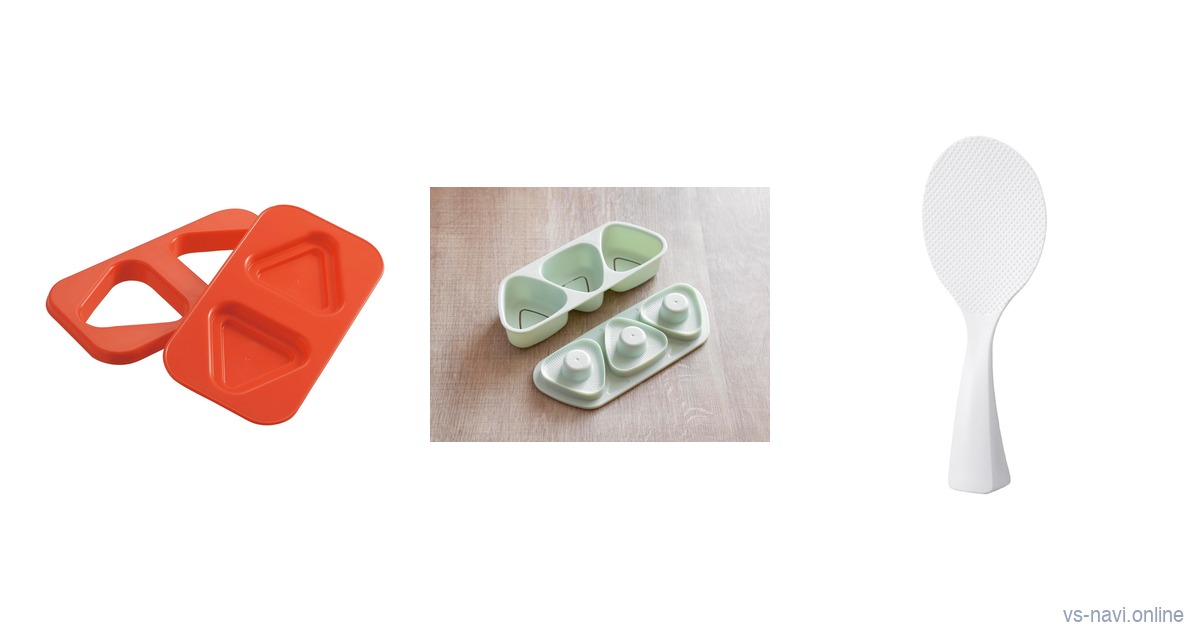
We compared three Made-in-Japan rice tools that are sold on Amazon.com: a rice sandwich mold from Akebono in Tsubame, a three-cavity onigiri press from Skater in Nara and the standing rice paddle from Marna in Tokyo. This is a desk comparison built on manufacturer pages, listing specifications and current Amazon.com prices, not a hands-on cooking test.
Our Picks: The Best Onigiri Mold and Rice Tools in 2026
All three items had a live price with stock on Amazon.com when we checked. Prices move, so treat the dollar figures as a guide:
- Akebono WE-961 Rice Ball Mold — about $23. A two-part frame and press that makes a flat rice sandwich with a thick layer of filling. The pick for a full lunch in one piece.
- Skater LKON3AG-A Onigiri Pressing Mold — about $5. A tray that shapes three classic triangles at once, each about 70 g. The pick for bento boxes and kids.
- Marna Stand Rice Paddle K-386W — about $13. The standing shamoji that Marna sells in Japan for 660 yen. The pick for every rice cooker owner.
If you only buy one mold, the Skater tray is the cheapest way to get three even onigiri. If you cook rice several times a week, the Marna paddle is the tool you will touch most often.
Check price on Amazon: Skater onigiri mold →
Why Japanese Makers Still Build These Small Tools
Onigiri is not a specialty food in Japan. It is the convenience-store staple, the picnic default, the thing a parent makes at 6 a.m. before school. Because the demand is daily, Japanese housewares companies have spent decades refining tools that most Western kitchens never had a reason to invent.
Two details show up again and again in the better products. The first is a dimpled or embossed surface on every face that touches rice, so the grains release without oil or water. The second is a body molded from polypropylene that survives the dishwasher and the microwave. All three tools in this guide use both ideas.
The three makers also sit at different points of the Japanese market. Akebono is a small Niigata factory that cuts its own molds. Skater is a large Nara company best known for character lunch boxes. Marna is a 150-year-old Tokyo housewares brand that sells on design. That spread is useful: you are not choosing between three copies of the same tray.
Akebono WE-961 Rice Ball Mold (Around $23 on Amazon)
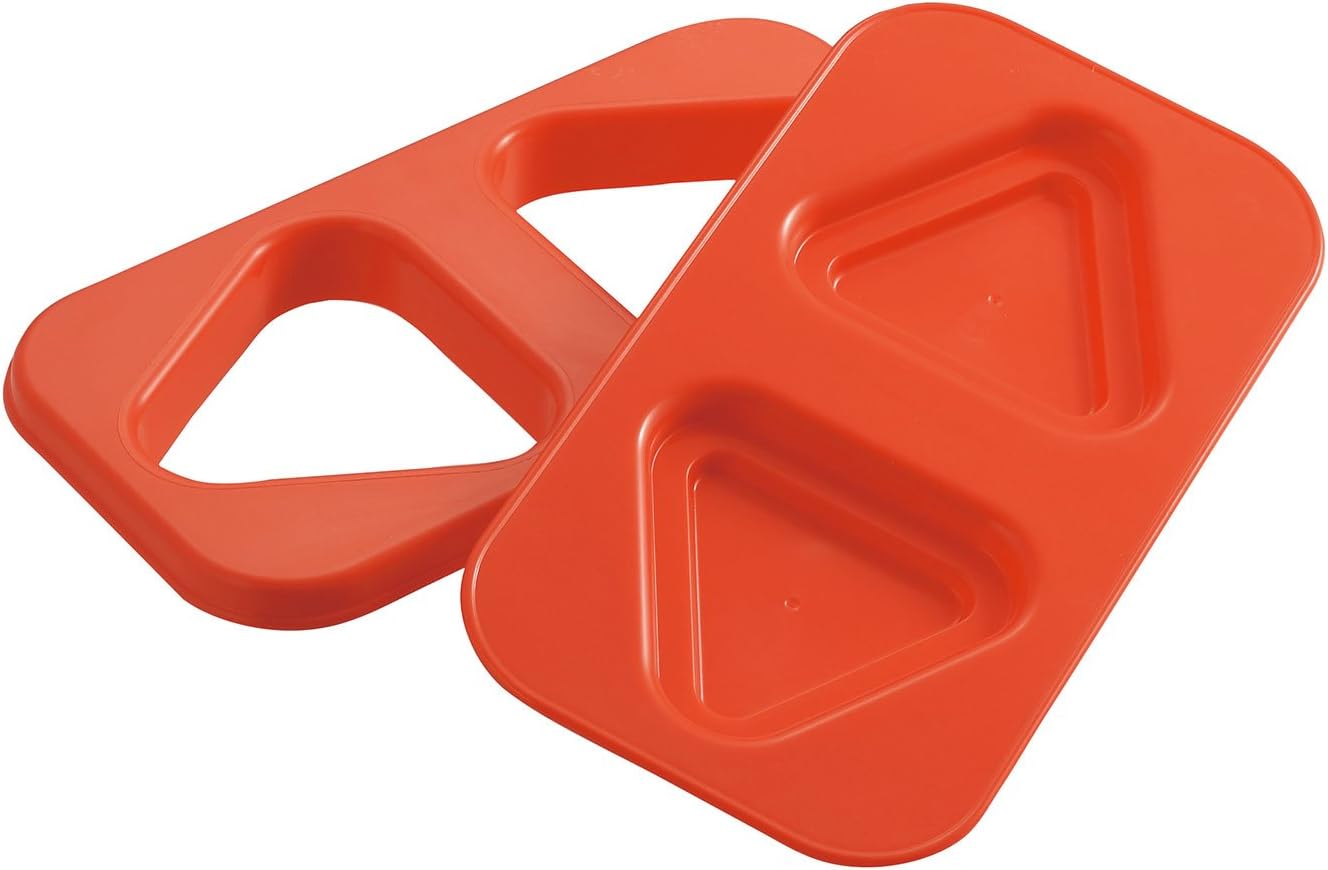
The WE-961 is not a triangle mold. It is a two-piece set, a rectangular frame and a matching press plate, that builds a flat rice sandwich. You lay a sheet of nori under the frame, press in a layer of rice, add a thick filling, press a second layer of rice, then fold the nori over. The result is the square, cut-in-half style that Japanese convenience stores sell next to classic onigiri.
The frame measures 20.1 by 10.9 cm and the whole set weighs 90 g, so it stores flat in a drawer. Akebono lists the body as polypropylene with heat resistance to 120°C and cold resistance to minus 20°C, which covers the dishwasher. The listing images show what the maker calls double embossing: a raised pattern on both faces that keeps rice from clinging to the plastic.
Akebono Sangyo is based in Tsubame, Niigata, the metalworking town that produces much of Japan’s cutlery. The company started as a grinding workshop in 1952, moved into plastics in 1962 and still runs its own mold shop, injection molding and assembly under one roof with about 60 staff. Its founder designed the Magic Shamoji, an early non-stick rice paddle that became a long-running seller in Japan, so rice tools are the company’s home ground.
The honest downside is the price. At about $23 on Amazon.com this is an imported item from a small maker, several times what a basic triangle press costs. Buyers on the US listing rate it 4.6 out of 5 across more than 800 ratings. One visible review warns not to overfill it, which matches the design: the press only closes cleanly when the filling sits below the frame edge.
This mold suits anyone who wants one substantial, lunch-sized piece rather than several small balls. A tempura shrimp, a slice of fried chicken, a whole egg omelet: the recess is deep enough for fillings that a triangle cannot hold.
Check price on Amazon: Akebono WE-961 →
Skater LKON3AG-A Onigiri Pressing Mold (Around $5 on Amazon)
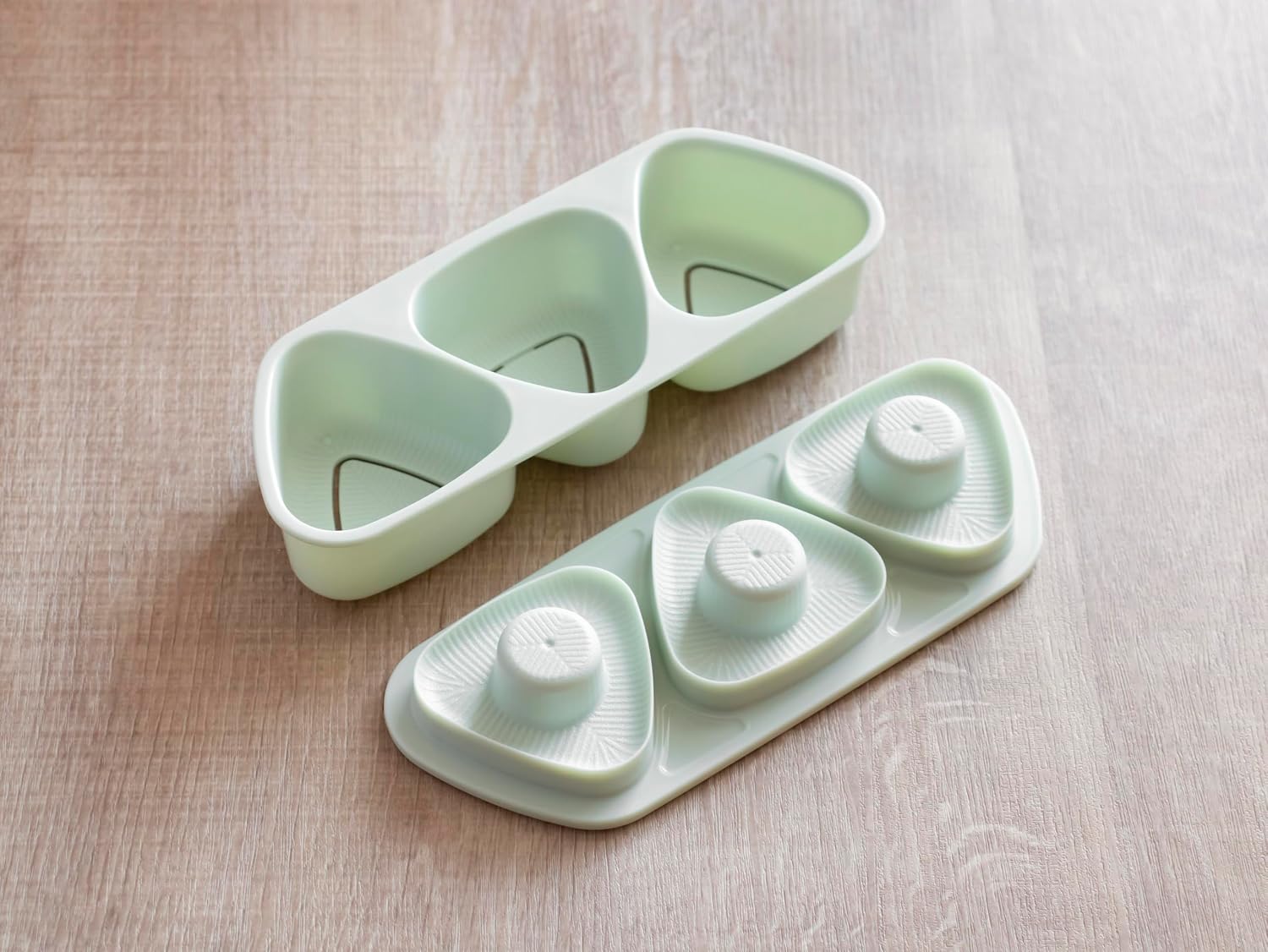
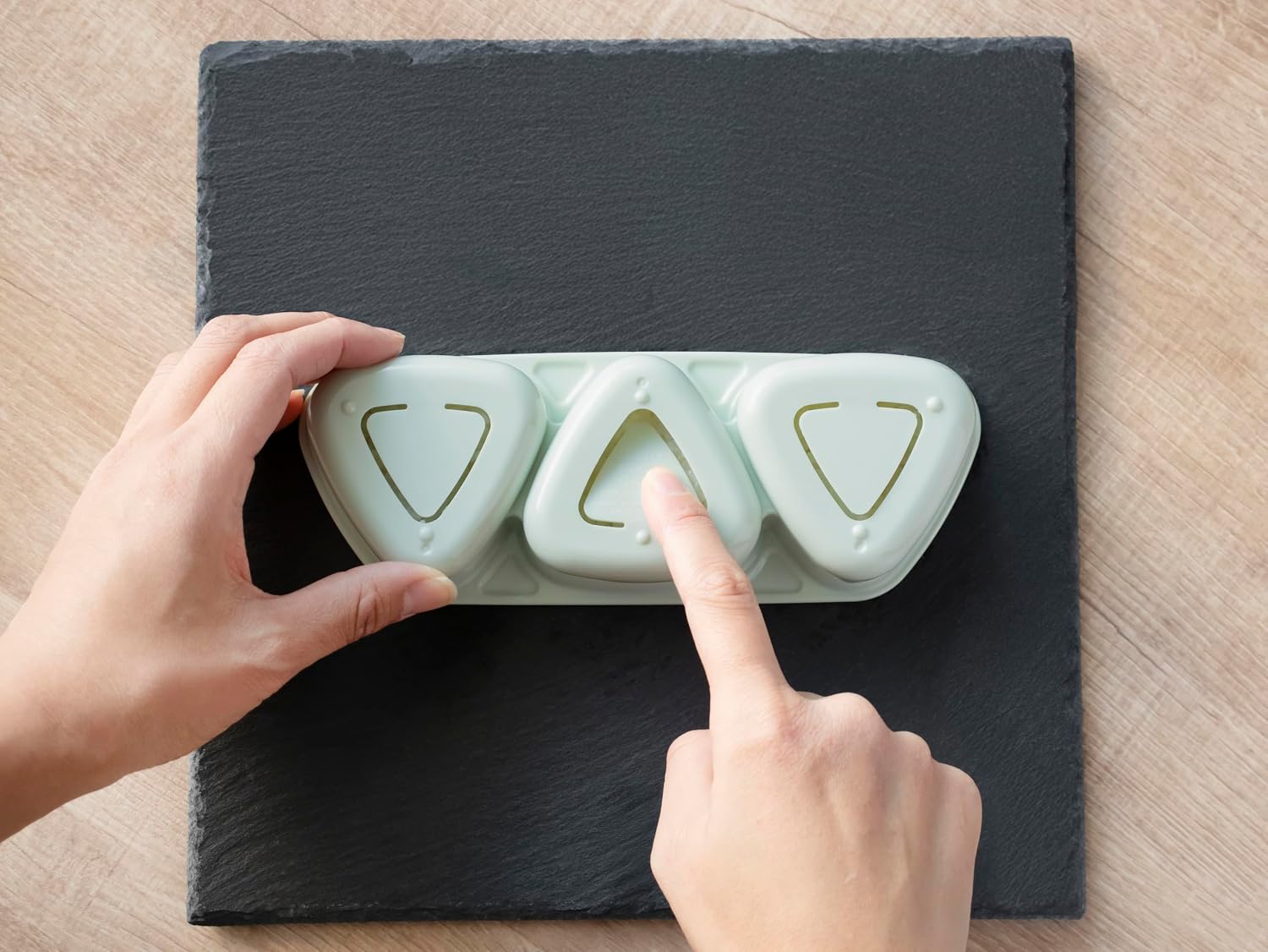
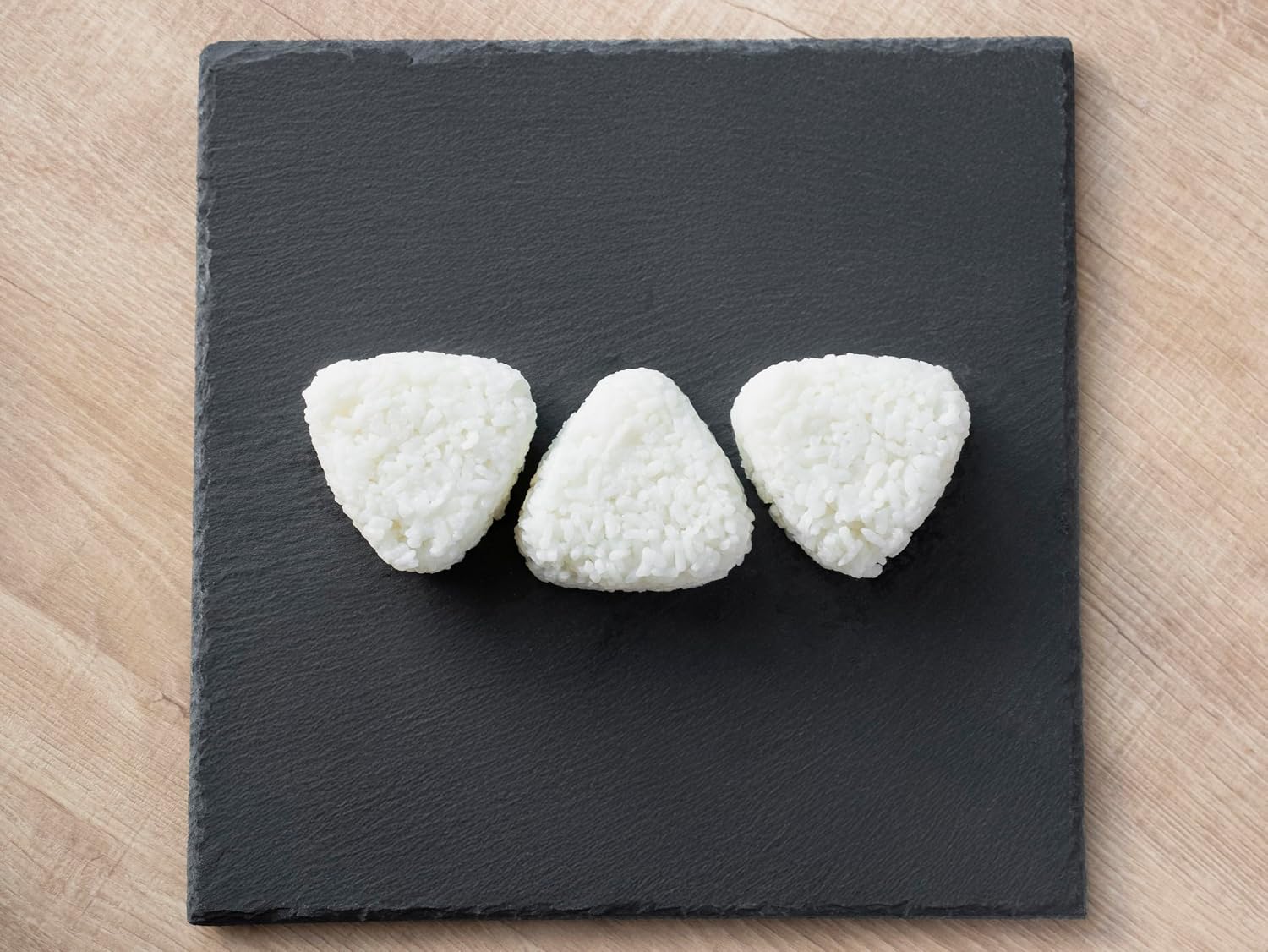
This is the classic shape. The Skater tray has three triangular cavities with a small peg in the center of each lid. You fill the cavities with rice, press the lid down, lift it away and tip out three onigiri of the same size. The peg leaves a recess on top for a filling, which Skater describes as the point of the design.
The tray is 19.3 by 7.3 cm, weighs 90 g and is molded in Japan from polypropylene rated to 140°C. Skater states that each finished onigiri is about 70 g, which is the standard size of a convenience-store rice ball in Japan. The listing says the tray is dishwasher safe and microwave safe, so you can reheat rice in it before pressing.
Skater began in 1938 as a fountain pen maker in Nara and was incorporated in 1950. It moved from pens to food containers and is now one of the largest bento and lunch-goods companies in Japan, with annual sales of about 15 billion yen. In Japanese supermarkets its name is on children’s lunch boxes, water bottles and licensed character goods. A plain gray onigiri tray is about as unglamorous as its catalog gets.
The downside is the rating. At 4.0 out of 5 across more than 1,200 ratings it is the lowest of the three here. The 70 g portion is a Japanese portion, smaller than many American buyers expect. A thin tray at this price is not a precision tool. If you want larger rice balls you will need a bigger mold.
It suits parents packing bento boxes, anyone making onigiri for a crowd and first-time buyers who want to try molded onigiri without spending much. At about $5 it costs less than a single onigiri at a US Japanese market.
Check price on Amazon: Skater LKON3AG-A →
Marna Stand Rice Paddle K-386W (Around $13 on Amazon)
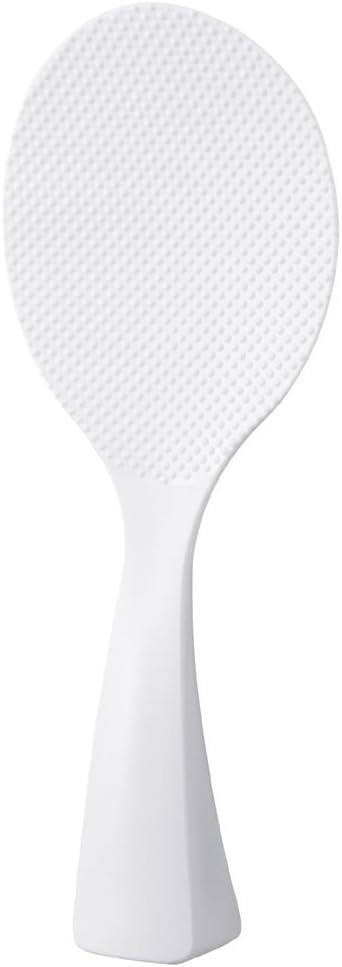
A shamoji is the flat paddle used to fluff and serve rice. Marna’s version adds a squared base so the paddle stands upright on the counter instead of lying blade-down on the table. That is the whole idea. It is why the product is known in Japan simply as the standing shamoji.
The blade is 20 cm long and 7.7 cm wide and the paddle weighs 40 g. The face is covered in small dimples so cooked rice releases cleanly. Marna also lists a thin edge that cuts through rice for mixing without crushing the grains. It is dishwasher safe. Note that the Amazon.com listing labels the material as stainless steel in the details table; the paddle is plastic, as the photographs show.
Marna was founded in 1872 and is based in Sumida, Tokyo. Its slogan is Design for Smile. The company competes on everyday objects that solve one small annoyance well: collapsible shopping bags, a bath sponge that dries fast, this paddle. On marna.jp the standing shamoji sells for 660 yen, so the Amazon.com price carries an import premium of roughly three times.
US buyers rate it 4.6 out of 5 across more than 4,400 ratings, the largest review base of the three tools here. It also sits in the top 200 of Amazon.com’s rice server category. One visible review notes it is smaller than expected, which the 20 cm length confirms: this is a home paddle, not a restaurant scoop.
It suits anyone with a rice cooker. The paddle that ships with most cookers is flat and sticky; this one stands up, releases rice and costs less than lunch.
Check price on Amazon: Marna standing paddle →
Compare the Three
| Akebono WE-961 | Skater LKON3AG-A | Marna K-386W | |
|---|---|---|---|
| Price seen | ~$23 | ~$5 | ~$13 |
| What it makes | 1 flat rice sandwich | 3 triangle onigiri, ~70 g each | Serves and mixes rice |
| Size | 20.1 × 10.9 × 2.2 cm | 19.3 × 7.3 cm | 20 × 7.7 cm |
| Weight | 90 g | 90 g | 40 g |
| Material | Polypropylene, 120°C | Polypropylene, 140°C | Plastic (listing mislabels it) |
| Non-stick surface | Double embossing | Textured surface | Dimpled blade |
| Dishwasher | Yes | Yes, microwave too | Yes |
| Made in | Tsubame, Japan | Japan | Japan (Marna, Tokyo) |
| Amazon.com rating | 4.6 (845) | 4.0 (1,242) | 4.6 (4,492) |
For a packed lunch that is one solid piece, the Akebono frame wins. It holds a filling no triangle mold can. The Tsubame build quality is the reason to pay the premium.
For bento boxes, children and anyone cooking for a group, the Skater tray is the practical choice. Three identical 70 g onigiri in one press is exactly what a Japanese lunch box expects. The price makes the 4.0 rating easy to forgive.
The Marna paddle is not a competitor to the two molds. It is the tool you use before either of them. It is the one most readers should add first if the paddle in the rice cooker drawer still sticks.
How to Get Clean Onigiri From a Mold
Three habits make any mold work better. Wet the mold or rinse it under the tap before the first press, so the first batch releases as cleanly as the last. Use rice that has rested a few minutes after cooking; steaming-hot rice is too soft to hold an edge, fully cooled rice will not stick to itself.
Good onigiri also start before the rice cooker. Japanese short-grain rice is washed in cold water until the water runs nearly clear, which keeps the grains distinct once they are pressed. Our guide to Japanese rice washing bowls and zaru compares three Made-in-Japan tools that drain the rinse water without losing grains.
Salt the rice lightly before it goes in rather than the outside after. Fill each cavity a little above the rim, press firmly once, then stop: a second press compacts the center into a dense lump. Wrap the nori just before eating, or pack it separately, unless you prefer it soft.
Finished onigiri travel best in a box with a tight lid. Our guide to Japanese bento boxes for adults covers the Skater and Zojirushi boxes that a tray of three fits into. The Japanese kitchen tools guide covers the rice cooker that comes before all of this.
Summary
Buy the Skater tray for three everyday triangles at the lowest price. Buy the Akebono frame when the lunch is a single filled rice sandwich. Buy the Marna paddle whichever mold you choose, because the rice has to get out of the cooker first.
Frequently Asked Questions
Do you need a mold to make onigiri?
No. Onigiri were hand-shaped for centuries. A mold gives you identical size and shape with no burnt fingers, which matters when you make several at a time or pack them in a bento box.
What size onigiri does the Skater mold make?
Skater states about 70 g per piece, which is the standard convenience-store size in Japan. Three pieces use roughly one rice-cooker cup of cooked rice.
What is the Akebono WE-961 for if it is not a triangle mold?
It builds a flat, square rice sandwich: nori, rice, a thick filling, rice, nori. The frame holds everything in line while you press, then you fold the nori over and cut it in half.
Why does the Marna paddle cost more than the paddle that came with my rice cooker?
The dimpled face and thin edge release rice without mashing it. The base keeps the blade off the counter. In Japan it sells for 660 yen; the Amazon.com price reflects import costs.
Are these molds dishwasher safe?
All three listings say yes. The Akebono is rated to 120°C and the Skater to 140°C. The Skater tray is also listed as microwave safe.