vs-navi.online is a participant in the Amazon Services LLC Associates Program. Purchases made through links on this page may earn us a commission at no extra cost to you.
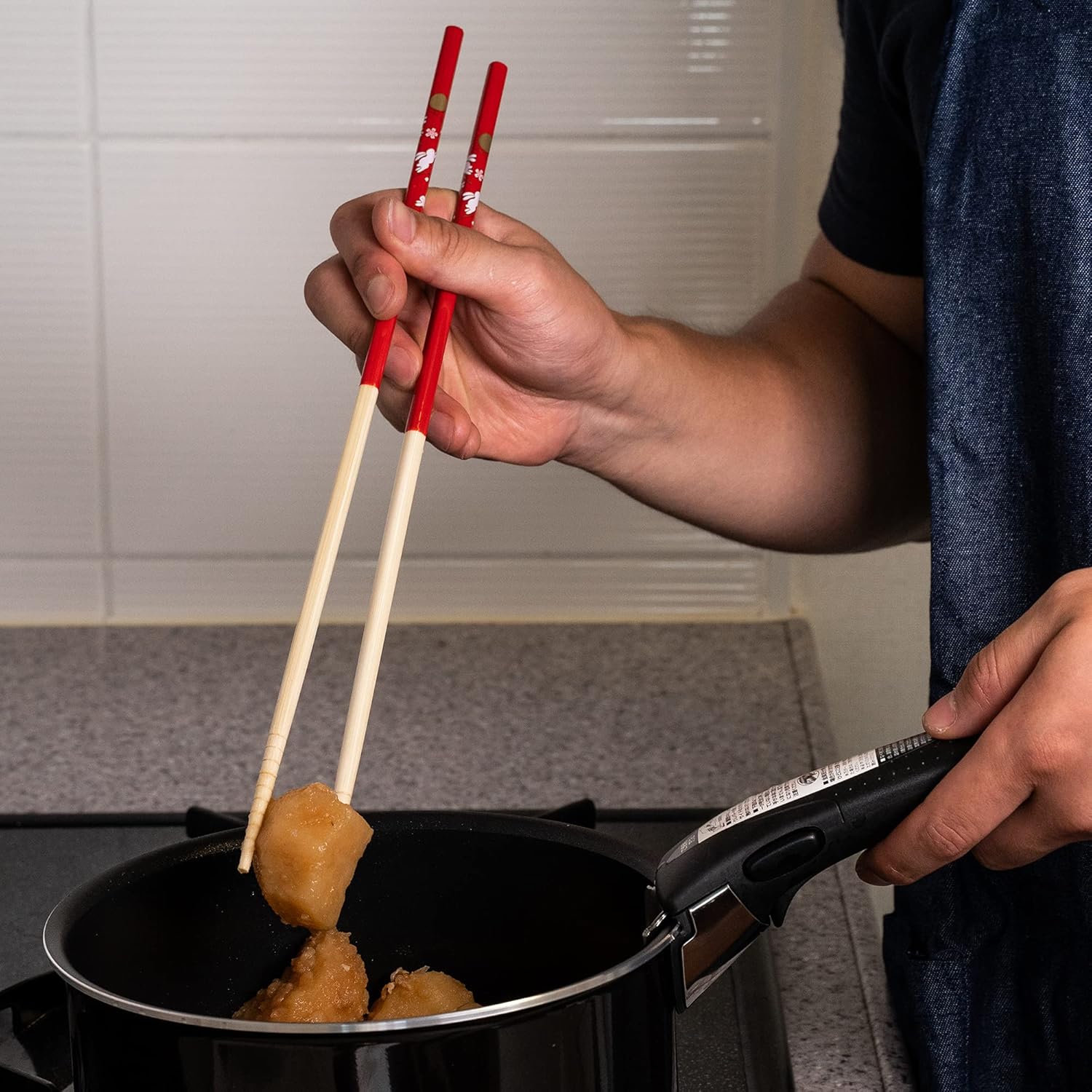
A pan of oil is at temperature. The cook reaches in with two slim sticks, turns a piece of chicken karaage, lifts it out, sets it on the rack. No tongs, no spatula, no splash.
Those sticks are saibashi, the long cooking chopsticks found in almost every Japanese kitchen. They look like ordinary chopsticks that grew by a third. That extra length is the whole idea: the hand stays well back from hot oil while the tips do the fine work that tongs are too clumsy for.
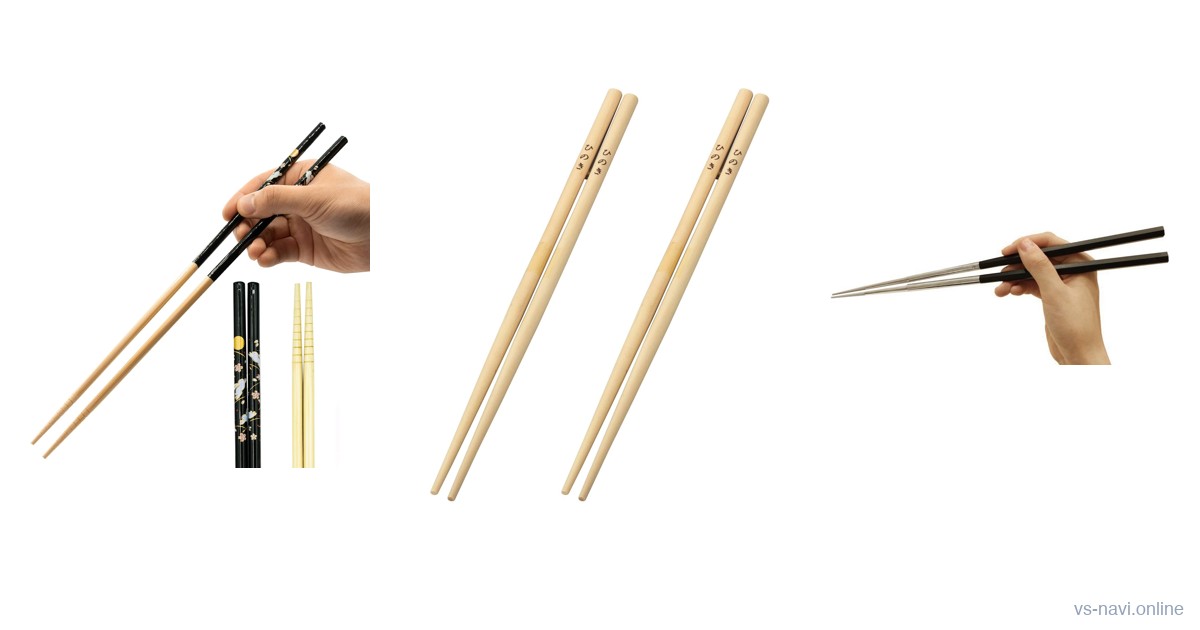
This guide explains why the standard length is 33 cm and what the material changes. We compared three Made-in-Japan pairs sold on Amazon.com on their published specifications: a bamboo pair from Tanaka Hashi in Fukui, an unfinished hinoki set, plus the stainless steel SELECT100 saibashi from Kai in Seki. It is a desk comparison built on listing specifications, manufacturer pages and current Amazon.com prices, not a hands-on cooking test.
Our Picks: The Best Saibashi on Amazon.com in 2026
All three had a live price with stock when we checked, although stock was thin on each listing. Prices move, so treat the dollar figures as a guide:
- Tanaka Hashi bamboo saibashi, 33 cm — about $6. The classic: light, cheap, made in the chopstick town of Obama in Fukui. The pick for a first pair or a spare for every burner.
- Japanese hinoki saibashi, set of two pairs — about $27. Unfinished cypress with the grain left bare. The pick for anyone who likes natural wood tools and wants a pair for raw food and a pair for cooked.
- Kai SELECT100 stainless saibashi DH3104 — about $29. Steel tips, hexagonal resin handle, dishwasher use allowed. The pick for deep frying, grilling and anyone tired of scorched wooden tips.
If you want one pair that does everything, start with the Tanaka Hashi bamboo. It costs less than a coffee, it is the length a Japanese cook expects, it will not scratch a non-stick pan.
Check price on Amazon: Tanaka Hashi saibashi →
Why 33 cm: The Logic Behind the Length
Dining chopsticks in Japan run about 20 to 23 cm. Saibashi start at 30 cm; the common household size is 33 cm; restaurant kitchens stock 36 cm and longer for tempura pots. The jump from table length to 33 cm is not about reach into a bowl. It is about distance from heat.
At 33 cm the hand sits roughly 25 cm from the tips. That is enough to turn food in a wok of hot oil or lift noodles from a rolling boil without the fingers catching steam or splatter. Go longer than 36 cm at home and the sticks start to feel like a lever: fine control at the tip drops off, which is why the pro lengths stay in pro kitchens.
The second reason is precision. A pair of tongs grabs a whole piece of food; a pair of sticks can pinch a single shred of ginger, separate two slices of pork belly stuck together, or hold a shrimp by the tail while the batter drips. Japanese home cooking is full of these small moves, which is why saibashi outlast every gadget in the drawer.
Most Japanese kitchens keep two pairs. One lives by the stove for frying and stirring. The other, often a different colour, is reserved for raw ingredients or for plating so that cooked food never meets a stick that touched raw chicken. The listings below reflect that habit: Tanaka Hashi sells single colours, the hinoki set ships as two pairs.
Tanaka Hashi Bamboo Saibashi, 33 cm (Around $6 on Amazon)
Tanaka Hashi is a chopstick maker in Obama, a small city on the Sea of Japan coast of Fukui Prefecture. Obama is Japan’s chopstick town: the Wakasa lacquered chopsticks made there account for about 80 percent of the country’s lacquered chopstick output, a tradition the local museum traces back around 400 years. Tanaka Hashi designs and finishes its products in its own factory there, selling everything from traditional Wakasa-nuri pairs to animal-print chopsticks for the gift trade. The Amazon listing states the company was established in 1948.
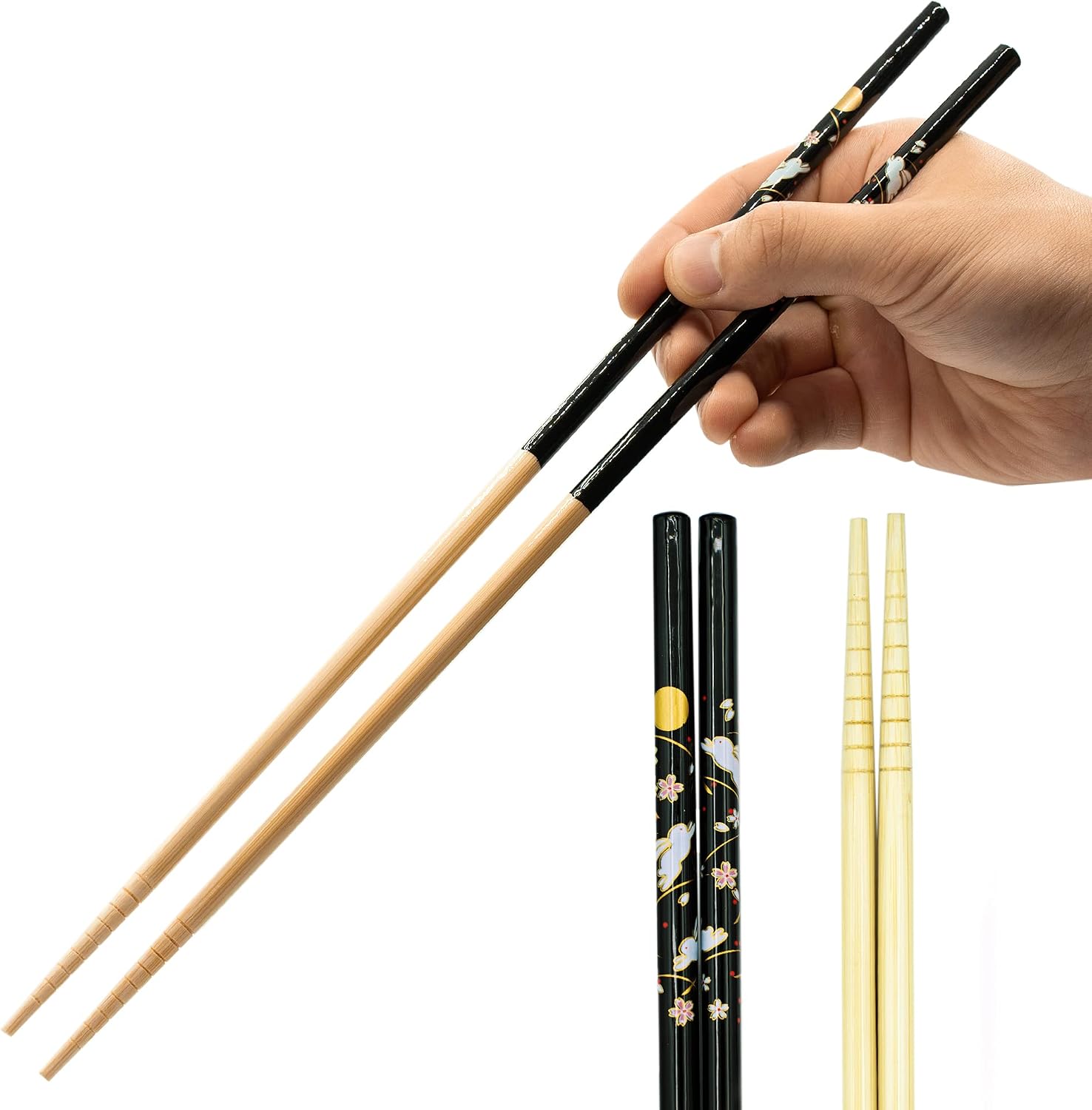
The saibashi are the plainest thing the company makes. Each stick is bamboo, 33 cm long, with the upper half coated in black or red lacquer carrying a small sakura, rabbit and moon design. The lower half is bare bamboo, roughened at the tip so a slippery piece of tofu or a noodle does not slide away. A 20 cm dining pair is shown in the listing photos purely for scale.
Bamboo is the default material for saibashi in Japan because it is light, cheap, heat tolerant and kind to coated pans. The honest downside is wear. Bare bamboo tips darken with oil, char if they rest on a hot pan edge, swell if left soaking. A pair like this is a consumable: it does its job for a year or two, then you buy another.
The black pair carries a 4.7-star average from just over 1,000 ratings; the red version of the same product has more than 7,600. Buyers mostly praise the length and the grip at the tip for the price, while the most common complaint concerns the lacquer wearing at the join after many washes. Tanaka Hashi also lists a three-pair assortment at about $10, which has by far the largest review base of any saibashi on Amazon.com, with the catch that the patterns are chosen at random.
This is the pair for most people. It suits a first kitchen, a second pair by the stove, or a cook who wants the lightest possible tool for tempura and stir-fries.
Check price on Amazon: Tanaka Hashi black → Three-pair assortment →
Japanese Hinoki Saibashi, Set of Two Pairs (Around $27 on Amazon)
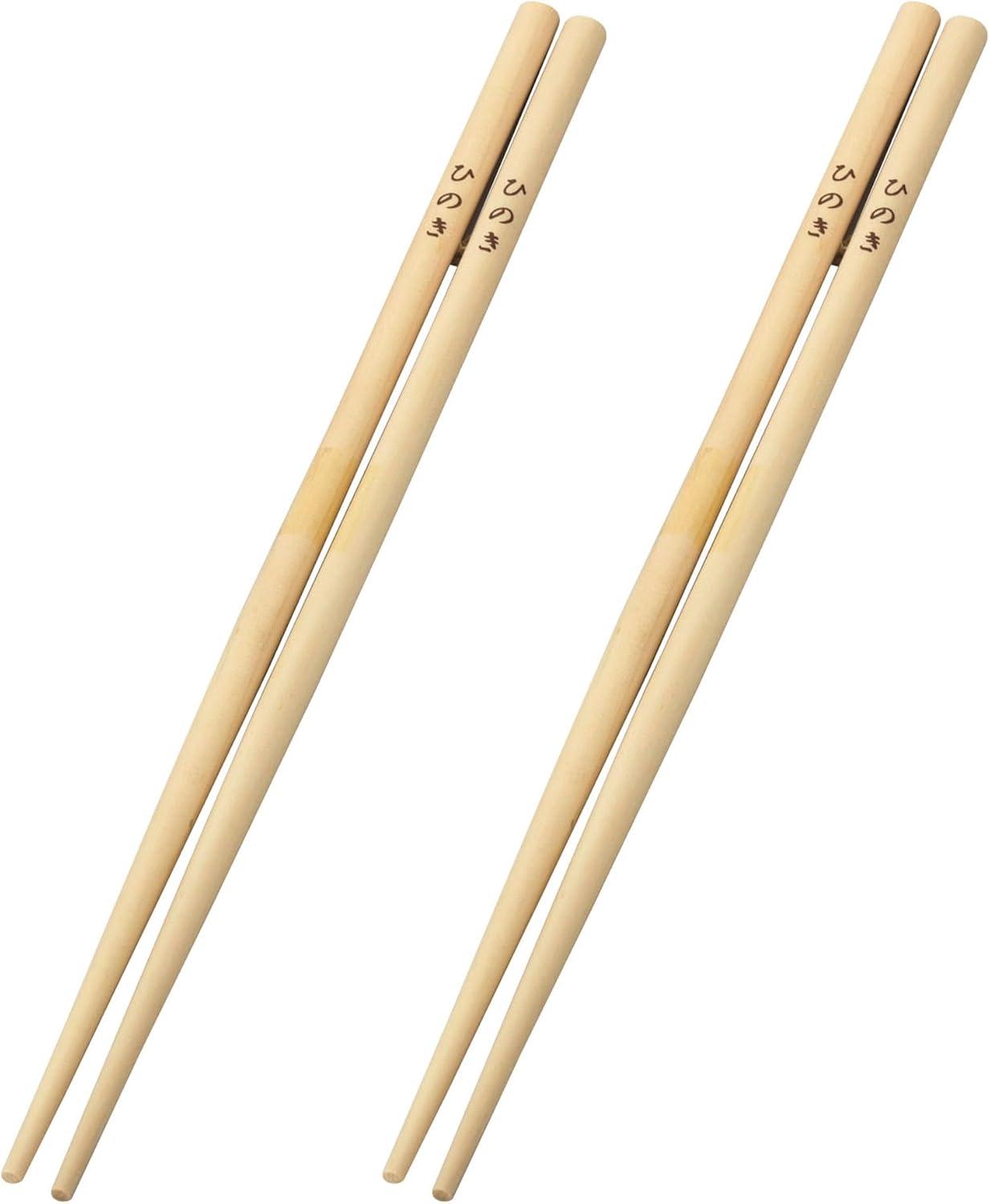
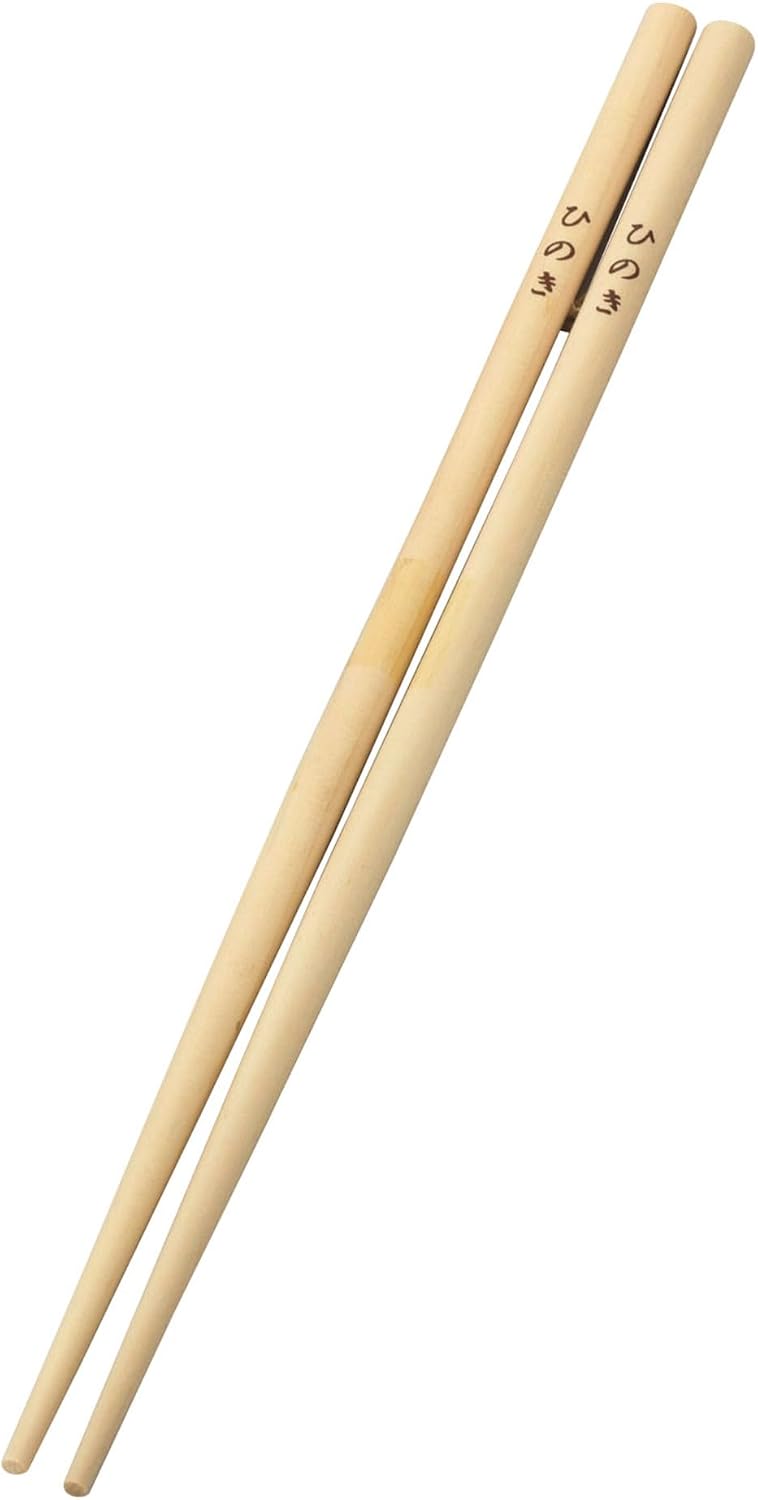
Hinoki is Japanese cypress, the pale, straight-grained, faintly fragrant wood that Japanese carpenters have used for temples, bath tubs and cutting boards for more than a thousand years. In the kitchen it is prized for being light, soft enough not to mark a pan, slow to absorb odours when dried properly. A hinoki saibashi is the quiet, traditional choice.
This set is sold under the IPPINKA label, a North American retailer of Japanese housewares. The listing says the sticks are made in Japan from Japanese hinoki with an unfinished surface, 33 cm long, about 18 g per pair. It does not name the workshop, so there is no maker story to tell here beyond the wood. The single-pair versions of the same product were listed as temporarily out of stock at the time of writing; the two-pair set was available.
Unfinished wood changes how the sticks age. There is no lacquer to chip, which is why hinoki pairs look better after a year than lacquered bamboo does. The trade-off is that bare cypress stains: turmeric, soy sauce, red oil all leave their mark, so the sticks should be washed by hand and stood up to dry rather than left in a sink. The listing itself recommends hand washing.
The set carries a 4.8-star average from a small base of 23 ratings, so the score should be read as a good sign rather than a verdict. Two pairs for $27 is also four times the price of the bamboo pair, which only makes sense if you value the feel of a natural wood tool.
This is the set for cooks who already keep one pair for raw and one for cooked, or who want a saibashi that looks at home next to a hinoki cutting board.
Check price on Amazon: hinoki saibashi set →
Kai SELECT100 Stainless Saibashi DH3104 (Around $29 on Amazon)
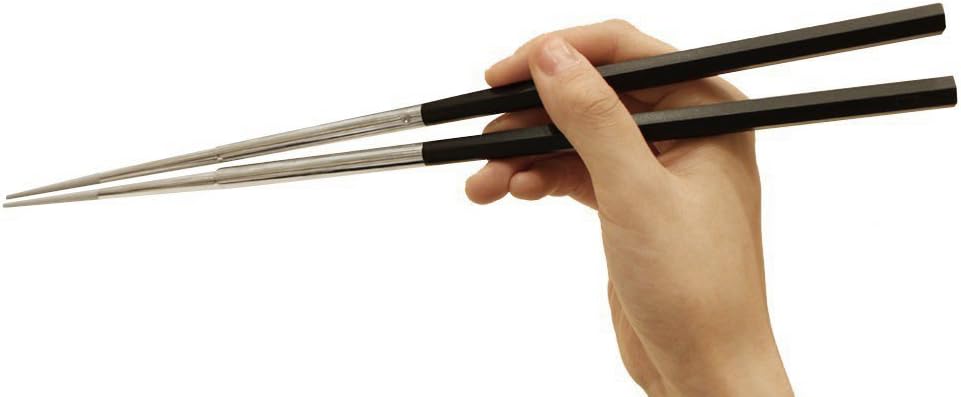
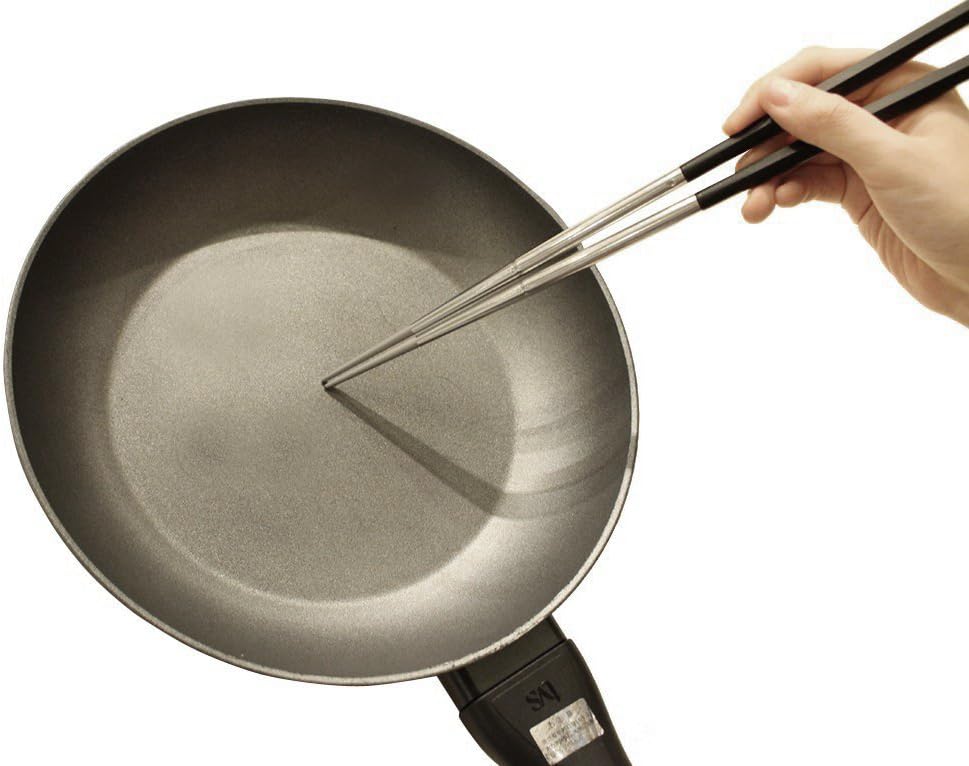
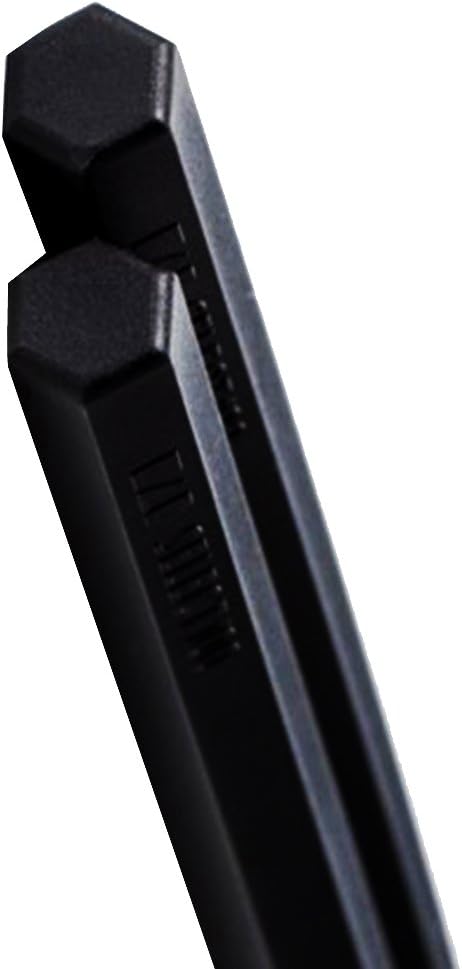
Kai is the blade company from Seki in Gifu Prefecture, Japan’s sword-making town. Founded in 1908 by Saijiro Endo as a pocket-knife workshop, it went on to make Japan’s first disposable razors and is now one of the largest blade manufacturers in the world, with Shun knives as its best-known export. SELECT100 is Kai’s stainless kitchen-tool range for the Japanese home market, designed around durability and everyday use rather than fashion.
The DH3104 is a 33 cm saibashi with 18-8 stainless steel tips and a black polyacetal handle, rated by Kai to 140°C. The handle is hexagonal, which keeps the pair from rolling off a counter; the tips are blast-finished so a piece of fried chicken does not skid off the metal. Listed weight is about 49 g for the pair, roughly twice the hinoki set, with the balance point further forward than a wooden pair.
Steel solves the two complaints every wooden saibashi earns: it cannot scorch at the pan edge, it cannot stain. Kai’s own Japanese care label on the listing allows a household dishwasher. The downside is heat: the tips get hot in oil, so the pair should not be left resting in the pan. Steel tips will also scratch a non-stick coating if used carelessly, which is why many Japanese cooks keep a steel pair for grilling and deep frying and a wooden pair for the non-stick skillet.
The listing shows a 4.7-star average from 26 ratings, a small base. In Japan the same model sells for roughly 1,450 to 1,700 yen, so the Amazon.com price of about $29 is mostly import cost; it is still the cheapest way to buy a Kai steel saibashi in the United States without a proxy service.
This is the pair for the cook who fries, grills or cooks over cast iron several times a week, or who simply wants a saibashi that will still look new in five years.
Check price on Amazon: Kai SELECT100 DH3104 →
Compare the Three
| Item | Tanaka Hashi bamboo | Hinoki set | Kai SELECT100 |
|---|---|---|---|
| Price (checked Oct 2026) | About $6 | About $27 (2 pairs) | About $29 |
| Length | 33 cm | 33 cm | 33 cm |
| Material | Bamboo, lacquered grip | Unfinished hinoki cypress | 18-8 stainless tips, polyacetal handle |
| Weight per pair | Not listed | About 18 g | About 49 g |
| Non-stick pans | Safe | Safe | Use with care |
| Deep frying and grilling | Tips char over time | Tips char over time | No wear |
| Dishwasher | Hand wash | Hand wash | Allowed (household) |
| Amazon rating | 4.7 (1,023) | 4.8 (23) | 4.7 (26) |
| Maker | Tanaka Hashi, Obama, Fukui | Not named (Made in Japan) | Kai, Seki, Gifu |
For a first pair, or for anyone cooking on non-stick, the Tanaka Hashi bamboo is the obvious choice. It is the cheapest, the lightest in the hand, the one most Japanese home cooks would recognise as normal.
For a cook who fries or grills often, the Kai steel pair earns its price. It never chars, it goes in the dishwasher, it will outlast several bamboo pairs. Keep a wooden pair alongside it for the non-stick skillet.
The hinoki set is the choice on feel rather than function. It does nothing the bamboo cannot, but the bare cypress is a nicer object, it ages well with care, the second pair covers the raw-and-cooked habit in one purchase.
How to Use and Care for Saibashi
Hold saibashi slightly further back than dining chopsticks, roughly a third of the way down from the top. The tips should cross only at the very end; if they cross higher, the grip is too tight. For turning food in oil, pinch rather than scoop, lift straight up so oil drains back into the pan.
Wooden pairs should be washed by hand as soon as the cooking is done, then stood tips-up in a jar to dry. Never leave them soaking. If a bamboo tip starts to char, sand it lightly rather than throwing the pair away. Steel pairs can go in the dishwasher; dry the handle join so water does not sit in it.
If you own a Japanese carbon steel frying pan, steel saibashi are the natural partner: the pan does not care about scratches, the sticks do not care about heat. Saibashi also pair with a tamagoyaki pan, where the whole technique of rolling the egg is done with a pair of long chopsticks rather than a spatula.
Summary
Saibashi are long because the hand belongs away from the heat, 33 cm is the household standard. Buy the Tanaka Hashi bamboo pair first; it is the right length, the right weight, the right price. Add the Kai steel pair if you fry or grill often, or the hinoki set if you prefer the look and feel of bare wood.
Frequently Asked Questions
What does saibashi mean?
Saibashi (菜箸) literally means vegetable chopsticks, from an older usage where sai meant a side dish. In modern Japanese it simply means cooking chopsticks, as opposed to the shorter pair used at the table.
Can I just use long dining chopsticks for cooking?
You can, but a 23 cm pair puts the hand within splatter range of a frying pan. Saibashi are 30 cm or longer for that reason, their tips are usually roughened rather than lacquered so hot, oily food does not slip.
Is bamboo or steel better for a non-stick pan?
Bamboo or hinoki. Wood will not mark a coating. Stainless tips like the Kai pair are best kept for cast iron, carbon steel, stainless pans and the grill.
Why do Japanese kitchens keep two pairs?
One pair for raw ingredients or plating, one for the stove. Different colours make it obvious which is which, so a stick that handled raw meat never touches the finished dish.
Are these three really made in Japan?
All three listings state Made in Japan. Tanaka Hashi names its own factory in Obama, Fukui. Kai manufactures the SELECT100 line for the Japanese market. The hinoki set does not name its workshop, only the country.