vs-navi.online is a participant in the Amazon Services LLC Associates Program. Purchases made through links on this page may earn us a commission at no extra cost to you.
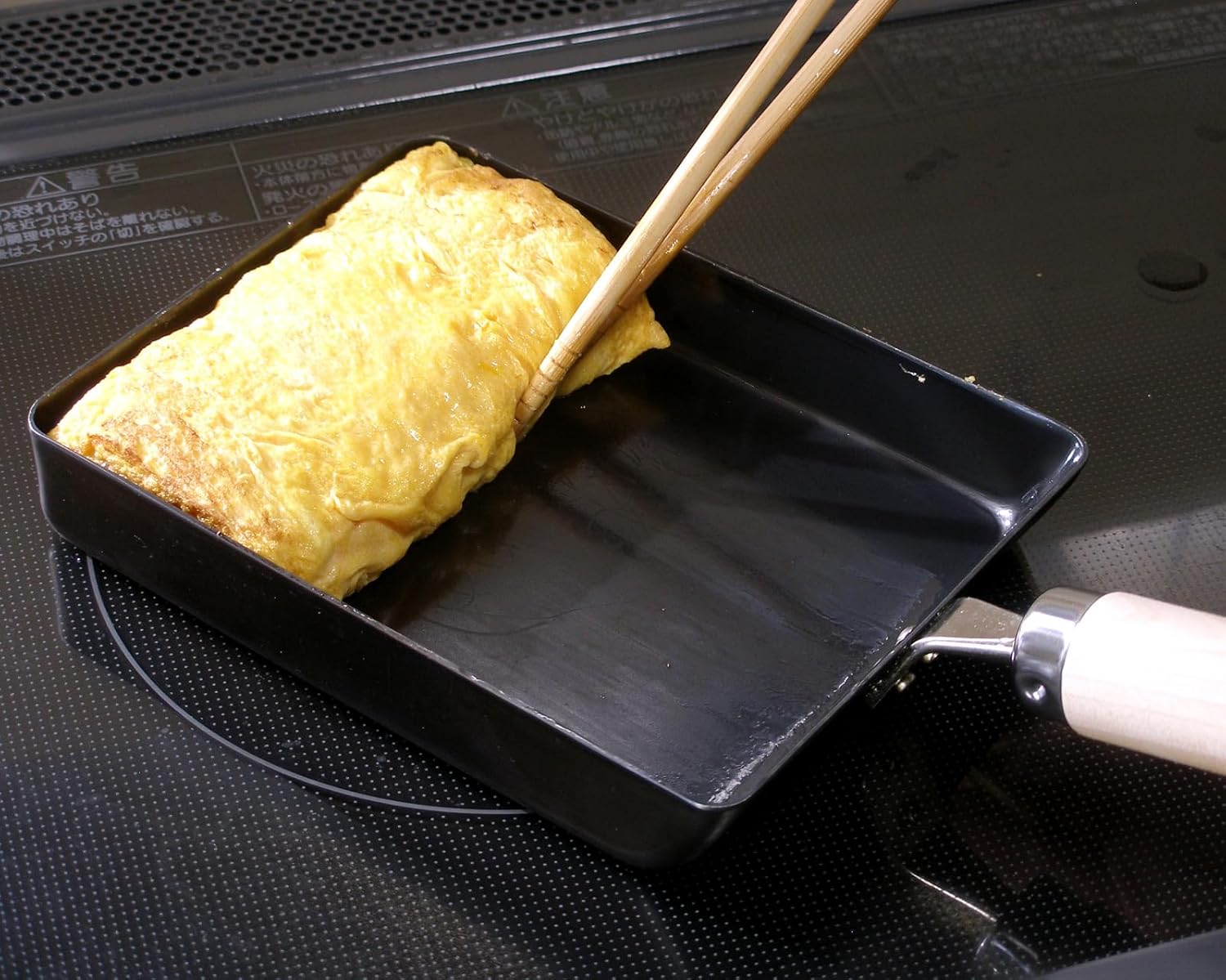
A rolled Japanese omelette is cooked in layers, each one poured thin and folded back over the last while the previous layer is still soft. The whole thing is over in about three minutes.
That short window is why the pan matters more here than in almost any other kind of cooking. There is no time to correct a hot spot or wait for a cold pan to catch up. The metal does the work, so the metal is the real choice.
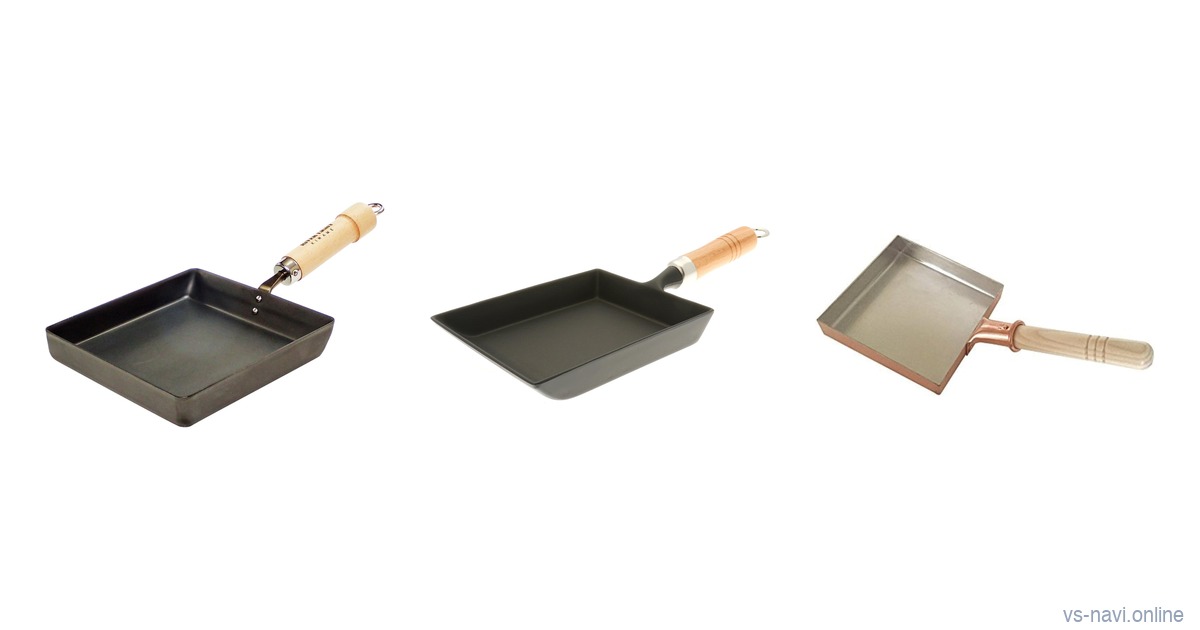
We compared three Japanese tamagoyaki pans in three different metals on published specifications, manufacturer descriptions plus current Amazon listings: nitrided iron from River Light, Nambu cast iron from Iwachu, alongside a hand-made copper pan from the Tokyo workshop Nakamura Douki.
Which Tamagoyaki Pan Should You Pick?
Short version, before the detail:
- River Light Kiwame egg pan — the easiest of the three to live with. Nitrided iron needs no burn-in seasoning, resists rust better than plain iron plus it is listed for induction. About 0.9 kg. Around $90.
- Iwachu Nambu cast iron egg pan — the steadiest heat at the lowest price, from Japan’s best known cast iron house. Also the heaviest at 2.7 lb, which your wrist will notice. Around $75.
- Nakamura Douki copper egg pan — what tamagoyaki specialists actually use. Hand-tinned in Tokyo, fastest to respond, most even across the base. Around $120, with real care requirements.
River Light Kiwame Egg Pan — Around $90 on Amazon
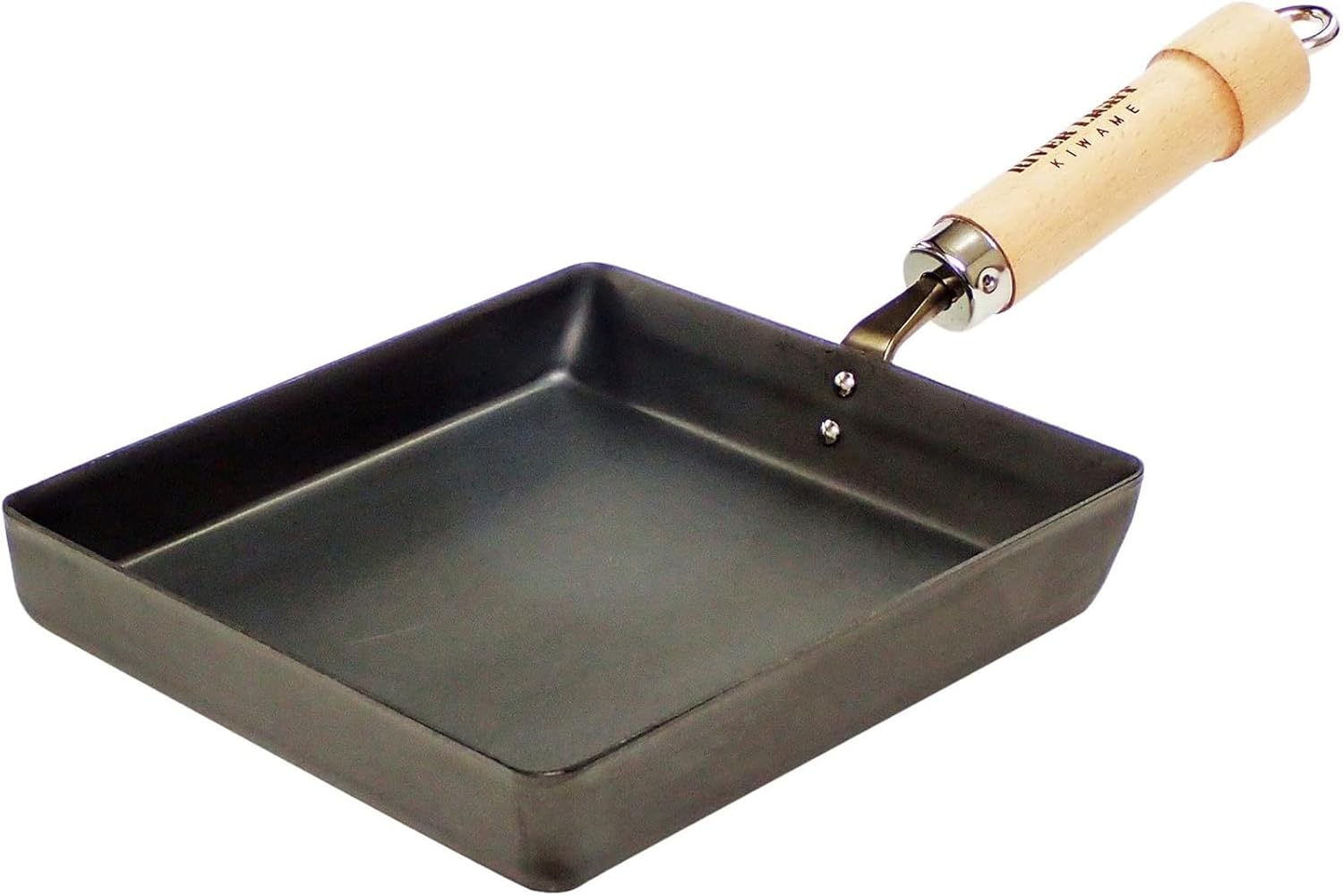
River Light is based in Tsubame-Sanjo in Niigata, the metalworking district that supplies a large share of Japan’s kitchen steel. Its Kiwame line, sold overseas as Extreme Japan, is the brand’s answer to the most common complaint about iron pans: rust.
The body is nitrided iron, described on the listing as specially heat treated. That surface treatment is the reason this pan skips the burn-in ritual that plain carbon steel demands. You wash it, dry it, oil it lightly, then start cooking. For a pan you may use before work on a weekday morning, that difference is the whole argument.
It is also the lightest of the three at 0.9 kg with an 800 ml capacity. The cooking floor measures roughly 17.5 × 16.5 cm. The handle unscrews, which matters more than it sounds: it makes the pan fit a crowded drawer. The listing specifies gas plus induction, so this is the only one of the three that belongs on a flat electric hob.
The honest limitation is shape. This is close to a square pan rather than the long narrow rectangle used in Tokyo-style tamagoyaki, so the roll comes out shorter with fewer visible layers. Buyers across roughly 775 ratings settle around 4.4 stars, with the recurring praise being how little maintenance it asks for. The recurring complaint is the price for what is, after all, a small egg pan.
Iwachu Nambu Cast Iron Egg Pan — Around $75 on Amazon
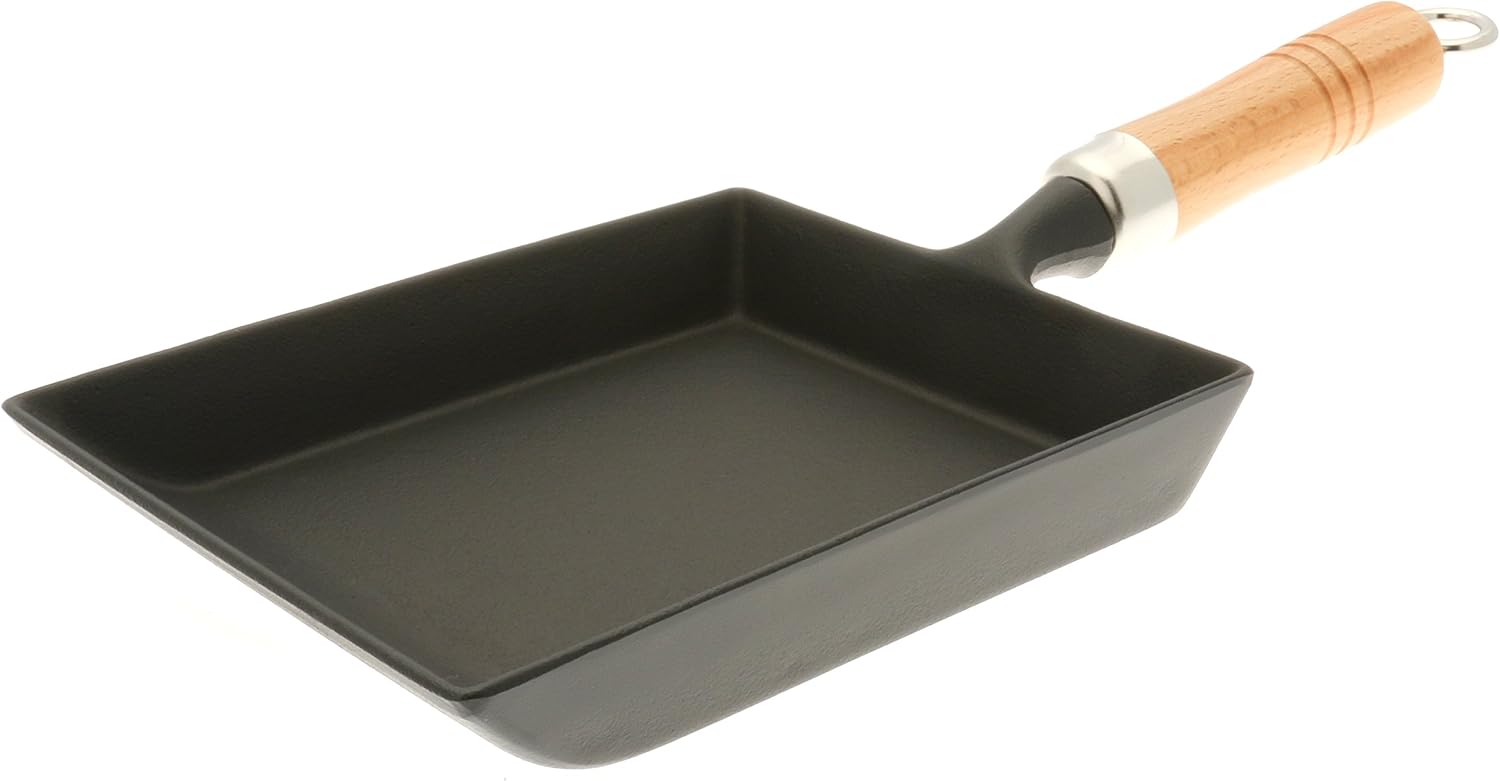
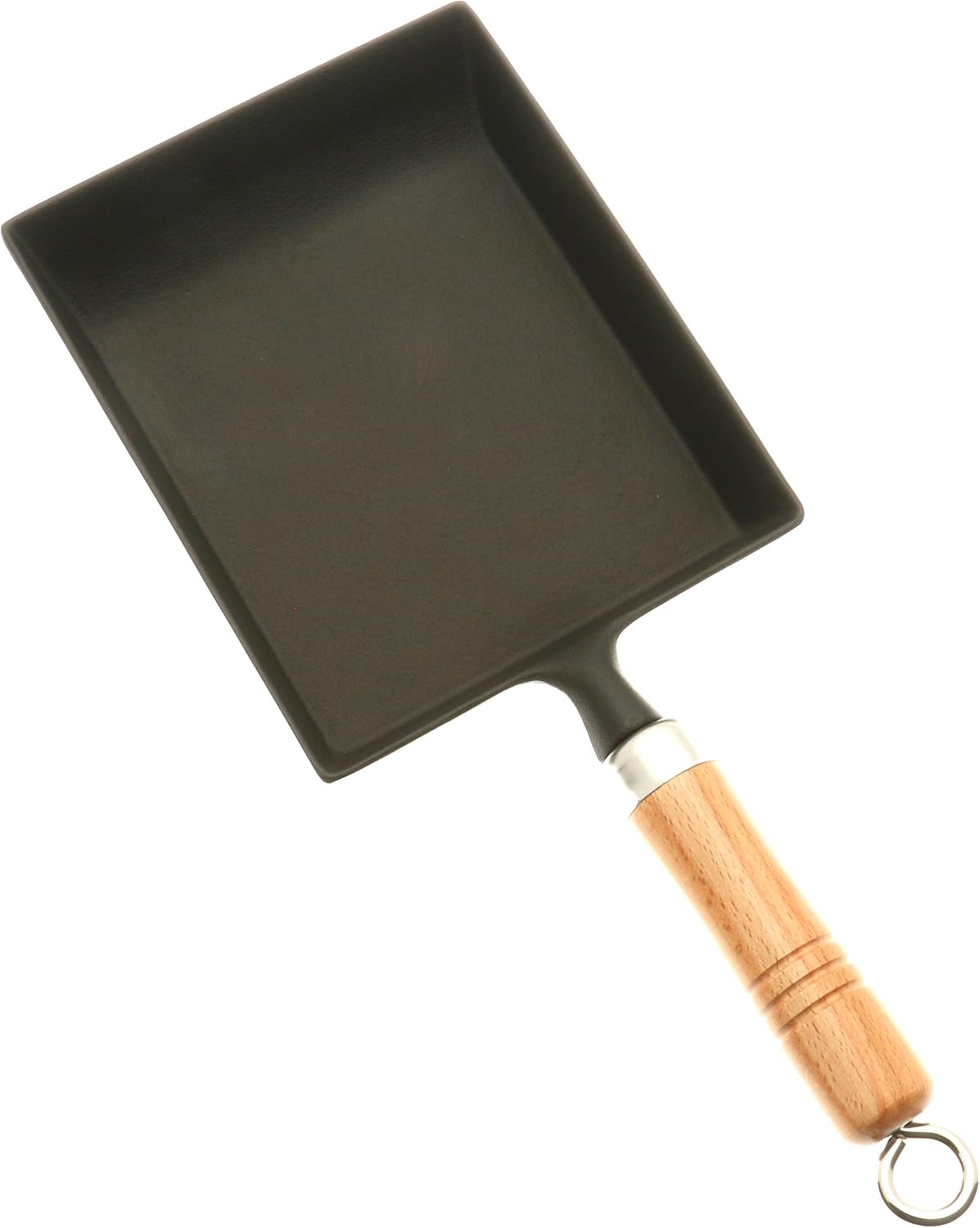
Nambu tekki is the cast ironware of Morioka in Iwate prefecture, a craft that has been worked there since the seventeenth century. Iwachu is the name most Japanese households attach to it, largely through its teapots. Its cast iron egg pan is the traditionalist’s choice in this comparison.
Cast iron behaves differently from sheet iron in a way you feel immediately. It takes longer to come up to temperature, then it simply stays there. When cold egg hits the surface the pan barely flinches, so each layer sets at the same speed as the one before it. That consistency is the single best reason to buy this pan.
It carries the strongest owner sentiment of the three as well, around 4.8 stars across roughly 726 ratings, with the browning on the underside of the egg coming up repeatedly as the thing people notice first. Capacity is listed at 10 ounces, care is hand wash only.
Two caveats are worth knowing before you buy. The pan weighs 2.7 lb, which is three times the River Light. Tamagoyaki is cooked with the pan tilted in one hand while chopsticks work in the other. The listing also specifies gas as the compatible device, so do not buy this one expecting to use it on an induction hob without checking your own cooktop first. The same thermal mass that makes the heat steady also makes it slow to correct, so if a layer starts to colour too fast, lifting the pan off the flame is your only quick lever.
Nakamura Douki Copper Egg Pan — Around $120 on Amazon
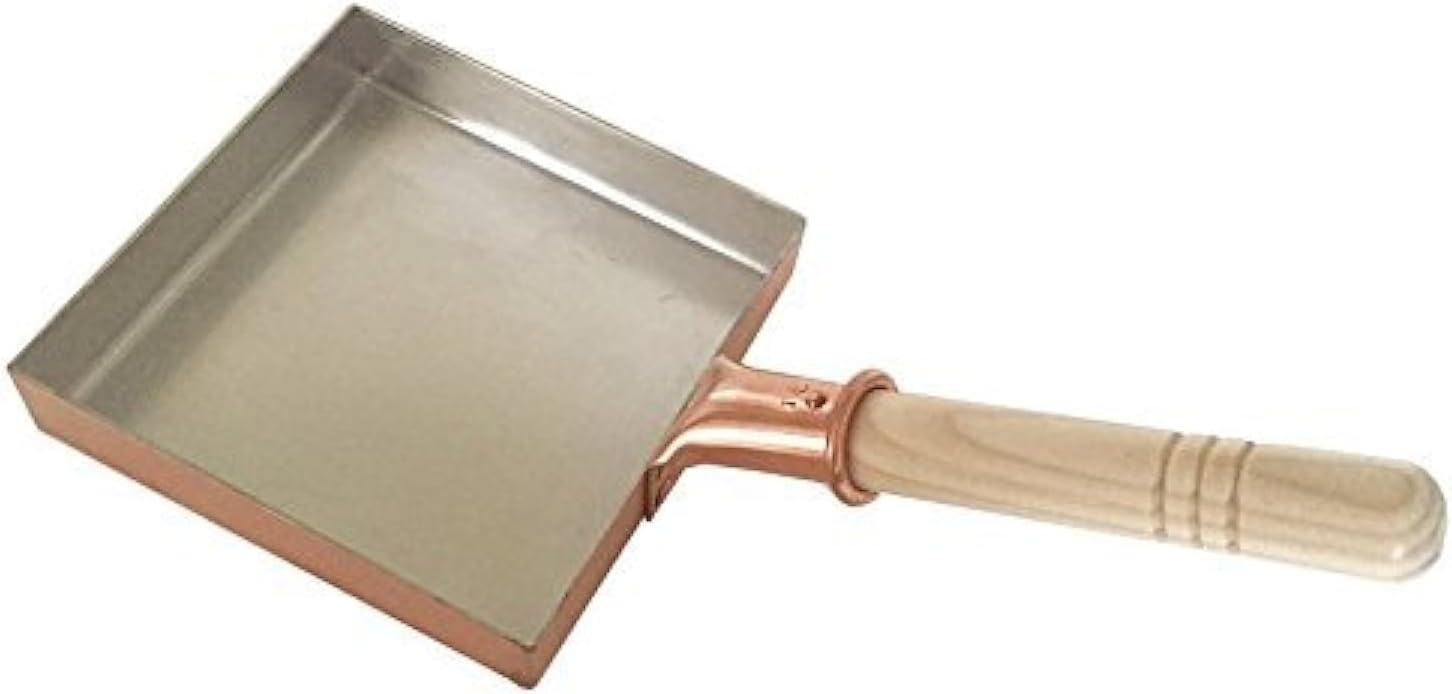
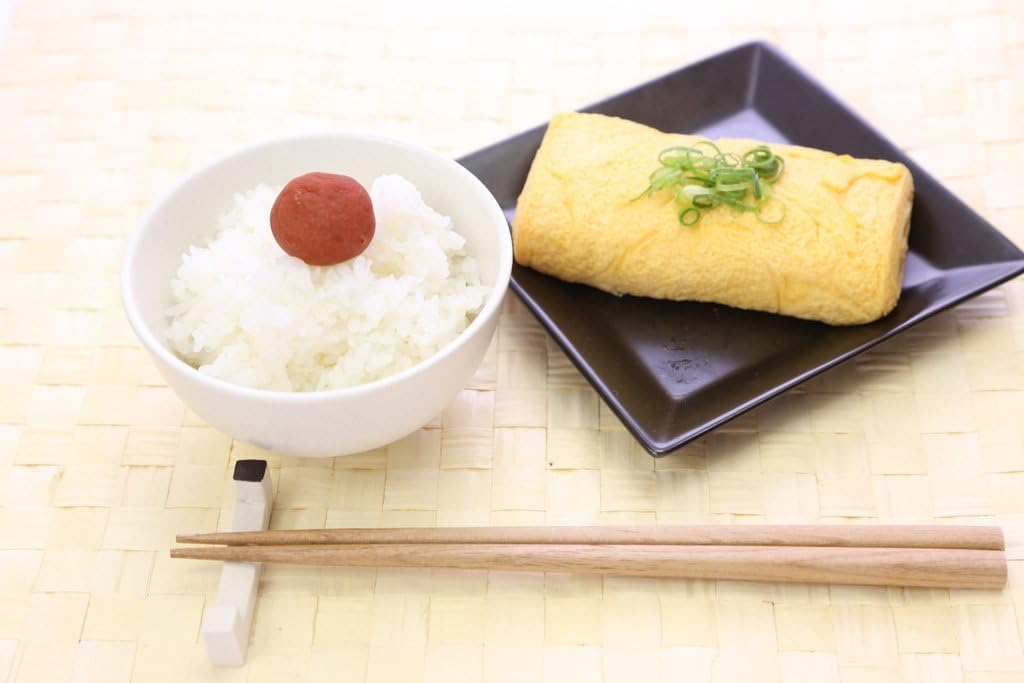
Nakamura Douki Seisakusho is a small copper workshop in Adachi Ward, Tokyo, now in its fourth generation after roughly eighty years of making pans one at a time. Its tamagoyaki pans are the ones that turn up in the kitchens of tamagoyaki specialists plus sushi counters, which is the strongest thing anyone can say about a pan this narrow in purpose.
The interior is not electroplated. It is finished by suzu-hiki, a hand process in which the craftsman heats the copper body over a flame, rubs tin onto the inside so it melts on contact, then spreads it with cotton while it is still liquid. The silver surface you can see in the photograph above is that layer.
That same tin lining turns up on a far smaller copper tool. Tsuboe in Tsubame plates its copper graters the same way for the same reason — our guide to Japanese graters sets that copper plate against ceramic plus stainless.
Copper conducts heat several times better than iron, which is the entire point. A thin pour of beaten egg meets a surface that is the same temperature corner to corner, so it sets as one sheet instead of setting at the middle first. At 15 cm square, 1.3 mm thick and around 694 g, it is sized for three to five eggs.
Now the part the listing will not tell you clearly. Tin melts at a far lower temperature than copper, so this pan must never be heated empty or left on a high flame with nothing in it. The lining will eventually need re-tinning after years of use. More practically: copper is non-magnetic, so it will not work on a standard induction hob, even though the Amazon listing includes induction in its compatibility field. This is a gas pan. It also has the thinnest review base of the three, roughly 27 ratings at about 4.3 stars, so there is less collective owner experience to lean on.
Compare the Three
| River Light Kiwame | Iwachu Nambu | Nakamura Douki | |
|---|---|---|---|
| Material | Nitrided iron | Cast iron | Copper, tin lined |
| Weight | 0.9 kg | 2.7 lb (approx. 1.2 kg) | Approx. 694 g |
| Heat response | Quick | Slow to heat, very steady | Fastest plus most even |
| Stove types (per listing) | Gas plus induction | Gas | Gas only in practice |
| Burn-in seasoning | Not required | Oil before first use | Oil before first use |
| Main risk | Squarish roll shape | Wrist fatigue | Tin lining, re-tinning |
| Amazon rating | 4.4 (approx. 775) | 4.8 (approx. 726) | 4.3 (approx. 27) |
| Approx. price | $90 | $75 | $120 |
If you cook on an induction hob the decision is already made for you. Only the River Light is built to work on one, which removes the other two from the list regardless of how good they are.
On a gas burner the question becomes how often you plan to cook. For a few times a month, the Iwachu is the most forgiving pan here plus the cheapest, because its heat does not move around while you are learning the rolling motion. For a daily bento habit where weight in the wrist accumulates, the River Light is the sensible answer.
The copper pan is for the person who already makes tamagoyaki regularly on gas, knows why an even base matters, accepts that a tin lining is a consumable surface rather than a permanent one. It buys precision, not convenience.
Summary
- Induction hob or daily use: River Light Kiwame, around $90.
- Gas, best value, steadiest heat: Iwachu Nambu cast iron, around $75.
- Gas, serious about the result: Nakamura Douki copper, around $120.
Frequently Asked Questions
Do I need a rectangular pan to make tamagoyaki?
No, but the shape decides how the roll looks. A long narrow rectangle produces the many-layered Tokyo-style block. A square pan gives a shorter, thicker roll with fewer visible layers. Both taste the same.
Can I use a copper tamagoyaki pan on induction?
No. Copper is not magnetic, so a standard induction hob will not detect it. Some Amazon listings for copper pans still show induction in the compatibility field. Treat copper as a gas-only pan.
Why does the copper pan have a silver interior?
That is a tin lining, applied by hand over the copper. It keeps the food off the raw copper. Because tin has a low melting point, the pan should never be heated while empty, plus the lining will need renewing after years of regular use.
Does nitrided iron still rust?
It resists rust far better than untreated carbon steel, which is River Light’s main selling point, but it is still iron. Dry it on the hob after washing rather than leaving it wet in the rack.
Are any of these dishwasher safe?
No. All three are hand wash only. Iron pans lose their oil film in a dishwasher, while a tin-lined copper pan should never see one at all.
Prices above are approximate US dollar figures converted from current listings. Amazon pricing for imported Japanese cookware moves with exchange rates plus stock, so check the current price before buying.