vs-navi.online is a participant in the Amazon Services LLC Associates Program. Purchases made through links on this page may earn us a commission at no extra cost to you.
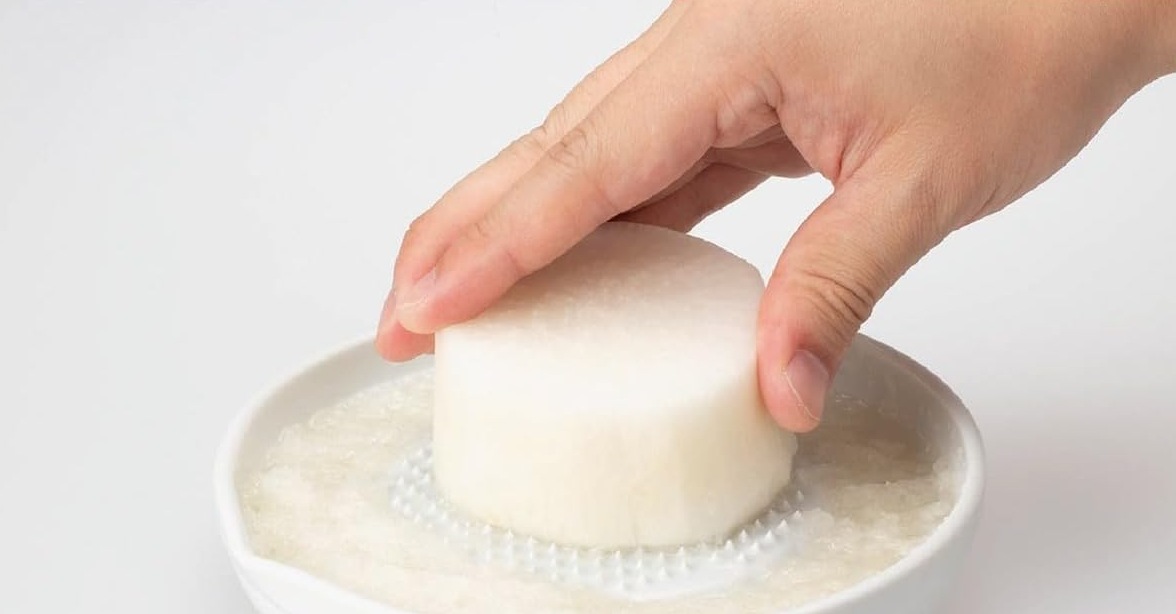
Grilled mackerel arrives at a Japanese table with a small white mound next to it. That mound is daikon oroshi — grated radish, loose rather than wet, sweet rather than sharp. It takes about forty seconds to make. What decides whether it comes out fluffy or watery is not technique so much as the plate you rub it against.
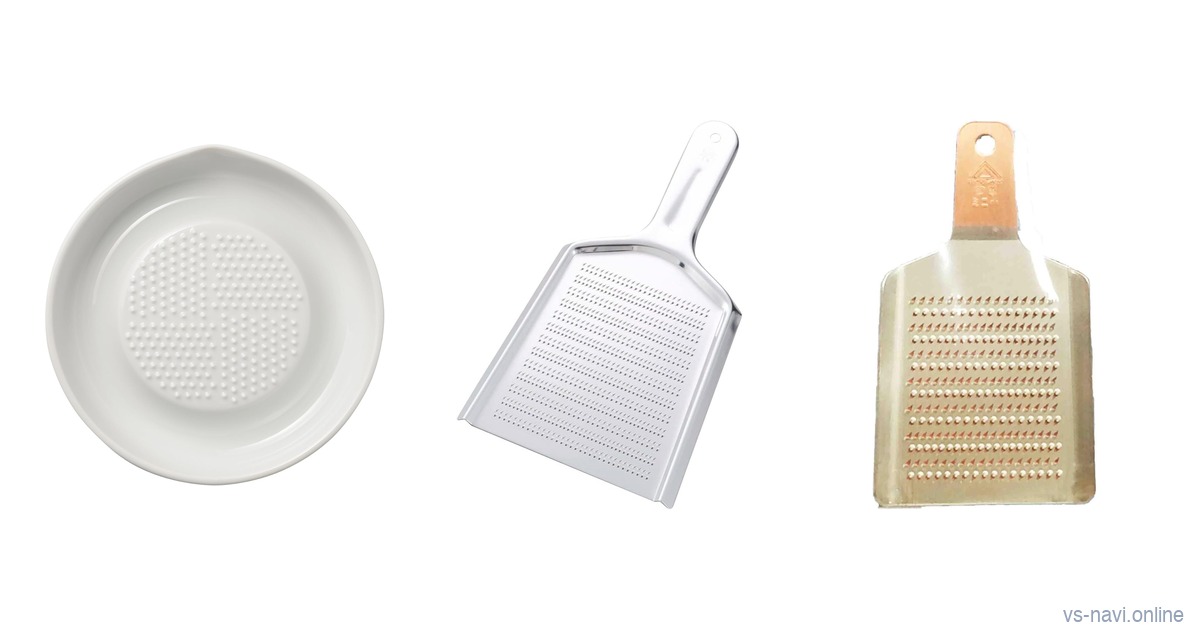
The Japanese word for that plate is oroshigane. Western kitchens mostly own a box grater or a rasp, both of which shear food into shreds. An oroshigane works differently: a field of short upright teeth abrades the vegetable into pulp. The three graters below cover the three materials Japanese kitchens actually reach for — ceramic, stainless steel, plus copper — at roughly $16 to $46 on Amazon.
We compared them on published maker specifications, listing details, plus the brand records of the companies that make them. Listings were checked in September 2026; prices are converted estimates that move with exchange rates.
Which Japanese Grater Should You Pick?
Short answer, before the detail:
- Most people should buy the Kyocera ceramic plate. It costs the least to live with, never rusts, grates straight into its own dish, plus it ships with the little brush you need to get the pulp off the teeth.
- Buy the stainless oroshigane if you grate daikon in quantity. It is the full-size traditional shape with a lip that funnels pulp into a bowl. A ceramic saucer fills up fast.
- Buy the Tsuboe copper only if ginger, garlic or wasabi is what you grate. It is small, it is the cheapest of the three, plus it comes from a company that has made nothing but graters for four generations.
Kyocera Ceramic Grater CD-18 — Around $25 on Amazon
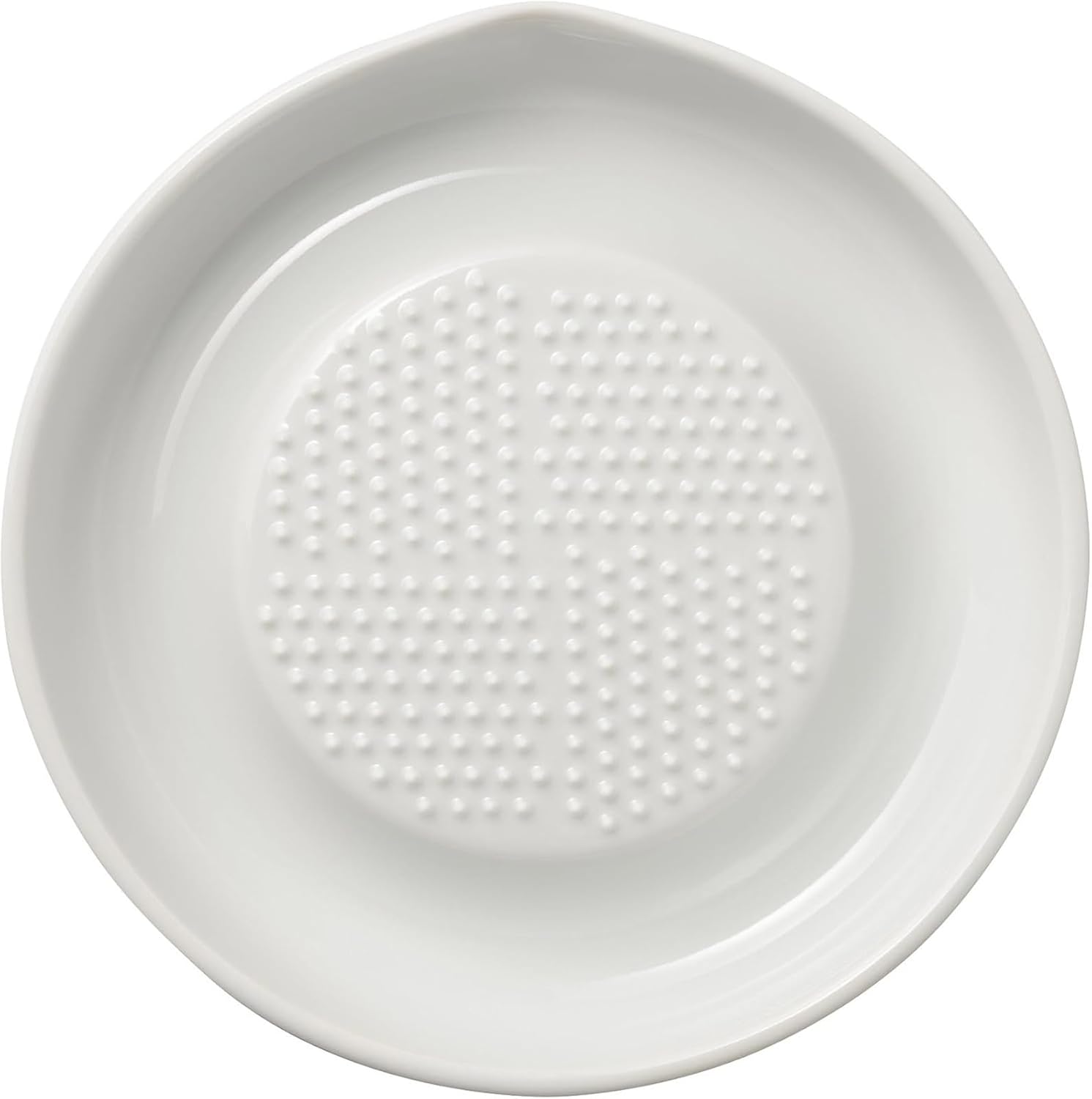
Kyocera is not a kitchenware company that happens to use ceramic. It is a fine-ceramics manufacturer founded in Kyoto in 1959 that later pointed the same material science at knives, peelers plus graters. In Japanese homes the white Kyocera ceramic line sits in ordinary supermarkets rather than specialist shops, which is why this shape is familiar to almost everyone there.
The same white ceramic shows up on Kyocera’s T-shaped peeler. It weighs about 30 g, never rusts and is pitched at fruit that browns quickly. Our Japanese vegetable peeler comparison sets it against stainless models from Kai in Seki and Shimomura in Tsubame-Sanjo.
The plate measures about 6.3 inches across by 1.2 inches deep at 350 g. Kyocera describes the teeth as sharp cones set in a deliberately staggered arrangement rather than neat rows. The underside carries a silicone non-slip ring, which matters more than it sounds: grating is a two-handed job only if the plate skids, otherwise one hand holds the vegetable while the dish stays put.
The material argument Kyocera makes is about metal taste. Fine ceramic releases no metal ions, so nothing metallic transfers to grated ginger or radish — a real consideration with acidic or delicate ingredients. It also cannot corrode, which removes the one maintenance job a metal grater demands.
The honest limitation is capacity plus repairability. The well holds about a single serving of daikon oroshi, so grating for four means emptying it as you go. And ceramic teeth cannot be re-cut when they dull, where a metal grater can in principle be re-toothed. Drop it on a tiled floor and the story ends there.
It suits the cook who wants one grater for ginger, garlic, apple plus the occasional radish, who would rather rinse a plate than maintain a tool. The included scraping brush is a small thing that buyers mention often — pulp wedges between teeth on every grater, ceramic included.
TIKUSAN Stainless Oroshigane — Around $46 on Amazon
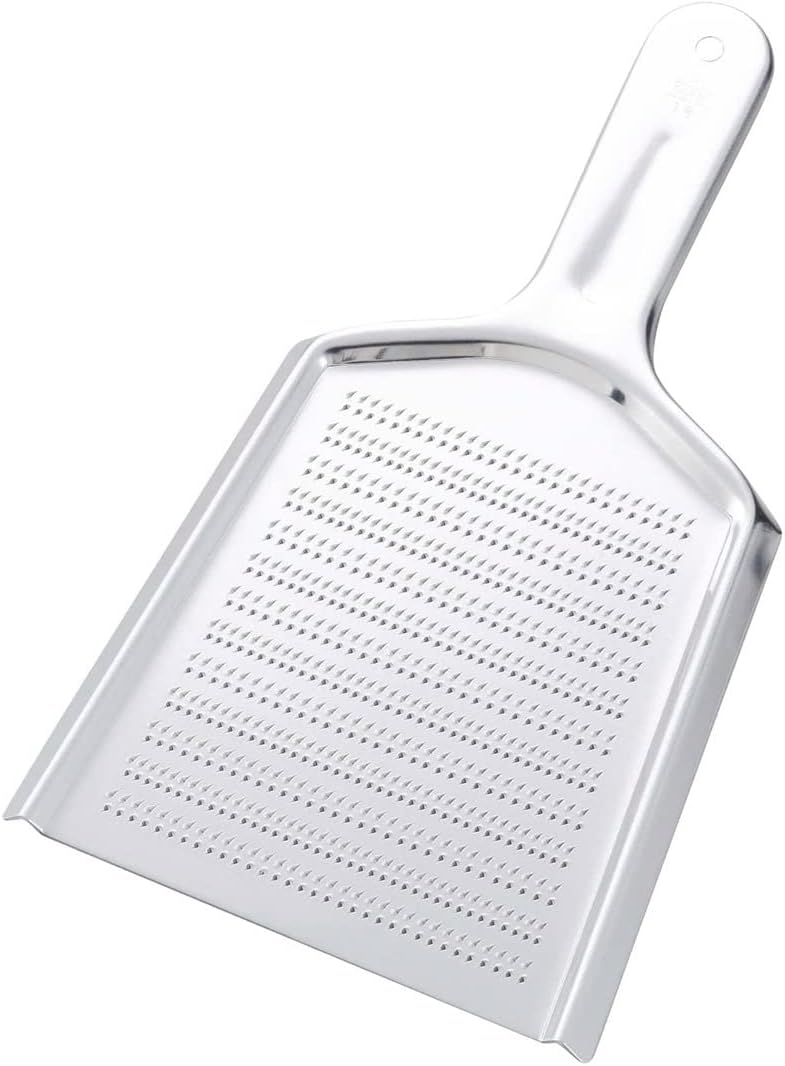
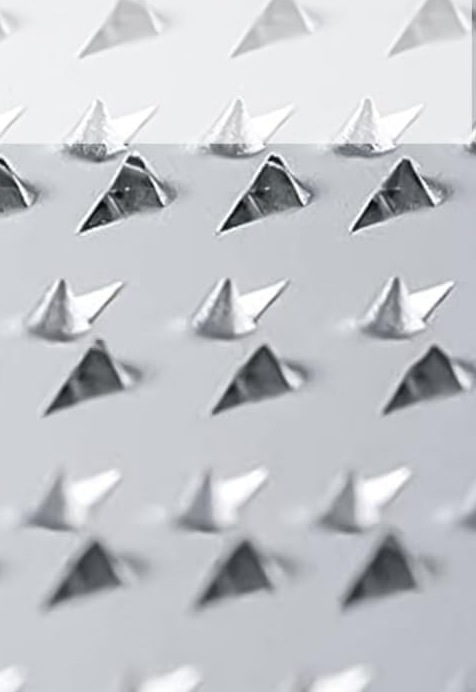
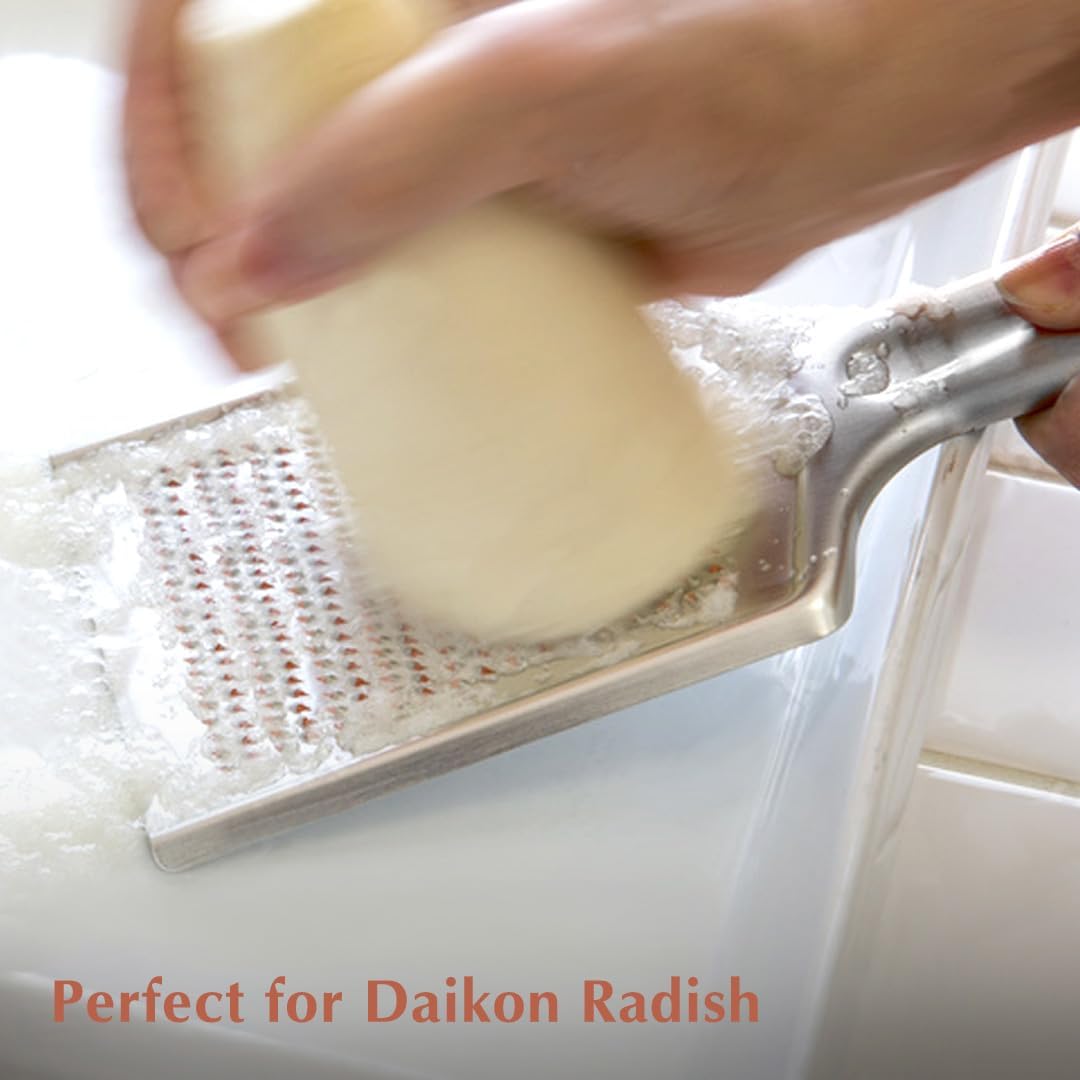
This is the shape most Japanese restaurant kitchens keep in a drawer: a broad flat plate roughly 5.0 by 8.9 inches, side walls that stop pulp escaping, a handle at one end, all of it one piece of stainless at 270 g. You rest the far end in a bowl, work the vegetable down the plate, then scrape everything forward off the lip. Nothing to empty, nothing to fill up.
Stainless is the pragmatic middle of the three materials. It will not tarnish the way copper does, it does not chip the way ceramic does, plus it goes in a dishwasher. The teeth here are raised triangular points rather than the shallow bumps on the ceramic plate, which is what lets a full-size plate get through a whole daikon without stalling.
Two things about this listing deserve flagging before you buy. First, the listing contradicts itself on the steel grade — one product image places it at 18/0 stainless in a comparison chart while another image labels the same plate 18/8. Those are different alloys with different corrosion behaviour, so treat the grade claim as unconfirmed rather than a reason to choose it. Second, the listing states that each tooth is hand-chiselled one by one. We could not confirm that from any maker documentation, plus the Japanese grater industry mechanised tooth-cutting decades ago. Buy it as a well-made Japan-manufactured stainless plate, not as a hand-cut artisan object.
TIKUSAN itself is an export-facing label rather than an old workshop with a history to tell. The listing states manufacture in Japan but does not name the maker — worth knowing if provenance is part of what you are paying for. At roughly $46 it is the most expensive grater here by some margin, with only a couple of dozen ratings behind it.
Buy it if you make daikon oroshi regularly, for grated-radish ponzu dips, for mizore simmered dishes, for the mound beside fried food. That is the job the shape exists for. For a thumb of ginger it is far more grater than you need.
Tsuboe Copper Grater DO-070 — Around $16 on Amazon
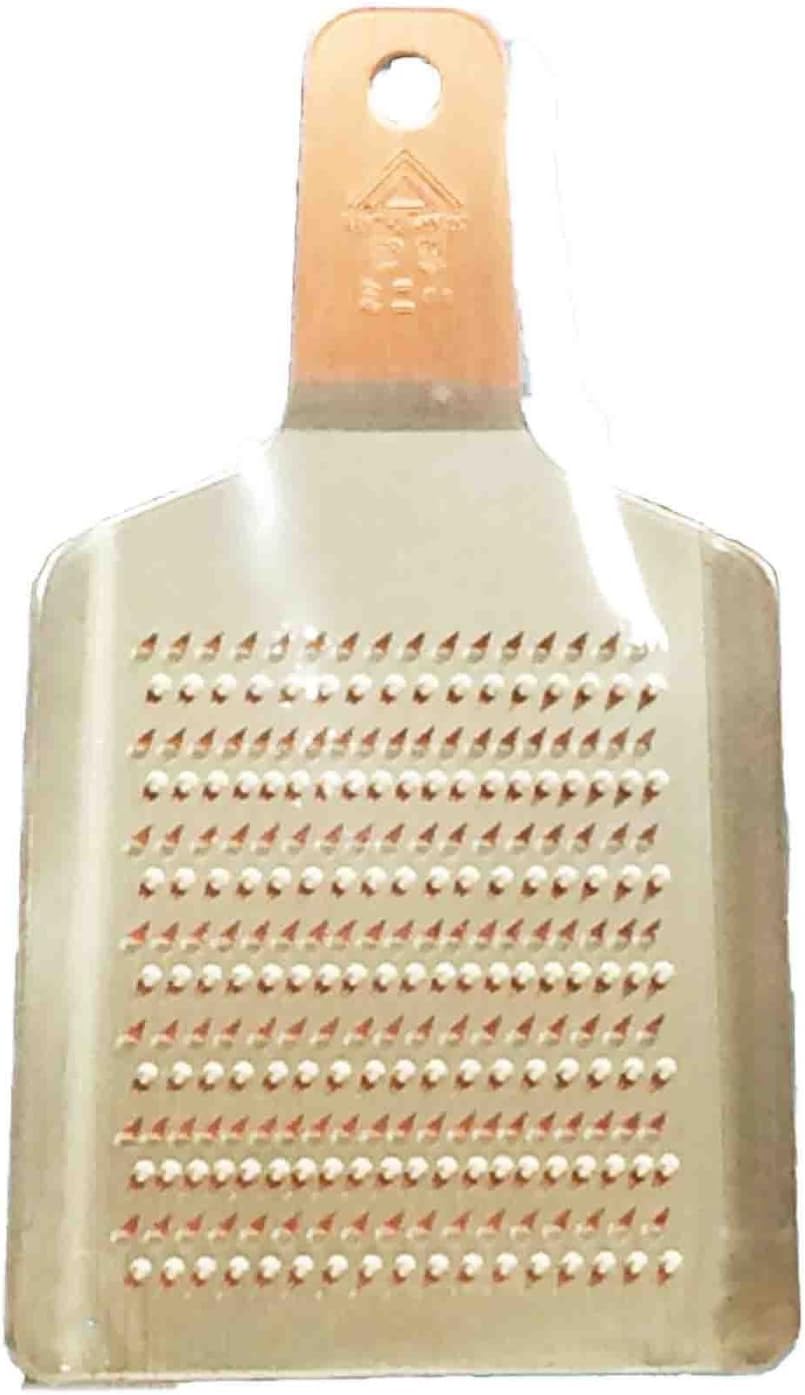
Tsuboe has the best story of the three. The company was founded in Tsubame, Niigata in 1907 by Kasahara Kohtaro — not as a kitchenware maker but as a file works, producing yasuri, the toothed steel bars metalworkers use to cut and shape. Tsubame was already a metalworking town; files were its trade.
Cutting teeth into a flat blank is the same problem whether the blank becomes a file or a grater, which is how the business turned. From the 1970s onward Tsuboe moved its file-cutting expertise into graters, eventually making nothing else. It is now run by the fourth generation of the same family, with a catalogue spanning copper, stainless, aluminium alloy plus titanium. That is the Tsubame-Sanjo pattern in miniature — a supply town that kept the skill while changing the product, the same region behind the carbon steel frying pans covered separately.
Copper is what high-end Japanese restaurant kitchens have traditionally used, on the reasoning that keen teeth abrade the vegetable without crushing its fibres, so moisture stays inside the pulp rather than running out of it. The result is described as lighter, sweeter oroshi. That is the consensus of Japanese makers plus professional cooks rather than a laboratory finding, so weigh it as craft judgement.
Note what this grater is not. The DO-070 is the mini small in Tsuboe’s range, a palm-sized plate weighing 2.4 ounces — sized for ginger, garlic or wasabi rather than a radish. And the surface is tin-plated copper, the same tin lining used on copper tamagoyaki pans, which keeps the copper off the food. Tsuboe has also mechanised the precision its craftsmen once achieved by hand, so this is a machine-cut plate made to a hand-cut standard. Anyone selling it to you as hand-punched is embellishing.
Care is the trade-off. Copper tarnishes, tin plating wears thin over years, plus neither likes sitting wet. Rinse it, dry it immediately, keep it out of the dishwasher. At around $16 it is the cheapest item here, which makes it an unusually low-cost way to own a specialist tool from a specialist maker.
Compare the Three
| Kyocera CD-18 | TIKUSAN Oroshigane | Tsuboe DO-070 | |
|---|---|---|---|
| Material | Fine ceramic | Stainless steel | Tin-plated copper |
| Approx. price | $25 | $46 | $16 |
| Size | 6.3 in. plate | 5.0 × 8.9 in. | Palm-sized |
| Weight | 350 g | 270 g | 2.4 oz |
| Best for | Everyday all-rounder | Daikon in volume | Ginger, garlic, wasabi |
| Dishwasher | Yes | Yes | No |
| Catches pulp | In its own dish | At the lip | No |
| Amazon rating | 4.4 / 5 (1,844) | 4.4 / 5 (26) | 4.4 / 5 (148) |
Price is not the axis that separates these. The cheapest of the three comes from the oldest specialist maker; the most expensive is the one with the thinnest provenance. What separates them is what you grate: a radish needs a long plate, a thumb of ginger needs a small one, plus a household that grates a bit of everything is best served by the plate that doubles as its own bowl.
Grating handles roots. Seeds are a different job: for sesame, Japanese cooks switch to a ridged clay mortar that crushes rather than shreds. Our suribachi and surikogi guide covers three made-in-Japan sets for that side of the prep.
One technique note that applies to all three. Do not bear down. Japanese cooks work the vegetable in small circles with light pressure, letting the teeth do the abrading — pressing hard crushes fibres, squeezes out juice, then leaves you with a wet grey mound instead of a loose white one. If you want to see where a grater fits among the rest of a Japanese kitchen, our guide to Japanese kitchen tools maps the wider set.
Summary
If you buy one, buy the Kyocera: it is the cheapest to maintain, it serves what it grates, plus nothing about it needs looking after.
If grated daikon is a weekly thing in your kitchen, the full-size stainless plate is the right shape for the job, with the listing’s steel-grade claim treated as unconfirmed.
If you mostly grate aromatics, the Tsuboe copper costs less than either, from a family that has made graters since 1907.
Frequently Asked Questions
What is the difference between an oroshigane plus a Western box grater?
A box grater shears food into shreds through holes. An oroshigane has short raised teeth on a flat surface that abrade food into pulp. For daikon oroshi, grated ginger or grated yam, the pulp is the point — shreds will not do.
Can I grate real wasabi on any of these?
You can, but traditionally fresh wasabi is grated on samegawa — sharkskin stretched over a paddle — because its extremely fine surface produces a smoother paste. A fine metal or ceramic grater is a workable substitute. The Tsuboe is the closest of these three in size for the job.
Is copper really better than ceramic or steel?
Copper is what traditional Japanese professional kitchens favour, on the argument that sharp teeth abrade without crushing, keeping moisture in the pulp. That is craft consensus rather than measured fact. Copper also demands the most care of the three, so the advantage is not free.
How do I clean pulp out of the teeth?
Rinse immediately, before anything dries, then use a stiff brush worked against the direction of the teeth. The Kyocera includes a purpose-made scraping brush. For the copper plate, dry it straight away rather than leaving it on a rack.
Do these ship from Japan?
All three are sold on Amazon.com as Japan-manufactured goods, with stock levels that move quickly on the smaller listings. Availability plus price can both change between reading this page then checking out.
Prices quoted are approximate US dollar conversions taken in September 2026, so the figure you see at checkout will differ with exchange rates plus seller stock.