vs-navi.online is a participant in the Amazon Services LLC Associates Program. Purchases made through links on this page may earn us a commission at no extra cost to you.
The sound of a good wok is a dry hiss the moment rice hits the metal, then a steady rattle as the pan is shaken over the flame.
Japan has its own wok tradition, built for fried rice, gyoza fillings and the quick Chinese-style dishes known as chuka. Two Japanese makers stand out for overseas buyers. One is Yamada Kogyosho in Yokohama, which still shapes woks by hammering. The other is River Light, which sells a rust-resistant nitrided iron wok that works on induction.
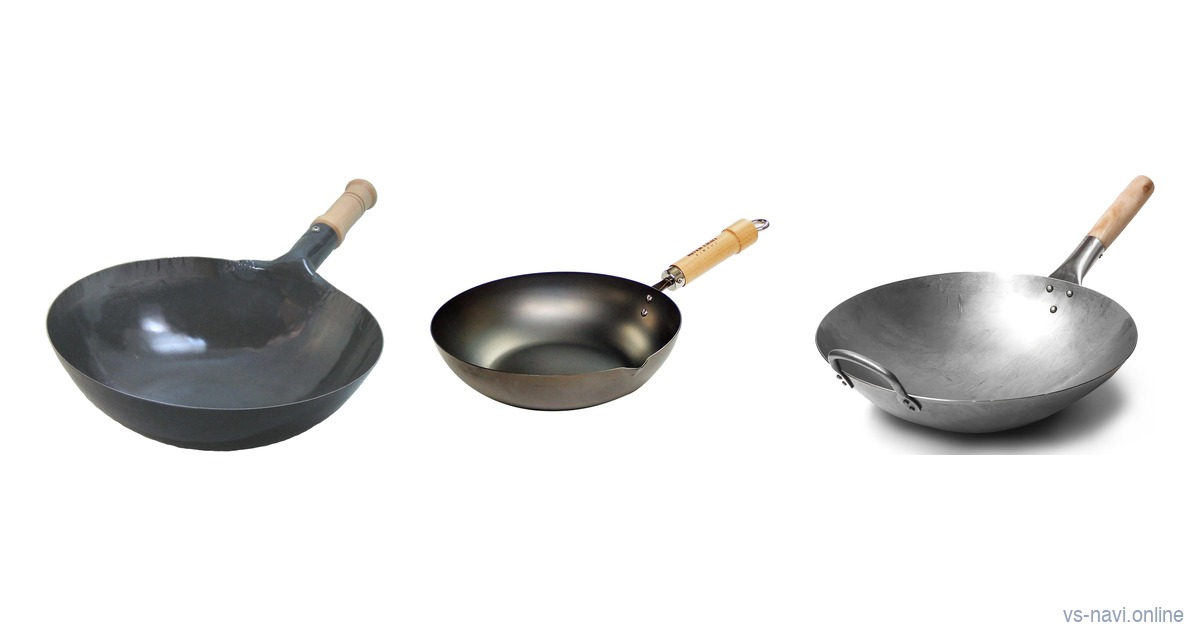
We compared both on published specs, manufacturer descriptions and current Amazon listings, then set them against the best-selling hammered carbon steel wok on Amazon, the Craft Wok, as a benchmark.
Which Japanese Wok Should You Pick?
Short version, before the detail:
- Yamada Kogyosho 30 cm one-handed wok — the classic Japanese hammered wok. Light for its size, quick to heat, made for tossing over a gas flame. Around $120.
- River Light Kiwame 30 cm wok — the pick for flat stoves. Nitrided iron resists rust, needs no burn-in seasoning and sits flat on induction. Around $115.
- Craft Wok 14-inch round bottom — the non-Japanese benchmark. Heavier, bigger and cheaper at around $70, with thousands of owner reviews behind it.
Yamada Kogyosho One-Handed Wok, 30 cm (around $120 on Amazon)
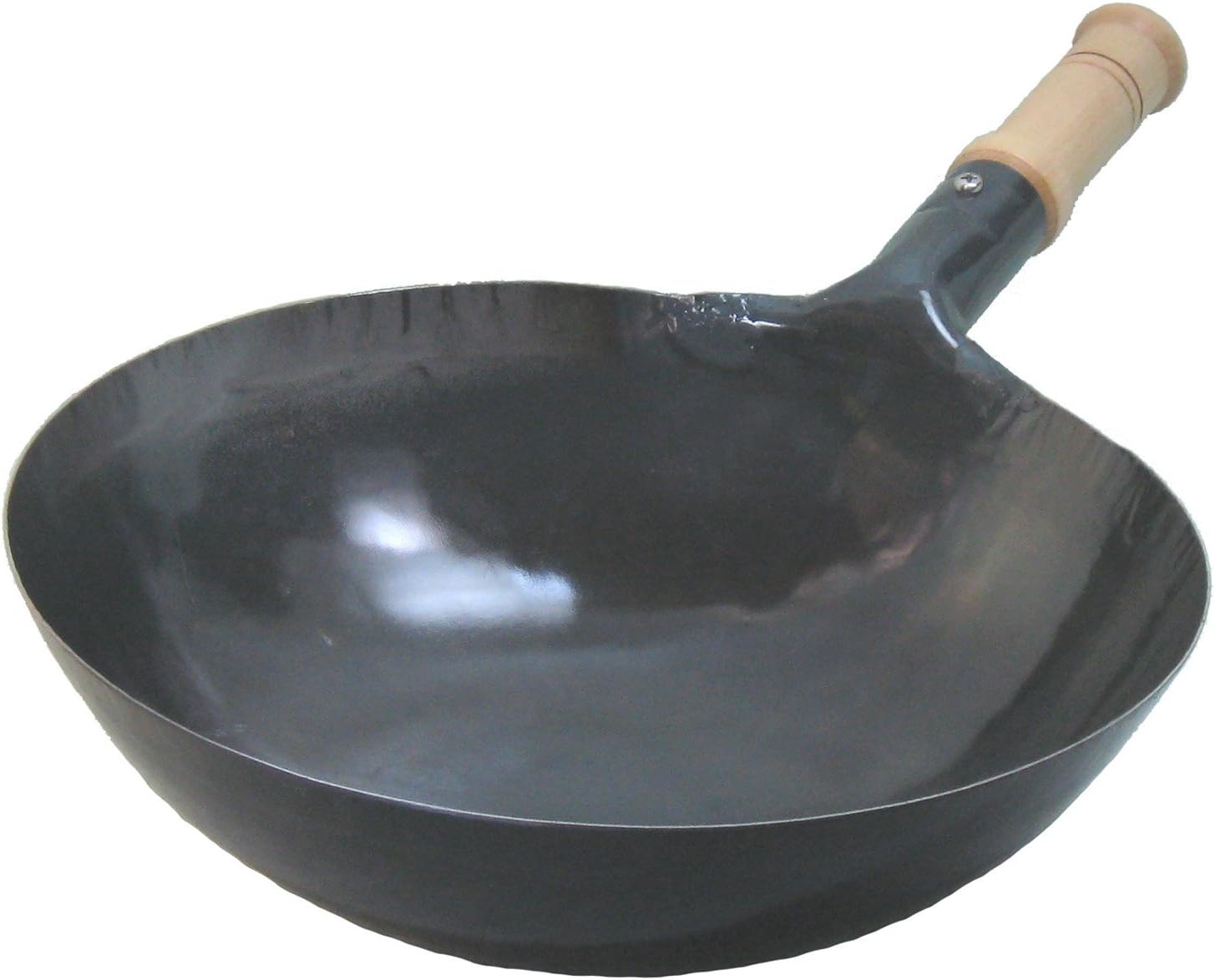
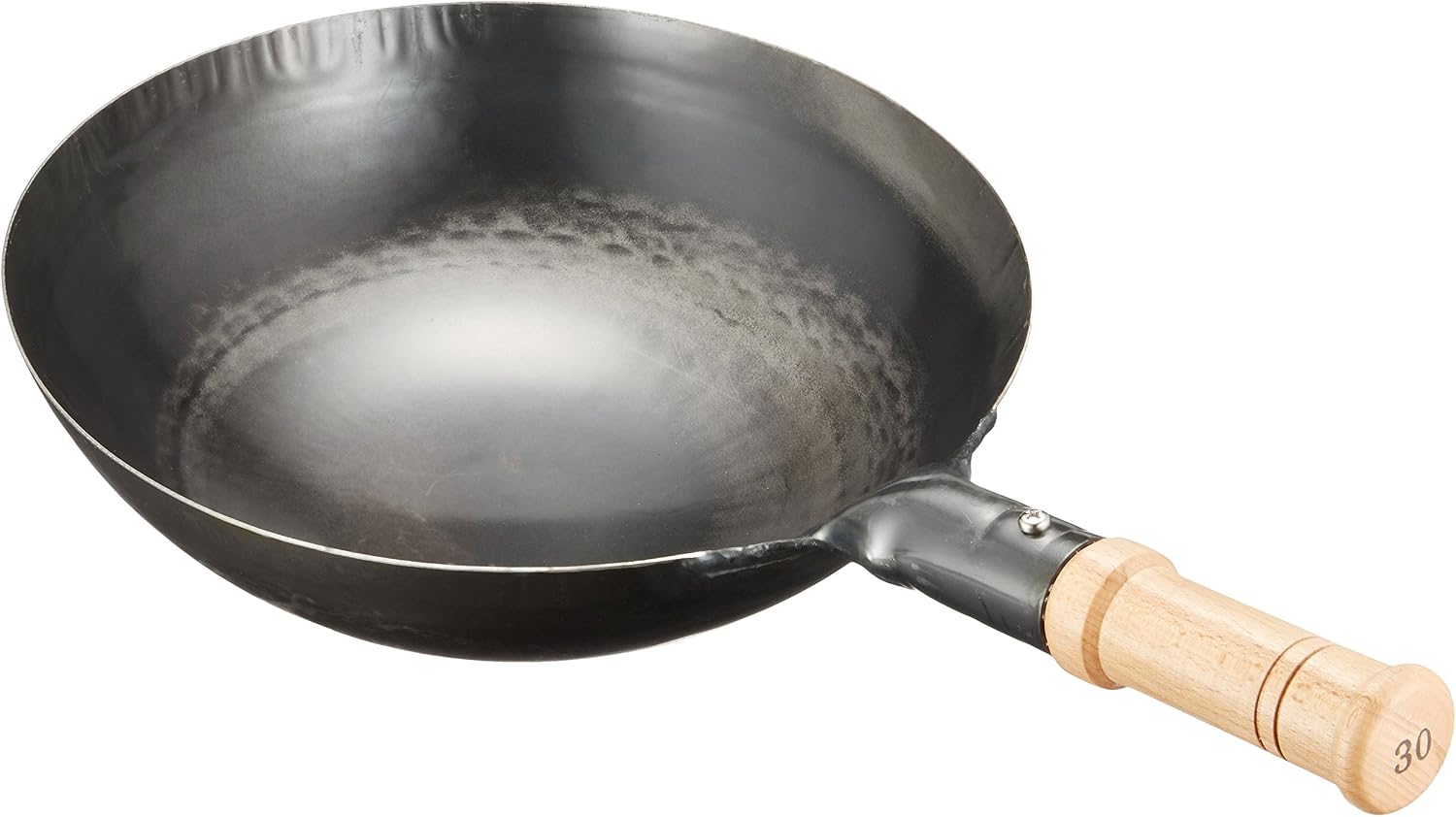
Yamada Kogyosho is a small ironworks in Yokohama, the city with Japan’s largest Chinatown. It is best known for one thing: woks formed by hammering a sheet of iron thousands of times rather than pressing or spinning it into shape. The manufacturer’s own listing notes that this is done with a power hammer, so the wok is hammered rather than literally hand-beaten.
The hammering is the point. According to the maker, it compacts the iron so the wall can stay thin while staying strong, which keeps the 30 cm wok to roughly 1 kg. That low weight is what lets a home cook lift the pan by its wooden handle and flick fried rice up the far wall the way a restaurant cook does.
Owner reviews on Amazon line up with that. Buyers repeatedly mention how light it feels, how quickly it heats up on gas and how easily food slides once the surface is seasoned. Several also mention that the metal neck of the handle gets hot during long cooking.
The honest downside is the start-up work. The wok ships with a rust-prevention coating that must be burned off before first use, then seasoned with oil. It also arrives looking rough, with hammer marks plus the odd scratch, which some buyers mistake for damage. It has a round bottom, so it belongs on a gas burner, ideally with a wok ring; it is not a match for induction or flat electric hobs.
Buy it if you cook on gas and want the wok Japanese chuka cooks recognise on sight. Amazon lists it in 24, 27 and 33 cm too; 30 cm suits two to four people.
River Light Kiwame Wok, 30 cm (around $115 on Amazon)
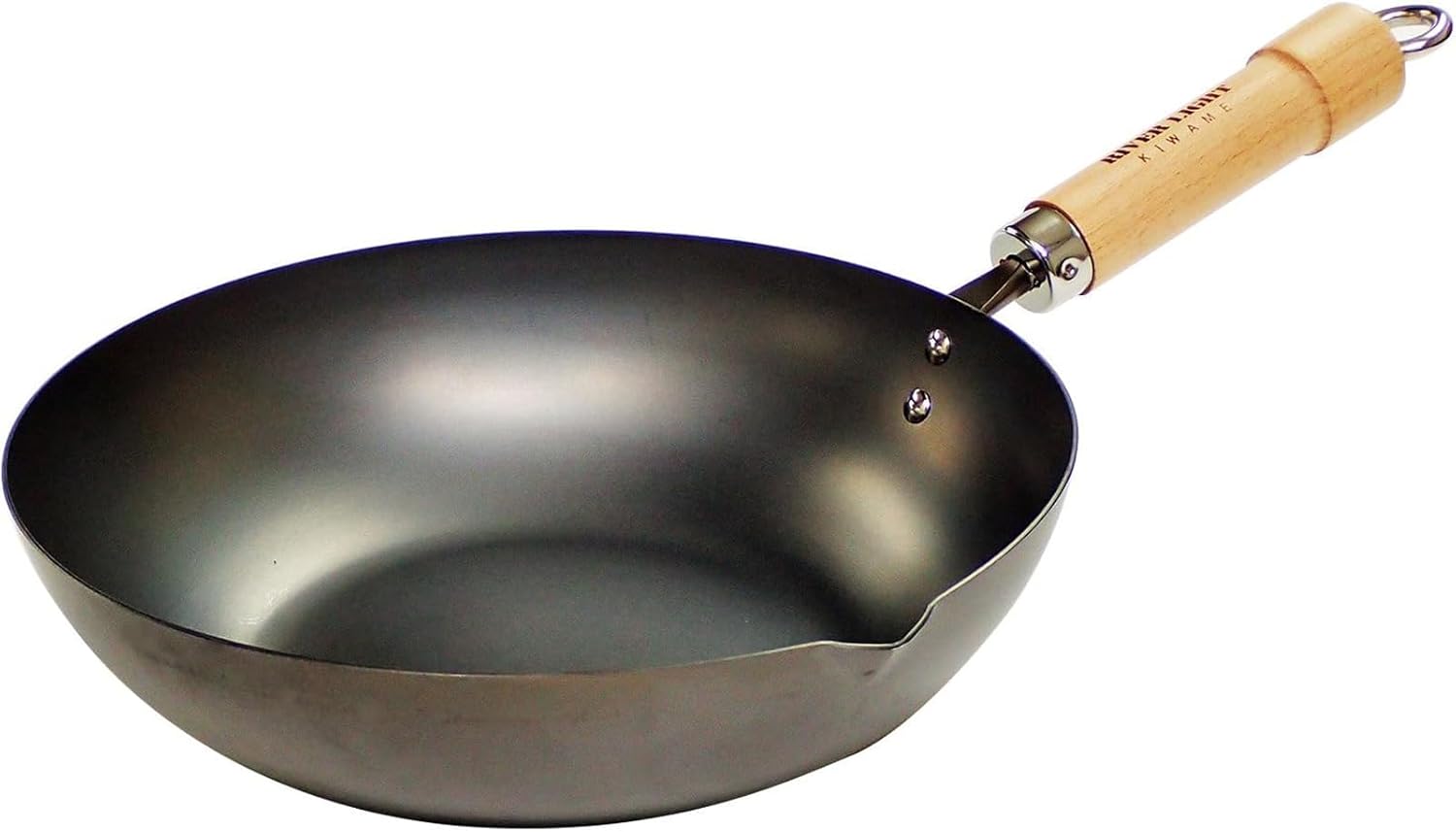
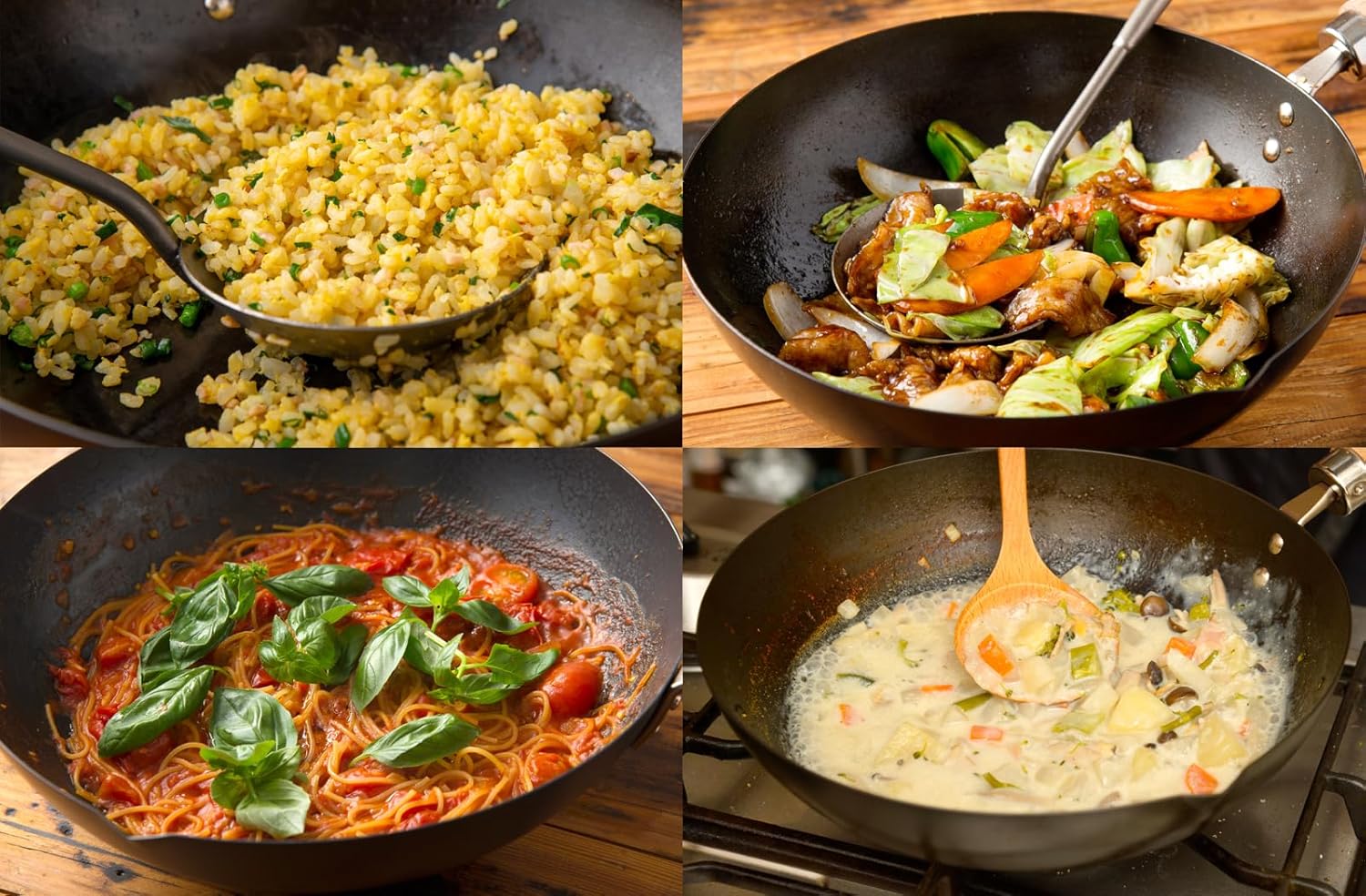
River Light is the Japanese brand that made iron pans easy for people who were afraid of rust. Its Kiwame line, sold on Amazon under the name Extreme Japan, is carbon steel treated with nitrogen at high heat. That nitrided surface resists rust far better than ordinary iron.
In practice this changes the first day. River Light says the pan needs no burn-in seasoning: wash it, oil it, cook. The wok has a flat 17.2 cm base, so it sits steady on induction, electric or gas, with a small pouring lip for sauces plus a wooden handle that can be tightened or removed.
It carries around 750 ratings on Amazon averaging 4.0 out of 5. Owners most often praise how light it is next to cast iron, how evenly it heats and the relief of cooking without a coating. The most serious complaints are a handful of reports of small pits appearing in the cooking surface after months or years of use.
The trade-off is shape. A flat base means you give up some of the tossing motion a round-bottomed wok allows, so this is closer to a deep Japanese stir-fry pan than a restaurant wok. It also still wants a hot pan plus enough oil; anyone who cooks with very little fat will find eggs stick.
A wok is also the classic base for a steamer basket, because the sloped sides hold almost any diameter above the water. Our guide to the Japanese seiro steamer explains the difference between wa-seiro and Chinese-style bamboo baskets plus how to use, clean and store one.
Buy it if you cook on induction or a glass-top stove. If you already own River Light pans, the size guide in our Japanese carbon steel frying pan comparison explains how this wok fits alongside them.
Craft Wok 14-Inch Round Bottom (around $70 on Amazon)
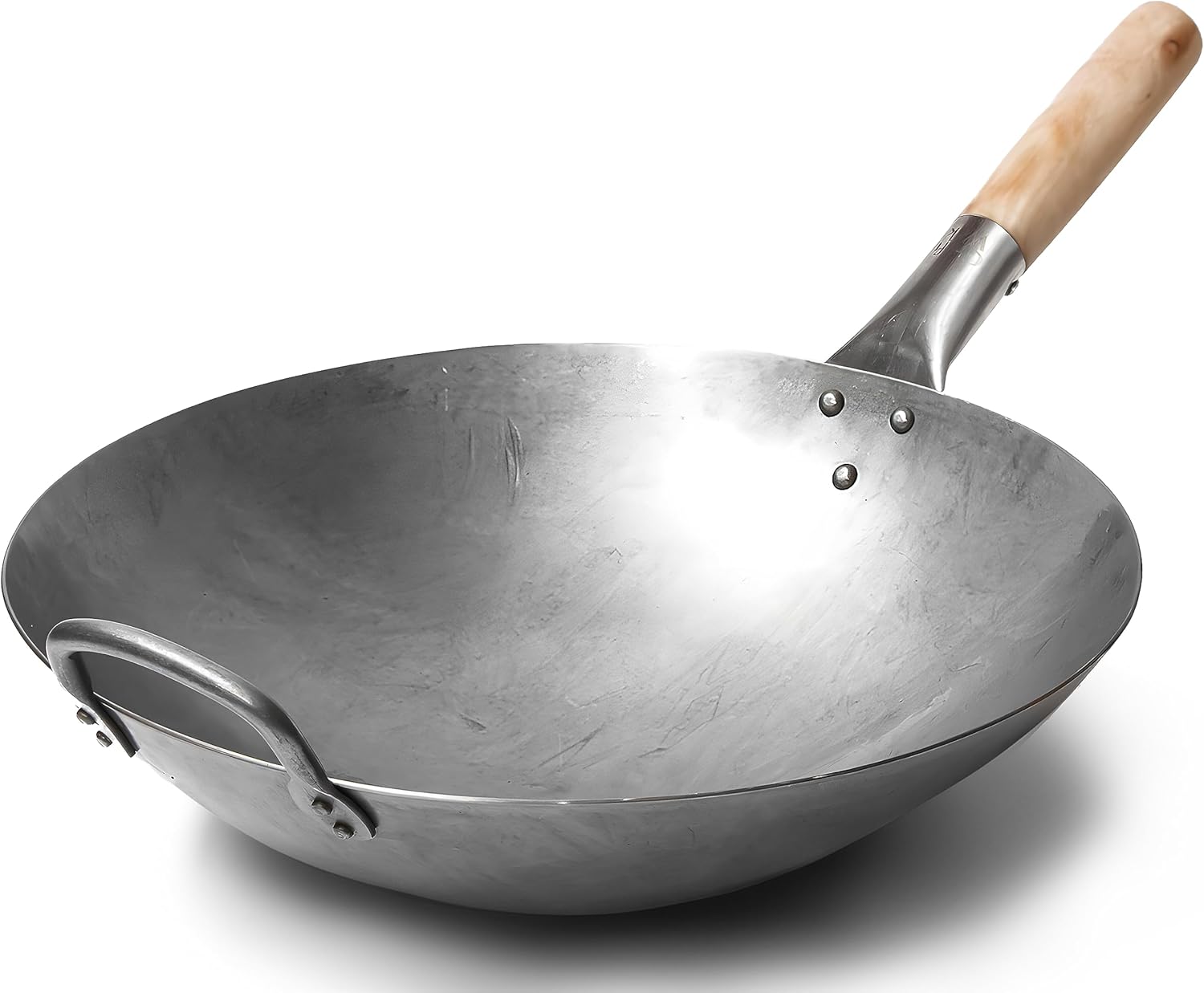
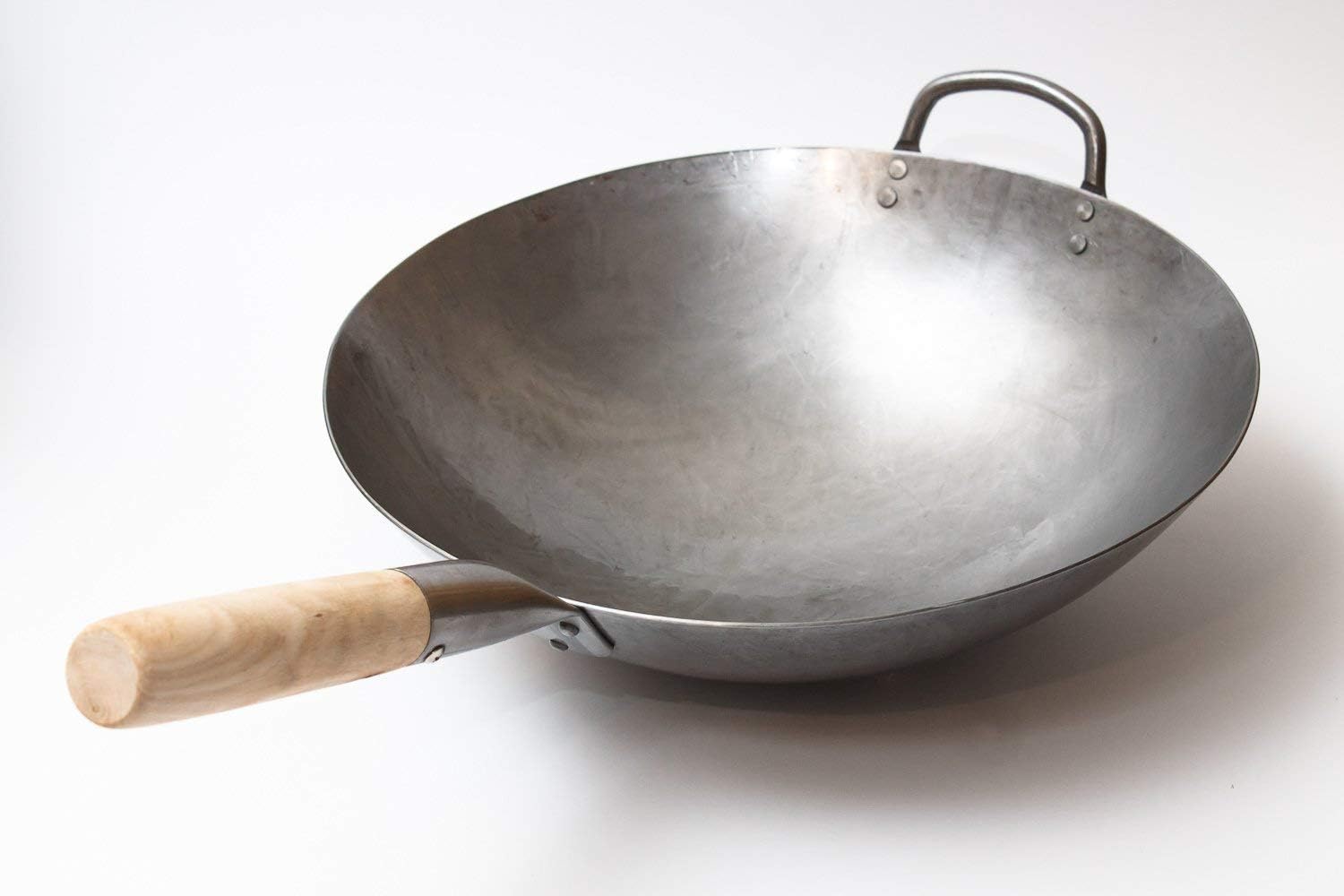
The Craft Wok is not Japanese. It is hammered in Guangzhou, China, in the traditional Cantonese style. It is here because it is the wok most American buyers will compare against. With more than 12,000 ratings averaging 4.4 out of 5, it is the reference point for hammered carbon steel on Amazon.
It is a different animal from the Yamada. The steel is thicker at 1.8 mm, the diameter is larger at 14 inches, plus the listed weight is 2.1 kg, about twice the Japanese wok. That mass holds heat well when a big batch of cold vegetables goes in, but it is a two-hand pan for most people.
The most helpful owner reviews are long seasoning guides. The consensus: follow the bluing then oil-seasoning steps carefully plus the wok becomes close to non-stick; skip them and it rusts or sticks. Petite cooks regularly flag the weight once food is in the pan.
Like the Yamada, it has a round bottom. The maker states plainly that it is not suitable for flat electric or induction stoves.
Buy it if you want a big, sturdy wok on gas or an outdoor burner for less money. The weight is the price you pay.
Compare the Three
| Yamada | River Light | Craft Wok | |
|---|---|---|---|
| Made in | Yokohama, Japan | Japan | Guangzhou, China |
| Size | 30 cm (11.8 in) | 30 cm (11.8 in) | 14 in |
| Weight | about 1.04 kg | about 1.2 kg | about 2.1 kg |
| Bottom | Round | Flat (induction OK) | Round |
| First-use prep | Burn off coating, season | Wash, oil, cook | Blue, then season |
| Price (approx.) | $120 | $115 | $70 |
Your stove decides most of this. On induction or a glass-top hob, only the River Light makes sense of the three. On gas, the choice is between the light Yamada for tossing single portions plus the heavy Craft Wok for bigger batches.
If you want the Japanese wok specifically, the Yamada is the one with the craft story behind it. If you want the least maintenance, the River Light is the easiest iron wok here to live with.
Summary
Yamada Kogyosho is the Japanese hammered wok for gas cooks who want to toss. River Light Kiwame is the Japanese iron wok for induction plus low-maintenance kitchens. Craft Wok is the cheaper, heavier Chinese benchmark.
All three are bare iron, so they reward a hot pan, a little oil and a quick dry after washing.
FAQ
Is a Yamada wok hand-hammered?
It is hammered, not pressed. The maker describes the process as thousands of strikes with a power hammer, so it is machine-hammered rather than beaten by hand, though each wok still comes out slightly different in size and weight.
Can I use a Japanese wok on an induction stove?
Only a flat-bottomed one. The River Light Kiwame wok is listed as induction compatible. Round-bottomed woks such as the Yamada or the Craft Wok need a gas burner, usually with a wok ring.
Does a new iron wok need seasoning?
Yamada woks ship with a rust-prevention coating that has to be burned off before seasoning. The Craft Wok also needs bluing plus seasoning. River Light says its nitrided wok needs no burn-in: wash it then cook with oil.
What size wok is best for a home kitchen?
For one-handed tossing on a home burner, 30 cm (about 12 inches) is the usual choice for two to four people. A 14-inch wok holds more food but is noticeably heavier to lift.
Can an iron wok go in the dishwasher?
No. Wash it by hand with hot water, dry it on the stove then wipe on a thin film of oil. A dishwasher strips the seasoning plus invites rust.
Why did my new Yamada wok arrive scratched?
Hammer marks, uneven colour plus light scratches are normal on a hammered wok, which the manufacturer notes in its listing. Real shipping damage such as a bent rim is a different matter worth raising with the seller.
Prices shown are approximate US figures for 2026 taken from current Amazon listings. Amazon prices move frequently, so check the current price on Amazon before you buy.