Our pick for the best Japanese deba knife in 2026 is the Tojiro Shirogami Deba — check its price on Amazon. The deba (出剛包丁) is the heavy, single-bevel workhorse of the Japanese kitchen — the knife sushi and washoku chefs reach for to behead, fillet and break down whole fish. We compared three genuine Made-in-Japan single-bevel deba across the price ladder: the value Tojiro Shirogami (White Steel carbon), the professional’s standard Masamoto KS (honbazuke carbon) and the premium Yoshihiro Hongasumi (Aoko Blue Steel #2). Here is which to buy.
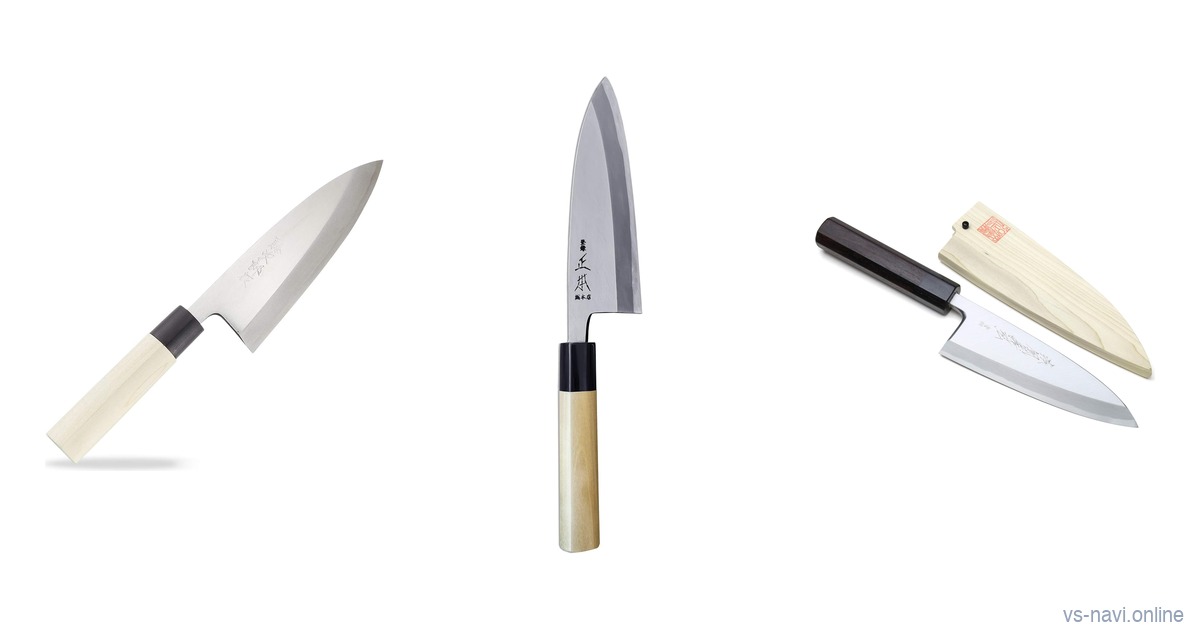
Quick Picks — Our Top Three Deba Knives
Best Overall & Best Value: Tojiro Shirogami Deba 150mm (White Steel carbon, trusted first deba). Best Premium / Edge Retention: Yoshihiro Hongasumi Blue #2 180mm (Aoko Blue Steel, saya included). Best Professional Heirloom: Masamoto KS Deba 165mm (Tsukiji honbazuke, horn ferrule). Check price on Amazon →
Specs Comparison — Three Deba Knives Side by Side
| Tojiro Shirogami | Masamoto KS | Yoshihiro Hongasumi | |
|---|---|---|---|
| Blade length | 150 mm (5.9 in) | 165 mm (6.5 in) | 180 mm (7.0 in) |
| Core steel | Shirogami White Steel (carbon, clad) | High-carbon White Steel (honbazuke) | Aoko Blue Steel #2 (carbon, clad) |
| Hardness (HRC) | ~61 | ~62–63 | ~63–64 |
| Bevel | Single bevel (right-hand) | Single bevel (right-hand) | Single bevel (right-hand) |
| Steel type | Reactive carbon (will patina) | Reactive carbon (will patina) | Reactive carbon (will patina) |
| Handle | Magnolia ho-wood wa-handle | Magnolia + buffalo-horn ferrule | Rosewood (shitan) wa-handle |
| Saya (sheath) | Not included | Magnolia saya included | Magnolia saya included |
| Made in | Sanjo, Niigata, Japan | Tokyo, Japan | Japan (Sakai lineage) |
| Price (2026) | around $95 | around $220 | around $300 |
| Amazon rating | 4.1 / 5 | 3.8 / 5 | 4.8 / 5 |
Specs reflect the standard single-bevel deba model of each line. Prices are 2026 US street prices and move often — always confirm the live figure before buying. All three are right-hand single-bevel grinds; left-handed cooks should seek a dedicated left-handed model.
Tojiro Shirogami Deba 150mm — The Best-Value First Deba
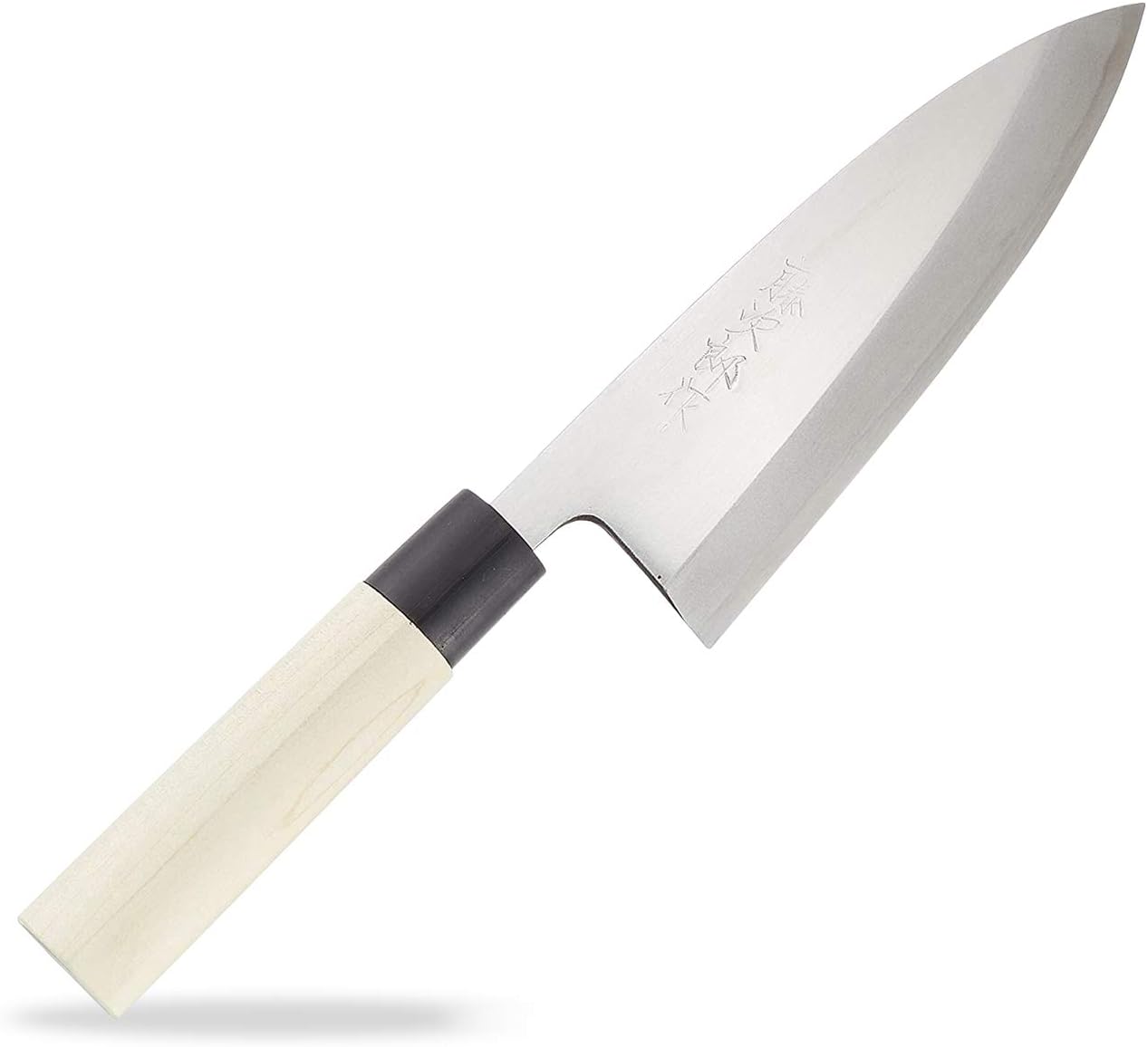

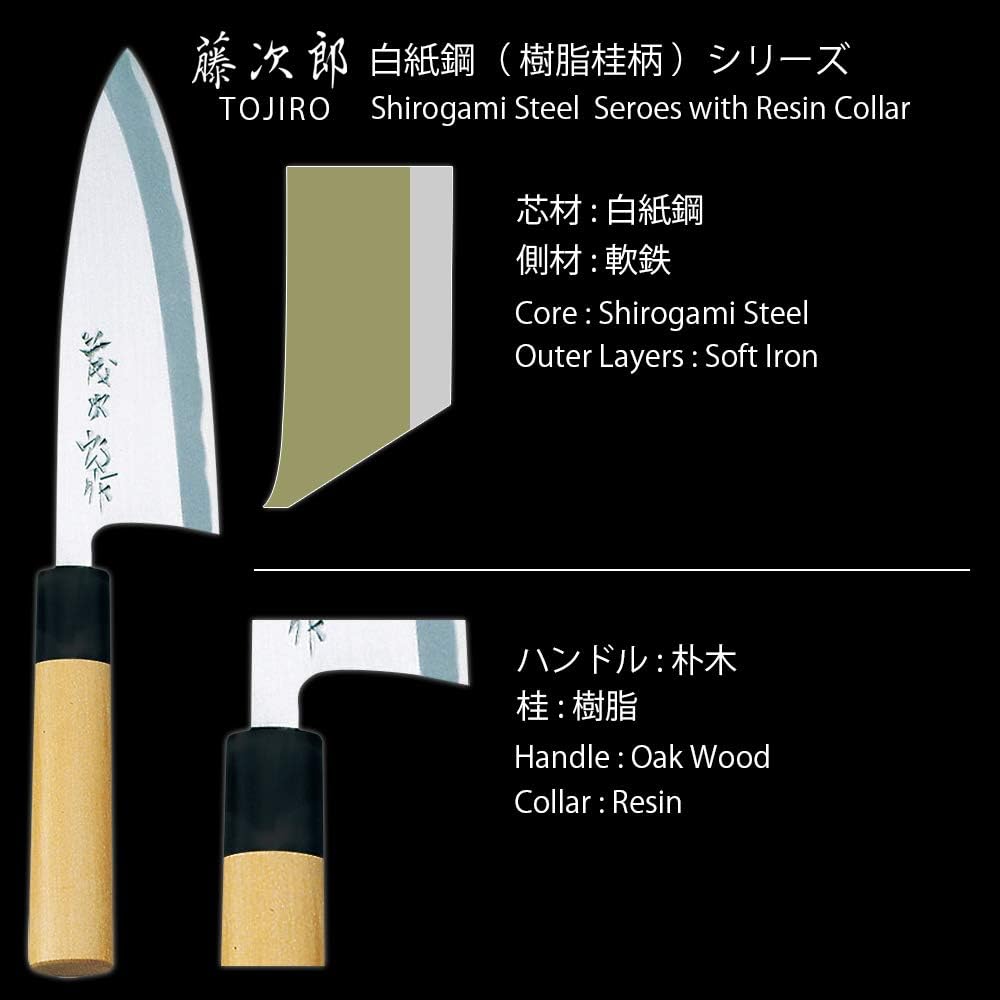
If you want a real Made-in-Japan single-bevel deba without paying professional money, the Tojiro Shirogami is the easiest of the three to recommend. It pairs a Shirogami (White Steel) carbon core — a clean, easy-to-sharpen high-carbon steel — clad in softer iron, finished with a light magnolia wa-handle. At around $95 it is by far the most deba-per-dollar in this comparison and the 150 mm length is ideal for the small-to-medium fish most home cooks actually break down.
The catch is the steel type. White Steel is reactive carbon, not stainless: it will develop a grey patina and must be dried immediately or it can spot-rust. In exchange you get a thin, keen edge that takes a wicked point quickly on a stone and a back that hollow-grinds cleanly for filleting. Tojiro’s factory grind is famously consistent, so out of the box it is the most beginner-friendly entry into the demanding world of single-bevel knives.
The Brand in Japan
Tojiro (藤次郎) is a Sanjo City cutlery maker in Niigata, the heart of Japan’s metalworking belt. Domestically it is the go-to “first real Japanese knife” brand — trusted, factory-precise and famous for delivering professional steel and grinds at accessible prices rather than artisan prestige. Where a Tsukiji house like Masamoto signals tradition, Tojiro signals dependable value and its knives populate the kitchens of culinary students and serious home cooks across Japan. A White Steel deba from Tojiro is exactly the knife a Japanese cook recommends to a friend buying their first deba.
Real-World Usage
On the board the Tojiro feels honest and capable. The 150 mm blade has enough heel weight to push through the collarbones of a sea bream or the spine of a small fish, while the pointed tip handles delicate work around the gills and fins. The single bevel follows the backbone cleanly so fillets release in one pass. As reactive carbon, it asks for habits: wipe it dry between cuts, never leave it wet in the sink and a light coat of camellia oil before storage. Treat it like a cast-iron pan and it rewards you with a keen, easily restored edge.
✅ Pros
- Outstanding value — a real Sanjo-made White Steel single-bevel deba for around $95.
- Easy to sharpen — White Steel takes a screaming edge quickly and is the most forgiving carbon to learn single-bevel sharpening on.
- Consistent factory grind — Tojiro’s quality control makes this the most beginner-friendly deba here.
❌ Cons (Honest Assessment)
- Reactive carbon steel — patinas and can spot-rust; strictly hand-wash and dry immediately.
- No included saya — budget for a separate sheath to protect the single-bevel edge in storage.
💬 What Users Are Saying
One recurring line of praise in Amazon reviews: “My first deba and the perfect one to learn on. It breaks down whole mackerel and sea bream beautifully and it sharpens up in minutes on a 1000-grit stone. Incredible value.” — Source: Amazon.com verified purchase
The most common criticism in Amazon reviews: “Great knife, but respect the carbon steel. I left it wet once and got a rust spot. It also came without a sheath, which I had to buy separately.” — Source: Amazon.co.jp verified purchase
👤 Who Should Buy This
Anyone buying their first deba, or a home cook who breaks down small-to-medium whole fish and wants genuine single-bevel performance without a professional spend. It is also the best knife in this guide to learn single-bevel sharpening on before stepping up to a premium carbon blade.
Masamoto KS Deba 165mm — The Professional’s Standard

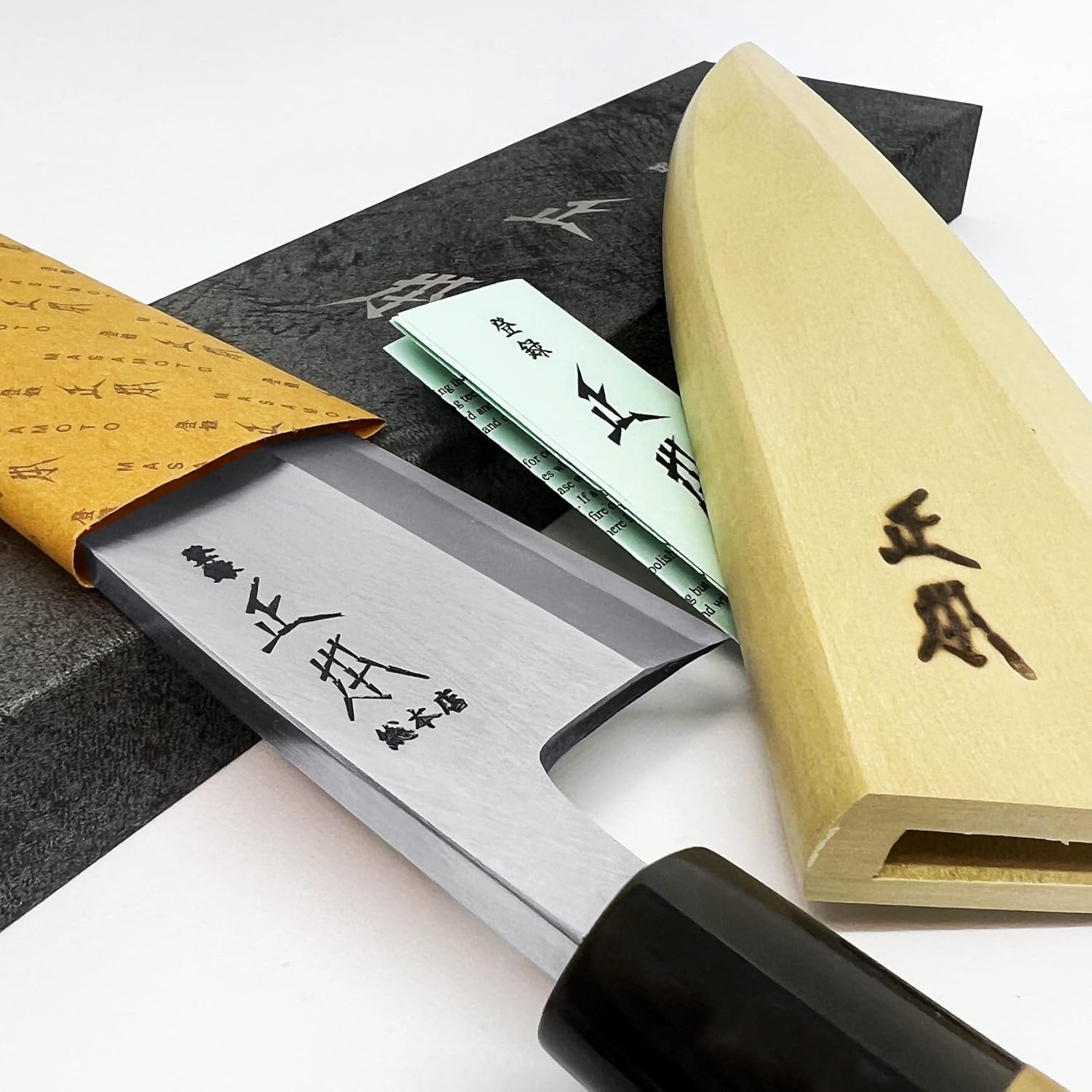
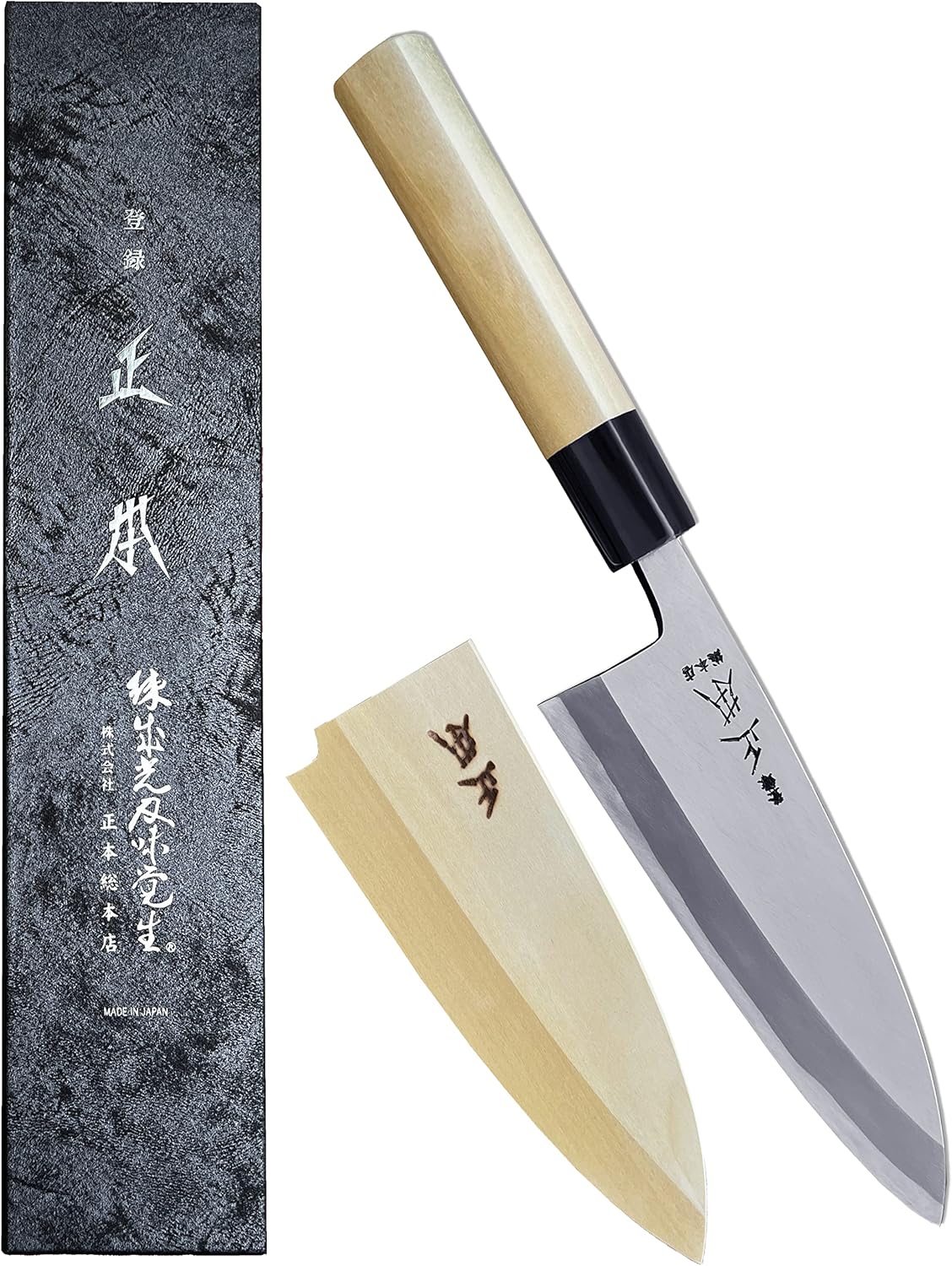
The Masamoto KS is the deba we recommend to the cook who wants the knife the professionals actually use. Masamoto Sohonten is the legendary Tsukiji house whose blades set the standard for Japanese-cuisine kitchens and the KS line delivers a hand-finished honbazuke high-carbon White Steel edge on a properly weighted 165 mm deba. It ships with a magnolia wa-handle finished with a black buffalo-horn ferrule and a fitted magnolia saya — the details that separate a pro knife from a budget one.
At around $220 it sits in the middle of this trio on price but at the top on pedigree. The honbazuke edge arrives genuinely sharp and the 165 mm length is the most versatile deba size, equally at home on a horse mackerel or a mid-sized sea bream. Its Amazon rating runs lower than its rivals, but the critical reviews almost all come down to carbon-steel care expectations — this is an uncompromising traditional knife, not a forgiving stainless one and buyers who treat it accordingly are rewarded with a heirloom-grade blade.
The Brand in Japan
Masamoto Sohonten (正本総本店) is the Tsukiji-born Tokyo knife house that effectively defined the modern professional Japanese-cuisine blade. In Japan the name is shorthand for “what the sushi and kappo pros actually use” — it carries far more craft prestige than mass-market brands and a Masamoto deba behind a sushi counter is a quiet statement of seriousness. The KS line keeps that pedigree accessible while preserving the hand-finished honbazuke edge and traditional fittings that built the reputation. For many Japanese chefs, a Masamoto is the deba you buy once and keep for a career.
Real-World Usage
The KS feels like a working professional’s tool. The well-balanced 165 mm blade has the heft to take a fish head off in one confident stroke and the precision to run a clean fillet off the spine. The buffalo-horn ferrule and properly seated magnolia handle give it a reassuring, traditional feel in a pinch grip. As high-carbon steel it needs the full carbon routine — dry it immediately, oil it for storage and let it build a protective patina — and the included saya makes safe storage easy. Sharpen it on quality whetstones at the factory angle and it holds a true pro edge.
✅ Pros
- Tsukiji professional pedigree — Masamoto is the standard many sushi and washoku chefs build their kit around.
- Hand-finished honbazuke edge — arrives properly sharp with a traditional, refined grind.
- Pro fittings included — buffalo-horn ferrule and a fitted magnolia saya at a mid-tier price.
❌ Cons (Honest Assessment)
- Demanding carbon care — uncompromising reactive steel; the lower Amazon rating reflects buyers underestimating the maintenance.
- Pricier than the value pick — you pay for the name and the honbazuke finish, not extra raw cutting over a Tojiro.
💬 What Users Are Saying
One recurring line of praise in Amazon reviews: “This is a real professional’s deba. The balance and the honbazuke edge are on another level and the horn ferrule and saya feel like a knife you keep for decades.” — Source: Amazon.com verified purchase
The most common criticism in Amazon reviews: “Beautiful blade, but it is uncompromising carbon steel. If you do not dry and oil it religiously it will rust. Know what you are buying before you complain.” — Source: Amazon.co.jp verified purchase
👤 Who Should Buy This
The serious home cook or aspiring professional who wants the knife the pros use and will commit to traditional carbon-steel care. It is also the standout choice for someone buying one deba to keep for life, where the Masamoto name and honbazuke finish justify the step up from a value blade.
Yoshihiro Hongasumi Blue #2 Deba 180mm — The Premium Edge
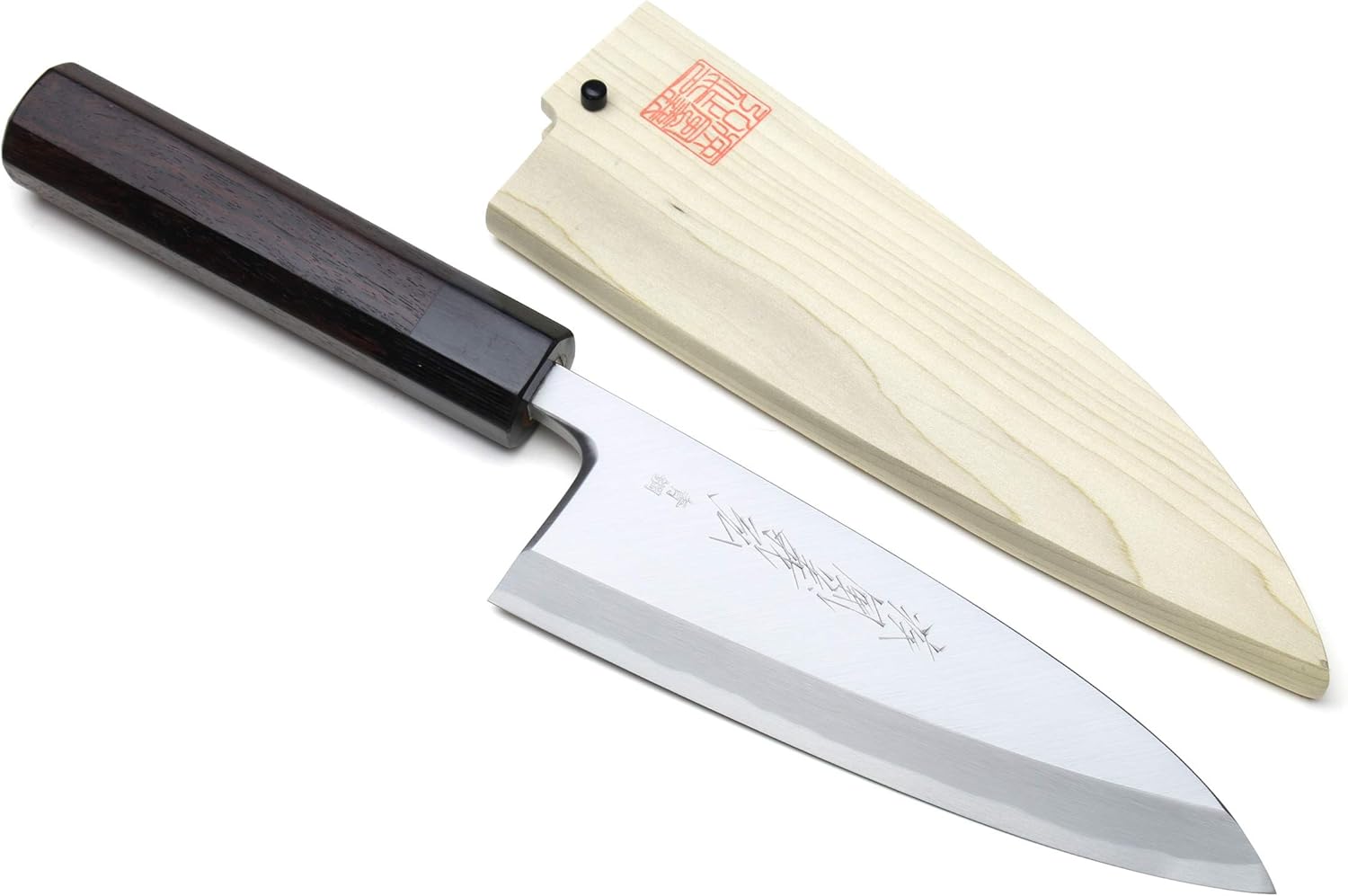
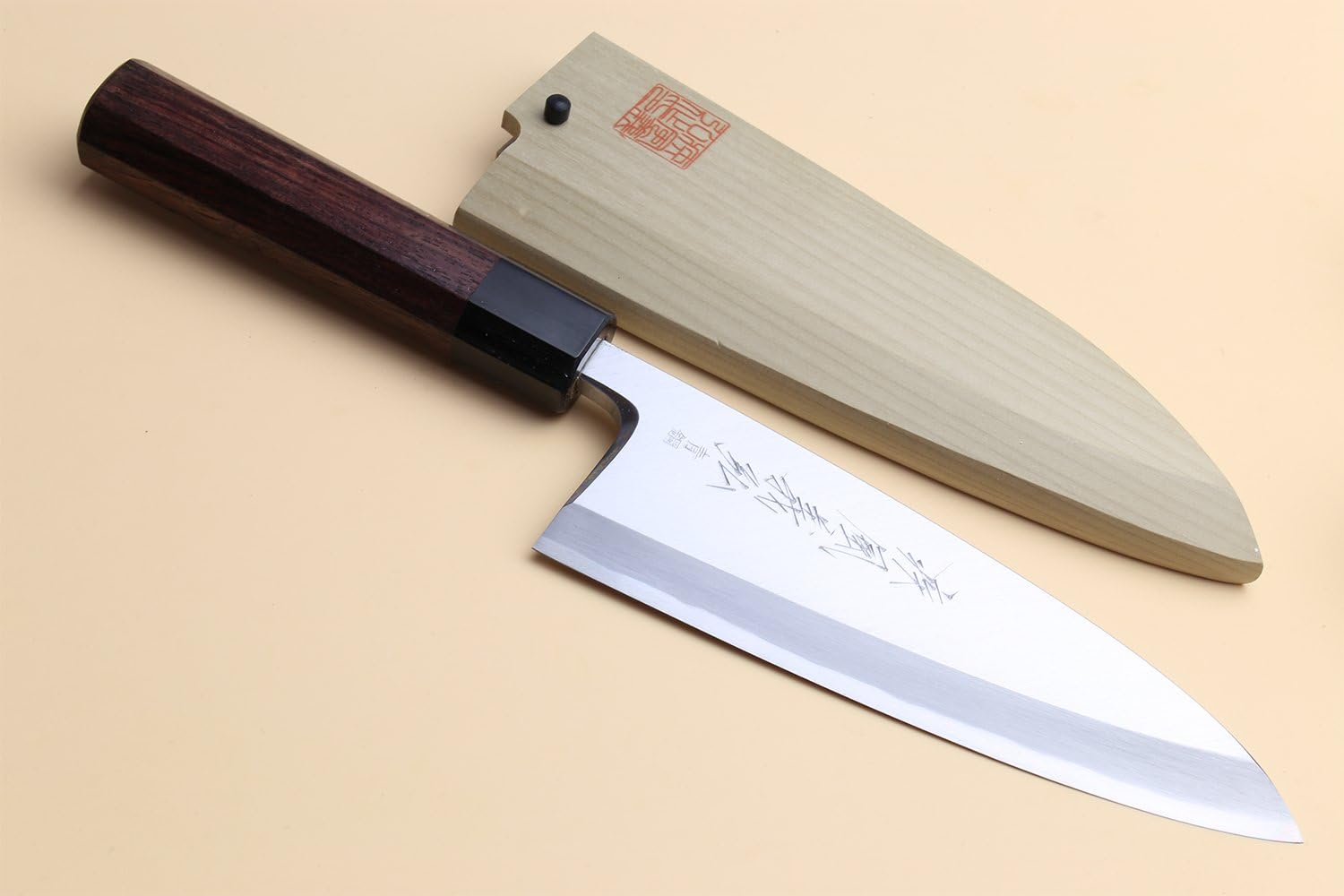
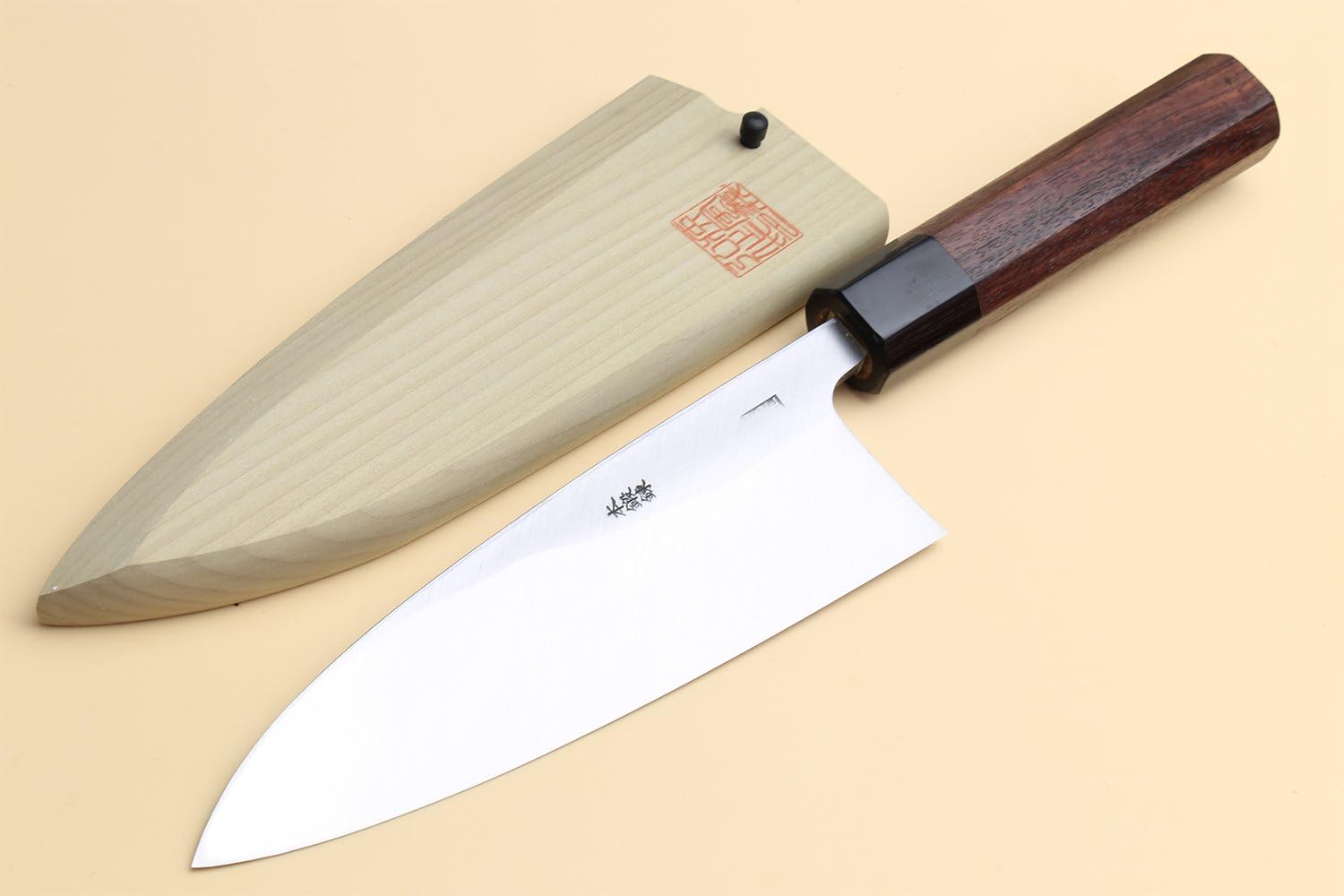
The Yoshihiro Hongasumi is the splurge: an Aoko (Blue Steel #2) carbon core — the connoisseur’s steel, prized for edge retention — in Yoshihiro’s premium Hongasumi two-layer forging, finished with a misty kasumi face and a rosewood wa-handle and it ships with a magnolia saya. At 180 mm it is the longest, most authoritative blade here and carries the highest Amazon rating in this comparison at 4.8 stars.
It commands its price on steel and forging quality. Blue Steel #2 adds tungsten and chromium to the White Steel recipe, giving it a hardness of roughly HRC 63–64 — harder than either rival — and noticeably better edge retention, so it stays sashimi-sharp through a long prep session. The 180 mm length suits larger fish and the Hongasumi grind makes it the most refined cutter on the list. The trade-off is that the harder, more brittle Blue Steel is the least forgiving of poor technique and it is still reactive carbon that demands the full care routine.
The Brand in Japan
Yoshihiro is a Tokyo cutlery house that sources hand-forged blades from Japan’s traditional smithing regions, most notably the Sakai (Osaka) cluster that has forged professional Japanese-cuisine knives for some 600 years. The Hongasumi Aoko line is its premium tier and among Japanese enthusiasts Blue Steel #2 is regarded as professional sushi- and sashimi-counter grade — the steel you choose when edge retention matters most. Where Tojiro is the trusted value name and Masamoto the Tsukiji institution, Yoshihiro is the connoisseur’s craftsman-export brand, the maker for cooks who want hand-forged Sakai-lineage performance.
Real-World Usage
The Hongasumi feels precise and authoritative. The long, hard Blue Steel blade powers through a large fish head and then runs a clean, controlled fillet off the spine and the acute single-bevel edge holds far longer than the softer White Steel rivals before it needs a touch-up. The misty kasumi face releases flesh cleanly. As the hardest steel here it dislikes lateral twisting and hard bone contact, so keep it to fish work and away from heavy joints. It is reactive carbon, so dry it immediately and oil it for storage; the included saya makes that easy. Sharpen on good whetstones at the factory angle and it stays scary-sharp for a long time.
✅ Pros
- Best edge retention here — Aoko Blue Steel #2 at ~HRC 63–64 holds a sashimi edge the longest.
- Premium Hongasumi forging — a refined two-layer grind with a beautiful kasumi finish and the highest rating in this guide.
- Longest blade with a saya — 180 mm of reach for larger fish, with a fitted magnolia sheath included.
❌ Cons (Honest Assessment)
- Most expensive — roughly triple the Tojiro; you pay for Blue Steel and the Hongasumi forging.
- Least forgiving — the hard Blue Steel can chip on bone or with poor technique and still needs full carbon care.
💬 What Users Are Saying
One recurring line of praise in Amazon reviews: “The edge is unreal and it holds it through an entire fish-prep session. The Blue Steel and kasumi finish are gorgeous and it filets salmon and sea bream like nothing else I own.” — Source: Amazon.com verified purchase
The most common criticism in Amazon reviews: “Stunning and razor-sharp, but it is a precision instrument. I chipped the edge on a backbone once — my fault. If you are rough on knives, this is not the one.” — Source: Amazon.co.jp verified purchase
👤 Who Should Buy This
Buyers who want the finest steel and the best edge retention for serious fish work — and who already sharpen carbon knives and treat them with care. It is also the gift or once-in-a-decade purchase in this guide: the Blue Steel and Hongasumi forging make it feel like an occasion.
Head-to-Head — Category-by-Category Winner
| Category | Tojiro | Masamoto | Yoshihiro |
|---|---|---|---|
| Out-of-box sharpness | Very good | Honbazuke ✓ | Excellent ✓ |
| Edge retention | Good | Very good | Best in class ✓ |
| Ease of sharpening | Easiest, White Steel ✓ | Moderate | Hard Blue Steel |
| Fit & finish / pedigree | Factory-clean | Tsukiji honbazuke + horn ✓ | Hongasumi kasumi finish |
| Included extras | None | Horn ferrule + saya ✓ | Saya included |
| Value for money | Outstanding ✓ | Good (pays for pedigree) | A splurge |
Sharpness & edge retention: all three arrive genuinely sharp; the honbazuke Masamoto and premium Yoshihiro feel keenest out of the box, while the harder Blue Steel Yoshihiro holds its edge the longest and the softer White Steel Tojiro needs touch-ups soonest. Sharpening & care: the White Steel Tojiro is the easiest to bring back on a stone, while the hard Blue Steel Yoshihiro is the most demanding; all three are reactive carbon that must be dried and oiled. Pedigree & value: the Masamoto wins on professional pedigree and included fittings, while the ~$95 Tojiro delivers by far the most deba per dollar.
How to Choose — A 30-Second Decision Tree
- “I just want one great deba to learn on” → Tojiro Shirogami. Buy it and stop reading.
- “I want the knife the pros use and will keep for life” → Masamoto KS — just commit to traditional carbon care.
- “I want the best steel and edge retention for serious fish work” → Yoshihiro Hongasumi Blue #2.
- “It’s my first Japanese carbon knife” → the Tojiro — the most forgiving and easiest to sharpen; learn on it before stepping up.
- “I want low-maintenance / dishwasher-safe” → none of these — a traditional deba is reactive carbon steel; if you want fuss-free, look at a stainless deba instead.
How We Compared These Knives
Our editorial team has tracked the Japanese knife market since 2024, cross-referencing Japanese-language manufacturer pages, Japanese forums (5ch / 包丁板), English communities such as r/chefknives and Western test sources. For this 2026 update we re-checked specs, US pricing, steel grades and Amazon ratings against each maker’s own listings, weighting the same six criteria for every knife: out-of-box sharpness, edge retention, ease of sharpening, fit and finish, included extras and value. Holding the single-bevel deba shape constant lets the steel and price tiers speak for themselves. The rankings were consistent with our 2025 Japanese-knife coverage — the value Tojiro remains the all-round pick, with the Masamoto and Yoshihiro winning their lanes.
🏆 Verdict — Overall Ranking
#1 – Tojiro Shirogami Deba 150mm The smartest single buy for most cooks who want a genuine single-bevel deba. It delivers White Steel carbon performance and a consistent Sanjo factory grind at around $95, it is the easiest knife here to learn single-bevel sharpening on and the 150 mm length fits the small-to-medium fish home cooks actually break down — the safest, best-value way into this demanding category. Check price on Amazon →
#2 Yoshihiro Hongasumi Blue #2 180mm — Best premium — Aoko Blue Steel #2, Hongasumi forging, best edge retention, saya included. Check price on Amazon →
#3 Masamoto KS Deba 165mm — Best professional heirloom — Tsukiji pedigree, honbazuke edge, horn ferrule and saya. Check price on Amazon →
More Comparisons Worth Reading
TL;DR
You probably don’t need a deba unless: – You buy whole fish (not fillets) at least 2x/month – You break down 1kg+ fish regularly – You’re committed to Japanese-style fish prep
For most Western home cooks: a gyuto + petty covers 95% of fish work without needing a deba.
What Is a Deba?
A deba is a single-bevel, heavy-spined knife designed specifically for whole fish butchery: – Cutting through fish heads and bones (chopping motion) – Filleting along the spine (precise single-bevel cuts) – Sectioning whole fish
Key specs
| Aspect | Deba Characteristics |
|---|---|
| Length | 150-180mm (small) / 180-210mm (medium) / 210-240mm (large) |
| Weight | 200-400g (heavy for its size) |
| Spine thickness | 5-9mm (vs gyuto’s 2-3mm) |
| Edge angle | 15-20° single-bevel |
| Steel | Usually shirogami (white) or aogami (blue) carbon |
| Handle | Wa-handle (Japanese) standard |
The heaviness is the defining feature. A deba has enough mass to chop through fish spine bones in one stroke—something a gyuto would struggle with.
Deba vs Other Fish Knives
| Aspect | Deba | Yanagiba | Honesuki | Gyuto |
|---|---|---|---|---|
| Purpose | Breaking down whole fish | Sashimi slicing | Poultry/chicken butchery | General-purpose |
| Bevel | Single | Single | Single (slight) | Double |
| Weight | Heavy | Light | Medium | Medium |
| Spine thickness | Thick | Thin | Thick | Medium |
| Best at | Cutting bones | Slicing flesh | Chicken bones | Most tasks |
| Western alternative | Cleaver | Fillet knife | Boning knife | Chef knife |
Why a gyuto can’t replace a deba
A gyuto’s thinner spine isn’t designed to chop through fish vertebrae. Attempting this: – Chips the gyuto’s edge – Risks bending the blade – Doesn’t make clean cuts
Conversely, a deba is too heavy and short for most non-fish tasks.
Do You Need a Deba?
Scenario 1: You buy fillets from the grocery store
No deba needed. A gyuto or petty handles fillet work fine. Save the $150-300 for something else.
Scenario 2: You buy whole fish at a Japanese/Asian market
Maybe yes. If you process 1-3 whole fish per month, a deba makes the work dramatically easier.
Scenario 3: You fish recreationally
Yes. A deba is the perfect “fishing camp” knife for processing your catch. Stainless deba models are best (carbon rusts in outdoor conditions).
Scenario 4: You’re committed to traditional Japanese cooking
Yes. Even if you mostly buy fillets, a deba lets you process whole fish properly—which is required for true ikejime, traditional sushi prep, etc.
Scenario 5: You only cook 1-2 times per week
No. A deba is for serious fish cooks. Don’t buy it because it looks cool.
Deba Size Selection
| Use Case | Deba Length |
|---|---|
| Small fish (sardines, mackerel, trout) | 150-165mm “ko-deba” |
| Medium fish (salmon, sea bream, sea bass) | 165-180mm “standard” |
| Large fish (yellowfin, tuna sections) | 180-210mm “o-deba” |
| Professional fishmonger | 210-240mm “large” |
For most home cooks: 165-180mm deba
This covers most fish sizes available at typical Japanese/Asian markets.
Best Deba Knives by Tier
Entry ($80-150)
Tojiro Shirogami Deba 165mm — ~$120 – White Steel #2, single-bevel – Wood Wa-handle – Good first deba
Yoshihiro Inox Deba 165mm — ~$140 – Stainless steel (easier maintenance) – Mahogany Wa-handle
Mid ($150-300)
Sakai Takayuki Tokujou Shirogami Deba 180mm — ~$220 – Hand-forged Sakai shirogami – Magnolia/buffalo horn handle – Traditional craftsmanship
Yoshihiro Aogami #2 Deba 180mm — ~$280 – Blue steel core – Improved edge retention
Premium ($300+)
Sakai Takayuki Hongasumi Aogami Deba 180mm — ~$420 – Premium blue steel – Honkasumi (mirror-finished) flat side – Heirloom quality
Konosuke Fujiyama Deba 180mm — ~$650 (Japan only, via Hocho-Knife) – Forum favorite – White Steel #2 honyaki
Deba Technique Basics
The “scaling fish” stroke
- Hold deba perpendicular to fish
- Scrape from tail toward head
- Heavy spine adds force
The “head removal” stroke
- Position behind gills
- Single chopping motion through spine
- Deba weight does the work
The “filleting” technique
- Insert tip near spine
- Single smooth pull-stroke along bones
- Single-bevel guides the cut precisely
The “spine cracking” technique
- For fully separating fillet
- Vertical chop at strategic points
- Required for clean fish steaks
Deba Maintenance Reality
Stainless deba (low maintenance)
- Wash and dry after use
- Sharpen every 3-6 months
- Yo-handle versions can dishwasher (don’t recommend)
Carbon steel deba (high maintenance)
- Immediately dry after washing
- Apply mineral oil monthly
- Sharpen on whetstone every 2-4 months
- Develops patina (some love, some hate)
- Will rust if neglected
Single-bevel sharpening warning
Don’t take a deba to a regular knife sharpener. Single-bevel knives sharpen differently than double-bevel. Either: – Learn yourself with proper Japanese whetstones – Send to a Japanese-specialty sharpener – Buy a stainless deba so you can use easier techniques
Common Deba Misconceptions
“I can use a deba as a heavy chef knife”
No. Single-bevel means it cuts to one side. Vegetables and herbs are difficult; chopping is asymmetrical.
“Deba is just a Japanese cleaver”
No. A Japanese cleaver (Chinese-style 中華包丁) is thinner and used for vegetables. Deba is specifically for fish bone work.
“I’ll mostly use deba for vegetables”
No. Single-bevel cuts to one side—vegetables roll away. Wrong tool.
“A small deba (ko-deba) is for beginners”
Partially true. A ko-deba (135-150mm) is for small fish work, not general beginner use. Beginners should still match deba size to fish size.
Substitutes for Deba (If You Don’t Want to Buy One)
If you don’t need a true deba but want to process whole fish:
- Heavy gyuto (240-270mm) can handle some fish bone work
- Western cleaver can substitute for chopping motions
- Petty knife for delicate filleting
- Use a kitchen scissors for fin removal and quick prep
These don’t match a real deba but cover 70% of use cases.
Conclusion
A deba is a specialist’s tool. Most US home cooks don’t need one—a gyuto plus petty covers most fish work.
Buy a deba if: – You buy whole fish regularly – You’re committed to Japanese-style cooking – You fish recreationally
Skip a deba if: – You only buy fillets – You cook fish < 4 times per month – You’re new to Japanese knives (start with gyuto)
Recommended first deba: Tojiro Shirogami 165mm ($120) — proper single-bevel introduction without breaking the bank.
Frequently Asked Questions
What is a deba knife used for?
A deba (出剛包丁) is a heavy, single-bevel Japanese knife designed to break down whole fish: removing the head, cutting through collarbones and the spine and filleting cleanly along the bone. Its thick spine and weighted heel power through small fish bones, while the pointed tip handles delicate work around the gills. It is a fish-and-poultry knife, not a general chopper and not meant for hard beef bones or frozen food.
Is a deba knife single or double bevel?
Traditional deba are single-bevel (kataba) — ground on one side with a flat, hollow-ground back (urasuki). All three knives in this guide are single-bevel right-handed grinds, which is what gives a deba its clean, bone-following fillet cut. Single-bevel blades are handed, so left-handed cooks should buy a dedicated left-handed model. Double-bevel “western deba” exist and are easier for beginners, but they lack the traditional filleting behavior.
Can you cut bone with a deba knife?
Yes, but only fish bone and light poultry joints. The deba’s thick spine and heavy heel are built to chop through fish backbones and collarbones in one confident stroke. It is not a cleaver: avoid heavy beef or pork bones and frozen food, which can chip the hard carbon edge. Use the strong heel of the blade for bone and the thinner tip for delicate work.
What size deba knife should I buy?
For most home cooks, 150 to 165 mm is ideal — large enough for sea bream and mackerel, light enough for everyday control. Step up to 180 mm or larger only if you regularly break down bigger fish like salmon. In this guide the 150 mm Tojiro suits small-to-medium fish, the 165 mm Masamoto is the most versatile all-rounder and the 180 mm Yoshihiro gives the most reach for larger fish.
Does a carbon deba rust and is it hard to maintain?
It needs habits, not skill. White Steel and Blue Steel are reactive carbon, so wipe the blade dry between wet ingredients, never leave it in the sink and oil it lightly with camellia oil before long storage. It will develop a grey patina, which is normal and protective. If that sounds like too much, a stainless deba trades some edge keenness for fuss-free care — but no traditional carbon deba is dishwasher-safe.
How do you sharpen a single-bevel deba?
Differently from a double-bevel knife. You sharpen the beveled front side on a whetstone to raise a burr, then lightly flatten the burr off the back (uraoshi) without rounding the hollow grind. Use a 1000-grit and then a 6000-grit Japanese whetstone, maintain the factory angle and avoid pull-through V sharpeners, which ruin a single-bevel grind. The softer White Steel Tojiro is the most forgiving knife here to learn the technique on.
Summary & Recommendation
- Best overall — Tojiro Shirogami Deba 150mm: the smartest single buy for most cooks; genuine White Steel single-bevel performance, the easiest to sharpen and outstanding value at around $95.
- Best premium — Yoshihiro Hongasumi Blue #2 180mm: the best edge retention and the most refined cutter — an Aoko Blue Steel Hongasumi deba with a saya, for cooks who care for carbon steel.
- Best professional heirloom — Masamoto KS Deba 165mm: the Tsukiji pedigree, honbazuke edge and traditional fittings of the knife many sushi pros use — a deba to keep for life.
Whichever you choose, add a basic Japanese whetstone and hand-wash your knife — a maintained $95 Tojiro out-cuts a neglected $300 blade every time.
You Might Also Like
- Sujihiki vs Yanagiba vs Western Slicer 2026: Best Japanese Slicing Knife for Sashimi
- Best Japanese Chef’s Knife 2026: Shun vs MAC vs Tojiro
- Best Japanese Santoku Knife 2026: Seki Magoroku vs Tojiro vs Yoshihiro
- Best Japanese Nakiri Knife 2026: Kai Seki Magoroku Damascus vs Artisan vs Moeki
- Best Japanese Kiritsuke Knife 2026: Yoshihiro vs Shun vs Miyabi
References & Editorial Notes
This comparison was compiled by an editorial team that tracks the Japanese knife market, drawing on Japanese-language manufacturer pages (Tojiro, Masamoto Sohonten, Yoshihiro Cutlery), Japanese forums (5ch / 包丁板) and English communities (r/chefknives). Steel, hardness, bevel and price claims were cross-checked against each maker’s listings and current Amazon.com data. Prices reflect 2026 US conditions and may change. Affiliate links carry the vsnavi-20 associate tag; we may earn a commission at no extra cost to you.