This article contains affiliate links (we may earn a commission).
Walk into any serious coffee bar in Japan and you will almost always spot one of two drippers on the counter: a cone with a single wide hole, or a flat-bottomed cup that takes a rippled paper filter. The first is the Hario V60. The second is the Kalita Wave. Between them they have shaped how a whole generation brews pour-over coffee at home. Prefer tea some mornings? Our guide to Japanese green tea compares the leaf brands Japanese households actually keep on hand.
They look similar from across the kitchen, yet they brew in genuinely different ways. One rewards a steady hand plus a bit of practice. The other quietly does the hard part for you.
Drawing on published reviews and manufacturer specifications, this guide compares how each dripper actually works, the Japanese brands behind them, the honest trade-offs of each shape, plus which one belongs in your kitchen for 2026.
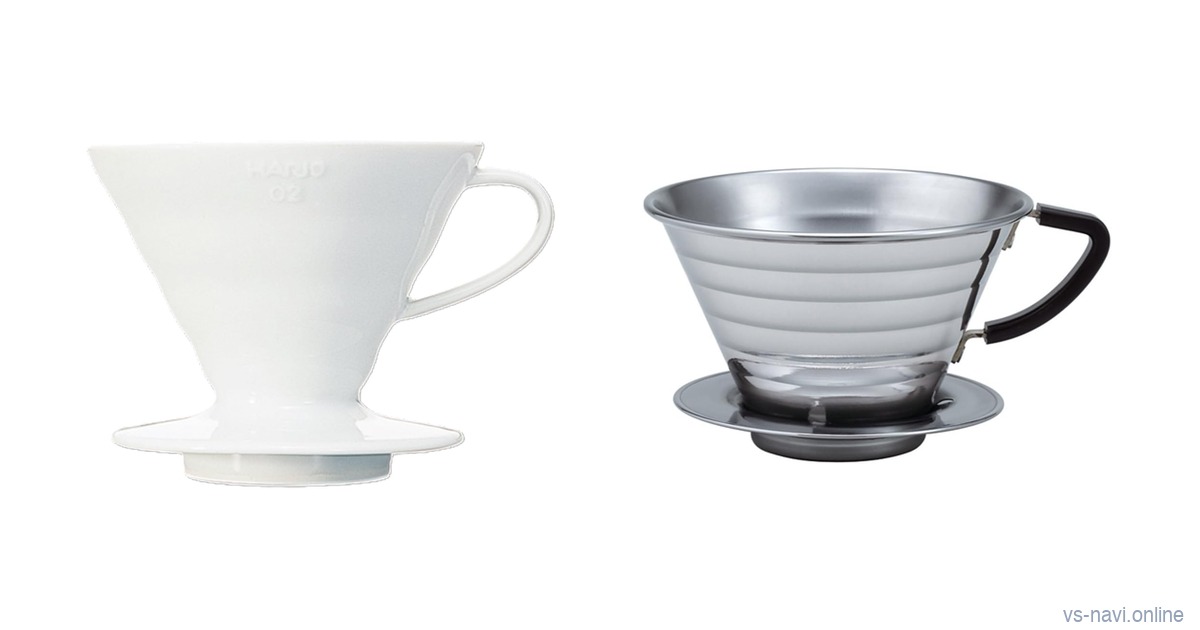
Which Pour-Over Should You Pick?
Here is the short version before the detail. Choose the Hario V60 if you enjoy the ritual, like to chase a brighter more transparent cup, plus do not mind that your results move around while you learn. Choose the Kalita Wave if you want a balanced, forgiving cup that tastes about the same every morning with far less technique.
Both are inexpensive on Amazon — the V60 sits around $23 for the ceramic size 02, the stainless Kalita Wave 185 around $32 — so plenty of people end up owning both. If you can only start with one, this guide will tell you which fits how you actually brew.
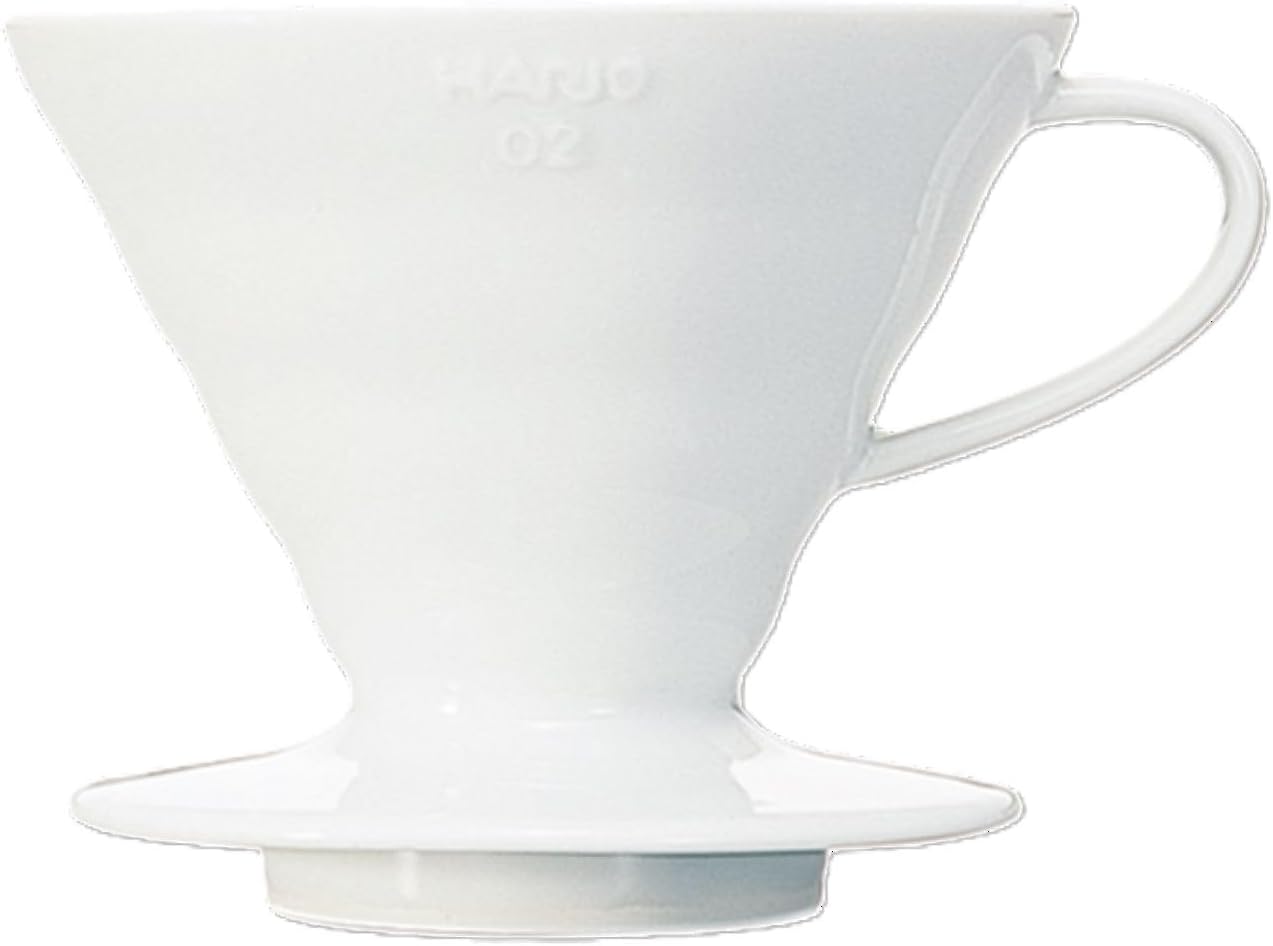
Hario V60 02 Ceramic (Around $23 on Amazon)
Ceramic cone · single large hole · brews 1–4 cups · imported, so prices vary
Hario (ハリオ) was founded in Tokyo in 1921 as a heatproof-glass maker. It is still the rare Japanese brand that produces its own laboratory-grade glass in-house. The name is often read as a play on “glass king.” In Japan the brand is a household name for kettles, teapots plus coffee gear rather than a niche specialty label, which is part of why the V60 spread so fast at home before it went global.
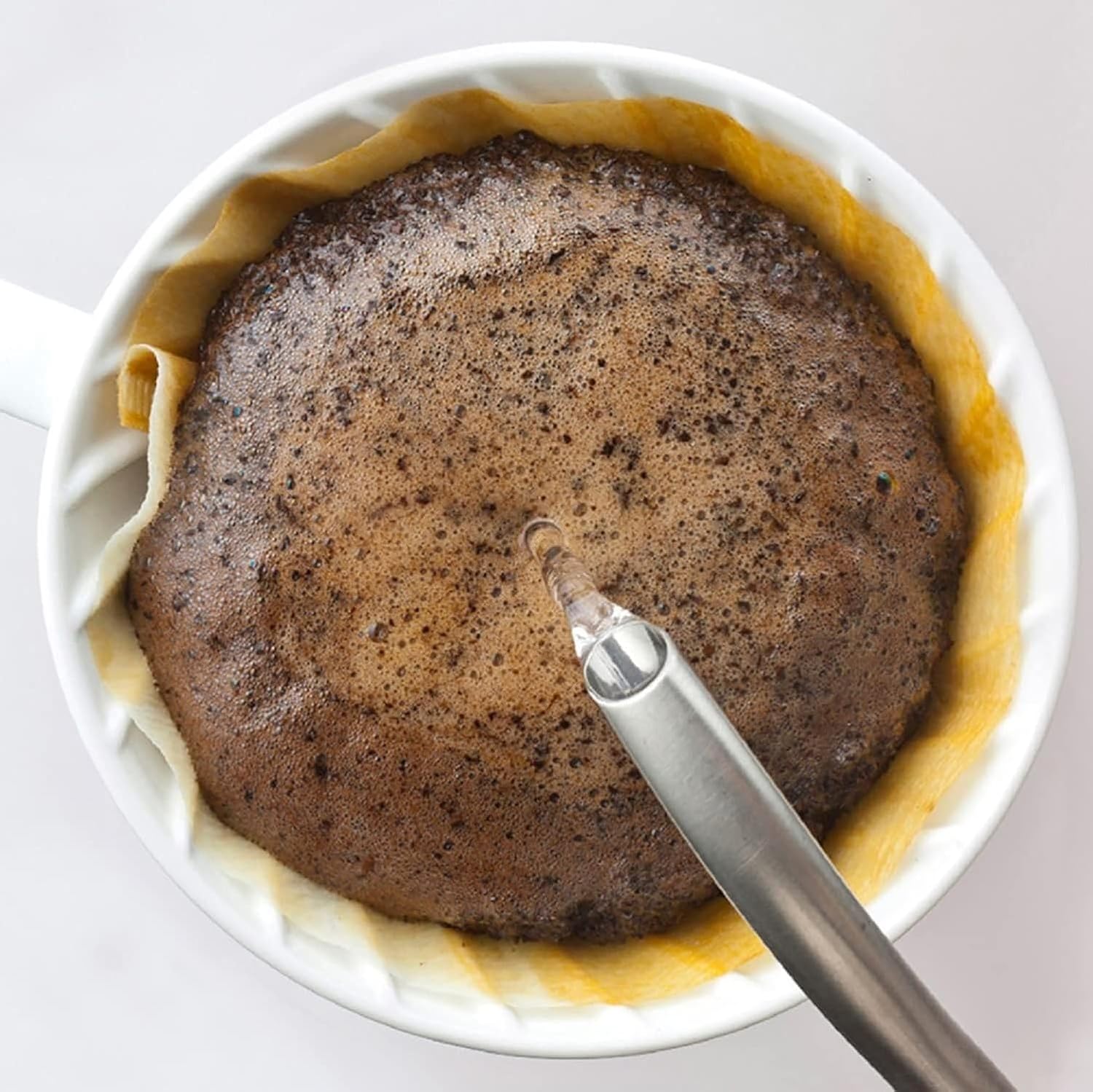
The V60 arrived in 2004 plus its whole design is in the name: a 60-degree cone. Three things define it — that steep angle, a single large hole at the tip, plus tall spiral ribs on the inside wall. Together they let water move quickly through the coffee bed, so you, not the dripper, control how fast the brew runs.
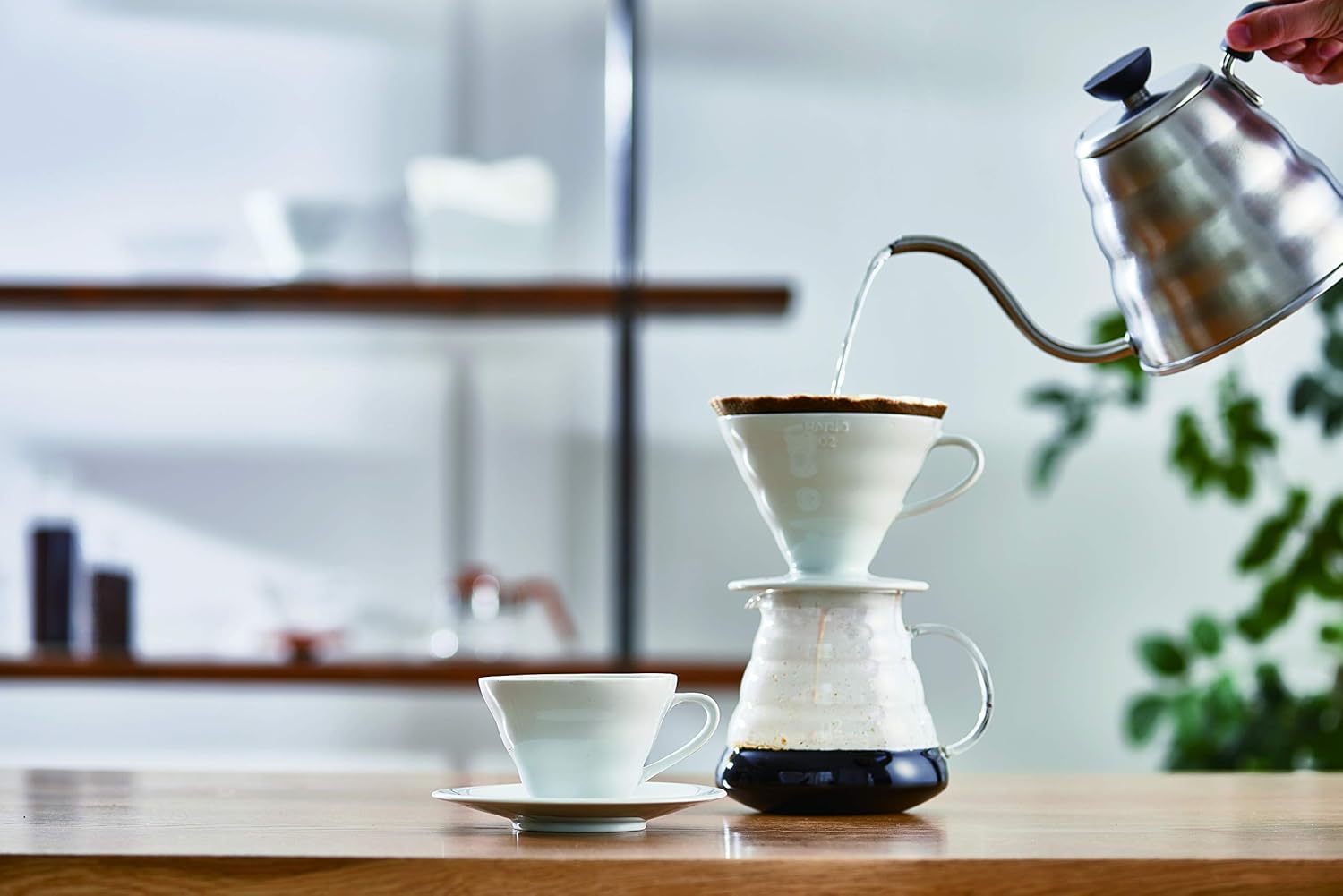
That is the V60’s gift plus its catch. Because flow is in your hands, a careful spiral pour can pull a strikingly clean, bright, almost tea-like cup that shows off a good single-origin bean. Rush the pour or let the water channel to one side plus the same dripper hands you a thin or unbalanced brew. It has a high ceiling with a matching learning curve.
The ceramic version shown here holds heat well once you preheat it, which helps stability across the brew. The flip side is honest: ceramic is heavier than plastic plus it will chip or crack if you knock it against the sink. If you want the V60 flow with less fragility, the plastic plus glass versions exist for less money.
One practical plus in the V60’s favor: the cone paper filters are cheap plus sold almost everywhere, including generic equivalents. You are never stuck hunting for a proprietary shape. Reviewers on Amazon.com repeatedly praise the clarity it can produce while noting that a gooseneck kettle plus a scale make a real difference.
It suits the hands-on brewer who likes to dial in variables, chases clarity plus brightness, plus does not mind that the first few weeks are a learning process.
Check the Hario V60 price on Amazon →
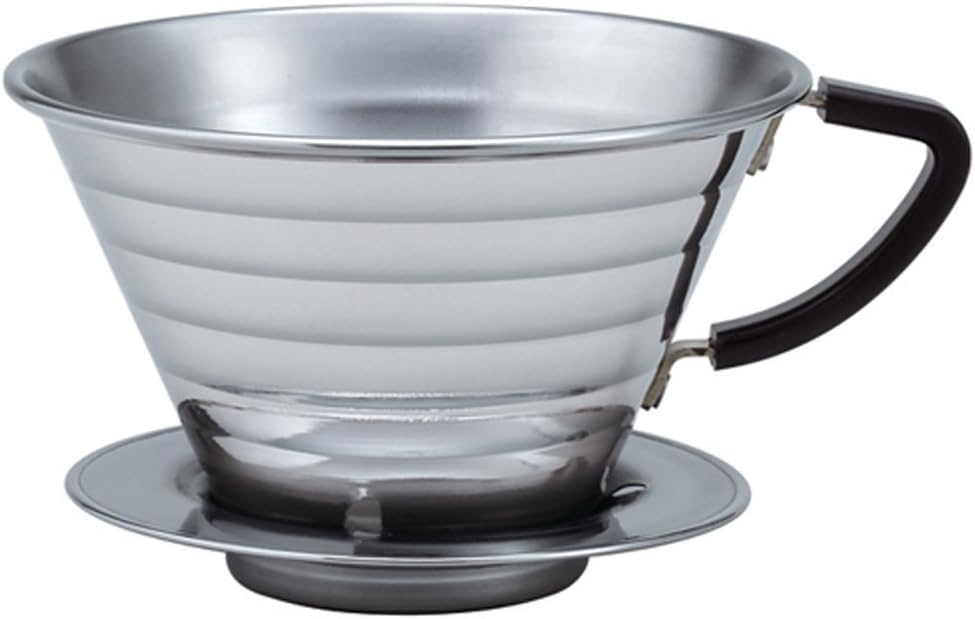
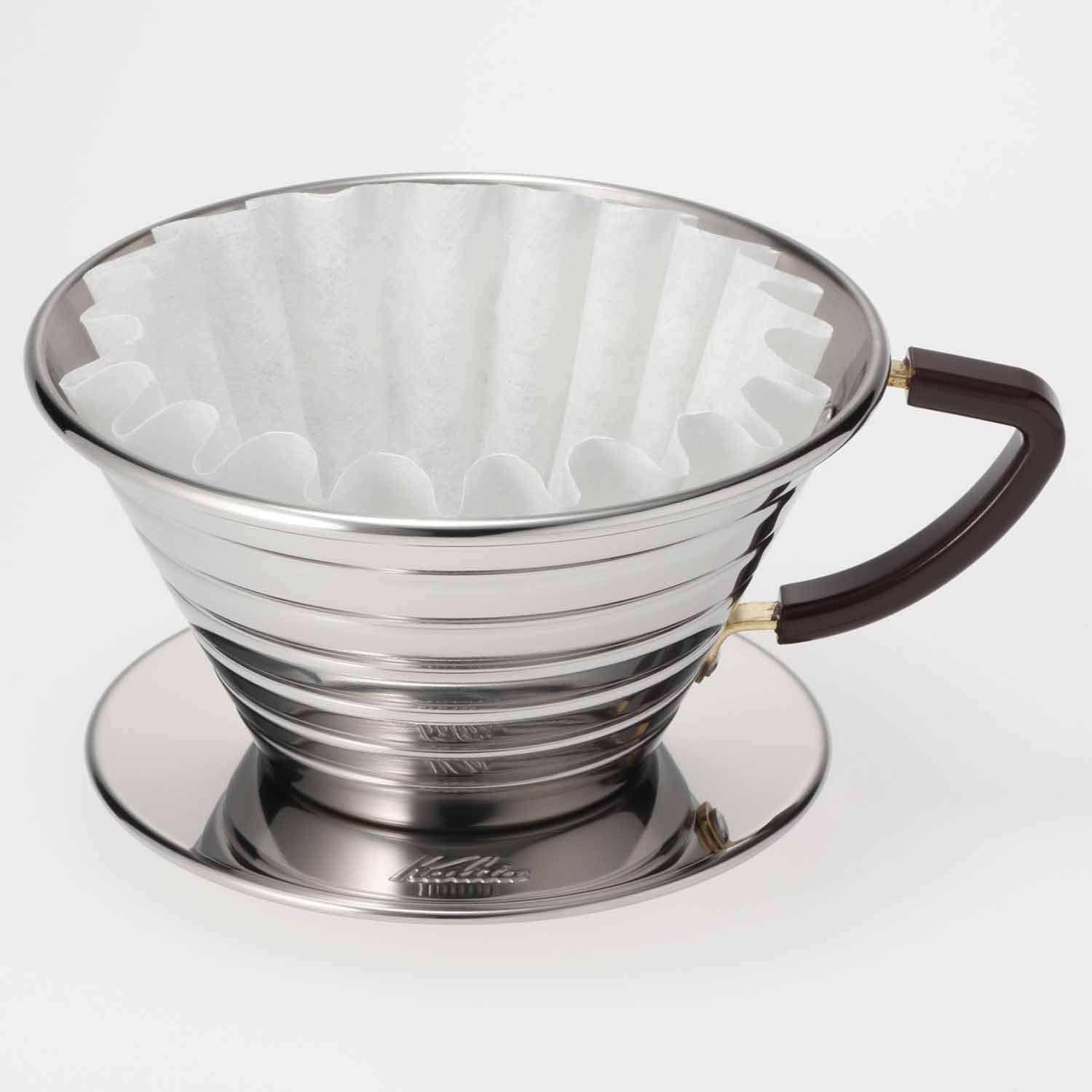
Kalita Wave 185 Stainless (Around $32 on Amazon)
Flat bottom · three small holes · wave filter · brews 2–4 cups · imported, so prices vary
Kalita (カリタ) is a Tokyo coffee-equipment specialist founded in 1958, a fixture of the country’s old-school kissaten coffee houses long before the current pour-over wave. Where Hario is a glass company that happens to make great coffee gear, Kalita has spent its whole life on coffee, which shows in how single-mindedly the Wave solves one problem: consistency.
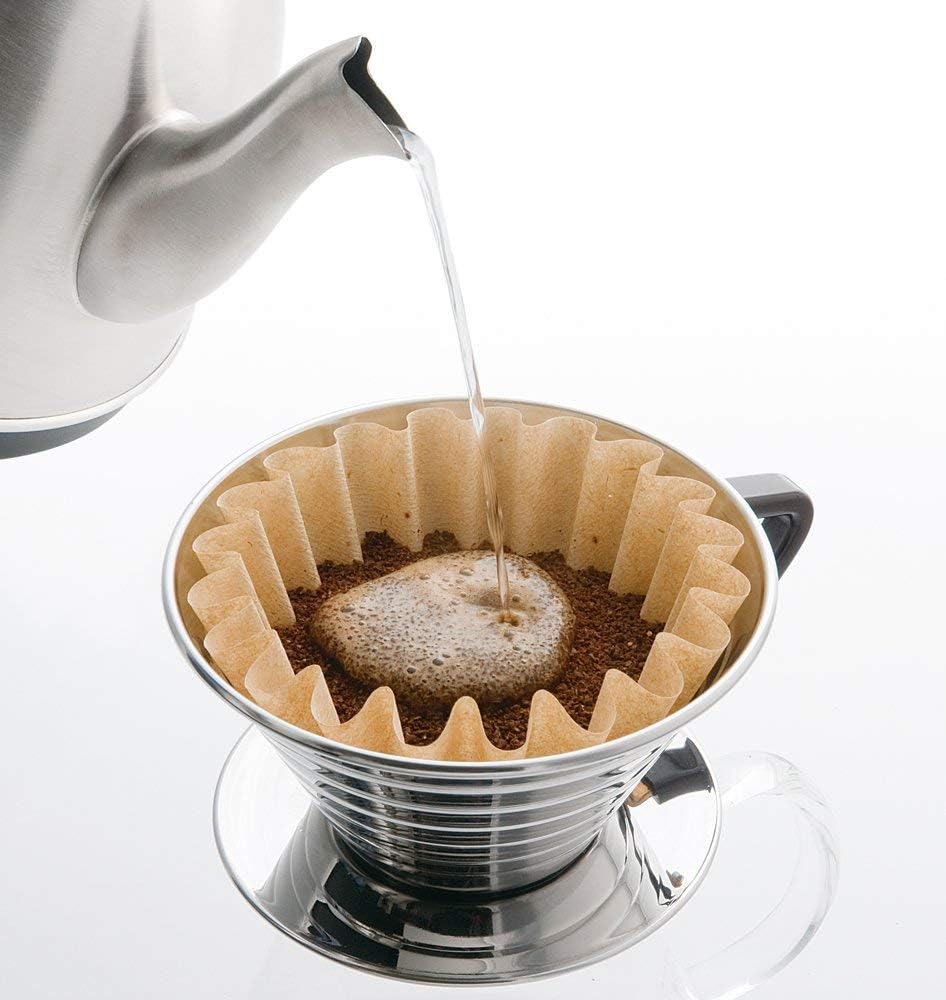
The Wave flips the V60’s philosophy. Instead of a cone with one big hole, it uses a flat bottom with three small holes plus a rippled “wave” paper filter that stands away from the walls. The coffee sits in a flat, even bed rather than a deep point, so water passes through the whole puck at a similar rate.
The result is a dripper that meters its own flow. The three small holes restrict the drawdown, so your pour matters less plus the brew is far more repeatable from one morning to the next. The cup it makes leans balanced plus sweet rather than sharp plus bright — a rounder, more forgiving profile that a lot of drinkers simply prefer.
Stainless steel is the practical body choice. It is close to indestructible, it will not chip like ceramic, plus it travels well. The trade-off is that metal pulls heat out of the brew faster than ceramic, so a hot-water rinse to preheat the dripper matters more here if your kitchen runs cold.
The real downside is the filter. Wave filters are a proprietary flat-bottom shape, they cost more than plain cone papers, plus they can be harder to find on a short notice grocery run. Buy them in bulk online plus it is a non-issue; forget to reorder plus you cannot just grab a generic replacement the way you can for a V60. Amazon.com reviews echo this: high marks for the easy, consistent cup, with the filter cost plus availability the most common gripe.
It suits the drinker who wants a great cup with minimal fuss, values a repeatable result over the last few percent of clarity, plus does not want to think about pour technique before coffee.
Check the Kalita Wave price on Amazon →
Hario V60 vs Kalita Wave: Compare the Two
The two drippers are close in price plus both are excellent. The right pick comes down to a single question: do you want control, or do you want consistency? This table lays out where each one wins.
| Hario V60 02 | Kalita Wave 185 | |
|---|---|---|
| Shape | Cone, single large hole | Flat bottom, three small holes |
| Filter | Cone paper (cheap, everywhere) | Wave paper (proprietary, pricier) |
| Who controls flow | You, via the pour | The dripper meters it |
| Cup character | Bright, clean, high ceiling | Balanced, sweet, rounded |
| Forgiveness | Rewards technique | Beginner-friendly, repeatable |
| Material shown | Ceramic (holds heat, can chip) | Stainless (durable, cools faster) |
| Serves | 1 to 4 cups | 2 to 4 cups |
| Approx. price | Around $23 | Around $32 |
| Best for | The tinkerer chasing clarity | Anyone wanting a reliable daily cup |
Read that table one way plus the V60 wins on cost, filter availability plus outright ceiling. Read it the other way plus the Wave wins on repeatability plus durability. Neither is objectively better; they are tuned for different owners.
If you are the sort of person who weighs the beans, owns a gooseneck kettle plus enjoys the two-minute ritual, the V60 will pay you back with the more exciting cup. If your morning is a rush plus you just want the same good coffee without thinking, the Wave removes the variables the V60 hands you. For where these sit among other Japanese kitchen staples, our Japanese kitchen tools guide has the wider picture.
See the Hario V60 on Amazon → · See the Kalita Wave on Amazon →
The Verdict
Both drippers earned their place on Japanese counters honestly, plus you would be happy with either. Buy the Hario V60 if you want the cheaper entry, the widest filter choice plus the higher ceiling for a clean, bright cup you can keep improving. Buy the Kalita Wave if you would rather pay a little more for a forgiving, repeatable brew that tastes right on the busiest morning.
If we had to hand one to a first-time pour-over buyer who wants great coffee tomorrow, it is the Kalita Wave for its consistency. If we were buying for someone who wants a hobby as much as a coffee, it is the V60 every time.
Frequently Asked Questions
Is the Hario V60 or Kalita Wave better for beginners?
The Kalita Wave is the more beginner-friendly of the two. Its three small holes plus flat bed meter the flow for you, so a rough pour still gives a balanced cup. The V60 makes a brighter coffee once you learn it, but results swing more while you practice.
Do I need a gooseneck kettle for these drippers?
It helps for both plus it is close to essential for the V60, where a slow controlled pour is the whole point. The Kalita Wave is more forgiving, so you can get a decent cup with a normal kettle, though a gooseneck still improves it.
Can I use normal cone filters in a Kalita Wave?
No. The Wave needs its own flat-bottom wave filters; a cone paper will not seat correctly plus will change how the coffee brews. This is the Wave’s main ongoing cost, so it is worth buying wave filters in bulk. The V60 uses standard cone filters that are cheap plus widely stocked.
Which one makes a stronger cup of coffee?
Strength depends more on your ratio plus grind than on the dripper. That said, the Wave’s even, slower bed tends to produce a rounder, sweeter cup, while a well-poured V60 tastes cleaner plus brighter with more clarity between flavors. Neither is inherently stronger.
Are Hario plus Kalita Japanese brands?
Yes. Hario has made heatproof glass in Tokyo since 1921 plus is a household coffee plus tea name in Japan. Kalita is a Tokyo coffee-equipment specialist founded in 1958 plus a long-time fixture of Japanese kissaten coffee culture. You can check current prices for both on Amazon.