This article contains affiliate links (we may earn a commission).
The batter hits the hot wells with a hiss, you drop in a cube of octopus and a few minutes later you are turning a sphere with a metal pick while everyone at the table reaches in. Takoyaki is street food you make together, which is exactly why the pan you choose changes the whole evening.
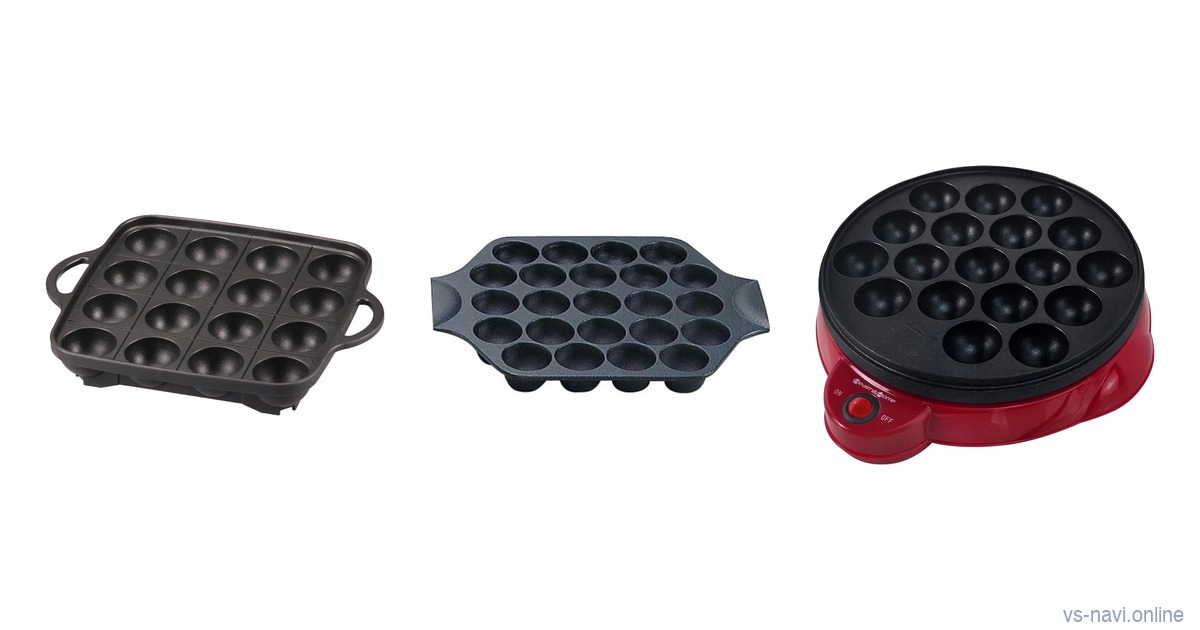
The catch is that “takoyaki pan” covers three very different tools. One is a plate that sits on a butane burner. One is a slab of Nambu cast iron that outlives its owner. One plugs into the wall and needs no stove at all. They cook the same snack, but they suit very different kitchens.
Our editorial team tracks how these tools are actually used in Japan, where takoyaki season peaks in autumn and winter. Below we compare three widely available picks — all steady Amazon listings from 2025 into the 2026 season — so you can match the format to your table.
Which Takoyaki Pan Should You Pick?
If you want the crispiest, restaurant-style shell and plan to make takoyaki for years, the Iwachu Nambu cast-iron pan is the one to buy on Amazon. If you already own a portable butane stove or love authentic tabletop cooking, the Iwatani grill plate is the cheapest honest way in. If you have no stove to spare or you are cooking with kids, the Health and Home electric maker is the easiest, safest pick.
Here is how each one earns its place.
Iwatani Takoyaki Grill Pan — around $31 on Amazon
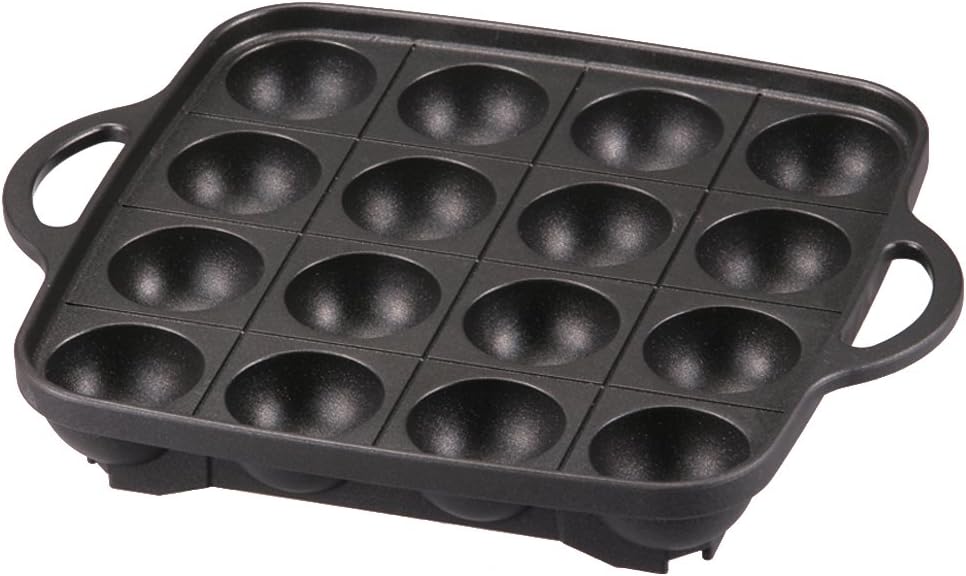
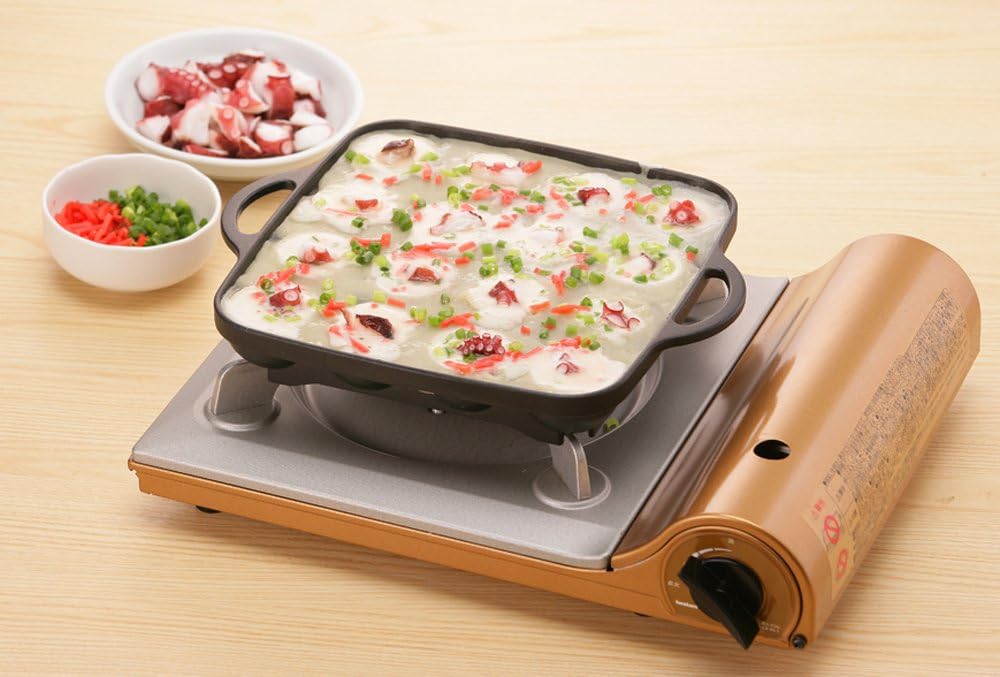
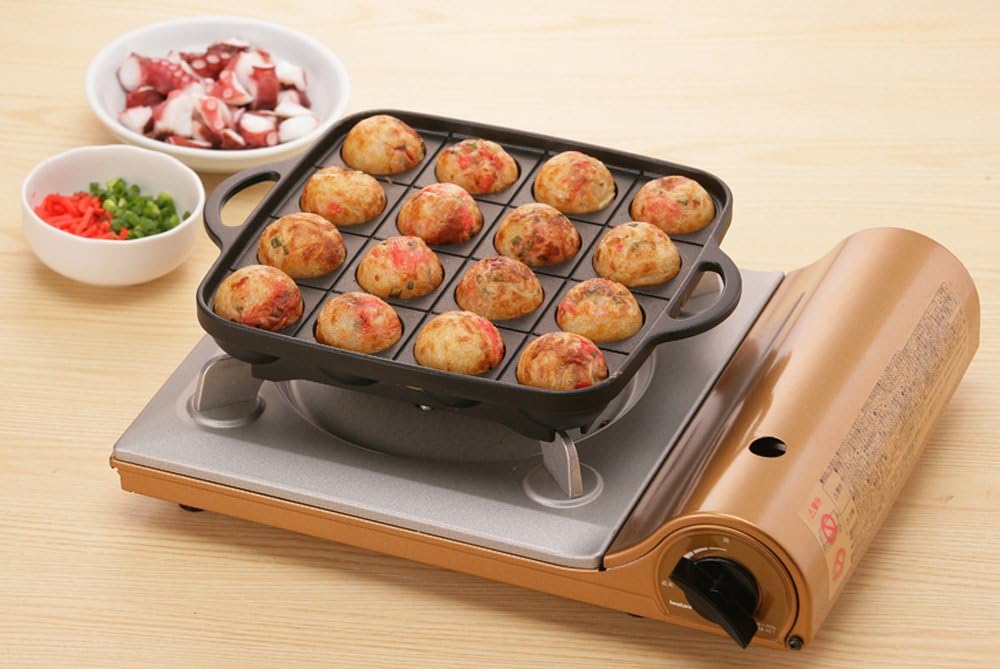
This is the pan most Japanese households actually reach for. It is a heavy nonstick plate of cast aluminum with 16 deep hemispherical wells and its underside is shaped to lock onto the pan supports of an Iwatani “Cassette Feu” butane stove. There is no cord and no dial of its own — the burner underneath does the work.
Iwatani Corporation was founded in Osaka in 1930 and is the name behind most of the portable cassette stoves sold in Japan. A takoyaki plate resting on an Iwatani burner in the middle of the table is the archetypal at-home takoyaki party, so this plate carries real cultural weight rather than being a novelty accessory.
The thick aluminum holds heat well and the wells are deep enough to stop batter spilling between them. In our review process the honest limitation is simple: it is only a plate. You must already own — or be willing to buy — a compatible butane stove and aluminum browns a touch more gently than iron. For anyone who already does tabletop nabe or yakiniku, that stove is probably in a cupboard already.
It suits people who want the genuine share-the-table experience at the lowest price and who like the theater of cooking in front of guests.
Iwachu Nambu Cast-Iron Takoyaki Pan — roughly $110–130 (imported)
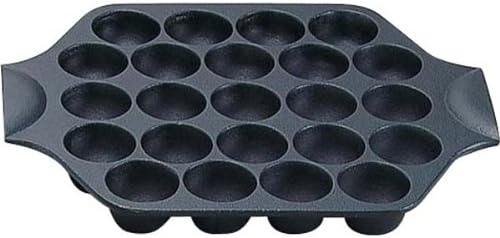
If the Iwatani plate is the people’s choice, the Iwachu 24025 is the one enthusiasts covet. It is solid Nambu ironware with 23 wells, each 4 cm across, cast walls roughly 4 mm thick and a flat ground base that works on gas or an induction (IH) cooktop. It weighs about 2.4 kg — you feel it the moment you lift it.
Iwachu is a historic foundry in Morioka, Iwate Prefecture, working in the Nambu Tekki tradition that dates back to the 17th century. In Japan, Nambu ironware kettles and pans are prized for exceptional heat retention, so buying an Iwachu is buying regional craft credibility as much as a cooking tool. These pans are passed down, not replaced.
That same foundry casts a rectangular egg pan in the same Nambu iron, aimed at tamagoyaki rather than takoyaki. It is the cheapest of the serious Japanese egg pans while also the heaviest, which is the trade-off we worked through in our comparison of the best tamagoyaki pans of 2026 against nitrided iron plus hand-tinned copper.
That thermal mass is the whole point. Cast iron holds and radiates heat so evenly that the shells sear crisp even as you keep adding cold batter, giving the browned, almost-lacquered exterior that thinner plates struggle to match. Being induction-compatible is genuinely rare for a takoyaki pan and widens where you can use it.
The honest trade-offs are weight, care plus cost. There is no nonstick coating, so it needs seasoning and careful hand-drying to avoid rust and it is the priciest of the three. It rewards cooks who chase texture and do not mind a little maintenance ritual.
Health and Home Electric Takoyaki Maker — around $28 on Amazon
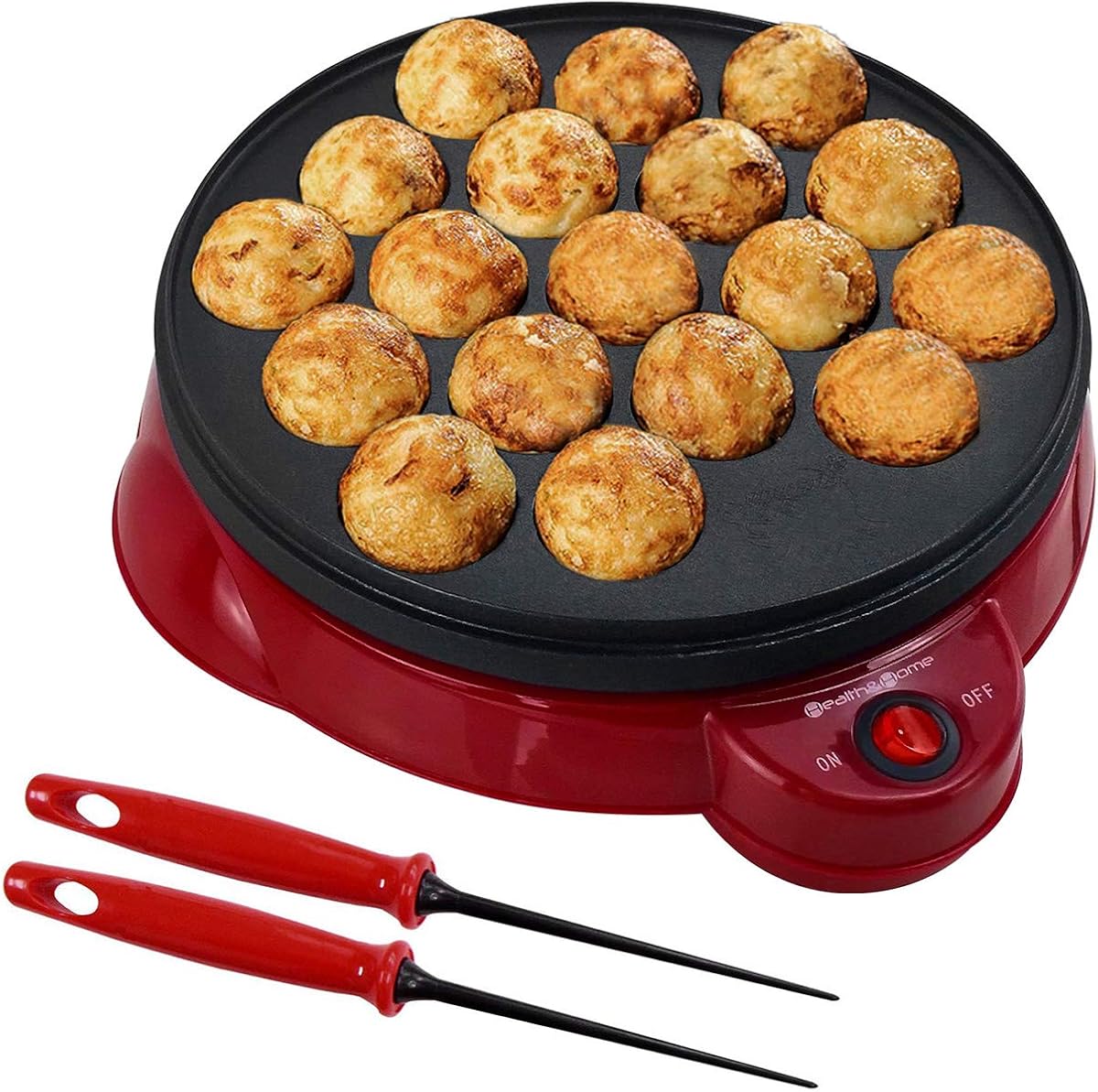
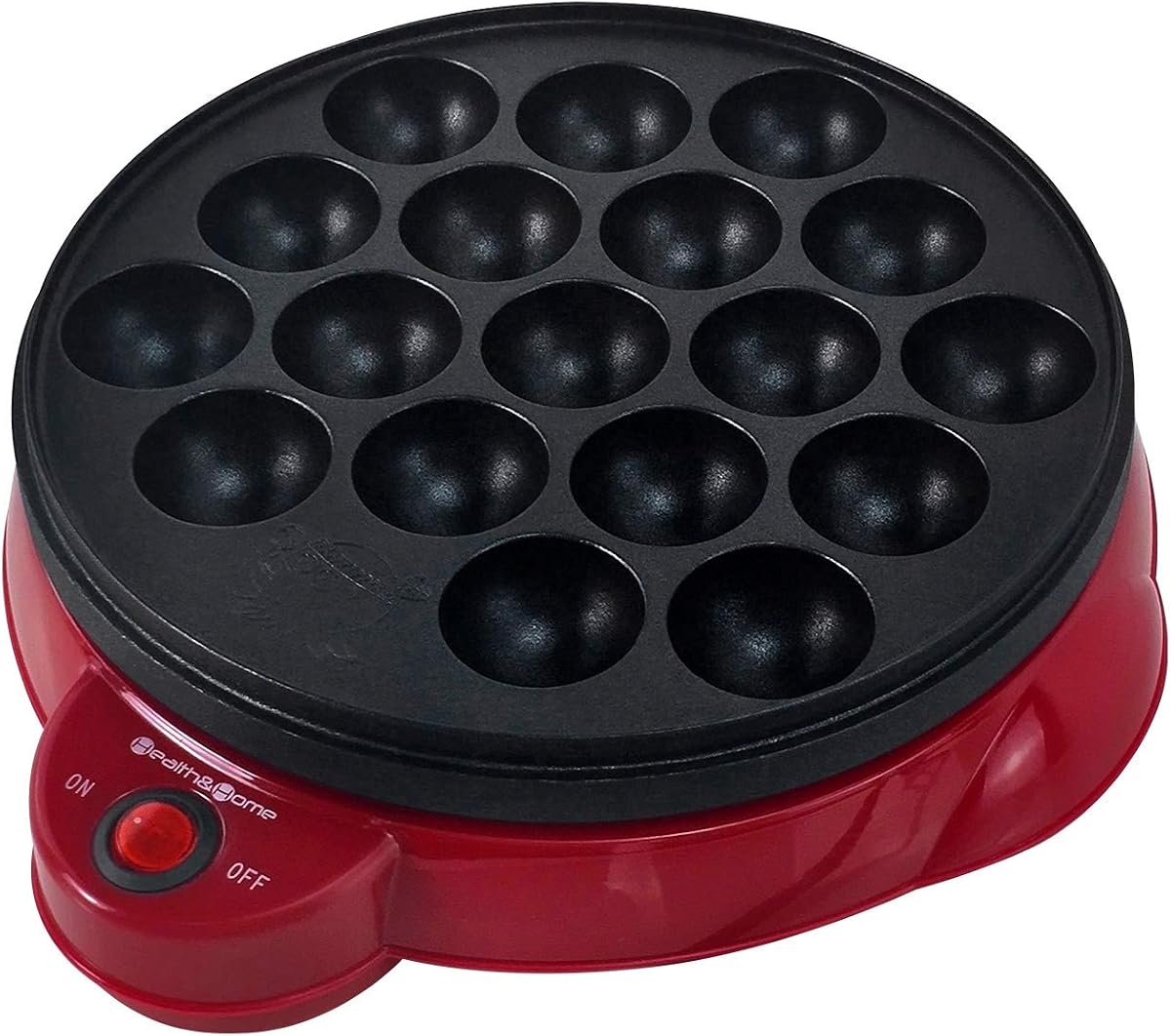
Not everyone has a spare butane stove or wants to season cast iron and that is the gap this fills. The Health and Home maker is a self-contained countertop unit with 18 nonstick molds, a single on/off switch plus two picks in the box. You plug it into a standard US outlet and start pouring — no burner, no flame.
If you decide the burner is worth owning after all, it is worth picking the right one. Our Iwatani butane stove review compares the three cassette bodies sold on Amazon.com, including the one rated to carry a 10 kg pot.
Health and Home is a US Amazon houseware brand rather than a heritage Japanese maker, so think of it as the accessible, no-special-equipment route into takoyaki. It currently holds around a 4.2-star average across roughly 760 ratings on Amazon.com, which is a solid record for a budget appliance.
The even heating plate has no fierce hot-spots, the nonstick surface wipes clean in seconds and there is no open flame to manage — which makes it the safest option for beginners or a kids’ party. It is also a two-in-one buy: the molds are effectively identical to Danish aebleskiver pans, so the same machine turns out cake pops, filled pancake balls plus poffertjes.
The trade-off is heat ceiling. A plug-in element caps out lower than a gas flame, so the shells brown more gently than they would on cast iron and the nonstick coating is a consumable that wears over years. For convenience and safety, though, nothing here beats it.
Compare the Three
| Iwatani gas plate | Iwachu cast iron | Health and Home electric | |
|---|---|---|---|
| Material | Cast aluminum, nonstick | Nambu cast iron | Nonstick electric plate |
| Wells | 16 | 23 | 18 |
| Heat source | Butane stove (not included) | Gas or induction | Wall outlet, self-contained |
| Browning / crisp shell | Good | Best | Gentle |
| Ease of use | Needs stove plus flip skill | Heaviest, needs seasoning | Easiest, plug and play |
| Cleanup | Easy (nonstick) | Season plus hand-dry | Easiest (wipe) |
| Price tier | Cheapest | Most expensive | Mid |
The pattern is easy to read. Chase crispiness plus longevity, choose the Iwachu cast iron. Want the lowest entry price with authentic tabletop cooking and you already have a butane stove, choose the Iwatani plate. Value convenience plus safety over the last few degrees of crunch, choose the electric maker.
Which Should You Buy?
There is no single winner because the three answer different questions. For the best possible takoyaki and a pan you will hand down, the Iwachu Nambu cast iron is worth the price plus the upkeep. For the true share-the-table ritual on a budget, the Iwatani plate is the classic Japanese choice.
And if you just want to plug in, cook with the kids plus wipe it clean, the Health and Home electric maker gets you there with the least fuss. Match the format to your kitchen and your first batch will vanish before the second finishes cooking.
Frequently Asked Questions
Do you need a special pan to make takoyaki?
Yes. Takoyaki needs a plate with hemispherical wells about 4 cm across so the batter can be rotated into balls. A flat frying pan cannot form the round shape — the wells are what let you turn each ball 90 degrees with a pick and build a sphere.
Can a takoyaki pan cook other foods like aebleskiver?
Yes. The molds are essentially identical to Danish aebleskiver pans plus Dutch poffertjes pans, so the same device also makes cake pops, doughnut holes, filled pancake balls plus mini egg bites. The Health and Home electric unit is explicitly marketed for aebleskiver as well as takoyaki.
Gas vs electric — which browns better?
Gas browns better and cast iron over gas browns best of all. A live flame plus iron’s thermal mass reach higher surface temperatures for a crisp shell, while electric makers cap out lower and cook more gently for a softer exterior. For crunch, choose gas plus cast iron; for ease, choose electric.
Does the Iwachu pan work on an induction cooktop?
Yes. The 24025 has a flat ground base rated for induction (IH) at both 100V plus 200V, as well as gas. Note that the Iwatani aluminum plate does not work on induction — it is built for butane cassette stoves — while the electric maker needs no cooktop at all.
Is cast iron worth it over aluminum or electric?
For heat retention plus crispiness, yes — Nambu cast iron holds and radiates heat far better, so balls sear evenly even as you add cold batter. The trade-offs are weight of about 2.4 kg, the need to season plus hand-dry to prevent rust and a higher price. Casual cooks are often happier with the lighter nonstick plate or the plug-in electric maker.
Prices are approximate and shift with Amazon listings plus import availability; imported Japanese cast iron in particular varies by seller. Check the live price before buying. Compiled by the Vs-Navi.Online Editorial Team, which tracks the Japanese kitchenware market.