vs-navi.online is a participant in the Amazon Services LLC Associates Program. Purchases made through links on this page may earn us a commission at no extra cost to you.
A friend’s birthday dinner. You film a 15-second clip, then a small print slides out with a QR code that plays it back.
That is the idea behind the instax mini Evo Cinema, the new Fujifilm camera that shoots video as well as stills. It was announced in Japan in early January 2026 with a US list price of $409.95, per Photo Rumors. Digital Camera World reported that it was already a best-seller before it had even started shipping.
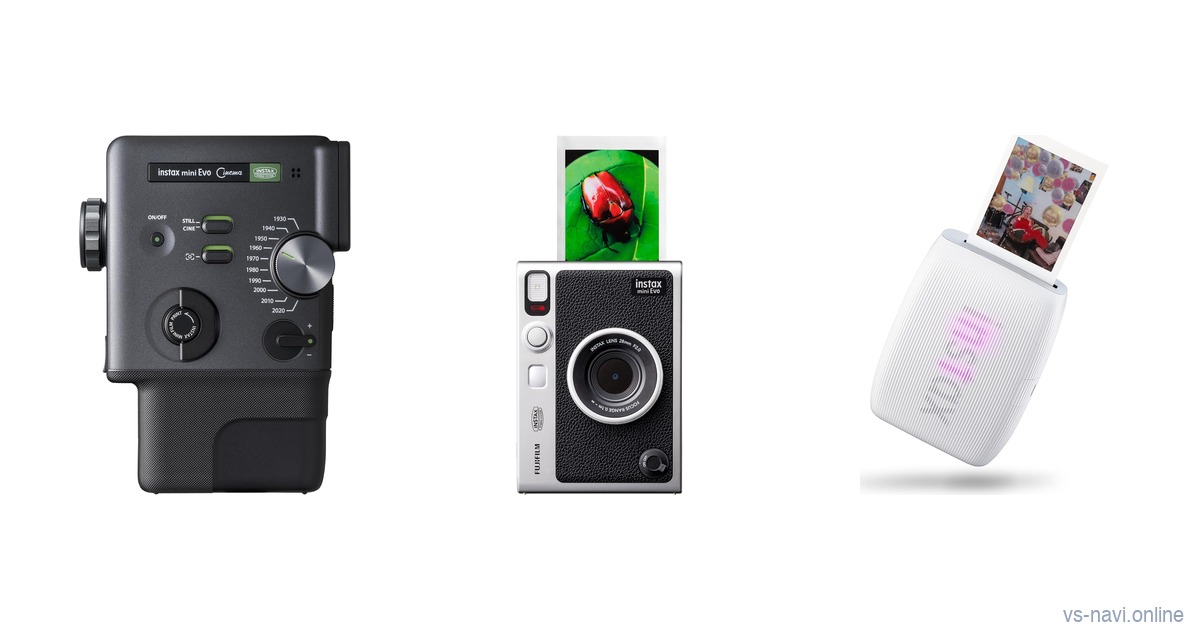
But is it the right instax for you? We compared it with the older instax mini Evo plus the instax mini Link 3 smartphone printer, using published specs, maker information plus Amazon.com listings. All three print on the same instax mini film, so the real question is how you want to shoot.
Our Pick: The Short Answer
- instax mini Evo Cinema — around $297 — best pick if you want short video clips plus retro looks from 10 decades.
- instax mini Evo — around $217 — best value hybrid camera for still photos with a large 3-inch screen.
- instax mini Link 3 — around $100 — best pick if you already love your phone camera and only want prints.

How to Choose: Hybrid Camera or Phone Printer?
Fujifilm started life in January 1934 as Fuji Photo Film. Its first instax camera, the instax mini 10, came out in Japan in November 1998. In Japan the mini line is still widely called “Cheki,” a nickname from that first model.
A classic instax camera exposes film directly, so every shot is a print. A hybrid camera like the mini Evo or the Evo Cinema is different. It saves a digital file first. You check it on the screen, then print only the ones you like. That saves film. If you would rather keep it fully analog, our instax mini 13 vs mini 12 vs mini 41 comparison covers the classic film-only cameras.
A smartphone printer like the mini Link 3 has no camera of its own. You shoot with your phone, edit in the free app, then send the image over Bluetooth. If your phone camera is good, this is the cheapest way into instax prints.
All three use instax mini film, sold separately. Each print is a 2 x 3 inch card with an image area of 62 x 46 mm. Fujifilm says a print takes about 90 seconds to develop.
instax mini Evo Cinema (Around $297 on Amazon)
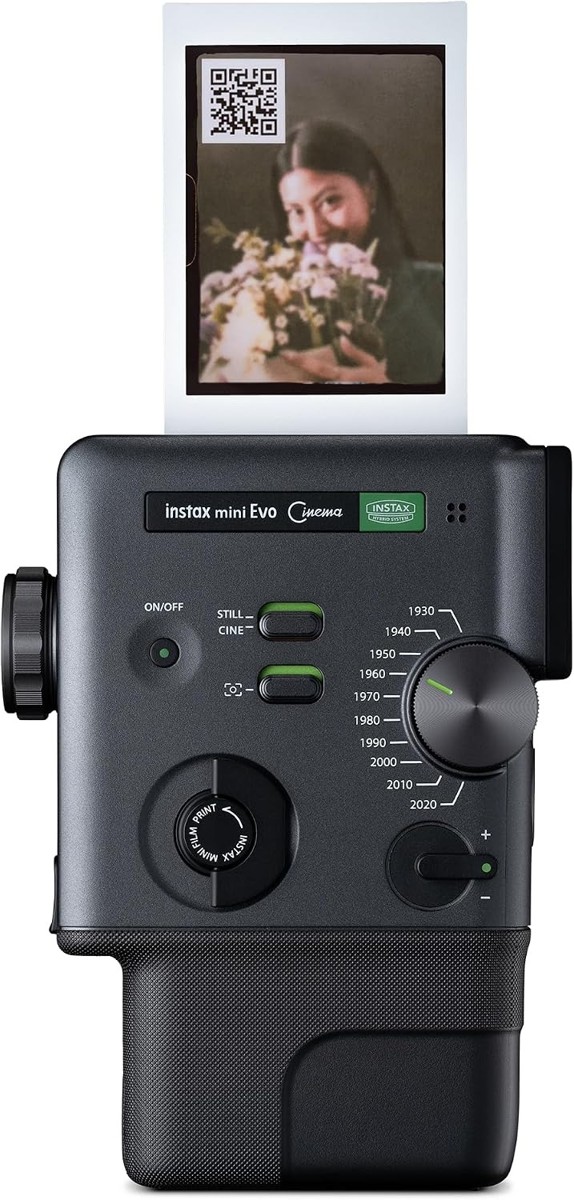
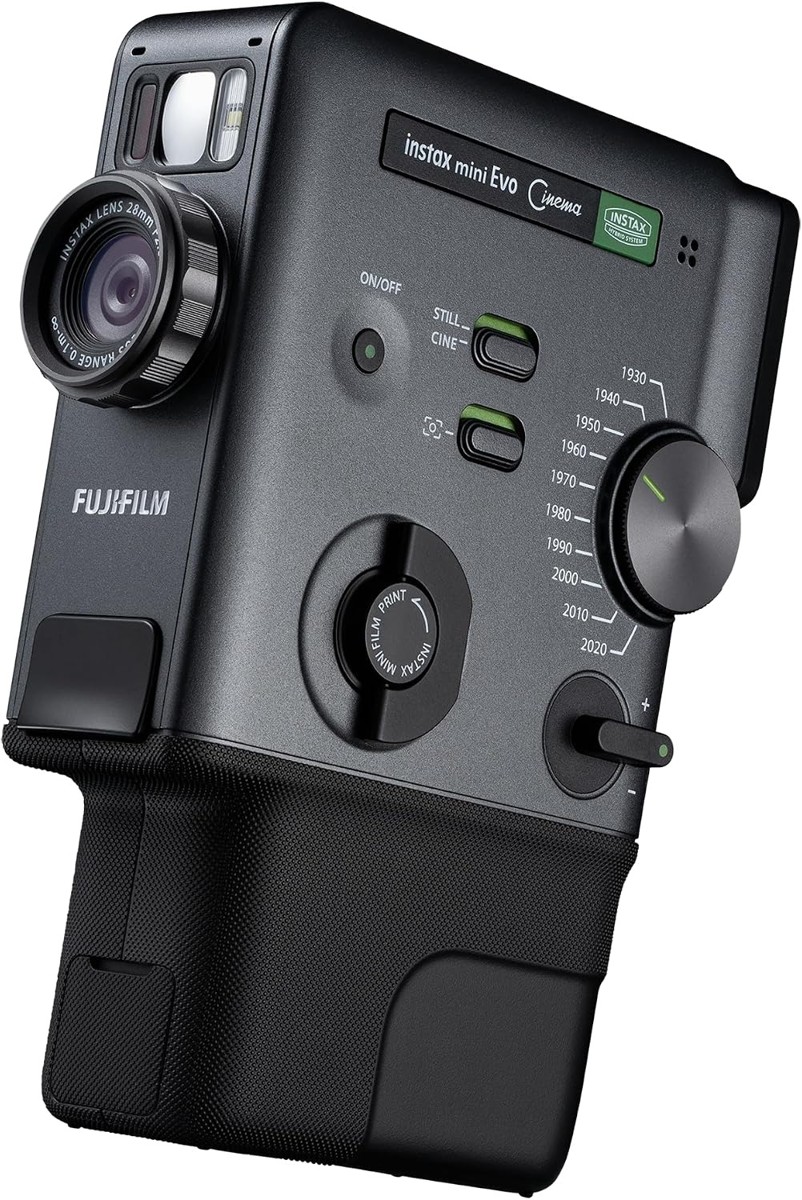
The Evo Cinema is the first instax mini camera in this group that records video. In Cine mode it shoots a series of short clips up to 15 seconds in total, then joins them into one movie. In the free instax mini Evo app you can edit videos up to 30 seconds long.
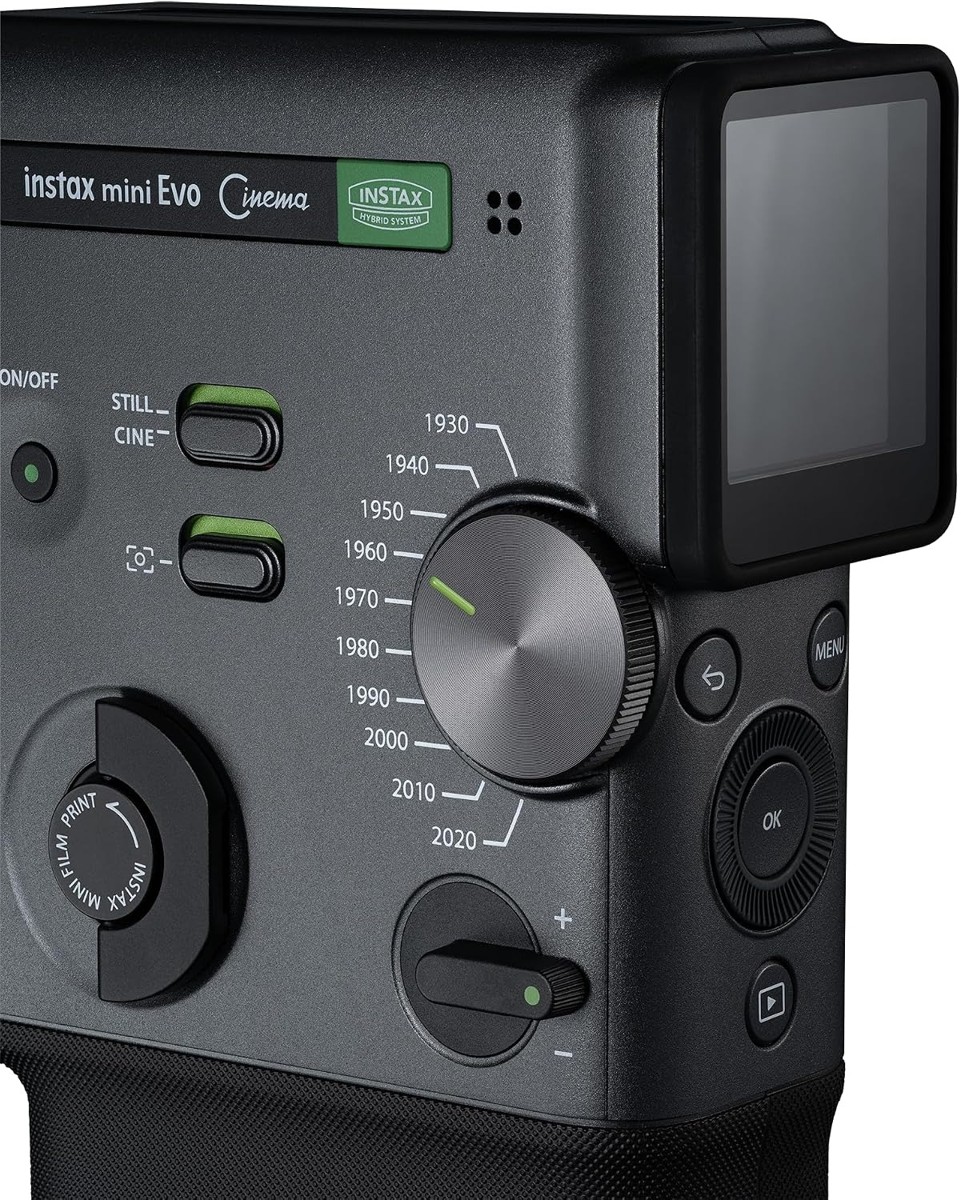
The fun part is the Eras dial. It has 10 settings marked 1930 through 2020. Fujifilm says each one changes the look of both the picture and the recorded sound. A second Degree dial adds 10 levels of color, contrast plus noise for each era. Picture turning the dial to 1960 at a beach party, then twisting it to 2020 for the group shot.
The body is not shaped like a normal camera. It stands upright with a grip at the bottom, a bit like a vintage film movie camera. It weighs about 270 g. Physical levers handle zoom plus printing: you lift and twist the Print Lever to make a print. To share a video, the camera prints a frame with a QR code. Friends scan it with a phone to watch the clip. Fujifilm keeps the uploaded video playable for two years.
Under the hood it uses a 1/5-inch sensor with about 5 million effective pixels, a 28 mm-equivalent F2.0 lens plus a 1.54-inch screen. Standard video is 600 x 800 pixels at 24p. A sharper 1080 x 1440 mode works only in the 2020 era. There is a microSD slot for cards up to 256 GB, a built-in mic, a speaker, a light, a selfie mirror plus a self-timer. One full charge is rated for about 100 prints.
The downside: the 1.54-inch screen is small for checking video, while the standard video size is low next to any phone. It is also new on Amazon, with 3.7 out of 5 stars from only 23 ratings when we checked. That is too few ratings to judge long-term reliability.
instax mini Evo (Around $217 on Amazon)
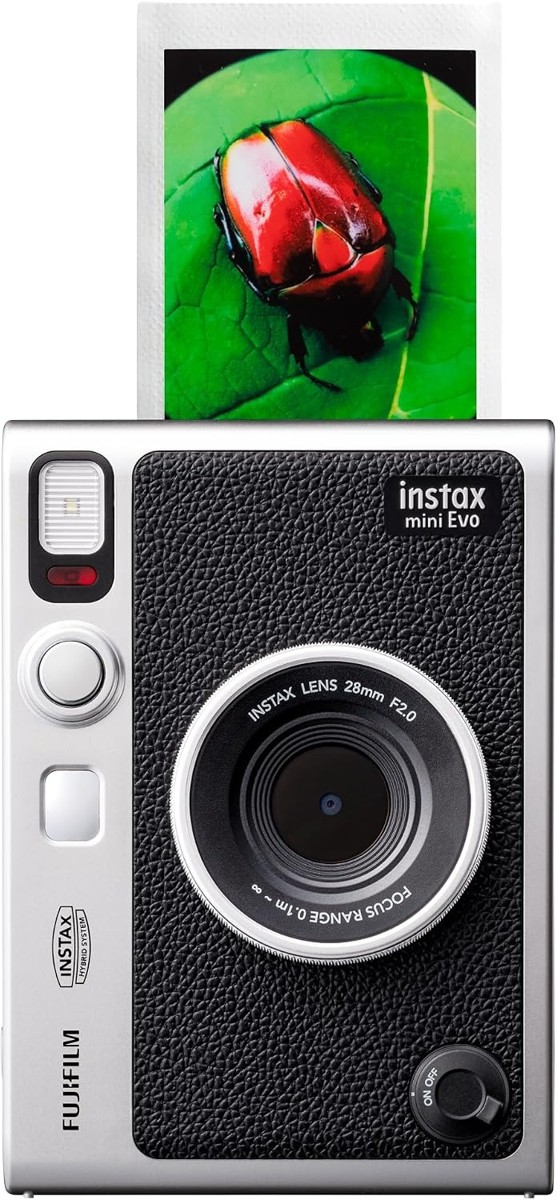
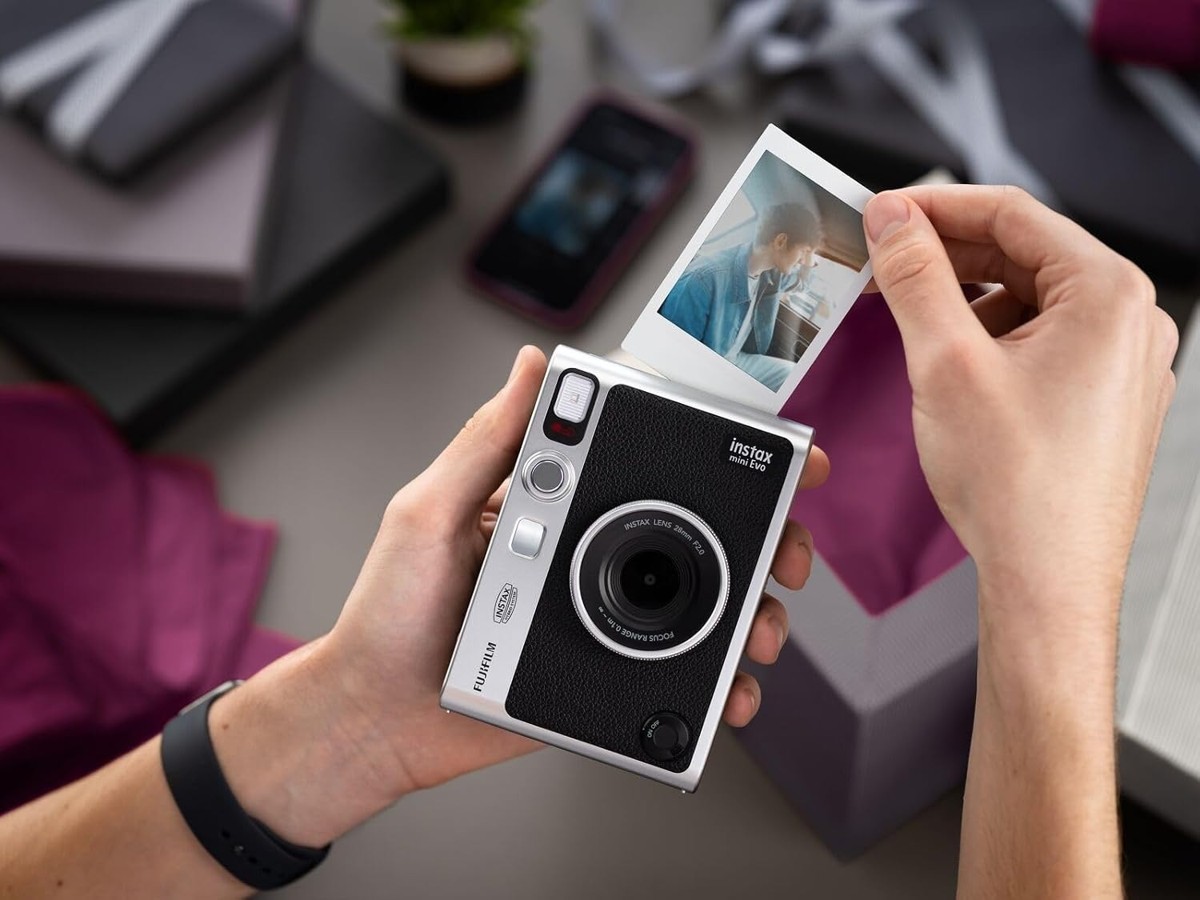
The mini Evo came out in Japan in November 2021. It is the hybrid camera that the Evo Cinema builds on. It shoots stills only, but it has the bigger screen: a 3.0-inch display with about 460,000 dots. That makes it easier to frame a shot or check faces before you spend film.
Instead of eras, it gives you 10 lens effects times 10 film effects, for 100 combinations. There are two shutter buttons, one for portrait shots plus one for landscape. A selfie mirror sits on the front. Picture a night out: you take five shots, flip through them on the screen, then print just the one where nobody blinked.
The specs match the Evo Cinema in many ways. It has the same 1/5-inch sensor class, the same 28 mm-equivalent F2.0 lens plus the same rating of about 100 prints per charge. At about 285 g with a flat, wide body, it looks like a classic film camera. It also works as a printer for photos from your phone through the app.
On Amazon it holds 4.6 out of 5 stars from 2,022 ratings. That long track record is a real point in its favor over the newer model.
The downside: there is no video mode at all. Also, the Amazon listing showed only 16 left in stock when we checked, so the price may move.
instax mini Link 3 (Around $100 on Amazon)
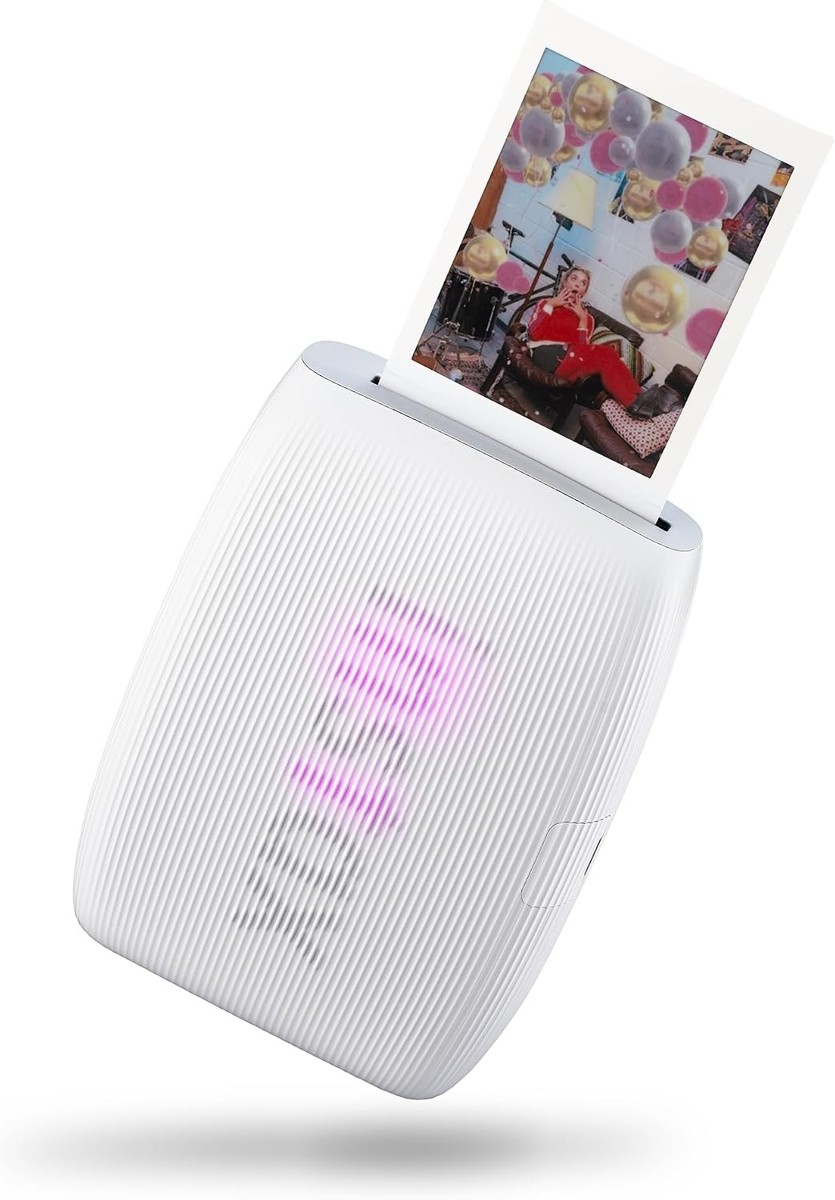
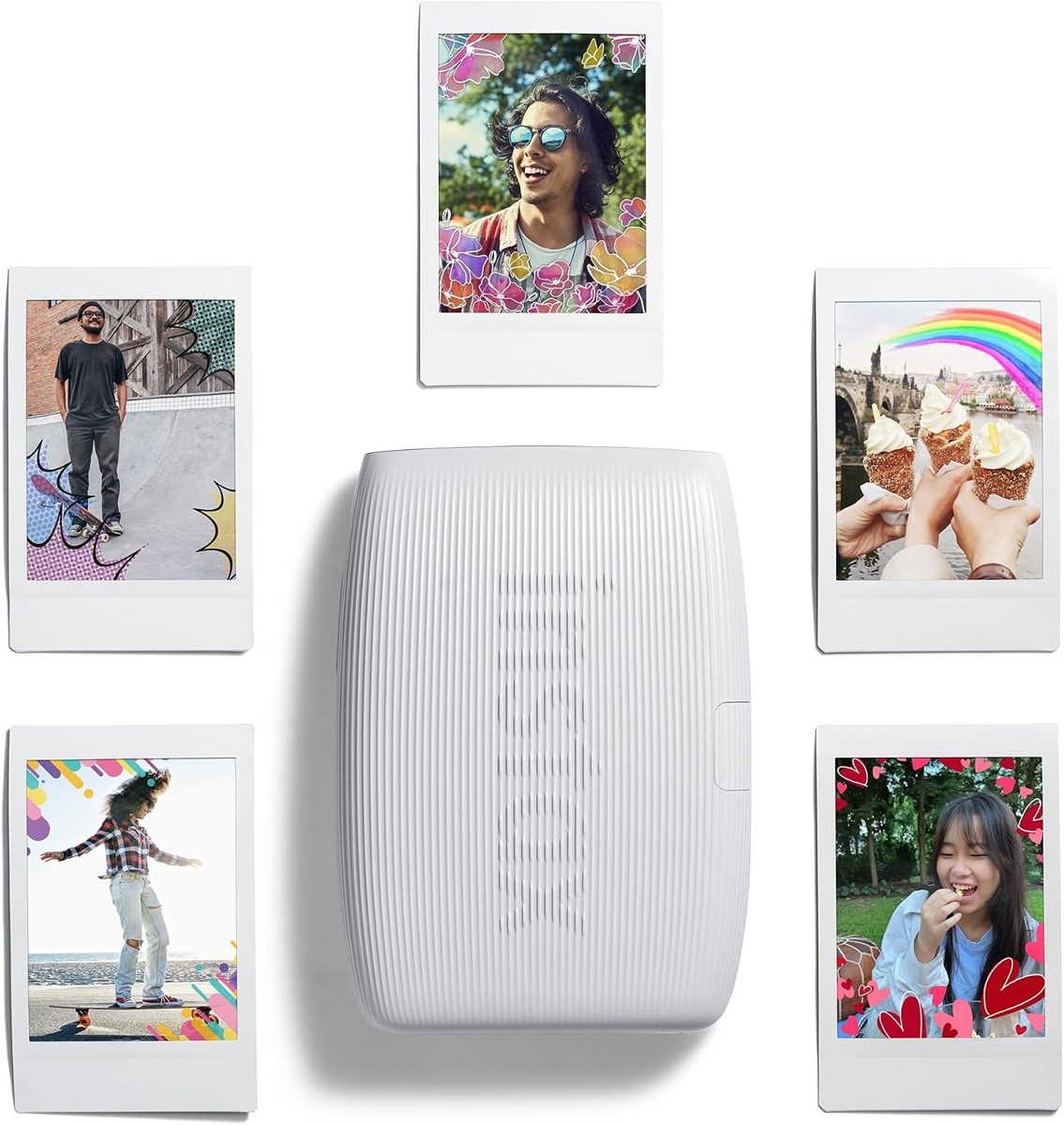
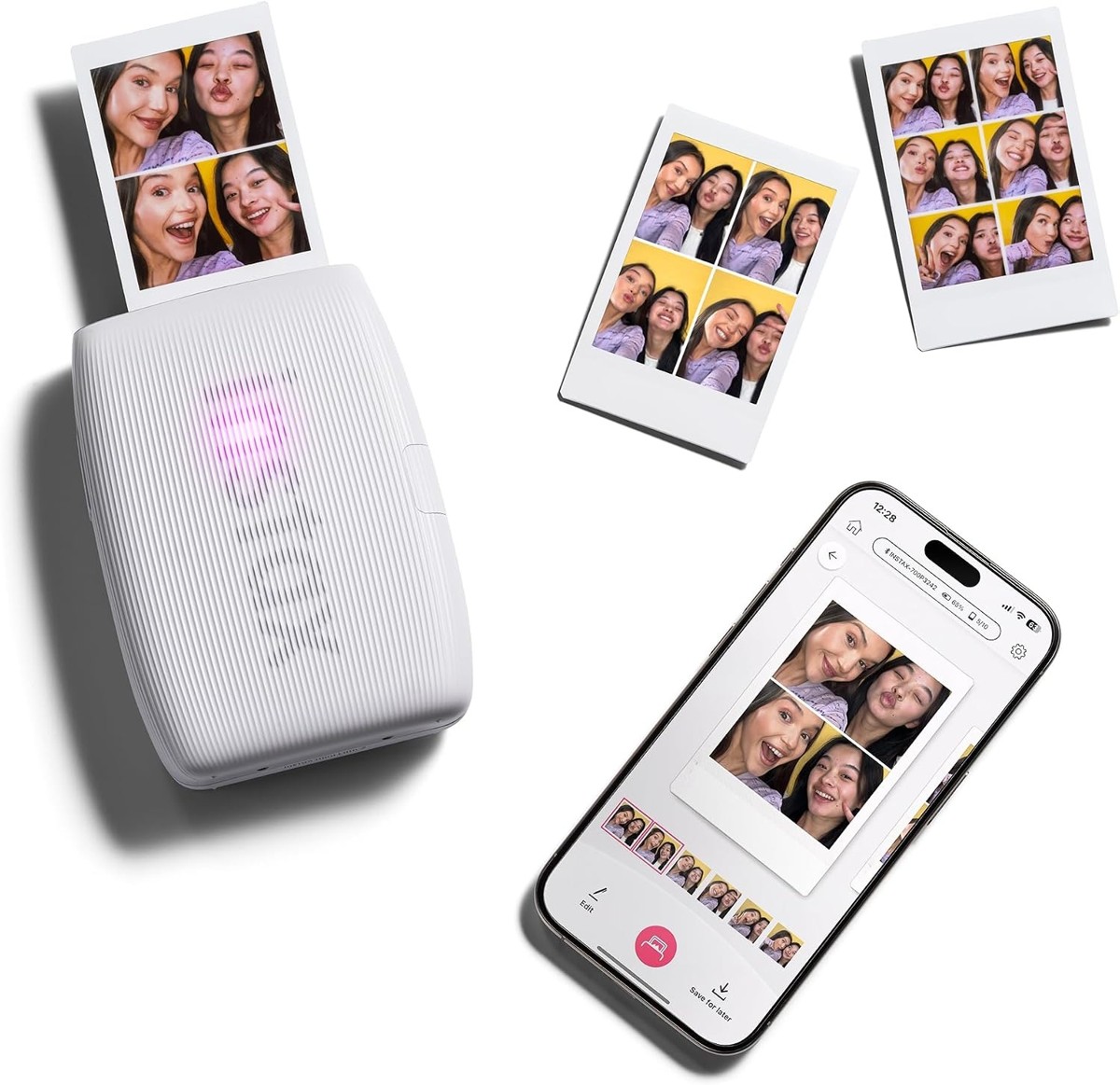
The mini Link 3 launched in Japan in August 2024. Fujifilm has been making smartphone printers since the SHARE SP-1 in 2014, so this is a mature product line. At about 210 g it is the lightest of the three. It slips into a tote bag next to your phone.
You pick a photo on your phone, send it over Bluetooth, then the print comes out in about 15 seconds. It prints at 800 x 600 dots (318 dpi) using an OLED exposure system. The app also lets you print a still frame from a video, or add a QR code that links to a clip, which is a cheap way to get part of the Evo Cinema idea.
The app has fun extras. instax AiR Studio adds AR backgrounds plus animated effects. Click to Collage takes up to six photos at 3-second intervals for a photo-booth style print. You can even tilt the printer to zoom in the app camera, or press its power button as a shutter. Colorful LED lights glow while it prints. It comes in Clay White, Sage Green plus Rose Pink.
It holds 4.7 out of 5 stars from 746 ratings on Amazon, the highest score of the three.
The downside: it is not a camera. If your phone battery dies, there are no prints. It also lacks the physical dials that make the Evo models feel special to use.
Compare the Three
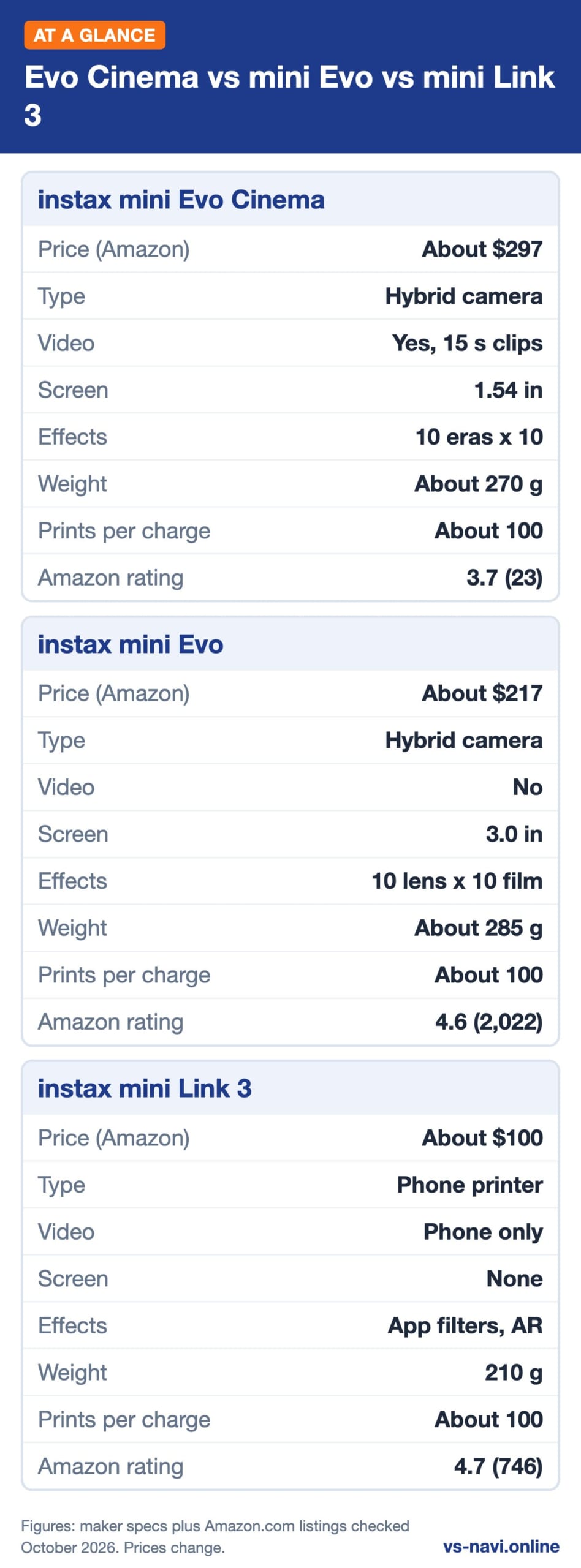
| Evo Cinema | mini Evo | Link 3 | |
|---|---|---|---|
| Price (Amazon) | About $297 | About $217 | About $100 |
| Type | Hybrid camera | Hybrid camera | Phone printer |
| Video | Yes, 15 s clips | No | Phone only |
| Screen | 1.54 in | 3.0 in | None |
| Effects | 10 eras x 10 | 10 lens x 10 film | App filters, AR |
| Weight | About 270 g | About 285 g | 210 g |
| Prints per charge | About 100 | About 100 | About 100 |
| Amazon rating | 3.7 (23) | 4.6 (2,022) | 4.7 (746) |
Choose the instax mini Evo Cinema if video memories matter to you. It is the only one here that records clips, mixes in era-style sound plus turns a clip into a QR print. It suits weddings, trips plus parties where a moving moment says more than a still.
Choose the instax mini Evo if you want a real camera feel for still photos at a lower price. The 3-inch screen is a clear win for framing, while its long rating history makes it the safer buy today.
Choose the instax mini Link 3 if your phone already takes the photos you want. It costs about a third of the Evo Cinema, weighs the least plus has the strongest Amazon score. Gift buyers on a budget will find it the easiest choice.
Summary
The instax mini Evo Cinema is the trend pick of 2026: short video, 10 era looks plus QR-code prints, at around $297 on Amazon.
The instax mini Evo is the proven still-photo hybrid with a bigger screen at around $217.
The instax mini Link 3 is the low-cost route at around $100 if your phone is your camera.
Frequently Asked Questions
Do all three use the same film?
Yes. All three print on instax mini instant film, which is sold separately. Each print is 2 x 3 inches with an image area of 62 x 46 mm.
How long can the instax mini Evo Cinema record?
In the camera, clips add up to a maximum of 15 seconds. In the instax mini Evo app you can edit videos up to 30 seconds long.
How does the QR-code video print work?
The video is uploaded to Fujifilm’s server through the instax mini Evo app. The print carries a QR code that plays the clip on a phone. Fujifilm says the video stays playable for two years from upload.
Can the hybrid cameras work with my phone?
The instax mini Evo can print photos sent from your smartphone over Bluetooth through the free instax mini Evo app. The Evo Cinema pairs with the same app for remote shooting, zoom plus saving prints to your camera roll. If phone printing is your main goal, the mini Link 3 is built for it.
Why is the Evo Cinema cheaper on Amazon than its list price?
Its US list price at launch was $409.95. It was around $297 on Amazon at the time of checking. Prices change often, so check the current listing before you buy.
Prices along with ratings were checked on Amazon.com in October 2026. Prices change often, so check the current price on Amazon before buying.
Sources: instax.com product pages plus specification pages for the instax mini Evo Cinema, instax mini Evo plus instax mini Link 3; instax.jp history page; Fujifilm Holdings corporate history; Photo Rumors (January 14, 2026); Digital Camera World.