vs-navi.online is a participant in the Amazon Services LLC Associates Program. Purchases made through links on this page may earn us a commission at no extra cost to you.
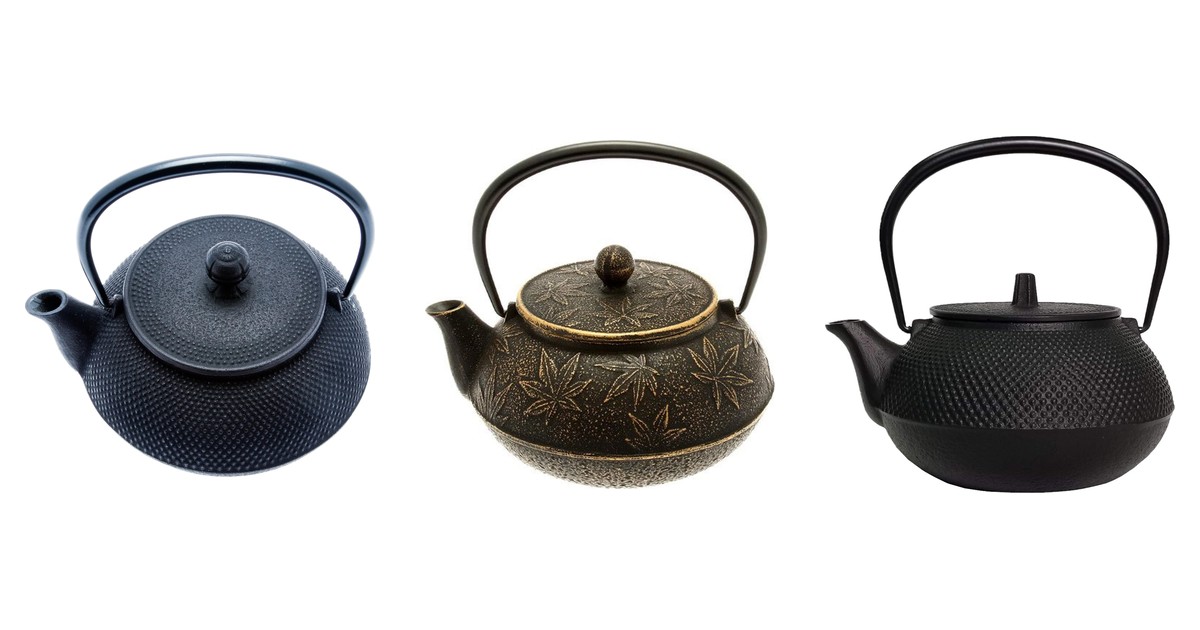
A heavy black pot sits on the table. The lid clinks softly. Green tea pours out still hot after the second cup. That is the picture most people have of an Iwachu cast iron teapot.
Before you spend around $140, there is one thing to know. On Amazon.com the word “tetsubin” is used for two different products. Most Iwachu pots sold in the US at $139.95 are teapots with an enamel-coated inside. They are for brewing, not for boiling water on a stove. A true tetsubin is an uncoated iron kettle that goes on the flame.
We compared two of the $139.95 Iwachu teapots with an uncoated Iwachu tetsubin kettle on published specs, maker statements and Amazon.com ratings. This guide explains which one fits the way you drink tea.
Our Pick: Which Iwachu Pot Is Best for You
All three listings showed a live price with an add-to-cart button when we checked Amazon.com in October 2026.
- Iwachu Tetsubin Teapot, Hobnail, Black — about $140. The classic dotted “arare” pattern, 22 oz, enamel inside, stainless steel infuser. 4.5 out of 5 from 71 ratings. Not for an open flame.
- Iwachu Iron Teapot, Gold and Black Maple — about $140. The same 22 oz teapot format with a maple leaf design touched with gold. 4.7 out of 5 from 30 ratings.
- Iwachu 11884 Arare Tetsubin Kettle, 0.8 L — about $205. No enamel, made for direct heat. You boil water in it, then brew in a separate teapot. 4.4 out of 5 from 258 ratings.
If you want one pot to brew loose-leaf tea at the table, buy the Hobnail teapot. It is the design Iwachu is known for around the world. If you want to boil water in iron on your stove, skip the $140 teapots entirely and buy the uncoated tetsubin kettle.
Check price on Amazon: Iwachu Hobnail Teapot →
Tetsubin vs Cast Iron Teapot: The Difference That Matters
In Japanese the two products have different names. A tetsubin (鉄瓶) is an iron kettle for heating water. A cast iron kyusu (急須) is a teapot for brewing leaves. Overseas sellers often call both “tetsubin” because it is the better-known word.
Iwachu’s own Japanese catalog is clear about the split. Its cast iron kyusu are listed with an enamel finish on the inside of the body plus the underside of the lid. Under heat source, the same pages state that gas, direct flame or induction cannot be used. The US Amazon listings say the same in shorter words: “Coated interior to prevent rust” on most of them, “Not for use over an open flame” on the Hobnail teapot.
The enamel is what makes a teapot easy. It stops rust, so you can leave a little water in it after rinsing without damage. It also means the tea never touches bare iron. The trade-off is heat. Put an enameled teapot on a burner, the glass-like coating can crack.
An uncoated tetsubin works the other way. The inside is bare iron that has been heat-treated, so it can sit over a gas flame for years. It needs more care: empty it after use, then let the heat of the pot dry it.
| Cast iron teapot (kyusu) | Tetsubin kettle | |
|---|---|---|
| Job | Brew tea leaves | Boil water |
| Inside | Enamel coated | Bare, heat-treated iron |
| Stovetop | No | Yes (gas flame) |
| Infuser | Stainless mesh basket | Strainer included on this model |
| Care | Rinse, dry by hand | Empty, dry with leftover heat |
Why Iwachu Is the Name Behind Nambu Ironware
Iwachu is a cast iron maker in Morioka, the capital of Iwate Prefecture in northern Japan. Morioka is the home of Nambu tekki, or Nambu ironware. Iwachu describes it as a craft passed down in the city for more than 400 years. The company traces its own start to a small local ironworks workshop.
The tetsubin itself was born there. According to Iwachu’s history page, a kettle maker working for the local Nambu lords added a spout plus a handle to the round yugama water pot used for the tea ceremony. That shape became the Nambu tetsubin. By the late Edo period into the Meiji era it had become an everyday kettle in Japanese homes.
Nambu ironware is designated a Traditional Craft by Japan’s national government. Iwachu is the brand most buyers outside Japan meet first, because its colored teapots are widely sold abroad. Its Japanese catalog goes well beyond those: plain black tetsubin, kyusu in many sizes plus iron kitchen pans. If you are curious about the cookware side, our comparison of an Iwachu Nambu frying pan with Lodge plus Staub covers it.
Iwachu Tetsubin Teapot, Hobnail, Black (Around $140 on Amazon)
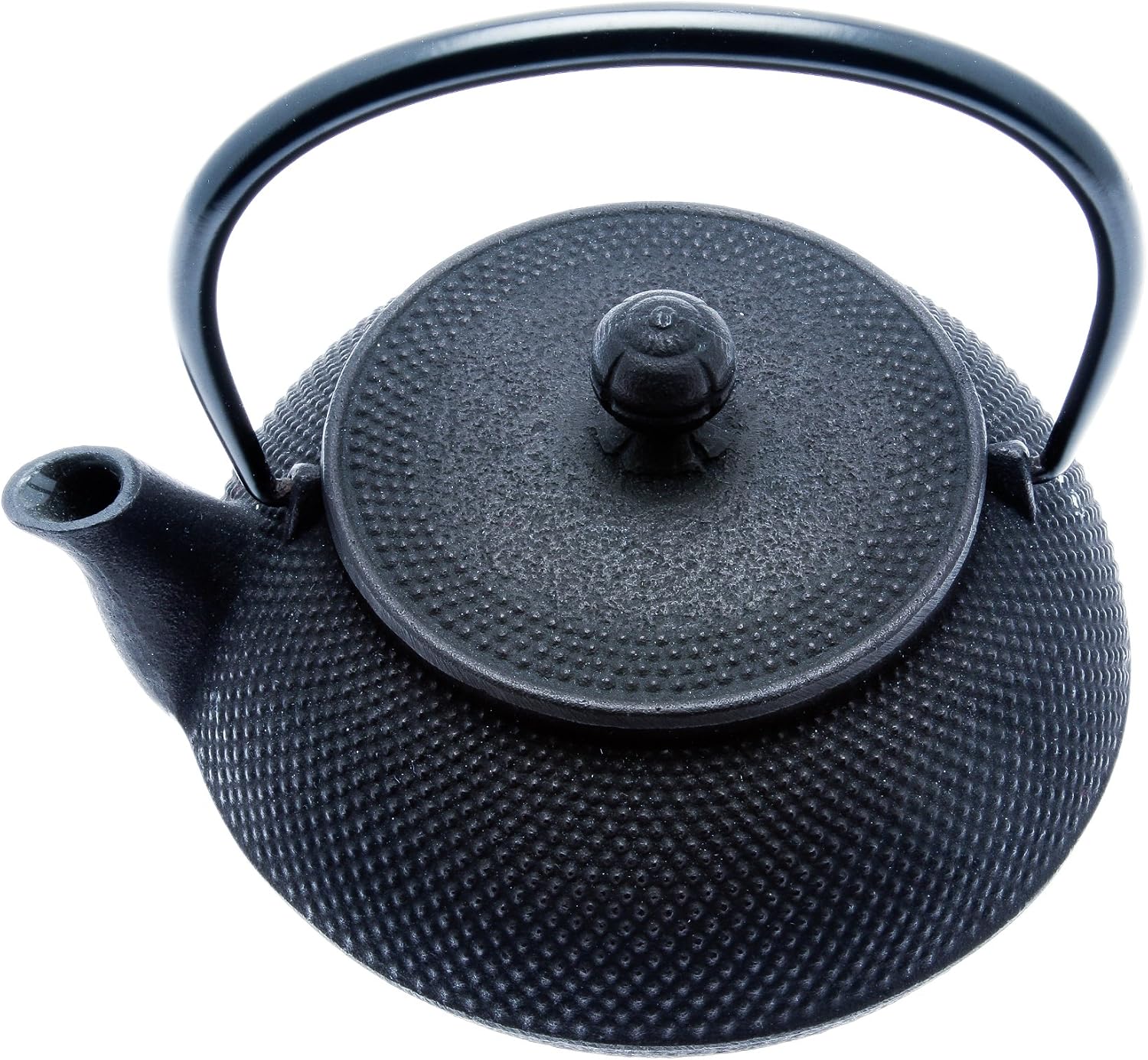
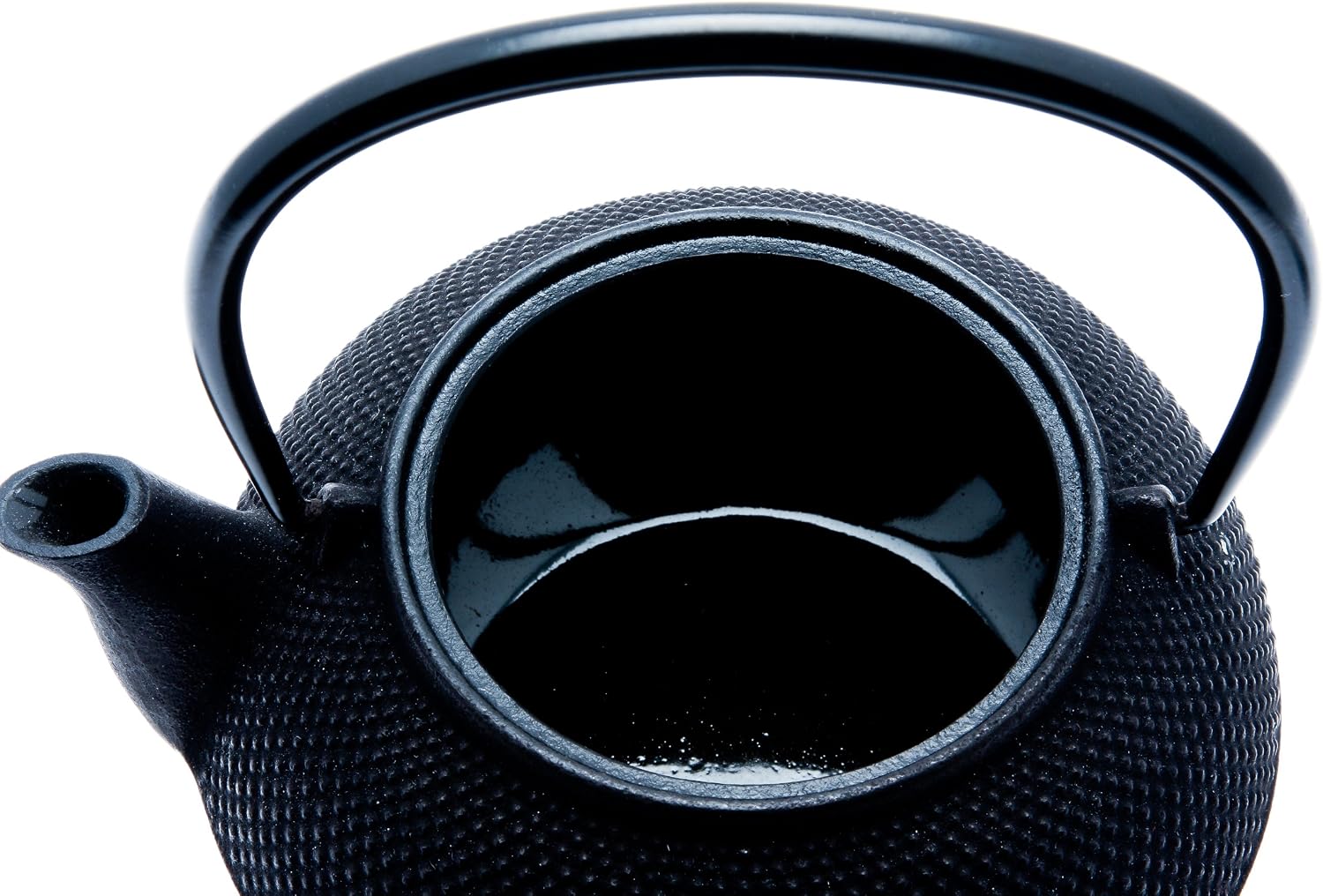
This is the pot people picture when they hear “Iwachu.” The body is covered in small raised dots called arare, named after hailstones. The pattern is not only decoration. More surface area helps the iron hold heat, so the outside stays warm to the touch for a long time after you pour.
The listing gives a 22 oz capacity with a weight of about 3.1 pounds. In practice that is two to three small Japanese cups or two mugs. A removable stainless steel mesh basket sits inside the opening. You drop sencha or hojicha into the basket, pour in hot water from your kettle, wait a minute, then lift the basket out so the tea does not turn bitter.
Ratings on Amazon.com are steady at 4.5 out of 5 across 71 ratings. The main practical point is weight: a full pot is heavy for a small hand. The handle is also iron, so it gets warm. A cloth or a small pot holder helps.
Choose it if you want the classic look for daily green tea at the table. Remember to set it on a trivet, not on the stove.
Iwachu Iron Teapot, Gold and Black Maple (Around $140 on Amazon)
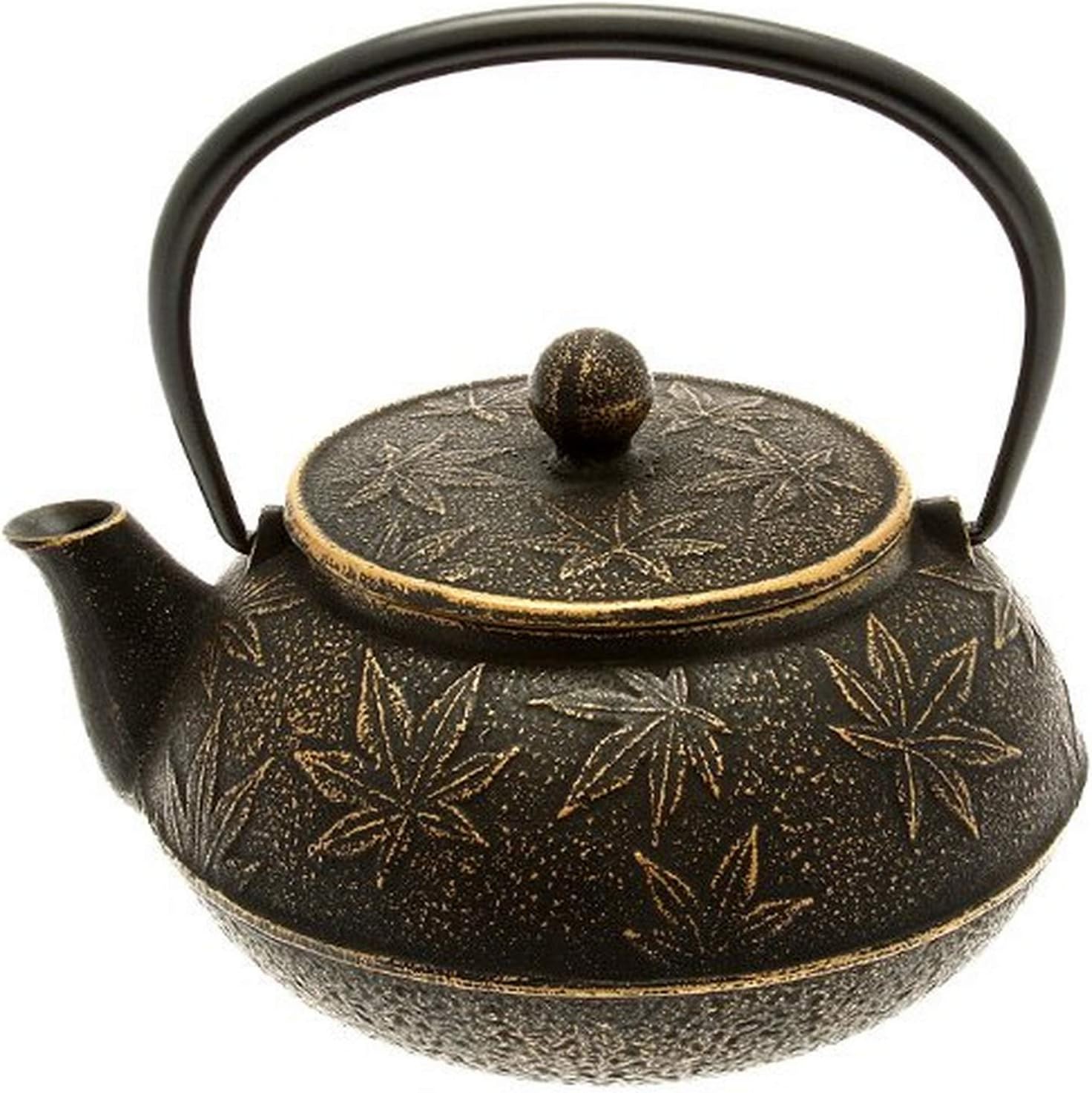
The Maple teapot uses the same 22 oz format with an enamel-coated inside plus a removable stainless steel infuser. The difference is the surface. Raised maple leaves wrap around the body, with gold rubbed onto the high points over a black base. In Japan the maple leaf, momiji, is the symbol of autumn, so this design is often chosen as a seasonal or gift piece.
The listing gives a weight of about 3.4 pounds, slightly heavier than the Hobnail. Ratings are higher at 4.7 out of 5, though from a smaller group of 30 ratings. That is a good sign, but it carries less weight than the Hobnail’s larger count.
Picture a fall afternoon: a pot of roasted hojicha, the gold leaves catching the light from the window. This is the pot for someone who wants the teapot to be part of the table setting.
Choose it as a gift, or if you already like the shape but want something less common than the black dots. It has the same “no stovetop” rule as every enameled Iwachu teapot.
Iwachu 11884 Arare Tetsubin Kettle, 0.8 L (Around $205 on Amazon)
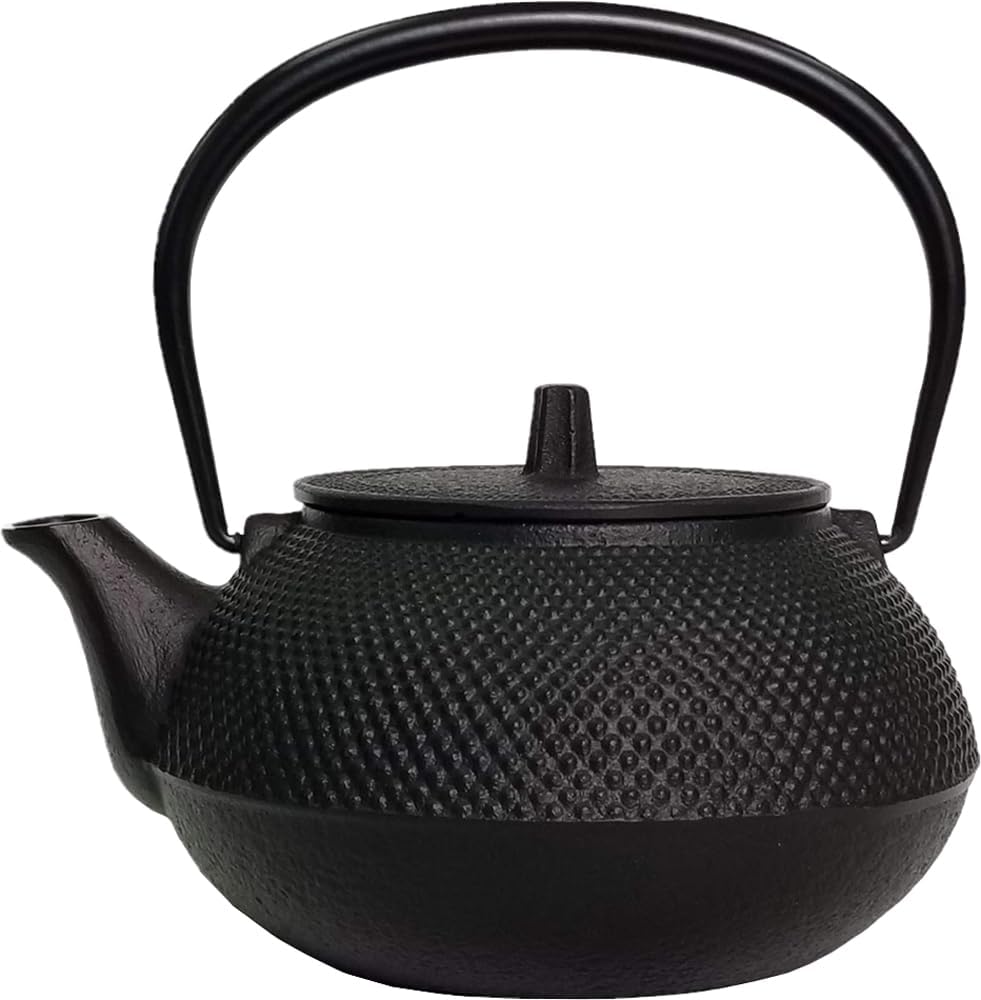
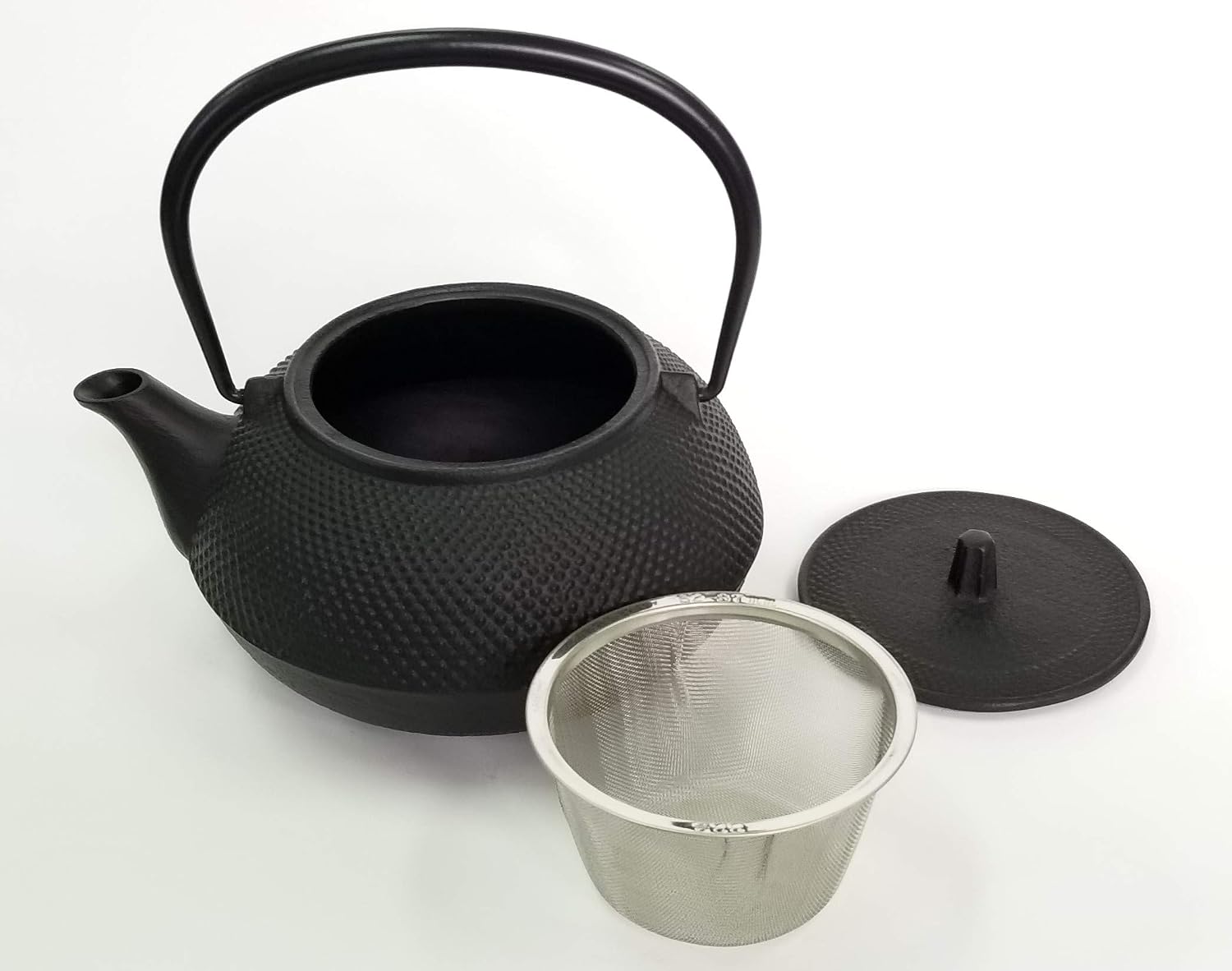
This is the real thing. The listing title states “No Enamel, Direct Fire,” with the inside plus outside finished by a black baking process. The capacity is 0.8 liters, about 27 oz, with a weight of roughly 1.6 kg (3.5 pounds). The same arare pattern covers the body.
You use it the traditional way. Fill it with water, set it over a gas flame, then wait for the soft rumble that tells you the water is near a boil. Pour into a separate teapot or straight into a cup with a tea bag. Many Japanese tea drinkers say water from an iron kettle tastes rounder. That is a matter of taste rather than a measured fact, so treat it as a reason to try, not a promise.
This model has the most ratings of the three: 4.4 out of 5 across 258 ratings. Care is the main thing to plan for. Do not use soap inside. Empty the kettle after each use, then let the remaining heat dry it so rust cannot form. A thin white layer of mineral scale building up inside over time is normal.
Two practical notes. When we checked, the listing said it usually ships within 5 to 6 days rather than next day. It is also about $65 more than the enameled teapots. If you want a kettle you can keep using for many years, the price difference buys a completely different tool.
Compare the Three
| Hobnail Teapot | Maple Teapot | 11884 Tetsubin | |
|---|---|---|---|
| Price (Oct 2026) | About $140 | About $140 | About $205 |
| Capacity | 22 oz | 22 oz | 0.8 L (about 27 oz) |
| Weight | About 3.1 lb | About 3.4 lb | About 3.5 lb |
| Inside | Enamel | Enamel | No enamel |
| Stovetop | No | No | Yes |
| Amazon.com rating | 4.5 (71) | 4.7 (30) | 4.4 (258) |
| Best for | Daily brewing, classic look | Gifts, seasonal table | Boiling water on the stove |
The same $139.95 Iwachu teapot also comes in other designs on Amazon.com, including Black Honeycomb, Gold and Black Pine Needle or Gold and Purple Goldfish. All are 22 oz with a coated interior, so the choice between them is purely about looks.
Is an Iwachu Teapot Worth $140?
Amazon.com lists many cast iron teapots in the $25 to $60 range with a similar shape. What the extra money buys with Iwachu is the maker: a Morioka foundry working in a recognized Japanese craft tradition, with “Made in Japan” stated on every listing we checked. Several of the cheaper pots do not name a country of origin in their titles.
It is worth it if you will brew loose-leaf tea most days. The heavy iron keeps a pot warm through a long conversation, the enamel makes cleanup simple, while the design lasts for years. It is not worth it if what you really want is a stovetop kettle. In that case, put the money toward an uncoated tetsubin. For the leaves themselves, our Japanese green tea comparison is a good next read.
Summary
Buy the Iwachu Hobnail teapot if you want the classic Nambu ironware pot for brewing tea at the table. Pick the Maple design if it is a gift or you want a more decorative piece. Buy the 11884 tetsubin kettle only if you plan to boil water on a gas stove, since it is the only one of the three made for direct heat.
Check price on Amazon: Iwachu Hobnail Teapot →
Frequently Asked Questions
Can I put an Iwachu cast iron teapot on the stove?
No. Iwachu teapots with an enamel-coated interior are for brewing only. Iwachu’s own Japanese catalog lists gas, direct flame or induction as heat sources that cannot be used with its kyusu. Heat water in a kettle first.
What is the difference between a tetsubin and a cast iron teapot?
A tetsubin is an uncoated iron kettle for boiling water over heat. A cast iron teapot, called kyusu in Japanese, has an enamel lining plus an infuser basket for brewing tea leaves.
How do I clean an Iwachu teapot?
Rinse it with warm water after use, then dry the inside plus outside with a soft cloth. Avoid scrubbing pads that could scratch the enamel, as well as the dishwasher.
How much tea does a 22 oz Iwachu teapot make?
About 650 ml when full, which is two to three small Japanese teacups or two regular mugs.
Where are Iwachu teapots made?
Iwachu is based in Morioka, Iwate Prefecture, the home of Nambu ironware. The Amazon.com listings for the models in this guide state Made in Japan.
Prices along with ratings were checked on Amazon.com in October 2026. Prices change often, so check the current price on Amazon before buying.