vs-navi.online is a participant in the Amazon Services LLC Associates Program. Purchases made through links on this page may earn us a commission at no extra cost to you.
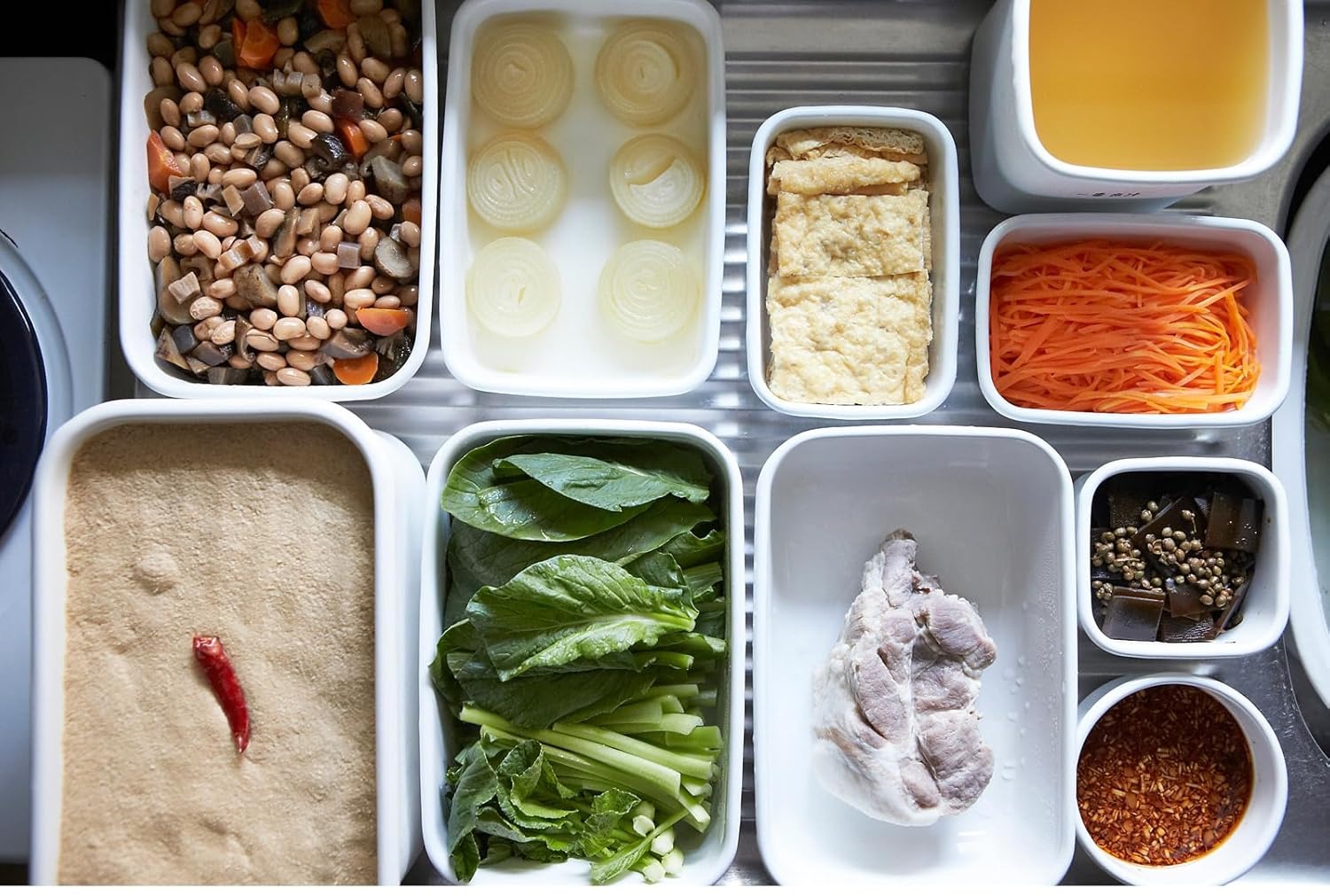
Open a tidy Japanese fridge and you often see the same thing: rows of milk-white boxes with soft lids.
Inside are simmered beans, blanched greens, a block of butter, a bed of rice bran with cucumbers buried in it. The boxes are steel coated in glass, so nothing stains them and nothing lingers. Tomato sauce on Monday, custard on Tuesday.
Very often those boxes are Noda Horo. The Tokyo company has made enamelware since 1934, which puts it past 90 years in the same trade. We compared the three Noda Horo pieces that are easiest to buy on Amazon.com in 2026, using the maker’s published specifications, its care guidance and current Amazon listing data.
Which Noda Horo Piece Should You Buy First? Our Picks
The short version, before the detail:
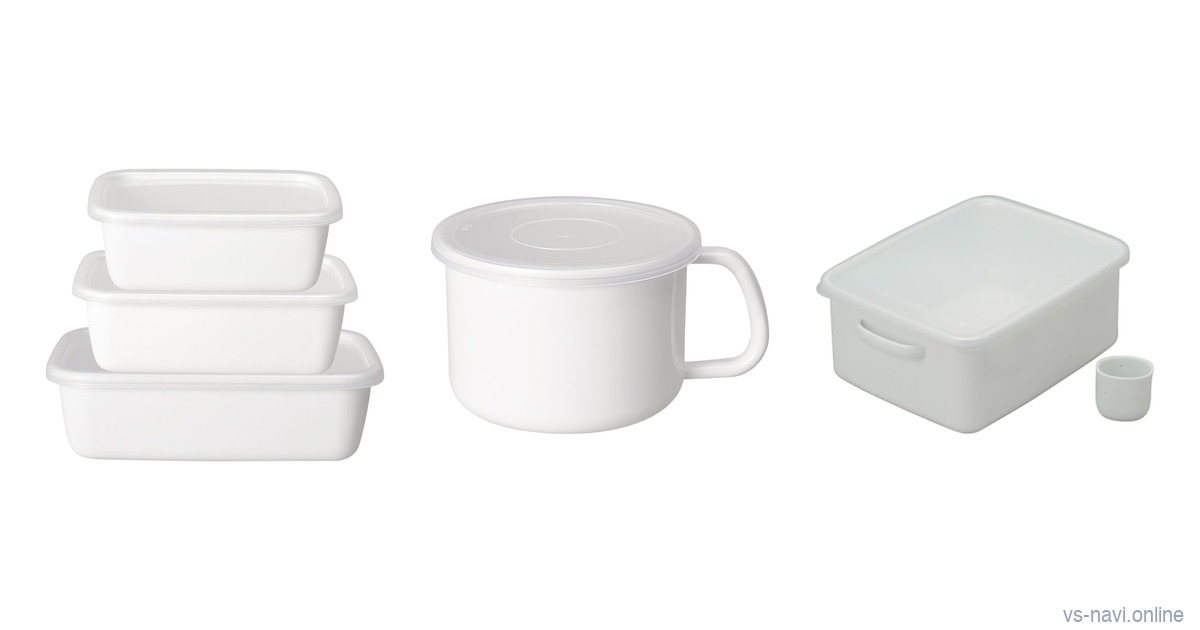
- White Series Rectangle Deep, set of 3 (S, M, L) — about $50 for 0.5 L, 0.85 L and 1.5 L boxes that nest. The best first purchase for meal prep and leftovers.
- White Series Round Stocker with Handle, Large (MS-14M) — about $31, 1.5 L. One mug-shaped container for sugar, salt, miso or a small batch of jam.
- Nukazuke Bijin Large (TK-58) — about $63, 5.8 L with a porcelain water cup. The piece to buy if you want to keep a rice-bran pickle bed in the fridge.
Check price on Amazon: White Series set of 3 →
Noda Horo in Japan: 90 Years of One Material
Horo is the Japanese word for vitreous enamel: a steel body dipped in liquid glass glaze and fired. Noda Horo says each piece gets a black ground coat, then a top coat, with firing above 800°C. Craftspeople dip every piece by hand.
The company started in 1934 making bowls, plates and cups for export. Its factory was closed under wartime rules in 1942 and later burned down. Production restarted in 1947 with trays, tanks and buckets. Through the 1970s and 1980s, laboratory and commercial trays were the core business. Acid-resistant lab containers are still on its product list today.
Pickling is where the brand entered home kitchens. In 1976 it launched a pickle container developed with a well-known cooking teacher, which became its main product. The Nukazuke Bijin rice-bran pickle box followed in 2001.
The White Series arrived in 2003. According to the company, the trade assumed plain white household enamel would not sell, because enamel then meant bright colors and patterns. Noda Horo started with small batches anyway. In 2013 the eleven original White Series items received Japan’s Good Design Long Life Design Award, which is reserved for products sold continuously for ten years or more.
Today Noda Horo describes itself as the only maker in Japan that runs every step of sheet-steel enamel production in-house. Everything is made at its plants in Tochigi, north of Tokyo, including the small parts.
White Series Rectangle Deep, Set of 3 (Around $50 on Amazon)
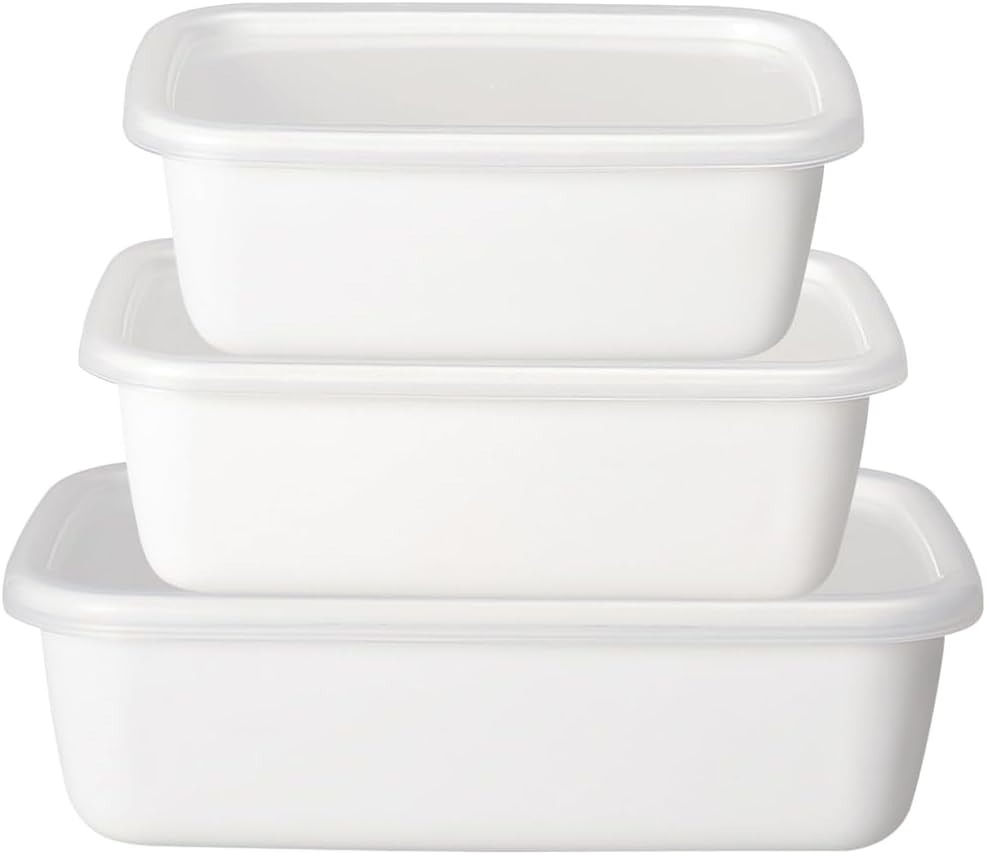
This is the shape most people picture when they hear the brand name. The set bundles three deep rectangles. S holds 0.5 L and measures 15.4 × 10.3 × 5.7 cm. M holds 0.85 L. L holds 1.5 L at 22.8 × 15.5 × 6.8 cm. The three weigh roughly 210 g, 300 g and 440 g.
The appeal is the surface. Enamel is glass, so it does not take on smell or color the way plastic tubs do. Curry, kimchi brine and beet juice rinse off. Noda Horo also points out that enamel chills quickly, which suits food that goes straight from the pot to the fridge.
The maker gives a homely size guide for the S box: one 200 g block of butter, a batch of side dishes or a pack of salted cod roe. In practice S and M cover leftovers for one or two people. L takes a marinating piece of meat or a small tray bake.
The honest downside is the lid. The set ships with soft EVA resin seal lids. Noda Horo itself lists their limits: they pick up smell and color, they dislike heat, they are not fully airtight and they should not go in a dishwasher. Do not carry soup in a bag in these. For strong-smelling food the maker recommends its separate enamel lids instead.
On Amazon.com the set held a 4.8 out of 5 average across 54 ratings when we checked. It suits anyone replacing a drawer of stained plastic with something that will look the same in ten years.
White Series Round Stocker with Handle, Large MS-14M (Around $31 on Amazon)
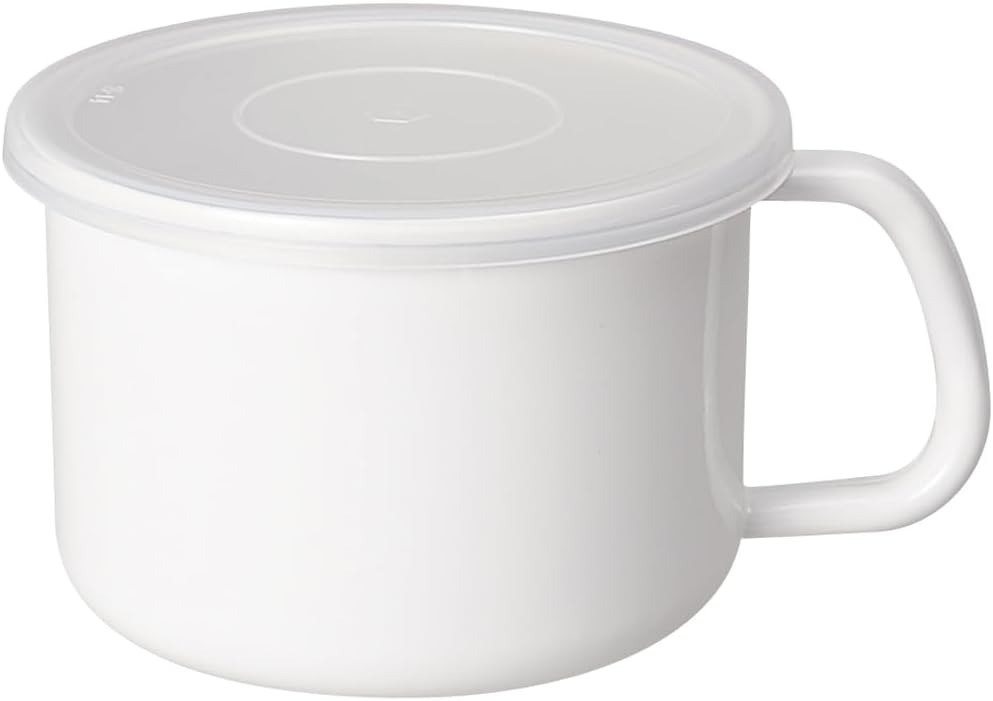
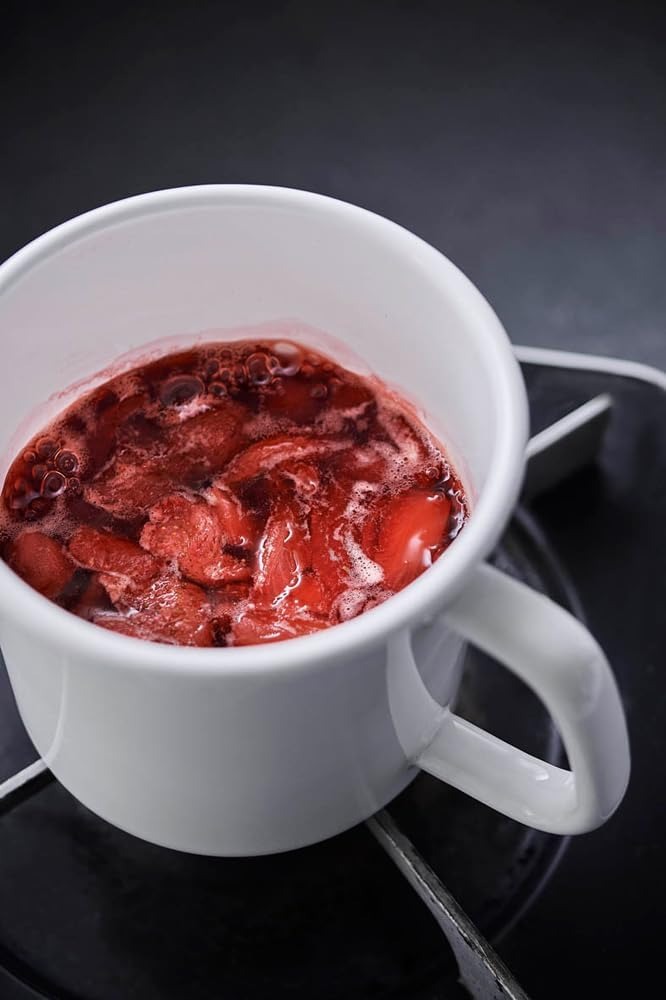
Picture an oversized enamel mug with a lid. The MS-14M holds 1.5 L, measures 20 × 15.8 × 10.5 cm with the handle and weighs about 470 g. Noda Horo’s own description is modest: a simple storage container with a handle, for sugar, salt and other seasonings.
The handle is the whole idea. A full container of miso or salt is heavy and slippery when your hands are wet. Here you hook one finger through and lift it off a high shelf. The white glaze also shows at a glance how much is left.
Japanese home cooks stretch it further. The Amazon listing shows a batch of berries bubbling in the stocker on a gas burner, the way a small jam pan would be used. Noda Horo’s general guidance says its enamelware works over a gas flame and in the oven, never in a microwave. It also states that its storage containers are not induction-compatible.
There is a caveat worth knowing. One graphic on the same listing marks the heat-source field as none, which conflicts with the burner photo. Treat this as storage first. If you do heat it, take the resin lid off, keep the flame low, never heat it empty and follow the leaflet packed with the product.
It was listed as in stock with a 4.8 out of 5 average from 18 ratings when we checked. The Japanese list price is ¥2,585 including tax, so the US price carries a clear import premium. It suits cooks who keep one staple within arm’s reach of the stove.
Nukazuke Bijin Large TK-58 (Around $63 on Amazon)
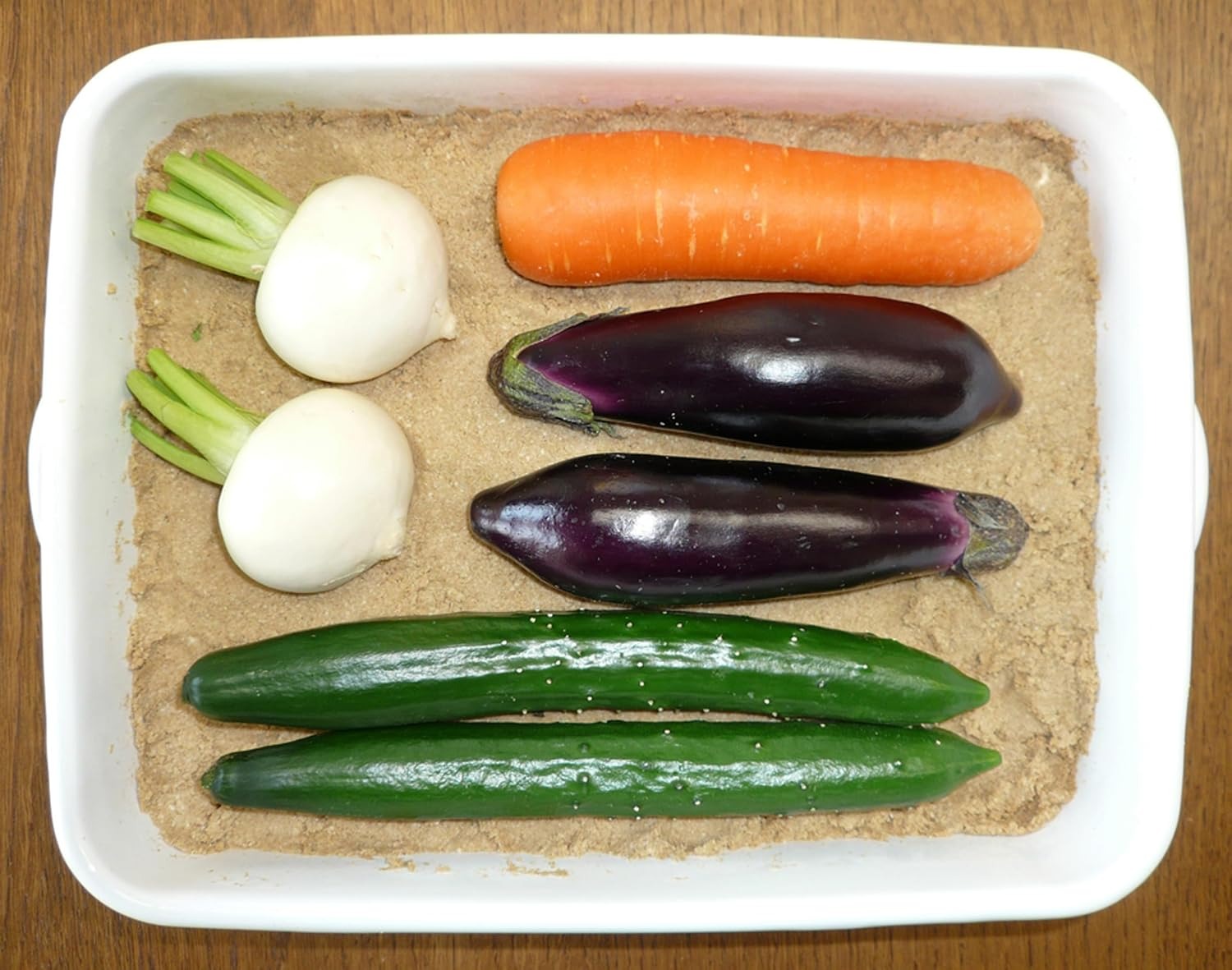
Nukazuke is the everyday pickle of Japanese home cooking. Vegetables are buried in a bed of salted, fermented rice bran called a nukadoko. A cucumber pushed in one evening is ready the next day, sour, salty and still crisp.
The bed is acidic, salty and alive, which is hard on containers. This is where enamel earns its place. Noda Horo lists acid and salt resistance among the material’s core strengths. The glass surface also keeps the bran’s strong smell from soaking in.
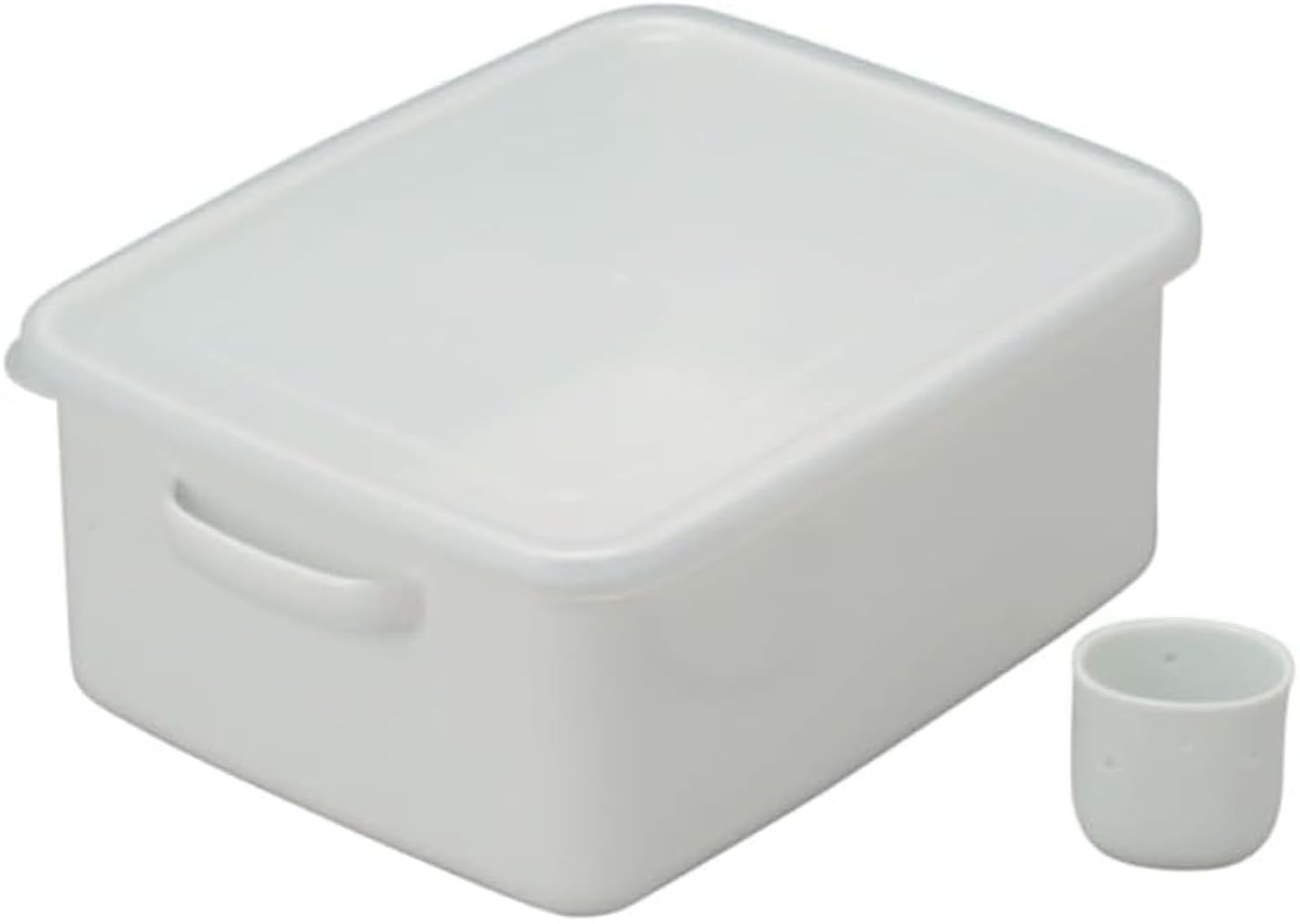
The TK-58 is the large version: 5.8 L, 30.7 × 22.5 × 12 cm, about 2.6 lb. The listing explains that the height is held to 12 cm so the box slides onto a refrigerator shelf. Keeping the bed cold is the modern Japanese approach. The maker notes that fermentation slows in the fridge, so the bed stays stable all year.
It comes with a seal lid and a small porcelain cup. The cup sits in the bran and collects the liquid that vegetables give off, which is the usual reason a bed turns sloppy. Two side grips make the heavy box easier to pull out.
Check your shelf before ordering. A footprint of roughly 31 × 23 cm takes most of one fridge shelf. The standard Nukazuke Bijin is 3.2 L, a size the maker also sells. The US listing also has few ratings so far: a 4.5 out of 5 average from 9. Thin slices pickle fastest, so a Benriner mandoline is a natural partner.
Compare the Three
| Rectangle Deep Set | Round Stocker L | Nukazuke Bijin L | |
|---|---|---|---|
| Price seen | ~$50 (3 pieces) | ~$31 | ~$63 |
| Capacity | 0.5 / 0.85 / 1.5 L | 1.5 L | 5.8 L |
| Largest footprint | 22.8 × 15.5 cm | 20 × 15.8 cm | 30.7 × 22.5 cm |
| Lid | EVA resin seal lid | EVA resin seal lid | Seal lid + porcelain cup |
| Amazon rating | 4.8 (54) | 4.8 (18) | 4.5 (9) |
| Best for | Meal prep, leftovers | Salt, sugar, miso | Rice-bran pickles |
If you only buy one thing, buy the rectangle set. Three sizes cover most of what a fridge needs. It also has the most ratings behind it of the three listings.
The stocker is the low-cost way to try the material. It makes sense for one ingredient you use every day. The Nukazuke Bijin is a single-purpose tool, so buy it only if a pickle bed is really the plan.
All three share the same limits. Enamel is glass over steel, so a hard knock or a drop can chip it. None of it goes in the microwave.
How to Care for Noda Horo Enamel
The maker’s care advice is short. Wash with a mild detergent and a soft sponge. Dry it fully, because exposed steel at the rim or at the hanging marks left from firing can rust if it stays wet.
Skip metal scourers and abrasive powders. Noda Horo also warns that alkaline dishwasher detergents and chlorine bleach can dull the gloss over time. Metal spoons can leave grey lines on the glaze, so wood or silicone tools are the safer match.
Small black specks or a thin dark line at the rim are normal. They come from hand-dipping and firing, not from damage. If the glaze does chip, the company says the base is plain iron, so any rust is ordinary iron rust with nothing harmful released.
The same quiet, long-running approach to design runs through the Sori Yanagi stainless range. For packing what you prep, our adult bento box comparison covers the lunch side.
Frequently Asked Questions
Can Noda Horo containers go in the microwave?
No. The body is enamel-coated steel, so it cannot be used in a microwave. Noda Horo states this plainly in its own FAQ. Move the food to a plate or bowl to reheat it.
Can you put Noda Horo on the stove or in the oven?
The maker’s general guidance lists gas flame and oven as usable heat sources for its enamelware. Its storage containers are not induction-compatible. Always remove the resin lid first, never heat a container empty and follow the instructions supplied with the specific product.
Are Noda Horo containers dishwasher safe?
The soft seal lids are not. Noda Horo says they should stay out of dishwashers and dryers. For the enamel itself, the company warns that alkaline dishwasher detergent can dull the gloss, so hand washing is the safer habit.
Is Noda Horo made in Japan?
Yes. The company says all of its products, parts included, are made in Japan at its plants in Tochigi. Its head office is in Tokyo.
Is the seal lid airtight?
Not completely. Noda Horo describes the seal lid as reasonably tight but not fully airtight. It is fine on a fridge shelf. It is not meant for carrying liquids on its side.
Summary
Noda Horo is a Tokyo enamel maker with more than 90 years behind it, whose plain white boxes became a fixture of Japanese fridges. Start with the rectangle set, add the stocker for a daily staple and choose the Nukazuke Bijin only if you plan to pickle.
Prices are approximate US dollar figures from Amazon.com at the time of writing and they change often.