vs-navi.online is a participant in the Amazon Services LLC Associates Program. Purchases made through links on this page may earn us a commission at no extra cost to you.
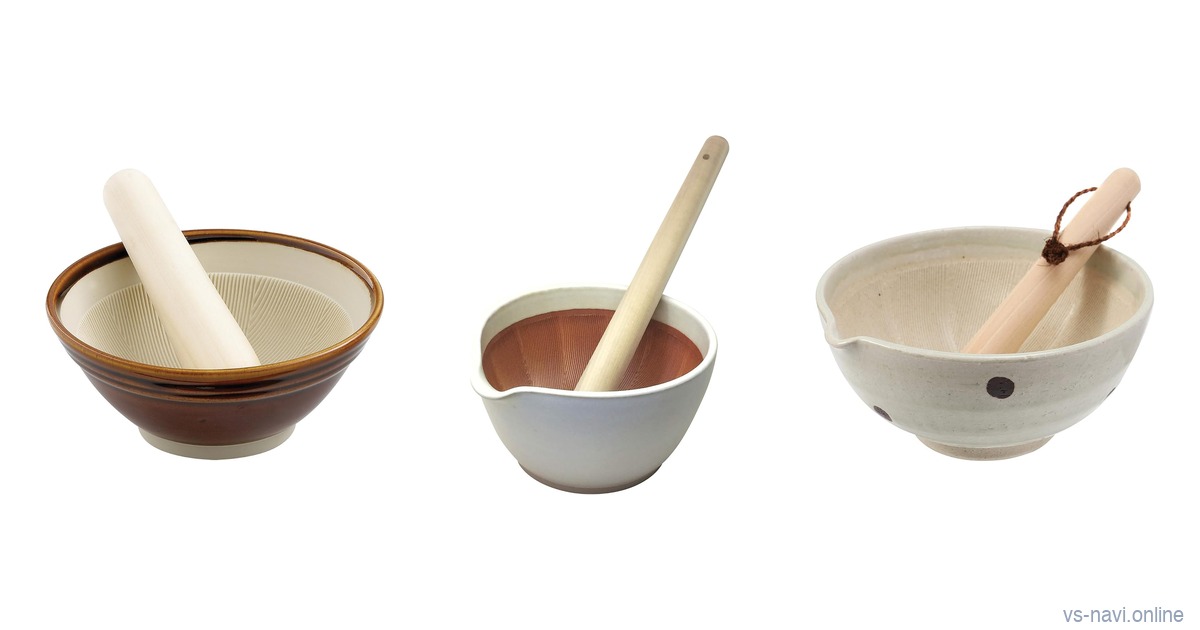
Toasted sesame seeds go into a ridged clay bowl. A wooden pestle circles. The sound is a low, dry rasp.
Within a minute the seeds crack, turn sandy, then start to clump as their oil comes out. The smell is the reason Japanese cooks still do this by hand. Add soy sauce and a little sugar to the same bowl, toss in blanched spinach, then carry the bowl to the table.
That bowl is a suribachi. The pestle is a surikogi. We compared three made-in-Japan sets that are in stock on Amazon.com in 2026, using manufacturer information, regional reporting on the makers and current Amazon listing data.
Our Picks: Three Made-in-Japan Suribachi Sets
The short version, before the detail:
- Motoshige Seitosho 18 cm (7.1 in), white — about $25. Iwami ware from a specialist suribachi maker, with a silicone non-slip base and a long pestle. The best value of the three.
- TIKUSAN 7.1 in with spout, white polka dot — about $51. Mino ware with a clear pouring spout. The one to buy if the bowl will also go to the table.
- Helen’s Asian Kitchen Classic Suribachi Set, 5.5 in — about $17. A small brown-glazed bowl for a tablespoon or two of sesame at a time.
Check price on Amazon: Motoshige 18 cm →
What a Suribachi Does That a Spice Grinder Cannot
A suribachi is a ceramic bowl with a glazed outside but an unglazed inside. The inside is scored with fine radial grooves called kushime, which means comb pattern. Kikkoman’s cooking reference describes them as ridges that look like lines drawn with a comb.
Those grooves are the whole point. An electric spice grinder chops with a blade. A suribachi shears food between wood and rough clay, so seeds are crushed open rather than cut. You also control the result by eye: stop early for a coarse, crunchy grind or keep going until sesame becomes a paste.
The second difference is that the bowl is also the mixing bowl. Goma-ae, the sesame dressing for blanched greens, is ground, seasoned and tossed in one vessel. The same goes for tororo, grated mountain yam worked smooth with dashi. Shira-ae, a tofu and sesame dressing, is made the same way.
The greens for goma-ae are usually blanched first in a yukihira, the light single-handled saucepan with a spout on each side. Our yukihira pan comparison looks at three Japan-made stainless models that also work on induction.
A blade grinder still wins for hard, dry spices in bulk. A suribachi is the better tool for oily seeds, nuts, miso, garlic, herbs and anything wet.
How to Choose: Size, Pestle, Base
Size comes first. A bowl around 5 inches handles a spoonful of sesame for two people. A bowl around 7 inches leaves room to grind, season and toss vegetables for a family without food climbing over the rim.
Pestle length matters more than it looks. A common rule of thumb in Japan is a pestle about twice as long as the bowl is wide. One hand rests on top as a pivot while the other turns the lower end in circles. A short pestle forces a fist grip, which is tiring.
Traditionally the surikogi is cut from the wood of the sansho pepper tree. Kikkoman notes that hinoki cypress and walnut are common today. Wood is used because it is softer than the clay, so it wears instead of the ridges.
The base decides whether you need a second hand. A light bowl spins on the counter. The classic fix is a damp cloth underneath. Some modern bowls add a silicone ring to the foot instead.
Motoshige Seitosho 18 cm Suribachi (Around $25 on Amazon)
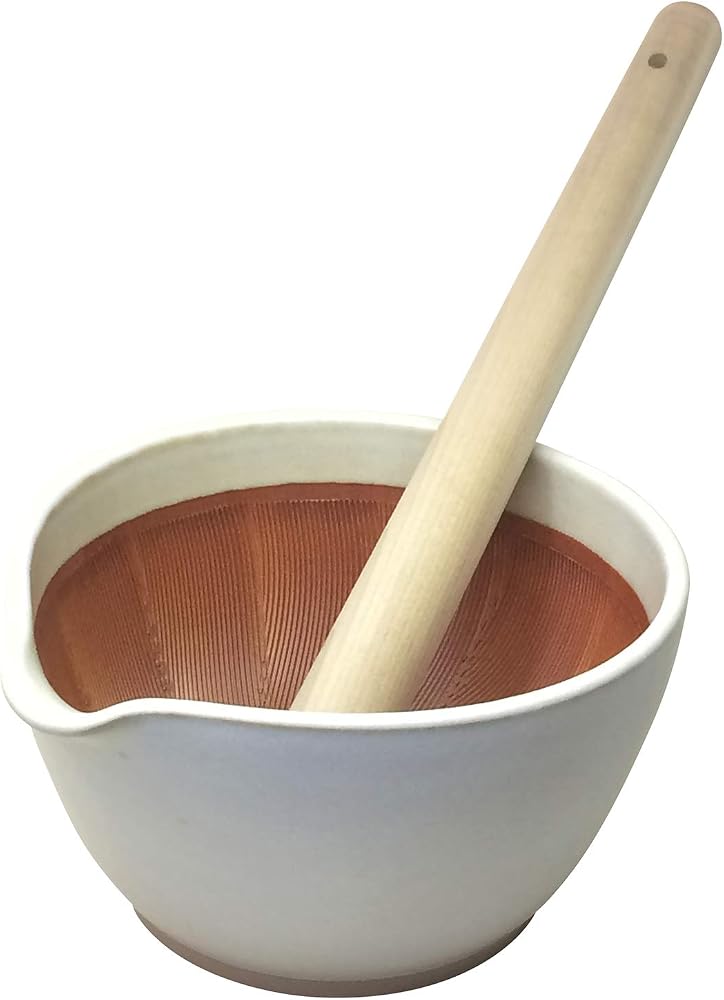
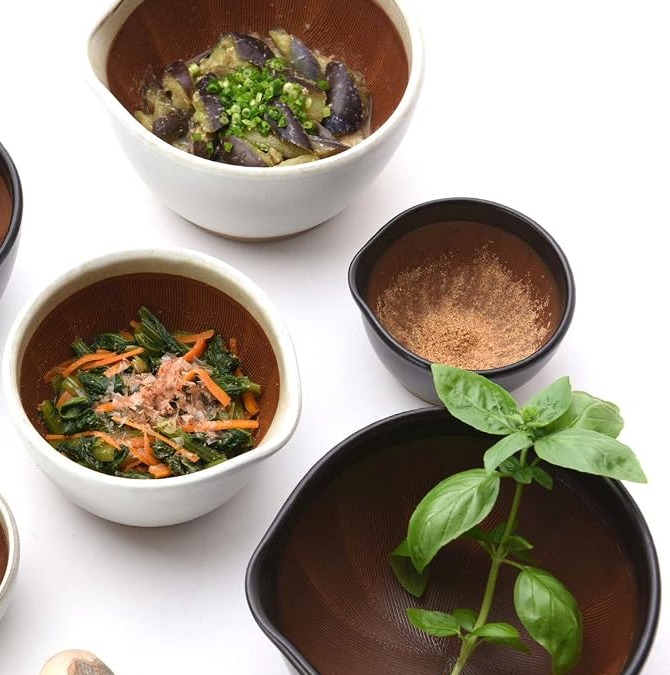
Motoshige Seitosho is a pottery in Gotsu, Shimane Prefecture, founded in 1925. It began with the water jars and pickle crocks typical of Iwami ware, then turned itself into a specialist suribachi maker. A regional profile published in 2020 put its output at about 250,000 bowls a year.
In Japan this is the suribachi people find on the shelf of a home-improvement store, not a gift-shop piece. The same profile reports that the ridges are still cut by hand, with the pressure adjusted to how firm the clay is that day. The clay is local Iwami clay, fired hard. The red-brown interior color comes from a glaze made with Kimachi stone from the same prefecture.
The Amazon listing gives the bowl as 18 cm across, 10 cm tall, about 1.1 kg. The pestle is roughly 30 cm of Japanese natural wood. A silicone ring on the foot keeps the bowl planted, so one hand can stay on the pestle. The listing photos show a small pouring lip.
The weight is the feature here. A heavy bowl with a grippy base stays put while a thick tororo or a miso paste drags against the ridges.
The honest downside is how little US feedback exists. The listing showed a 5.0 rating from only 2 reviews when we checked, which says almost nothing. The listing title also misspells Iwami ware as “Ishimiyaki”. Buy it on the maker’s record in Japan rather than on Amazon stars.
TIKUSAN 7.1 in Suribachi with Spout (Around $51 on Amazon)
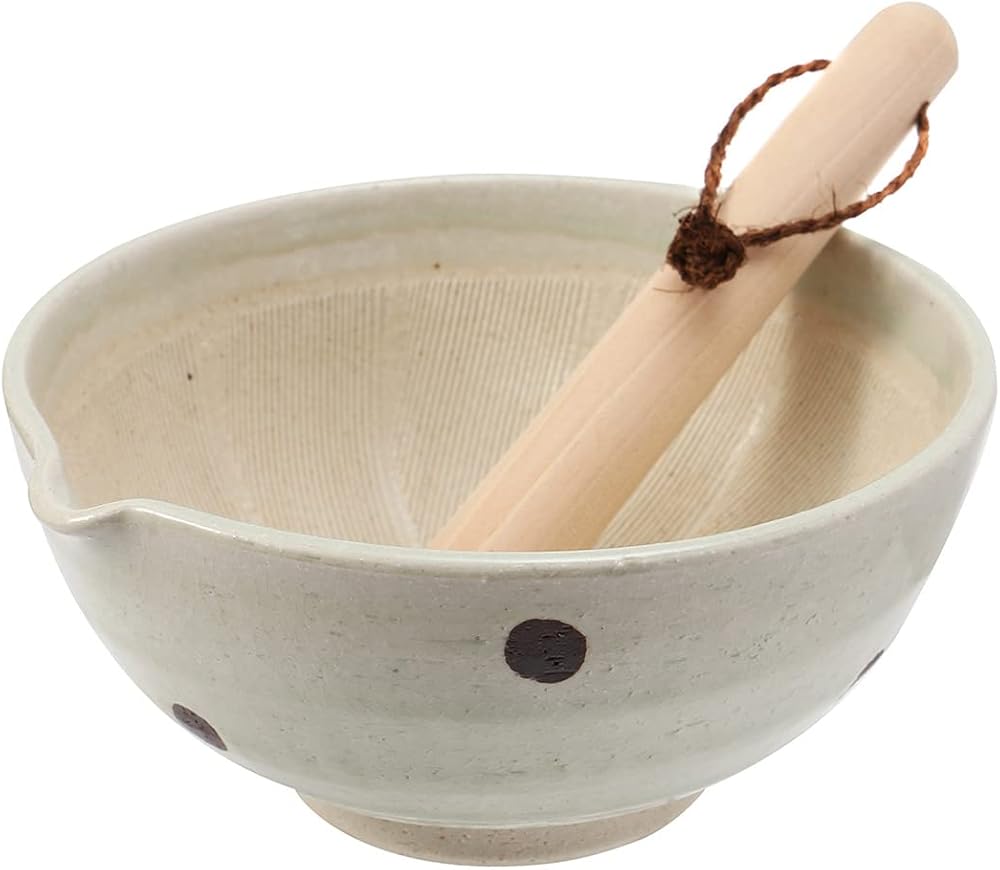
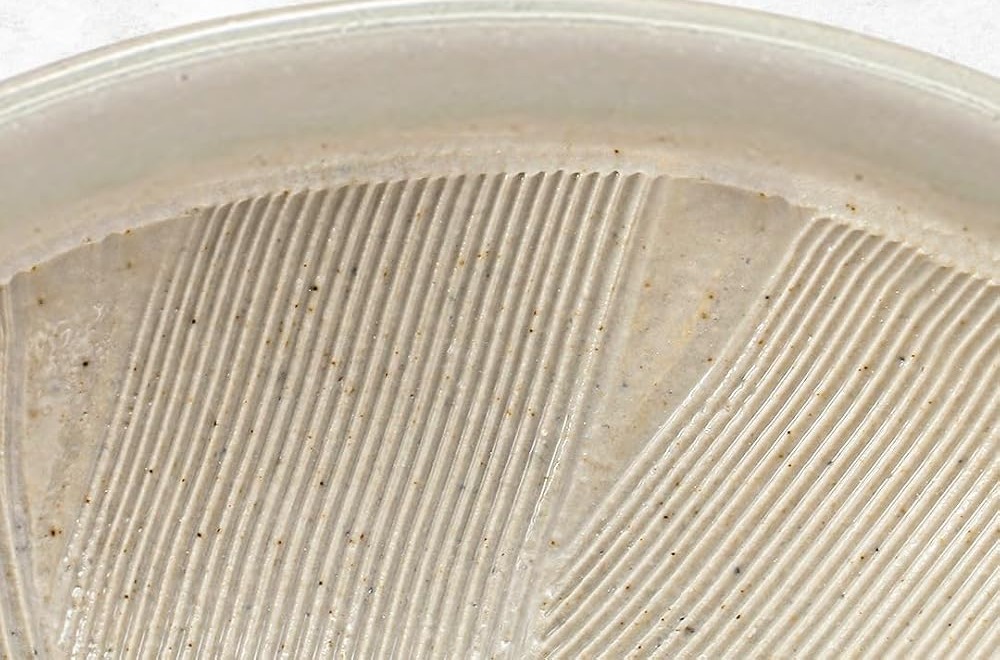
TIKUSAN is a label that sells Japanese regional craft goods on Amazon. This bowl is Mino ware from Gifu Prefecture, the largest pottery-producing area in Japan. The listing states that the pottery behind it accounts for about 60% of Japan’s suribachi production. That is the seller’s claim, so treat it as such.
The bowl is the same 7.1 inches across as the Motoshige, a little shallower at 3.5 inches. The listing gives the weight as 1.85 lb. The glaze is a soft white with brown dots, the kind of bowl that looks at home next to rice bowls on a dinner table.
The spout is the practical reason to choose it. Sesame dressing, a ground-herb sauce or a loose tororo pours out in a clean line instead of running down the side. The wide rim also makes the bowl easy to rinse.
It has no silicone foot. The listing itself recommends a wet towel underneath for stability. The other downside is simple arithmetic: it costs about twice as much as the Motoshige for the same diameter. You are paying for the glaze, the gift box and the spout.
On Amazon.com it showed 4.7 stars from 89 ratings when we checked, the highest score of the three with a meaningful sample.
Helen’s Asian Kitchen Classic Suribachi Set (Around $17 on Amazon)
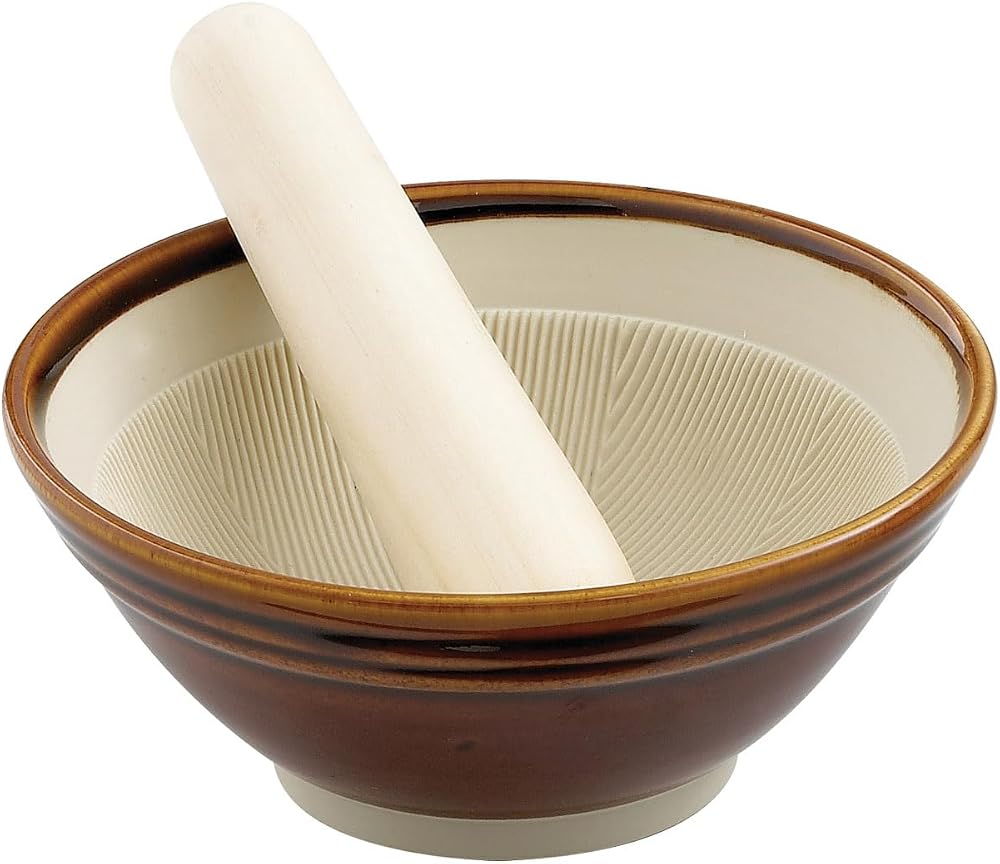
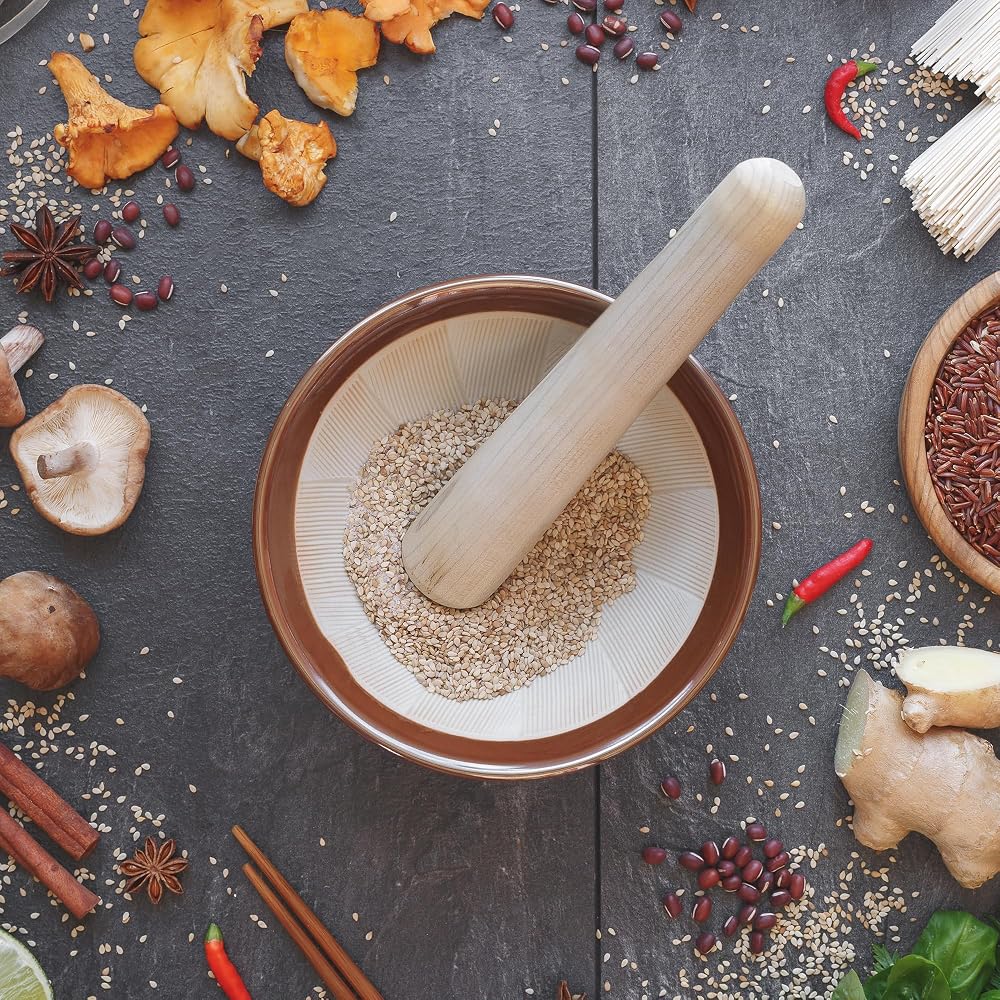
Helen’s Asian Kitchen is an American kitchenware label, not a brand you would find in a Japanese store. The bowl itself is made in Japan according to the listing. Its brown-glazed outside with a pale ridged inside is the look most associated with an everyday household suribachi.
The listing gives the bowl as 5.5 inches across, 2.25 inches tall, in earthenware. The inside is unglazed with kushime ridges. Care is hand wash only, then air dry thoroughly.
This is the size for finishing a dish. Two tablespoons of toasted sesame for a bowl of noodles. A clove of garlic with salt. A few shiso leaves for a dressing. It takes up about as much shelf space as a rice bowl.
The weak point is the pestle. At 4.75 inches it is shorter than the bowl is wide, far from the twice-the-diameter rule of thumb. Expect to hold it like a stamp. A longer surikogi can be bought separately.
It showed 4.3 stars from 561 ratings on Amazon.com when we checked. That is by far the largest review base here, at the lowest price.
Compare the Three
| Motoshige 18 cm | TIKUSAN with Spout | Helen’s Classic | |
|---|---|---|---|
| Price seen | ~$25 | ~$51 | ~$17 |
| Diameter | 7.1 in (18 cm) | 7.1 in | 5.5 in |
| Height | 3.9 in (10 cm) | 3.5 in | 2.25 in |
| Listed weight | about 1.1 kg | 1.85 lb | not listed |
| Pottery | Iwami ware, Shimane | Mino ware, Gifu | Made in Japan (region not stated) |
| Pestle | about 30 cm | included, length not listed | 4.75 in |
| Non-slip base | silicone ring | no (use a damp towel) | no (use a damp towel) |
| Pouring | small lip | full spout | none |
| Amazon rating | 5.0 (2 ratings) | 4.7 (89) | 4.3 (561) |
| Best for | regular cooking, thick pastes | dressings, serving at the table | small batches, tight kitchens |
If you plan to make goma-ae or sesame dressing most weeks, the Motoshige is the working choice. It has the long pestle, the grippy foot and the lowest price for a full-size bowl.
If the bowl will be seen, or if you mostly make pourable sauces, the TIKUSAN earns its premium with the spout and the glaze. If you only want fresh-ground sesame over noodles now and then, the Helen’s set is enough for $17.
Using and Caring for a Suribachi
Toast sesame in a dry pan until a few seeds pop, then grind while it is still warm. Hold the top of the pestle loosely with one palm. Turn the lower end in circles with the other hand. Let the ridges do the cutting. Pressing hard only wears the wood.
Wash the bowl soon after use, before paste dries into the grooves. A stiff kitchen brush drawn along the ridges, from the center outward, clears them faster than a sponge. Dry the bowl upside down. Dry the pestle fully before storing it, since damp wood can mold.
For fibrous roots like ginger or daikon, a grater is the better tool. Our Japanese grater comparison covers that side. For the wider picture, see the guide to Japanese kitchen tools.
Frequently Asked Questions
What is the difference between a suribachi and a regular mortar?
A Western or Thai mortar is smooth inside. You pound downward with a heavy pestle. A suribachi has an unglazed, grooved interior. You grind in circles with a light wooden pestle. It is better for oily seeds, pastes and dressings than for cracking hard whole spices.
What size suribachi should I buy?
Around 5 inches is enough for sesame as a topping for one or two people. Around 7 inches gives room to grind, season and toss vegetables in the same bowl for a family. If you only buy one, the larger size is more useful.
Can a suribachi go in the dishwasher?
Check the listing for the bowl you buy. Helen’s Asian Kitchen specifies hand wash only. The other two listings do not state dishwasher use, so hand washing is the safe default. Never put the wooden pestle in a dishwasher.
What wood is a surikogi made from?
The traditional choice is wood from the sansho pepper tree. Hinoki cypress and walnut are common in modern sets, according to Kikkoman’s cooking reference. Any of them is softer than the clay, which protects the ridges.
Do the ridges wear out?
Slowly. The pestle is wood so that it wears before the clay does. Avoid metal spoons or metal pestles on the ridges. With a wooden pestle, a hard-fired bowl lasts for many years of home use.
Summary
A suribachi grinds, mixes and serves in one bowl, which is why it has stayed in Japanese kitchens. Buy the Motoshige for regular cooking, the TIKUSAN if you want a spout and a table-ready glaze, the Helen’s set for small batches.
Prices are US dollar figures seen on Amazon.com at the time of writing and they change often.