This article contains affiliate links (we may earn a commission).
A donabe (土鑫) is the Japanese clay pot that turns a winter evening into an event: it goes straight onto the flame, holds a bubbling hot pot at the center of the table then, an hour later, cooks the fluffiest rice you have ever tasted. Almost every donabe sold today comes from one place — Yokkaichi in Mie Prefecture — where Banko ware (萬古焼) accounts for roughly 80% of Japan’s clay-pot output.
We compared three Banko ware donabe you can buy on Amazon.com: the best-selling Ginpo Hana Mishima all-rounder for hot pot, plus two dedicated rice cookers — the double-lidded TOYO CASE and the Banko 3-go rice pot. Our pick for most kitchens is the Ginpo — check its price on Amazon. Here is how the three differ.
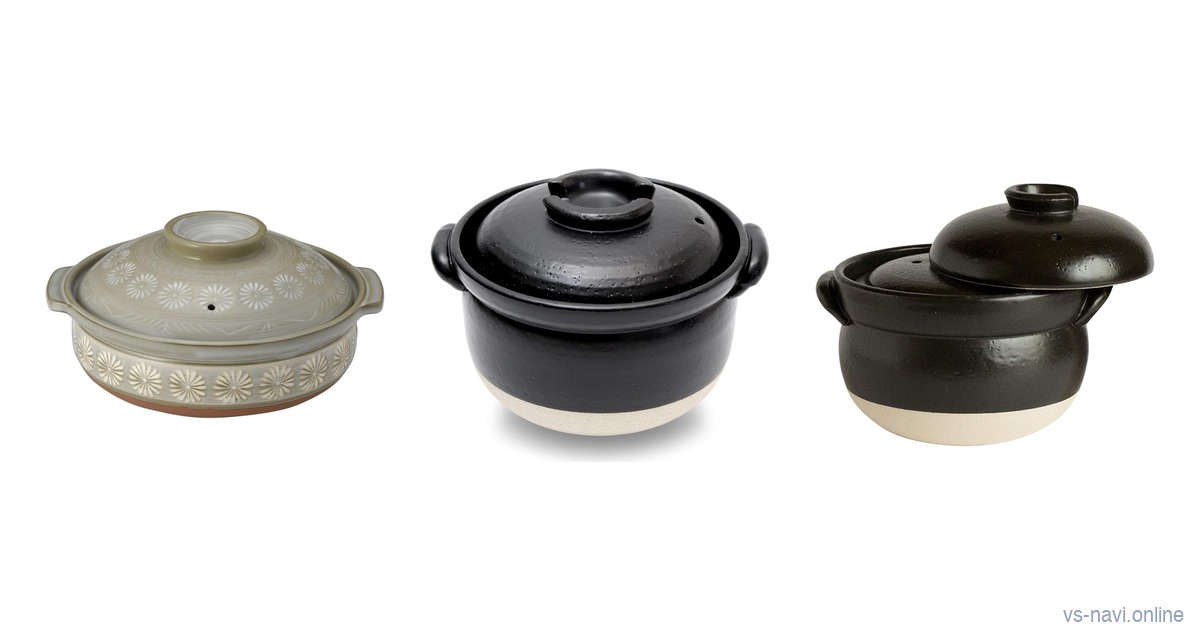
Ginpo Hana Mishima Donabe (No. 8) — The Best All-Rounder
Around $55 on Amazon · φ25 cm, for 2–3 people
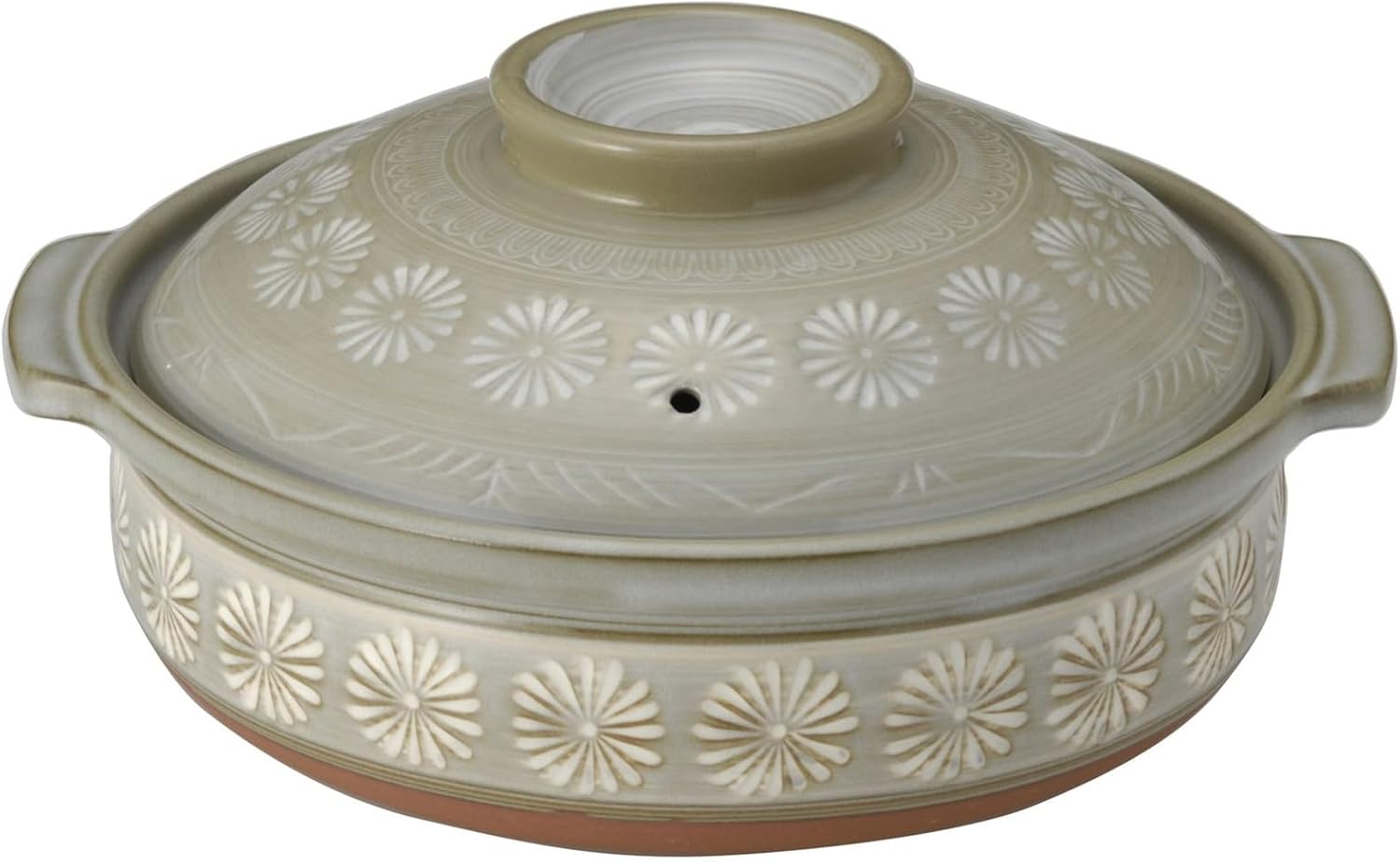
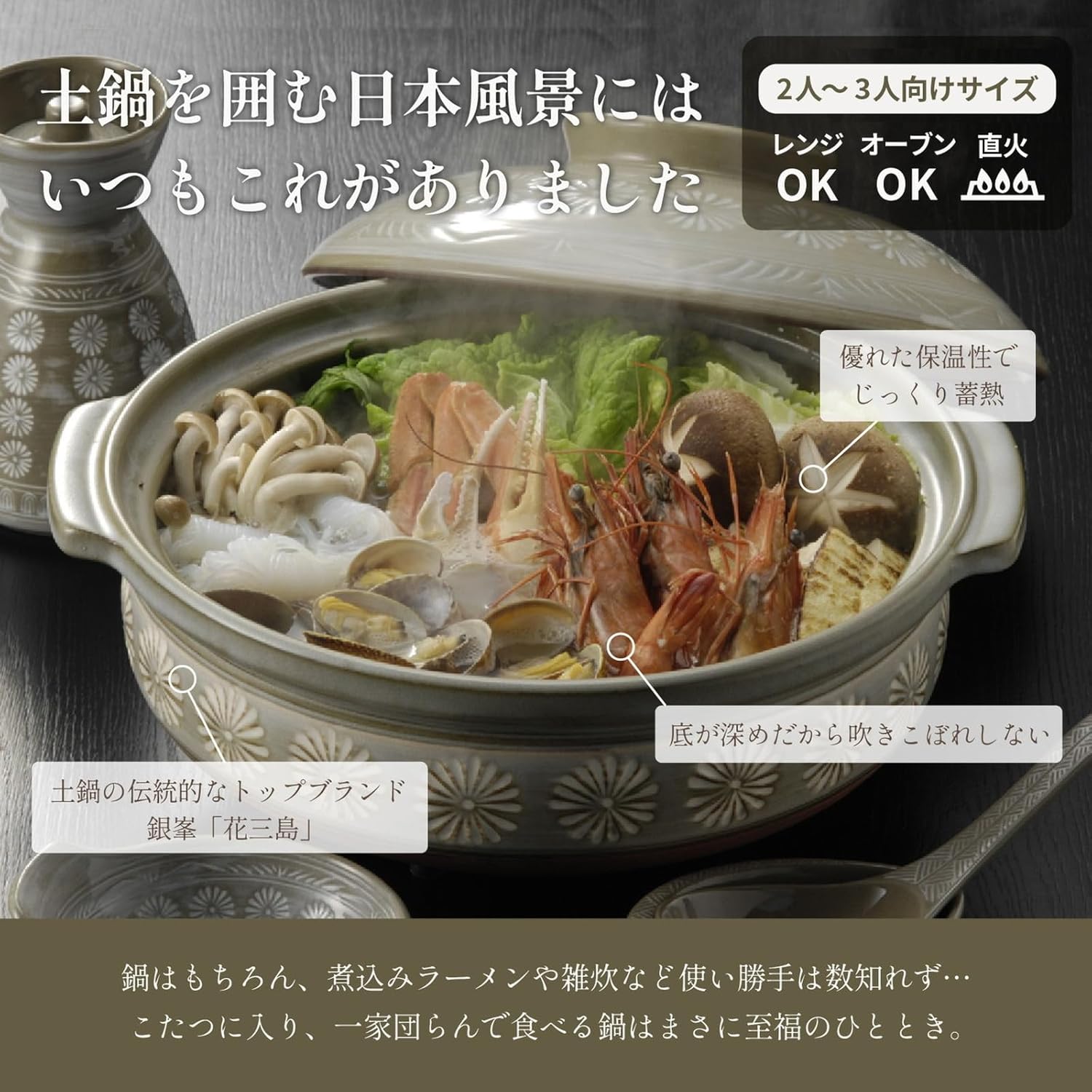
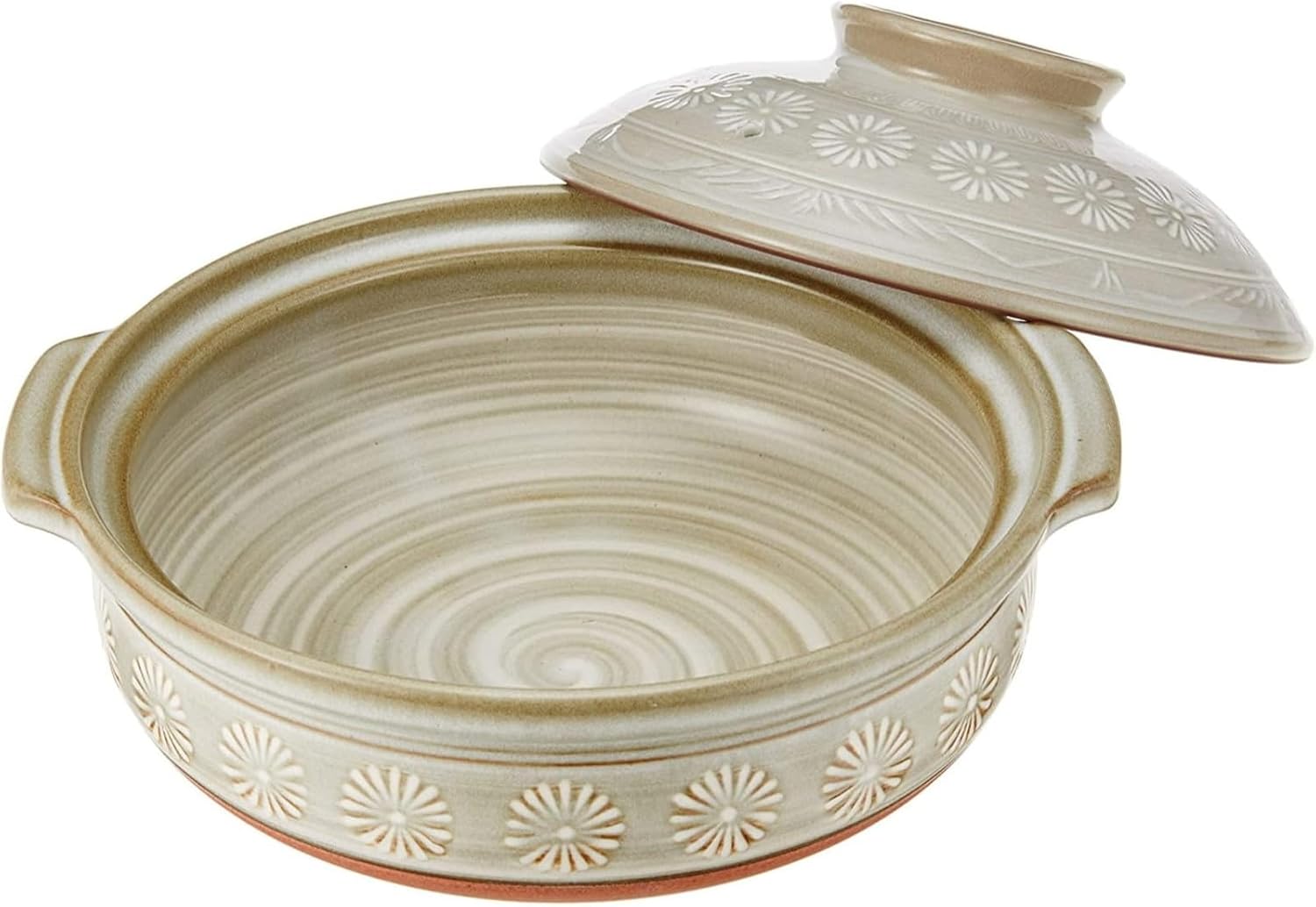
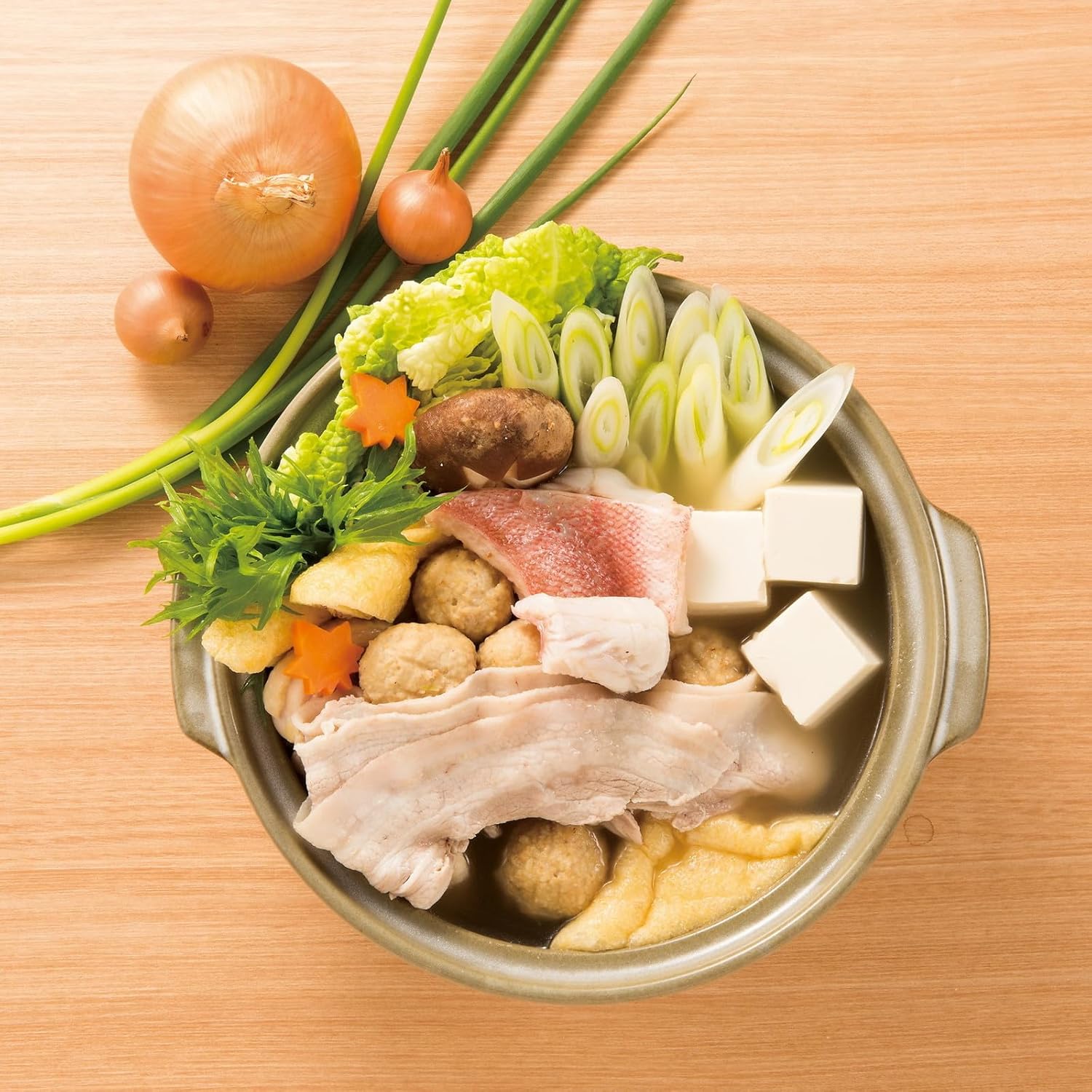
This is the donabe most Japanese households own. The wide, shallow body is built for a shared hot pot — you set it on a portable burner, drop in dashi, vegetables plus whatever protein the night calls for, then everyone reaches in from around the table. The clay walls hold heat so gently that the broth keeps a soft simmer long after you turn the flame down.
The prep work before a hot pot night happens in a smaller pan. Japanese cooks make the dashi or blanch tougher vegetables in a yukihira saucepan first. Our guide to the best yukihira pans compares Yoshikawa, TIKUSAN and Kourikka on size, weight and steel.
What the pot sits on matters as much as the pot. A cassette konro is what puts that flame on the table in Japan — our Iwatani butane stove review works through which of the three Iwatani bodies suits a heavy clay donabe.
Banko clay contains a lithium mineral called petalite, which lets the pot survive direct flame plus sharp temperature swings that would crack ordinary pottery. That is why a donabe can go from a cold cupboard to a live burner without ceremony. The No. 8 size (φ25 cm) feeds two to three people comfortably; a family of four should size up to a No. 9.
Clay is one of Japan’s two answers to a live flame; iron is the other. Where Banko clay warms slowly then holds that heat gently, Nambu Tekki cast iron from Iwate does the opposite — thin sand-cast walls that come up to searing heat fast. If your cooking leans toward stir-fries and steaks rather than simmered pots, see Iwachu Nambu Tekki vs Lodge vs Staub.
That clay-versus-iron split also frames the question many Western cooks ask first: how does a donabe stack up against the cast iron Dutch oven already sitting in their kitchen? We put the two heavy pots side by side in our donabe vs Dutch oven comparison.
It cooks rice beautifully too, though you watch the flame yourself rather than trusting a second lid. The honest downside is care: a new donabe needs a one-time medome seasoning (simmer rice porridge in it once to seal the pores), plus you must let it cool before washing. Treat it gently then it lasts decades.
After comparing the three, this is the one we would tell a first-time buyer to get. It does the thing a donabe is famous for — the tabletop hot pot — better than either rice specialist.
This pot draws the most discussion of the three and there is more to say about it than fits here: how the hand-stamped Hana Mishima chrysanthemum finish is actually made, the No. 8 versus No. 9 size call and what cooking in partly unglazed clay asks of you week to week.
Check price on Amazon →TOYO CASE Donabe Rice Cooker (2–3 Cups) — The Fuss-Free Rice Specialist
Around $48 on Amazon · double lid, 2–3 rice cups, microwave-safe
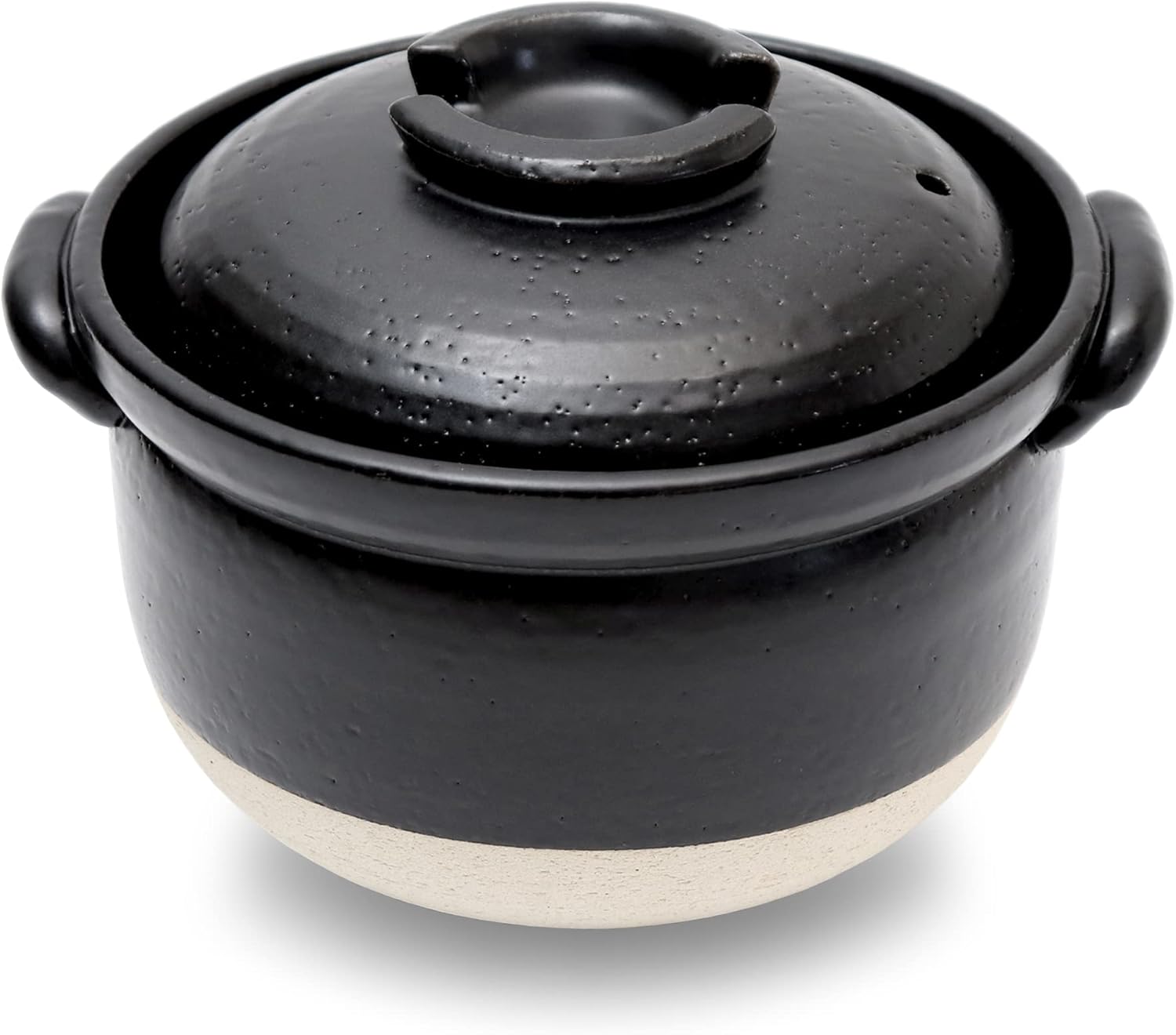
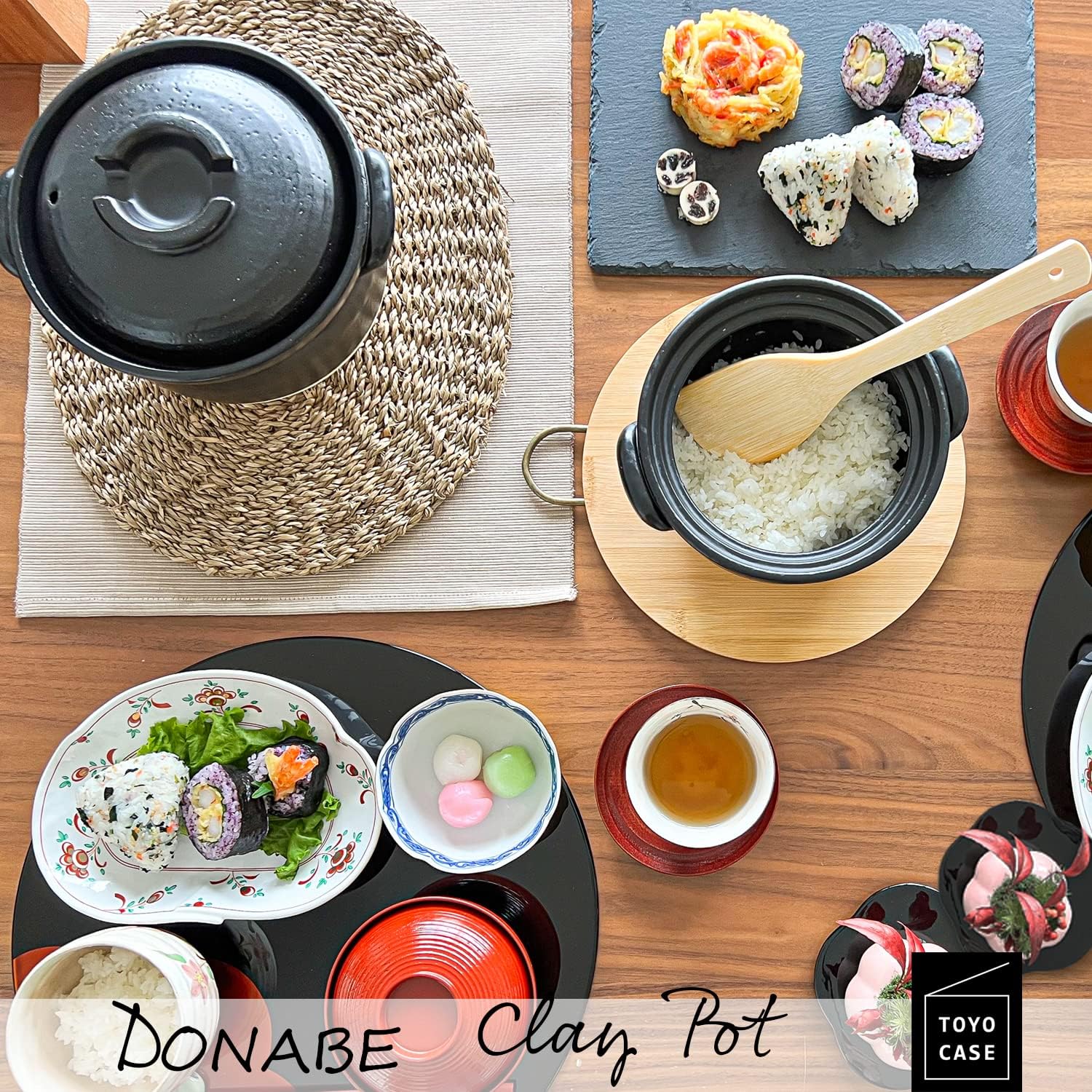
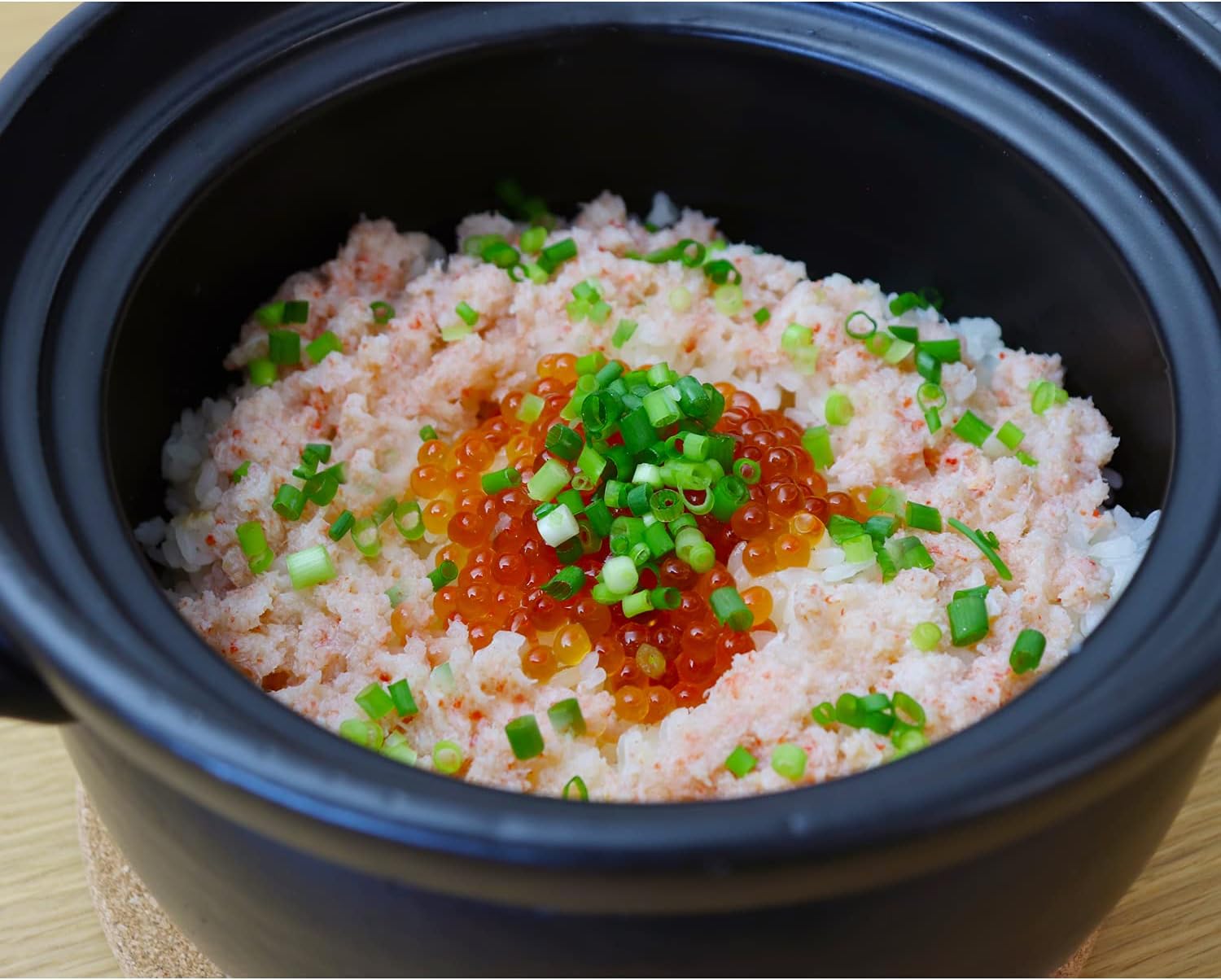
If you mainly want rice, a purpose-built rice donabe is easier to live with than the wide Ginpo. The TOYO CASE uses a double-lid design — an inner plus an outer clay lid — that traps steam plus builds a light pressure inside, the trick behind that glossy, individually-standing grain donabe rice is prized for.
The routine is fixed rather than fiddly: rinse the rice, add water to the molded line inside the pot, bring it to a boil, then cut the heat plus let it steam. No electricity, no timer — you go by the smell plus the steam. Two interior water lines (for 2 plus 3 cups) take the guesswork out of the ratio.
It is also the most forgiving of the three in daily use: the glazed body wipes clean, plus TOYO CASE rates the pot microwave-safe for reheating leftovers straight in the vessel. The trade-off is versatility — the narrow, deep shape that makes great rice is wrong for a tabletop hot pot. Buy this if rice is the job.
Check price on Amazon →Banko 3-Go Rice Pot — The Deep Pot for Serious Rice Eaters
Around $52 on Amazon · 1,900 ml, cooks 3 go, inner lid, made in Mie
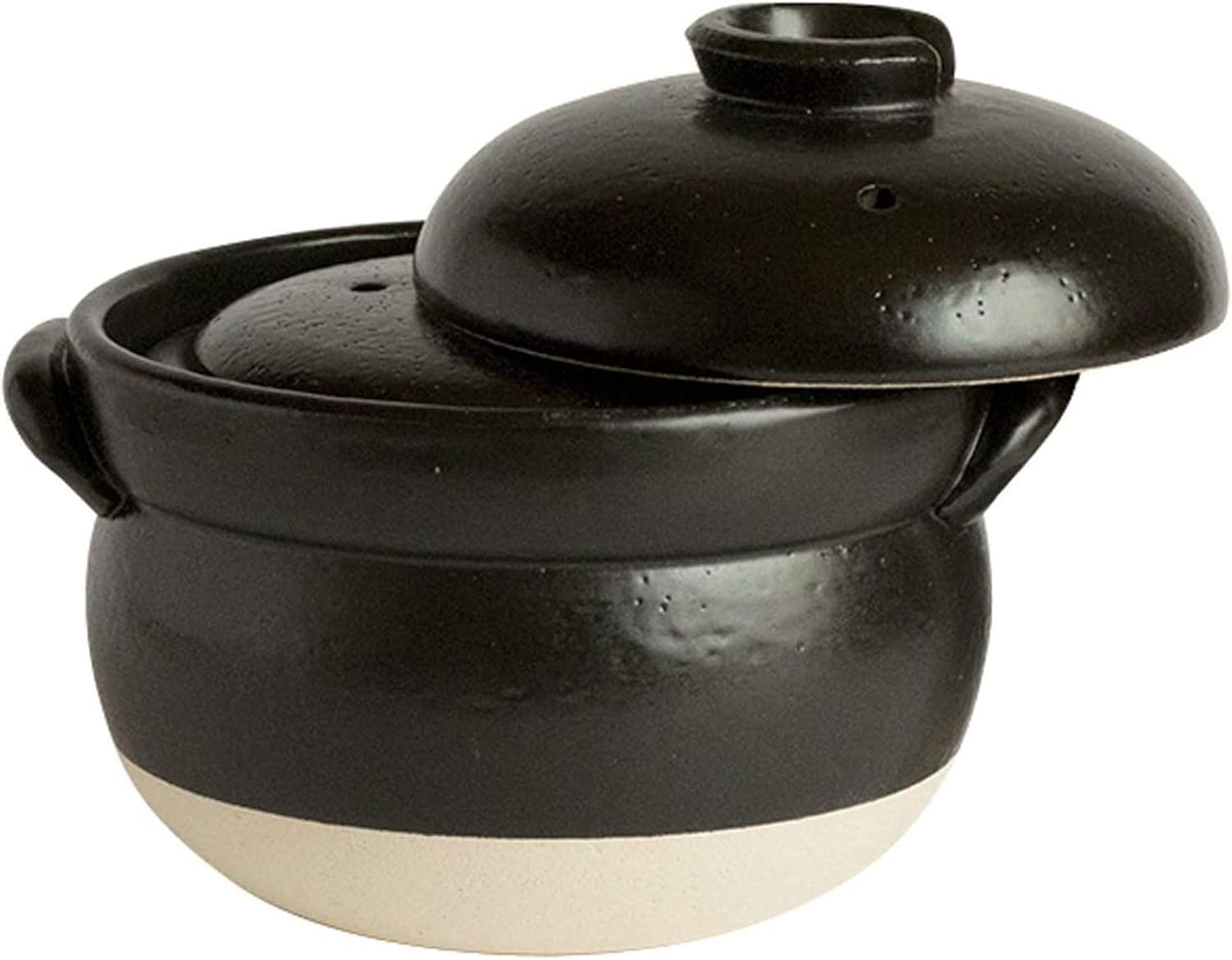
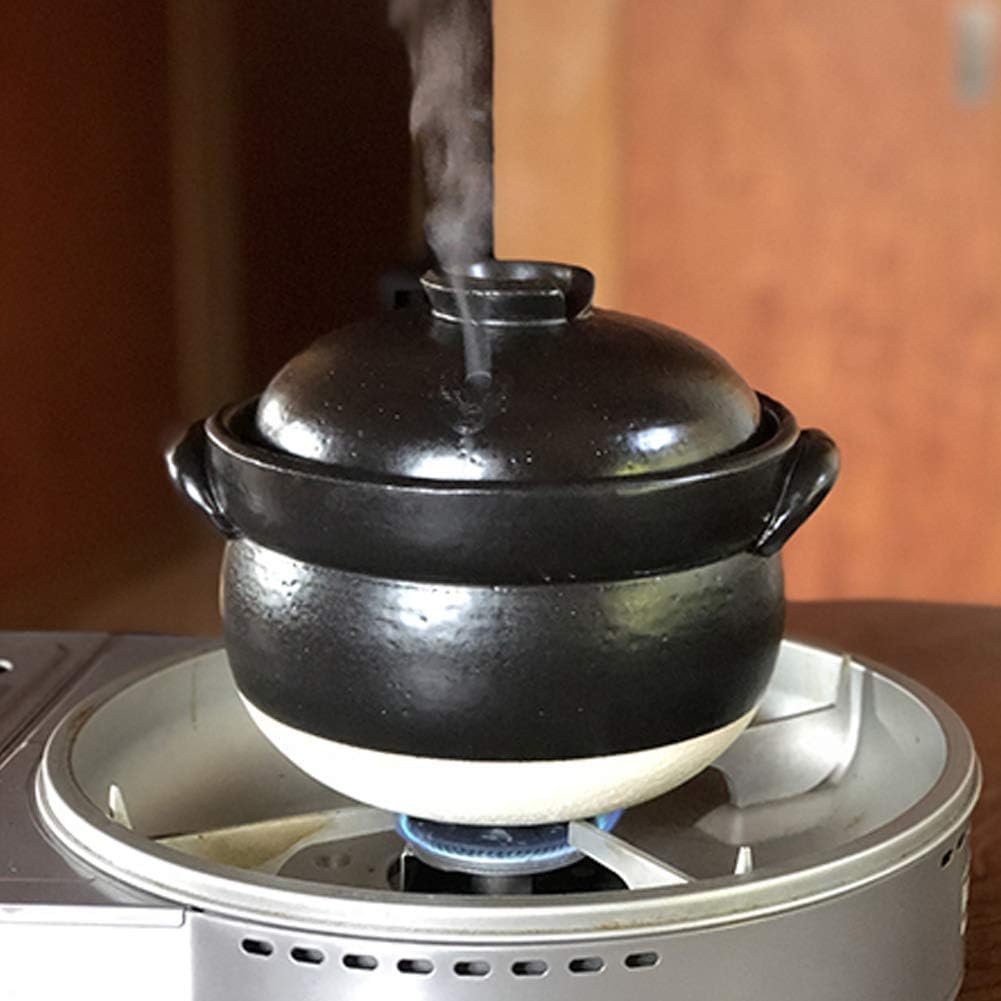
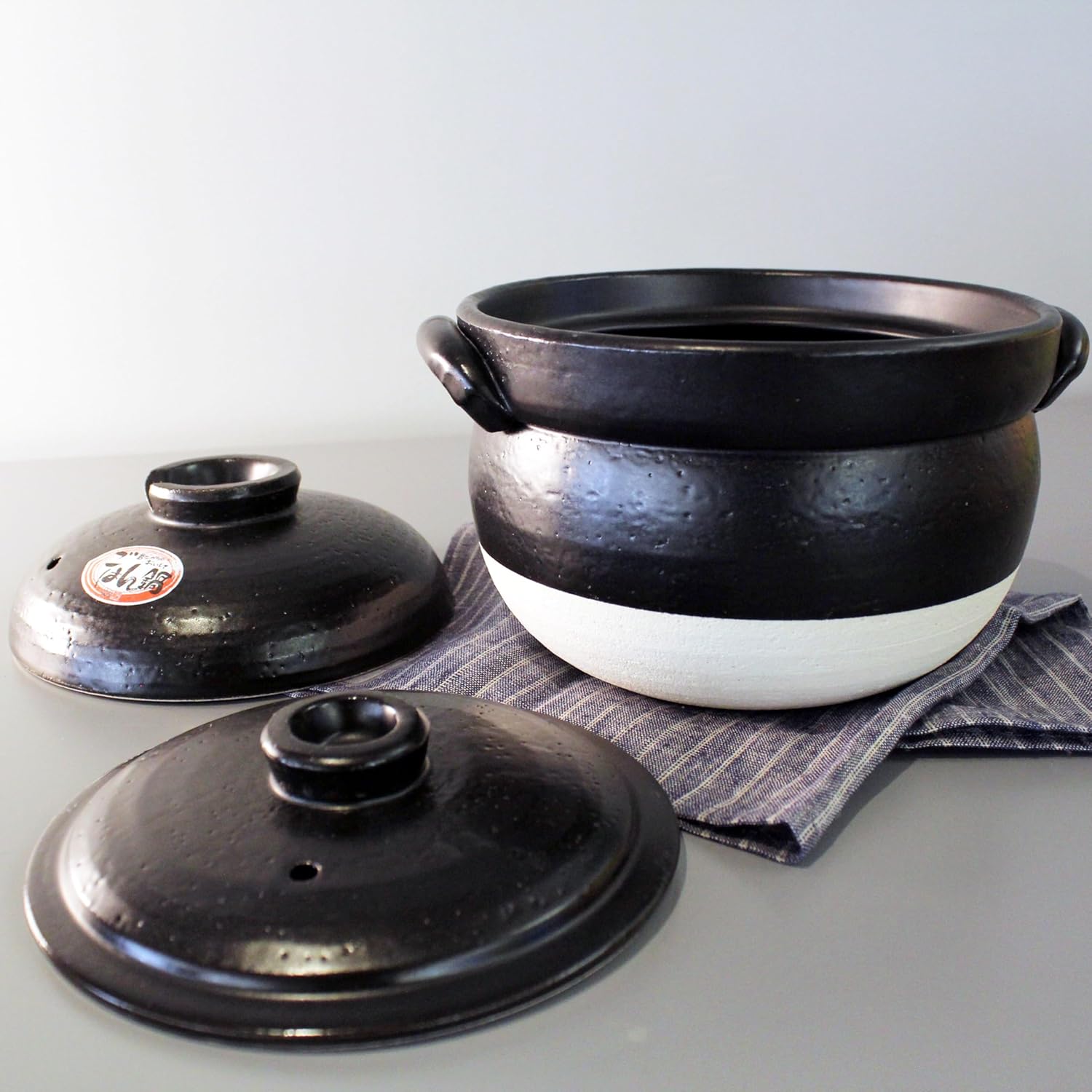
Where the TOYO CASE tops out at three cups, this deeper Banko pot is built around a full 3-go batch (about 1,900 ml of capacity), so it suits households that treat rice as the main event rather than a side. The tall, rounded shape circulates heat around a bigger volume of grain without scorching the bottom.
It carries the same made-in-Mie Banko credentials plus an inner lid that seals steam for that gentle-pressure cook. On the stove it announces itself — a plume of steam signals the moment to cut the heat, exactly as a rice donabe should. The finished rice develops a faint okoge, the prized toasted layer at the base that an electric cooker never gives you.
The catch is simply size: a deep 3-go pot is more clay to store plus more heat to manage than a compact 2-cup model, plus overkill for one or two people. For a rice-loving family, though, it is the most satisfying pot here.
Check price on Amazon →Compare the Three
| Ginpo Hana Mishima | TOYO CASE | Banko 3-Go | |
|---|---|---|---|
| Best for | Tabletop hot pot | Everyday rice | Big-batch rice |
| Shape | Wide, shallow | Compact, deep | Tall, deep |
| Lid | Single | Double lid | Inner plus outer |
| Capacity | φ25 cm (2–3 people) | 2–3 rice cups | 3 go / 1,900 ml |
| Direct flame | Yes | Yes | Yes |
| Microwave | Not advised | Yes | Not advised |
| Made in | Mie, Japan | Mie, Japan | Mie, Japan |
| Price (2026) | around $55 | around $48 | around $52 |
Pick the Ginpo if you want the classic experience — a hot pot shared at the table, with rice as a bonus. Pick the TOYO CASE if you want the simplest path to perfect rice in a compact, microwave-friendly pot. Pick the Banko 3-go if your household eats a lot of rice plus you want the deep pot with the toasted okoge layer.
Specs reflect each maker’s listing on Amazon.com in 2026. US prices move often, so confirm the live figure before buying. Viewed from a Japanese connection, Amazon.com may display prices in yen; the dollar figures above are approximate.
Summary
All three are genuine Banko ware from the same corner of Mie, so you are not choosing between good plus bad — you are matching a shape to a habit. The Ginpo is the donabe for people who picture a bubbling hot pot; the two rice cookers are for people who picture a bowl of glossy, stovetop rice. Buy for the meal you will actually make most often.
More Comparisons Worth Reading
Why the Ginpo Hana Mishima Is Our Donabe Pick
Around $60 on Amazon · No. 8 size, for 2–3 people · imported, so prices vary
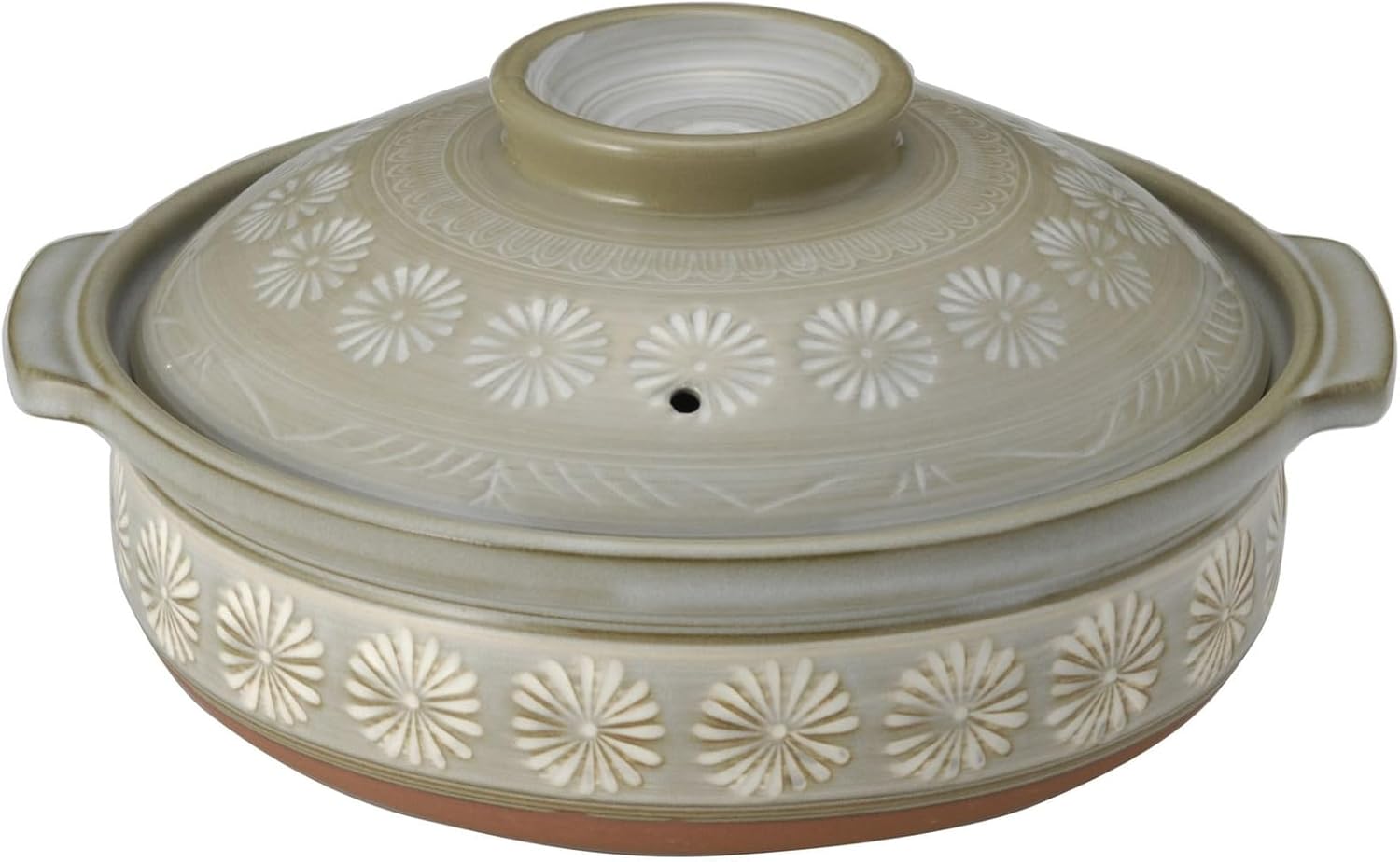
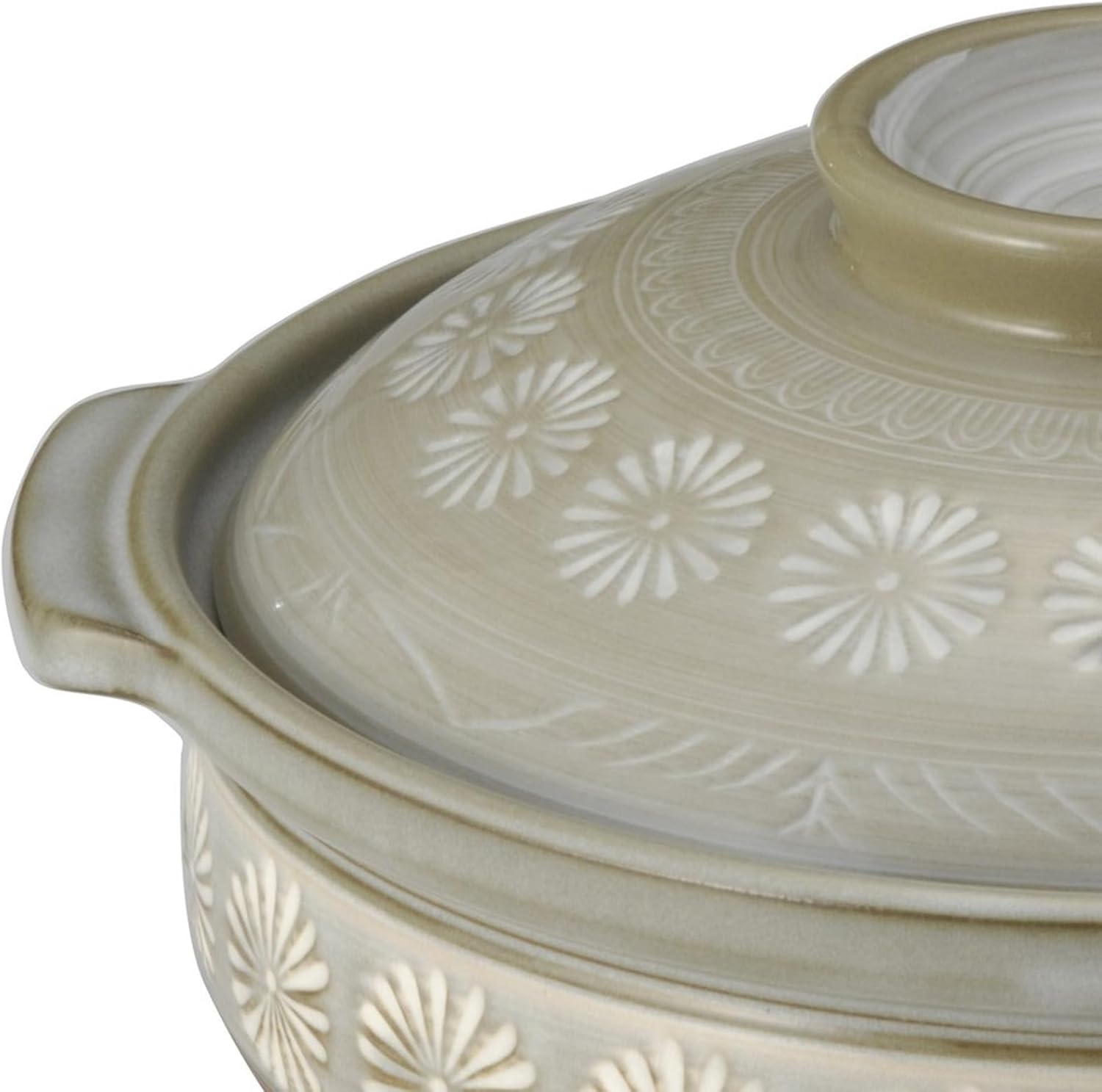
Ginpo (銀峰陶器) is a Banko ware pottery in Yokkaichi, Mie Prefecture — the town that produces the great majority of Japan’s heat-safe clay pots. Banko ware earns that reputation from a clay body rich in petalite, a lithium mineral that barely expands when heated. That is the quiet engineering reason a thin ceramic pot can sit on an open gas flame without cracking.
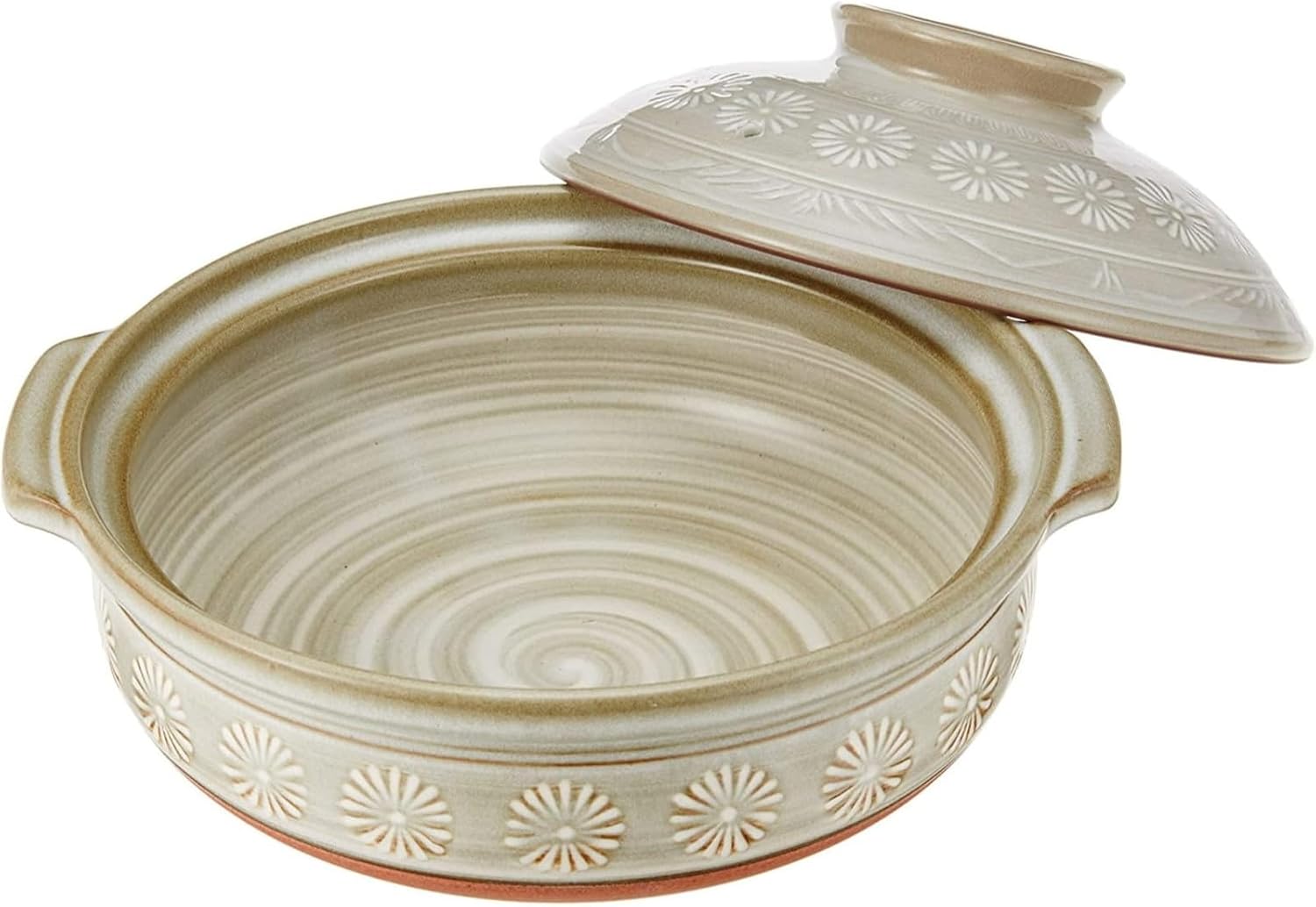
The “Hana Mishima” (花三島) finish is where the craft shows. Mishima is an old inlay technique that traces back to Korean Joseon-era pottery: the surface is stamped with a small chrysanthemum, then white slip is pressed into the recess so each flower reads crisp against the celadon-grey glaze. It is understated up close rather than loud, which is why the same pattern has stayed in production for years while trendier designs come plus go.
Look closely at the two-tone body. The glaze softens over most of the pot, but the foot ring is left as bare terracotta clay. That raw ring is deliberate: it lets the base take direct flame without the glaze crazing, plus it is a small tell that you are holding a proper flame-safe donabe rather than a decorative casserole dish that only tolerates the oven.
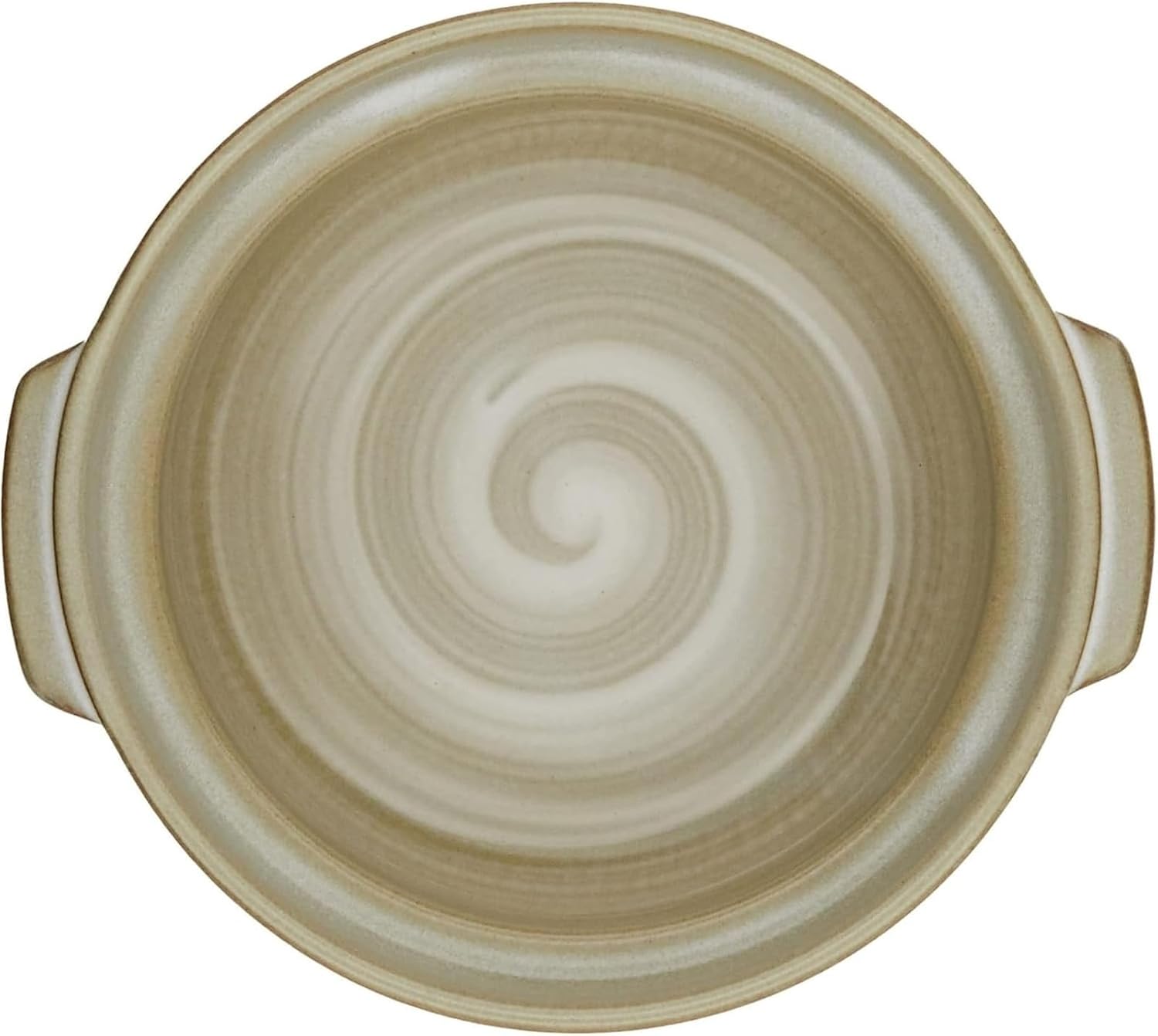
In use, the appeal is heat that behaves. Clay warms slowly then holds, so a nabe hot pot keeps a gentle simmer at the table long after the flame is low, plus the residual heat finishes tofu or noodles without scorching. The bottom is genuinely deep, which is the practical detail most rivals miss — it means broth for three does not spit over the rim the second it hits a rolling boil.
The honest downside is that unglazed clay is porous plus needs respect. Before first use you should season it (the classic method is cooking a thin rice porridge to seal the pores), you should never heat it empty or hit it with cold water while hot, plus it should air-dry fully so it does not develop a musty smell. None of this is hard, but it is a real habit an enameled Dutch oven does not ask of you.
There is one more limitation worth stating plainly. This is a flame-first vessel, so it will not work on an induction cooktop, plus like any clay pot it can crack if it is thermally shocked or dropped. Treat it as a lifelong tool rather than a disposable pan and it rewards you: many Japanese families use the same donabe for a decade or more, the seasoning deepening with every winter of hot pots plus every batch of clay-pot rice.
It suits anyone who eats hot pot, clay-pot rice, or slow winter stews for two to four people plus wants the real thing from a named Japanese maker rather than an anonymous import.
Check price on Amazon →Specs at a Glance
| Maker | Ginpo (銀峰陶器), Banko ware · Made in Japan |
|---|---|
| Model / pattern | 21081 · Hana Mishima (stamped chrysanthemum) |
| Size shown | No. 8 (8-go), about 25 cm diameter |
| Serves | 2 to 3 people |
| Heat sources | Direct gas flame, oven, microwave. Not for induction (IH) |
| Care | Season before first use · hand wash · dry fully |
| Approx. price | Around $60 (imported; check the live listing) |
One line deserves a bold star, because it is the mistake buyers make most: this pot is for a gas flame or oven, not an induction hob. If your kitchen is all-electric induction, the pot will not heat — that is where an IH-native option like the Vermicular Musui-Kamado earns its premium instead.
Which Size Should You Buy?
Ginpo numbers its donabe by “go.” Bigger numbers mean a wider pot, plus the jump between sizes is larger than it sounds. Match the size to how many people usually sit down, not to your biggest imagined dinner party.
| Size | Diameter | Best for |
|---|---|---|
| No. 6 | ~19 cm | 1 person, single-serve rice |
| No. 7 | ~22 cm | 1 to 2 people |
| No. 8 | ~25 cm | 2 to 3 people — the everyday pick |
| No. 9 | ~28 cm | 3 to 4 people |
| No. 10 | ~31 cm | 4 to 5 people, family hot pot |
For most couples plus small families the No. 8 shown here is the sweet spot: big enough for a shared nabe, still small enough to store plus to bring to the boil quickly. Cooking mainly for one? Drop to a No. 6 or 7. Feeding four or more regularly? Go straight to the No. 9 so nobody fishes for the last piece of tofu.
One sizing note that comes up repeatedly in owner reviews: a donabe cooks best when it is roughly two-thirds full, so err toward the size that matches your usual crowd rather than your largest one. An oversized pot left half-empty loses the gentle, even simmer that makes clay worth owning in the first place, plus it takes longer to heat.
Compare sizes plus prices on Amazon →
Donabe vs Electric Rice Cooker vs Dutch Oven
A common question from readers is whether a clay pot really beats the electric rice cooker already on the counter. They do different jobs. Here is how the two compare.
| Ginpo donabe | Electric rice cooker | Enameled Dutch oven | |
|---|---|---|---|
| Best at | Hot pot at the table, clay-pot rice | Hands-off daily rice | Braises, bread, stews |
| Serve at table | Yes, it is the centerpiece | No | Yes, but heavy |
| Heat feel | Slow, gentle, long hold | Automated | Very high retention |
| Care | Season, hand wash | Wipe the pot | Easy, dishwasher-safe |
If you want set-and-forget rice on a busy weeknight, keep the rice cooker. If you want the ritual — a bubbling pot everyone shares, rice with a crisp bottom crust, a vessel that goes from flame to table — that is exactly what the donabe is for. Many Japanese kitchens simply own both. For the wider view, our best Japanese donabe guide plus the Japanese kitchen tools guide put it in context.
Check the current price on Amazon →
The Verdict
The Ginpo Hana Mishima earns its status as Japan’s default donabe honestly. You are paying a fair price for a real Banko ware pot with genuine thermal-shock-resistant clay, a deep spill-resistant bowl, plus a stamped chrysanthemum finish that looks better in person than in photos. The only homework is learning to season plus dry it, plus remembering it is a flame-or-oven pot rather than induction.
For 2026 it remains the clay pot we would hand a first-time buyer without hesitation. Start with the No. 8 unless you know you cook for one or for a crowd.
See the Ginpo Hana Mishima on Amazon →Frequently Asked Questions
What is a donabe used for?
A donabe is a Japanese clay pot that goes directly on a flame. Its two classic jobs are the tabletop hot pot (nabe) — a shared simmering broth of vegetables, tofu plus protein — plus cooking rice, where the thick clay walls give an even, gentle heat that produces fluffy grain with a lightly toasted bottom layer called okoge.
What is Banko ware and why does it matter for donabe?
Banko ware (Bankoyaki) is pottery made in Yokkaichi, Mie Prefecture, which produces roughly 80% of all Japanese donabe. Its clay contains petalite, a lithium mineral that gives the pot exceptional resistance to direct flame plus thermal shock — the property that lets a donabe move from cupboard to burner without cracking. All three pots here are Banko ware.
Do I need to season a new donabe before first use?
Yes. A new unglazed or partly-glazed donabe should be seasoned once with a process called medome: cook a thin rice porridge (or a rice-water rinse) in it, let it cool fully, then wash. This seals the microscopic pores in the clay, reduces cracking plus prevents leaks. After that one-time step, normal washing is enough.
What does the double lid on a rice donabe do?
The double-lid design — an inner clay lid under an outer one, as on the TOYO CASE — traps steam plus builds a light internal pressure while the rice cooks. That gentle pressure is what gives donabe rice its glossy, individually-standing grains. It also makes the cook more forgiving, since less steam escapes before the rice finishes.
Can a donabe go in the microwave or dishwasher?
It depends on the pot. TOYO CASE rates its glazed rice donabe as microwave-safe for reheating, which is unusual. Most donabe, including the Ginpo plus the deep Banko 3-go, should not be microwaved or put in a dishwasher — hand-wash them after they have cooled, plus never heat an empty pot or expose a hot pot to cold water.
Which size donabe should I buy?
For hot pot, match the pot to the table: a No. 8 (φ25 cm) Ginpo suits two to three people, a No. 9 suits four. For rice, match it to appetite: the 2–3 cup TOYO CASE fits couples plus small households, while the deeper 3-go Banko pot suits families or anyone who eats rice at most meals.
You Might Also Like
- Zojirushi vs Cuckoo Rice Cooker: Which One Is Worth Buying?
- Best Bento Box for Adults 2026: Zojirushi vs Skater vs Takenaka
- Best Japanese Vacuum Insulated Bottles 2026: Tiger vs Zojirushi vs Thermos
References & Editorial Notes
This is a desk comparison built from Japanese-language maker pages plus current Amazon.com listings; we do not receive samples or cook-test the pots. For this 2026 guide we re-checked sizes, materials plus US pricing against each maker’s listing. Prices reflect 2026 US conditions and may change. Affiliate links carry the vsnavi-20 associate tag; we may earn a commission at no extra cost to you.