vs-navi.online is a participant in the Amazon Services LLC Associates Program. Purchases made through links on this page may earn us a commission at no extra cost to you.
Water for dashi comes to a simmer in a few minutes. You tip the pan to the left and the stock pours cleanly from a small spout. The pan itself weighs about as much as a full bottle of water.
That is the yukihira pan, the plain single-handled saucepan found in almost every Japanese home. It has a hammered body, a wooden or resin handle and a pouring lip on both sides. Japanese cooks reach for it to blanch greens, make miso soup, boil noodles or warm milk.
We compared the Japan-made yukihira pans in stock on Amazon.com in 2026. This is a desk comparison based on Amazon listing data, maker specifications and how the pan is used in Japanese kitchens. Nothing here is a hands-on cooking claim.
Our Picks: The Best Yukihira Pans on Amazon in 2026
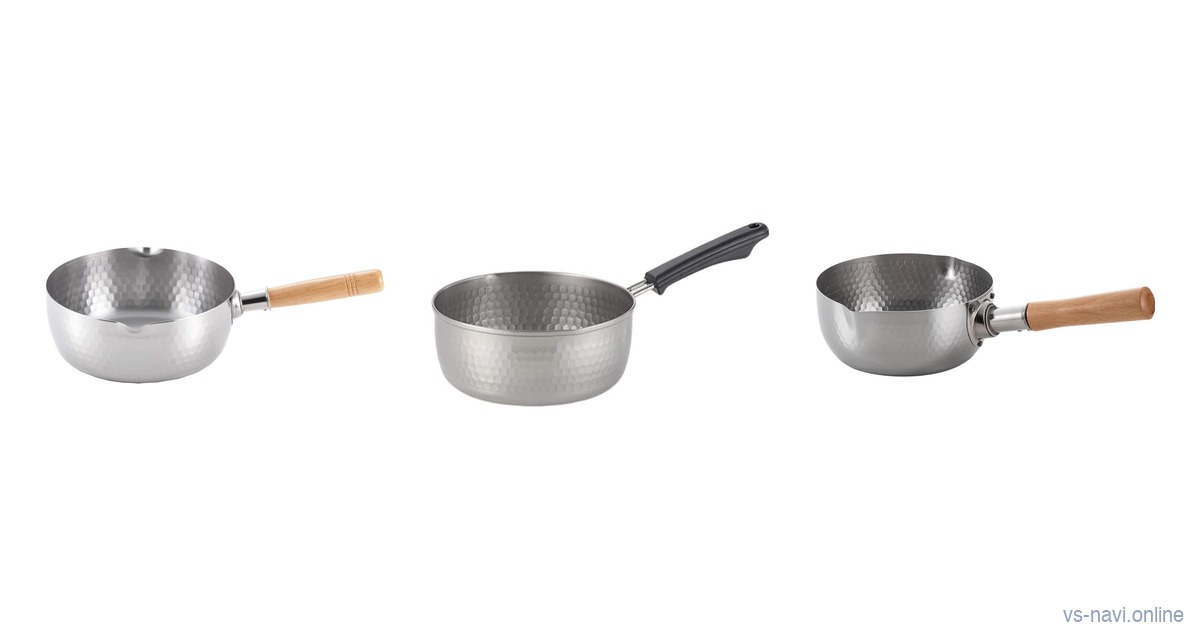
All three are stainless steel, made in Japan per their listings and induction-ready. Each had a live price with an add-to-cart button when we checked:
- Yoshikawa Yukihira Saucepan, 3 quart (22 cm) — about $42. The best seller of the group with more than 3,300 ratings. The pick for a family pot.
- TIKUSAN Yukihira Pot, 18 cm — about $40. The lightest at roughly 480 g with a black resin handle. The pick for one or two people.
- Maruyama Giken Kourikka KRY-18, 18 cm — about $55. A nickel-free 16/0 steel body with a mirror-polished outside. The pick if looks matter.
Check price on Amazon: Yoshikawa 3 qt →
What Makes a Pan a Yukihira?
The name is often linked to Ariwara no Yukihira, a Heian-era poet said to have made salt by boiling seawater on the shore. Whatever the true origin, the shape has stayed the same for generations. It is a straight-sided pot with one long handle.
Three details define it. The first is the hammered pattern called tsuchime. The small dents add surface area so heat spreads into the liquid a little faster. They also stiffen thin metal.
The second is the pair of pouring spouts. One on each side means a left-handed cook can pour as easily as a right-handed one. The third is the lack of a lid. Japanese cooks usually set an otoshibuta, a drop lid, right on the food when simmering.
Older yukihira pans were mostly aluminum. Aluminum heats fast but does not work on induction. Most Japanese brands now sell stainless versions for that reason, which is why all three picks here are steel.
Yoshikawa Yukihira Saucepan, 3 Quart (Around $42 on Amazon)
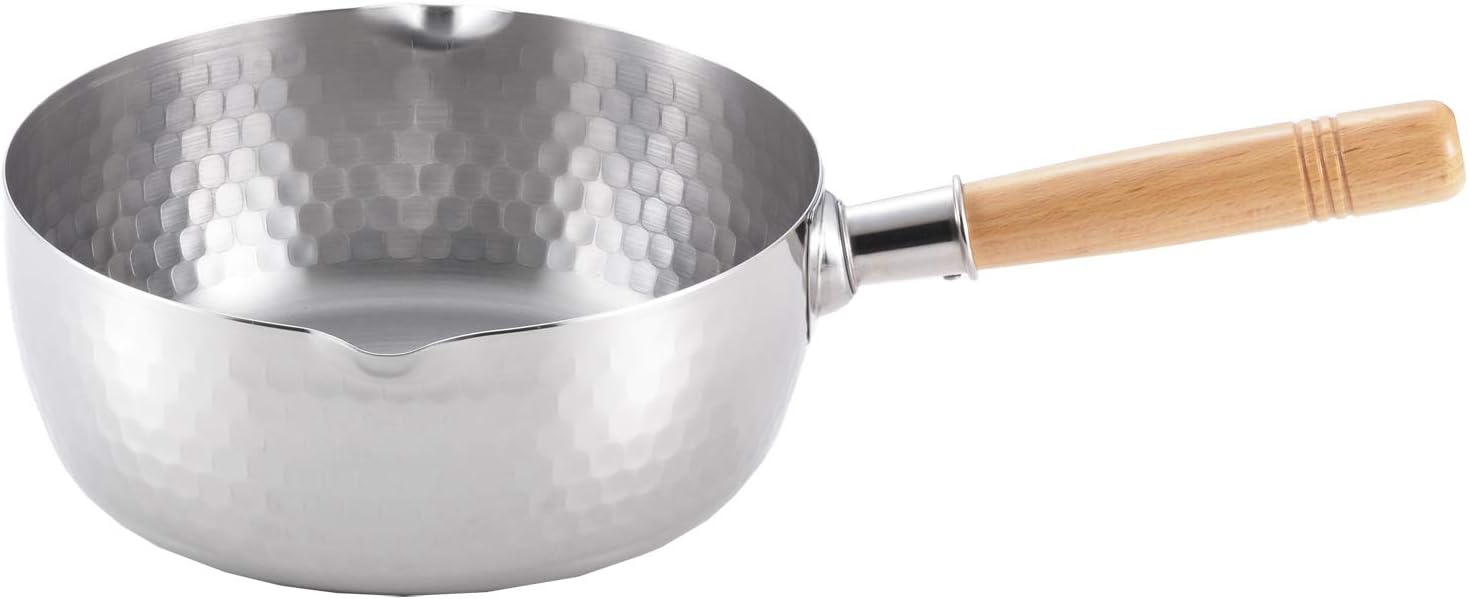
Yoshikawa is a housewares maker from the Tsubame-Sanjo metalworking area of Niigata. Its yukihira line is one of the most familiar in Japanese stores. On Amazon.com this 3 quart pan holds 4.4 stars from more than 3,300 ratings, far more than any rival.
The body is 1.0 mm stainless steel with 18-8 stainless fittings. The listing gives the weight as about 740 g (1.6 lb). The maker rates it for gas plus every common electric hob, including induction.
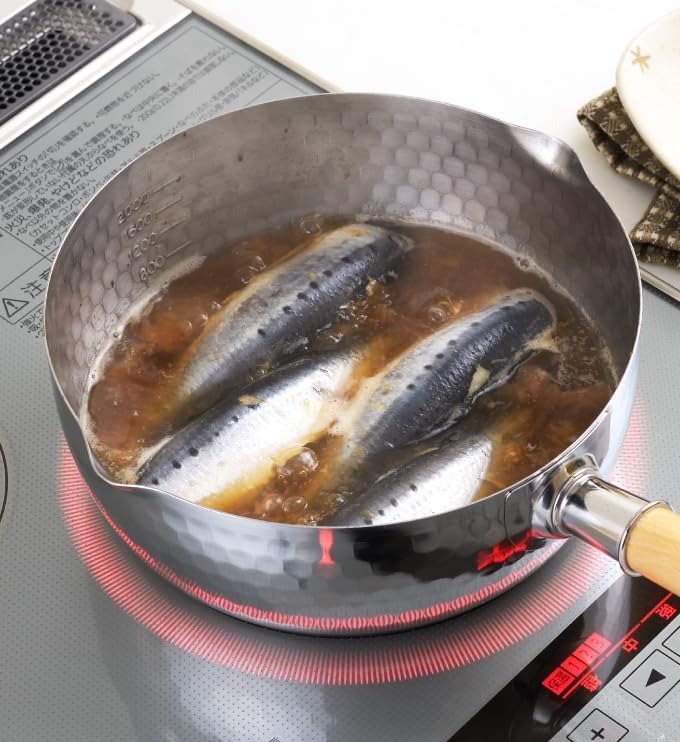
At 22 cm across it fits a whole pack of noodles or two fish fillets in broth. The inside is marked with volume lines, so you can measure water for rice or soup without a cup. The handle is natural wood fixed without rivets on the inside wall, which makes the pan easy to scrub.
The downside is size. For a single cup of miso soup this pan is more than you need. It also has no lid in the box. Smaller sizes are sold on Amazon.com as well, but this listing is the 3 quart.
Who it suits: a household of three or more, or anyone who wants one yukihira to do most jobs.
TIKUSAN Yukihira Pot, 18 cm (Around $40 on Amazon)
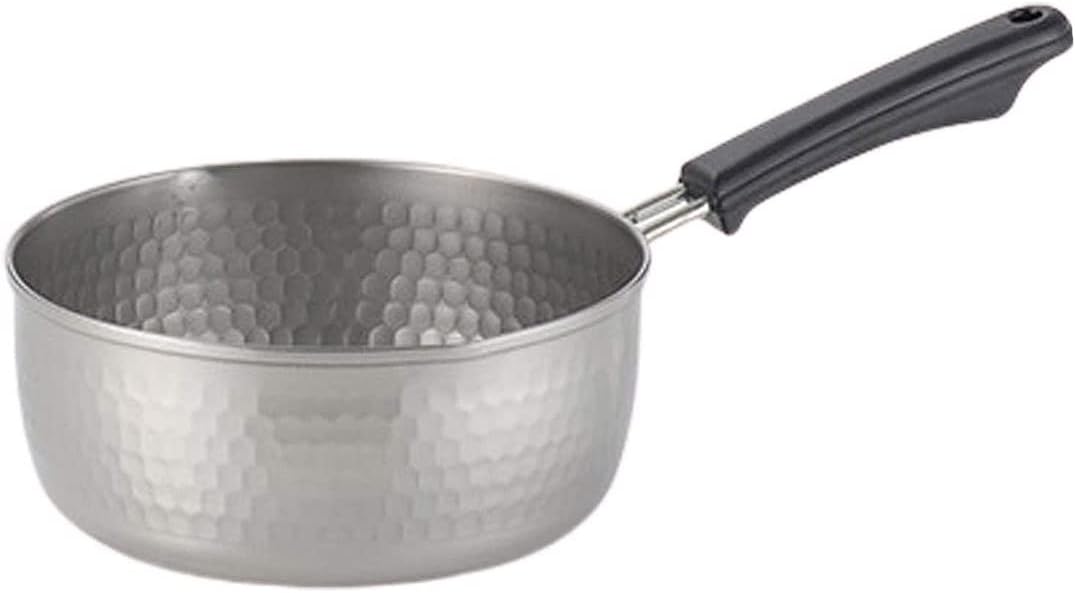
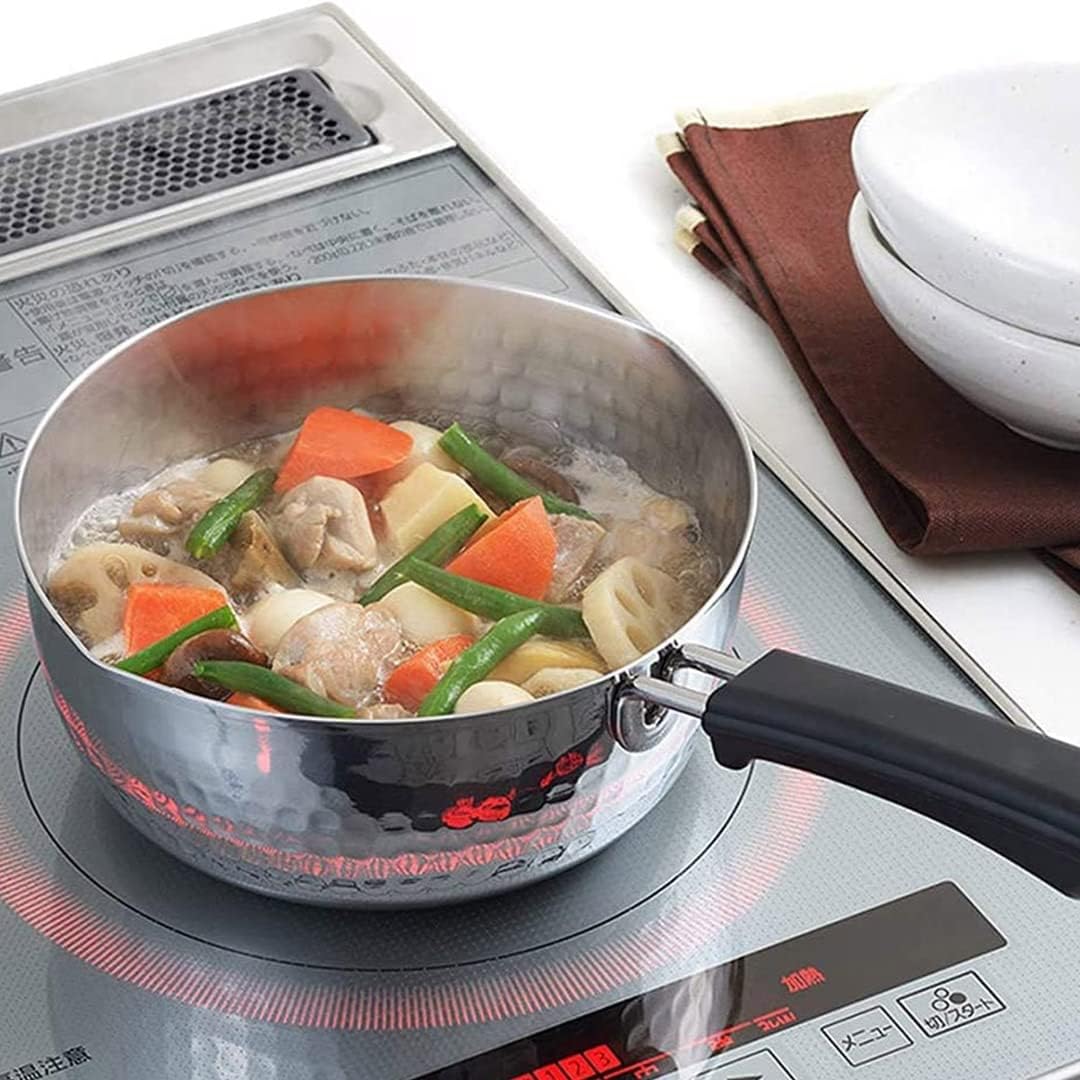
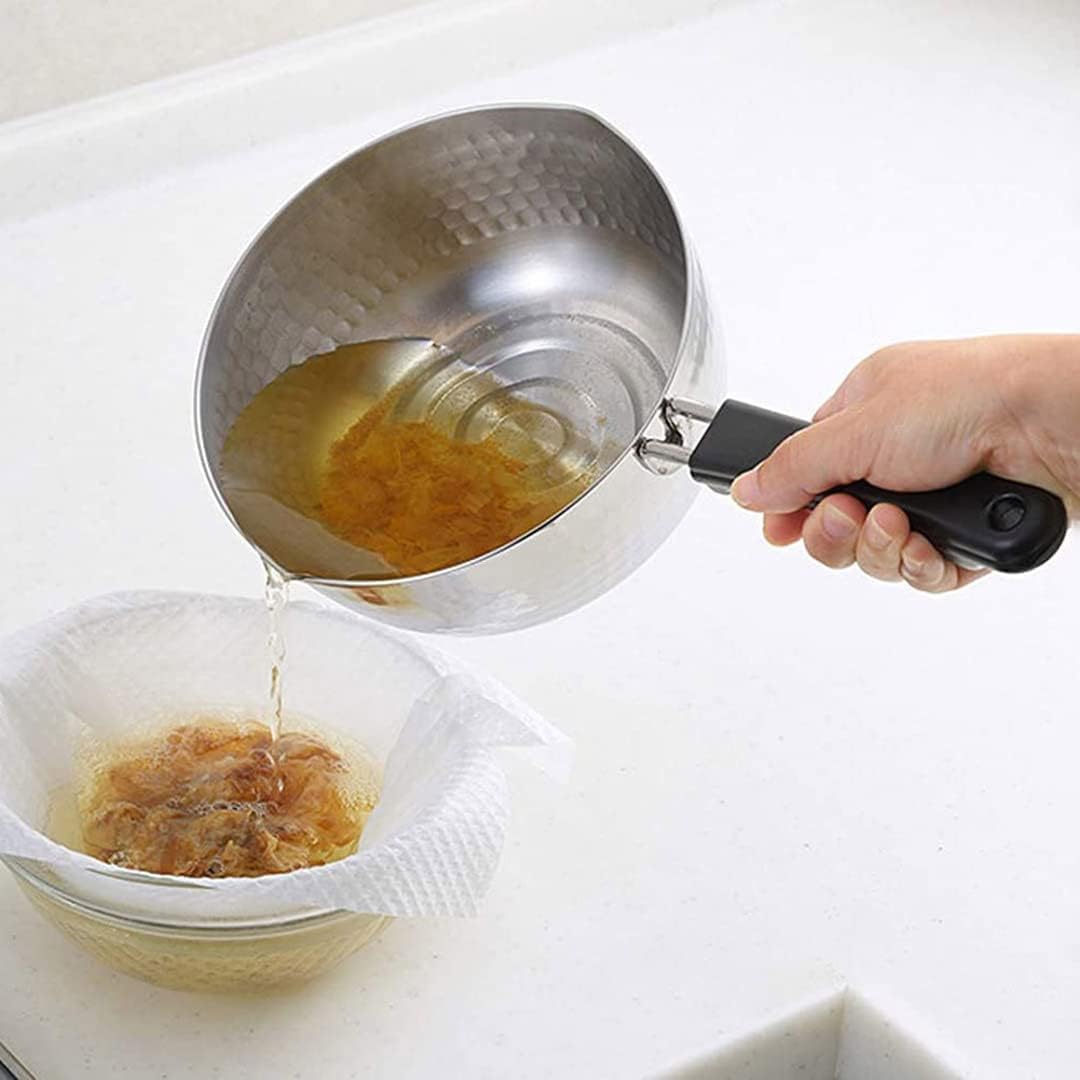
TIKUSAN sells this pot on Amazon.com as a Made in Japan item. The listing names Yoshikawa in the manufacturer field, so this pan is closely tied to the first pick. The difference is in the details rather than the maker.
At 18 cm (7.1 inches) wide it holds about 2 quarts. The listing weight is roughly 480 g, light enough to lift with one hand while you pour. Pouring dashi through a strainer is the classic yukihira task. A light pan makes that job easy.
The handle is black resin instead of wood. It will not darken or crack from water the way bare wood can. Some buyers will miss the traditional look, though.
It holds 4.7 stars on Amazon.com, but from only 23 ratings. Stock looked thin as well, with only a few left when we checked. The listing also says it is not dishwasher safe.
Who it suits: a cook living alone or a couple who want a small, light pan for soup, noodles or blanching.
Maruyama Giken Kourikka Yukihira KRY-18 (Around $55 on Amazon)
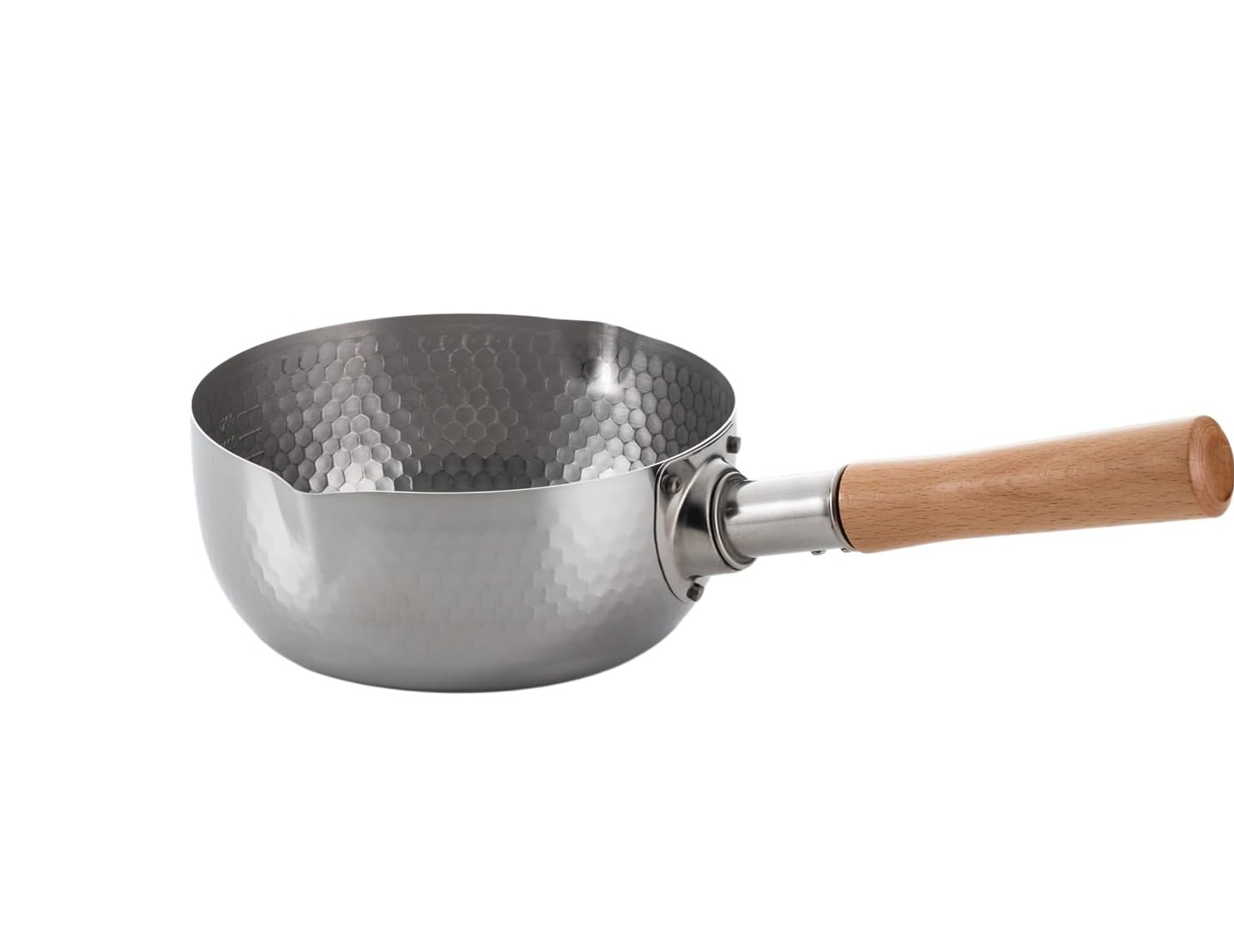
Kourikka is a cookware line from Maruyama Giken. The Japanese name is written with characters that suggest a sparkling snowflake. The pans are sold in 16, 18, 20 or 22 cm sizes.
The body is 16/0 stainless steel. That grade contains no nickel, which some buyers with nickel sensitivity look for. It is also magnetic, so it works on induction without a separate base.
The outside is mirror-polished over the hammered pattern while the inside is brushed. On the stove it catches the light more than the matte finish of the other two. The 18 cm model holds 1.8 quarts to the brim. The listing weight is about 670 g with a solid wood handle.
It costs about $15 more than the TIKUSAN for a slightly smaller capacity. The matching lid is sold separately. Ratings sit at 4.4 stars from 64 reviews, a figure that appears to be shared across the sizes.
Who it suits: someone who wants a yukihira that looks good on open shelving or who prefers a nickel-free steel.
Compare the Three
| Yoshikawa 3 qt | TIKUSAN 18 cm | Kourikka KRY-18 | |
|---|---|---|---|
| Price seen | ~$42 | ~$40 | ~$55 |
| Diameter | 22 cm (8.7 in) | 18 cm (7.1 in) | 18 cm (7.1 in) |
| Capacity (listing) | About 3 qt | About 2 qt | 1.8 qt to the brim |
| Weight (listing) | About 740 g | About 480 g | About 670 g |
| Steel | Stainless, 1.0 mm body | Stainless | 16/0 nickel-free |
| Handle | Natural wood | Black resin | Solid wood |
| Induction | Yes | Yes | Yes |
| Amazon rating | 4.4 (3,359) | 4.7 (23) | 4.4 (64) |
For most first-time buyers the Yoshikawa 3 quart is the safe choice. It has by far the longest track record on Amazon.com with room for family-size soup or noodles.
If you cook for one or two, the TIKUSAN 18 cm is lighter for about the same price. If you want a nickel-free pan that looks good hanging on a rail, the Kourikka earns its higher price.
How Japanese Cooks Use a Yukihira
In a Japanese kitchen the yukihira is the everyday small pot. It boils spinach for ohitashi, cooks a single portion of udon or warms leftover curry. Because it heats quickly it suits short jobs better than long braises.
For long simmers on the table many households switch to a clay pot. Our guide to Japanese donabe clay pots covers that side of the kitchen. For a rolled omelette to go with the miso soup, see our tamagoyaki pan comparison.
Care is simple. Wash a stainless yukihira by hand with a soft sponge, then dry the wooden handle. Do not leave a wooden handle soaking in the sink. If white mineral spots appear, a little vinegar or citric acid in water removes them.
Summary
A yukihira pan is a light Japanese saucepan with a hammered body and two pouring spouts. The Yoshikawa 3 quart is the all-round pick. The TIKUSAN suits small households while the Kourikka is the nickel-free, polished option.
Prices are US dollar figures seen on Amazon.com at the time of writing. They change often.
Frequently Asked Questions
What is a yukihira pan used for?
It is an everyday saucepan in Japan. Common jobs are making dashi or miso soup, blanching vegetables, boiling noodles, simmering small dishes and warming milk.
Why does a yukihira pan have no lid?
Traditional Japanese simmering uses an otoshibuta, a drop lid that sits on the food instead of on the rim. Many makers sell a matching lid separately if you want one.
Aluminum or stainless steel yukihira?
Aluminum is the older style. It heats very fast but does not work on induction. Stainless steel is heavier yet works on gas or induction with less discoloration. All three picks here are stainless.
What size yukihira should I buy?
An 18 cm pan (about 2 quarts) suits one or two people. A 20 to 22 cm pan (about 2.5 to 3 quarts) suits a family or noodle cooking. Many Japanese homes own two sizes.
Is a yukihira pan dishwasher safe?
Check each listing. The TIKUSAN listing says it is not dishwasher safe. Wooden handles in general last longer when washed by hand then dried right away.