vs-navi.online is a participant in the Amazon Services LLC Associates Program. Purchases made through links on this page may earn us a commission at no extra cost to you.
Open a bag of good sencha and the clock starts. Air, light and kitchen humidity slowly flatten the sweet, grassy smell that made the tea worth buying.
In Japan the answer is the chazutsu (茶筒), a tight-fitting tea canister that sits on the shelf next to the kettle.
The most common kind is a steel or tin can wrapped in printed washi paper, with a snug outer lid and an inner lid that presses down on the leaves.
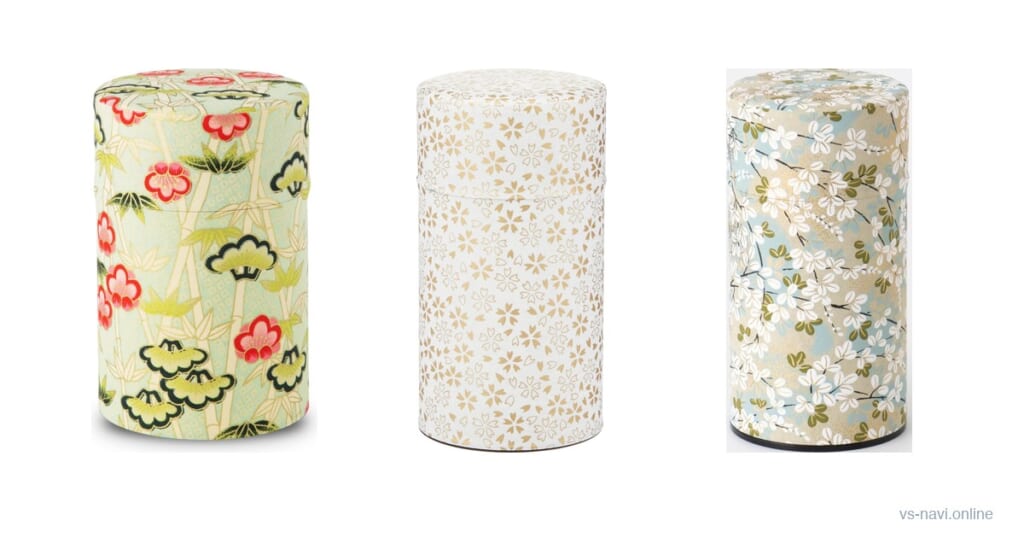
We compared three Japanese washi tea canisters that were in stock on Amazon.com in November 2026: NOREN, Yamako Pokkan and KIMIKURA.
This is a desk review of listings, maker specs and public review summaries, not a hands-on test.
Our Picks: Which Japanese Tea Canister to Buy
Quick picks: choose by size and purpose
Best small canister
NOREN Yuzen Washi Tea Canister
Holds 100 g (3.5 oz) of loose tea. Kyoto Yuzen paper on a steel can made in Shizuoka.
About $16 · 4.5/5 from 474 ratings
Check price: NOREN →Amazon affiliate link
Best value for 200 g
Yamako Pokkan Tea Canister (Sakura)
Double lid with gold cherry blossoms on white. Some buyers report dents.
About $13 · 4.3/5 from 237 ratings
Check price: Yamako →Amazon affiliate link
Best for gifting
KIMIKURA Washi Tea Canister
Double lid and 200 g capacity, sold by a Japanese tea brand. Fewer reviews so far.
About $19 · 4.6/5 from 29 ratings
Check price: KIMIKURA →Amazon affiliate link
These canisters are often sold in small lots, so stock and price can change quickly. Prices were seen on November 6, 2026; ratings were checked on Amazon.com on November 22, 2026. Jump to the side-by-side table ↓
Kotodo and Kaikado, two well-known Japanese chazutsu makers, had no in-stock listing on Amazon.com when we checked, so they are not linked here.
What a Chazutsu Is in Japan
Japanese green tea is usually sold in vacuum or nitrogen-flushed bags.
Once a bag is opened, most tea shops in Japan advise moving the leaves into a canister and finishing them within a few weeks. That is the job of the chazutsu.
The best-known craft version is the hand-made metal chazutsu from Kyoto. Kaikado, founded in 1875, makes copper, brass and tin canisters whose lids slide down under their own weight.
Those cost well over $100 and are rarely sold on Amazon.com.
Most Japanese households use something simpler: a pressed steel or tin can covered with washi paper.
Many patterns use Yuzen paper (友禅紙), a printed paper from Kyoto with kimono-style motifs such as cherry blossoms, pine, plum, waves and cranes. These cans are cheap, light and easy to replace.
They are also a common small gift in Japan, often sold next to the tea itself.
If you are still choosing the tea, our guide to Japanese green tea brands compares Ito En with Yamamotoyama. For brewing, see our Tokoname kyusu teapot guide.
What to Look for in a Tea Canister
Capacity. Japanese canisters are sized by how much sencha they hold. A 100 g can fits one standard bag of tea. A 200 g can fits two bags or one bag of a bulkier tea like hojicha or genmaicha.
Inner lid. The inner lid is what really keeps air out. Some cans use a metal inner lid with a small knob. Others use a translucent plastic inner lid that seals with a soft press.
Paper care. Washi is real paper. It does not like wet hands, steam or a dishwasher. Wipe the outside with a dry cloth and keep the can away from the kettle spout.
Light. Unlike glass jars, a washi-covered metal can blocks light completely. That matters for green tea and matcha, which lose color under light.
NOREN Yuzen Washi Tea Canister (around $16 on Amazon)
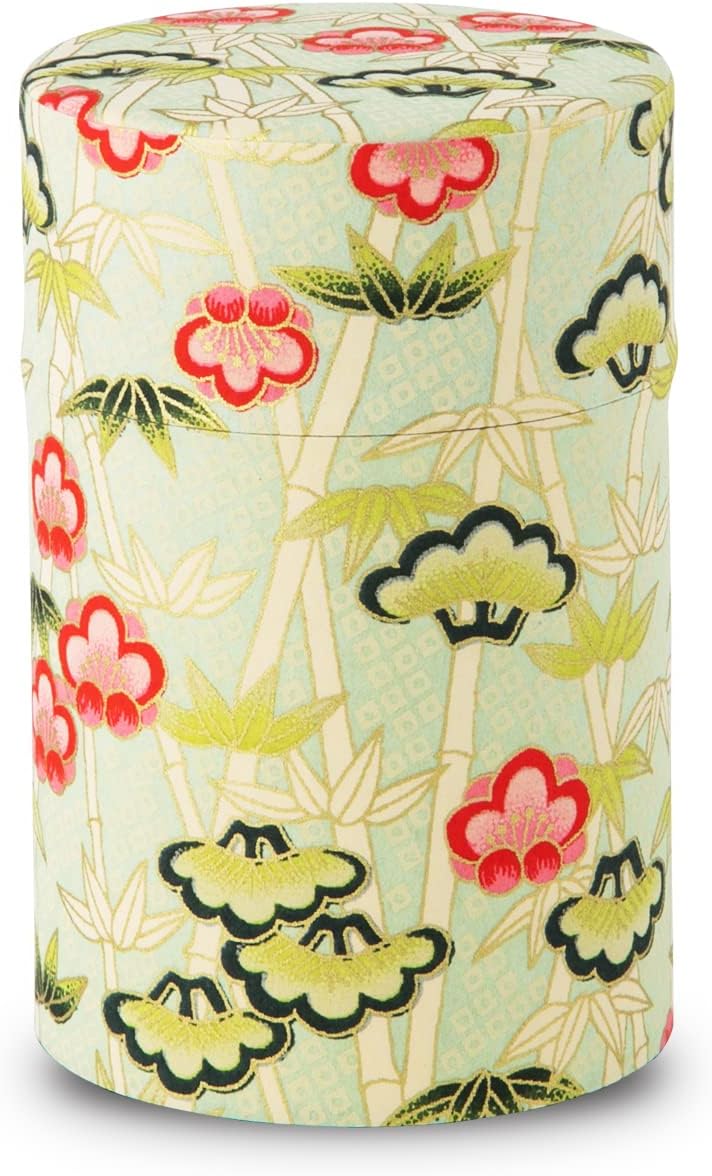
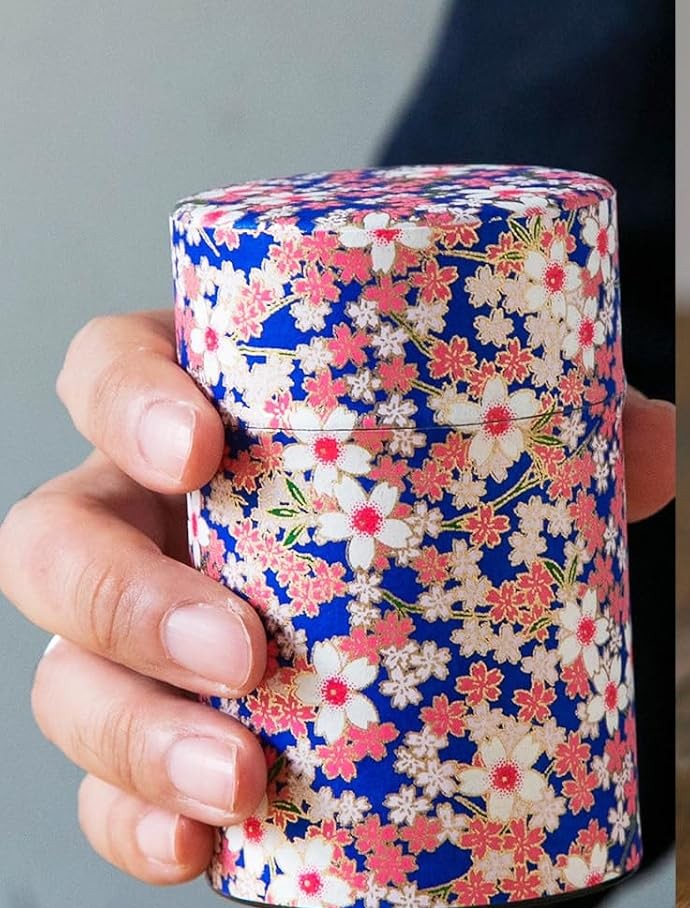
NOREN’s canister is the classic small chazutsu.The listing says the steel can is made in Shizuoka, one of Japan’s main tea-growing prefectures, plus each one is wrapped by hand in Yuzen washi from Kyoto.
It measures about 3.9 by 2.4 inches and holds 100 g (3.5 oz) of tea.
Under the outer lid sits a translucent polyethylene inner lid. It lets you see how much tea is left without lifting the leaves.
The maker also notes that the paper pattern is aligned so the lid and body line up when closed.
With 473 ratings at 4.5 stars, this is the most reviewed canister here. Amazon’s review summary says buyers like the build quality and the size for loose-leaf tea.
Several mention that the opening is wide enough for a spoon and that the lid clicks into place.
The downside is size. If you buy tea in 200 g bags, this can will not hold a full bag. The listing also warns that the paper is sensitive to water, so handle it with dry hands.
It suits matcha drinkers and anyone who keeps a few small teas open at once.
Check price on Amazon →Amazon affiliate link
Yamako Pokkan Tea Canister, Sakura (around $13 on Amazon)
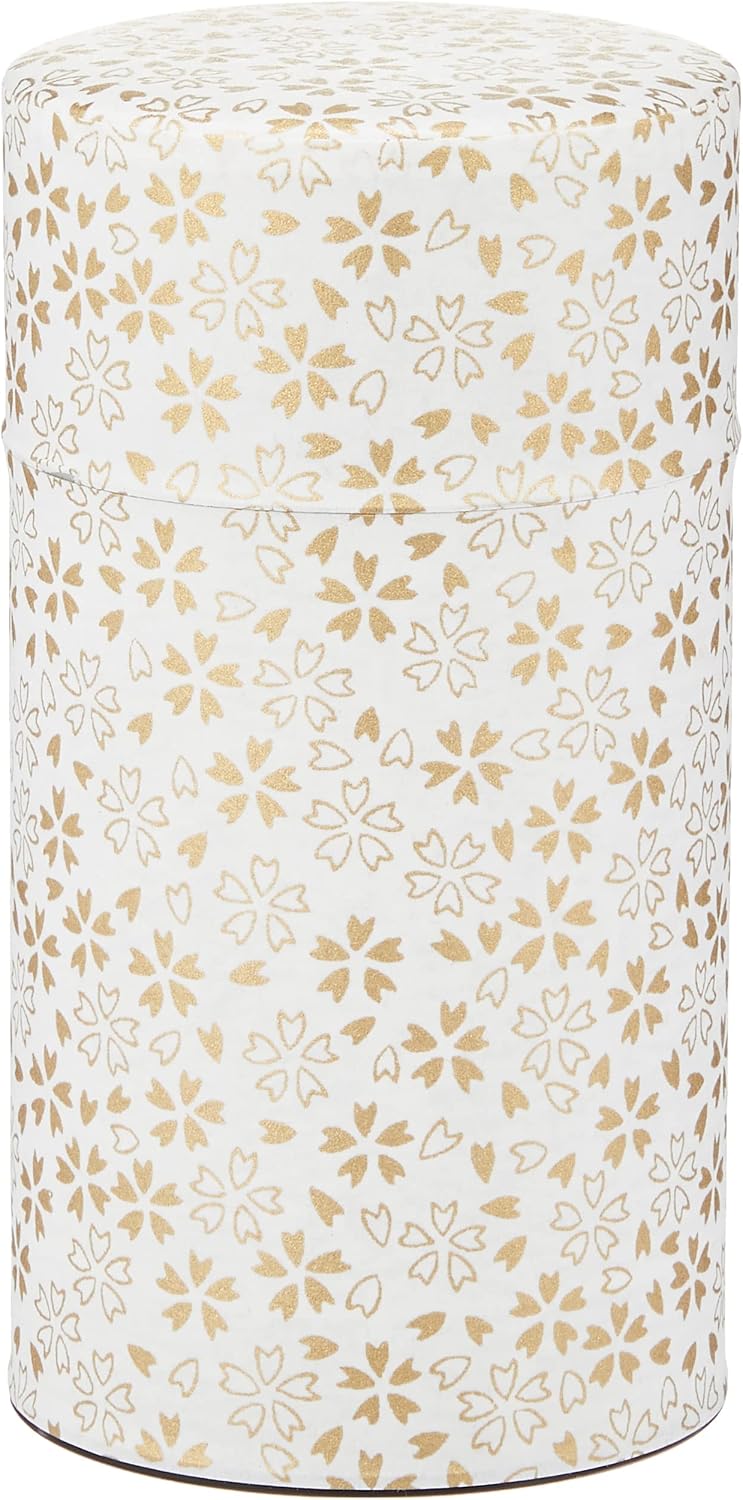
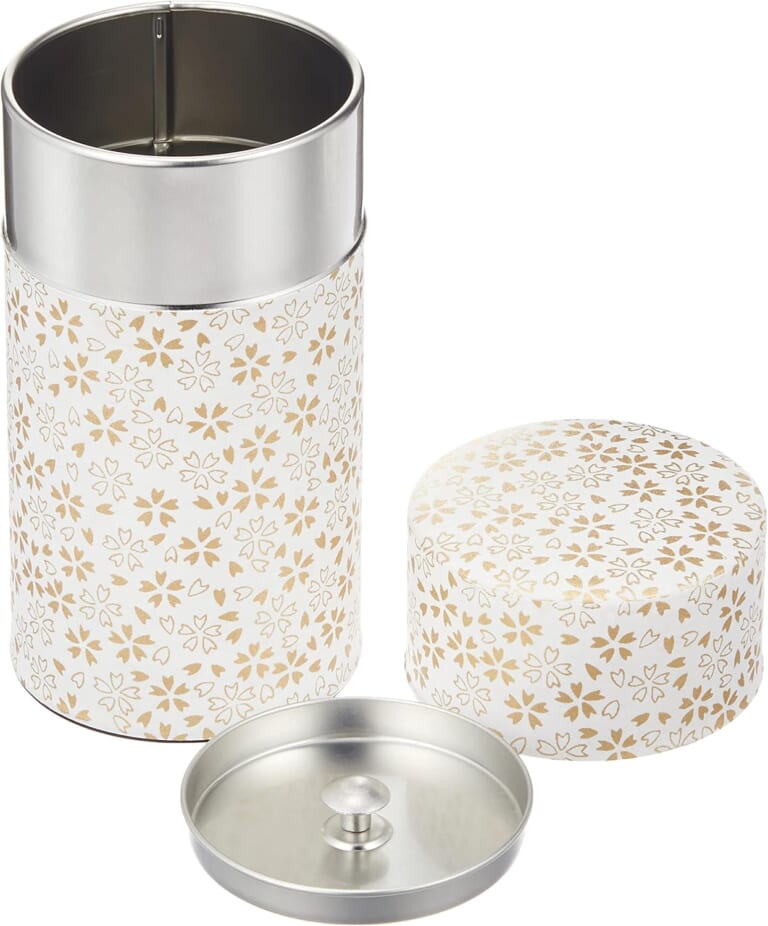
“Pokkan” is the name of the classic Japanese double-lid tea can. It comes from the soft “pop” the outer lid makes as air escapes.
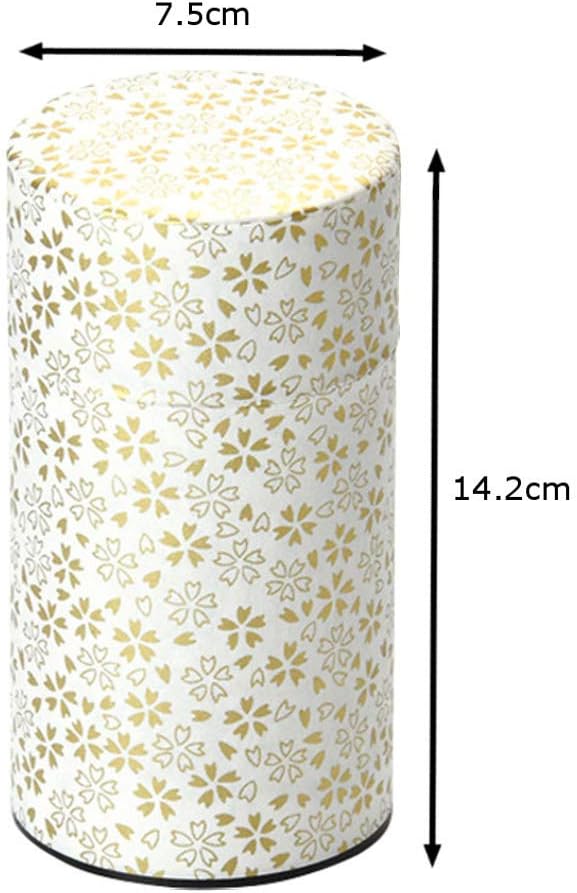
Yamako’s version is a tall can of about 7.5 by 14.2 cm with a metal inner lid and a small pull knob.
This 200 g size holds two standard bags of sencha. The Sakura pattern is printed in gold on white washi, which looks quieter than most of the bright Yuzen designs.
Yamako also sells it in wave and check patterns, plus a smaller 100 g size.
At 4.8 stars from 233 ratings, buyers are mostly happy. Amazon’s summary says people like the look and the airtight double lid.
It also notes the main complaint: some buyers found it flimsy, with reports of dented or damaged cans on arrival.
That makes it the best value here, with a trade-off. It is a thin pressed can, not a craft piece.
It suits someone who wants a pretty, working canister for everyday sencha and does not mind a light build.
Check price on Amazon →Amazon affiliate link
KIMIKURA Washi Tea Canister (around $19 on Amazon)
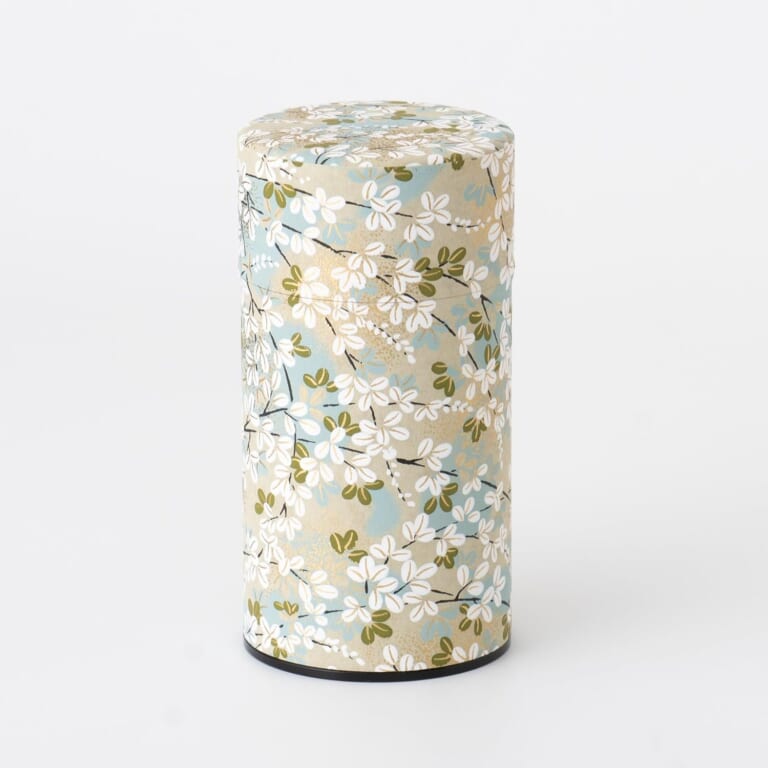
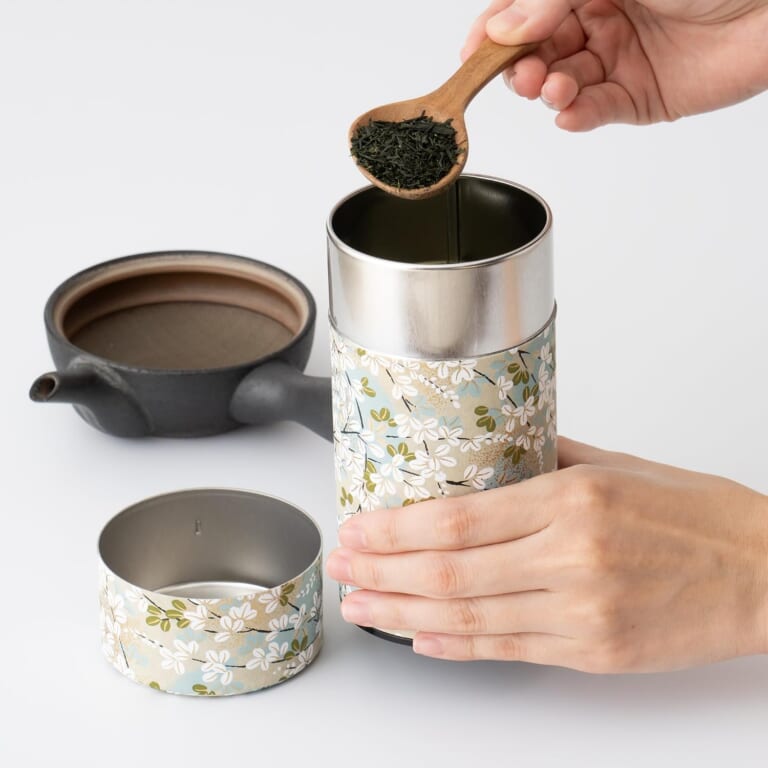
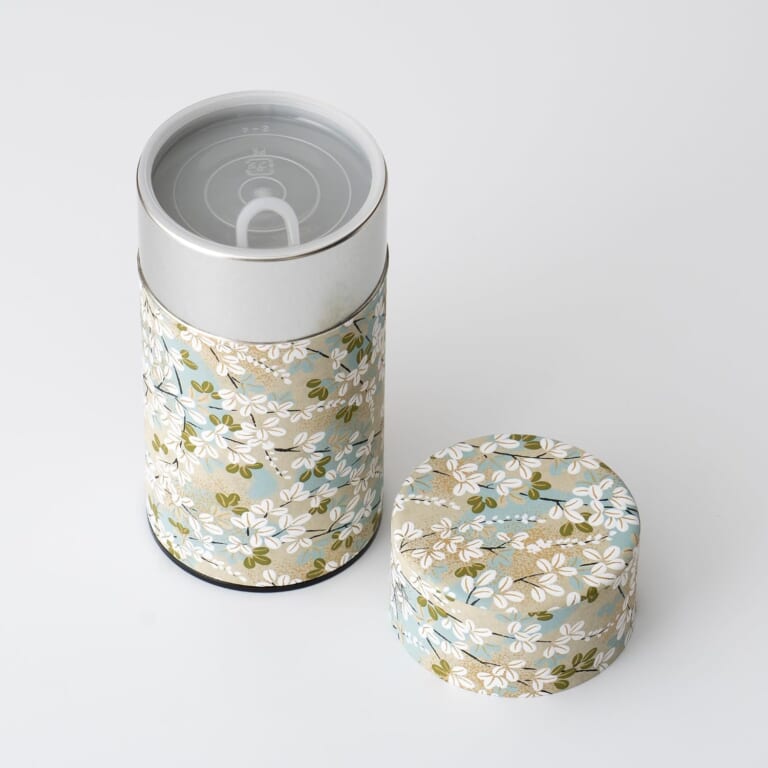
KIMIKURA (きみくら) is a Japanese tea brand that also sells tea tools on Amazon.com. Its canister is an aluminum can finished with washi paper with delicate white flowers on a pale blue and gold ground.
The listing says each one is handcrafted in Japan.
It measures about 7.2 by 14.3 cm, nearly the same as the Yamako can, plus holds about 200 g of loose tea. The double lid uses a translucent inner lid under the outer lid.
Aluminum is lighter than steel and does not rust, which helps in a humid kitchen.
The listing is newer, with 28 ratings at 4.5 stars. That is too few to see a clear pattern in reviews, so treat it as a promising pick rather than a proven one.
It costs about $6 more than the Yamako can. What you get is a softer, more refined pattern from a brand that sells tea, which makes it the easiest of the three to give as a gift with a bag of sencha.
Check price on Amazon →Amazon affiliate link
Compare the Three
On a phone, swipe the table sideways to see every column.
| NOREN | Yamako Pokkan | KIMIKURA | |
|---|---|---|---|
| Best for | Matcha, small bags | Everyday sencha on a budget | Gifts |
| Price (approx., as of Nov 6, 2026) | $16 | $13 | $19 |
| Capacity | 100 g (3.5 oz) | 200 g | 200 g |
| Body | Steel, made in Shizuoka | Thin pressed metal | Aluminum, made in Japan |
| Inner lid | Translucent plastic | Metal with knob | Translucent plastic |
| Amazon rating (Nov 22, 2026) | 4.5 (474) | 4.3 (237) | 4.6 (29) |
If you drink matcha or buy tea in 100 g bags, choose NOREN. It is the most reviewed and the right size, so the tea inside stays full rather than sitting in a half-empty can.
If you drink sencha every day and buy in larger bags, the Yamako Pokkan gives you 200 g with a double lid for the lowest price.
Check the can when it arrives, since dents are the most common complaint.
If the canister is a gift, the KIMIKURA can has the most refined pattern. Pair it with a bag of tea and it becomes a complete Japanese tea set.
Buyer’s Considerations
Patterns vary. All three brands sell many patterns under one listing. Make sure the pattern you select on Amazon.com matches the photo you want before you buy.
One tea per can. Metal cans pick up smell over time. Keep strong teas such as hojicha or flavored blends in their own canister and avoid switching between tea and coffee.
Fridge storage. In Japan, unopened tea is often kept in the fridge.
Once a canister is in daily use, keep it in a cool, dark cupboard instead, since taking a cold can out every day lets moisture form on the leaves.
Craft upgrade. If you want a canister that lasts decades, look at hand-made copper or tin chazutsu from Kyoto makers.
They cost several times more and are usually sold through the makers’ own stores rather than Amazon.com.
Summary
A Japanese washi tea canister keeps loose tea dark, dry and fresh for a few dollars. Choose NOREN for 100 g bags and matcha, Yamako Pokkan for 200 g on a budget or KIMIKURA for a gift.
Check price on Amazon →Amazon affiliate link
FAQ
How long does green tea stay fresh in a canister?
Most Japanese tea shops suggest finishing opened sencha within about two to four weeks. A tight canister slows the loss of aroma but does not stop it, so buy a size you will finish quickly.
Can I store matcha in a washi tea canister?
Yes. A small 100 g canister with an inner lid works well for matcha. Many people keep the matcha in its original inner bag inside the can for extra protection.
Can I wash a washi tea canister?
Do not soak it or put it in a dishwasher. The paper can peel when wet. Wipe the inside with a dry cloth. If you must rinse the metal inner can, dry it fully before adding tea.
Is a tea canister good for coffee beans?
It works, plus the NOREN listing suggests it for coffee. A 100 g tea can holds less coffee by weight, since beans are bulkier. Keep tea and coffee in separate canisters so smells do not mix. Prices change often, so check the current price on each Amazon.com listing linked above.